Sample Cross Border Business Expansion Proposal Letter
You need to send a cross border business expansion proposal letter, but the blank page is staring you down. It's that moment of pressure—getting the tone right for an international partner while nailing the formal structure. Sound familiar?
Using a sample isn't cheating. It's a smart shortcut. A good sample gives you a solid framework so you don't have to reinvent professional correspondence from scratch. You get the structure, the key phrases, and the right level of formality. Then you fill in the parts that matter: your specific value proposition, your market insights, your authentic voice. That's where the real work lives.
(Category: Business Proposal Letters)
What makes a cross border expansion letter different
A standard business letter won't cut it here. You're not just proposing a deal; you're asking someone to trust you with their market, their customers, their reputation. The letter needs to show you understand local business practices, regulations, and cultural nuances. That means your letter structure has to include space for context: why now, why this partnership, and how you'll navigate the complexities together.
Think of it as a relationship builder, not just a document. The best cross border business expansion proposal letter samples balance enthusiasm with realism. They show you've done your homework and you're prepared for the hard parts.
How to choose the right sample and make it yours
Not every template fits every situation. If you're approaching a potential distributor in Germany, you'll want a more formal, data-heavy tone compared to a proposal for a joint venture with a startup in Singapore. Look for samples that match your industry and the relationship stage. A cold outreach letter looks very different from a follow-up after an initial meeting.
Once you find a good fit, adapt it without losing your authenticity. Swap out generic language for specific examples. Instead of "we offer excellent services," write "we reduced logistics costs by 18% for a similar partner in Southeast Asia." Your tone in writing should reflect your company's personality while respecting the recipient's culture. If they're formal, stay formal. If they appreciate directness, skip the fluff.
Pay close attention to your salutation and closing. "Dear Mr. Tanaka" is safer than "Hi Kenji" unless you've built a rapport. And close with a clear next step, not just "Sincerely." Something like "I will follow up next Tuesday to discuss how this fits your current expansion plans."
Mistakes that will undermine your proposal
The most common error? Forgetting that digital letter format and printed letters behave differently. If you're emailing the proposal, keep paragraphs short and scannable. Include a clear subject line. If you're mailing a physical version, use proper letterhead design that looks professional when printed. A sloppy format signals sloppy planning.
Another trap: outdated language. "Enclosed please find" feels stiff. "I've attached" works better for email. And always, always proofread. A typo in a cross border proposal reads as carelessness. Proofreading letter content out loud catches awkward phrasing you'd miss on screen.
Don't ignore the fact that this is a formal proposal, not a casual pitch. Follow letter writing etiquette for international business: address recipients by their correct title, mention mutual connections if they exist, and avoid presuming familiarity. When in doubt, lean toward formality.
If you need ideas for structuring different types of proposals, check out this persuasive sales proposal letter for tactics on framing benefits. Or see how a counter offer business letter handles negotiations—some of those persuasive techniques carry over.
Tailor the opening to grab attention fast
Your first paragraph is where most readers decide whether to keep reading. Start with a shared goal or a specific observation about their company. "Your recent expansion into renewable energy markets aligns closely with our experience in cross border logistics and compliance." That's concrete. It shows you've done your research and you're not sending a mass generic proposal.
For comparison, a community center renovation proposal letter opens differently because the audience and stakes are local. Use that contrast to think about what matters most to an international partner: risk reduction, market knowledge, and clear communication.
Use the sample as a springboard, not a crutch
The best cross border business expansion proposal letter feels both confident and collaborative. It shows you bring value without overshadowing the partner's role. Let the sample give you structure, then layer in your specific market research, your honest assessment of challenges, and your enthusiasm for the work ahead.
Writing these letters gets faster with practice. Each one teaches you something about tone, timing, or cultural expectations. Keep refining. And remember—a thoughtful, well-structured letter earns respect before you even get to the negotiation table.
If you need a more formal framework, the government tender bid letter example shows how to structure clear deliverables and compliance details. Adapt its precision for your own proposal.
Useful Formats
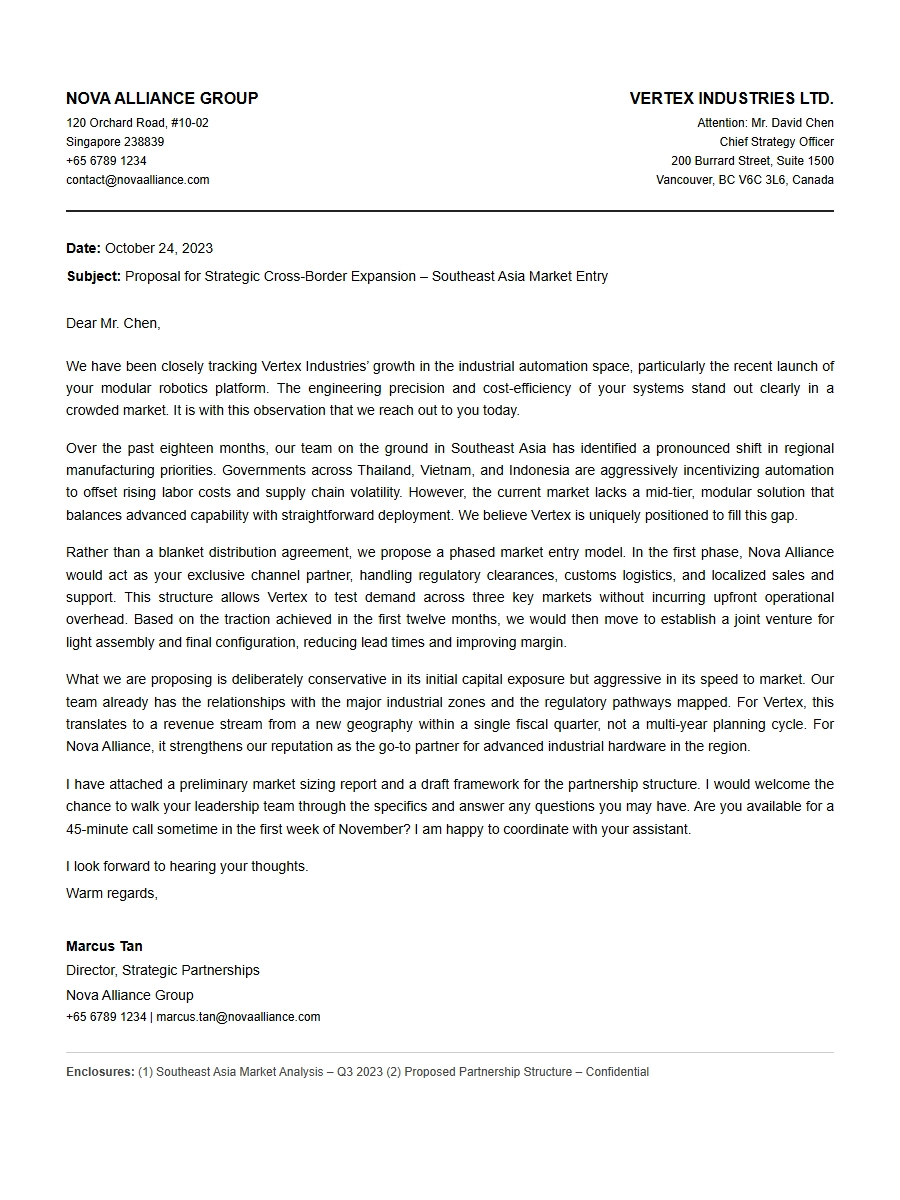
Sample Cross Border Business Expansion Proposal Letter
Distributor Partnership Proposal
To: Global Tech Distributors Ltd. From: ABC Innovations, Inc. Date: March 15, 2025 Subject: Proposal for Exclusive Distribution in Southeast Asia
We are pleased to present this proposal for a cross-border distribution partnership. ABC Innovations seeks to expand into Southeast Asian markets through your established network. Our flagship product, the EcoCharge power bank, has achieved 40% market share domestically and is ready for international launch.
Proposed terms:
Exclusive distribution rights for Indonesia, Malaysia, and Thailand
Minimum annual order: 50,000 units in year one, scaling to 100,000 by year three
Suggested retail price: $45.00 USD per unit; distributor margin: 25%
Marketing support: co-funded advertising campaigns up to $50,000 annually
Product pricing structure:
Model
Wholesale Price (USD)
Minimum Order Quantity
EcoCharge 5000
22.00
10,000
EcoCharge 10000
35.00
5,000
EcoCharge Pro
50.00
2,500
We look forward to discussing this opportunity further. A sample shipment will be provided upon signing a mutual non-disclosure agreement.
Next steps: Kindly acknowledge receipt and indicate your interest by April 1, 2025.
Joint Venture Proposal
To: EuroChem AG From: Pacific Agro Ltd. Date: March 20, 2025 Subject: Joint Venture for Organic Fertilizer Production in Vietnam
Pacific Agro proposes a 50/50 joint venture with EuroChem to manufacture and distribute organic fertilizers across Southeast Asia. Vietnam’s agricultural sector is growing at 8% annually, and demand for eco-friendly inputs is surging.
Proposed structure:
Equity contribution: $2 million each
Production facility in Binh Duong Province (25,000 sq. ft.)
Target annual output: 100,000 tonnes by year two
Revenue forecast: $15 million in year one, $35 million by year three
Shared responsibilities:
Pacific Agro
EuroChem
Local regulatory approvals
Technology & formula
Land & labor
Global quality standards
Distribution network
R&D and training
We have secured preliminary government support and a feasibility study. A detailed term sheet is available for review. We propose signing a memorandum of understanding within 30 days.
Contact: Please reach out to our VP of International Development to arrange an exploratory meeting.
Subsidiary Establishment Proposal
To: Board of Directors, NovaTech Inc. From: CEO, NovaTech Inc. Date: March 25, 2025 Subject: Proposal for Wholly-Owned Subsidiary in Mexico
This proposal advocates for establishing a wholly-owned subsidiary in Querétaro, Mexico, to serve the growing North American market. The subsidiary will handle manufacturing, logistics, and sales for our medical device lines.
Key projections:
Capital investment: $5 million (building & equipment)
Operational break-even: Month 14
Local workforce: 150 employees initially
Annual revenue target: $20 million by year three
Implementation timeline:
Phase
Activity
Duration
1
Legal entity registration
60 days
2
Facility lease and renovation
120 days
3
Hiring and training
90 days
4
Production launch
30 days
Mexico offers competitive labor costs, a strong free-trade agreement network, and proximity to our U.S. clients. A detailed business plan including risk analysis and tax benefits is attached.
Decision required: Board approval by April 15 to commence feasibility study.
Cross-Border E-Commerce Proposal
To: Alibaba International Group From: GreenLife Home Products Date: April 1, 2025 Subject: Proposal for Cross-Border E-Commerce Partnership on Tmall Global
GreenLife Home Products seeks to launch our bamboo kitchenware line on Tmall Global to reach Chinese consumers. We have a proven domestic track record with 500,000 units sold in 2024 and strong sustainability branding.
Proposal highlights:
Exclusive online distribution via Tmall Global for 12 months
Initial product range: 15 SKUs, priced $8–$35 USD
Marketing budget: $100,000 for launch campaign (Q3 2025)
Fulfillment via Alibaba’s overseas warehouse in Hong Kong
Expected performance (first year):
Metric
Target
Gross merchandise value
$1.2M
Units sold
80,000
Customer acquisition cost
$4.50
Conversion rate
3.5%
We are prepared to provide product samples, certifications, and marketing assets. A dedicated cross-border team will manage daily operations. We request a meeting to finalize terms and platform integration.
Contact: Our International Sales Director will follow up within one week.
Franchise Expansion Proposal
To: Board of Directors, FreshBites International From: CEO, FreshBites Date: April 5, 2025 Subject: Proposal for Master Franchise in the United Arab Emirates
FreshBites proposes entering the UAE quick-service restaurant market through a master franchise agreement. The UAE has a thriving food scene with 12% annual growth in fast-casual dining, and our health-focused menu fits local demand.
Terms proposed:
Master franchise fee: $500,000
Royalty: 6% of gross sales
Territory: entire UAE, with option for neighboring GCC countries after 5 years
Minimum store opening: 3 in first two years, 10 by year five
Investment breakdown per store:
Item
Cost (USD)
Initial franchise fee
150,000
Fit-out and equipment
400,000
Working capital (3 months)
100,000
Total
650,000
We have identified three potential master franchisees and completed initial due diligence. Next steps include site visits and signing a letter of intent. We seek board approval to proceed with negotiations.
Strategic Alliance Proposal
To: Star Pharma Ltd. (India) From: MedCore Biosciences (USA) Date: April 10, 2025 Subject: Strategic Alliance for Generic Drug Distribution in Latin America
MedCore proposes a non-equity strategic alliance with Star Pharma to distribute a portfolio of 30 generic drugs across Brazil, Mexico, and Argentina. Star Pharma’s manufacturing capabilities and MedCore’s regulatory expertise create a complementary fit.
Proposed scope:
Star Pharma manufactures; MedCore handles regulatory submissions and marketing
Revenue sharing: 60% to Star Pharma, 40% to MedCore
Exclusive partnership for three years, renewable
Initial product launch: 10 drugs by Q1 2026
Anticipated milestones:
Milestone
Target Date
Regulatory dossiers submission
June 2025
First country approval (Brazil)
September 2025
Distribution agreement signing
November 2025
Product launch
January 2026
We have prepared a detailed alliance agreement and a joint marketing plan. A preliminary meeting is scheduled for next week. We look forward to your positive response.
Export Distribution Agreement Proposal
To: Nordic Outdoor Equipment AS From: Summit Gear Inc. Date: April 15, 2025 Subject: Proposal for Exclusive Export Distribution in Scandinavia
Summit Gear proposes an exclusive export distribution agreement for our premium camping equipment line in Norway, Sweden, and Denmark. Our products have been recognized for innovation, and we see strong demand for high-altitude tents and sleeping bags in the Nordic region.
Key terms:
Exclusive rights for three years with performance clauses
Annual minimum purchase: $1 million (first year), growing to $2.5 million by year three
Distributor discount: 30% off MSRP (excluding shipping)
Marketing contribution: 2% of net sales from us, matched by distributor
Product categories and wholesale prices:
Category
Price Range (USD)
Lead Time
4-season tents
$400–$900
8 weeks
Sleeping bags (-20°C)
$200–$500
6 weeks
Backpacks (50L+)
$150–$350
6 weeks
We can support with training, warranty services, and trade show participation. Please review the attached draft agreement and suggest a date for a virtual meeting.
Foreign Investment Proposal for Manufacturing
To: Ministry of Investment, Kenya From: CleanTech Water Solutions Pte. Ltd. (Singapore) Date: April 20, 2025 Subject: Proposal for Manufacturing Facility for Water Purification Systems
CleanTech proposes establishing a manufacturing plant in Nairobi to produce affordable water purification systems for East Africa. The facility will create 200 direct jobs and serve a region where 40% of the population lacks clean drinking water.
Investment details:
Total investment: $10 million (equipment and building)
Production capacity: 50,000 units per year
Target market: Kenya, Uganda, Tanzania, Rwanda
Local content: 60% of components sourced within two years
Projected economic impact:
Year
Jobs Created
Local Revenue (USD)
1
100
$3M
2
150
$6M
3
200
$10M
We request tax holidays, customs duty exemptions, and support for Infrastructure access. A full feasibility report is enclosed. We seek government approval in principle to proceed with land acquisition.
Contact: Our Director of Africa Operations will present to your investment board.
Cross-Border Service Expansion Proposal
To: Middle East Financial Services Group (MEFS) From: DataSecure Consulting (UK) Date: April 25, 2025 Subject: Proposal for Cybersecurity Consulting Services Expansion in Dubai
DataSecure proposes opening a branch office in Dubai International Financial Centre to offer cybersecurity consulting to financial institutions across the Middle East. Our services include penetration testing, compliance audits, and incident response.
Service offerings and pricing:
Service
Duration
Price (USD)
Full security audit
2 weeks
$25,000
Penetration test
1 week
$12,000
Compliance (GDPR/ISO)
3 weeks
$30,000
Retainer (monthly)
Ongoing
$8,000
Proposed setup:
License through DIFC, leveraging their regulatory framework
Initial team: 5 consultants (3 expat, 2 local)
Partnership with local law firm for legal support
Marketing budget: $75,000 for first year brand awareness
We have three potential anchor clients in the region. The branch is expected to generate $1 million revenue in year one with 30% margins. We invite MEFS to become a referral partner with a 10% commission.
Next step: Sign a memorandum of understanding to initiate licensing procedures.
Foreign Acquisition Proposal
To: Board of Directors, Boreal Foods (Canada) From: Executive Committee, Boreal Foods Date: April 30, 2025 Subject: Proposal to Acquire GreenLeaf Organics (Australia)
We recommend acquiring 100% of GreenLeaf Organics, an Australian manufacturer of organic snack bars, for $45 million AUD. This acquisition aligns with our cross-border expansion strategy into the Asia-Pacific natural foods market.
Acquisition rationale:
GreenLeaf holds 12% market share in Australia’s organic snack segment
Expected revenue synergies: $10 million annually through distribution cross-selling
Cost synergies: $4 million from supply chain consolidation
Expansion into Japan and South Korea using their existing export channels
Proposed deal structure:
Component
Amount (AUD)
Cash consideration
$25M
Stock swap (Boreal shares)
$15M
Earn-out based on 2026 revenue
$5M
Total
$45M
Due diligence is complete with satisfactory findings. Financing via a $30M bank loan and existing cash reserves. We seek board approval to execute the share purchase agreement within 60 days.
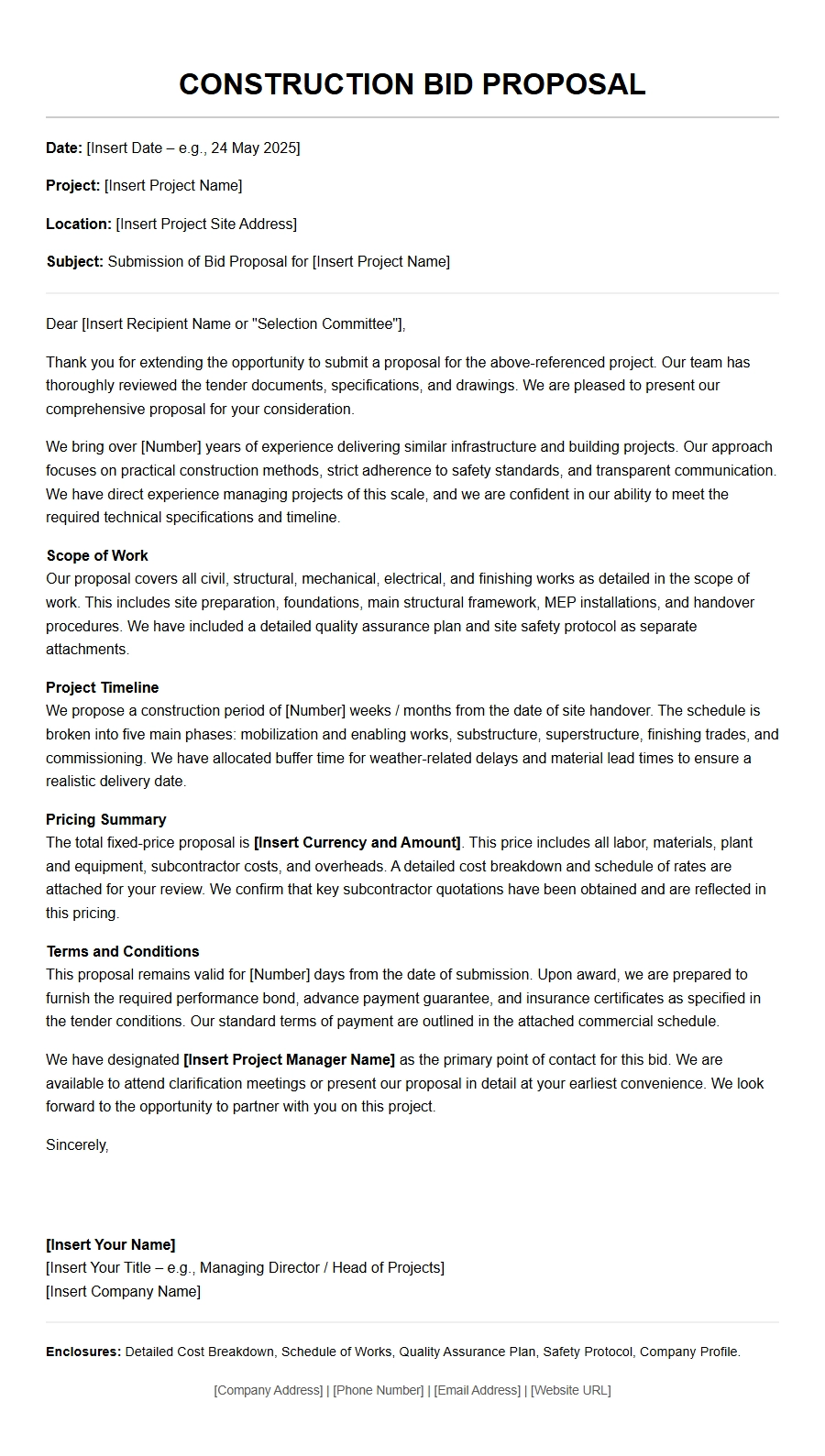 Sample Construction Bid Proposal Letter
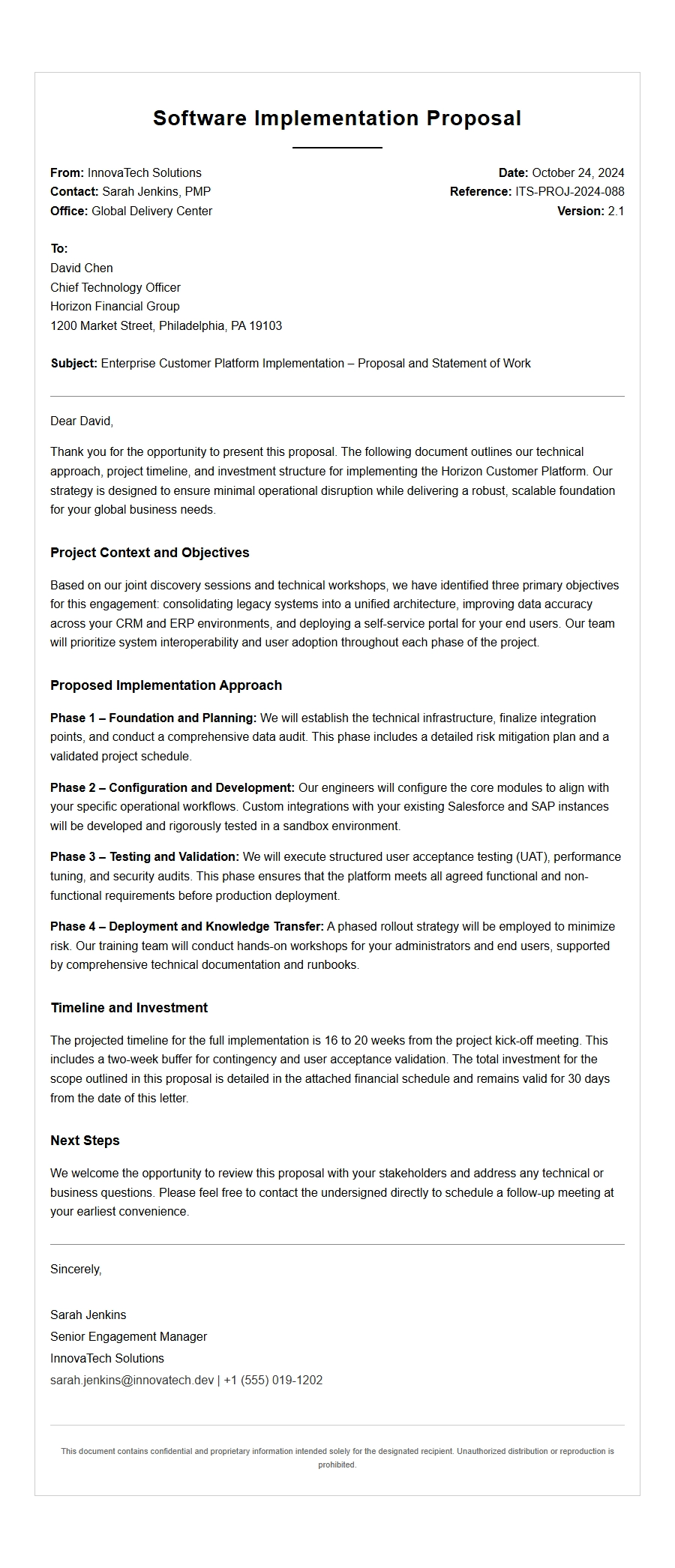 Enterprise Software Implementation Proposal Letter Example
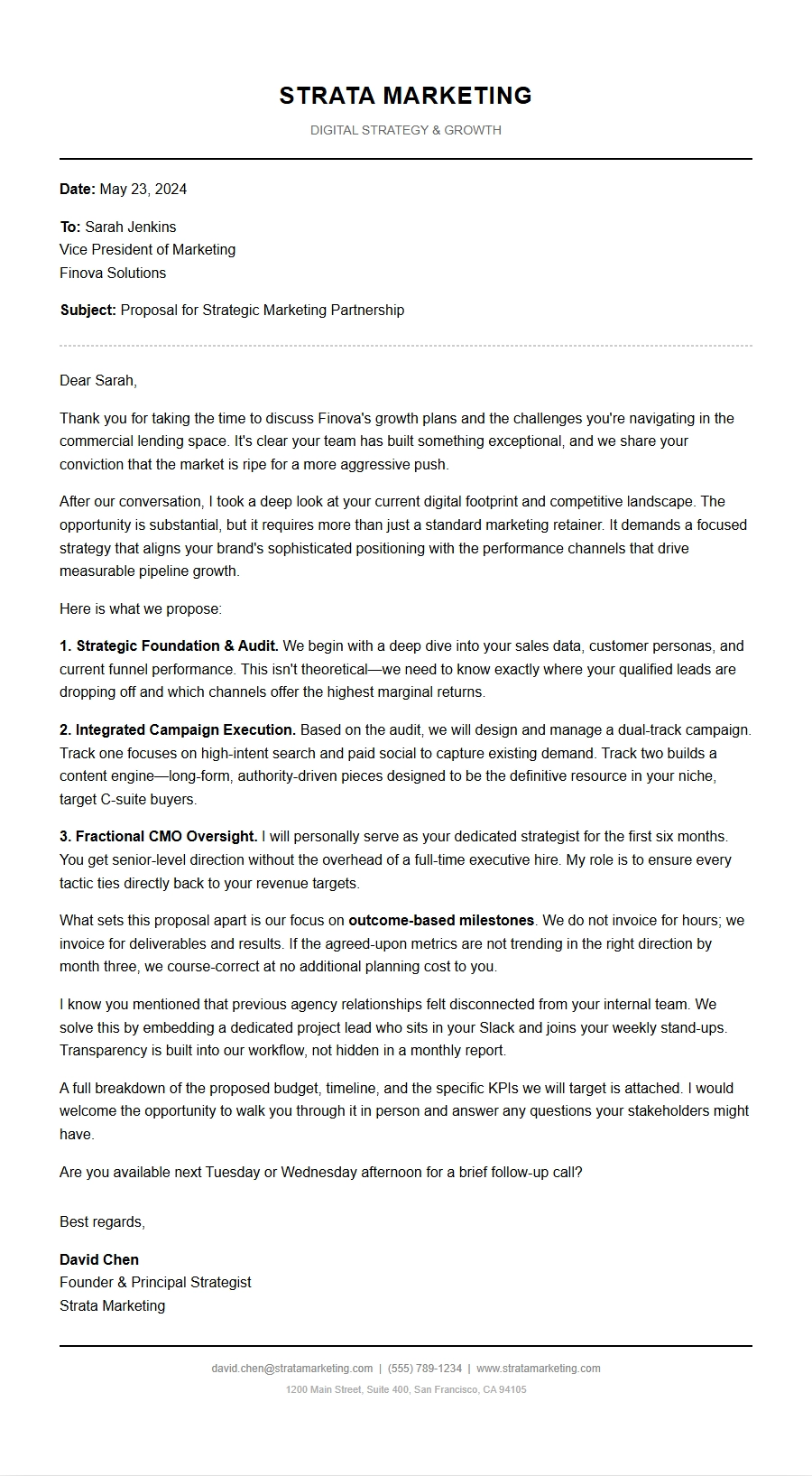 Marketing Agency Service Proposal Letter Template
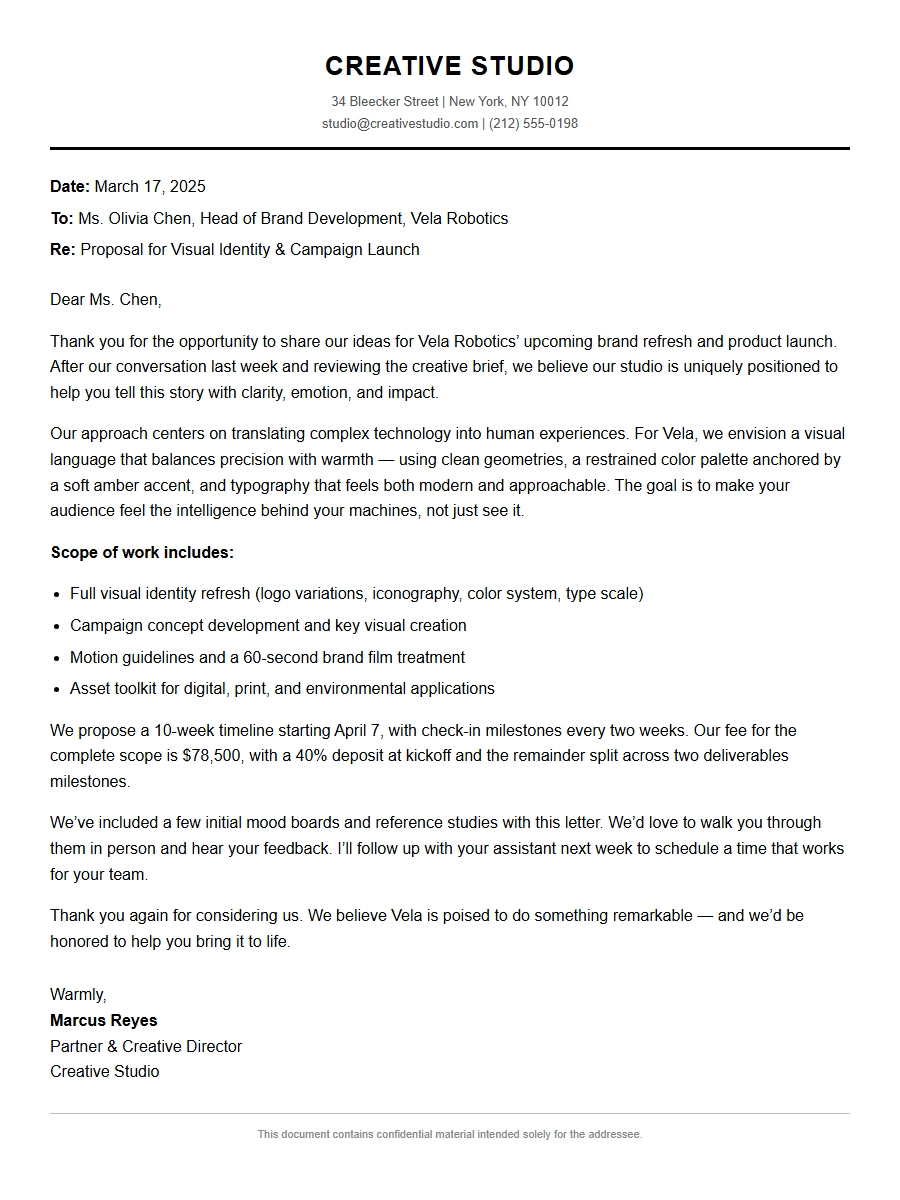 Creative Studio Project Proposal Letter
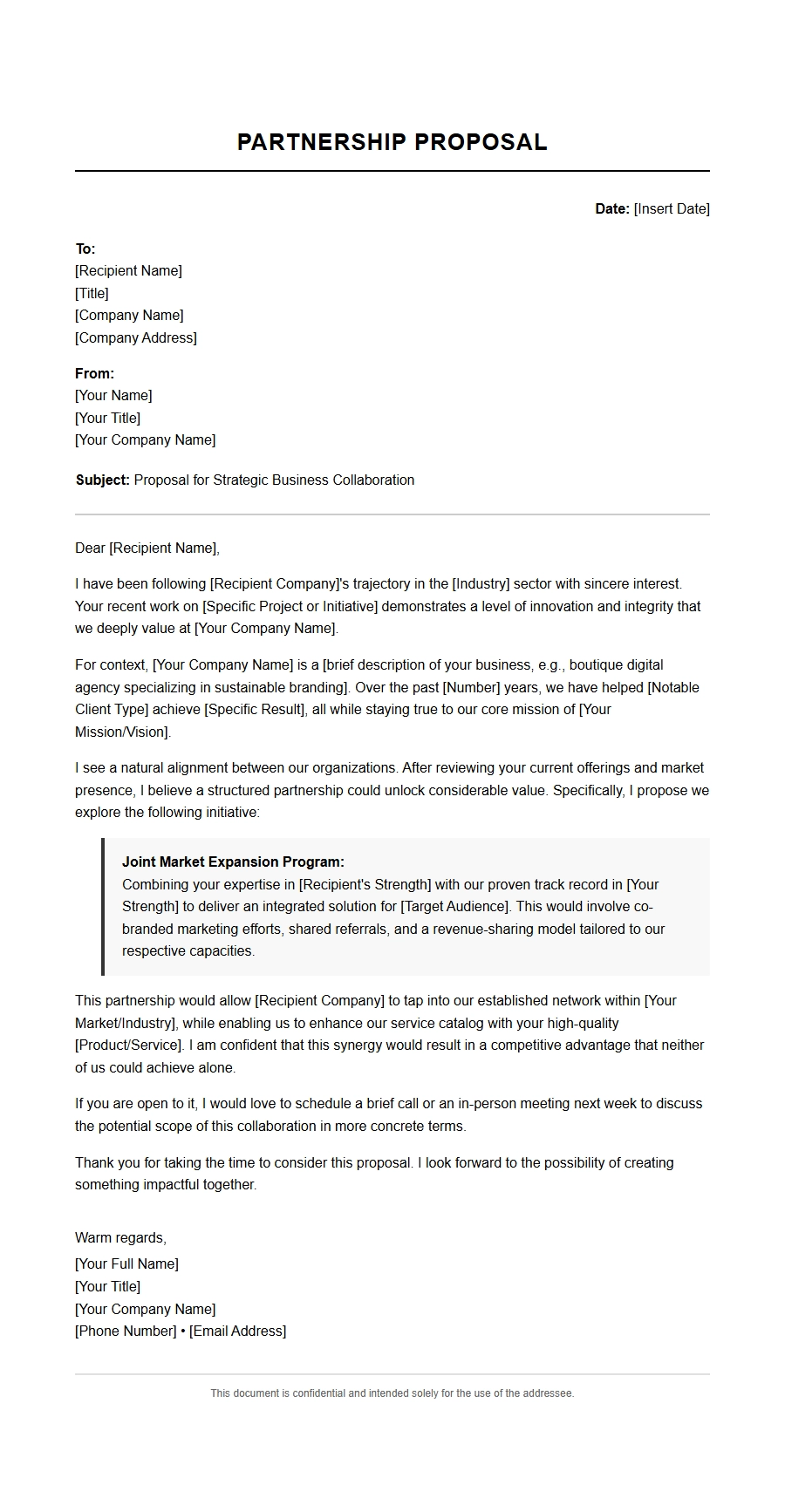 Small Business Partnership Proposal Letter Template
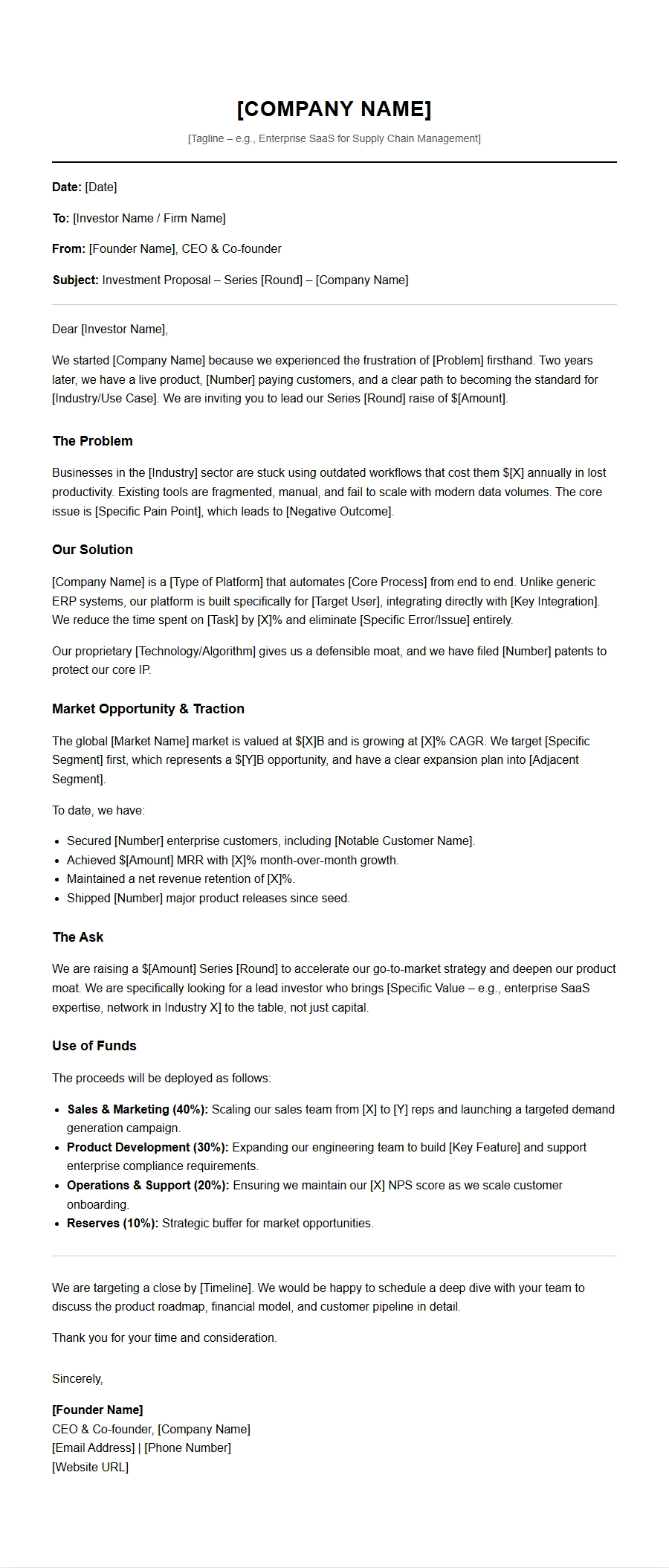 Startup Investment Proposal Letter Template