Assessing Nurse Practitioner Skills via Recommendation Letters
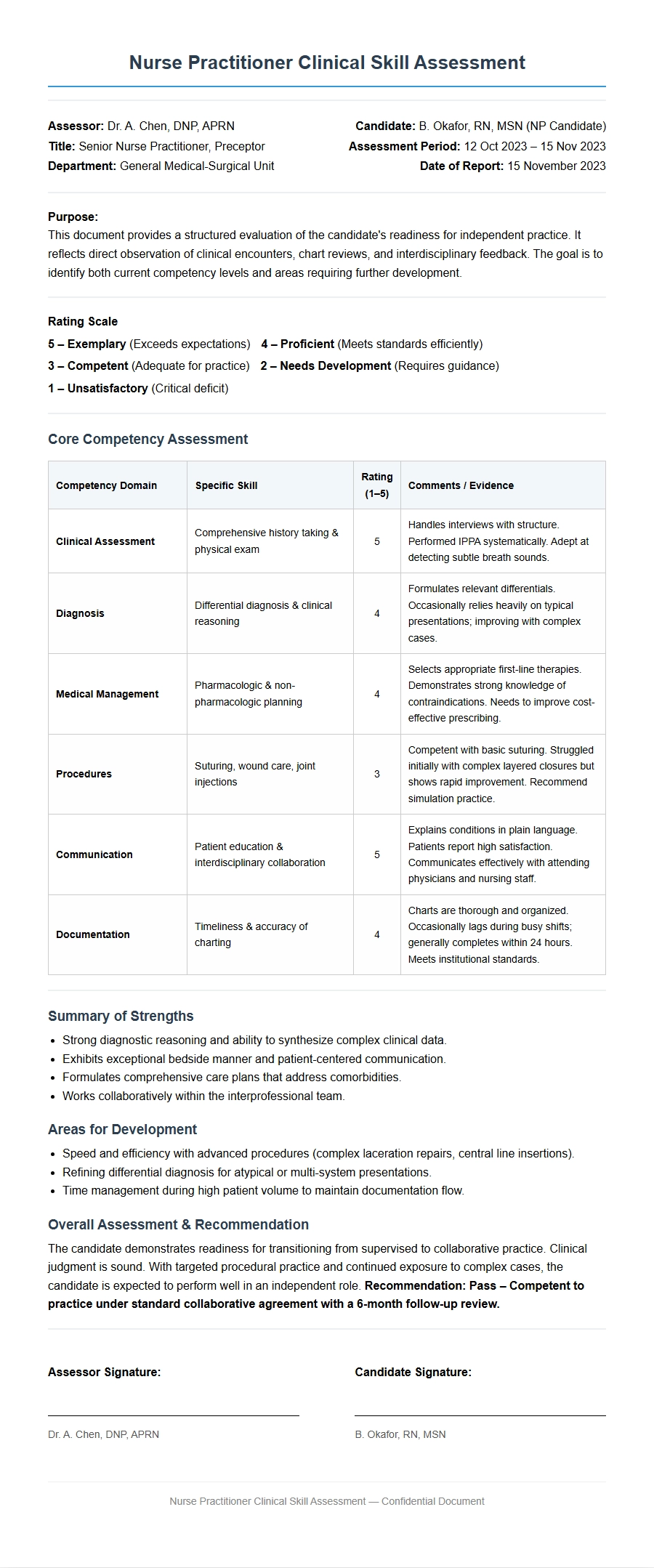
You need to write a formal assessment of a nurse practitioner’s skills—maybe for a credentialing committee, a job application, or a performance review. Staring at a blank page can stall you for hours. But a solid sample letter gives you a framework, not a crutch. It shows you the right tone, structure, and key phrases for documenting clinical competence. With a good template, you can focus on what matters: accurately describing the NP’s abilities without second-guessing the format.
Using a letter sample isn’t cheating—it’s smart. It saves time and reduces the risk of missing important sections like credentials, scope of practice, or specific clinical examples. You still personalize the content. The template is just the skeleton; you add the muscle and breath. Think of it like having a mentor say, “Start here, then make it yours.”
Nurse Practitioner Skills Assessment
For a nurse practitioner skill assessment, the letter typically needs to cover clinical experience, diagnostic reasoning, patient management, and interpersonal skills. A good sample will include placeholders for these areas. But not every sample fits every situation. A letter for a new graduate will look different than one for an experienced NP applying for a hospital leadership role. Choose a sample that matches the level of formality and the specific competencies you need to highlight.
Once you have the right template, adapt it without losing your own voice. Read through the sample and note its letter structure: salutation, opening statement, body paragraphs with evidence, and a closing that includes your contact information. Keep that skeleton, but rewrite each section in your own words. For example, instead of copying “She demonstrated excellent clinical judgment,” say what you actually observed: “When managing complex diabetic patients, she consistently adjusted insulin protocols based on blood glucose trends, reducing ER visits by 20%.” Specific, real examples carry more weight than generic praise.
Pay attention to tone. A nurse practitioner skill assessment should be professional but not stiff. Avoid overly formal phrases like “it is hereby certified that…” and instead use direct language: “I am writing to assess Jane Doe’s capabilities as a family nurse practitioner.” The best professional correspondence balances respect for the reader with natural clarity. If the letter is going to a credentialing board, follow standard business letter format: your name and title, date, recipient’s address, salutation, body, and a professional closing. For an email submission, you can skip the letterhead design and use a clean digital letter format with a subject line that includes the NP’s name and purpose.
One common mistake is using outdated salutations like “To Whom It May Concern” when you know the recipient’s name. Do a quick check. If you don’t know, “Dear Credentialing Committee” works. Another mistake is ignoring the format for the medium. An emailed letter doesn’t need a full letterhead, but it should still have a clear subject line and your signature block. A printed letter should be on official letterhead if you’re writing on behalf of an organization. Remember proofreading letter basics: read it aloud, check for typos, and ensure dates and names are correct. A missing middle initial or wrong date undermines credibility.
Think about your opening paragraph. That first sentence should grab the reader’s attention by stating the purpose and your relationship to the NP. “I have supervised Sarah Chen for two years as her lead physician in a high-volume urgent care setting. In that time, I have directly observed her ability to manage acute conditions independently.” This sets the stage better than “I am writing to recommend…”.
You’ll find that the same principles apply across different types of recommendation letters. For instance, when writing an executive leadership capability assessment recommendation letter, you also need to highlight specific examples and match the tone to the audience. Similarly, a product manager roadmap strategy recommendation letter uses a comparable structure but focuses on project management skills. Keep the framework adaptable.
If you’re assessing a nurse practitioner for a remote telehealth role, you might draw from lessons learned in remote work productivity testimonial recommendation letters, where self-sufficiency and clear communication are key. For adoption finalization social worker recommendation letters, the approach emphasizes empathy and trustworthiness—traits that also matter in patient care. Even a neighbor noise complaint reference recommendation letter can teach you how to stay objective and specific without overstating.
Finally, use the sample as a springboard, not a crutch. The best assessment letters feel both professional and personal. They show you know the NP’s strengths and can articulate them clearly. Practice makes the process faster. Once you’ve written one strong letter, the next one takes half the time. Keep a folder with a few well-structured samples you can tweak for different settings. That way, next time you need to write a nurse practitioner skill assessment, you’ll already have a solid starting point.
Browse Sample Ideas
Assessing Nurse Practitioner Skills via Recommendation Letters
Clinical Skills Assessment by Supervising Physician
Date: March 15, 2025
To: Credentialing Committee Re: Nurse Practitioner Jane Doe – Clinical Skill Assessment
I have had the privilege of supervising Jane Doe, NP, in our family practice for over two years. Her clinical skills are exemplary. Below are key competencies observed:
History Taking & Physical Exam: Consistently thorough, eliciting subtle findings that guide differential diagnoses.
Diagnostic Reasoning: Demonstrates evidence-based decision-making, ordering appropriate labs and imaging with high accuracy.
Procedural Proficiency: Competent in suturing, joint injections, and EKG interpretation.
Patient Management: Develops comprehensive treatment plans, adjusts medications wisely, and follows up diligently.
Jane independently manages a panel of 20+ patients daily and consistently receives positive feedback. Her skill in managing chronic conditions such as diabetes and hypertension is particularly strong. I recommend her without reservation.
Sincerely, Dr. Mark Smith, MD Medical Director, Oakwood Family Medicine
Leadership & Teamwork Assessment by Nursing Director
Date: March 20, 2025
To: Hiring Manager Re: Nurse Practitioner Sarah Lee – Leadership and Teamwork Skills
I write this letter in strong support of Sarah Lee, NP, with whom I have worked in the emergency department for three years. Her leadership and teamwork skills are outstanding.
Skill Area
Rating (1-5)
Comments
Team Collaboration
5
Actively coordinates with physicians, nurses, and allied health.
Clear, concise handoffs; ensures continuity of care.
Sarah often leads quality improvement initiatives, such as reducing door-to-provider time. She is approachable, mentors new staff, and maintains a collegial atmosphere. Her ability to rally the team under pressure is remarkable. She is an asset to any organization.
Respectfully, Anna Johnson, RN, MSN Director of Nursing, St. Mary’s ED
Collaborative Practice Skills – Peer NP Assessment
Date: April 2, 2025
To: Review Committee Re: Nurse Practitioner Tomás Rivera – Collaborative Practice Skills
As a fellow NP in the same clinic, I have collaborated closely with Tomás Rivera for two years. His collaborative skills are exceptional. Key observations include:
Consultation Etiquette: He seeks input from physicians and specialists promptly and respectfully, sharing all relevant data.
Shared Decision-Making: Encourages patient and family involvement; explains options clearly.
Referral Coordination: Manages referrals with seamless communication; ensures follow-up on recommendations.
Conflict Avoidance: Avoids turf disputes; focuses on patient outcomes and team cohesion.
Tomás is particularly skilled in managing patients with complex comorbidities and often facilitates multidisciplinary case conferences. His respectful, humble approach makes him a favored colleague. I highly recommend him for any role requiring strong collaboration.
Best regards, Emily Chen, NP-C
Patient-Centered Care Assessment – Family Testimonial
Date: April 10, 2025
To: Credentials Committee Re: Nurse Practitioner Rachel Green – Patient Care Skills
Our family has been under the care of Rachel Green, NP, for three years. We wish to express our deep appreciation for her compassionate and skilled approach.
What makes Rachel exceptional:
Listening Skills: She always takes time to hear our concerns without rushing.
Explanations: Uses plain language to describe diagnoses and treatments, ensuring we understand.
Empathy: Shows genuine care during difficult visits, offering emotional support.
Accessibility: Returns calls promptly and arranges telehealth when needed.
Her clinical competence is evident: she accurately diagnosed my mother’s early-stage heart failure and managed her medications effectively. We trust her completely. She is the kind of provider every patient hopes to find.
Sincerely, The Johnson Family (Contact: Sarah Johnson, sarah.j@example.com)
Evidence-based; adjusts plans per patient response.
Pharmacotherapy
4
Prescribes safely; monitors for interactions.
Patient Education
5
Tailors materials; confirms understanding.
Documentation
4
Timely, thorough, compliant with coding standards.
Professional Conduct
5
Ethical, collaborative, punctual.
Mark meets or exceeds expectations in all areas. I recommend full privileges without restriction.
Dr. Linda White Chief of Medicine, University Hospital
Academic Preceptor Assessment of Clinical Reasoning
Date: April 18, 2025
To: Graduate Program Director Re: NP Student Clinical Rotation – Jessica Adams, RN, BSN
As Jessica Adams’s preceptor during her final clinical semester, I observed her clinical reasoning skills extensively. She demonstrates advanced diagnostic thinking for a novice NP.
Key strengths:
Differential Generation: Consistently lists 3-5 plausible diagnoses before testing.
Pattern Recognition: Quickly identifies typical presentations of common conditions.
Management Planning: Proposes evidence-based treatment plans, including preventive measures.
Self-Reflection: After each case, she reviews her decisions and identifies learning points.
For example, she correctly prioritized sepsis in a patient initially presenting with confusion and mild fever, initiating early antibiotics and fluids. Her clinical reasoning is systematic and safe. I am confident she will excel as an independent practitioner.
Best regards, Dr. Karen Mills, MD Preceptor, City Health Clinic
Hospital Administrator Assessment of Efficiency & Adaptability
Date: April 22, 2025
To: Executive Committee Re: Nurse Practitioner Robert Kim – Operational Skills
I have overseen Robert Kim, NP, in our urgent care network for 18 months. His efficiency and adaptability are exceptional.
Patient Throughput: Average 4 patients per hour versus clinic baseline of 2.8; sees complex cases without delays.
Adaptability: Willingly covers shifts in different locations; quickly learns new protocols and EMR systems.
Crisis Management: During the recent flu surge, he triaged effectively, collaborated with nursing to streamline patient flow, and maintained quality metrics.
Cost-Consciousness: Orders only necessary tests; avoids unnecessary referrals.
Robert also contributes to process improvement: he redesigned the discharge workflow, reducing waiting times by 15%. His ability to balance speed with quality is rare. I strongly recommend him for leadership opportunities.
Sincerely, Angela Parker, MBA Administrator, Metro Urgent Care
Peer Review – Diagnostic Accuracy & Evidence-Based Practice
Date: April 25, 2025
To: Professional Review Board Re: Nurse Practitioner David Chen – Diagnostic Skills
I have peer-reviewed 30 charts of David Chen, NP, over the past year. His diagnostic accuracy and use of evidence-based practice are outstanding.
Metric
Result
Benchmark
Diagnostic concordance (final Dx vs. initial)
95%
≥85%
Appropriate test utilization
94%
≥90%
Guideline adherence (chronic disease mgmt)
97%
≥90%
Complication/preadmission avoidance
92%
≥80%
David consistently applies latest guidelines, such as ACC/AHA for hypertension and ADA for diabetes. He also engages in journal clubs and brings new evidence to team discussions. His diagnostic reasoning is careful, avoiding premature closure. He is a model of evidence-based practice.
Respectfully, Dr. Patricia Nolan, MD Peer Review Chair, Lakeside Medical Group
Mentor Assessment of Research & Evidence-Based Skills
Date: April 28, 2025
To: Fellowship Selection Committee Re: Nurse Practitioner Lisa Wang – Research Skills
I have mentored Lisa Wang, NP, in her research project on antibiotic stewardship for two years. She has demonstrated exceptional research and evidence synthesis skills.
Literature Review: Thorough; uses systematic search strategies; critically appraises studies.
Data Collection & Analysis: Designed a prospective audit; performed basic statistical analysis with support.
Implementation: Translated findings into a clinical guideline adopted by our clinic, reducing unnecessary antibiotic prescriptions by 20%.
Dissemination: Presented at a regional conference; co-authored a manuscript in a peer-reviewed journal.
Lisa also regularly applies research to practice: she initiated a point-of-care CRP testing protocol based on recent evidence. Her ability to bridge research and clinical care is impressive. She has my strongest recommendation.
Sincerely, Dr. Michael Torres, PhD, RN Research Mentor, Institute for Clinical Excellence
Interdisciplinary Team Member Assessment – Communication Skills
Date: April 30, 2025
To: Hiring Committee Re: Nurse Practitioner Gloria Evans – Interprofessional Communication
As a social worker collaborating with Gloria Evans, NP, in our geriatric clinic, I have witnessed her outstanding communication skills across disciplines.
Specific observations:
With Patients & Families: Explains complex care plans in simple terms; uses teach-back method to confirm understanding.
With Nurses: Provides clear orders and timely responses; respects nursing judgment.
With Physicians: Presents cases succinctly during huddles; offers evidence for recommendations.
With Allied Health (PT, OT, pharmacy): Coordinates care plans, ensures everyone is informed of changes.
Gloria also excels in electronic documentation: her notes are complete, structured, and easy to follow. She proactively communicates discharge summaries to home health agencies. Her communication style reduces errors and improves patient outcomes. She is a true team player.
Best regards, Rachel Adams, MSW, LCSW Clinical Social Worker, ElderCare Associates
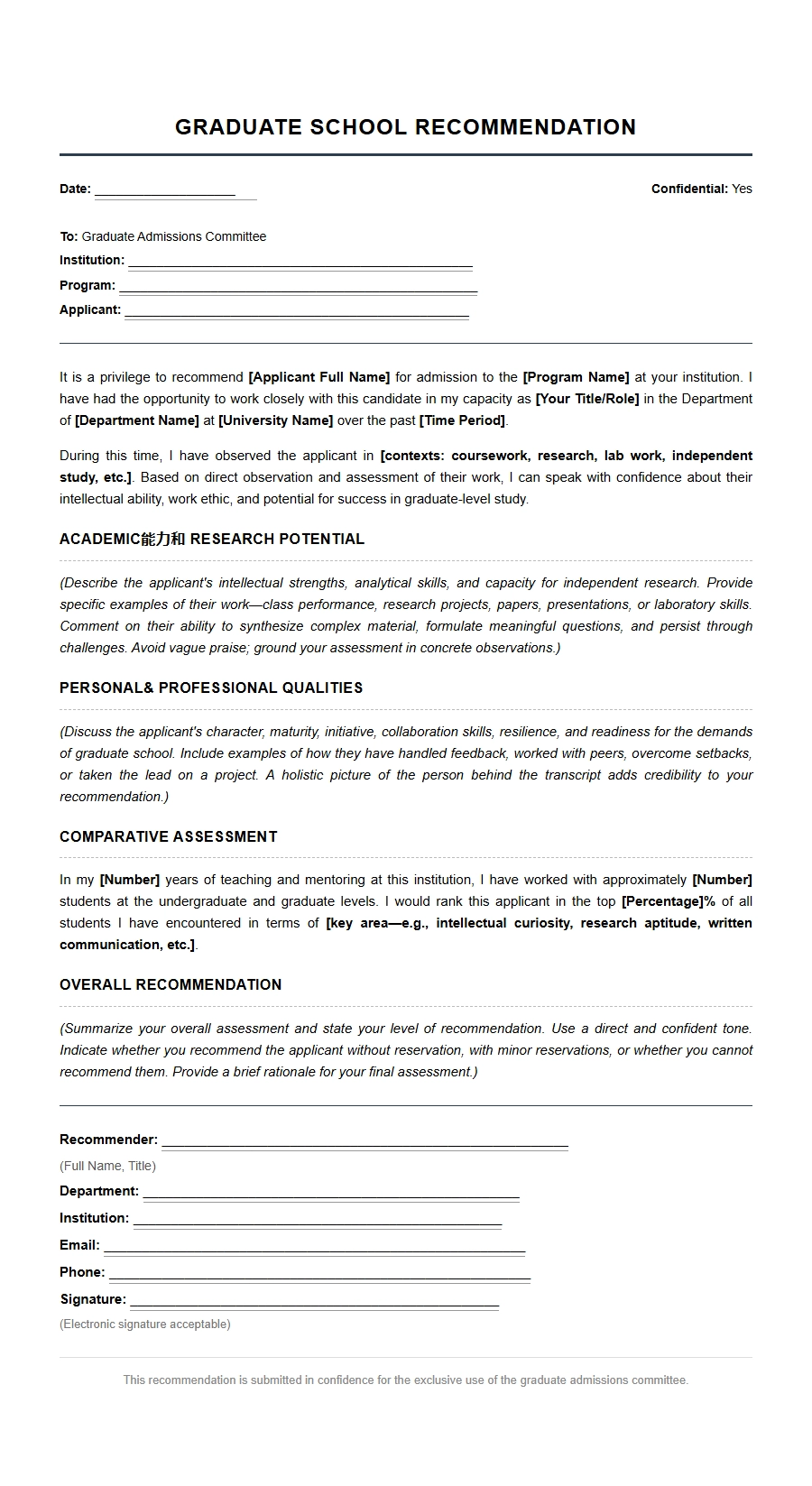 Format for Graduate School Faculty Recommendation Letters
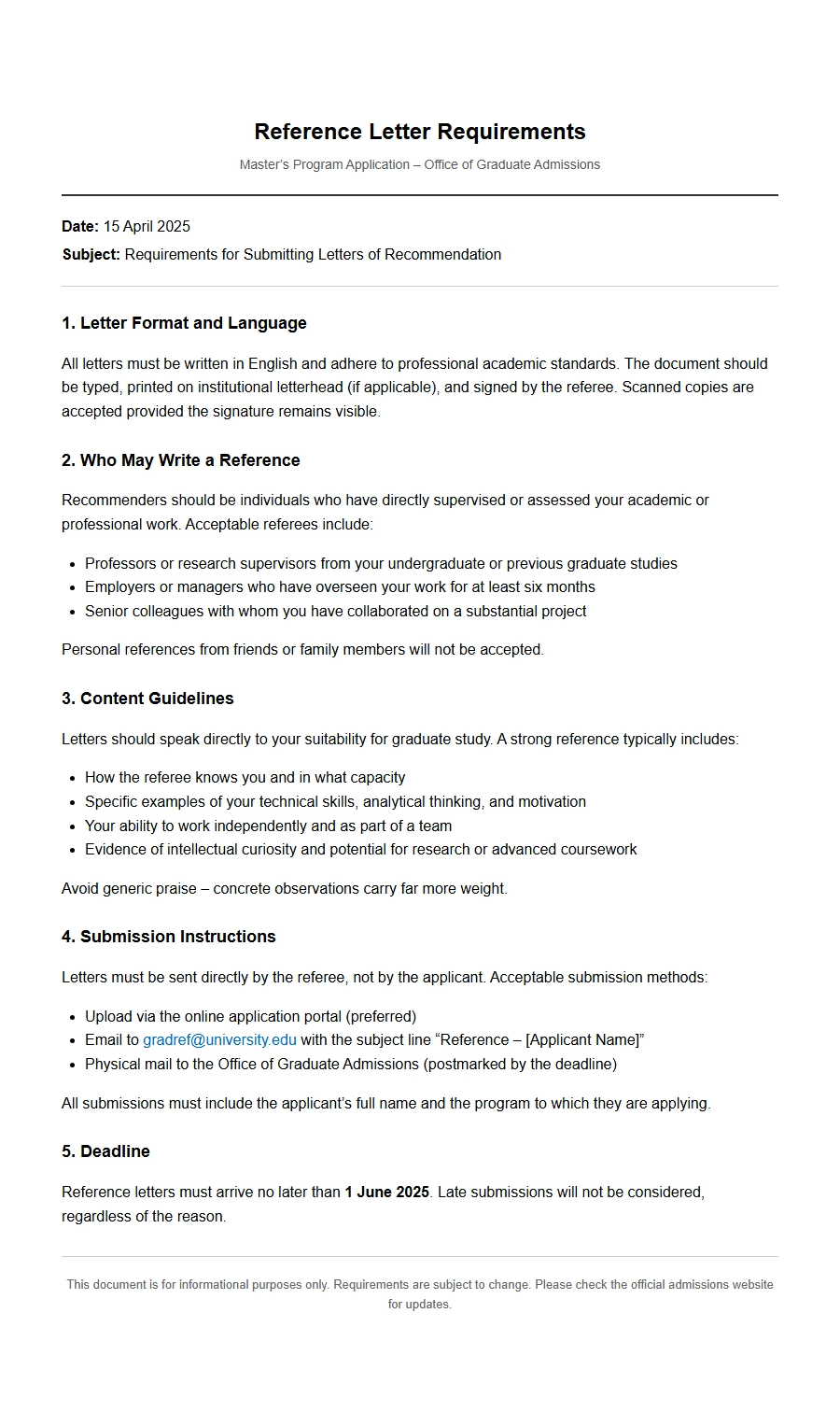 Master's Program Reference Letter Requirements
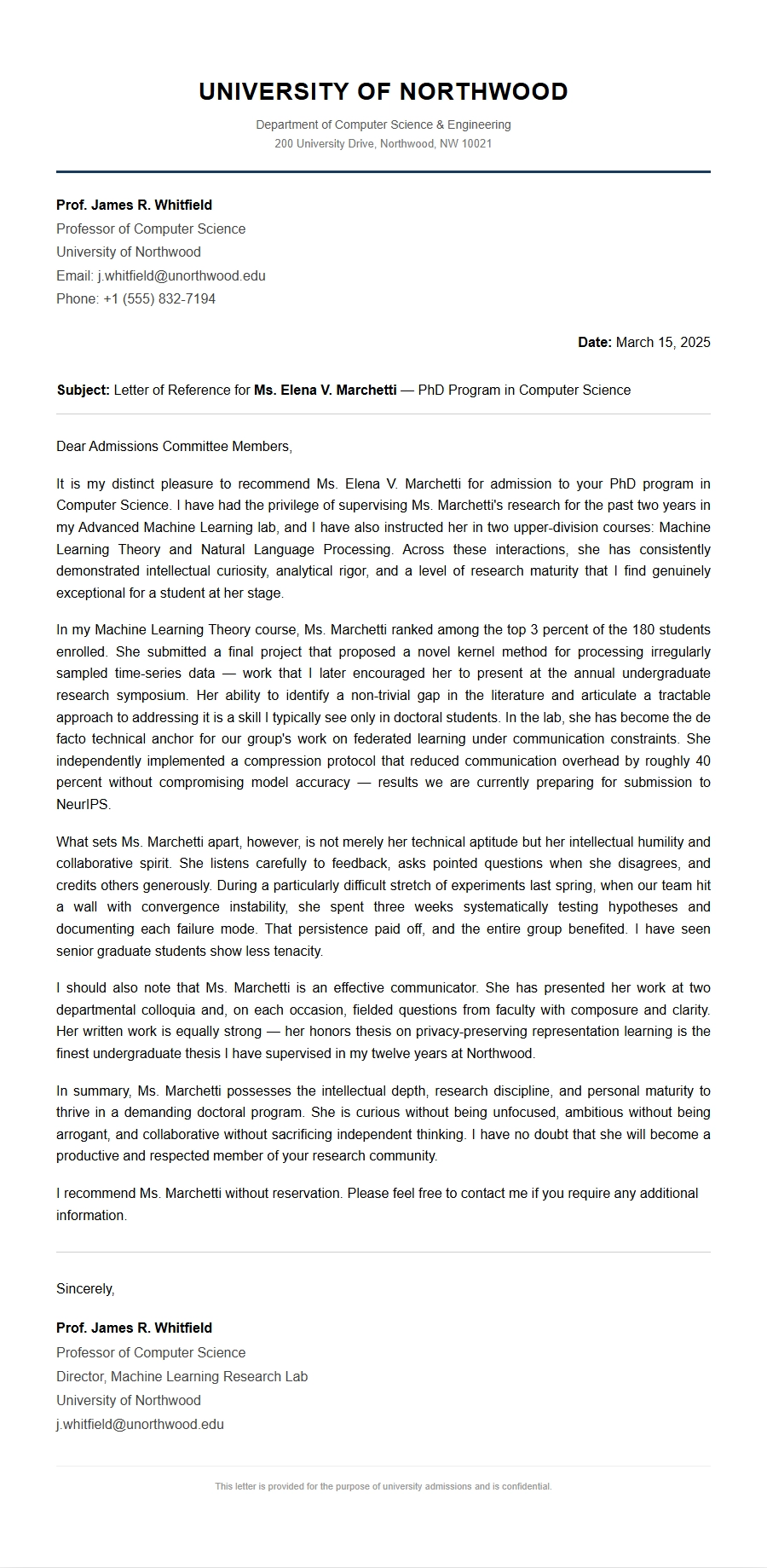 The Perfect Structure for a University Reference Letter
 scholarship essay recommendation portion - Recommendation Letters
 Sample PhD Supervisor Endorsement Letter
 How to Find Your Merit Award Referee Contact Info