You need to send a logistics shipping partner proposal letter, but the blank page stares back like a roadblock. Maybe you're a supply chain manager pitching a new carrier relationship, or a small business owner hoping to lock in better rates with a third-party logistics provider. Either way, the pressure to sound credible, clear, and compelling can stop you cold. I’ve been there too—and the right sample can turn that anxiety into a confident draft in minutes.
Using a letter sample isn’t cheating. It’s a smart time-saver that gives you structure, tone, and key phrases while leaving room for your specific details. A good letter template for a logistics shipping partner proposal letter helps you avoid the common traps: being too vague, too salesy, or forgetting critical business terms. Think of it as a skeleton you can dress up with your own data, rates, and service expectations.
Category: Business Proposal Letters
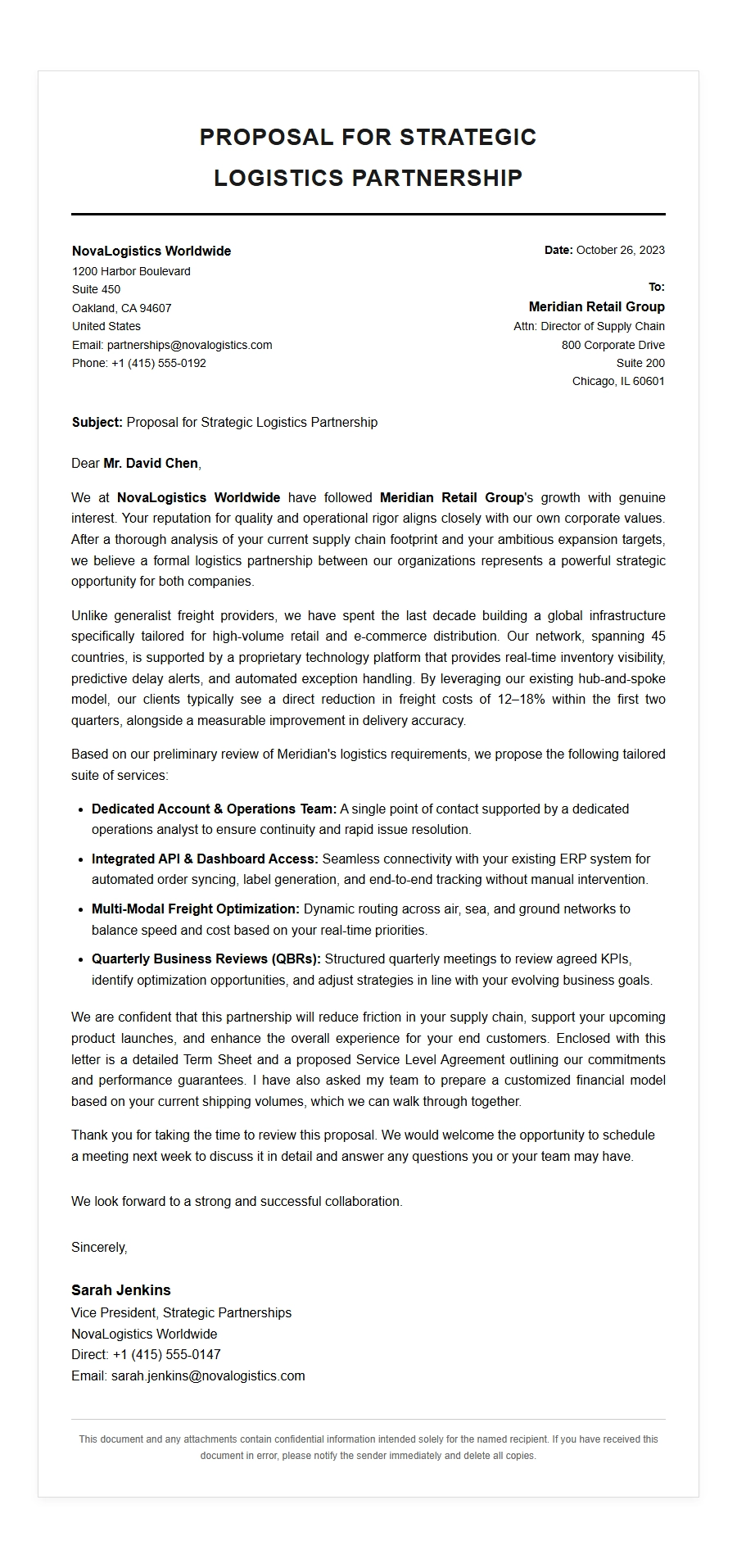
But before you grab any old template, know this: the best proposals feel personal and professional at the same time. A generic copy-paste job screams “I didn’t try.” Instead, adapt the sample to your situation. Start by deciding how formal your letter needs to be. If you’re proposing to a large logistics company, stick with business letter format—complete with letterhead, date, salutation, and a proper closing like “Sincerely.” For a smaller, more agile partner, you can loosen the tone slightly, but never skip the essentials: clear subject line, mutual goals, and a call to action.
Now, let’s talk about professional correspondence that gets results. The opening paragraph needs to grab attention without feeling forced. Avoid “I am writing to propose…”—it’s stale. Instead, lead with a shared opportunity. For example: “As your company expands into new regions, we’d love to discuss how our logistics network can reduce your transit times by 20%.” That’s direct, relevant, and shows you’ve done your homework.
Inside the body, cover three key areas: your value proposition, service details, and mutual benefits. Be specific. Mention shipping volumes, lanes, frequency, and any special handling needs. If you’ve worked with similar partners before, reference that experience. Formal writing tips for proposals like this include using active verbs (“we deliver,” “we coordinate”) and avoiding vague promises (“we strive for excellence” – everyone says that). Instead, promise something measurable: on-time delivery rates, claims processes, or cost savings targets.
A common mistake is ignoring the format difference between a printed letter and an email. If you’re sending the proposal digitally, still use a digital letter format with a clear subject line and attachment. Some people paste the whole letter into the email body—that’s fine, but keep the salutation and closing consistent. And don’t forget letterhead design; even a simple logo and address block adds professionalism.
Another tip: tailor the opening paragraph to the reader’s pain points. Are they struggling with late deliveries? Mention reliability. Are they trying to cut costs? Lead with efficiency. That personalization shows you understand their business—not just your own. And while you’re adapting the sample, keep your authentic voice. Don’t use words you’d never normally say. If you’re a hands-on operations person, write like one. Tone in writing for business proposals should match your relationship with the recipient—formal but not stiff, friendly but not chummy.
Once you’ve written the draft, proofreading letter is non-negotiable. One typo in a shipping date or rate can kill trust. Read it aloud, check for consistent terminology (e.g., “carrier” vs. “logistics partner”), and make sure the numbers add up. Also, consider including a section for next steps: a call to schedule a meeting, a proposal review deadline, or a request for their RFP documents. This turns your letter from a one-way pitch into the start of a conversation.
Finally, remember that the sample is a springboard, not a crutch. Over time, you’ll get faster at customizing these letters. The best logistics shipping partner proposal letters are those that feel both professional and personal—where the reader can tell you actually thought about their needs. Practice makes the process quicker, and soon you’ll be drafting these in minutes, not hours.
Subject: Proposal for Exclusive Shipping Partner Status – [Your Company Name]
Dear [Prospect Name],
We are excited to present this proposal for [Your Company Name] to serve as your exclusive shipping partner. Our network covers over 95% of domestic addresses with a 99.7% on-time delivery rate. We offer seamless integration with the leading e-commerce platforms, automated label generation, and real-time tracking.
Proposed Service Levels:
Service Tier
Delivery Time
Rate (per package)
Standard
3–5 business days
$5.50
Expedited
2 business days
$8.75
Next-Day
1 business day
$12.00
Key Benefits:
No minimum volume commitments
Free branded tracking page
Dedicated account manager
Monthly performance reports
We look forward to partnering with you and delivering excellence to your customers. Please contact us to schedule a detailed walkthrough.
As a leader in temperature-controlled logistics, [Your Company Name] proposes a strategic partnership to handle your cold chain shipping needs. Our fleet of refrigerated vehicles and monitored warehouses maintain temperatures from -20°C to +25°C, with 24/7 IoT tracking.
Services Included:
Refrigerated LTL and FTL transport
Temperature-controlled warehousing
Cold chain packaging solutions
Real-time temperature alerts
Pricing Model – Per Pallet:
Zone
Rate (per pallet)
Transit Time
Local (0–100 mi)
$45
Next Day
Regional (101–500 mi)
$85
2 Days
National (500+ mi)
$150
3–4 Days
Our quality assurance includes pre-shipment inspections and data loggers for every shipment. This partnership will reduce your spoilage risk and compliance burden. Let’s schedule a trial shipment at no cost.
[Your Company Name] specializes in last-mile logistics for high-volume shippers. Our proposal aims to reduce your delivery costs by 15–20% while improving customer satisfaction. We achieve this through route optimization AI, local micro-hubs, and a network of gig-economy drivers.
Current Metrics vs. Proposed:
Key Indicator
Current
Proposed
Average Delivery Time
3.2 days
1.8 days
Cost per Package
$7.10
$5.65
Failed Delivery Rate
4.5%
1.2%
Additional Features:
Same-day delivery in metro areas
GPS tracking with customer notifications
Returns management integrated
We propose a 90-day pilot in your top three ZIP codes. After the pilot, we can scale nationwide. This partnership will transform your last-mile experience.
International Freight Forwarding Partnership Proposal
Subject: Global Freight Forwarding Partnership – Expand Your Reach
Dear [Prospect Name],
We propose [Your Company Name] as your dedicated international freight forwarding partner. With customs brokerage licenses in 35 countries and contracts with major ocean and air carriers, we offer end-to-end visibility and competitive rates.
Service Portfolio:
Ocean FCL/LCL consolidation
Air freight (express and economy)
Door-to-door customs clearance
Cargo insurance and warehousing
Sample Rates (from Shanghai to Los Angeles):
Mode
Volume
Rate
Transit
Ocean LCL
1 CBM
$180
25–30 days
Ocean FCL (20ft)
1 container
$2,100
20–25 days
Air Freight
100 kg
$5.50/kg
3–5 days
Our dedicated account team will manage your documentation and compliance. We are ready to support your global supply chain today. Contact us for a free logistics audit.
[Your Company Name] proposes a full third-party logistics solution for your business. Our 500,000 sq. ft. distribution center near the national hub offers pick-and-pack, inventory management, and omnichannel shipping. We can reduce your fulfillment costs by up to 25%.
Included Services:
Warehousing (ambient and climate-controlled)
Order picking and packing
Shipping via all major carriers
Inventory tracking with real-time dashboard
Pricing Summary:
Service
Monthly Fee
Per-Unit Charge
Storage (per pallet)
$30
–
Pick and Pack
–
$1.50
Shipping (average)
–
$4.00
We offer a 30-day free trial with no contract lock-in. Our team will handle your inbound receiving and outbound logistics seamlessly. Let's discuss your specific volume requirements.
Sustainable Green Shipping Partnership Proposal
Subject: Green Logistics Partnership – Reduce Carbon Footprint Together
Dear [Prospect Name],
[Your Company Name] invites you to join our sustainable shipping program. We are committed to carbon-neutral logistics through electric delivery vehicles, carbon offset programs, and eco-friendly packaging. This partnership will help your company meet net-zero goals.
Our Green Initiatives:
100% electric last-mile fleet in metro areas
Biodegradable and recycled packaging options
Carbon offset via verified projects (Gold Standard)
We propose a pilot program for your top product SKUs with zero cost increase. Together, we can make logistics sustainable without sacrificing speed or reliability. Let's schedule a consultation.
Regional Distribution Center Consolidation Proposal
Subject: Regional Distribution Center Consolidation – Save Time and Inventory
Dear [Prospect Name],
[Your Company Name] proposes to consolidate your regional distribution centers into our strategically located hub. By centralizing inventory in our 300,000 sq. ft. facility near the population centroid, you will reduce transportation costs and improve order fulfillment speed.
Current vs. Proposed Network:
Parameter
Current (3 DCs)
Proposed (1 Hub)
Total Warehouse Space
450,000 sq ft
300,000 sq ft
Transport Cost (monthly)
$280,000
$195,000
Average Order Cycle
4.5 days
2.8 days
Additional Benefits:
Reduced inventory carrying cost
Simplified management and reporting
Cross-docking capability
We offer a free network analysis to validate savings. This partnership will streamline your supply chain and give you a competitive edge. Let's discuss next steps.
Same-Day Delivery Urban Partnership Proposal
Subject: Same-Day Delivery Partnership for Urban Markets
Dear [Prospect Name],
[Your Company Name] proposes a same-day delivery partnership targeting major metropolitan areas. Our micro-fulfillment network and dedicated courier fleet ensure delivery within 4 hours for orders placed before 1 PM. This service will boost your conversion rates and customer loyalty.
Coverage and Pricing:
City
Coverage Area
Rate per Delivery
New York
All 5 boroughs
$8.00
Chicago
Downtown & suburbs
$7.50
Los Angeles
Within 20 mi radius
$9.00
Service Features:
Real-time GPS tracking for customers
Mobile app for order management
Flexible pickup windows
No minimum order requirement
We propose a 60-day pilot in your highest-density ZIP codes. Our team will manage all fulfillment and dispatch. Let's transform your urban delivery experience.
[Your Company Name] offers a tailored bulk shipping partnership for manufacturers. Our dedicated fleet of flatbed and van trailers handles heavy and oversized loads. We provide just-in-time delivery to your customers, reducing your inventory holding costs.
Service Options:
Full truckload (FTL) – dry van, reefer, flatbed
Less-than-truckload (LTL) with consolidation
Drop-and-hook programs for frequent shipments
Inside delivery and liftgate service
Sample Pricing (FTL – 500 mi radius):
Trailer Type
Weight
Rate
Transit
Dry Van 53'
Up to 45,000 lbs
$1.85/mi
1–2 days
Reefer 53'
Up to 42,000 lbs
$2.15/mi
1–2 days
Flatbed 48'
Up to 48,000 lbs
$2.30/mi
1–3 days
We can integrate with your ERP for automated dispatching and invoicing. Let's arrange a capacity planning meeting to align with your production schedule.
Technology-Driven Logistics Partnership with Real-Time Tracking
[Your Company Name] proposes a data-driven logistics partnership that leverages our proprietary platform for real-time tracking, predictive ETAs, and shipment analytics. Our API integrates with your systems to provide end-to-end visibility and proactive exception management.
Platform Capabilities:
Live GPS tracking on every shipment
Automated alerts for delays and anomalies
Custom dashboards with KPIs (on-time %, cost per mile, etc.)
Historical data export for analysis
Performance Benchmarks from Current Clients:
Metric
Industry Average
[Your Company Name]
On-Time Delivery
92%
97%
Claims Rate
1.5%
0.4%
Visibility Accuracy
85%
99%
We offer a free 30-day platform trial with onboarding support. This partnership will bring your logistics into the digital age. Contact us for a demo.
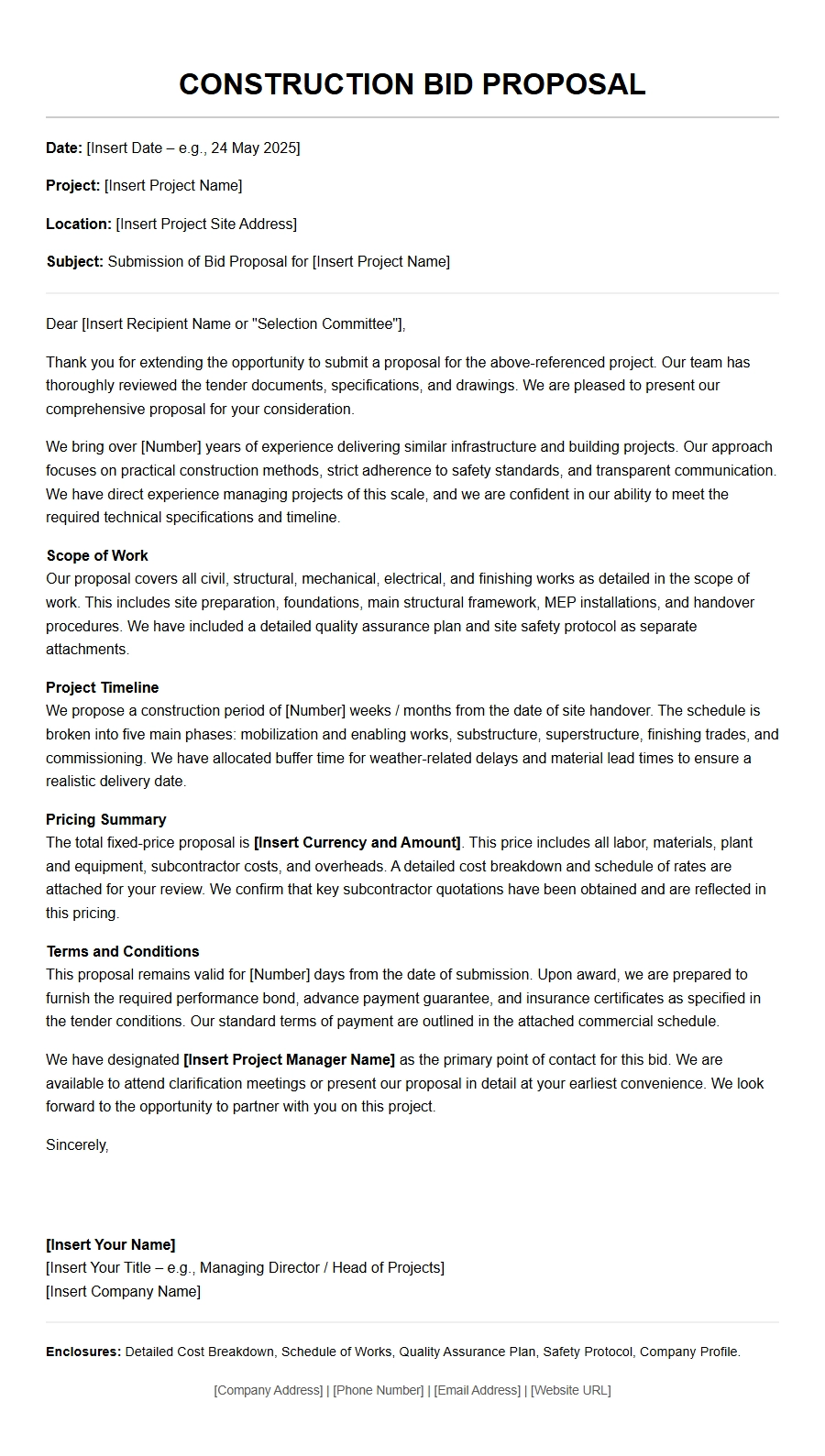 Sample Construction Bid Proposal Letter
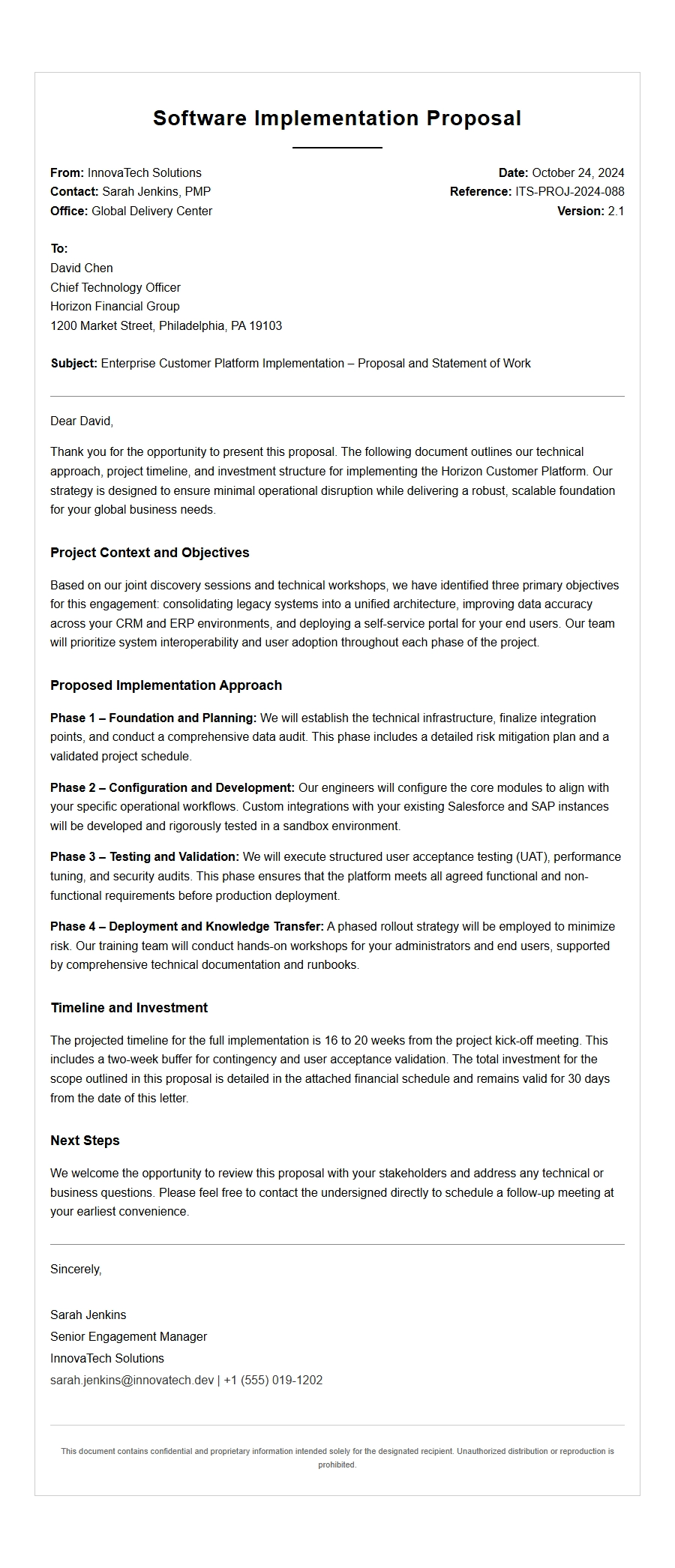 Enterprise Software Implementation Proposal Letter Example
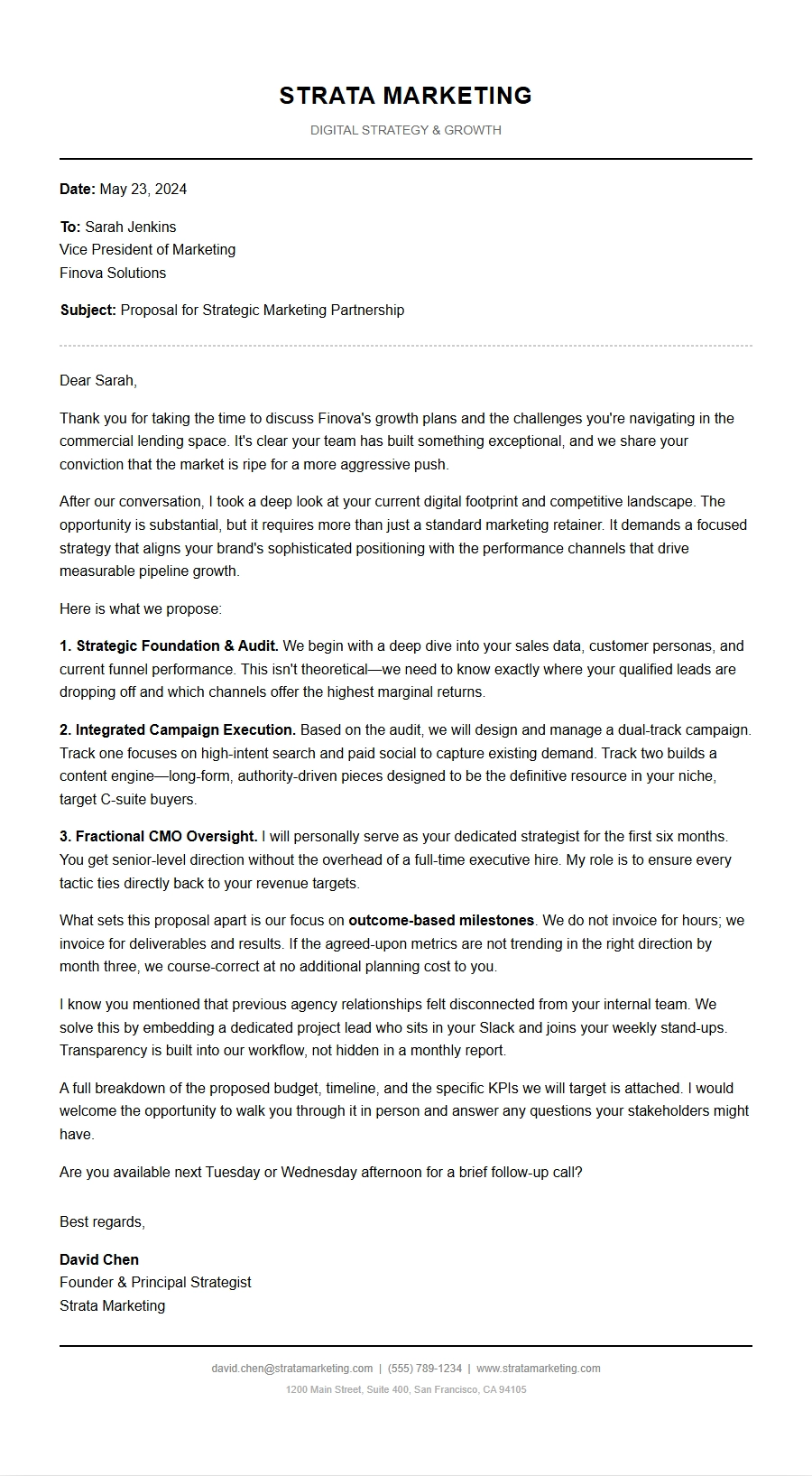 Marketing Agency Service Proposal Letter Template
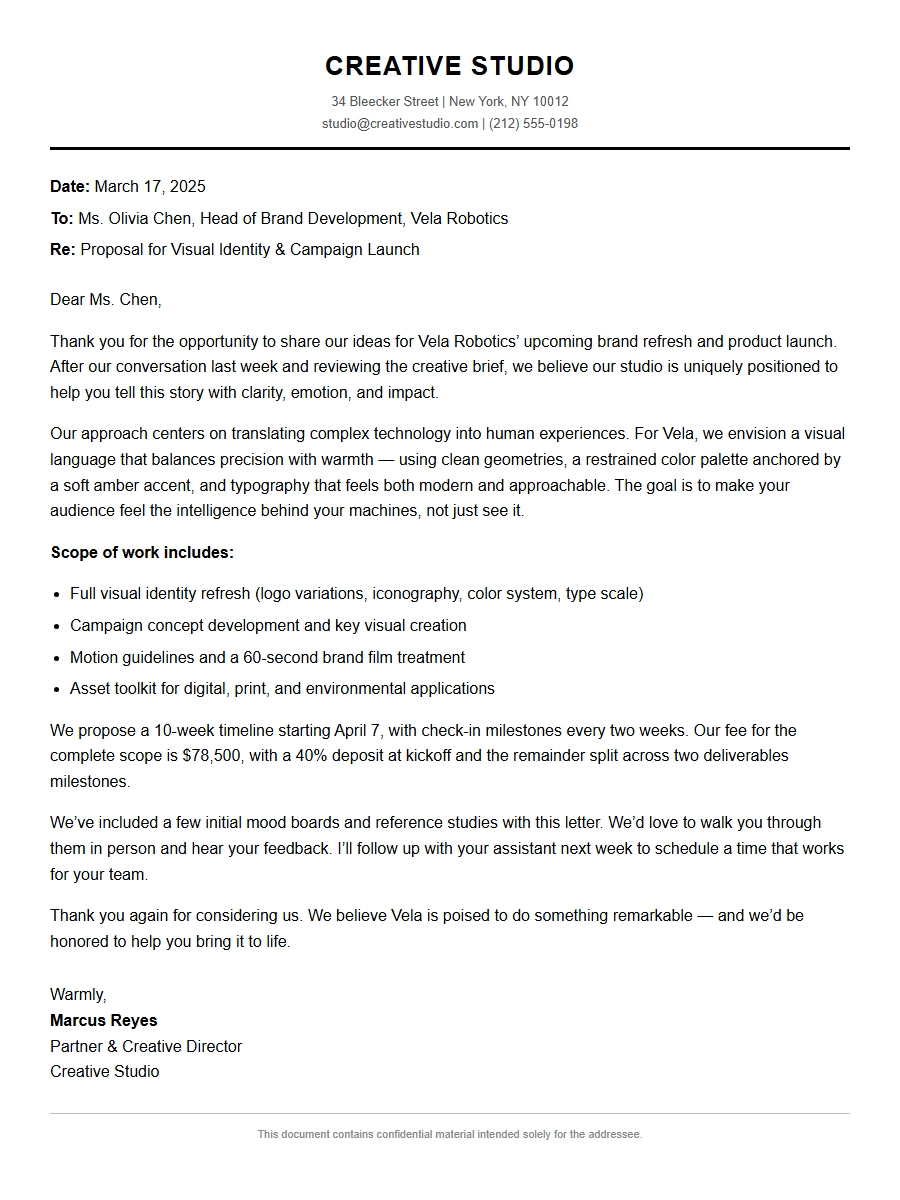 Creative Studio Project Proposal Letter
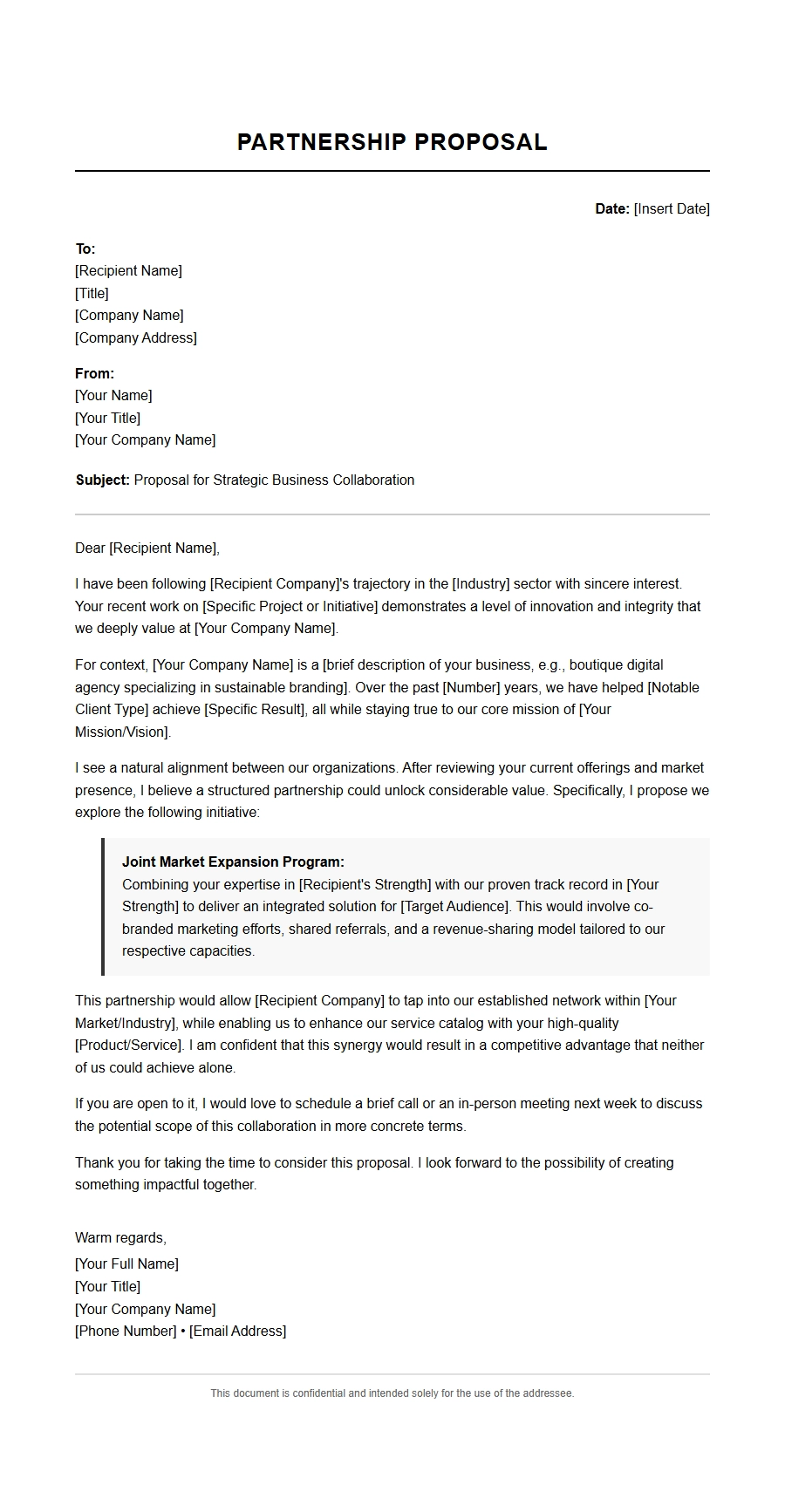 Small Business Partnership Proposal Letter Template
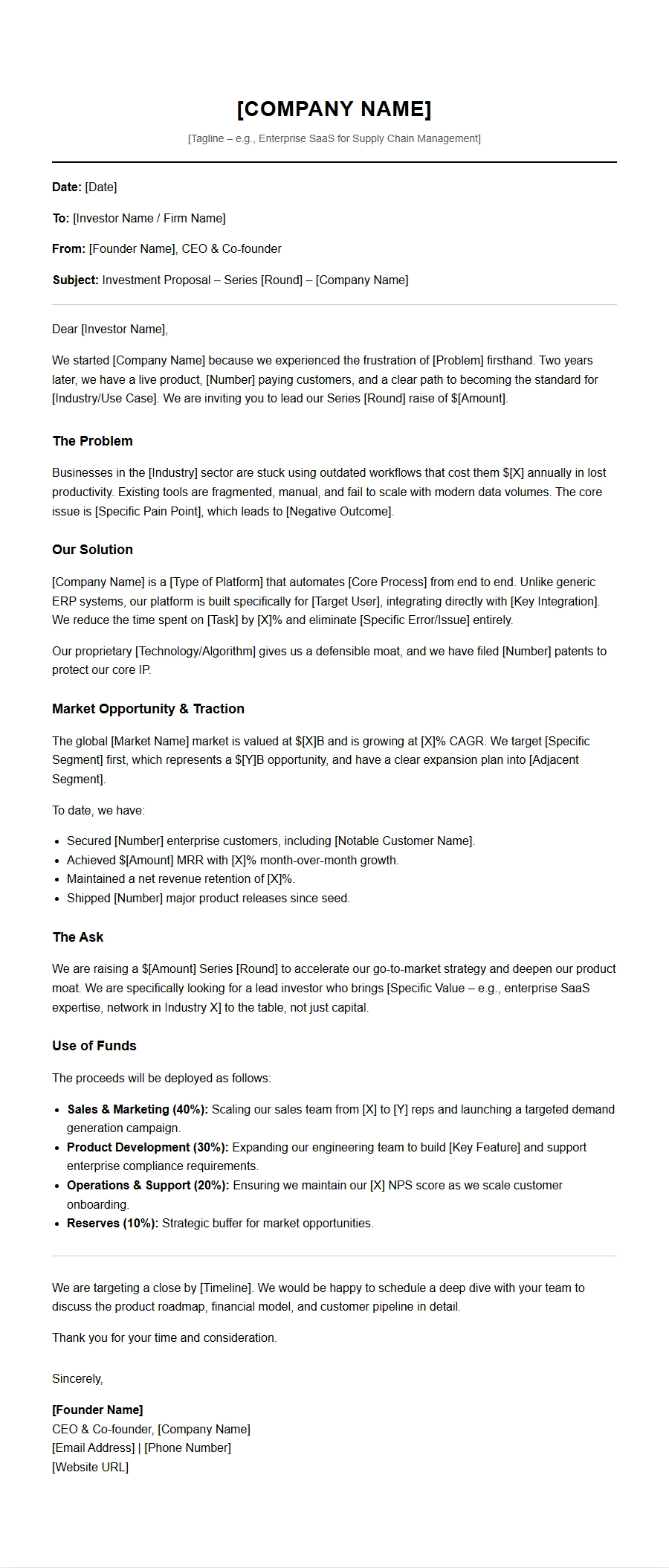 Startup Investment Proposal Letter Template