Apology Letter for Flight Delay Compensation Inquiry
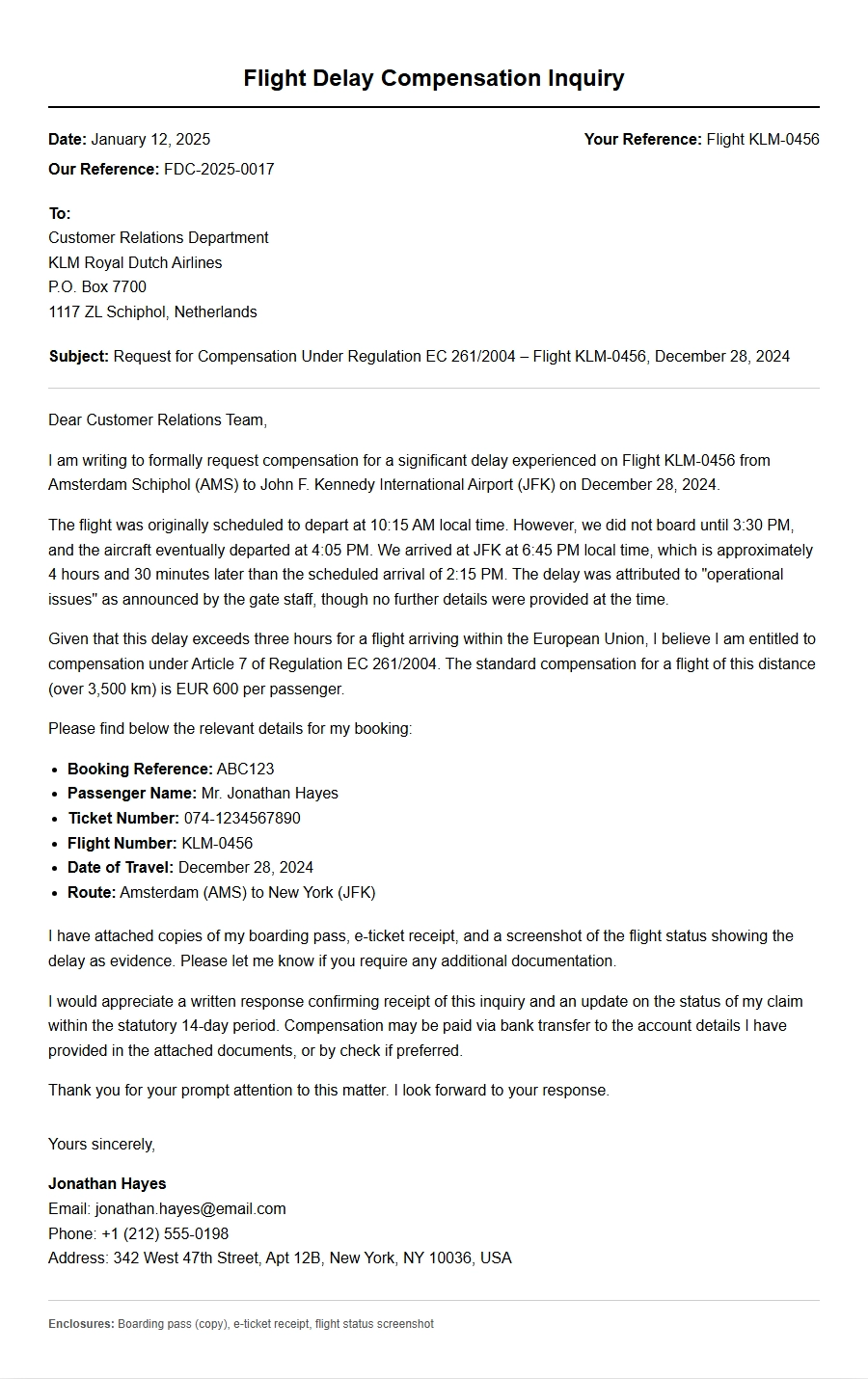
You booked a flight weeks ago. You showed up early. And then the board flipped to "Delayed" with no explanation. Three hours later, you're still waiting, already stressed about the meeting you'll miss or the hotel you now need to book. When you finally get home, the last thing you want is to wrestle with a compensation claim. But writing an inquiry for airline flight delay compensation doesn't have to be another headache. With the right approach, that blank page turns into a clear, professional letter in minutes.
Using a sample isn't cutting corners. It's a smart strategy. A good letter sample gives you the structure, tone, and key phrases you need, so you can focus on making your claim personal and accurate. Think of it as a blueprint. You still do the building, but you don't have to start from nothing. That saves time and reduces the chance you'll miss an important detail like your flight number, date, or the specific regulation you're citing.
Category: Professional Correspondence
Start by picking a sample that fits your situation. Are you writing a formal claim under EU Regulation 261/2004, or is this a less formal request to a smaller airline? The tone matters. A formal business letter format with a clear salutation and closing works best for most compensation claims. You want to sound professional but not stiff. If you need reference material, our library of inquiry for airline flight delay compensation apology letters can give you a strong starting point. You'll see how to state the facts, reference the policy, and request action without sounding aggressive.
Once you have a sample, adapt it to your voice. Don't copy it word for word. Swap out generic phrases for your specific details. For example, instead of "I experienced a significant delay," write "My flight from Chicago to London on March 12th was delayed by four hours and thirty minutes." That specificity makes your letter credible. It also shows the airline you have your facts straight. The tone in writing should be calm and factual. Frustration is understandable, but anger rarely helps. Stick to what happened, what you're entitled to, and what you're asking for.
A strong opening paragraph grabs attention. State your purpose immediately: "I am writing to request compensation for flight delay AA123 on March 12, 2025, from Chicago O'Hare to London Heathrow." Then briefly explain the impact: "The delay caused me to miss a connecting flight and incur unexpected hotel costs." This gives the reader context without rambling. Avoid opening with vague statements like "I hope this letter finds you well." Get straight to the point. That's good letter writing etiquette for any professional correspondence.
Common mistakes can weaken your claim. One is using outdated salutations like "To Whom It May Concern" when you could address the letter to the airline's customer service team or a specific claims department. Another is ignoring the format. If you're sending an email, use a clear subject line like "Compensation Claim – Flight AA123 – March 12, 2025." For a printed letter, include your contact information and the date at the top, and close with your signature. A similar structured approach works for other formal requests, like those in our documentation for bank transaction hold apology letters. The same care with tone and detail applies when writing about account security issues, such as in our letter for two-factor authentication lock apology letters. Each situation has its own nuance, but the principles of clear structure and polite insistence remain the same.
Don't forget to proofread. A typo in your flight number or date can delay the whole process. Read your letter aloud to catch awkward phrasing. Have someone else glance at it if you're unsure. Fresh eyes often spot things you miss. Proofreading a letter might feel tedious, but it saves you from having to send a correction later. That looks unprofessional and can slow down your claim.
Whether you're writing a formal complaint or a quick follow-up, keep your goal in mind. You want compensation, not a debate. Stick to the facts. Use the sample as your structure, but fill it with your story. A personalized, well-structured letter is more likely to get a timely response. Professional correspondence templates, like our email for taxi driver service refusal apology letters, show how context shapes the message, and the same principle applies here. Even formal complaints, such as those in our statement for neighborhood noise regulation apology letters, benefit from clear structure and a respectful tone.
Think of the sample as a springboard, not a crutch. The best letters feel both professional and personal. They show you know what you're talking about without sounding like a robot. Practice makes this process faster. The more you write, the more natural it becomes. So take that sample, make it yours, and send off your claim with confidence. You've earned that compensation, and now you know how to ask for it the right way.
Samples You Can Use
Apology Letter for Flight Delay Compensation Inquiry
Initial Apology and Acknowledgment of Delay Compensation Inquiry
Dear Mr. John Smith,
Thank you for reaching out to us regarding your flight delay on Flight AB1234 from New York (JFK) to London (LHR) on 15 March 2025. We sincerely apologize for the inconvenience caused by the 4-hour delay.
We have reviewed your inquiry and understand that you are seeking compensation under EU Regulation 261/2004. Our team is currently verifying the reason for the delay. Please find below a summary of your booking details:
Item
Detail
Booking Reference
XYZ789
Passenger Name
John Smith
Flight Date
15-Mar-2025
Original Departure
18:30
Actual Departure
22:45
Delay Duration
4 hours 15 minutes
We will provide a formal decision on compensation within the next 5 business days. Should you have further questions, please contact our customer service team. Again, we apologize for any distress this delay may have caused.
Yours sincerely, Customer Care Team SkyWay Airlines
Detailed Apology with Delay Reason and Compensation Offer
Dear Ms. Emily Davis,
We apologize for the delayed response to your inquiry regarding Flight CD5678 on 20 March 2025. Our investigation has concluded that the delay was due to an unexpected technical issue (engine inspection). This is considered an extraordinary circumstance, but we still wish to compensate you for your patience.
We are pleased to offer the following compensation:
Cash compensation: EUR 250.00 per passenger (as per EU261, reduced due to delay under 4 hours)
Travel voucher: EUR 100.00 applicable on future bookings
Meal vouchers: Provided at the airport during delay
To process your compensation, please confirm your preferred method by replying to this letter. Please note that accepting the travel voucher waives your right to cash compensation. Below are your flight details for reference:
Flight
Route
Scheduled
Actual
CD5678
Paris (CDG) – Rome (FCO)
14:00
17:30
We regret any frustration caused and assure you that we are taking steps to prevent similar issues. Thank you for your understanding.
Warm regards, Anna Müller Claims Department, EuroFly Airlines
Apology for Missed Connection Due to Delay
Dear Mr. David Chen,
We sincerely regret that the delay on Flight EF3456 from Frankfurt (FRA) to Bangkok (BKK) on 28 March 2025 caused you to miss your connecting flight to Singapore (SIN). We understand how disruptive this must have been, especially when you had important business meetings scheduled.
We have already rebooked you on the next available flight, and we are offering the following compensation for the inconvenience:
Full refund for the missed connecting segment: USD 350
Overnight accommodation and meals: provided at our expense
An additional travel voucher worth EUR 200
Please find your revised itinerary:
From
To
Date
New Time
Bangkok (BKK)
Singapore (SIN)
29 Mar 2025
08:15
We apologize again for the disruption and hope you will accept this compensation as a token of our commitment to making things right.
Thank you for bringing to our attention the lack of timely updates during the delay of Flight GH6789 on 5 April 2025. We deeply apologize for the confusion and frustration caused by our ground staff’s failure to communicate the evolving situation.
We have investigated and found that the delay was due to air traffic control restrictions, but our crew should have provided more frequent announcements. As a result, we have retrained the relevant team members. To make amends, we are offering:
Cash compensation: EUR 400.00 (statutory minimum for 3-hour delay)
Complimentary upgrade on your next flight with us (subject to availability)
Airport lounge passes for your next two trips
Your details are recorded as below:
Booking ID
Flight
Route
Delay
BRN-9876
GH6789
Berlin – Madrid
3h 20min
We value your feedback and will improve our communication protocols. Thank you for giving us a chance to rectify the situation.
Best regards, Carlos Méndez Station Manager, AeroEuropa
Apology from Ground Staff for Technical Delay
Dear Mr. Robert Kim,
On behalf of our ground operations team, I personally apologize for the delay of Flight IJ9012 from Tokyo (NRT) to San Francisco (SFO) on 12 April 2025. The aircraft required an unscheduled replacement of a critical avionics component, which took 5 hours to complete.
We understand you were left waiting without sufficient seating in the gate area. We have since provided additional support to our terminal staff. For your inconvenience, we are offering:
Refund of 50% of your ticket cost: USD 420
Food vouchers: JPY 5,000 each for you and your travel companion
Priority boarding on any future Pacific flight
Your ticket details:
Ticket No.
Class
Original Departure
Actual Departure
001-98765432
Economy
10:00
15:15
We hope this compensation helps restore your confidence in our service. Please do not hesitate to contact us if you have any further concerns.
Apology for Weather-Related Delay with Compensation
Dear Mr. Alex Brown,
We apologize for the delay of Flight KL2345 from Amsterdam (AMS) to New York (JFK) on 18 April 2025. Due to severe thunderstorms in the New York area, your flight was delayed by 5 hours. While weather is beyond our control, we recognize the impact on your schedule and wish to offer compensation.
Although EU261 does not require compensation for extraordinary circumstances, we value your loyalty and will provide:
Travel voucher: EUR 300.00 valid for one year
Complimentary meal and refreshments at the airport (already provided)
Hotel accommodation for passengers who missed connections (arranged)
Your reservation details:
PNR
Flight
Delay Reason
Compensation Offered
KL-88AB
KL2345
Weather (Thunderstorm)
EUR 300 voucher
We appreciate your understanding and hope to welcome you onboard again soon. Please contact us if you need further assistance with your onward journey.
Kind regards, Mia de Vries Customer Service Manager, KLM
Apology for Delay Causing Missing Event with Enhanced Compensation
Dear Ms. Lisa Wong,
We are deeply sorry that the delay of Flight MN3456 from Hong Kong (HKG) to London (LHR) on 22 April 2025 caused you to miss your daughter’s wedding. We understand that no compensation can fully make up for such a significant loss, but we want to do everything possible to express our regret.
After reviewing your case, we are offering an enhanced compensation package:
Full refund of your ticket: USD 1,200
Cash compensation: EUR 600 (beyond standard EU261 amount)
Two Business Class tickets for any future flight (value up to EUR 3,000)
Personalized apology from our CEO
Your flight details are as follows:
Flight
Original
Actual
Delay
MN3456
08:30
16:45
8h 15min
Please accept our heartfelt apologies. Our claims team will contact you within 48 hours to process the offer. We hope you and your family can find it in your hearts to forgive us.
With sincere regrets, Emily Hart Executive Customer Relations, SkyGlobal Airlines
Apology for Crew Scheduling Delay with Voucher
Dear Mr. James Lee,
We apologize for the delay of Flight OP7890 from Dubai (DXB) to Sydney (SYD) on 1 May 2025. The delay of 3 hours was caused by a last-minute crew scheduling error, which should not have occurred. We take full responsibility for this oversight.
As a gesture of goodwill, we are offering:
Travel voucher: AUD 250.00 per passenger, valid on any route
Lounge access for your next departure from DXB (one-time)
Priority check-in for a year on our airline
Your booking information:
Booking Ref
Cabin
Departure (Scheduled)
Departure (Actual)
DXB-7890-AB
Premium Economy
22:00
01:10 (next day)
We have also updated our crew scheduling system to prevent recurrence. Thank you for your patience, and please accept our sincere apologies.
Best regards, Fatima Al-Rashid Operations Manager, Emirates
Apology for Delay on Return Flight with Refund Offer
Dear Mr. Tom Hanks,
We regret that your return flight QR4567 from Doha (DOH) to Los Angeles (LAX) on 5 May 2025 was delayed by 6 hours due to a baggage handling system malfunction. We apologize for the frustration, especially after a long trip.
As compensation for this disruption, we offer the following options (choose one):
Full refund of the return segment: USD 800
Travel credit of USD 1,000 for future flights
Cash compensation of EUR 300 plus a 10% discount on your next booking
We have also arranged a complimentary transfer to your hotel during the wait. Your flight record:
Ticket #
Route
Scheduled
Actual
Delay
157-98632
DOH-LAX
14:00
20:10
6h 10min
We hope you will accept this as a sign of our commitment to making things right. Please let us know your preferred compensation method within 30 days.
Warm regards, Omar Hassan Customer Care Supervisor, Qatar Airways
Apology for Multiple Delays on Same Trip with Consolidated Compensation
Dear Ms. Rachel Green,
We apologize profusely for the series of delays you experienced during your journey on 5–6 May 2025. Your itinerary involved two flights: Flight UA111 from Chicago (ORD) to Denver (DEN) (delay 2h) and Flight UA222 from Denver (DEN) to San Diego (SAN) (delay 3h). We understand how exhausting this must have been.
After a thorough review, we are offering a consolidated compensation package:
Cash compensation: EUR 500 in total (covers both delays)
Travel voucher: USD 200 for future United flights
Complimentary meal and hotel at Denver (already provided)
Summary of your flights:
Flight
Scheduled
Actual
Reason
UA111 ORD-DEN
08:00
10:15
Aircraft late arrival
UA222 DEN-SAN
13:30
16:45
Maintenance issue
We hope this compensation helps restore your trust. Please contact our claims line to accept the offer. Thank you for your patience during these disruptions.
Sincerely, Laura Bennett Senior Claims Specialist, United Airlines
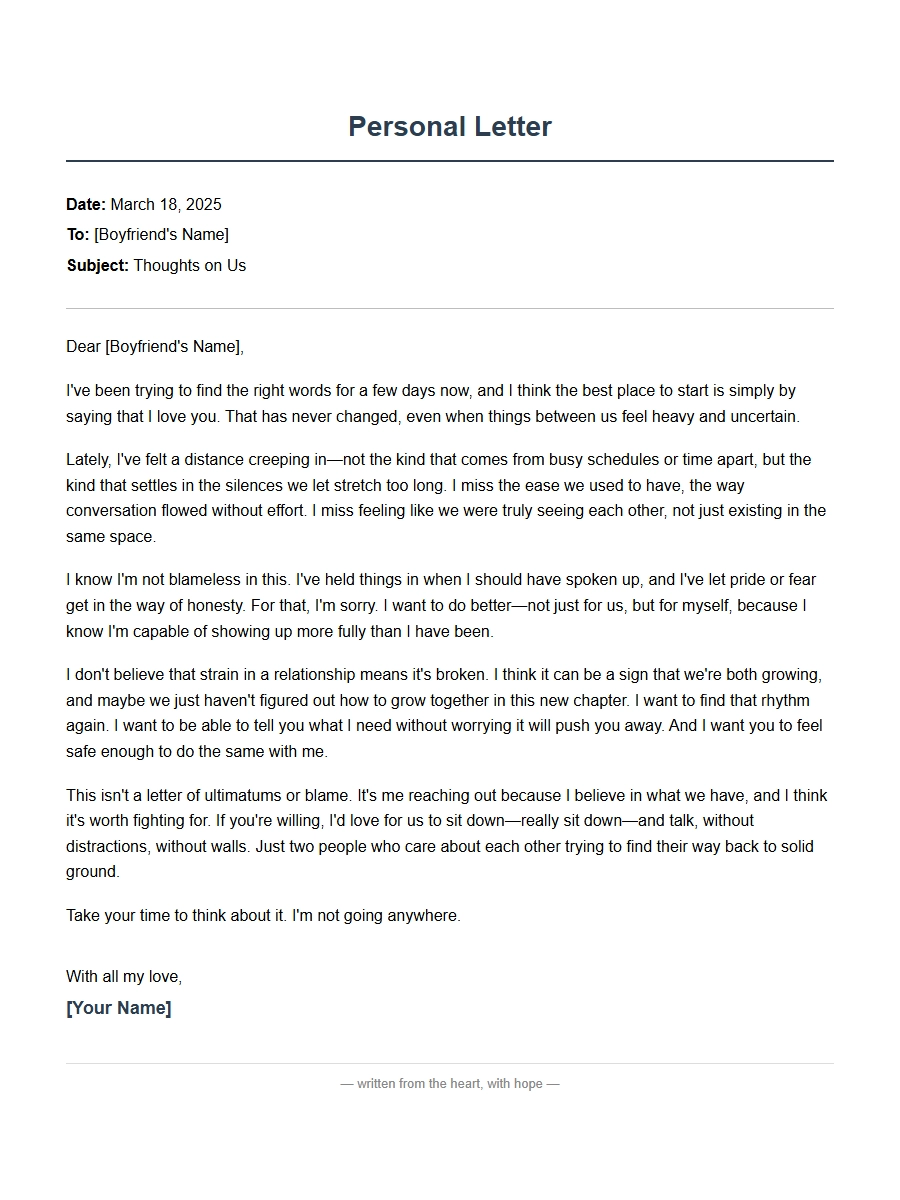 Personal Apology Letter for Boyfriend Relationship Strain
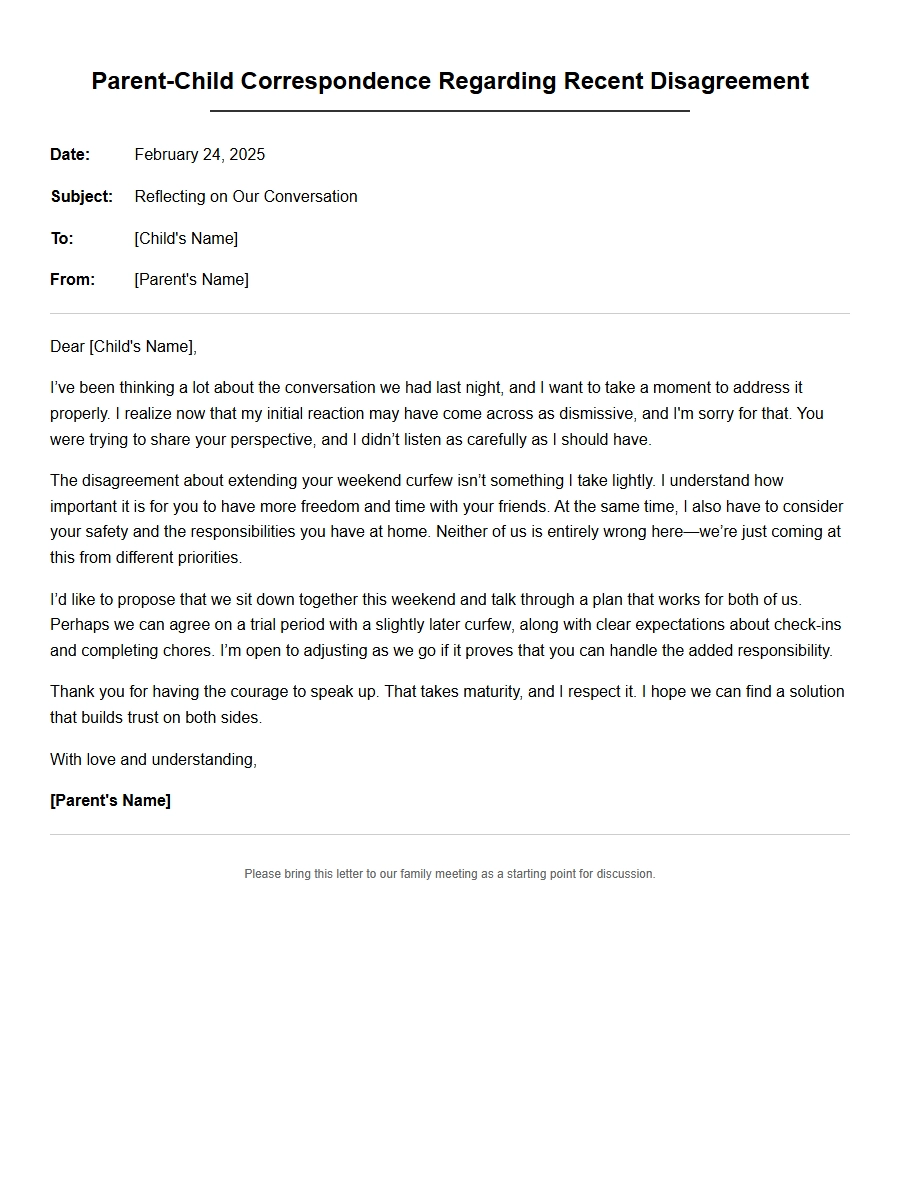 Apology Correspondence for Parent-Child Disagreements
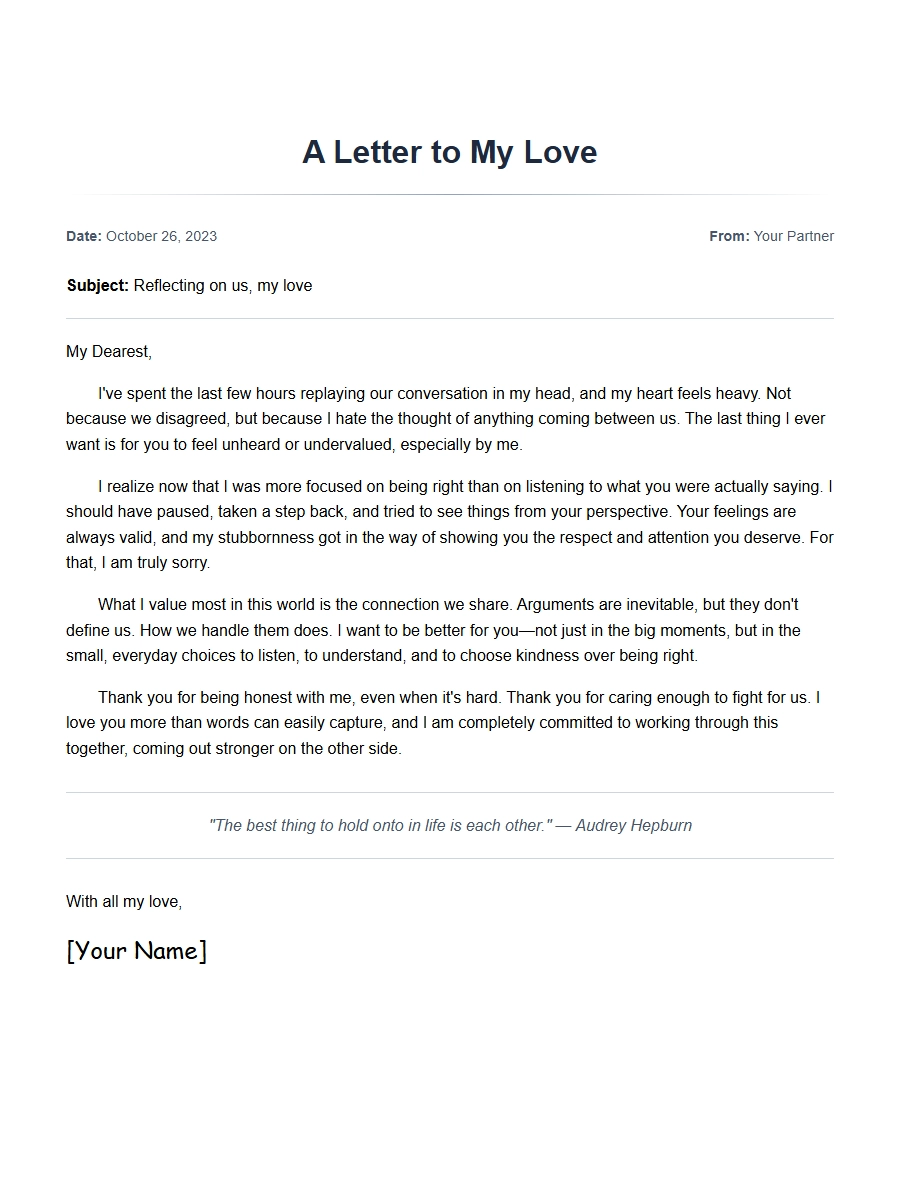 Apology Message for Girlfriend After Argument
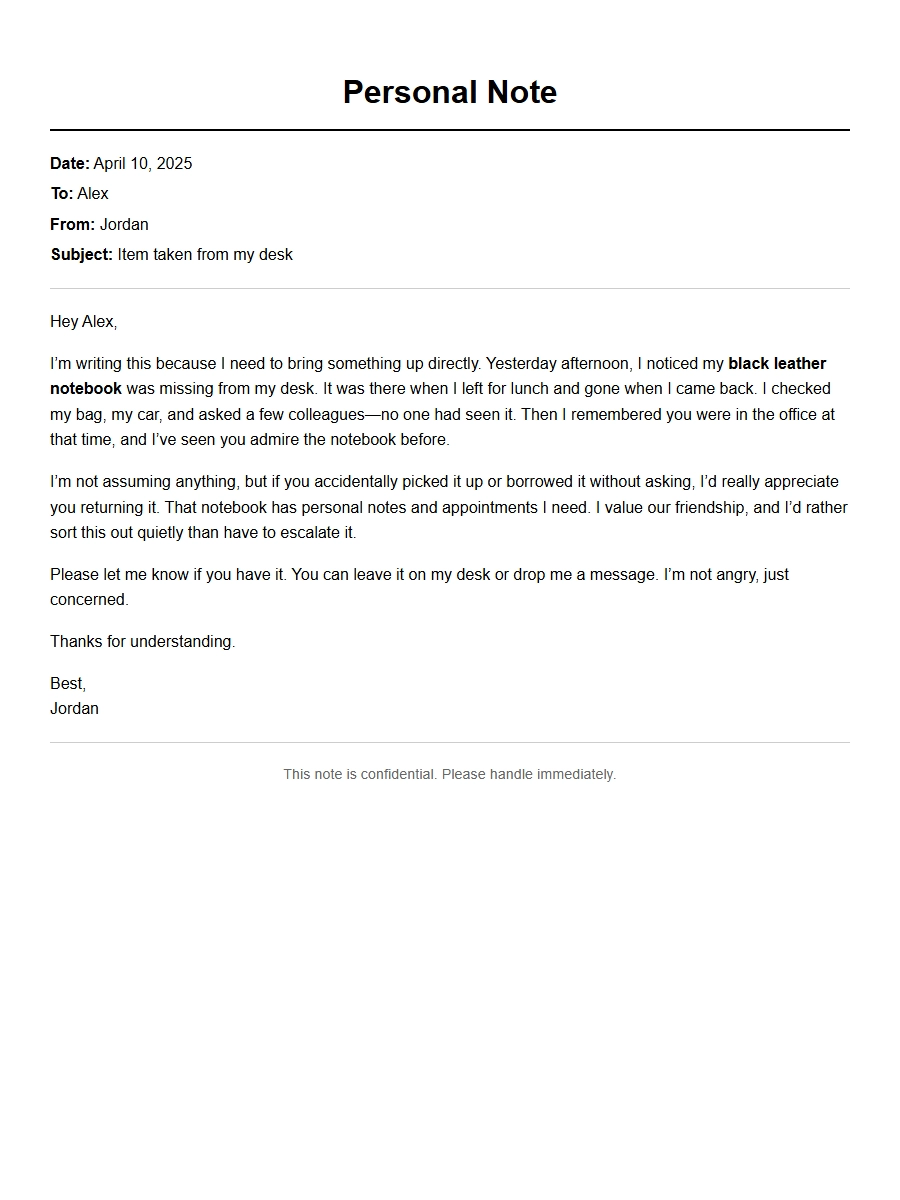 note for friend stealing item - Apology Letters
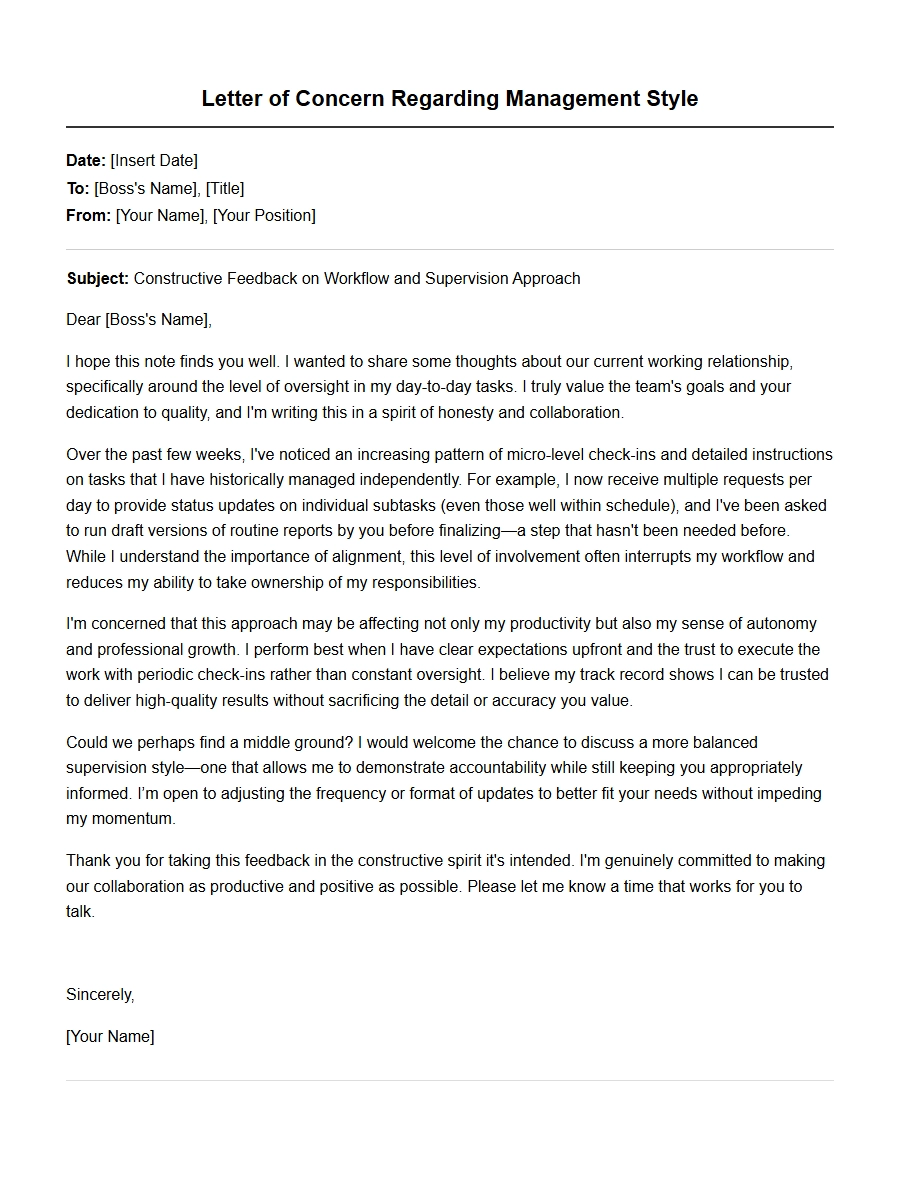 Apology to Boss for Micromanagement Complaint
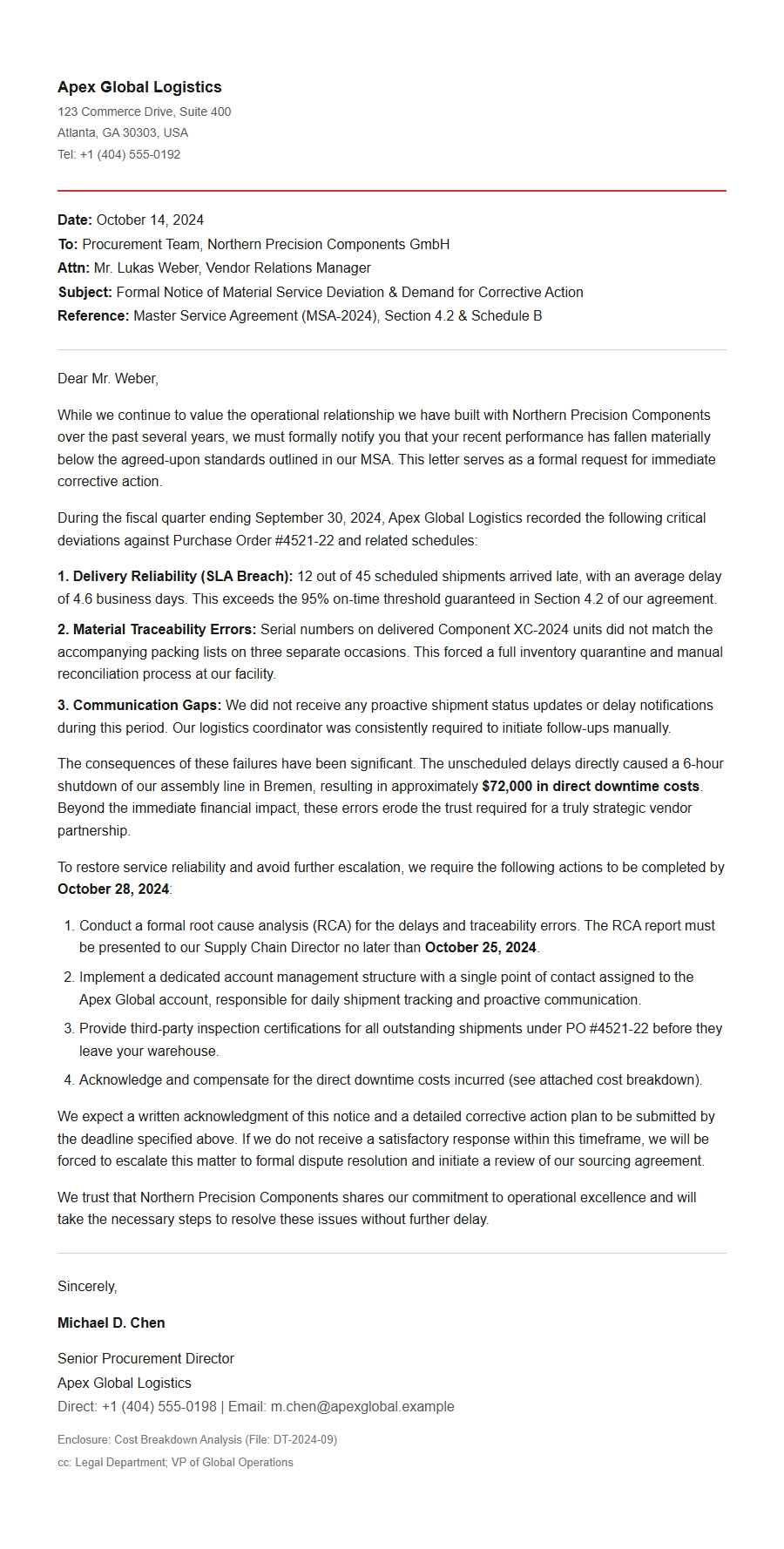 Apology Document for Vendor Supply Chain Issue