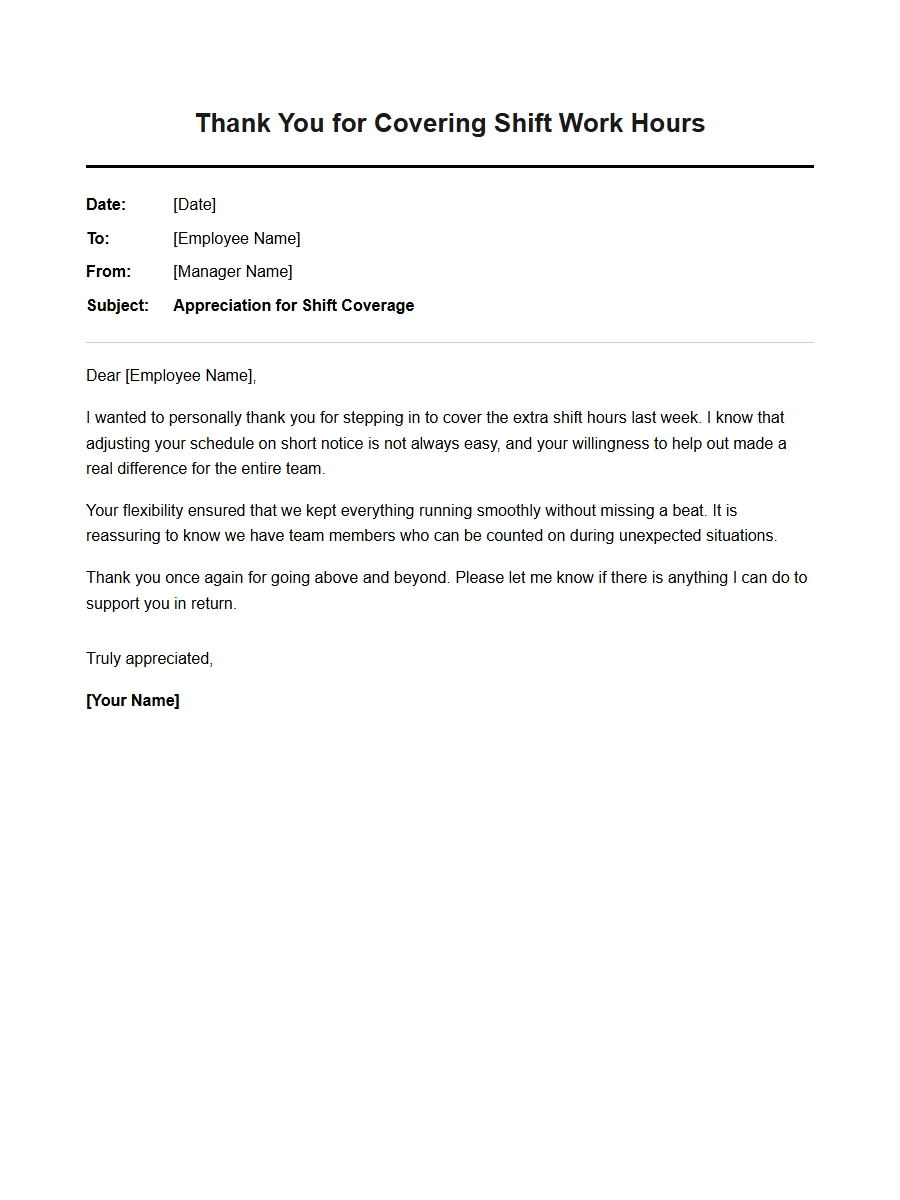
You just found out a coworker covered your late shift so you could attend your kid’s school play. Or maybe a team member stepped in at the last minute when you were sick. Now you need to say thank you—but writing that note feels surprisingly awkward. Too stiff and you sound like a robot; too casual and it doesn’t feel sincere. A solid example of a thank you for covering shift work hours can take that pressure off and give you a starting point that feels natural.
Why using a sample is smart, not cheating
Nobody expects you to reinvent the wheel every time you need to write a professional thank-you. A good letter template gives you the structure, the right tone, and key phrases—like “I really appreciate your flexibility” or “Your willingness to swap shifts made my day.” You still personalize it. The sample is just the frame; your words are the picture. That’s how professional correspondence works in most workplaces: you borrow what works and make it your own. It’s a time-saving strategy, not a shortcut.
Choosing the right example for your situation
Not every thank-you note calls for the same formal level. If you’re thanking a close coworker you text every day, a short email with a warm tone works best. If you’re acknowledging a supervisor who covered your shift, you’ll want a more polished business letter format. The key is matching the sample to the relationship and the context. Look for a sample that uses a salutation and closing that fits—like “Dear Marcus” vs. “Hi Anna.” And think about whether you’ll send it via email (digital letter format) or as a printed card. That affects things like subject lines and letterhead design.
How to adapt a sample without losing your voice
Start by replacing the generic details with specifics. Instead of “Thanks for covering my shift,” write “Thanks for covering my 3–11 p.m. shift on Tuesday. That let me attend Jamie’s play without worrying.” Specifics make the note feel genuine. Next, adjust the tone. If the sample uses “I am writing to express my gratitude,” and that sounds too formal for you, change it to “I really want to say thanks for.” The goal is to keep the letter structure but swap in your natural language. Also watch out for outdated phrases like “To whom it may concern” or “Yours truly”—those feel stiff in most modern workplaces. Use “Best regards” or “Thanks again” instead.
Common mistakes to avoid
One of the biggest pitfalls is forgetting to mention what specifically you’re thankful for. A general “You’re great” doesn’t land as well as “Your help covering the night shift gave me time to rest and recover.” Another mistake is ignoring the medium. If you’re sending an email, don’t copy-paste a long printed letter format. Keep it shorter, use a clear subject line like “Thanks for covering my shift,” and skip the formal letterhead unless your company expects it. And always proofread your note before hitting send. A quick once-over for typos shows you care. That’s part of good letter writing etiquette.
Tailor your opening paragraph to grab attention
The first sentence sets the tone. Instead of “I am writing to thank you,” try “You really saved me last Friday when you took over my shift.” That immediately shows the impact. If you’re writing to a manager, you might say “I appreciate you stepping in to cover my hours last week—your support made a big difference.” The opening is also where you can tie in other situations where you’ve received help, like after a job interview or when you were new. For example, you could mention that just as you’d send a thank-you note after an interview, this kind of coworker acknowledgment matters just as much.
Making the note feel personal without oversharing
You don’t need to write a novel. Keep it to three or four sentences. Thank the person for the specific action, explain briefly why it mattered to you, and end with a forward-looking sentiment like “I’m happy to return the favor anytime.” That’s enough. If you’re also someone who has written thank-you notes for borrowed equipment, you already know the formula: specific action + genuine appreciation + offer to reciprocate.
When to use a more formal letter
If the shift coverage was part of a larger effort—say, a coworker took over multiple days during a family emergency—you might want a slightly more formal note. In that case, use a structure similar to a thank-you after being hired, where you acknowledge the person’s professional support. Still keep it human. You can write: “I want to formally thank you for covering my shifts last week. Your willingness to adjust your schedule helped me through a tough time, and I’m truly grateful.” That strikes the right balance.
A final word: use the sample as a springboard
The best thank-you notes feel both professional and personal. A sample gives you the confidence to start writing without staring at a blank screen. Fill in your real details, read it out loud to check the tone, and send it. Over time, writing these notes gets faster. And the people who cover your shifts will remember your appreciation—which makes them more likely to help again next time. If you’ve ever written a thank-you for an internship offer or a note to a mentor, you already have the skill. Just apply it here.
Examples You Can Adapt
Thank You for Covering Shift Hours
Night Shift Coverage Thanks
Dear Jason,
Thank you for stepping in to cover the night shift hours from 11 PM to 7 AM on March 15. Your willingness to adjust your schedule at the last minute allowed us to maintain uninterrupted service for our night‑shift clients. Below is a summary of the hours you covered:
Date
Shift Start
Shift End
Total Hours
March 15
23:00
07:00
8
Because of your dedication, the night team met its performance targets without any disruption. Please confirm that these hours will be recorded as overtime in the payroll system. If you have any questions about your shift schedule next week, let me know.
With sincere appreciation, M. Daniels Shift Supervisor
Last-Minute Shift Swap Thanks
Hi Maria,
I want to thank you for covering the shift work hours that I suddenly had to leave on April 3. When my family emergency arose, you agreed within minutes to take over the remaining four hours of my afternoon shift and also stayed an extra hour to complete the handover notes.
Original shift covered: 14:00 – 18:00
Additional hour worked: 18:00 – 19:00
Total covered: 5 hours
Your quick response kept the production line running smoothly. I deeply appreciate your support, and I hope to return the favor whenever you need shift coverage. Please log the extra hour as voluntary overtime through the usual portal.
Thanks again, Carlos
Weekend Shift Gratitude
Dear Sam,
Thank you very much for covering the weekend shift work hours on May 6‑7. I know that giving up your Saturday and Sunday is a big ask, yet you did it with a positive attitude. Your coverage allowed the rest of the team to enjoy a well‑deserved break.
Here is the shift breakdown you covered:
Day
Hours
Saturday
08:00 – 16:00
Sunday
09:00 – 17:00
Because of your flexibility, we avoided any overtime penalties for other staff. I have updated the schedule log to reflect your hours. If you’d like to take a comp day next week, please submit the request form and I will approve it immediately.
Many thanks, Angela Operations Lead
Morning Shift Coverage Acknowledgment
To: Emily Chen
I am writing to formally thank you for covering the morning shift work hours from 6:00 AM to 2:00 PM on June 12. Your regular shift is an evening one, so switching to an early start must have been challenging. You not only arrived on time but also handled the pre‑opening setup without missing any steps.
Feedback from morning team: excellent coordination
We recognize the extra effort it takes to adapt to a different rhythm. The department is grateful for your team‑first mindset. As a token of appreciation, you will receive an additional meal voucher for this month.
Thank you again, R. Alvarez Shift Manager
Extended Shift Hours Thanks
Dear Jordan,
Thank you for extending your shift work hours on July 22. When the evening crew was short‑staffed due to illness, you volunteered to stay from 3 PM until 10 PM – a total of 7 extra hours above your usual 8‑hour day. Your commitment ensured that all customer orders were fulfilled before the warehouse closed.
Here is a summary of the extended hours:
Period
Original Hours
Extended Hours
Morning
07:00 – 15:00
07:00 – 15:00
Evening coverage
—
15:00 – 22:00
Because of your dedication, we avoided a backlog that would have affected next‑day deliveries. Please ensure you rest well – we have noted this as double overtime in the payroll system. You are a valued member of this team.
With gratitude, Patricia S. Warehouse Supervisor
Emergency Shift Coverage Note
To: David Lee
I cannot thank you enough for covering the shift work hours during the emergency on August 5. When a power outage forced us to switch to manual operations, you came in on your day off and worked from 10 AM to 6 PM. Your experience with the backup systems was crucial.
Hours covered: 8 hours (10:00 – 18:00)
Contribution: restored manual logs, coordinated with IT
Impact: kept the production line running with minimal delay
We are especially grateful that you did not hesitate. Your actions helped prevent what could have been a full‑day shutdown. Management has authorized a special recognition bonus, which will appear in your next paycheck. Please let me know if you need any support rearranging your schedule for the following week.
With deep appreciation, Sarah Conner Emergency Response Lead
Holiday Shift Coverage Thanks
Dear Rachel,
Thank you for volunteering to cover the holiday shift work hours on Labor Day. I know that spending the holiday at work instead of with family is a sacrifice, and your willingness to do so made a real difference. You covered the full 10‑hour shift from 7 AM to 5 PM, which allowed the rest of the crew to take the day off.
Below is your holiday shift record:
Date
Holiday
Hours
Holiday Pay Rate
Sep 4
Labor Day
10
2x
Because of your coverage, our service remained available to customers who needed urgent support. We have entered your holiday premium pay in the system. Next holiday rotation, you will be given first preference for a day off.
With sincere thanks, George M. Scheduling Coordinator
Flexible Shift Arrangement Appreciation
Hi Nina,
Thank you for agreeing to a flexible shift work hours arrangement last week to cover your colleague’s parental leave. Instead of your usual 9‑to‑5, you worked split shifts: 6 AM – 10 AM and 4 PM – 8 PM for three days. This adaptation helped bridge the gap until a temporary replacement starts.
Dates: Oct 10, 11, 12
Total hours covered: 12 (4 hours per split each day)
Unique benefit: ensured both morning and evening tasks were handled
Your flexibility exemplifies the teamwork we value here. The department head asked me to pass along her personal thanks. Please let us know if you need any adjustments to your commute reimbursement to reflect the split shifts.
Warm regards, Liam O’Neil Team Lead
Overtime Shift Coverage Thanks
To: Keisha Williams
Thank you for covering the overtime shift work hours on November 19. When the project deadline was moved up, you agreed to work an additional 6 hours after your regular day, taking your total shift to 14 hours. Your focus and energy stayed high throughout, and you completed the critical data entry before the deadline.
Shift Type
Time
Hours
Regular
08:00 – 16:00
8
Overtime
16:00 – 22:00
6
Because you stayed, the client report was submitted on time. Overtime is never easy, and we are grateful for your dedication. You will receive the overtime premium as per company policy, and I have also nominated you for the monthly recognition award.
Thank you, Dennis Park Project Manager
Training New Staff Shift Thanks
Dear Tony,
Thank you for covering shift work hours while also training our new hires during the week of December 4‑8. You worked an extra two hours each day to mentor the three new team members on the night‑shift procedures. This went beyond your regular duties and has significantly shortened their learning curve.
Extra hours per day: 2 (total 10 hours for the week)
Because of your patience and expertise, the new hires are already comfortable working independently. The onboarding team appreciates your investment in their success. We have credited you with 10 hours of training overtime and will include a note in your personnel file.
With thanks, Amanda Torres Learning & Development Coordinator
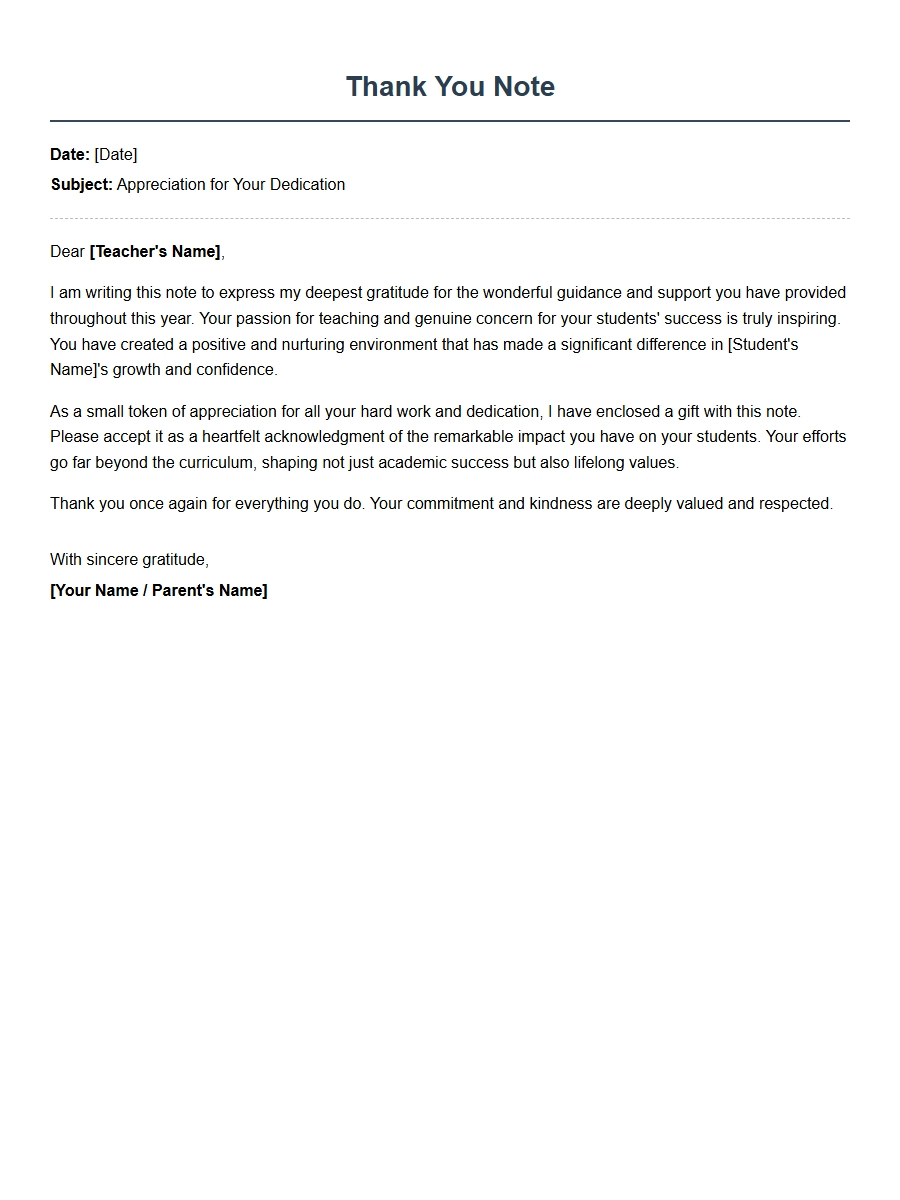 Sample Thank You Note for Teacher Gift
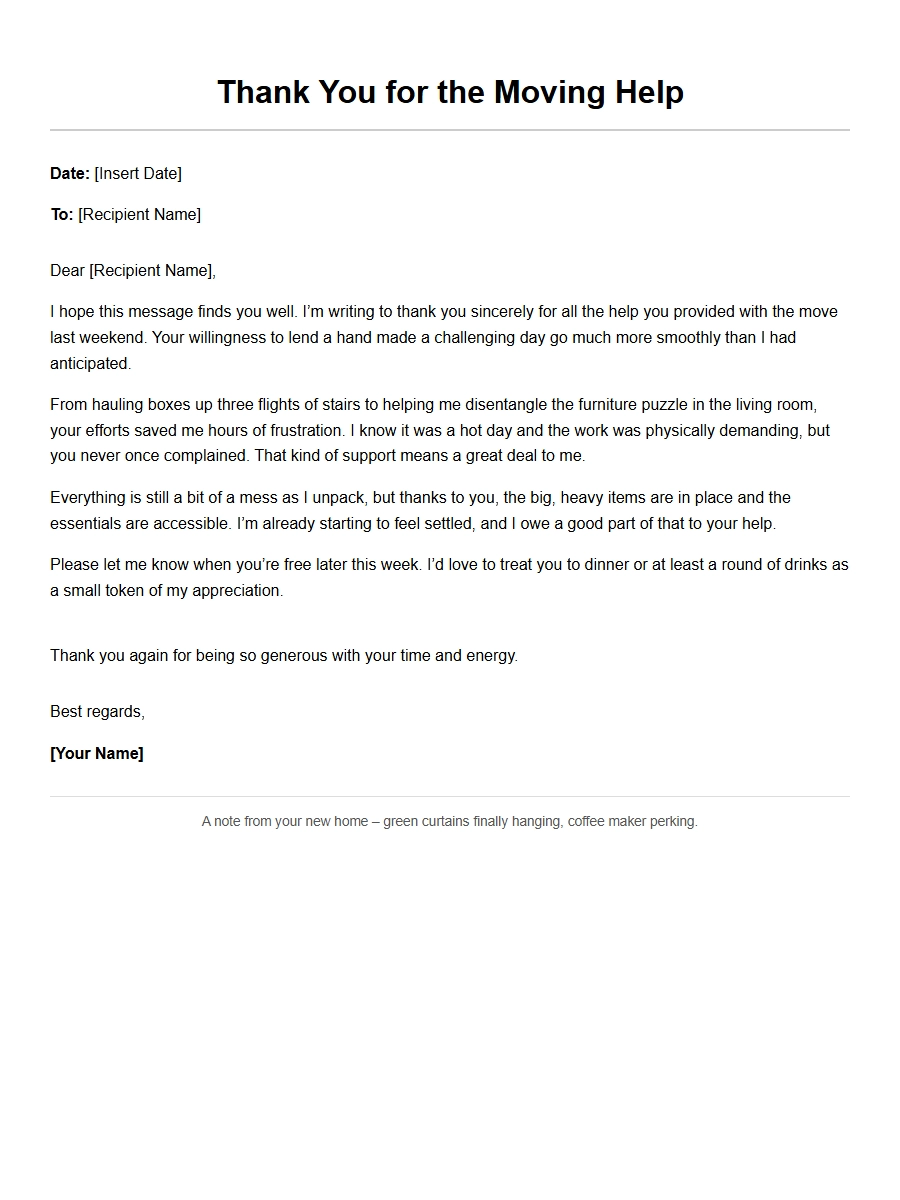 Thank-You Letter for Help with Moving
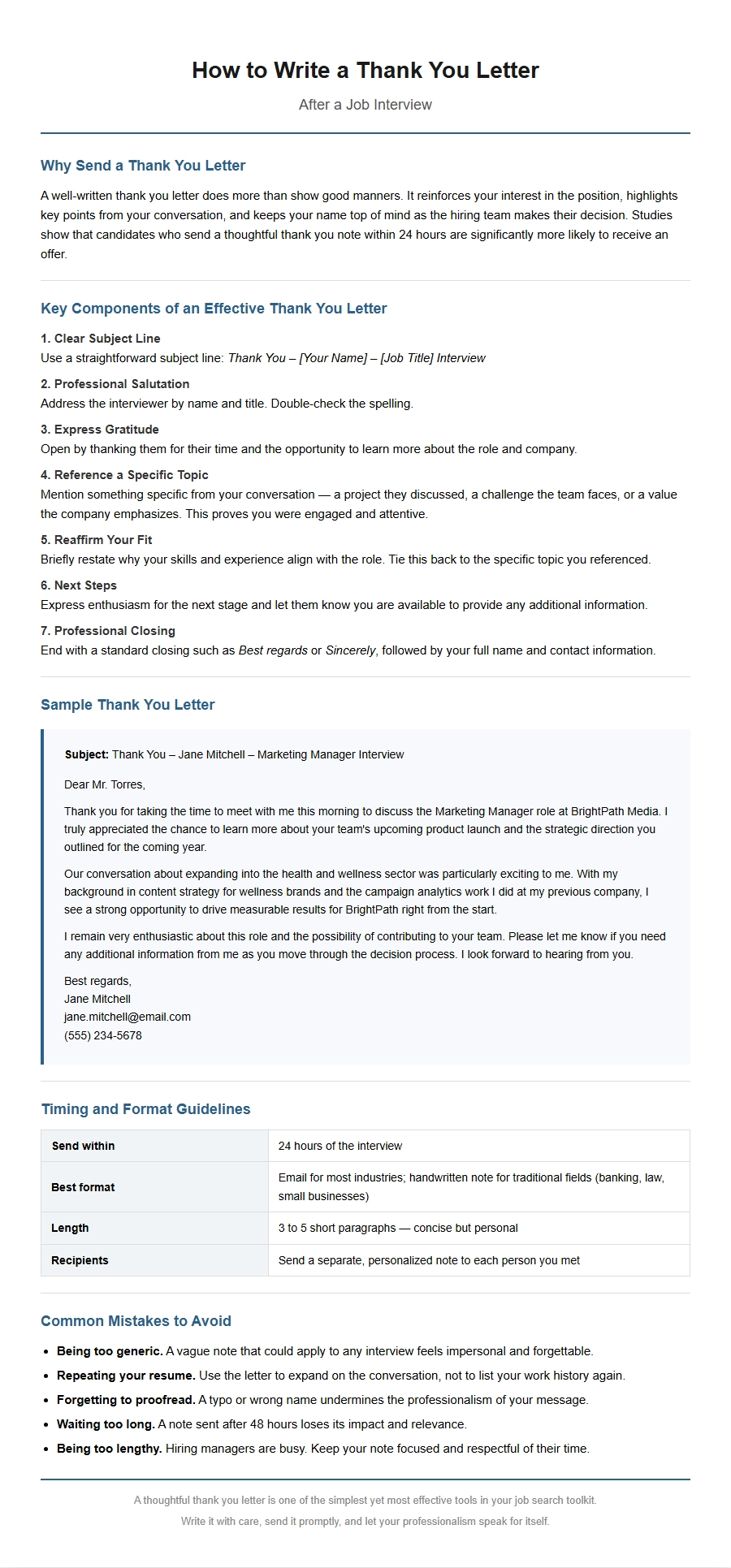 How to Write a Thank You Letter After an Interview
 professional thank you email example for client - Thank-You Letters
 Business Mentor Thank-You Letter Guide
 Thank You Letter for Sponsor Donation