It’s a gut-drop moment. You’ve been looking forward to speaking at a conference for months. Maybe you’ve already booked travel. But something unavoidable has come up, and you need to cancel. The hardest part isn’t the disappointment; it’s figuring out how to write the email without burning a bridge or sounding unprofessional.
Let’s be clear: using a sample for this kind of professional correspondence isn’t taking a shortcut. It’s a smart way to make sure you hit the right notes. A good email for conference keynote speaker cancel gives you the structure and tone you need, so you can focus on being honest and specific in your own words.
Templates help you avoid common pitfalls like sounding too casual or too cold. They give you a framework for the salutation and closing, the key details to include, and the right level of formality. The goal is to cancel the commitment while maintaining respect for the organizers and their event.
What to include in a cancellation email
A cancellation email needs to be direct but not abrupt. Start with a clear subject line like “Speaker cancellation: [Your Name] – [Conference Name].” Open with a sincere apology and state your reason briefly. You don’t need to overshare, but a simple, honest explanation shows integrity.
Next, offer to help with the transition. This is where a sample really shines because it reminds you to include practical steps. Can you suggest a replacement speaker? Offer to record a short video message for attendees? These gestures go a long way in preserving the relationship.
Reading a letter template is helpful, but the worst thing you can do is copy it word for word. The organizers will notice if your email sounds like it was generated. Your goal is to use the sample as a map, not a script.
Here’s how to customize it effectively. Change the opening to reflect your actual relationship with the organizers. If you’ve worked with them before, mention it. If this is a new connection, be a bit more formal. Use your natural vocabulary. If you normally say “I’m so sorry,” don’t change it to “I offer my sincere apologies” just because the sample does.
One common mistake in letter writing etiquette is using an outdated salutation like “To Whom It May Concern.” Always use a specific name if you have it. And pay attention to the digital letter format. An email doesn’t need a letterhead design, but it should use a clear subject line and a simple, readable font.
Mistakes you don’t want to make
One big error is waiting too long to send the email. The sooner you cancel, the easier it is for the conference team to find a replacement. Another is being vague. Saying “something came up” feels dismissive. A brief, honest reason like “a family medical situation” or “a scheduling conflict with a funded research project” is more respectful.
Also, avoid overselling your regret. You don’t need to apologize five times. One sincere apology at the beginning is enough. Then move on to the helpful part: what are you doing to make this less painful for them?
Practical tips for writing with confidence
If you’re not used to professional correspondence, the tone can feel tricky. Aim for warm but professional. Think of it like a conversation with a colleague you respect. You’re serious about the situation, but you’re not robotic.
Here’s a quick tip for your opening paragraph: lead with gratitude. Say something like, “I was truly honored to be invited to speak at [Conference Name].” This sets a positive tone before you deliver the bad news. It also reminds them why they wanted you in the first place, which matters for future invitations.
Don’t skip the proofreading letter stage. A typo in a cancellation email can look careless, which is the opposite of the professional image you want to project. Read it out loud. Ask a friend to glance at it. A small error can undermine the sincerity of your message.
Finally, remember that this email is about the future as much as the present. You’re canceling one engagement, but you’re also planting a seed for the next opportunity. Maintaining a reputation for reliability even when you have to decline speaks volumes about your character as a speaker.
Use the sample to get started. Then set it aside and write from your own perspective. The best letter structure is one that feels true to who you are, while still following the basic rules of formal writing tips. You’ll send the email, feel a huge sense of relief, and know you handled a tough situation with grace.
Browse Sample Ideas
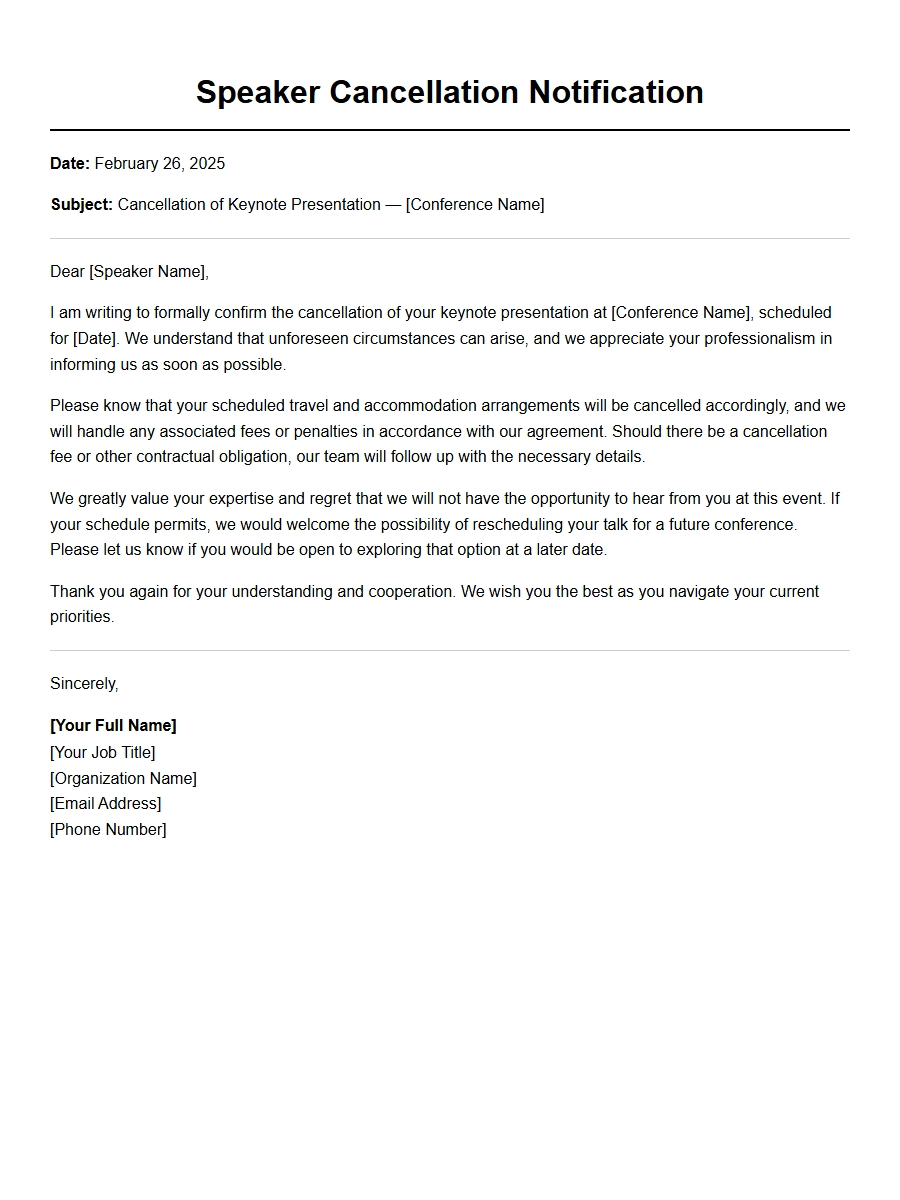
Apology Email for Canceling Keynote Speaker
Personal Apology to Conference Organizer
Dear [Organizer Name],
I am writing to express my sincere apologies for needing to cancel my participation as the keynote speaker at the upcoming [Conference Name] on [Date]. This decision was difficult and unavoidable due to a family emergency that requires my immediate attention.
I deeply understand the inconvenience this cancellation causes, especially given the advanced planning and promotion already done. Please know I value your trust and regret any disruption to your schedule.
To assist in a smooth transition, I have prepared a brief video message summarizing key points for your reference, should you wish to share it with attendees. Additionally, I recommend the following speakers who may be available on short notice:
Dr. Jane Smith – Expert in [Relevant Topic], email: j.smith@example.com
Professor Alex Lee – Specializes in [Alternative Topic], phone: 555-0199
Thank you for your understanding. I hope to have the chance to collaborate with you at a future event.
Formal Cancellation Letter
To the Conference Committee,
It is with regret that I formally cancel my engagement as keynote speaker at the [Conference Name], scheduled for [Date]. This cancellation stems from an unforeseen medical issue that prevents my travel.
I apologize for any inconvenience this may cause to your planning, marketing efforts, and attendee expectations. I am committed to minimizing the impact as much as possible.
Please find below a summary of my confirmed commitment details for your records:
Item
Details
Event
[Conference Name]
Date
[Original Date]
Session
Keynote Presentation (60 minutes)
Fee
$[Amount] (to be waived)
I have informed my agent to halt any further invoicing. Please let me know if you require a formal replacement proposal or any documentation for your records.
Thank you for your understanding and professionalism.
Professional Apology with Recommendation
Dear [Organizer Name],
Please accept my sincere apologies for having to cancel my keynote presentation at the [Conference Name] on [Date]. Due to a last-minute scheduling conflict with a critical client engagement, I am unable to fulfill this commitment.
I truly regret any negative impact on your agenda and attendee experience. To help mitigate this, I recommend a highly qualified colleague, Dr. Maria Garcia, who is already familiar with your conference theme and can deliver an inspiring talk on short notice.
Here are her key details for your consideration:
Expertise: Innovation in Technology
Past speaking: Similar keynote at TechSummit 2024
Contact: maria.garcia@example.com
I have also shared my slides and notes with her to ensure continuity.
Thank you for your understanding. I deeply value our relationship and hope to collaborate again soon.
Apology for Health-Related Cancellation
Dear [Organizer Name],
I am writing to share my heartfelt apology for canceling my keynote role at the [Conference Name] on [Date]. Regrettably, I have been advised by my physician to rest and avoid travel due to a recent health issue.
This cancellation grieves me, as I was looking forward to connecting with your audience. Please be assured that I am taking all necessary steps for a full recovery.
To facilitate a smooth substitution, I have prepared the following materials:
Keynote abstract – approved version for sharing
Replacement speaker suggestion – Dr. Kevin Brown, an expert in [Topic], contactable at kbrown@example.com
Video greeting – a short message to attendees, available upon request
Thank you for your compassion. I will be happy to reschedule for a future event once I am well.
Short Email Notice of Cancellation
Dear [Organizer Name],
I must apologize for the short notice, but I am writing to cancel my keynote speech at the [Conference Name] due to an unavoidable personal conflict that arose this morning.
I know this causes disruption, and I am truly sorry. To assist, I recommend the following immediate replacement options:
Speaker A: [Name], available directly via phone at 555-0202
Speaker B: [Name], has a similar talk ready, email: speakerb@example.com
I will also refund any deposit or fee arranged.
Thank you for your understanding. I hope this does not harm our professional relationship.
Apology with Refund Confirmation
Dear [Organizer Name],
I am writing to formally cancel my keynote engagement for the [Conference Name] on [Date] and to apologize for any inconvenience caused. This decision is due to a family emergency that requires my presence elsewhere.
As per our agreement, I have arranged for full refund of the speaker fee. Please find below the refund details for your records:
Item
Amount
Status
Deposit paid
$500.00
Refund initiated
Travel reimbursement
$200.00
Waived
If you need a formal cancellation letter for your documentation or insurance, I can provide one promptly.
Thank you for your understanding and patience during this difficult time.
Apology for Dual Booking Conflict
Dear [Organizer Name],
I sincerely apologize but must cancel my keynote participation at the [Conference Name] due to a double booking in my schedule that was overlooked. This is entirely my oversight, and I deeply regret the inconvenience.
I understand the challenges this creates for your event planning. To make amends, I offer the following assistance:
Provide a pre-recorded video of my keynote (up to 30 minutes) free of charge
Recommend Dr. Lisa Chen as a replacement – she is an expert in [Field] and has previously delivered a similar talk
Share my presentation slides without restrictions
I have also written a brief public apology for your social media if helpful.
Thank you for your understanding. I will ensure this does not happen again.
Formal Lettter with Travel Emergency
Dear [Organizer Name],
I must unfortunately cancel my keynote address at the [Conference Name] because of a travel disruption caused by severe weather conditions that have grounded all flights from my location. I apologize profoundly for this last-minute change.
To support your team, I have prepared an alternative plan:
Share a digital keynote script and Q&A list for a designated moderator
Offer a live video link during the scheduled time if internet connectivity allows
Recommend Speaker C, a local expert, who can step in with minimal notice
Please find my proposed travel details for compensation record:
Expense
Amount
Canceled flight
$350.00 (non-refundable)
Hotel deposit
$150.00 (cancelled)
Thank you for your flexibility. I hope to participate in your future events.
Brief Apology for Contract Breach
Dear [Organizer Name],
I regret to inform you that I must cancel my keynote speaker contract for the [Conference Name] due to an unexpected legal issue that prohibits my public appearance at this time. I apologize sincerely for any breach of trust or schedule.
I take full responsibility and have already contacted my lawyer to address any contractual penalties. For your immediate needs, I suggest contacting [Speaker Name] from our mutual network, who is interested in filling the slot.
The following terms from our agreement are now affected:
Clause
Status
Performance date
Cancelled
Fee payment
Waived
Non-disclosure agreement
Still valid
I appreciate your professionalism and hope to resolve this amicably.
Apology with Future Collaboration Offer
Dear [Organizer Name],
I am writing with sincere apologies for having to cancel my keynote speech at the [Conference Name] due to an unexpected academic commitment that I cannot postpone. I deeply regret any disruption to your program.
To express my gratitude for your understanding, I would like to offer a free virtual keynote for your next event or a discounted speaker fee for a future conference. Please let me know if either option works.
Below are my recommendations for a quick replacement:
Speaker X – specializes in [Topic], with a ready keynote (contact: x@example.com)
Speaker Y – local and available on short notice (phone: 555-0303)
I am also sharing my curated resource list for your attendees.
Thank you for your kind understanding. I look forward to building a stronger partnership together.
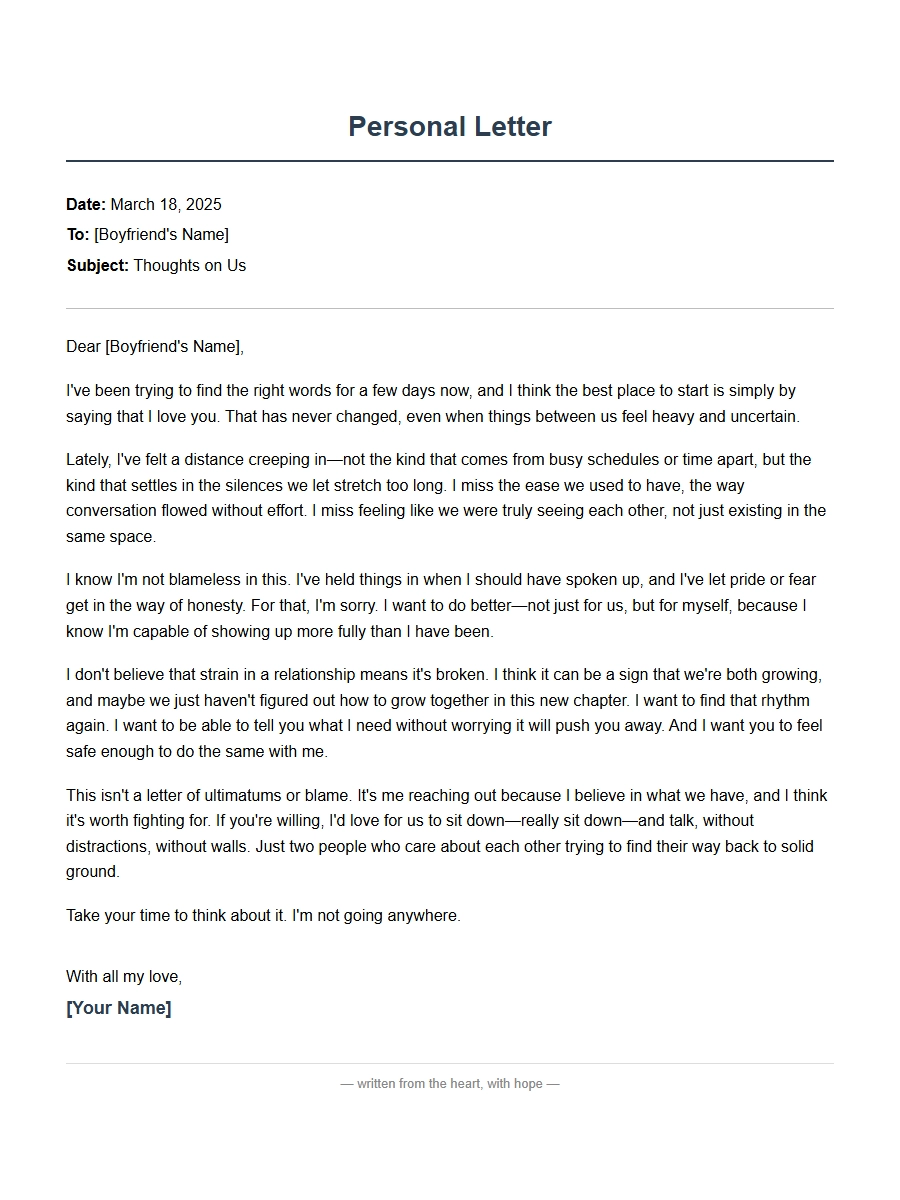 Personal Apology Letter for Boyfriend Relationship Strain
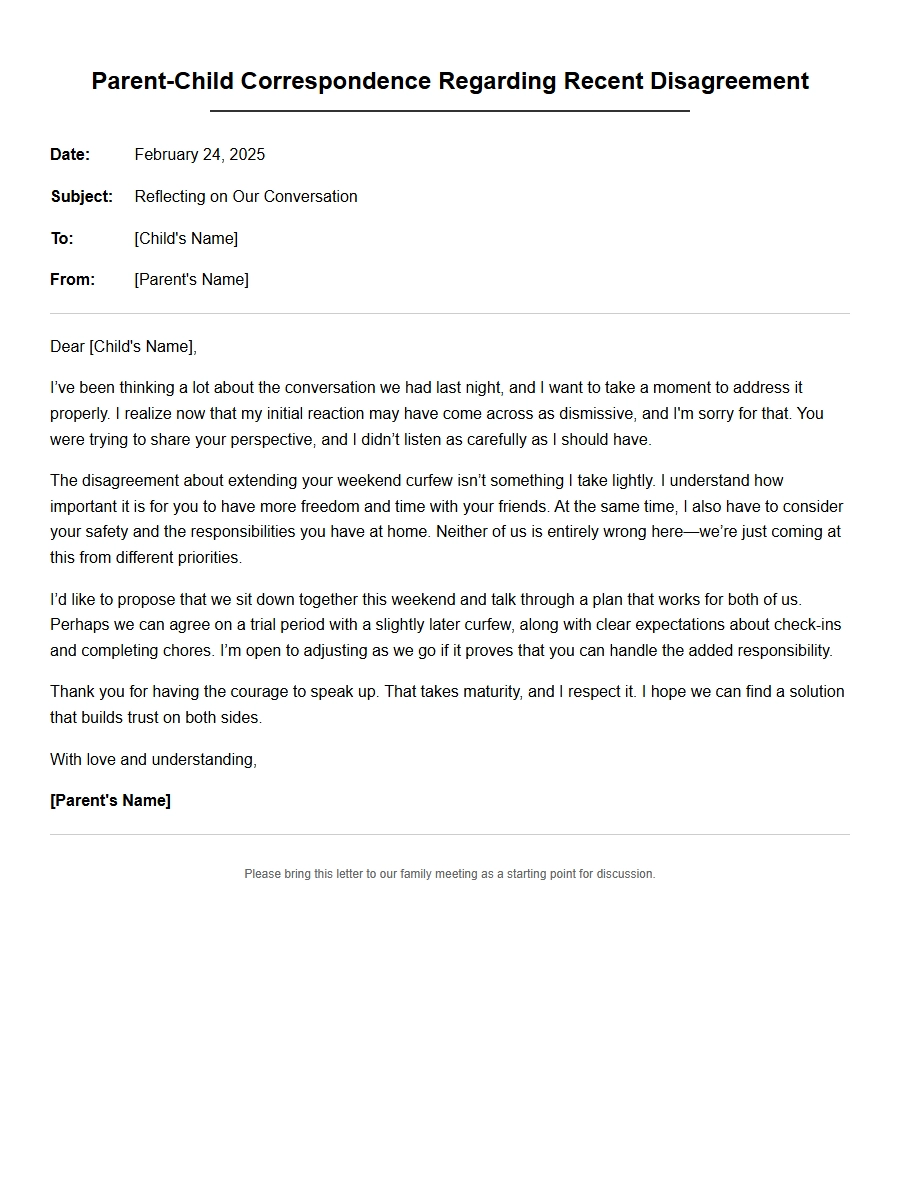 Apology Correspondence for Parent-Child Disagreements
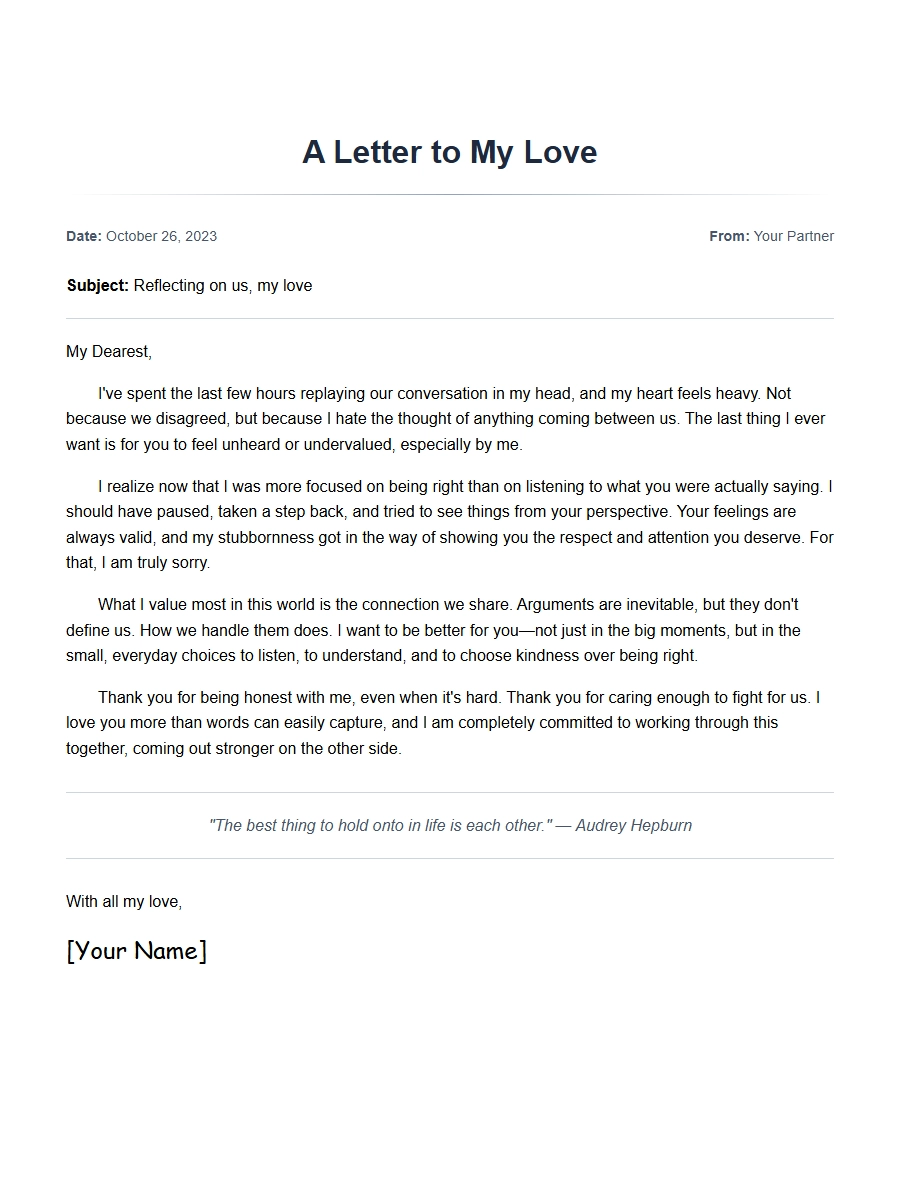 Apology Message for Girlfriend After Argument
 note for friend stealing item - Apology Letters
 Apology to Boss for Micromanagement Complaint
 Apology Document for Vendor Supply Chain Issue