You need to send a professional notice about a seasonal promotion inventory gap, but you aren’t sure how to phrase it without sounding like you’re panicking or making excuses. That blank page stares back, and the clock is ticking. I’ve been there. The good news is that a solid letter template can turn that anxiety into a clean, confident draft in a few minutes. Using a sample isn’t cheating. It’s a smart shortcut that gives you the right letter structure and tone, so you can focus on fixing the actual problem instead of wrestling with formal writing tips.
This kind of notice is common in retail, ecommerce, and event planning. You run a promotion, demand spikes, and suddenly your stock doesn’t match the hype. You need to tell stakeholders—whether they are suppliers, internal teams, or customers—what happened and what you’re doing about it. A good business letter format helps you sound professional without sounding robotic. It also makes sure you don’t skip important details like dates, quantities, and next steps.
Let’s walk through how to write this notice the right way. You’ll need to choose the right sample for your situation. If you’re writing to a supplier, keep it formal and direct. If it’s an internal memo to your team, a semi-formal tone works better. The key is matching the tone in writing to your audience. For example, if you over-apologize to a supplier, they might think you mismanaged your orders. If you under-explain to your boss, they might think you dropped the ball on planning. Find a customizable letter that lets you adjust the salutation and closing to fit your relationship.
When you adapt a sample, don’t just fill in the blanks. Read it out loud first. Does it sound like you? If it feels stiff, change the wording. Swap “We regret to inform you” for “I want to give you a heads-up” if that’s more natural for your workplace. Keep the letterhead design clean—your company logo, date, and contact info at the top. If you’re sending this via email, skip the letterhead and use a clear subject line like “Update on Seasonal Promotion Stock Levels.” That’s a smart digital letter format tip that saves time.
Avoid common mistakes that make you look unprepared. Don’t use outdated salutations like “To Whom It May Concern” when you know the recipient’s name. Don’t bury the key information. State the inventory gap right in the first paragraph. And please, proofread your letter before hitting send. A typo in a notice about inventory errors makes you look careless. Spend two minutes on proofreading letter details—it’s the difference between looking competent and looking rushed.
One practical tip I’ve learned the hard way: tailor the opening paragraph to grab attention. Start with the positive context of the promotion, then pivot to the gap. Something like, “Our seasonal sale generated more interest than expected, which is great news. However, it also means we’ve exceeded our inventory projections for the following items.” That shows you’re proactive, not reactive. You’re acknowledging success while addressing a problem. That balance makes your notice feel helpful rather than defensive.
Category: Business Communication Strategies
Finally, remember that a letter of recommendation for your own process can be built into this notice. Explain what you’ve already done to fix the gap. Did you place a rush order? Are you allocating stock differently? That shows expertise. This isn’t just a problem—it’s a situation you’re managing. Use the sample as a springboard, not a crutch. The more you practice writing these notices, the faster you’ll get. Over time, you won’t need a template at all. For now, let the sample guide you, but make sure your voice comes through. The best letters feel both professional and personal. Start with a solid base, add your own words, and send something you’re proud of.
Browse Sample Ideas
Apology for Seasonal Promotion Inventory Gap
Apology for Winter Sale Stock Shortage
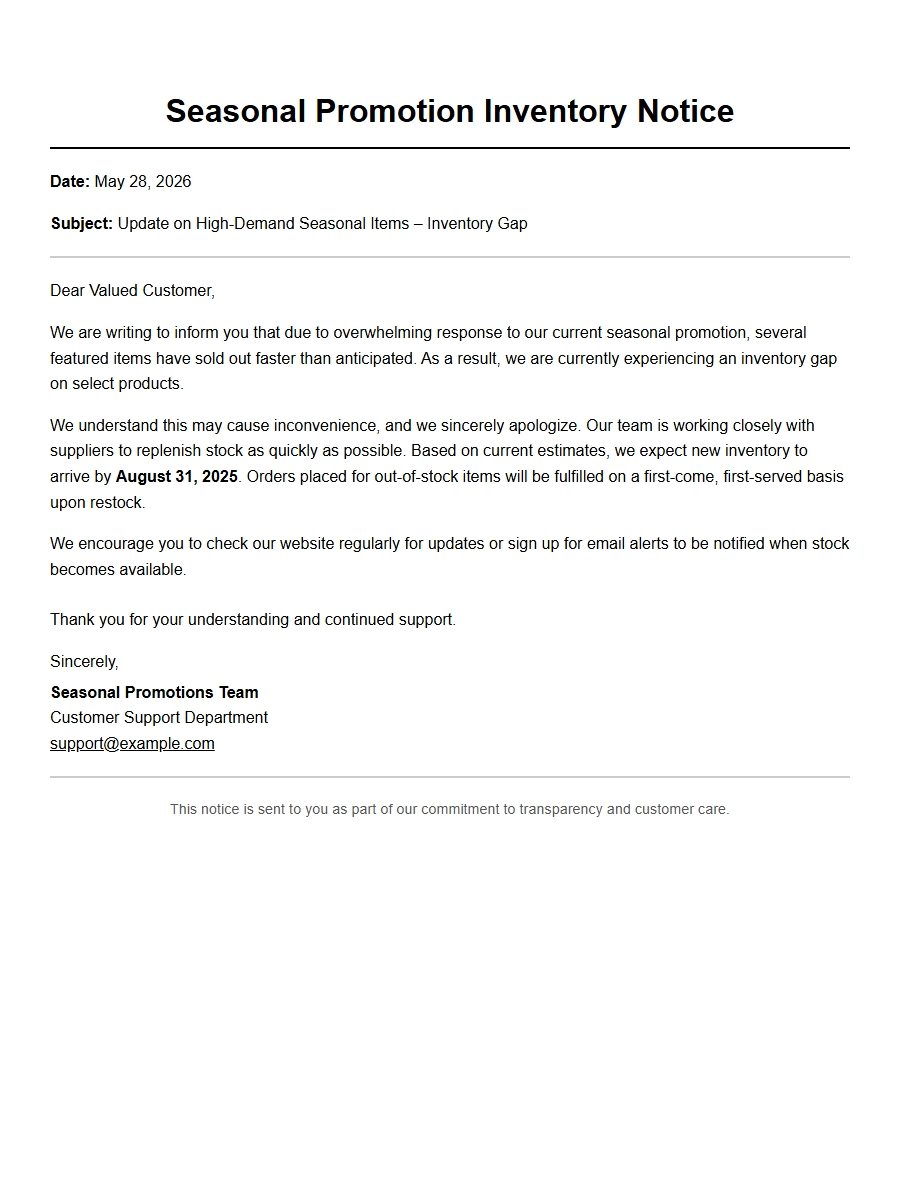
Dear Valued Customer,
We sincerely apologize for the inventory gap experienced during our Winter Sale promotion. Due to unexpectedly high demand and supplier constraints, several popular items were out of stock shortly after the sale launched.
We understand this caused inconvenience. Below is a summary of the affected products and the status of your order:
Product Code
Item Description
Quantity Ordered
Quantity Shipped
Backorder Status
WS-124
Merino Wool Scarf
2
1
Restocking by Jan 20
WS-208
Insulated Winter Boots
1
0
Cancelled – discontinued
WS-315
Fleece-Lined Gloves
3
2
Partial shipment
We have refunded any cancelled items and will notify you when backorders ship. As a gesture of goodwill, we are offering a 15% discount code on your next purchase. Please contact support for further assistance.
Thank you for your understanding.
Notice of Inventory Gap for Summer Promotion
Hello,
This notice concerns the inventory shortfall affecting our Summer Splash promotion. We regret to inform you that a surge in orders has depleted stock for some advertised items faster than anticipated.
Your order #SMP7892 contains the following affected items:
Portable Beach Tent – only 1 of 2 units available; remaining unit on backorder, estimated arrival July 5.
Inflatable Stand-Up Paddleboard – completely out of stock; order cancelled and refunded.
We have updated your invoice accordingly:
Original Total: $349.98 Refunded Amount: $199.99 New Total: $149.99
We apologize for the disruption. To make up for this, we are sending you a $25 gift card via email. If you prefer a different resolution, please reply to this notice.
Apology for Holiday Seasonal Promotion Inventory Shortfall
Dear Customer,
We are writing to apologize for the inventory gap that occurred during our Holiday Gift Guide promotion. Despite careful planning, the popularity of certain gift sets overwhelmed our warehouse capacity and supply chain.
Your order #HOLIDAY22 includes the following impacted line items:
SKU
Product Name
Ordered
Available
Action
HG-101
Gourmet Chocolate Box
3
3
Shipped
HG-203
Scented Candle Set
2
1
Partial ship; backorder
HG-305
Luxury Knit Throw
1
0
Refunded
We have shipped what was available and will follow up on backorders within 10 business days. Refunds for out-of-stock items have been processed. As compensation, we are adding a 10% discount to your next purchase.
We value your business and regret any inconvenience.
Seasonal Clearance Stock Apology
To our loyal customers,
We apologize for the inventory gap encountered during our Annual Clearance Sale. The promotion was meant to offer deep discounts on seasonal overstock, but demand far exceeded our remaining inventory.
Please find below the status of items you ordered:
Autumn Leaf Table Runner – in stock, shipped.
Pumpkin Spice Candle (3-pack) – partially fulfilled; 2 of 3 shipped, refund issued for missing unit.
Harvest Wreath – out of stock, full refund processed.
Your revised order total is $42.99 (was $67.99). The refund of $25.00 will appear in your account within 5-7 business days.
To thank you for your patience, we are including a free shipping code for your next order. We appreciate your understanding during this seasonal rush.
Inventory Gap Apology for Spring Campaign
Dear Customer,
We regret to inform you that our Spring into Savings promotion has experienced an inventory gap on select gardening and outdoor items. This was due to a shipping delay from our main warehouse combined with unprecedented demand.
Your order #SPRING23 contains the following:
Item
Qty Ordered
Qty Shipped
Expected Restock
Raised Garden Bed Kit
1
1
–
Organic Herb Seed Collection
2
0
April 15
Premium Potting Soil (50L)
3
2
April 20
We have shipped what is available and placed the missing items on backorder. Your payment will only reflect shipped goods. You will receive a notification when backorders are dispatched.
We sincerely apologize for the delay and offer a 5% discount on your next purchase as compensation.
Backorder Notice for Seasonal Promotion Items
Dear Customer,
Thank you for participating in our Limited-Time Seasonal Promotion. Unfortunately, due to a sudden inventory gap, several items in your order are now on backorder. We apologize for the inconvenience.
Here is the status of your order #BON-892:
Men's Performance Polo (Size L, Blue) – backordered, expected ship date: March 10.
Insulated Water Bottle (500ml) – in stock, shipped today.
We will ship the backordered items as soon as they arrive. No additional shipping charges will apply. You may cancel any backordered item for a full refund. Please contact our support team if you have questions.
We value your business and appreciate your patience.
Apology for Limited Availability During Festive Sale
Hello,
We are sorry to inform you that the inventory for our Festive Fiesta Sale was insufficient to fulfill all orders. A combination of high traffic and logistical bottlenecks caused a gap in stock for some of the most popular deals.
Your order #FFS-1122 is affected as follows:
Promotion Item
Ordered
Fulfilled
Status
Festive LED String Lights 10m
2
2
Delivered
Holiday Ornament Gift Set
1
0
Refunded
Poinsettia Planter
2
1
Partial – see below
We have refunded the ornament set and the missing poinsettia planter. A $10 credit has been added to your account for the inconvenience.
We are reviewing our inventory planning to prevent this in the future. Thank you for your understanding.
Seasonal Promotion Inventory Gap – Customer Apology
Dear Customer,
We are writing to apologize for the inventory gap that affected your experience during our End-of-Season Sale. The promotion aimed to clear out seasonal stock, but the response was higher than anticipated.
Your order #EOS-4455 includes the following:
Winter Down Jacket (Size M, Black) – shipped.
Fleece Blanket (Twin) – shipped.
Electric Heater – out of stock; order cancelled. Refund of $59.99 processed.
We have taken steps to ensure that the cancellation does not affect your other items. A $5 discount code has been emailed to you as a token of apology.
We hope this does not discourage you from shopping with us in the future. Our team is available to address any concerns.
Supplier Apology for Seasonal Promotion Shortage
Dear Retail Partner,
We regret to inform you that an inventory gap has occurred in our seasonal promotion stock, impacting your order #SP-2024-09. This shortage is due to unexpected production delays at our overseas facility.
Below is a summary of affected products:
Product ID
Description
Ordered (units)
Available
Backorder ETA
SP-101
Halloween Decor Bundle
500
200
Oct 25
SP-204
Winter Holiday Lights, 20m
300
150
Nov 5
We are shipping the available quantities immediately and will update you on the remaining units. We apologize for any disruption to your promotion plans. As a goodwill gesture, we are offering a 3% discount on your next wholesale order.
We appreciate your continued partnership.
Post-Promotion Inventory Gap Apology
Dear Customer,
Thank you for your recent order during our marked down seasonal promotion. We must apologize for the inventory gap that prevented us from fulfilling your complete order.
Your order #PROMO-5689 details:
Quilted Vest (Size S, Navy) – shipped.
Thermal Leggings (Size M, Black) – shipped.
Snow Boots (Size 7, Brown) – only 1 of 2 pairs available; the second pair was cancelled due to no stock. Refund of $89.99 issued.
We have sent the available items and processed the refund. You will receive a confirmation email shortly. We are also adding a 10% discount code for your next purchase, valid for 30 days.
We sincerely apologize for the inconvenience and value your understanding.
 Personal Apology Letter for Boyfriend Relationship Strain
 Apology Correspondence for Parent-Child Disagreements
 Apology Message for Girlfriend After Argument
 note for friend stealing item - Apology Letters
 Apology to Boss for Micromanagement Complaint
 Apology Document for Vendor Supply Chain Issue