Staring at a blank page when you need to write a professional letter can feel paralyzing—but the right sample turns that anxiety into a confident, polished draft in minutes. Maybe you’re drafting a letter about a contract negotiation clause waiver—a formal document where one party agrees to give up a specific right under an existing agreement. You know what you want to say, but getting the tone and structure right without sounding stiff or careless is tough.
Using a sample for this kind of letter isn’t cheating. It’s a smart shortcut. A good sample gives you the proper business letter format, the right salutation and closing, and key phrases that signal professionalism. You still get to personalize it, so your voice comes through. Think of it like having a blueprint: you follow the walls and windows, but you choose the paint and furniture.
[Category: Contract Waiver Letters]
What is a Contract Negotiation Clause Waiver Letter?
A clause waiver letter states in writing that one party voluntarily gives up a right or benefit that a specific contract clause gives them. For example, a vendor might waive a penalty clause for late delivery if the buyer agrees to extend the contract term. The letter makes the waiver official and prevents future disputes. It’s a formal piece of professional correspondence, not a casual email.
When you write one, you need to be precise. Which clause? What is being waived? For how long? Any conditions? A vague waiver can cause bigger problems than the original clause. That’s why having a solid template to start from helps you avoid missing critical details.
How to Choose the Right Sample for Your Situation
Not all waiver letters are the same. If you’re in a formal industry like finance or legal, your sample should use a traditional business letter format with a formal tone. If you’re in a creative or tech field, a slightly more conversational tone works—but still keep it clear and respectful. Look for a template that matches the language of your original contract. If the contract uses “Party A” and “Party B,” your letter should too. If it’s between individuals, use names.
Don’t just grab the first sample you find. Read a few. Find one that feels close to what you need, then adapt it. The best customizable letter samples leave room for you to insert your specific context without breaking the flow.
Adapting a Sample Without Losing Your Voice
Start by replacing placeholders with your actual details—names, dates, clause numbers. Then read the sample aloud. Does it sound like you? If it’s too formal, tweak a few phrases. For instance, change “The undersigned hereby waives…” to “I agree to waive…” if the context allows. Keep the structure but make the language yours.
A common mistake is copying the sample’s opening verbatim. That opening paragraph is where you grab attention and state the purpose. Tailor it: say exactly which clause you are waiving and why. For example, “This letter confirms that ABC Corp waives the late-delivery penalty in Section 4.2 of the Service Agreement dated March 1, 2024, in exchange for a one-month extension of the warranty period.” That’s direct and clear.
Formatting and Etiquette You Shouldn’t Skip
Even with a great sample, small errors can undermine your professionalism. Use a proper letterhead design if you have one—your company logo and address at the top. If you’re sending it digitally, a digital letter format with a clear subject line works, but keep the body structured like a printed letter. Avoid casual greetings like “Hey” or outdated ones like “To Whom It May Concern” unless you have no other option.
Spell-check is not enough. Read the letter out loud for tone as well as typos. Ask a colleague to proofread the letter; fresh eyes catch things you skim over. This is part of letter writing etiquette that many people skip when they’re in a hurry.
One error I see often is using vague language like “we waive all rights under the agreement.” That’s way too broad. A court could interpret that as waiving rights you didn’t intend. Be specific: clause number, what right is waived, and the effective date. Another mistake is forgetting to include a signature block. A waiver letter is a binding document; it needs to be signed by an authorized person.
Also, don’t assume email is fine for every waiver. If the original contract specifies formal written notice by mail or hand delivery, follow that. Email might not count. Check the contract’s notice clause before you send.
Finally, don’t skip the closing. End with a standard closing like “Sincerely,” followed by your name and title. Add a line like “This waiver does not affect any other terms of the agreement” to limit the scope.
Use the Sample as a Springboard, Not a Crutch
The best letters feel both professional and personal. A sample gets you started quickly, but your specific situation makes it real. The more you write these letters, the faster the process becomes. You’ll start recognizing patterns and will only need samples for the trickiest clauses. For now, grab a good template, adapt it thoughtfully, and get that letter out the door with confidence.
Browse Sample Ideas
Recommendation Letter for Contract Clause Waiver
Waiver of Non-Compete Clause for Departing Manager
To: Legal Review Committee From: HR Department Date: March 15, 2025
Subject: Recommendation to Waive Non-Compete Clause in Employment Contract
We recommend waiving the non-compete clause for Mr. Alex Chen, who is leaving his role as Regional Manager. The clause restricts him from joining any competitor within a 50-mile radius for 12 months. However, Mr. Chen’s new position is in an unrelated industry, and he has signed a strict confidentiality agreement. The risk of competitive harm is minimal.
Key reasons for waiver:
Mr. Chen had no access to trade secrets outside standard operational data.
His departure is amicable, and he has agreed to a one-month transition period.
Enforcing the clause would create legal costs and bad publicity.
We propose a formal waiver letter with the following terms:
Provision
Waiver Details
Non-Compete
Full waiver effective upon last working day
Confidentiality
Remains in full force
Transition Support
Two weeks of consulting post-employment
Please approve this waiver to maintain a positive employer brand and avoid unnecessary litigation.
Waiver of Liquidated Damages for Supplier Delay
To: Procurement Director From: Project Management Office Date: April 2, 2025
Subject: Recommendation to Waive Liquidated Damages – Supplier X Contract
We recommend waiving the liquidated damages clause in our contract with Supplier X for their 14-day delay in delivering raw materials. The delay was caused by a rare port strike that affected all shipments. Supplier X has been a reliable partner for five years and communicated proactively about the issue.
Supporting factors:
The delay did not impact our production schedule because we had safety stock.
Supplier X offered a 5% discount on the next order to compensate.
Enforcing liquidated damages would strain the long-term relationship.
The original clause specifies $2,500 per day of delay. We propose a partial waiver, reducing the penalty to $1,000 total, as shown below:
Clause
Original Penalty
Recommended Revised
Liquidated Damages (14 days)
$35,000
$1,000 (goodwill gesture)
We request your approval to proceed with this waiver and send an amended contract addendum.
Waiver of Confidentiality Clause for Regulatory Disclosure
To: General Counsel From: Compliance Team Date: May 10, 2025
Subject: Recommendation to Waive Confidentiality Clause – CrowdHealth Partnership
We recommend a limited waiver of the confidentiality clause in our partnership agreement with CrowdHealth to allow disclosure of certain non-proprietary operational data to the FDA. The regulator has requested this data as part of a clinical trial approval process. The clause currently prohibits sharing any “business or technical information” without mutual consent.
Our recommendation is supported by:
The data requested is aggregated and de-identified, posing no competitive risk.
CrowdHealth has already verbally agreed to the waiver.
Non-compliance with FDA could delay our product launch by 6 months.
We propose a waiver limited to the following items:
Data Category
Waiver Scope
Patient enrollment numbers
Waived for FDA submission only
Operational metrics (anonymized)
Waived for FDA submission only
Financial terms
Not waived
Please draft a waiver letter to CrowdHealth for signature before we respond to the FDA.
Waiver of Arbitration Clause for Small Claims
To: Chief Legal Officer From: Claims Resolution Department Date: June 1, 2025
Subject: Recommendation to Waive Arbitration Clause – Vendor Dispute #245
We recommend waiving the mandatory arbitration clause in our contract with Janitorial Pros LLC, a small cleaning vendor. The dispute involves an overpayment of $850 due to a billing error. Arbitration costs would exceed the claim amount (approximately $3,000 in fees). Both parties prefer to resolve this in small claims court, which is faster and cheaper.
The relevant clause states: “All disputes arising from this contract shall be resolved by binding arbitration under AAA rules.” We propose a mutual waiver contingent on:
Both parties signing a brief waiver agreement.
Limiting the waiver solely to this specific claim.
Retaining arbitration for all future disputes.
Estimated cost comparison:
Method
Estimated Cost
Time to Resolution
Arbitration (AAA)
$3,000+
4-6 months
Small Claims Court
$100 filing fee
2-3 months
Approving this waiver will save the company resources and preserve vendor goodwill.
Waiver of Force Majeure for Partial Supplier Performance
To: Contract Manager From: Supply Chain Director Date: July 8, 2025
Subject: Recommendation to Waive Force Majeure Clause – SteelCo Ltd.
We recommend waiving the force majeure clause invoked by SteelCo Ltd. after a factory fire. The clause excuses all performance if a force majeure event occurs. However, SteelCo delivered 60% of the ordered steel before the fire and has now secured alternative production. We propose a partial waiver that holds SteelCo responsible for the remaining 40% at a revised delivery schedule.
Basis for recommendation:
SteelCo acted in good faith and provided evidence of the fire.
Our client projects will face delays if the full order is not delivered.
Alternative suppliers charge 25% more; SteelCo has offered a 10% discount on the undelivered portion.
Proposed waiver terms:
Clause
Original Effect
Waiver Modification
Force Majeure (full excuse)
Complete discharge from obligations
Waived for 40% undelivered; new deadline 60 days
Penalty for late delivery
N/A (force majeure)
Reinstated at 0.5% per week after new deadline
Please review and approve this balanced approach to protect our supply chain.
Waiver of Notice Period Clause for Urgent Project
To: Vice President of Operations From: IT Director Date: August 20, 2025
Subject: Recommendation to Waive 30-Day Notice Clause for Vendor Change
We recommend waiving the 30-day written notice requirement in our service contract with CloudHost Inc. to enable an immediate switch to a new provider. Our system is currently experiencing critical outages, and CloudHost cannot resolve them within 10 days. A competitor, DataSafe, can onboard us in 5 days. The notice clause would force us to wait a month, causing severe business disruption.
Reasons to waive:
CloudHost has breached the uptime SLA (99.9% vs actual 97%), releasing us from many obligations.
The clause is a standard boilerplate; waiving it once sets no precedent.
CloudHost has informally agreed to a shorter notice if we pay a small break fee ($500).
Cost comparison of options:
Action
Downtime Cost
Migration Cost
Enforce 30-day notice
~$150,000 lost revenue
$0 (delay)
Waive notice + pay break fee
$0 (5-day switch)
$12,000 migration + $500 fee
I strongly recommend immediate waiver approval to prevent revenue loss.
Waiver of Exclusivity Clause to Engage Second Vendor
To: Strategic Partnerships Committee From: Marketing Director Date: September 5, 2025
Subject: Recommendation to Waive Exclusivity Clause – PrintPro Agreement
We recommend waiving the exclusivity provision in our print services contract with PrintPro, which currently prohibits us from using any other printer for marketing materials. PrintPro’s capacity is strained during peak seasons, causing delivery delays. We propose a temporary waiver to engage a secondary vendor, QuickPrint, for 20% of our volume.
Key points:
PrintPro has agreed in principle to a 6-month waiver.
QuickPrint offers faster turnaround for small batches (under 1,000 units).
Exclusivity waiver will be limited to flyers and brochures only; all large orders remain with PrintPro.
Proposed waiver terms:
Provision
Current
Proposed Waiver
Exclusivity
PrintPro exclusive for all print
Waived for flyers and brochures (max 20% volume)
Duration
Indefinite
6 months, renewable by mutual consent
Revenue guarantee to PrintPro
None
Minimum 80% spend maintained
Approving this waiver will improve our agility without damaging our primary partnership.
Waiver of Penalty Clause for Long-Term Client
To: Credit & Collections Manager From: Account Executive – Key Accounts Date: October 12, 2025
Subject: Recommendation to Waive Late Payment Penalty – Client GlobalTech
I recommend waiving the 2% monthly late-payment penalty for GlobalTech, a client of eight years. They missed the September invoice deadline due to an internal bank transfer error. GlobalTech has a flawless payment history (0 late payments in seven years). The penalty would amount to $2,400 on the $120,000 invoice.
Why waive:
The error was promptly corrected; payment was received 20 days late.
GlobalTech is negotiating a major contract renewal worth $2M annually.
Enforcing the penalty could sour negotiations and risk renewal.
Current penalty clause details:
Clause
Terms
Accrued Penalty
Recommended Action
Late Payment Penalty
2% per month on overdue amount
$2,400
Full waiver
I suggest we send a goodwill letter confirming the waiver and remind GlobalTech of the standard terms going forward. Please approve.
Waiver of Warranty Clause for As-Is Equipment Sale
To: Legal Counsel – Asset Disposal From: Facilities Manager Date: November 1, 2025
Subject: Recommendation to Waive Warranty Clause – Sale of Used CNC Machines
We recommend waiving the standard implied warranty clause in the sales contract for three used CNC machines sold to Buyer Precision Parts. The machines are being sold “as-is” after a thorough inspection. The current contract language includes a clause that warrants the equipment to be “free from defects for 90 days.” This conflicts with the as-is nature and would expose us to liability.
We propose a specific waiver of that warranty clause, replacing it with a clear disclaimer.
Basis:
Buyer has already inspected the machines and accepted them in current condition.
Purchase price is 60% below market due to the as-is basis.
Legal department opines that retaining the warranty could lead to disputes over normal wear and tear.
Proposed modification to the contract:
Original Clause
Waiver/Replacement
“Seller warrants equipment free from defects for 90 days”
Waived entirely. Add: “Equipment sold AS-IS, WHERE-IS, with all faults. Buyer acknowledges inspection.”
Breach of warranty remedies
Waived. Buyer has no right to return or repair except for fraud.
Please draft the waiver addendum for buyer signature. This will finalize the sale cleanly.
Waiver of Termination for Convenience Clause to Stabilize Partnership
To: Chief Executive Officer From: VP of Strategic Alliances Date: December 3, 2025
Subject: Recommendation to Waive Termination for Convenience Clause – Logix Partnership
I recommend waiving the termination for convenience clause in our joint venture agreement with Logix Corp. This clause allows either party to terminate the agreement with 60 days’ notice for any reason. Logix has indicated they would exercise this clause next quarter unless we remove it, because they want long-term commitment to support their R&D investment.
Reasons to waive:
The partnership has generated $4M in revenue over 18 months with strong growth.
Logix is our exclusive logistics software provider; switching costs would be high.
Waiving the clause will be mutual – both parties commit to a minimum three-year term.
Proposed amendment:
Clause
Current
Proposed Change
Termination for Convenience
Either party may terminate with 60 days’ notice
Waived. Only termination for cause (material breach) allowed.
New Minimum Term
None
3 years from January 1, 2026
I strongly recommend you approve this waiver to secure a critical partnership and avoid disruption. The board at Logix expects our decision by Friday.
 Format for Graduate School Faculty Recommendation Letters
 Master's Program Reference Letter Requirements
 The Perfect Structure for a University Reference Letter
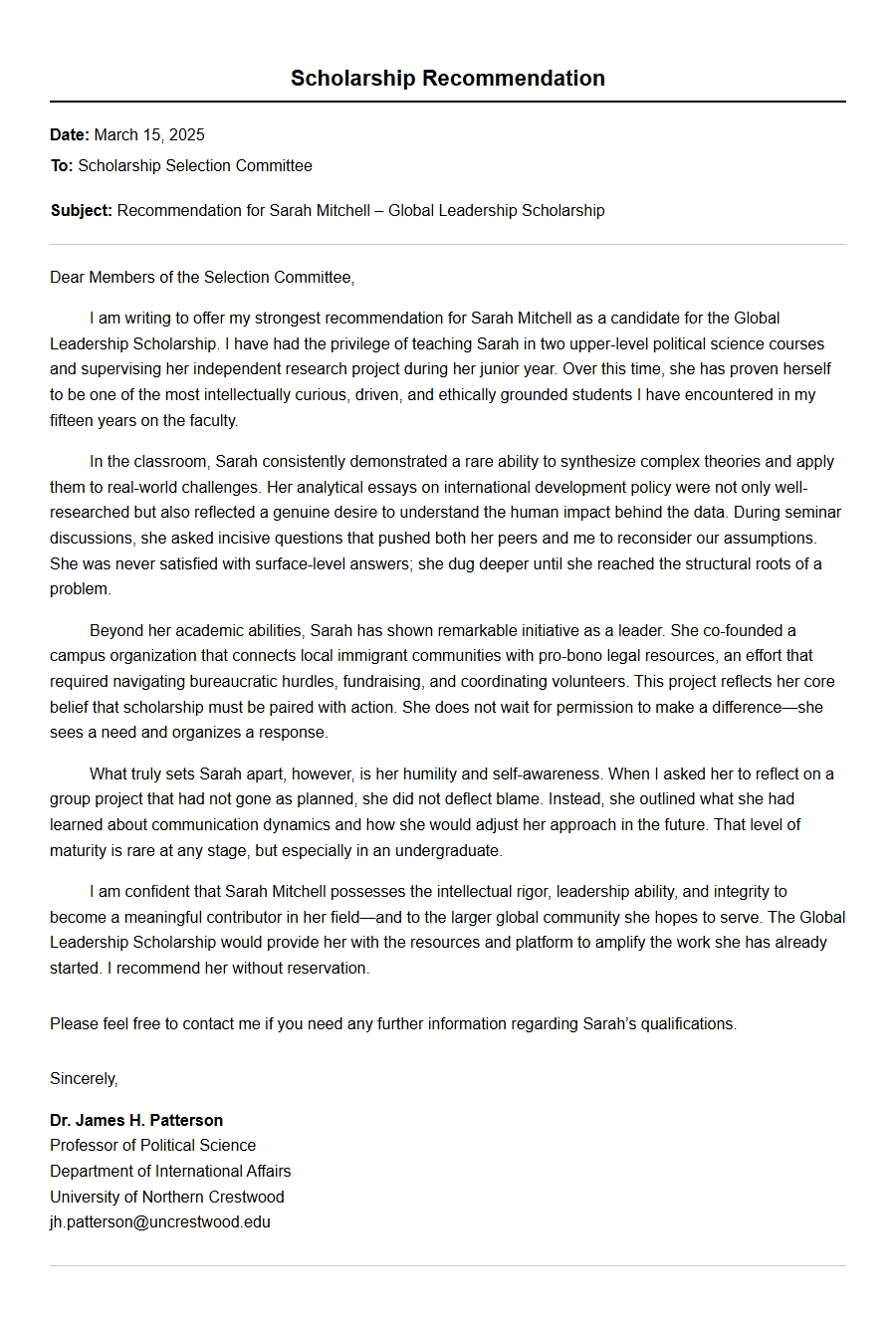 scholarship essay recommendation portion - Recommendation Letters
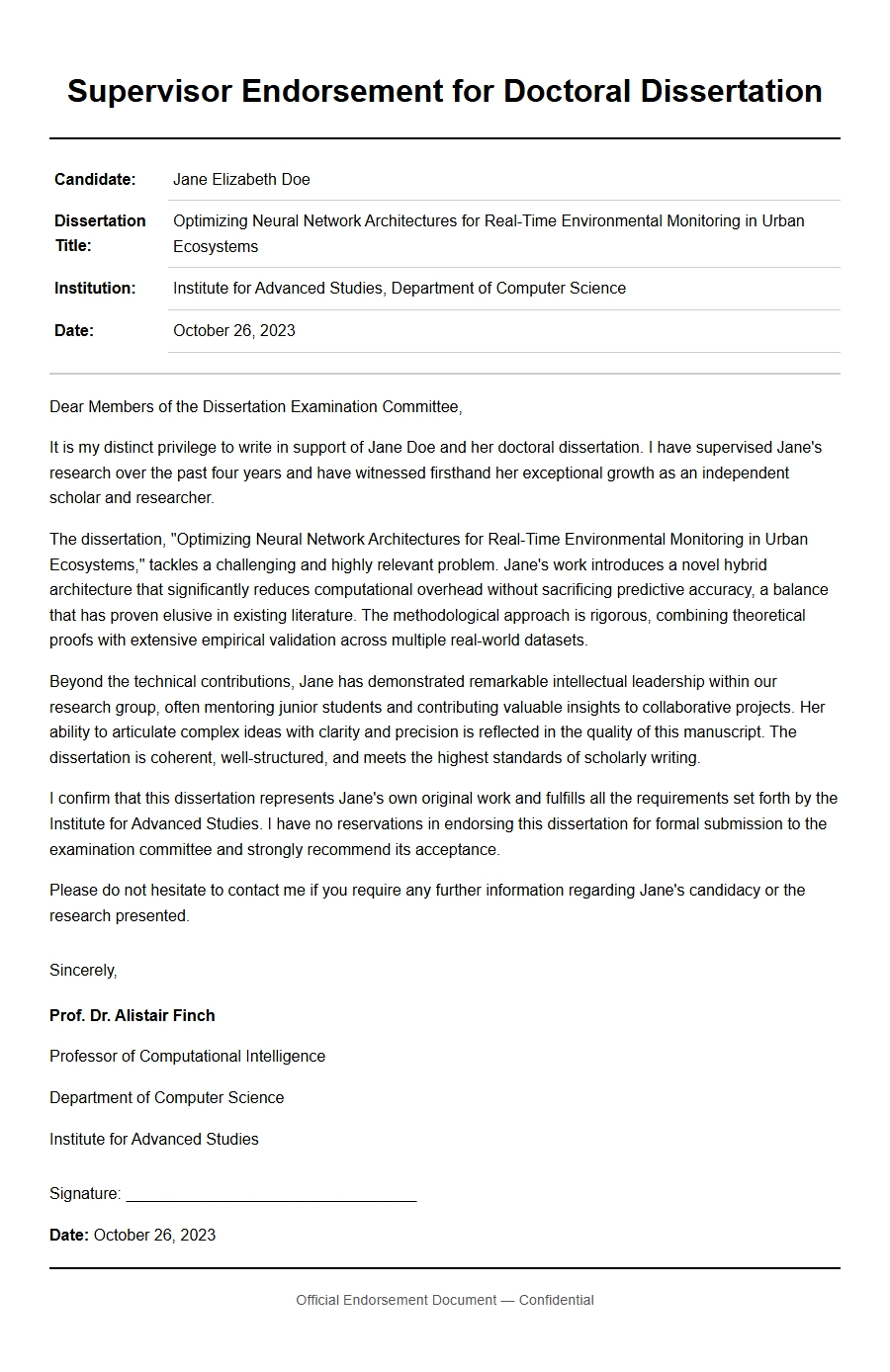 Sample PhD Supervisor Endorsement Letter
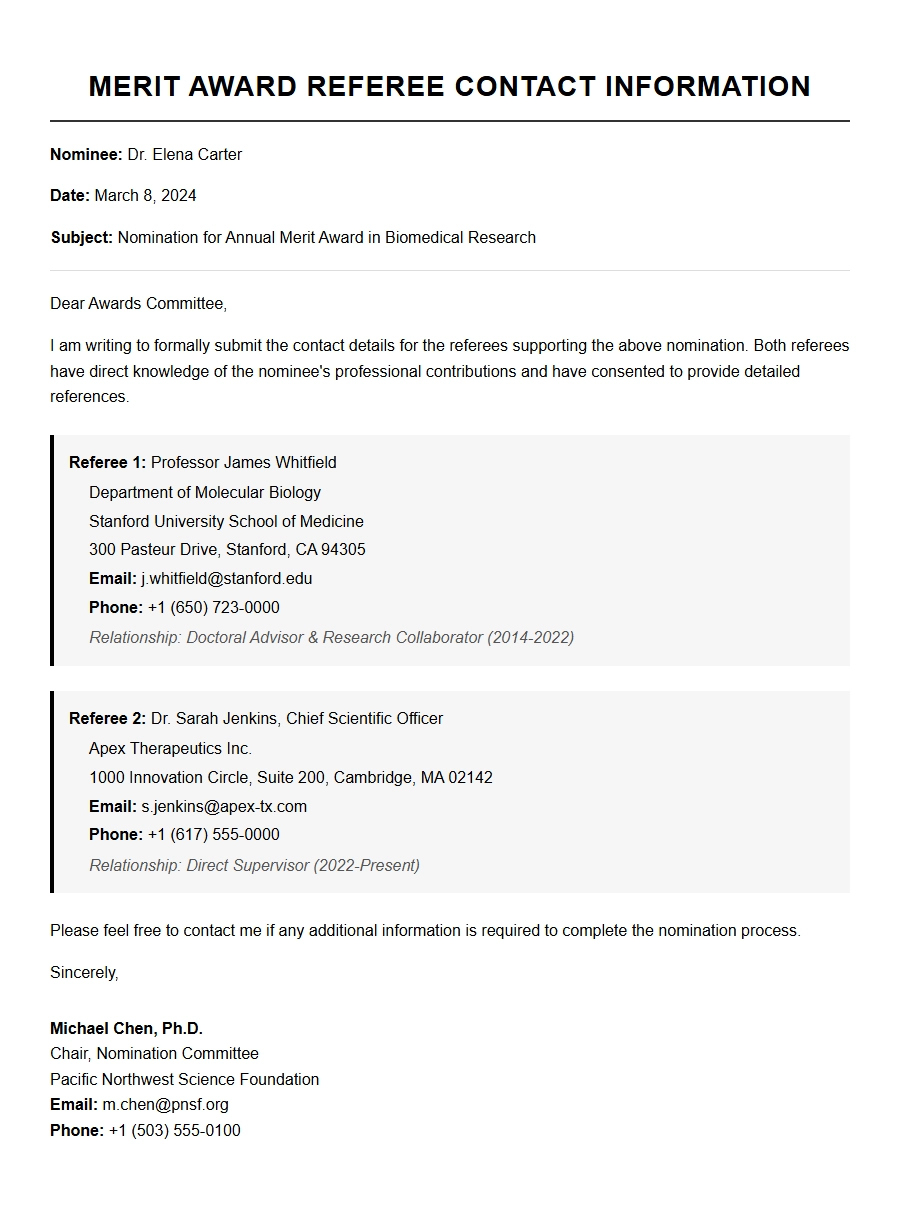 How to Find Your Merit Award Referee Contact Info