You’ve decided to move on from a casual job, and now you need to tell your boss. It feels awkward, right? Overly formal letters seem out of place, but just disappearing burns a bridge you might need later. A brief resignation memo hits the right note—respectful without the fuss.
Using a sample isn’t taking the easy way out. It gives you a dependable structure so you don’t forget your last day or leave your manager in a bind. It provides the right tone while leaving room for your own words. Think of it as a reliable starting point, not a crutch.
Category: Career Advice
What goes into a brief resignation memo?
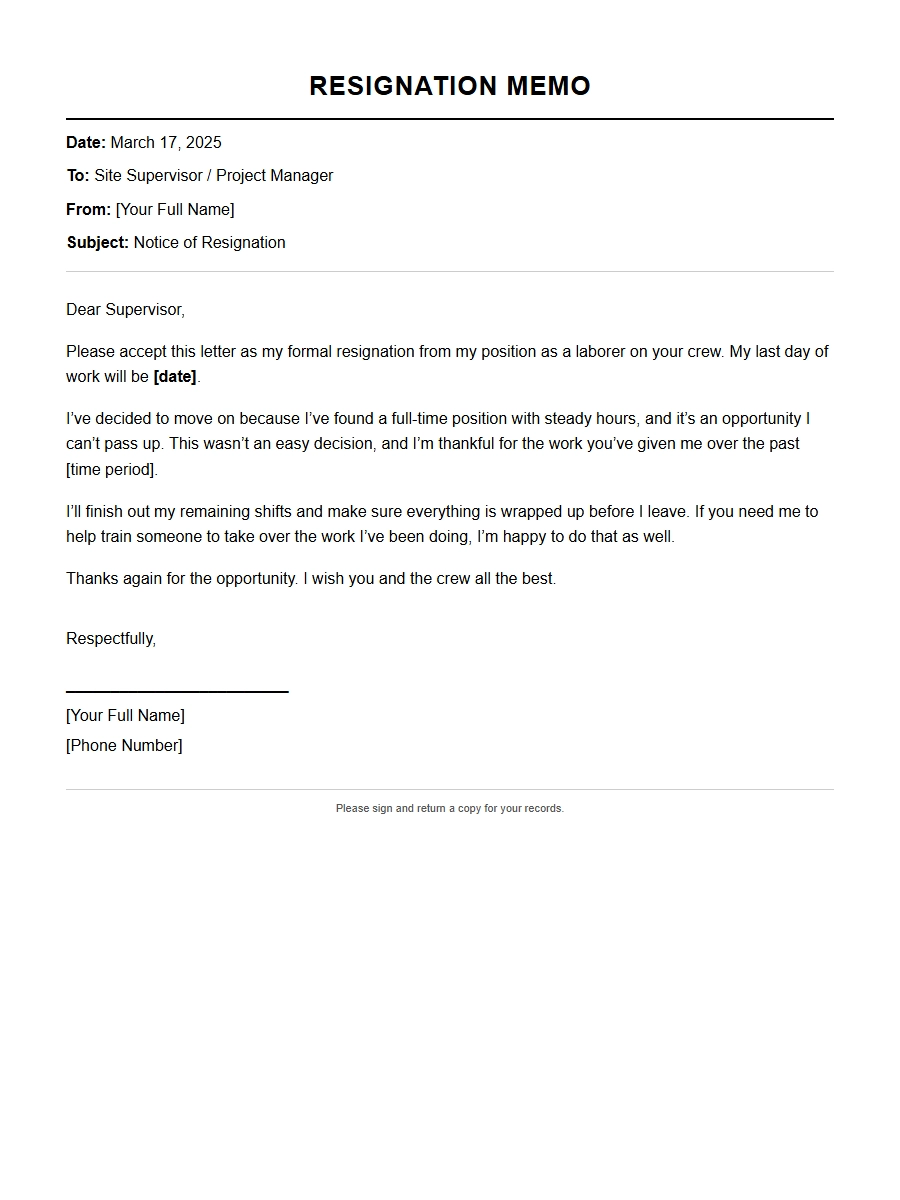
A brief resignation memo for a casual laborer is a short, direct note. It states you are leaving, your final shift, and a quick thank you. You’ll typically send this by email or hand it over as a printed note. Use it for roles in retail, hospitality, construction, or warehouses where the work is hourly and the relationship is straightforward.
A good memo has a clear subject line, a direct statement, and your last day. That’s really all you need. You don’t have to explain why you’re going. Sticking to a clean letter structure makes you look organized. Using a proper salutation and closing, like “Dear [Name]” and “Sincerely,” keeps things professional without feeling stiff.
How to make a sample sound like you
The tone in writing this memo should match your real relationship with your boss. If you got along well, a line like “I’ve enjoyed working here” feels right. If it was just a paycheck, a simple “Thank you for the opportunity” works perfectly. Injecting your authentic voice makes the letter personal, even when you’re following a template.
When you pick a resignation letter sample, change the details right away. Swap the generic lines for specifics. If the sample says “I appreciate the experience,” but you actually learned to drive a forklift or handle a busy register, say that. Customizing a customizable letter takes five minutes and shows you’re thoughtful.
Pay attention to the format. For a digital letter format, keep the font simple and text left-aligned. If printing, skip fancy letterhead design—your name and phone number at the top are just fine. Always proofread your letter before handing it in. A simple typo on your last day looks sloppy. Follow these basic formal writing tips to leave on good terms.
A common mistake is being too vague. “I’m leaving sometime next week” isn’t helpful. Give your exact last date. Another is forgetting to return gear. Just like how a resignation for data analyst roles requires handing over passwords and files, a casual laborer might need to return keys, uniforms, or tools. Similarly, stepping aside for a successor needs clear timing. Look at retail staff resignation letters to see how directness is appreciated. Even marketing specialist resignations prioritize clarity over fluff. Warehouse supervisors often use a very simple format because their teams need clear schedules. Borrow that same direct approach.
Taking ten minutes to write this note is a small act of professionalism. It tells your boss you’re reliable and respect their time. When a future employer calls to check on you, that manager will remember that you handled the end of your time with class. It’s a simple habit that keeps doors open for you down the road.
Extra Samples
Brief Resignation Memo for Casual Laborer
Short Notice – Personal Reasons
Please accept this as my formal resignation for the position of warehouse laborer. My final day will be May 15, 2025, giving one week’s notice. I am leaving due to a family emergency that requires my full attention.
Field
Details
Name
Carlos Mendez
Position
Warehouse Laborer
Last Day
May 15, 2025
Reason
Family emergency
I have already cleaned out my locker and returned the safety vest. Please let me know if any exit paperwork is needed.
Moving Out of Town
This memo serves as my resignation from the casual laborer role at GreenScape Landscaping. I am relocating to another state, so my last available shift is Saturday, June 3.
Item
Status
Uniforms
Returned – 2 shirts, 1 hat
Tools
All company tools accounted for
Final Pay
Please direct deposit to account on file
Thank you for the opportunity. I enjoyed the team and the outdoor work.
Better Job Opportunity
I am writing to resign from my casual labor position at Metro Warehouse. I have accepted a full‑time job with benefits. My last day will be April 22, 2025.
I will complete all scheduled shifts through April 21.
Ill help train the new hire on the packing line if needed.
Please provide a reference letter – contact info below.
Thank you for the flexible schedule and friendly coworkers. I wish Metro continued success.
Seasonal Work Ends
As the harvest season wraps up, I am submitting my resignation effective November 1. This was a temporary position, and I appreciate the chance to work with the team.
Task
Completed By
Return field gear
October 30
Submit time card
October 31
Final walk‑through with foreman
November 1 morning
I hope to be considered again next season. Thanks for a great summer.
Health Reasons
Due to a recent medical issue, I need to resign from my casual laborer job effective immediately. My last shift was Monday, July 10. I apologize for the short notice.
I have returned all company property: two reflective vests, gloves, and the site key. My final paycheck can be mailed to the address on file.
Thank you for understanding. I hope to reapply once my health improves.
School Schedule Conflict
This letter is my resignation from the laborer position at CleanCity Janitorial. My class schedule changed, and I can no longer work the required evening shifts. My last day will be September 10.
I will finish this week’s assignments.
I leave my uniform in the break room locker #14.
Please email my final pay stub to my student email.
Thank you for the part‑time opportunity. Working here taught me time management and responsibility.
Short Notice – Found Permanent Job
I must resign from my casual laborer role effective tomorrow, March 5 because I was offered a permanent position elsewhere. I know this is short notice, and I apologize.
I will work today’s full shift and ensure the worksite is clean. I have already returned the toolbox key to the supervisor. Please process my final pay for the hours worked this week.
Thanks for the chance to earn while I searched for stable work.
Personal Family Commitment
I am resigning from my casual labor position at Riverbend Farms to care for an elderly parent. My last day will be August 15.
Equipment
Return Date
Harvest knife
August 14
Work gloves (2 pairs)
August 14
Water bottle (company logo)
August 15
I appreciate the understanding and the flexible schedule you gave me. I may check back when my situation changes.
Relocation Within City – New Commute
I am resigning from my laborer position at Downtown Builders because I moved across the city and the commute is now over two hours. My final day is May 30.
I will complete all tasks through May 29.
My hard hat and safety harness are in the equipment shed.
Please send my W‑2 to my new address (updated in HR).
I enjoyed working with the crew. I recommend Mike as a replacement – he knows the site well.
Dissatisfaction with Conditions
After repeated issues with unsafe working conditions, I must resign from my casual laborer job effective immediately. My last day was yesterday, February 14.
I have left my uniform and ID badge at the front office. I am available to return any borrowed equipment by appointment.
I hope management addresses the safety concerns for the remaining workers. Thank you for the pay, but I cannot continue in an environment I consider hazardous.
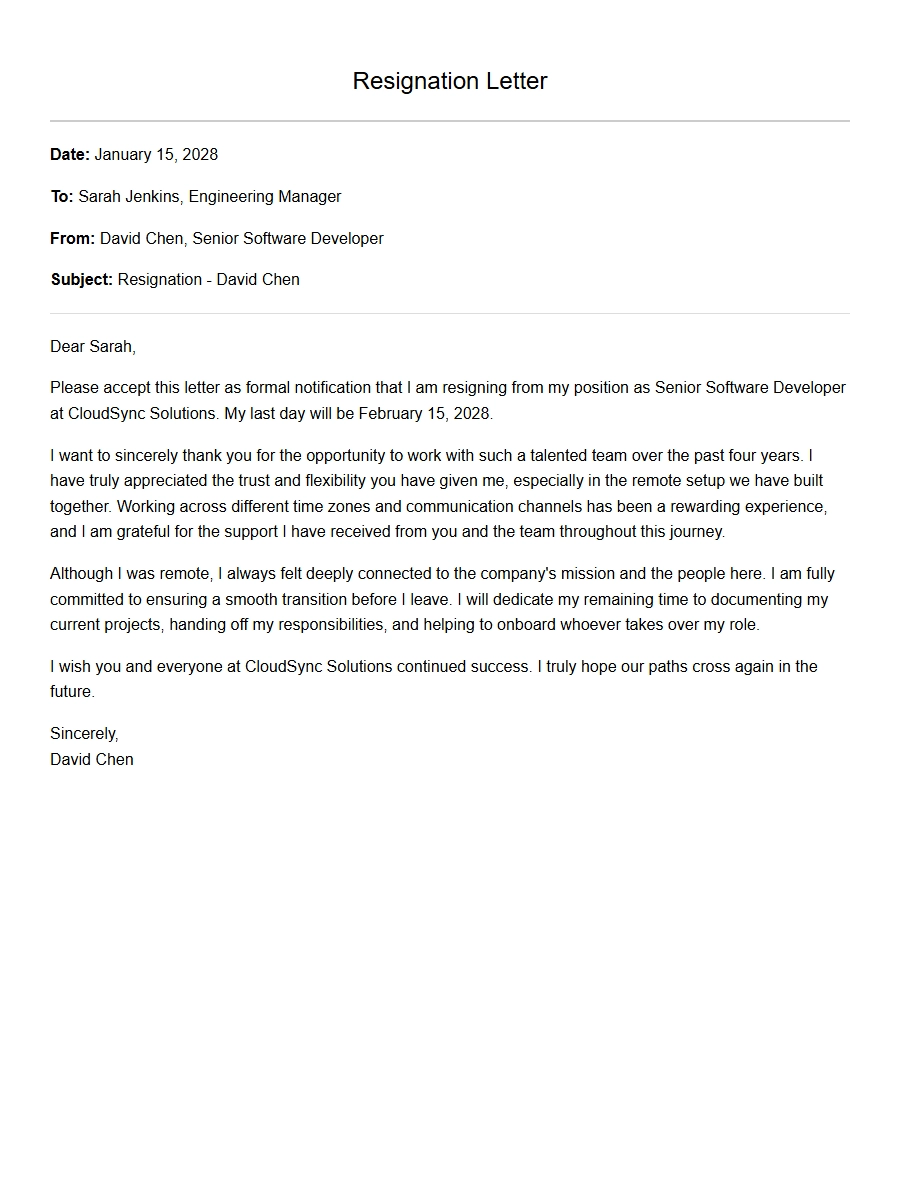 Polite Resignation Email for Remote Employees
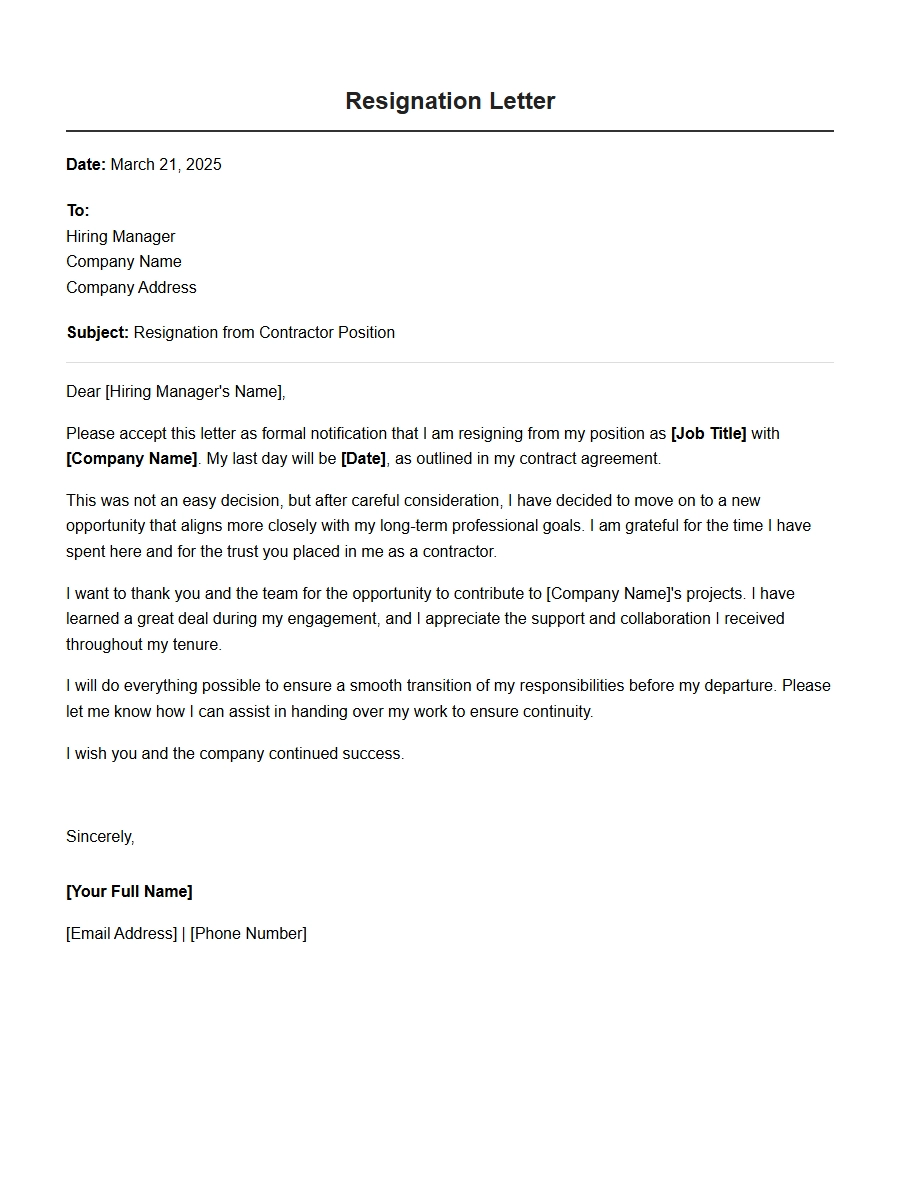 Short Resignation Letter for Contractor Position
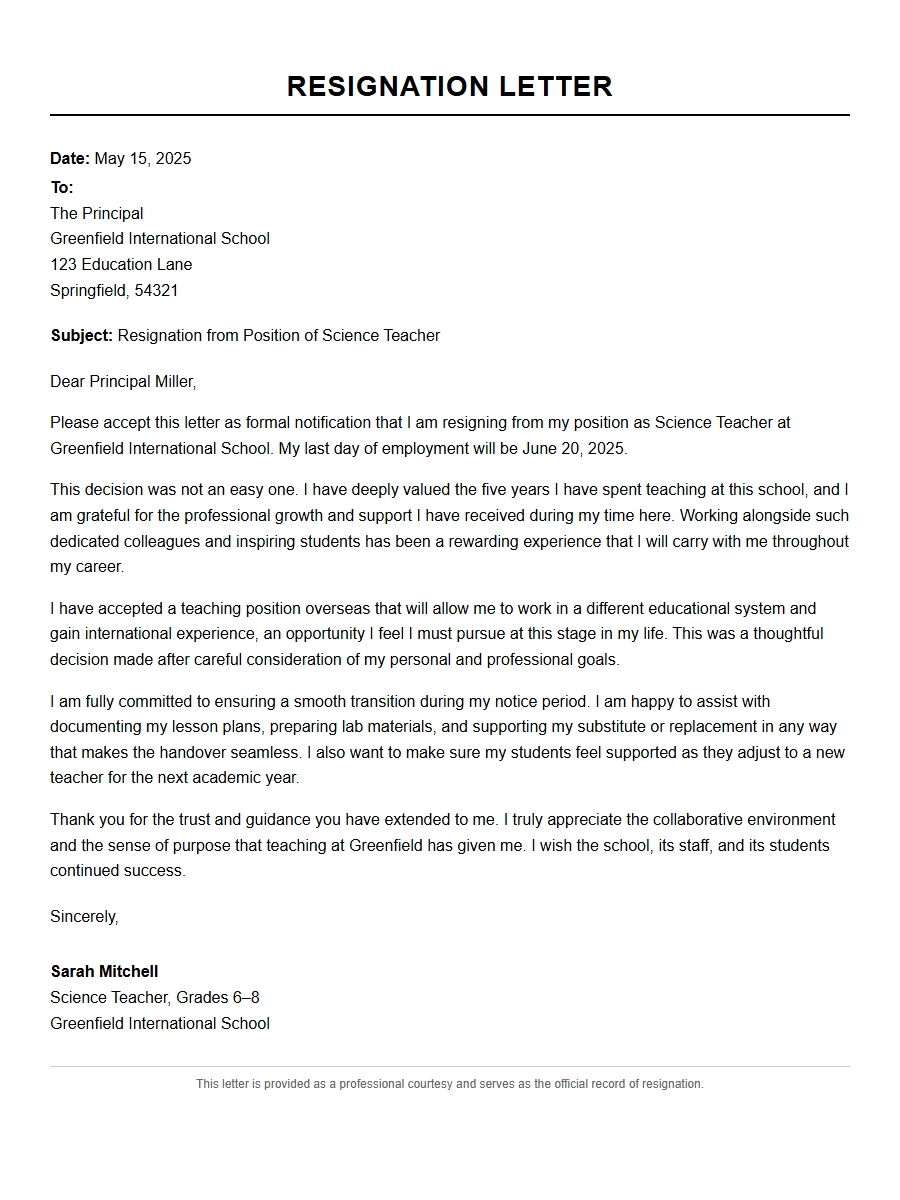 Teacher Resignation Letter Example
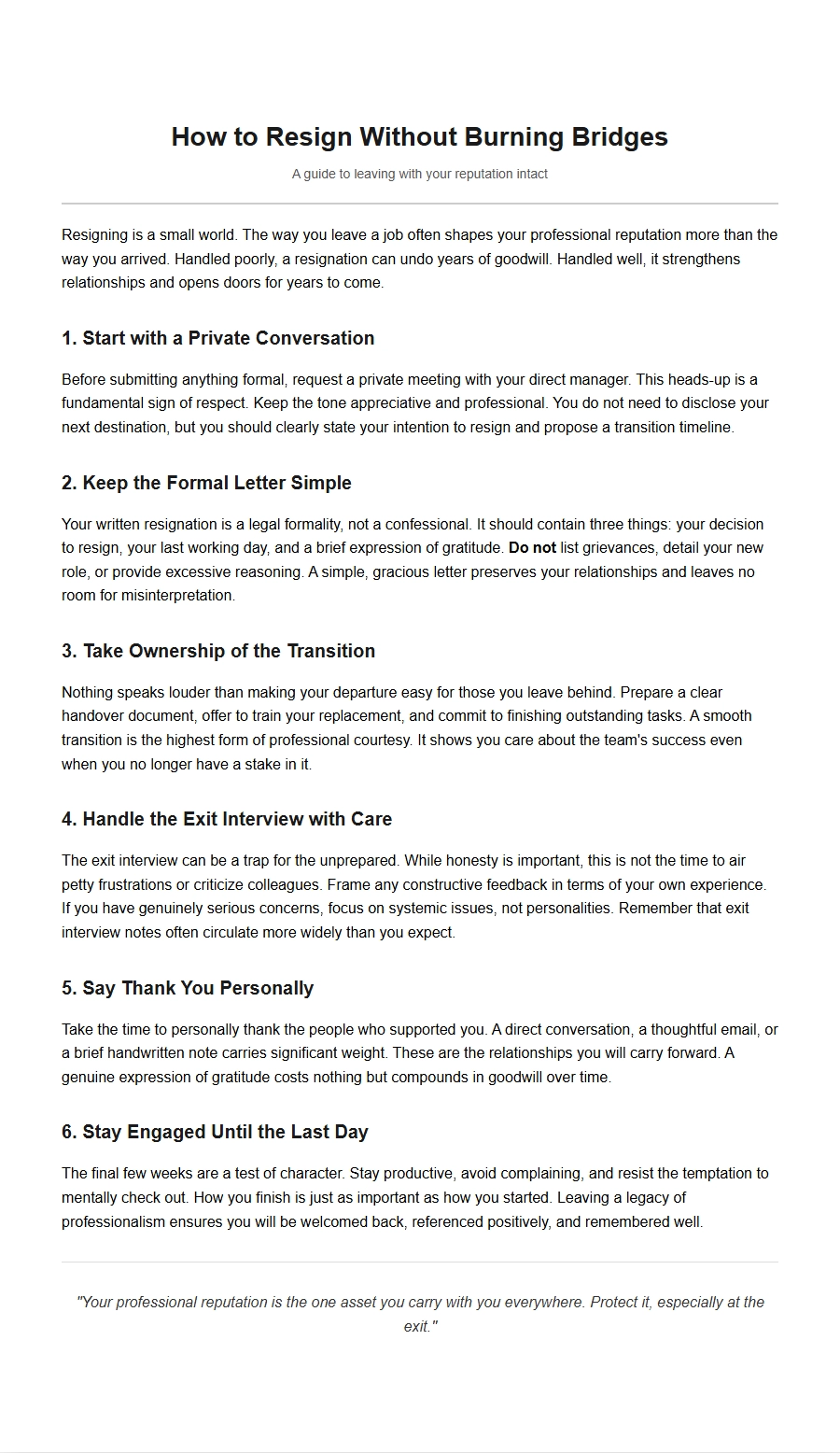 How to Resign Without Burning Bridges
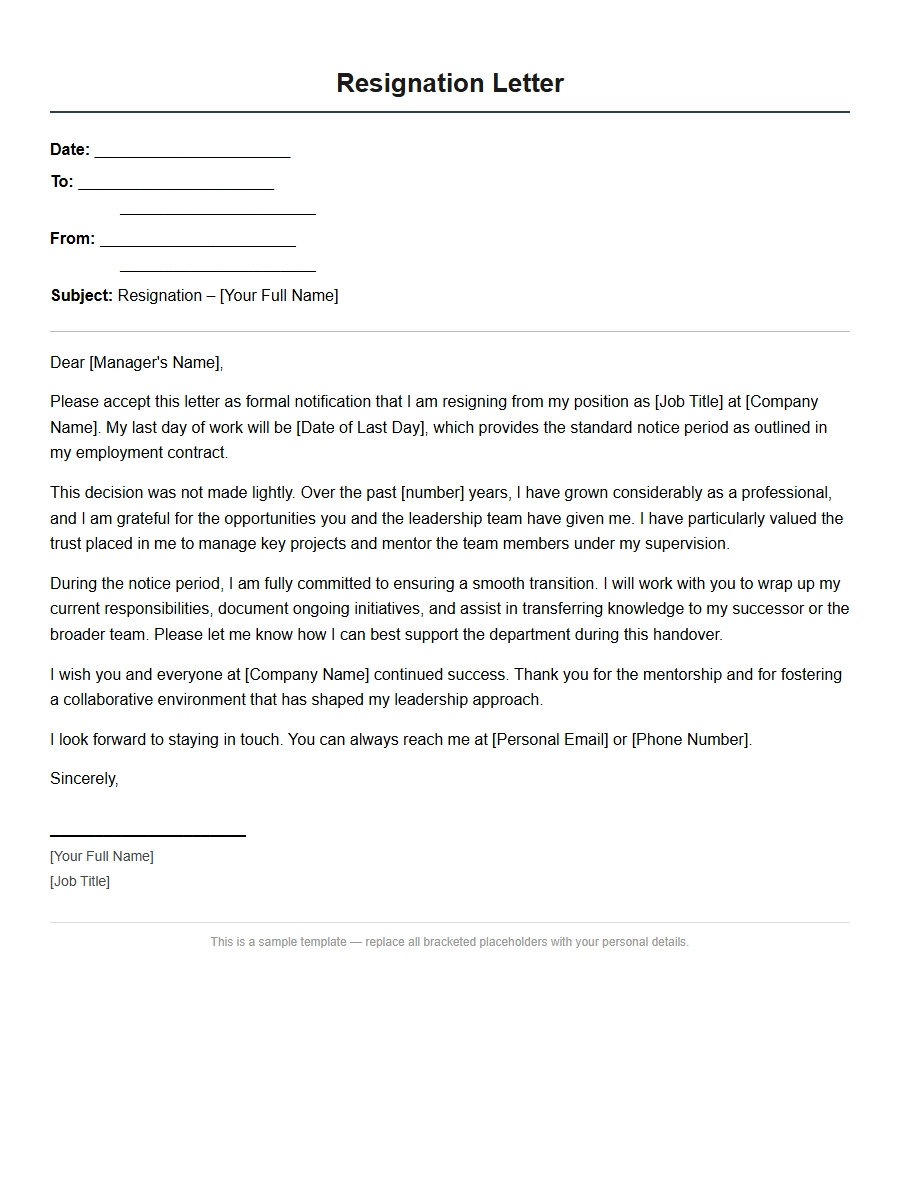 Formal Resignation Letter Sample for Manager
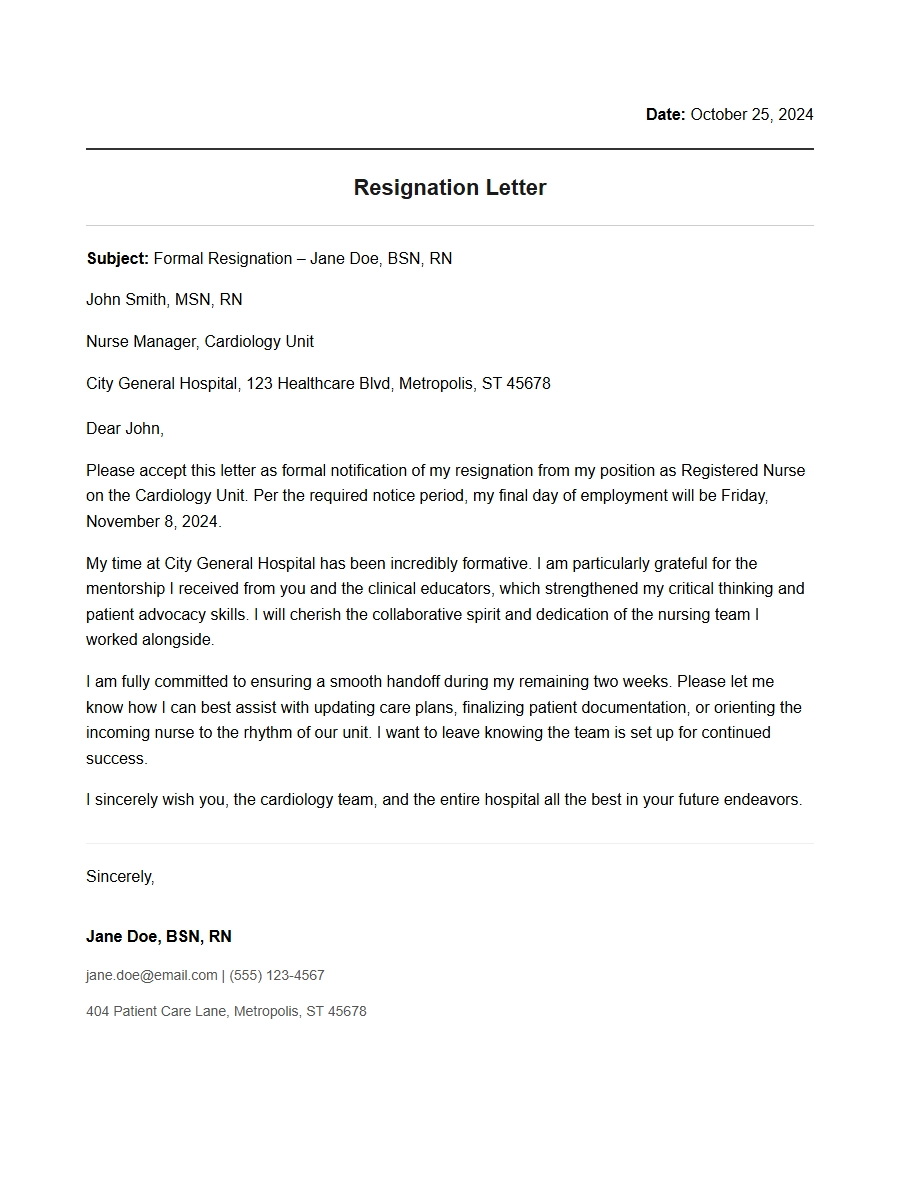 Nurse Resignation Letter with 2 Weeks Notice