Heartfelt Appreciation Message for a Project Manager
You need to send a thank-you note to your project manager, but you're stuck on how to start without sounding stiff or overly formal. It’s a common spot to be in. You want to show real appreciation for their hard work, but finding the right words can feel like a chore. The trick isn't to start from scratch. Using a well-chosen sample as your base is a smart move, not cheating. A good sample gives you a solid letter structure and the right tone in professional correspondence, saving you time while leaving plenty of room for your own personal touch.
Category: Professional Appreciation Letters
What Makes a Good Appreciation Message for a Project Manager?
A great message goes beyond a simple "thank you." It acknowledges the specific, often invisible work they do: keeping the team on track, clearing obstacles, managing stress from above, and celebrating small wins. Your note should feel genuine, not like a generic letter template you filled in. The best messages connect their actions to a positive outcome you experienced.
How to Choose the Right Sample for Your Situation
Before you grab the first sample you see, consider your relationship and the project's outcome. Was the project a huge success? A hard-fought struggle? A routine delivery? Your tone in writing needs to match the reality. A formal business letter format works best for a major, company-wide project. A shorter, warmer digital letter format is better for an email or a Slack message after a smaller win. For a project that went smoothly thanks to their organization, a direct appreciation for their planning works. If they saved a project from going under, focus on their problem-solving.
Adapting a Sample Without Losing Your Voice
This is where most people get stuck. You take a sample and it sounds like someone else. Here’s how to fix that. Read the sample and then put it aside. Write down three specific things the project manager did that you want to mention. Was it a clear weekly meeting? A calm response to a last-minute change? A tough decision they made? Once you have your specifics, rewrite the sample's opening paragraph using your own words. Start with their name and the concrete action. Something like, "Alex, I wanted to say thank you for how you handled the vendor issue last week. You kept the team focused and found a solution fast." That’s far more powerful than any generic opening.
Common Mistakes People Make
One big mistake is using an outdated salutation and closing. "To Whom It May Concern" is for cover letter examples, not a thank-you note to someone you work with. Use their first name. Also, ignore the format. If you’re sending an email, don’t use a full letterhead design with addresses. A simple subject line ("Thank you, Dana") and a polite signature block is enough. Another error is making it too long. A few tight, meaningful paragraphs are better than a page of rambling. Don't forget the proofreading letter stage. A typo in a thank-you note undercuts your sincerity. Read it out loud before you send it.
Practical Tips for Writing a Note That Lands
Start with the most specific thing you can say. That grabs attention immediately. Then, explain why that action mattered to you or the team. Finally, connect it to the project's success. Keep your sentences short and direct. Avoid corporate buzzwords like "leverage" or "synergy." If you’re sending a physical note, a handwritten message on a card feels personal, but a well-crafted email is perfectly fine. For a larger team, you might write a thank-you message for sponsor donation, but for your PM, focus on individual leadership.
Tailoring the Opening Paragraph
Don't start with "I am writing to express my gratitude." Start with a moment. "When the client changed the deadline on Tuesday, I was worried. Watching you reorganize the schedule in real-time reminded me why this team works so well." That specific opening sets a completely different tone. It shows you were paying attention. It makes your appreciation feel earned, not automatic. If you need inspiration for different situations, check out how to phrase an thank-you for covering shift work hours or a newsletter signup appreciation—the principle of specific recognition applies everywhere.
Structuring a Short but Effective Message
Think of three parts: the specific action, the impact, and the thanks. For a PM who handled a difficult stakeholder, you might write: "Thanks for managing the stakeholder meeting yesterday. Your calm approach turned a tense conversation into a productive one. It saved us from a lot of rework." That's it. You don't need to add fluff. This structure works for almost any professional correspondence. It’s direct, honest, and easy to write. You can see similar directness in a sponsor donation thank-you or a client thank-you email.
Using the Sample as a Springboard
Your goal is a letter that feels both professional and personal. The sample gives you the skeleton; your specific memories and honest words give it a heartbeat. Don't worry if your first draft feels a little rough. Writing is rewriting. If you're unsure about tone, lean toward being a little too personal rather than a little too corporate. It’s easier to pull back warmth than to add it. If you ever need guidance on how to handle a delicate situation, a note about a return or exchange policy can teach you how to be clear and polite at the same time.
You’ll get faster at this with practice. The more you write genuine appreciation, the more naturally it comes. So pick a sample that feels close, think of one real moment, and start writing. The PM will appreciate the effort, and you’ll feel good for having sent it.
Samples You Can Use
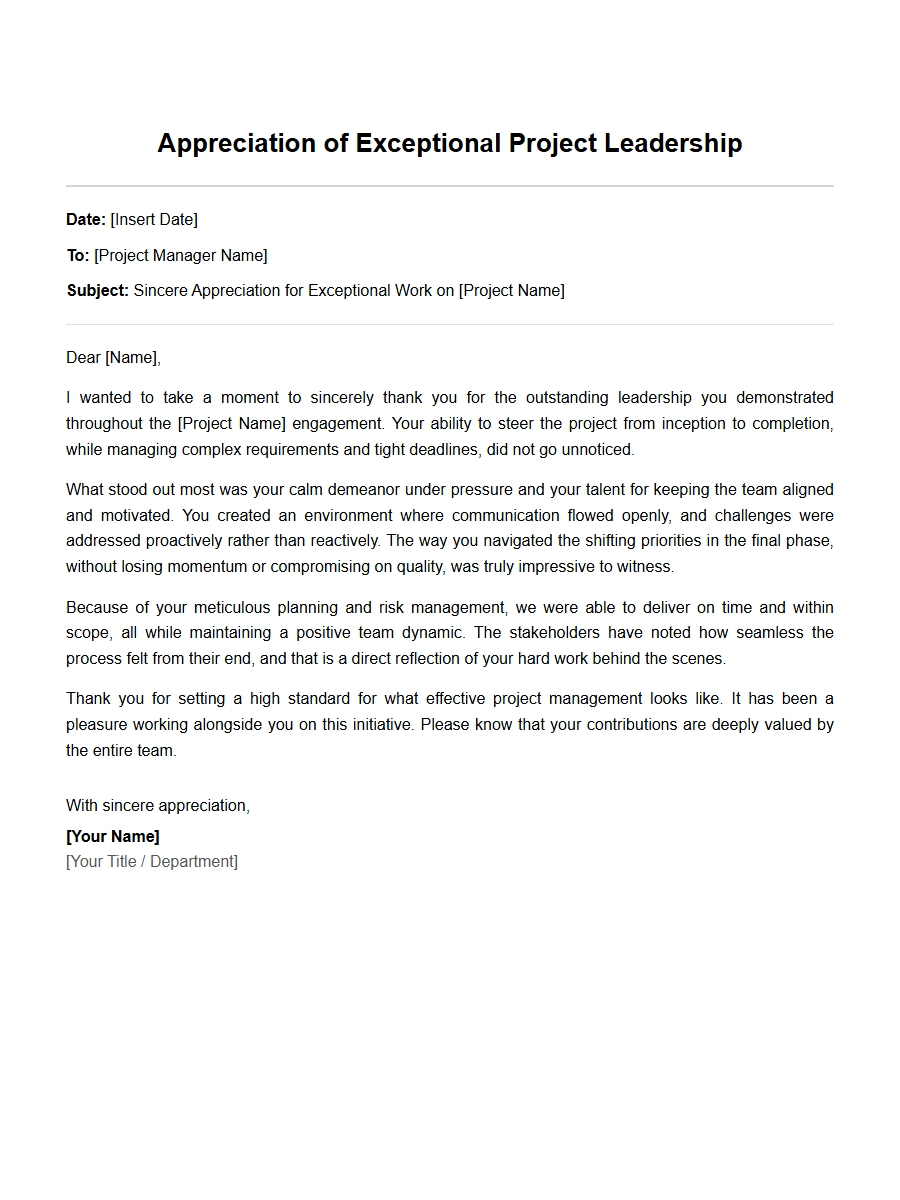
Heartfelt Appreciation Message for a Project Manager
Formal Project Completion Appreciation
Dear Project Manager,
On behalf of the entire team, I would like to extend our sincere gratitude for your exceptional leadership during the Horizon Integration project. Your meticulous planning and unwavering dedication ensured that we delivered on time and within budget.
Key highlights of your contribution:
Clear milestone tracking and risk mitigation
Regular transparent communication with stakeholders
Empowering team members to take ownership
Project details:
Metric
Value
Project Duration
6 months
Budget Variance
+2% (under budget)
Customer Satisfaction
4.8/5.0
Thank you for making this project a resounding success. We look forward to working with you on future initiatives.
Best regards, John Smith Project Sponsor
Short Appreciation Note for Extra Effort
Hi Alex,
Just a quick note to say thank you for going above and beyond on the Greenfield Launch last week. Your willingness to work late and resolve the deployment issues saved us from a major delay.
Your extra efforts included:
Coordinating with the DevOps team over the weekend
Updating the risk register proactively
Conducting an impromptu training session for new testers
I truly appreciate your commitment to quality and your calm demeanor under pressure. It is a pleasure to have you as our project manager.
With gratitude, Maria Lopez QA Lead
Team Appreciation Letter from Colleagues
Dear Jamie,
On behalf of the entire development and design teams, we want to express our heartfelt thanks for your exceptional project management. Your ability to balance our needs with client expectations made our work both efficient and enjoyable.
What we appreciated most:
Daily standups that were concise and focused
Clear task prioritization in JIRA
Respecting our time by shielding us from unnecessary meetings
Celebrating small wins with team shoutouts
Team feedback scores:
Category
Score (out of 5)
Communication
5
Support
4.9
Motivation
5
You truly set the standard for how a project manager should lead. Thank you for everything!
Warmly, Your Project Team
Thank-You for Mentorship During Project
Dear Raj,
I wanted to thank you personally for the mentorship you provided during the Cloud Migration project. As a junior team member, I learned so much from your structured approach and patience.
Specifically, you helped me with:
Understanding risk assessment matrices
Effectively communicating technical issues to non-technical stakeholders
Time management techniques for parallel work streams
Your guidance turned a daunting project into a valuable learning experience. I feel much more confident in my role because of you.
Thank you for investing in my growth.
Sincerely, Emily Chen Junior Developer
Appreciation for Handling a Crisis
Dear Sarah,
I want to express my deepest appreciation for how you handled the database outage during the Phoenix Release. Your quick thinking and calm leadership turned a potential disaster into a minor hiccup.
Your actions that made a difference:
Immediately formed a cross-functional response team
Provided clear status updates every 30 minutes
Negotiated with the client for a reasonable deadline extension
Led the post-mortem to prevent recurrence
Because of you, we retained client trust and even received praise for our transparency. You are a true crisis manager.
Thank you for keeping us on track when it mattered most.
Best, David Park Operations Director
Client Thank-You Letter to Project Manager
Dear Mr. Thompson,
On behalf of Acme Corp, I would like to thank you for the outstanding management of our custom ERP implementation. Your proactive communication and attention to our unique requirements made the process smooth and transparent.
We particularly valued:
Weekly progress reports with clear metrics
Prompt resolution of change requests
User training sessions tailored to our teams
Project performance summary:
Deliverable
Status
Requirements Phase
Completed on time
Development Sprint
Completed on time
User Acceptance Testing
Passed with 98% success
Go-Live
Achieved ahead of schedule
Your professionalism has set a high bar for future engagements. We look forward to our continued partnership.
Yours sincerely, Linda Gray VP of Operations, Acme Corp
Thank-You for Efficient Communication
Hi Marcus,
I just wanted to say a big thank you for the way you managed communication on the Brand Refresh project. Your clear, concise emails and timely agenda sharing saved all of us countless hours of confusion.
Specifically, your communication style included:
A single weekly status document instead of multiple threads
Immediate Slack updates when decisions were made
Visual sprint plans that were easy to follow
Your approach made it easy for the creative team to focus on design work without constant interruptions. You made coordination feel effortless.
Thanks again for making our jobs easier!
Cheers, Nina Patel Lead Graphic Designer
Appreciation for Budget Management
Dear Karen,
I would like to formally recognize your outstanding financial management of the Warehouse Automation project. You kept us within budget while still delivering all critical features.
Your budget stewardship included:
Identifying cost-saving alternatives for hardware vendors
Tracking expenses weekly with detailed spreadsheets
Forecasting risks that could impact the bottom line
Budget overview:
Category
Planned
Actual
Hardware
$120,000
$115,000
Software Licenses
$45,000
$44,200
Consulting
$60,000
$58,000
Contingency Used
$15,000
$2,800
Your diligence saved the company over $20,000. Thank you for your fiscal responsibility.
With appreciation, Tom Wright Chief Financial Officer
Thank-You for Leadership and Motivation
Dear Mia,
I want to thank you for the incredible leadership you showed during the Legacy System Upgrade. Your ability to keep the team motivated through challenging technical hurdles was truly inspiring.
You created a positive environment by:
Holding weekly one-on-ones to check on morale
Recognizing individual contributions in team meetings
Organizing a small celebration after each sprint milestone
Your energy was contagious. Even when we faced scope creep, you helped us refocus without losing momentum. The project finished three weeks early because of your leadership.
Thank you for being the kind of manager who brings out the best in everyone.
Gratefully, Chris Evans Senior Software Engineer
Simple Thank-You Card Message for Project Manager
Dear Jordan,
Just a simple note to say thank you for all you do. Your careful planning, calm guidance, and genuine care for every team member make you an exceptional project manager.
A few things I personally appreciate:
Your open-door policy
How you always ask about work-life balance
The way you defuse tense situations with humor
Project details at a glance:
Project
Status
Mobile App Redesign
Completed
API Integration
In progress
Documentation Overhaul
Under review
Working with you is a pleasure. Thank you for being such a wonderful project manager.
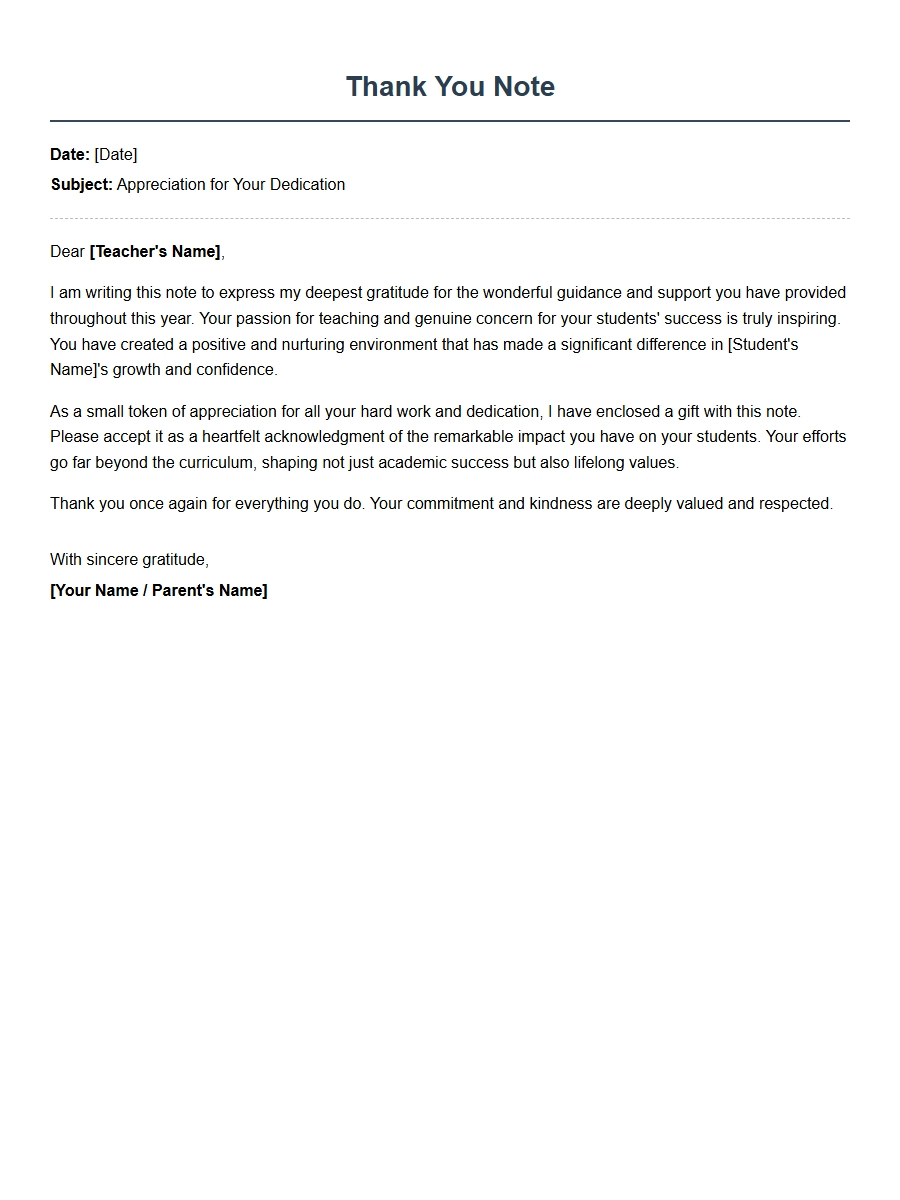 Sample Thank You Note for Teacher Gift
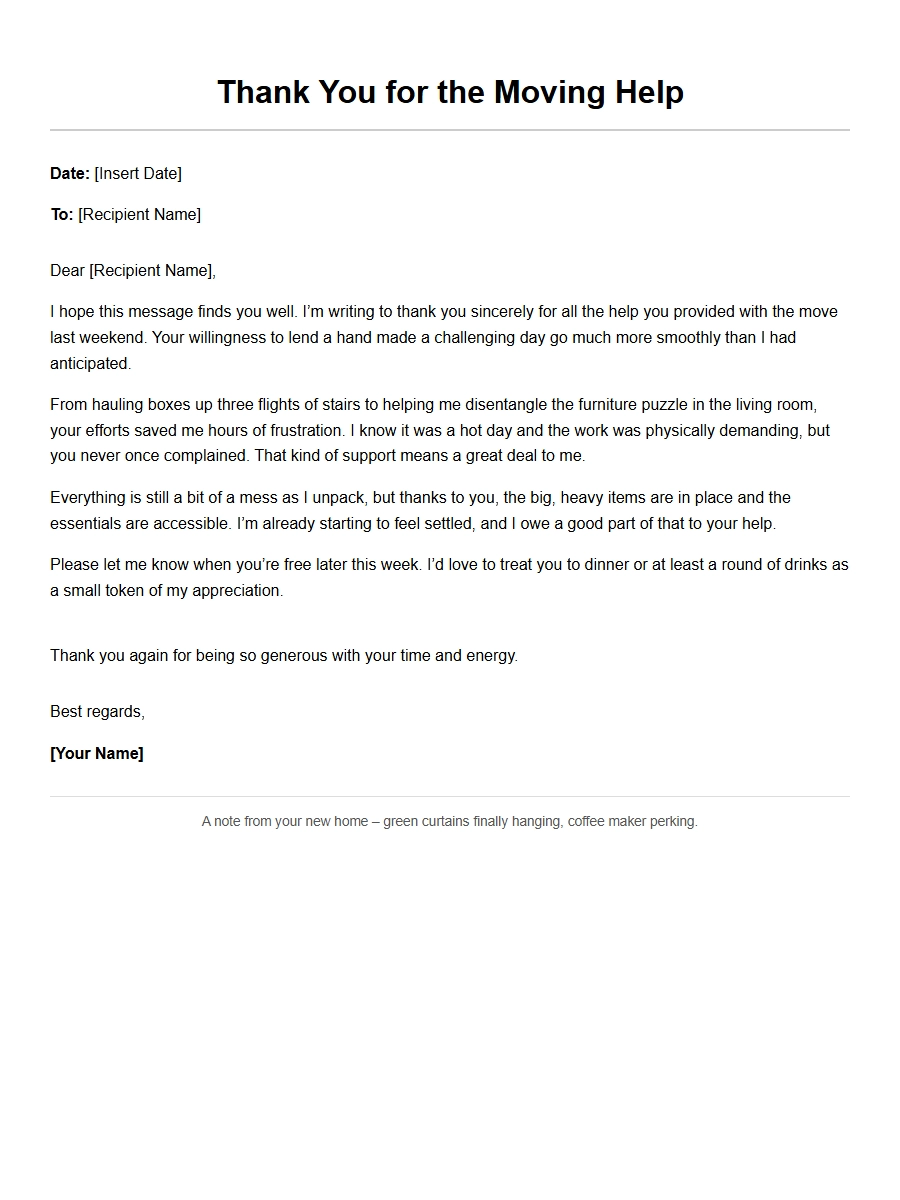 Thank-You Letter for Help with Moving
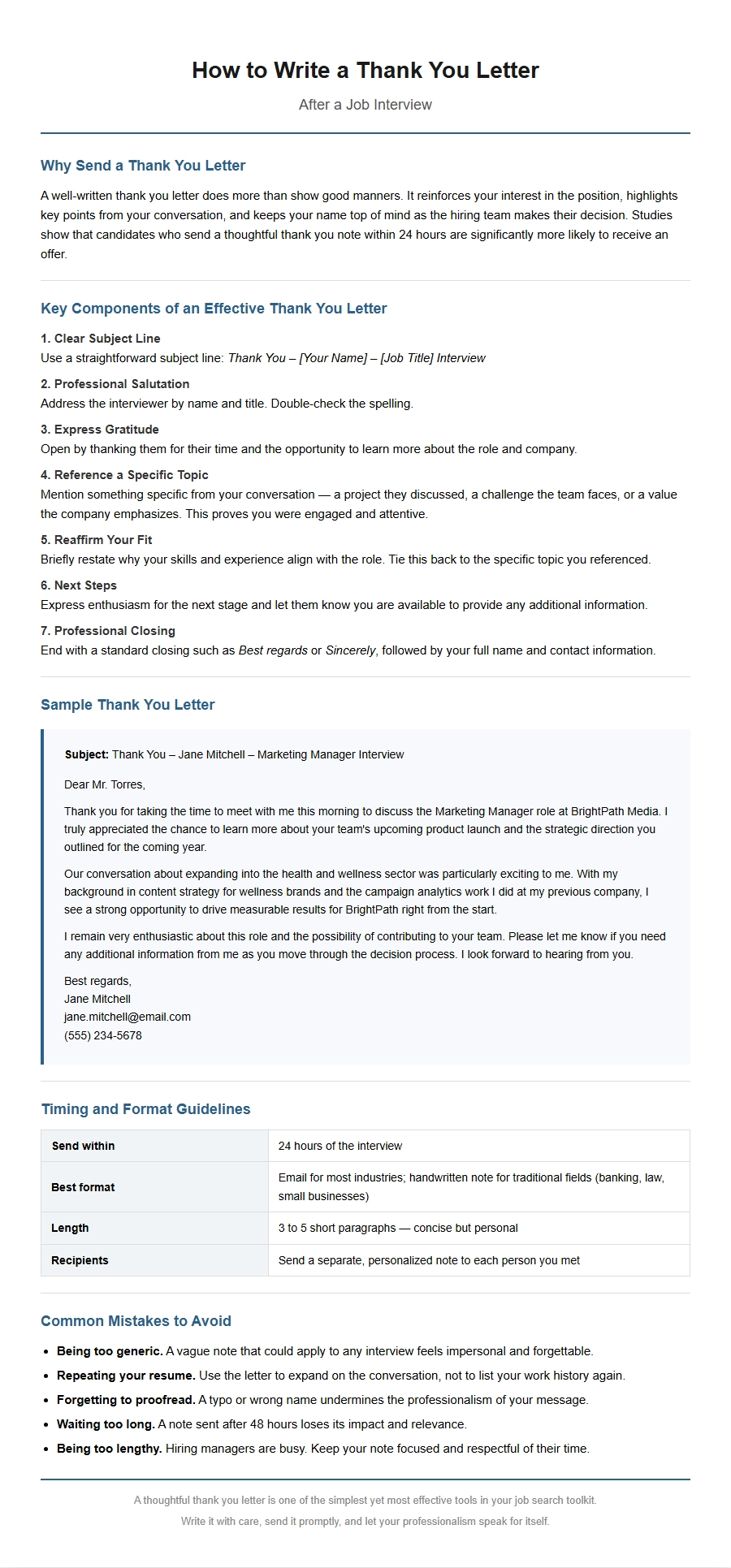 How to Write a Thank You Letter After an Interview
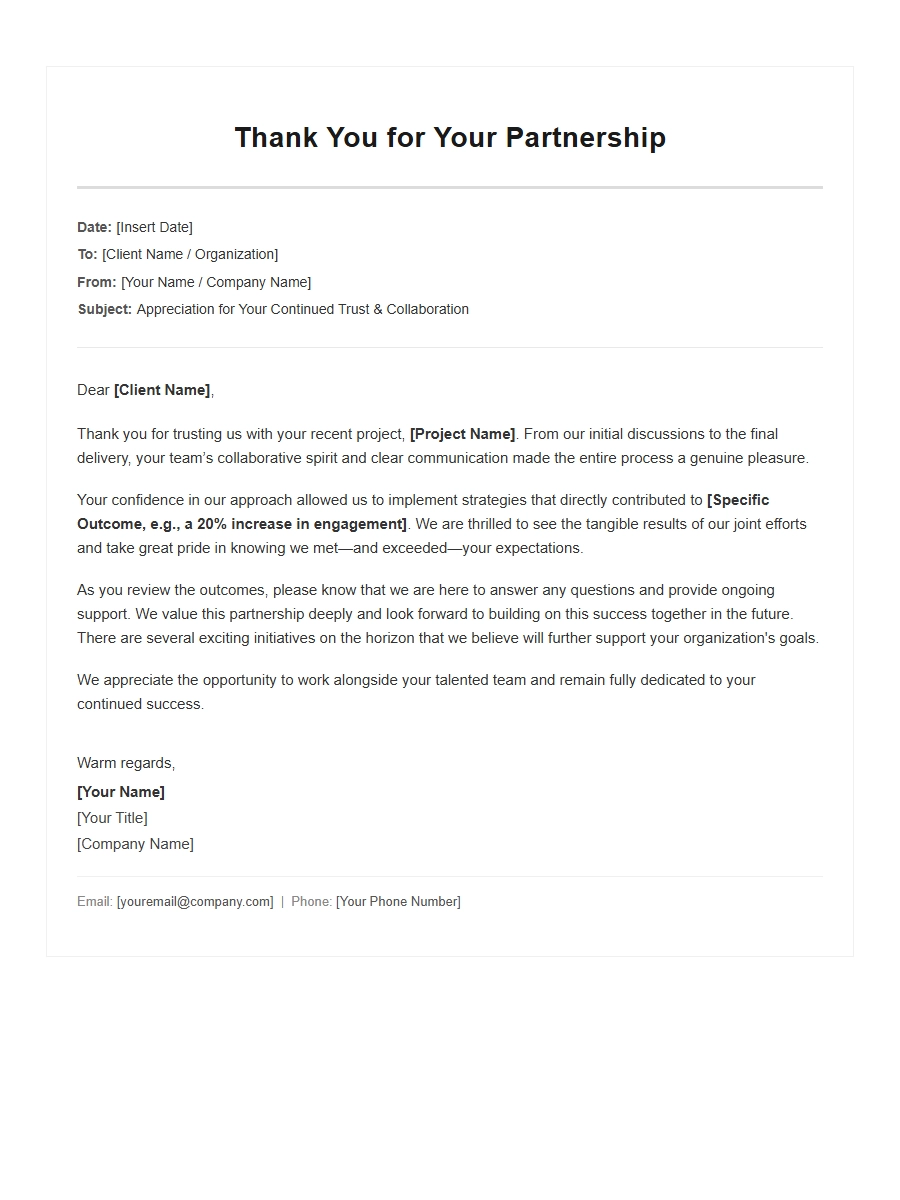 professional thank you email example for client - Thank-You Letters
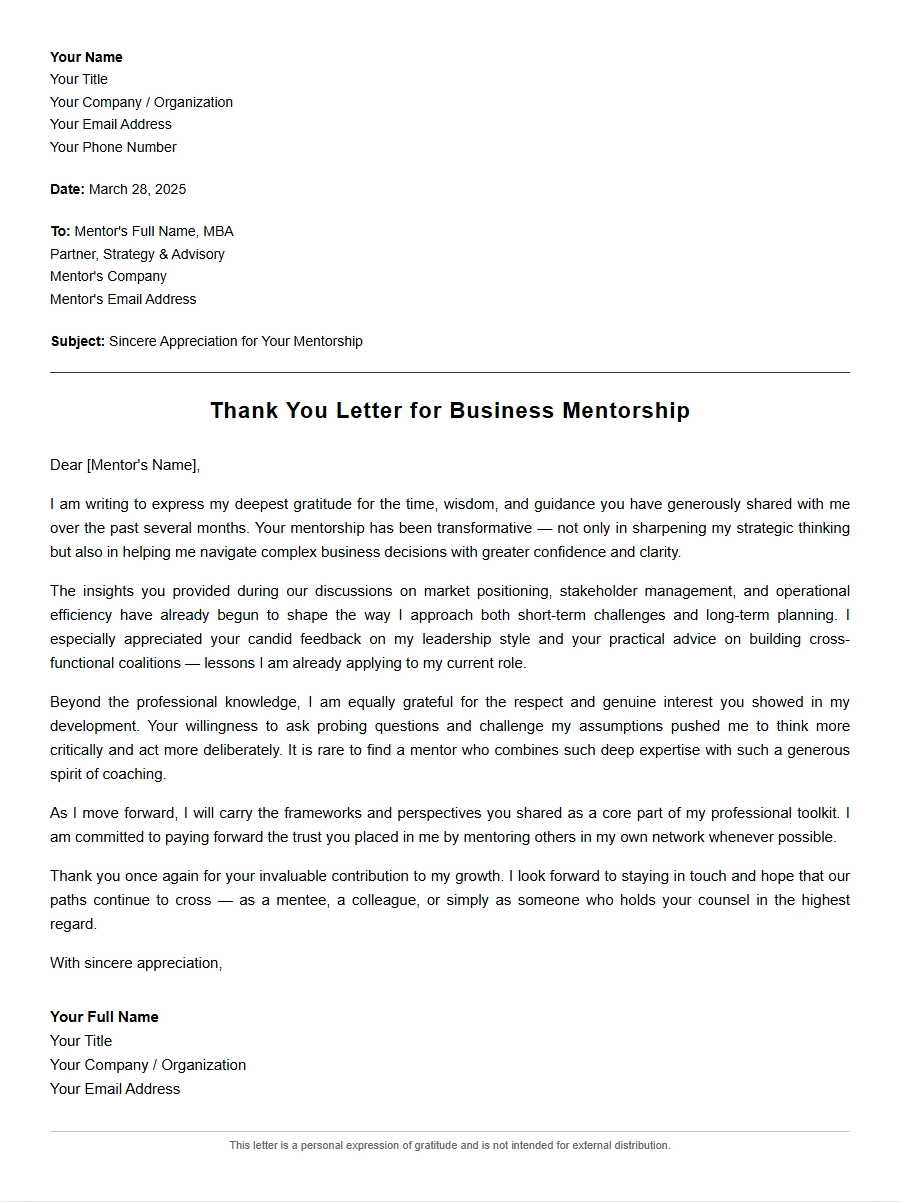 Business Mentor Thank-You Letter Guide
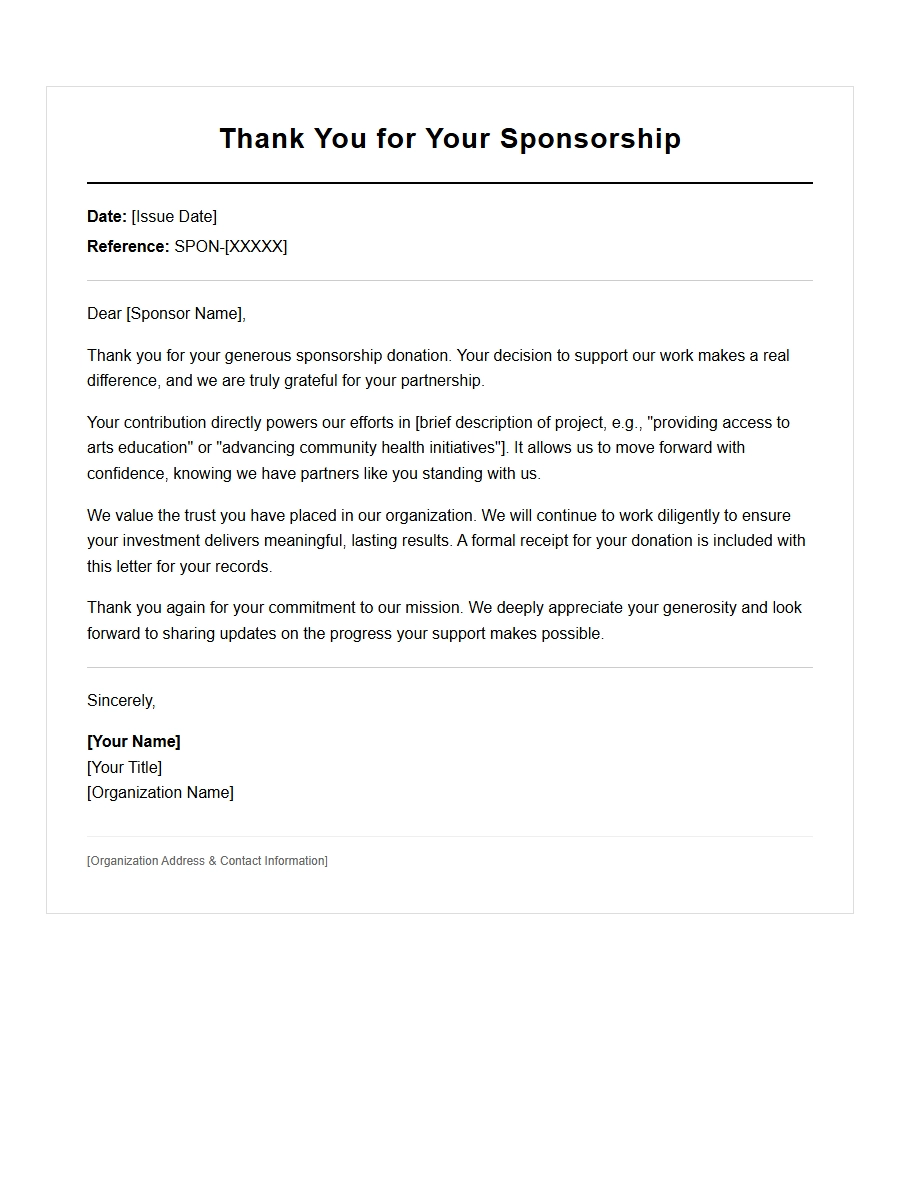 Thank You Letter for Sponsor Donation