You've got a handful of high-value guests who've paid a premium for a charity auction, and now you need to invite them to the VIP seating area. The pressure to get the wording right is real—too formal and it feels cold, too casual and it undermines the exclusivity they paid for. That blank page staring back at you is not a reflection of your writing ability; it's just a lack of a solid starting point.
Why a sample is your shortcut, not a cheat
Using a letter template for a VIP seating invite isn't about copying. It's about starting from a proven structure so you can focus on the personal touches that actually matter. A good sample gives you the business letter format and the right tone in writing so you don't have to guess whether "Esteemed Patron" is too stuffy or "Hey there" is too casual. You get the framework; you bring the personality.
This is especially true when you're writing for a charity auction. Your invite needs to do three things at once: thank them for their support, confirm the exclusive experience, and make them feel like the most important person in the room. That's a lot for one paragraph to carry.
Finding the right tone between formal and friendly
The biggest mistake I see in VIP seating invites is going either too corporate or too buddy-buddy. Your guests are donors who spent serious money, but they're also people who want to enjoy a night out. The sweet spot is professional correspondence that feels warm and appreciative.
Letter writing etiquette for this situation suggests you start with gratitude. Something like: "Thank you for your incredible support of our mission. Your generosity places you at our VIP table, where you'll enjoy premium views and dedicated service throughout the evening." That's direct, respectful, and immediately makes them feel valued.
If you're looking for how to structure the full invitation, check out our sample invitation letter for charity gala to see how the opening and closing flow works. The same principles apply here, just with a tighter focus on the VIP seating element.
Tailoring the sample without losing your voice
Once you have a sample, do not paste it in and call it done. Read it aloud. Does it sound like something you'd actually say? If you run a small local charity, your language should feel warmer than a national organization's. If your event is black-tie, your letter structure can be more formal. If it's a casual gala with a live band, loosen up a little.
The easiest way to adapt a sample is to rewrite the first paragraph in your own words. Keep the salutation and closing from the sample if they fit, but change the body to reflect your specific event details. Mention the auction items they helped win. Name the entertainer. Describe the view from their table. Specificity is what makes a customizable letter feel personal.
Common mistakes to skip
Proofreading your letter is non-negotiable, but I see two errors all the time in VIP invites. First, people use outdated salutation and closing phrases like "To Whom It May Concern" or "Sincerely yours" when the guest has a name and a known relationship to your organization. Use their name. It's a formal writing tip that sounds obvious, but you'd be surprised how often it's missed.
Second, don't forget the format. If you're mailing a printed invite, make sure your letterhead design is clean and doesn't compete with the message. If you're sending by email, use a clear subject line like "Your VIP Seating Details for [Event Name]" and keep the body shorter. A digital letter format should be scannable—no one reads long email paragraphs on their phone at a charity event.
Making the opening line work harder
The opening of your invite does the heavy lifting. Instead of "We are pleased to inform you," try something like: "Your winning bid earned you a seat at the center of the action." That's more exciting and more specific. If you need inspiration for how other events handle their opening warmth, the sample wording for housewarming toast invitation shows how a casual but gracious tone can set the mood right away.
The practical details people actually care about
Beyond the fancy language, your VIP seating invite needs to be useful. Tell them exactly where the VIP section is, what time they should arrive, and what perks are included—valet parking, a personal host, a private bar, whatever you've arranged. Don't bury this information in flowery paragraphs. Use short sentences: "Your table is Table 7. Please arrive by 6:30 PM. Your host, Maria, will greet you at the entrance."
If your event includes an anniversary or milestone celebration, the invitation letter for anniversary party template shows how to balance celebration with clear logistics. That same clarity applies here—your guests need to feel special, but they also need to know where to go.
When to adjust for a music festival or speaker event
Not all auction VIP experiences are formal galas. If your charity auction is part of a music festival, your VIP invite wording should match that energy—shorter sentences, fewer formalities, more excitement. The sample draft for music festival attendee invite uses a punchy, direct style that works well for younger audiences or outdoor events. For a speaker appearance, the tone shifts again toward professional respect. The formal invitation text for speaker appearance shows how to maintain prestige without sounding like a legal document.
Your auction guests paid for an upgrade. Your wording should reflect that value without over-promising. Stick to what you can actually deliver, and say it with genuine appreciation. That combination is what turns a good invite into a great guest experience.
Use your sample as a springboard, not a crutch. The more you practice writing these invites, the faster the words will come. Eventually, you'll reach for a sample less often—but when you're in a hurry or the stakes are high, having one ready is the smartest move you can make.
Samples You Can Use
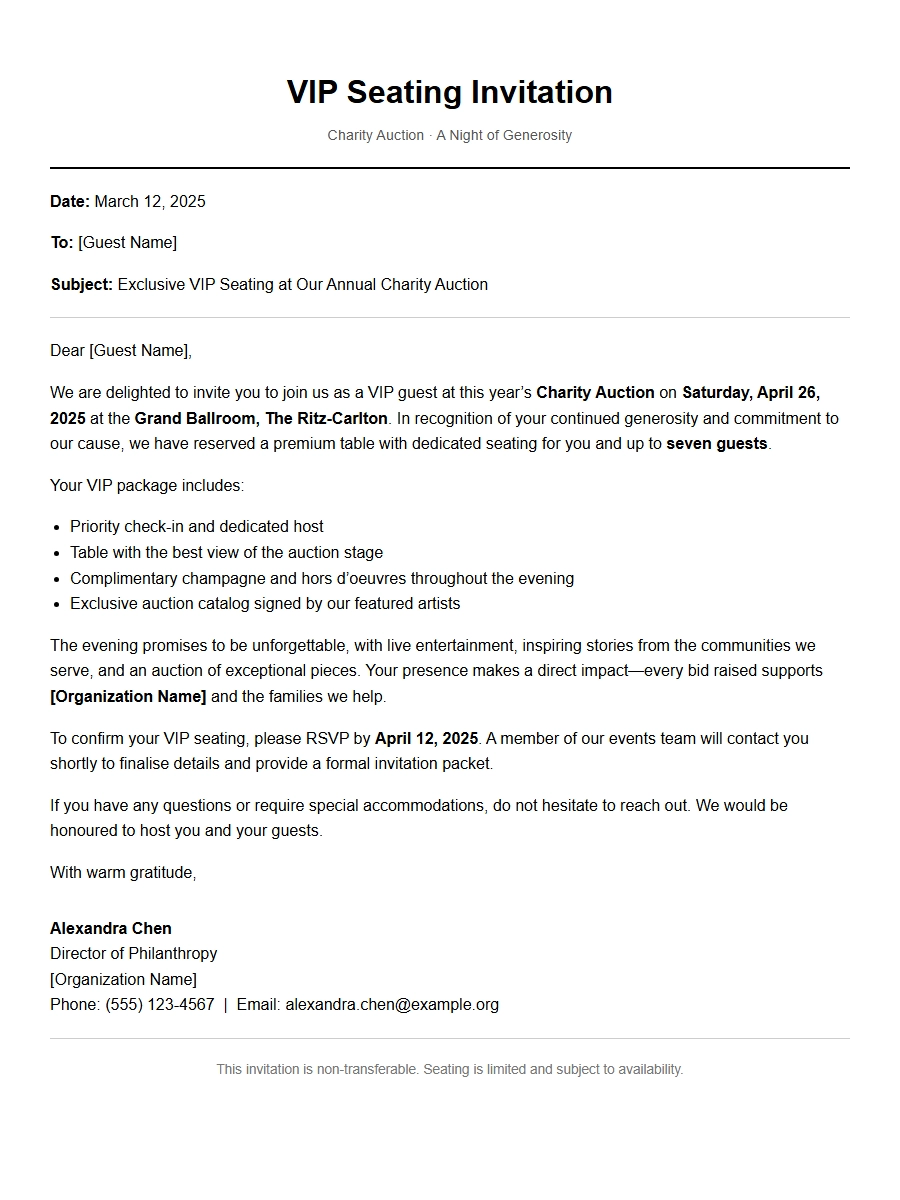
Charity Auction VIP Seating Invitation Wording
Classic Formal VIP Seating Invitation
You are cordially invited to an evening of elegance and generosity at the Annual Charity Gala. As a valued guest, we have reserved exclusive VIP seating for you.
Enjoy premium placement near the stage, a dedicated host, and early bidding access. Your presence will help us raise vital funds for [Cause Name].
VIP Benefit
Details
Seating Location
Front row, center section
Complimentary Champagne
Upon arrival and during auction
Personal Auction Assistant
Assists with bids and item pickup
Gift Bag
Curated luxury items worth $200+
Date: [Date] at [Time] Location: [Venue Name], [Address] Dress Code: Black Tie RSVP by: [RSVP Date] to [Contact Info]
We look forward to celebrating with you. Please confirm your attendance at your earliest convenience.
Exclusive Preview & Early Bidding Invitation
As a VIP seating guest, you are granted exclusive early access to preview and bid on auction items before the general admission. This invitation is non-transferable.
Join us for a private cocktail hour with the auction committee and a curated display of featured lots.
Preview Time
Activity
6:00 PM – 6:45 PM
Private viewing of silent auction items
6:45 PM – 7:15 PM
Early bidding opens (VIP only)
7:30 PM
Main event begins
Date: [Date] VIP Check-in: 5:45 PM at the East Entrance Location: [Venue], Grand Ballroom
Please bring this invitation or your digital confirmation. Seating will be assigned in order of RSVP.
Sponsors’ Circle VIP Table Invitation
Your generous sponsorship places you in our Sponsors’ Circle, and we are delighted to reserve a premium table for you and your guests. This table seats up to ten and includes prominent recognition throughout the evening.
As a sponsor, you will also receive:
Company logo displayed on event screens and printed program
Mention during the opening remarks
Access to the post‑auction reception with featured artists
Here are the available sponsorship levels for additional tables if needed:
Level
Tables Included
Additional Table Price
Platinum
2
$5,000
Gold
1
$3,500
Silver
1
$2,000
Date: [Date] at [Time] Location: [Venue Name] Please confirm your number of attendees by [RSVP Date]. We look forward to honoring your support.
Masquerade Themed VIP Seating Invitation
Step into an enchanted evening at our Masquerade Charity Auction. As a VIP guest, you will be seated at a prime table with a view of the stage and the auction podium.
Costume and mask are encouraged! The night will feature a live orchestra, signature cocktails, and a dazzling array of auction lots.
VIP Seating Perks: Welcome glass of Veuve Clicquot, mask gift, and priority paddle number
Dress Code: Formal masquerade – mask required for entry to VIP area
Entertainment: Live jazz during dinner, then a live auction hosted by [Emcee Name]
Date: [Date] at 7:00 PM Location: [Venue], Crystal Ballroom Please RSVP with your mask color preference (gold, silver, black) by [Date]. Unmask your generosity – join us!
Urgent – Last Few VIP Tables Available
VIP seating is almost sold out! Due to overwhelming demand, we have released a limited number of VIP tables for [Event Name]. This is your last chance to secure the best seats in the house while supporting [Cause].
Each VIP table includes:
Eight prime seats with dedicated server
Private hosted bar (beer, wine, and signature drink)
Exclusive auction preview 30 minutes early
Recognition in the event program
Table Package
Price
Remaining
VIP Table of 8
$4,000
3
VIP Table of 4
$2,200
5
Individual VIP Seat
$600
12
To reserve, reply to this invitation or call [Phone Number] by [Date]. Don’t miss this opportunity to make a difference from the front row.
Digital VIP Invitation (Email Style)
You’re invited to the VIP experience! Join us at the [Event Name] Charity Auction, where every bid changes lives. As a VIP ticket holder, you get the best seats and exclusive perks.
Seating: Front section, reserved table with your name
Perks: Complimentary champagne, dedicated auction runner, gift bag valued at $150
Access: Early bidding via mobile app; VIP entrance lane
Event Details:
Item
Detail
Date
[Date]
Time
6:30 PM – 11:00 PM
Location
[Venue], Main Hall
Attire
Cocktail / Formal
RSVP
Click here to confirm (link) by [Date]
Spaces are strictly limited. Reserve your seat now to avoid disappointment.
Corporate Table Host Invitation
Your company is cordially invited to host a VIP Corporate Table at the Charity Auction Gala. This is an excellent opportunity to entertain clients, reward employees, and showcase your commitment to [Cause].
Each corporate table accommodates up to 10 guests and includes premium branding and recognition.
Corporate Table Package
Price
Benefits
Platinum Table
$10,000
Logo on stage banner, full-page ad in program, speaking opportunity
Gold Table
$6,500
Logo on table tent, half-page ad, mention from podium
Silver Table
$4,000
Company name in program and rotating screen
Date: [Date] at 7:00 PM Location: [Venue], Grand Ballroom Seating: VIP area with dedicated waitstaff
Please RSVP by [Date] to [Contact Person] at [Email/Phone]. Together we can make a lasting impact.
Couples’ VIP Seating Invitation
Enjoy an intimate and unforgettable evening together at our Charity Auction. We have reserved a special VIP table for two just for you and your guest.
Your couple’s experience includes:
Private two-top table in the VIP section
Bottle of premium champagne on arrival
Personal auction assistant for your bids
Commemorative photo of the evening
Tickets for this exclusive couple’s setting are limited.
Package
Price
Includes
VIP Couple (2 seats)
$1,200
Champagne, photo, assisted bidding
VIP Couple + Donation
$1,800
Above plus a $600 tax-deductible donation
Date: [Date] at 7:30 PM Location: [Venue], Terrace Room Please confirm by [Date]. Celebrate love and generosity side by side.
Legacy Patron VIP Invitation
As a long-standing supporter of [Organization], we honor you with a Legacy Patron VIP Seating invitation. This is our way of thanking you for your years of dedication and impact.
Your exclusive experience includes:
Reserved table for four with your name engraved on the seat markers
Private reception with the board of directors before the event
First opportunity to bid on the featured “Legacy Lot”
Personalized thank-you gift
Event Details:
Event
Description
Reception
6:00 PM – 6:45 PM (VIP Lounge)
Dinner & Auction
7:00 PM – 10:30 PM (Ballroom)
After-Party
10:30 PM – Midnight (Patron only)
Please RSVP by [Date] to [Contact]. We treasure your partnership and look forward to welcoming you once again.
Young Professionals VIP Networking Invitation
Calling all rising stars! Join us for a Young Professionals VIP Experience at the Charity Auction. Network with like-minded peers while enjoying premium seating and exclusive access.
This invitation is specifically designed for young professionals aged 25–40 who want to make a difference in style.
VIP seating in the “Next Generation” section with high-top tables
Complimentary craft cocktails and small plates
Access to the VIP auction after-party with DJ
Digital bidding guide and mobile paddle
Tickets are limited to 50 guests.
Package
Price
Perks
Individual VIP
$350
All above + $50 donation credit
Duo VIP (two friends)
$600
Seated together, extra drink ticket each
Table of 6
$1,800
Reserved table, bottle service
Date: [Date] at 7:00 PM Location: [Venue], Gallery Space RSVP by [Date]. Bid big, give big, and party bigger.
 sample invitation for local market stall tour - Invitation Letters
 Art Exhibition Opening Invitation Wording Ideas
 Thanksgiving Meal Gathering Invitation Text
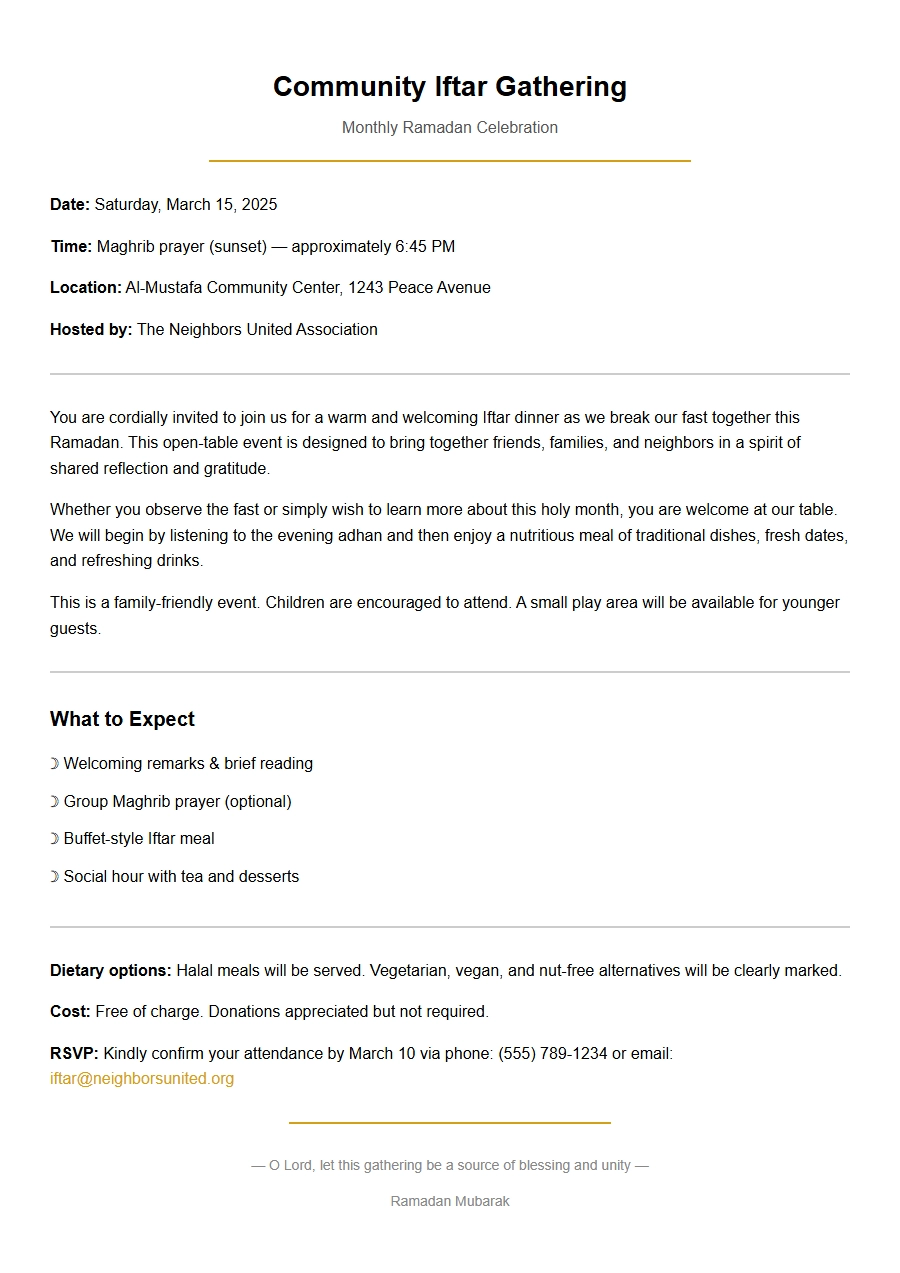 Ramadan Iftar Community Event Invitation
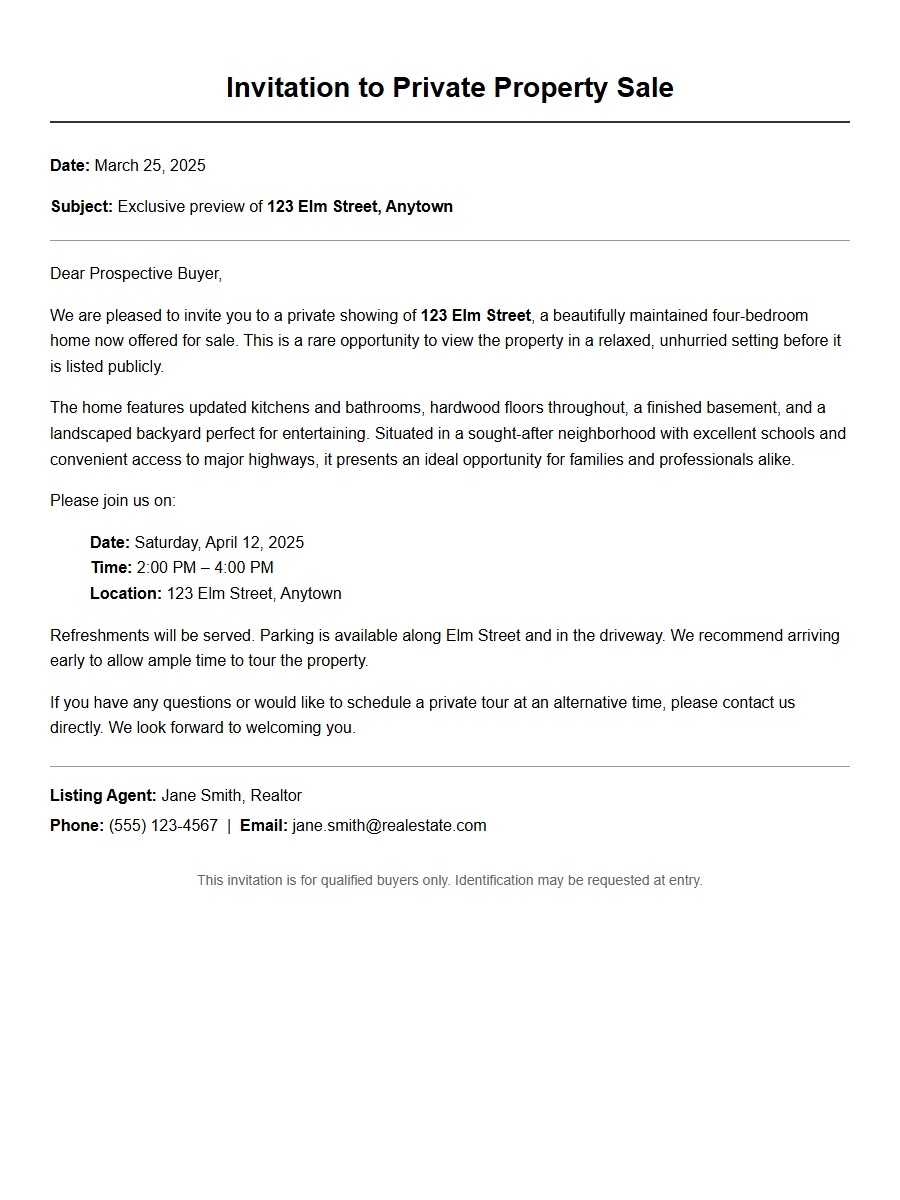 Sample Wording for Property Sale Invitations
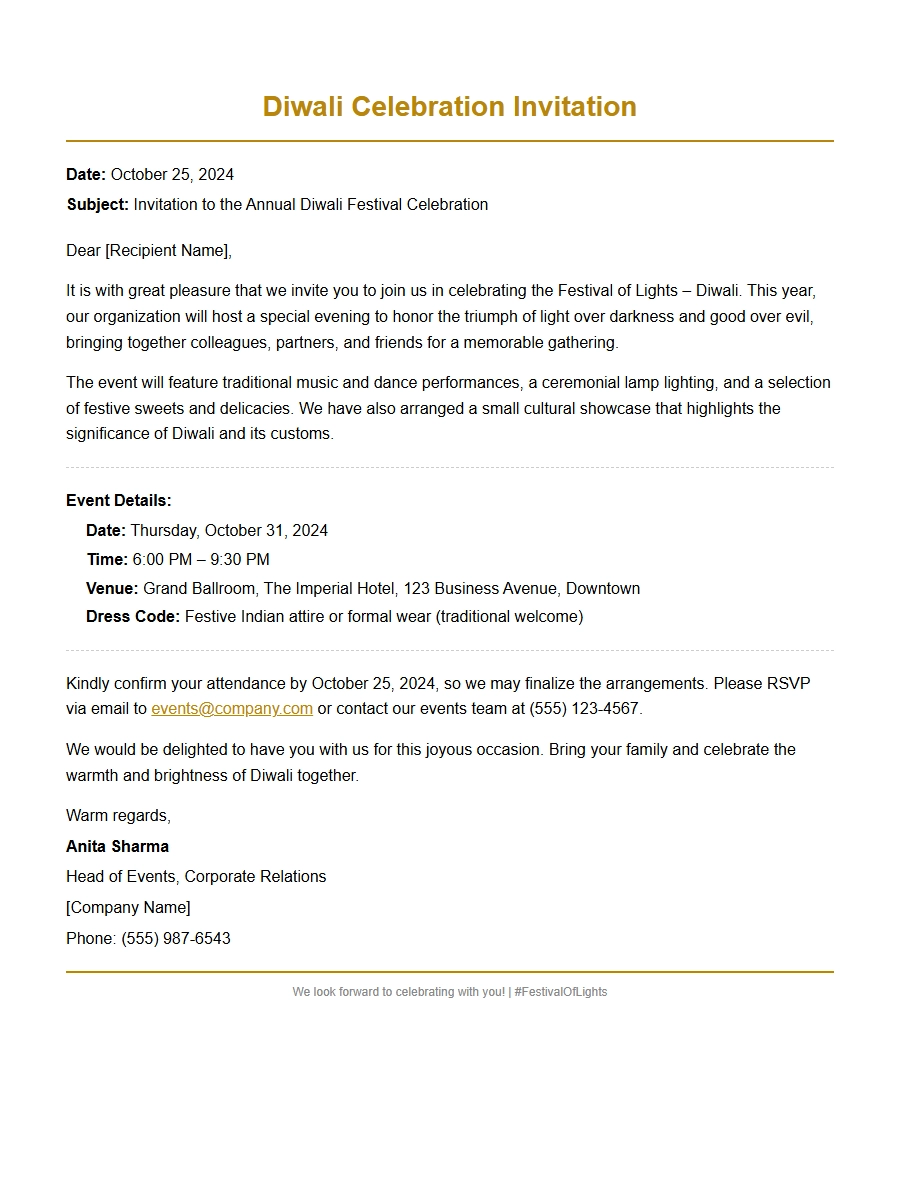 Diwali Festival Celebration Invitation Draft