Requesting Help with Voting Registration: A Letter Template
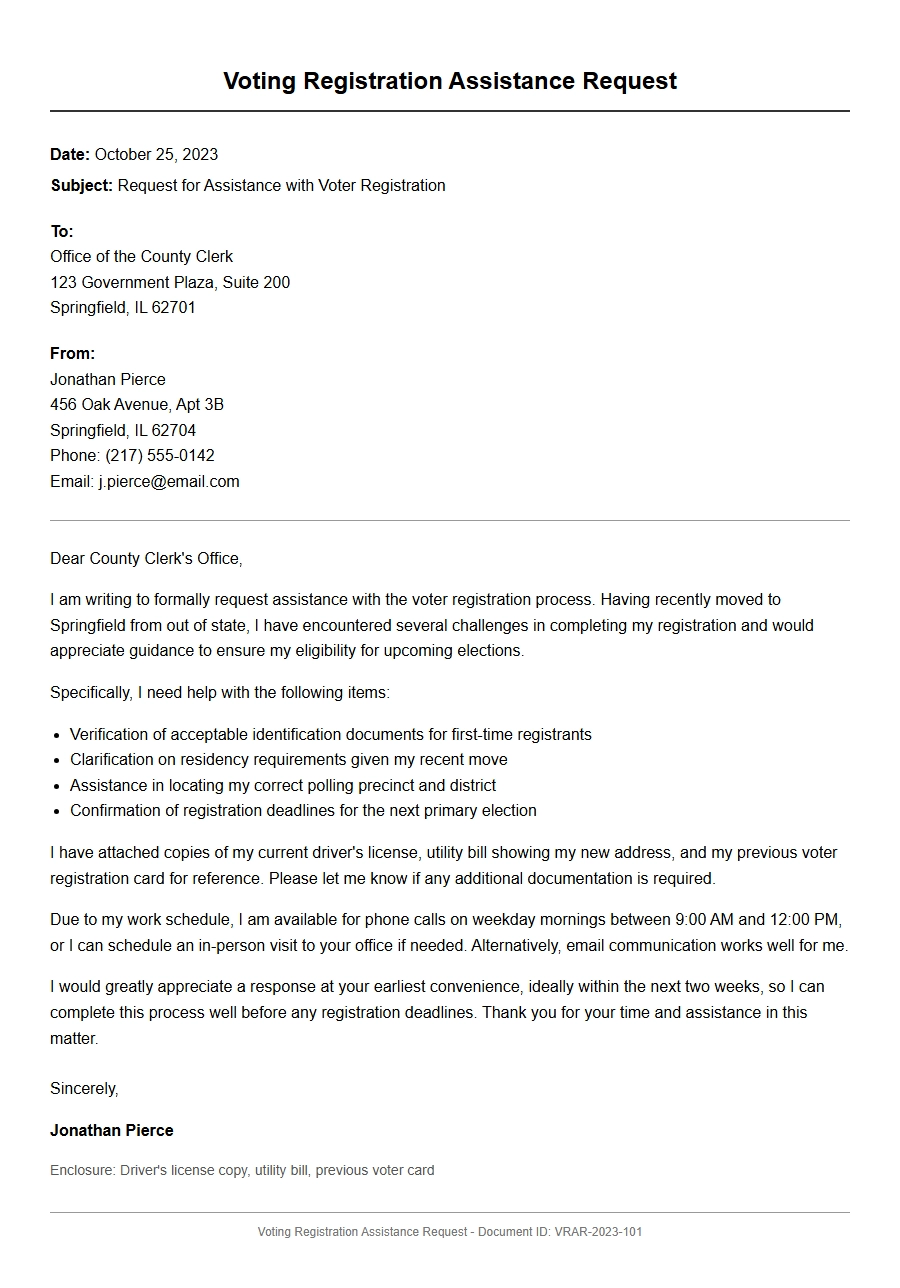
You need to send a voting registration assistance request letter, and you’re probably not sure how to ask for help without sounding pushy or confused. That’s normal. Most people write these letters only once every few years, so it feels awkward. The good news is the right letter template can turn that anxious blank page into a clear, respectful request in minutes.
Why a sample is a smart start, not a shortcut
Using a writing sample isn’t cheating. It’s a practical way to borrow structure, tone, and proven phrases from professional correspondence. You save time and avoid common mistakes—like forgetting your local election office contact or using a tone that’s too stiff for a simple request. A template gives you a solid foundation, so you can focus on customizing the parts that matter: your name, your deadline, and exactly what kind of assistance you need.
That said, not every sample fits every situation. If you’re emailing your county clerk’s office, you need a short, digital letter format. If you’re mailing a physical request for a disability accommodation, a more formal business letter format works better. The key is picking a sample that matches your specific need—and then adapting it to sound like you.
How to adapt a sample without losing your voice
Most people make one big mistake: they copy the sample word for word. The result feels robotic. Instead, read the sample once to understand the letter structure—the salutation and closing, the request itself, the polite sign-off. Then rewrite it in your own words. If the sample says “I humbly request assistance,” but you’d never talk that way, change it to “Could you help me with my voter registration?” Authentic tone in writing builds trust faster than formal fluff.
Another tip: tailor your opening paragraph to grab attention. State who you are, why you’re writing, and what you need within the first three sentences. For example: “My name is Jane Miller. I’m trying to register to vote before the November 5 deadline, but I’ve recently moved and can’t locate my old ID. Can you tell me what documents I’ll need?” That’s clear, direct, and respectful—no filler.
Common mistakes to skip
One frequent flub is using an outdated salutation. “To whom it may concern” feels stuffy and impersonal. Instead, look up the name of the elections official or use “Dear Voter Registration Office.” Another mistake: ignoring format differences. A printed letter needs your return address and a proper letterhead design. An email needs a clear subject line like “Voter Registration Assistance Request – [Your Name].” Don’t use the same format for both without adjusting.
Also watch your proofreading letter habits. A simple typo in your address or birth date can delay your registration. Read it out loud before sending. It catches awkward phrasing and missing details.
Category: Personal letters for civic needs.
Practical steps to write your letter today
Start by figuring out what assistance you actually need. Are you requesting a registration form? Help with an ID requirement? An accommodation for a disability? Write that down first. Then grab a sample customizable letter that matches your situation. Fill in your specific details, but keep the structure and polite tone intact.
If you’re unsure about formal writing tips, keep it simple. Use “Dear [Name or Office],” state your request clearly, and close with “Thank you for your help” followed by your full name and contact info. No need to overcomplicate it. For a printed letter, add the date and your address at the top. For an email, use a clear subject line and keep the body to three or four short paragraphs. Digital letter format should avoid heavy formatting—plain text works best for most forms and online submissions.
One more thing: if you’re writing a letter of recommendation or a cover letter examples style request, that’s overkill here. A voting registration assistance request letter is a direct, practical note. Keep it focused on your one need.
What to do after you send it
Send your letter and give the office a reasonable window—typically a week—to respond. If you don’t hear back, follow up with a polite phone call or email. Don’t assume no news means everything is handled. Voting deadlines are firm, so a short follow-up can save you a headache later.
The best letters feel both professional and personal. Think of your sample as a springboard, not a crutch. Every time you write one, it gets faster. Eventually, you won’t need a sample at all—you’ll just know what to say. That’s the goal. For now, use the template, make it yours, and get your request sent. Your vote is worth the effort.
Samples You Can Use
Requesting Help with Voting Registration: A Letter Template
Request to Elderly Neighbor for Registration Assistance
Dear Mrs. Henderson,
I hope this note finds you well. As you know, I have been having trouble with my eyesight lately, and I need help filling out my voter registration form. Would you be willing to assist me? I have the form here, but I cannot read the small print or write clearly without help.
The information I need to provide includes:
Full name and date of birth
Current residential address
State ID or driver's license number (last four digits)
Choice of political party (optional)
If you could spare an hour this weekend, I would be deeply grateful. I can come to your house or meet at the library — whichever is easiest. Please let me know a convenient time. Thank you for your kindness.
Warmly, Evelyn Rogers
Letter to Son Requesting Help with Online Registration
Dear Jason,
I am writing to ask for your help registering to vote online. I tried using the state election website, but I got confused navigating the pages and uploading my documents. You are always so good with computers.
Could you sit with me one evening and guide me through these steps?
Go to the official registration portal
Enter my personal details accurately
Scan and upload my passport photo
Review and submit the application
I also need to check if I am still registered at my old address. I have moved since the last election, so the form may require an address update. I will bring my new utility bill as proof of residency.
Let me know when you are free. Your help means the world to me.
Love, Dad
Request to Local Voter Assistance Group
To the Voter Assistance Coordinators,
I am a senior citizen living alone, and I need help completing my voter registration application. I recently moved into a retirement community and am not familiar with the new precinct rules.
Could a volunteer contact me to assist? I require help with:
Filling out the form legibly
Understanding the residency requirements
Providing acceptable ID (I have a state ID card but no driver's license)
I can meet at the community center lobby on weekdays between 10 a.m. and 2 p.m. My phone number is (555) 123-4567. Thank you for this essential service.
Sincerely, Harold Finch
Request for Transportation to Registration Office
Hi Sarah,
I hope you are doing well. I need to go to the County Voter Registration Office to submit my application in person, but my car is in the shop and I cannot use public transit due to my mobility issues.
Would you be able to drive me there next Tuesday or Wednesday morning? The office is open from 8 a.m. to 5 p.m. The visit should take less than an hour. I promise to treat you to lunch afterward.
Here is what I will bring to make the trip efficient:
Completed registration form
Proof of residence (lease agreement)
Social Security card
Photo ID
Please let me know if you are available. Thank you for considering this request.
Best, Michael Torres
Letter to Family Member About Disability-Related Assistance
Dear Aunt Carol,
I am writing to ask for your help with voter registration. As you know, my arthritis makes it very difficult for me to write or hold a pen for long. I want to vote in the upcoming election, but I need someone to fill out the registration form for me.
Could you come over this Saturday with the form? I will dictate my information to you. We also need to request an absentee ballot because I cannot stand in long lines. The necessary steps are:
Complete the registration form
Select the option for permanent absentee ballot
Have the form notarized if required
Mail it together
I already printed the form from the elections website. It is on my kitchen table. I hope you can spare a few hours. Your support would mean so much.
With love, Uncle George
Request to Community Center Volunteer
Hello,
I am a new resident at the Maplewood Apartments and I need assistance with voter registration. I saw that your community center offers help with filling out forms. Could I schedule an appointment?
I have trouble with reading English, so I need someone who can explain the questions in simple terms. The registration form requires these details:
Required Field
My Information (for you to write)
Full Name
Jose Maria Garcia
Date of Birth
04/15/1962
Address
742 Evergreen Terrace, Apt 3B
ID Number
State ID #1234567
Signature
Will sign myself
I can come any weekday afternoon. Please call me at (555) 987-6543 to arrange a time. Thank you very much.
Respectfully, Jose Garcia
Email to Coworker for Help After Moving
Hey Mark,
I just moved to a new city last month and I need to update my voter registration before the deadline. I tried doing it online but the system requires a new address verification that I don't understand. Could you help me figure it out?
You are the most tech-savvy person I know. I can bring my laptop to the office break room during lunch tomorrow. Here is what I have ready:
My old registration card
New lease agreement showing my address
My driver's license
We just need to go to the state's registration portal and complete the change of address form. I think it should take about 20 minutes. Let me know if you can spare that time.
Thanks a lot! Steve
Request to College Roommate for Absentee Ballot Help
Hi Jen,
I am studying abroad this semester and I need to register to vote by absentee ballot for my home state. The process is confusing from overseas. Can you help me by sending the forms to my parents' house and then walking me through the steps over video call?
I need you to:
Download the absentee voter registration form from the county website
Print it and mail it to my home address
Also give me the deadline date by which I must return it
Once I receive the form, we can fill it out together via Zoom. I will need my passport and my parents' address as proof of residence. I really appreciate your help — you are a lifesaver.
Thanks, Emma
Letter to a Church Group for Registration Assistance
Dear Grace Fellowship Volunteers,
I am a homebound member of your congregation, and I wish to exercise my right to vote in the upcoming election. However, I cannot leave my house to register in person. Could someone from the church's outreach team come to my home to help me complete the voter registration application?
I will need assistance with:
Filling out the form legibly
Making a photocopy of my ID
Filling out a request for a mail-in ballot (if separate)
I live at 123 Oak Street, Apartment 4B. I am available any weekday after 10 a.m. Please call me at (555) 555-1234 to schedule a visit. God bless you for serving the community.
In faith, Martha Collins
Note to Caregiver for Help with Registration
Dear Lisa,
As you know, I recently had surgery and cannot use my hands well yet. I need to register to vote before the deadline next week. Could you please help me fill out the form when you come tomorrow?
I have the form on the dining table. The information you will need to write is:
Item
Details
Name
Robert Adams
Birthdate
July 3, 1948
Address
456 Pine Street, City, State 12345
ID type
Medicare card (number 123-45-6789A)
After filling out, please also check the box for permanent vote-by-mail status. Then seal it in the envelope provided and drop it in the mailbox for me. Thank you so much for always being there when I need you.
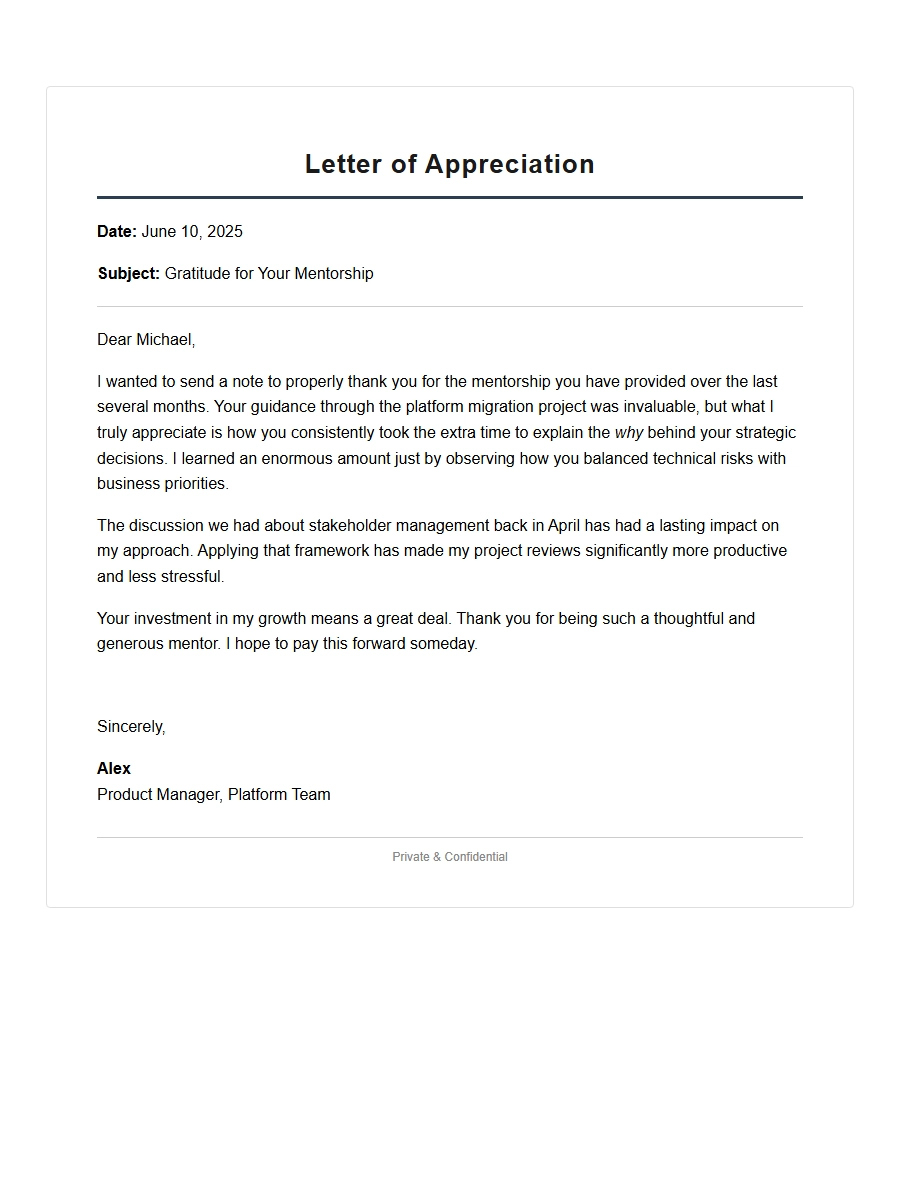 Thanking a Mentor for Guidance: Sample Messages
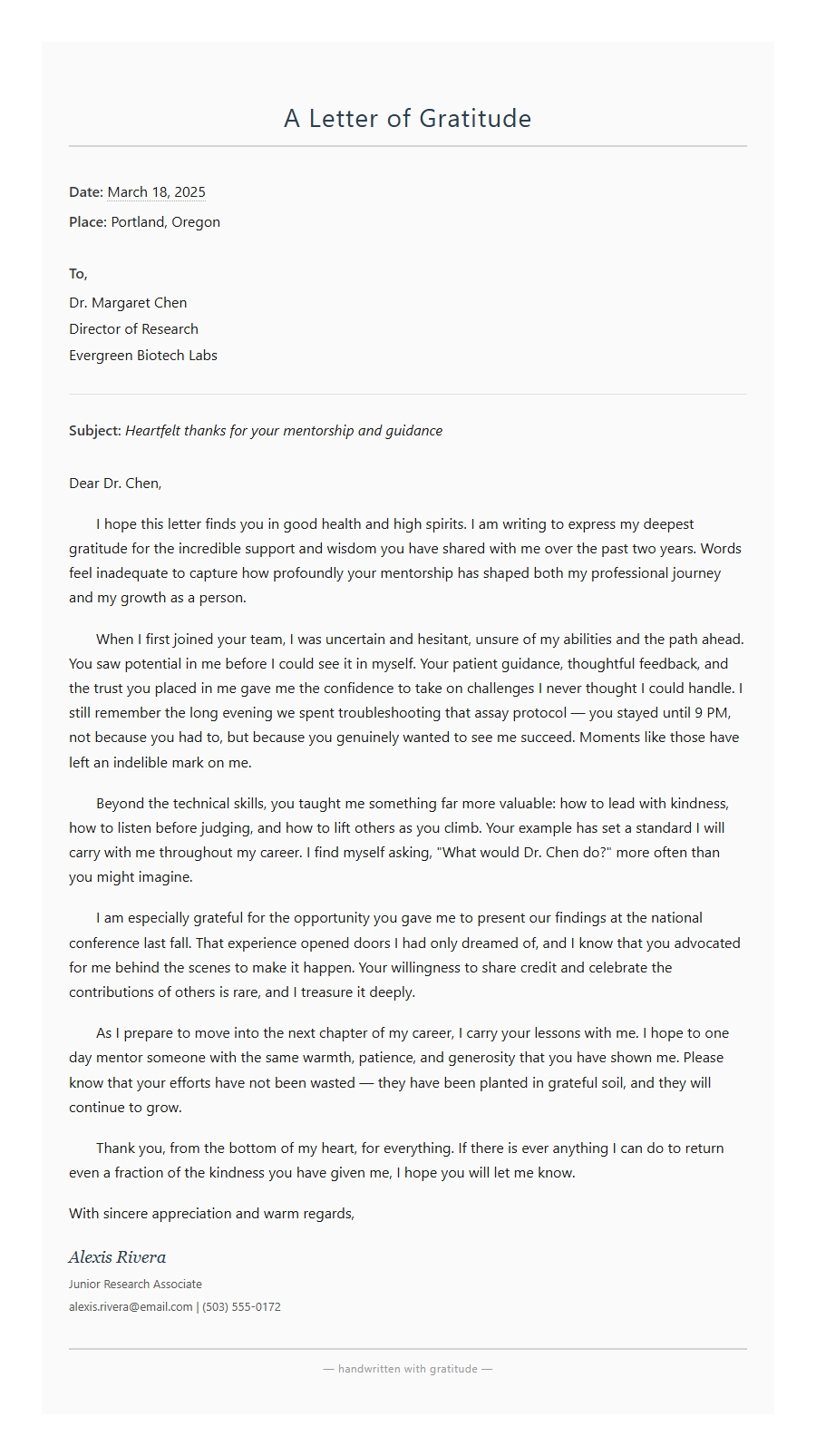 Expressing Gratitude: Handwritten Letter Example
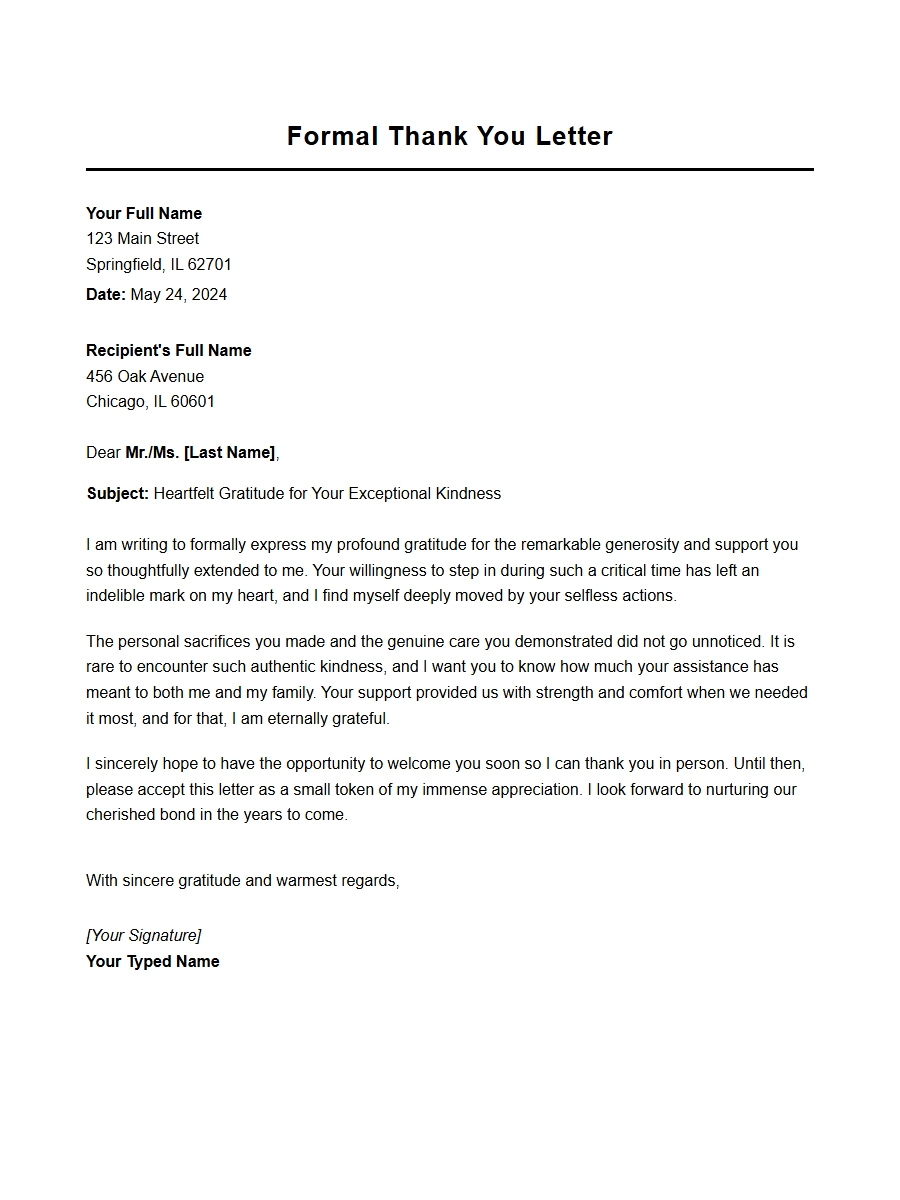 Expressing Thanks in a Formal Personal Letter
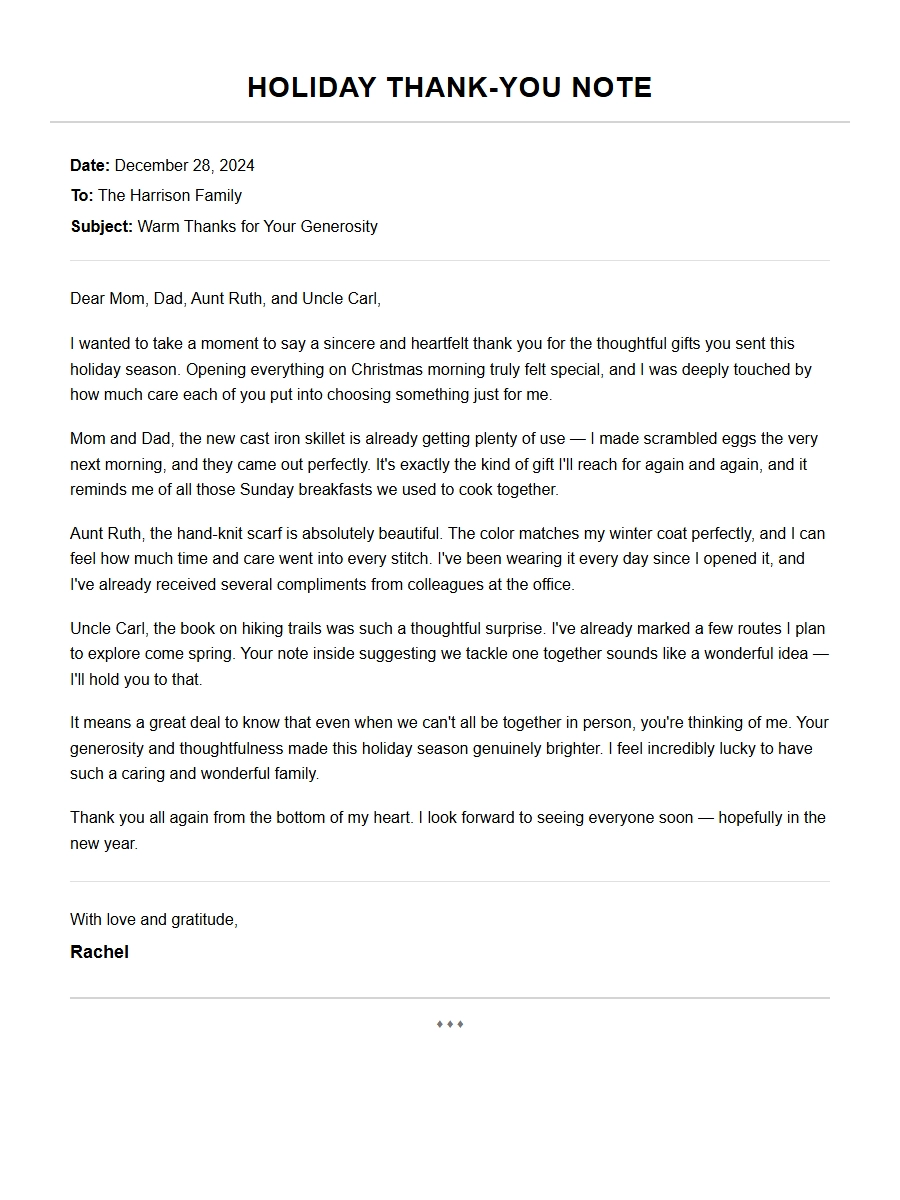 Thank You Letter Examples for Family Holiday Gifts
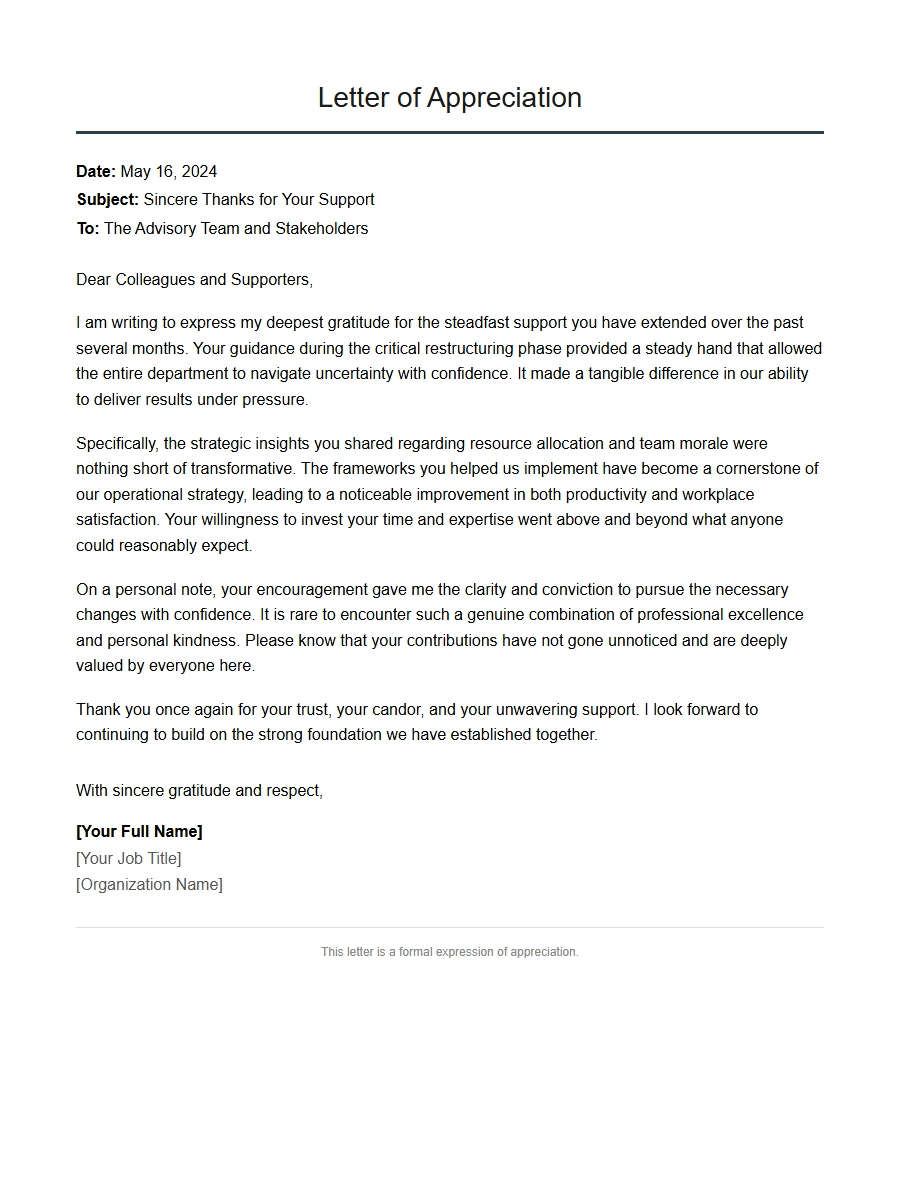 Sample Thank You Letter for Support
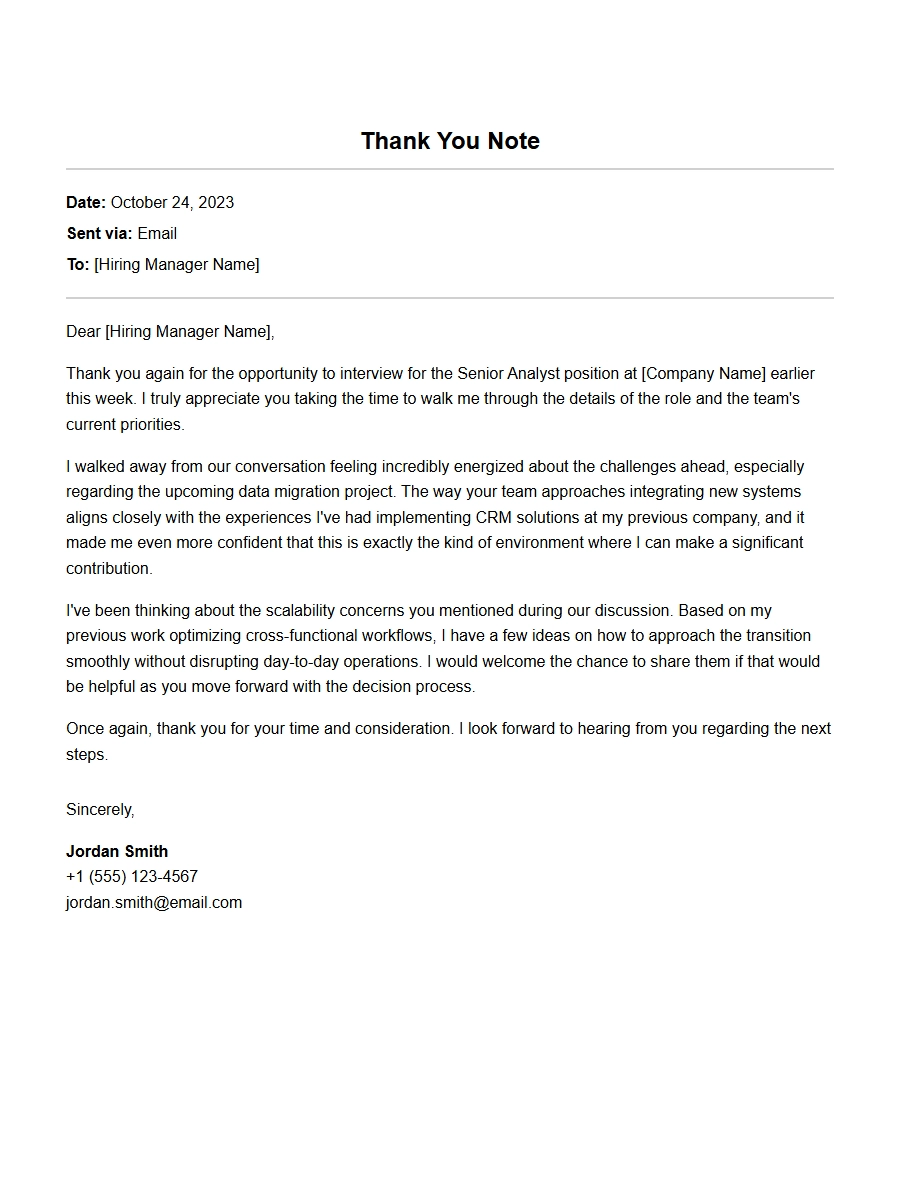 How to Write a Personal Thank-You Note After an Interview