Technical Writer Cover Letter for API Documentation
You’re staring at a blinking cursor, trying to remember how to explain API documentation experience in a cover letter. It’s a specific skill set, and generic advice doesn’t cut it. You might worry your technical writing sample will sound too robotic or, worse, that you’ll undersell your ability to translate complex endpoints into clear, usable prose. That pressure is real, and a good sample can turn that blank-page anxiety into a draft you can actually send.
Using a technical writer API documentation cover letter as a starting point isn’t cheating. It’s a practical shortcut that gives you a solid letter structure and the right professional tone. A template handles the formal writing basics like salutation and closing, so you can focus on the hard part: showing a hiring manager that you understand developer pain points and can write documentation that actually gets used.
Let’s talk about how to pick and personalize a sample without losing your voice.
How to choose the right sample for an API documentation job
Not every cover letter example fits a technical writer role. If the sample focuses on creative storytelling or marketing copy, it won’t help you highlight your experience with RESTful endpoints, SDKs, or developer portals. Look for samples that emphasize clarity, user testing, and working with engineering teams. A good sample will also help you pick the right business letter format for an email submission or a printed attachment.
Pay attention to the tone. Some industries expect a formal letter of recommendation style, while startups might prefer something more direct. Match the sample’s tone to the company culture. If the job description says “fast-paced,” skip the overly formal salutation and closing and use something simpler like “Dear [Name],” and “Best regards.”
Adapting a template without sounding fake
The trick to using a letter template is to treat it as scaffolding, not a final script. Start by changing the opening paragraph to describe a specific project. Instead of “I am writing to apply for the API technical writer position,” try “When I rebuilt the Payment API docs at my last company, support tickets dropped by 30%. That’s the kind of measurable clarity I’d bring to your developer portal.” That small shift shows real experience without losing the sample’s structure.
Keep your own tone in writing natural. If you’d never say “leveraged synergies” in real life, don’t put it in your cover letter. A sample might suggest formal corporate phrases, but you can swap them for clearer, more direct language. Hiring managers read dozens of professional correspondence letters. The ones that sound like a real person stand out.
Common mistakes that hurt your chances
One frequent error is ignoring formatting differences between a printed letter and a digital submission. If you’re pasting the letter into an email, skip the letterhead design and use a simple subject line and plain text. If you’re attaching a PDF, a clean digital letter format with standard margins and a readable font works better than a fancy template that distracts from your content.
Another mistake is using outdated salutations like “To Whom It May Concern” when you can easily find the hiring manager’s name on LinkedIn. It takes two minutes and makes a big difference in letter writing etiquette. Also, don’t skip the proofreading letter step. One typo in a technical writer’s cover letter can raise doubts about your attention to detail.
The first two sentences decide whether the reader keeps going. For an API documentation role, lead with something concrete. Mention the tools you know (Swagger, Postman, OpenAPI) and how you improved documentation workflows. For example: “I’ve written documentation for 50+ REST APIs, and I know that a good developer experience starts with clear, testable examples.” That instantly tells the hiring manager you’re not a generalist.
If you’re transitioning from a similar role, like pharmacy technician work, focus on transferable skills like precision and following strict guidelines. If you’ve worked in customer-facing roles like flight attendant cabin crew, emphasize your ability to explain complex procedures simply. Every background has something valuable for technical writing.
A good sample gives you structure, but the best letters feel both professional and personal. Write the first draft using the template, then read it aloud. If a sentence doesn’t sound like something you’d say in an interview, rewrite it. Replace generic phrases with specific examples from your work. Practice this process a couple of times, and it’ll get faster.
Next time you need to write an API documentation cover letter, you won’t stare at a blank page. You’ll grab a sample that fits, adapt it to your authentic voice, and send a letter that actually gets read.
Useful Writing Samples
Technical Writer Cover Letter for API Documentation
Entry-Level API Documentation Cover Letter
Dear Hiring Manager,
I am writing to apply for the Technical Writer position at [Company Name], specifically to create and maintain API documentation. As a recent graduate with a Bachelor's in Technical Communication and a certificate in API documentation, I have developed strong skills in writing clear, developer-focused content. During my internship at a software startup, I documented REST endpoints using Swagger and collaborated with engineers to ensure accuracy. I am familiar with Markdown, Git, and basic JSON/XML. I am eager to contribute to your documentation team and help developers integrate your APIs seamlessly.
Ability to read code and translate technical jargon into user-friendly language
Understanding of version control and doc review processes
Thank you for considering my application. I look forward to the opportunity to discuss how my skills can benefit your team.
Sincerely, [Your Name]
Experienced API Documentation Specialist
Dear [Hiring Manager's Name],
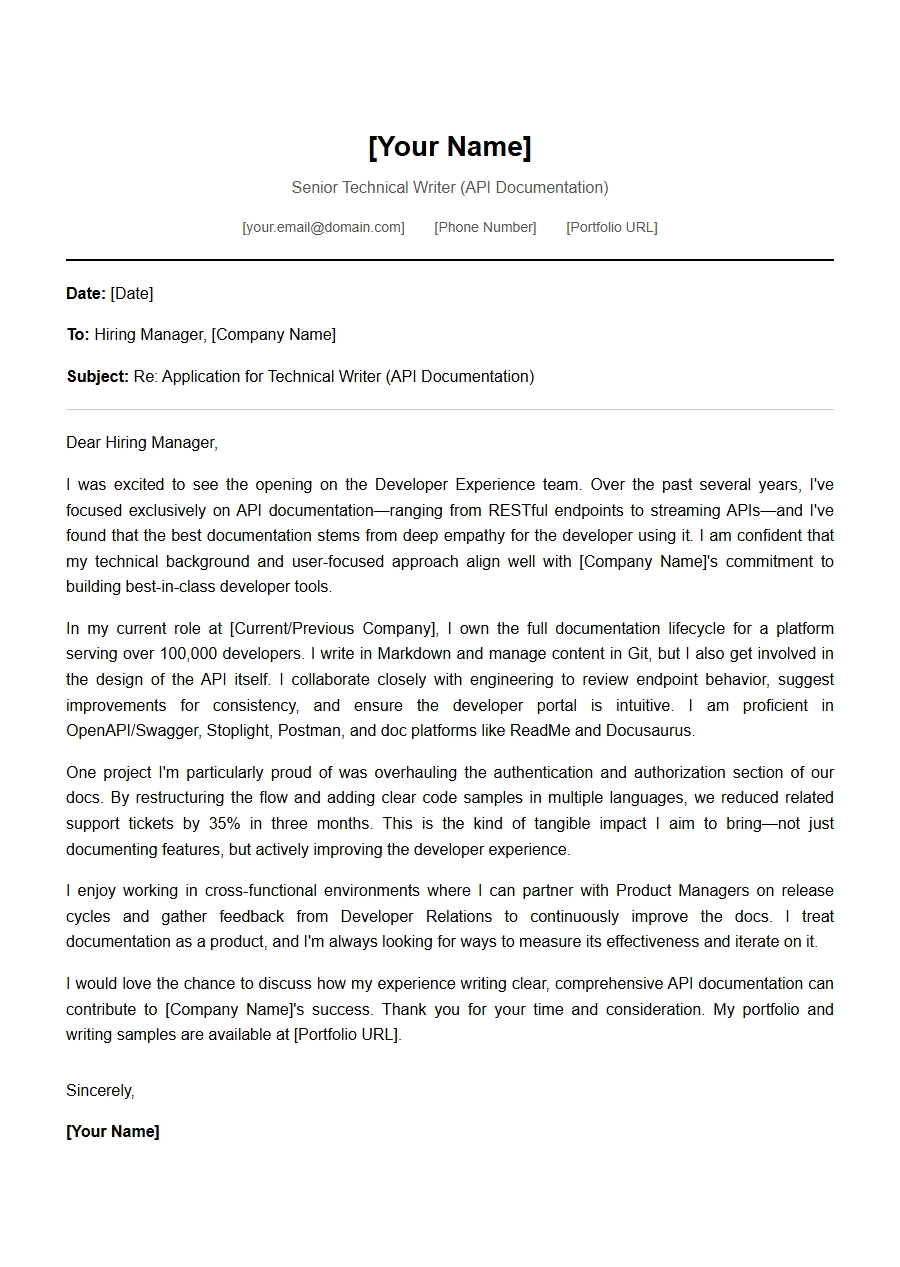
I am thrilled to apply for the Senior Technical Writer role focused on API documentation at [Company Name]. With over five years of experience documenting RESTful and SOAP APIs for enterprise platforms, I bring a deep understanding of developer needs and documentation best practices. At my previous company, I led the redesign of the developer portal, which improved developer onboarding time by 30%.
My expertise includes:
Creating comprehensive API reference docs using OpenAPI/Swagger, Postman collections
Writing developer guides, tutorials, and SDK documentation
Using Markdown, AsciiDoc, and DITA to produce consistent output
Collaborating with product managers and engineers to prioritize documentation
Implementing automated doc generation pipelines with CI/CD
I am passionate about making complex technical concepts accessible. I have attached a sample of my API documentation work for your review. I am eager to bring my experience to [Company Name] and help your developers build great integrations.
Best regards, [Your Name]
From Developer to Technical Writer: API Documentation Cover Letter
Dear [Hiring Manager],
I am writing to express my interest in the Technical Writer position for API documentation at [Company Name]. With a background in software engineering and a passion for clear communication, I offer a unique perspective: I understand both the developer experience and the need for precise, well-structured documentation. After four years as a backend developer, I transitioned to technical writing to leverage my coding skills in a more communicative role.
In my recent technical writing role, I documented microservices APIs, wrote code examples in multiple languages (Python, JavaScript, Java), and maintained an internal developer wiki. My ability to debug examples and understand edge cases ensures that documentation is accurate and helpful.
Skills relevant to this role:
Proficient in OpenAPI, RAML, and gRPC documentation
Experience with API testing (Postman, curl) and code review
Familiar with responsive design concepts for developer portals
Excellent written and verbal communication
I am confident that my technical background combined with my writing skills makes me an ideal candidate. Thank you for your time.
Sincerely, [Your Name]
Agile API Documentation for a Fast-Paced Startup
Dear [Startup Team],
I am excited to apply for the Technical Writer role at [Startup Name], where I can help you build clear developer documentation from the ground up. As someone who thrives in agile environments, I am accustomed to rapid product iterations and documenting APIs as they evolve. At my previous startup, I created the first version of API docs for a new product, using Swagger and hosting on ReadMe.io. I also developed quick-start guides and sample code that reduced support tickets by 20%.
Key strengths:
Ability to write concise, accurate docs under tight deadlines
Familiarity with developer onboarding flows and UX
Experience with static site generators (Jekyll, Hugo) and Git
Comfortable interacting directly with engineering teams
I understand the startup pace and can prioritize documentation that provides the most value. I am eager to contribute to your product's success by ensuring developers can integrate your APIs efficiently.
Thank you for considering my application.
Best, [Your Name]
Enterprise API Documentation Specialist
Dear [Hiring Manager],
I am writing to apply for the Technical Writer position on the API Documentation Team at [Large Enterprise]. Having worked extensively with enterprise-level documentation standards, I am well-prepared to contribute to your documentation lifecycle. In my previous role at [Company], I maintained a style guide for API documentation covering dozens of RESTful services used by thousands of developers.
My experience includes:
Documenting APIs for SaaS platforms with complex authentication flows
Creating release notes, changelogs, and deprecation notices
Collaborating with product managers to align docs with roadmap
Usability testing of documentation with developer focus groups
Training junior writers on API documentation best practices
I am skilled in tools such as SwaggerHub, Stoplight, Confluence, and Sphinx. I also have experience with localization and accessibility requirements. I am confident I can ensure your API documentation remains clear, consistent, and user-friendly for a global audience.
I would love to discuss how my background aligns with your needs.
Sincerely, [Your Name]
Freelance Technical Writer for API Documentation Projects
Dear [Hiring Manager],
I am a freelance technical writer specializing in API documentation and I am interested in collaborating with [Company Name] on your upcoming documentation needs. With over six years of experience delivering developer documentation for companies of all sizes, I can quickly ramp up on your APIs and produce high-quality content.
Past projects include:
Documenting a RESTful payment API with 50+ endpoints
Creating a GraphQL schema reference and tutorials
Writing SDK documentation for Python and Node.js clients
Setting up automated doc generation from OpenAPI specs
I work independently, adhere to style guides, and deliver on schedule. I am comfortable with Git, Markdown, and documentation platforms like GitBook and Read the Docs. I also offer both hourly and fixed-price engagements.
I have attached a portfolio with samples of my work. I look forward to discussing how I can support your documentation initiatives.
Best regards, [Your Name]
GraphQL API Documentation Specialist
Dear [Hiring Manager],
I am applying for the Technical Writer position with a focus on GraphQL API documentation. As an experienced technical writer who has documented GraphQL schemas and resolvers, I understand the unique challenges of documenting queries, mutations, subscriptions, and associated best practices. At my previous role, I wrote extensive GraphQL documentation for a content management platform, including interactive examples using GraphiQL.
My qualifications include:
Deep understanding of GraphQL types, fields, arguments, and introspection
Experience writing developer guides for Apollo Client and Relay
Ability to create clear error messages and troubleshooting guides
Familiarity with GraphQL documentation tools (GraphQL Voyager, documentation automations)
I also have strong experience with REST API documentation, so I can adapt to mixed environments. I am passionate about reducing developer friction through excellent docs.
Thank you for your consideration. I am eager to contribute to your team.
Sincerely, [Your Name]
API Documentation for Business Users (Low-Code/No-Code)
Dear [Hiring Manager],
I am writing to apply for the Technical Writer role focusing on API documentation for non-technical users at [Company Name]. Your platform empowers business analysts and citizen developers, and my strength lies in translating complex API concepts into language that is accessible to non-programmers. With a background in both writing and academic teaching, I excel at explaining technical workflows in simple terms.
In my previous role, I documented an API integration platform that allowed marketers to automate campaigns without coding. I created step-by-step guides, use-case examples, and glossary terms. The docs received positive feedback for reducing onboarding time for non-technical users.
Skills relevant to this role:
Ability to write for readers with varying technical proficiency
Experience with API concepts like endpoints, tokens, webhooks explained simply
Knowledge of REST basics and JSON structure
Strong empathy for end-users and iterative feedback
I am excited about the opportunity to make your APIs more accessible.
Best regards, [Your Name]
Global API Documentation Specialist (Localization)
Dear [Hiring Manager],
I am applying for the Technical Writer position with a focus on internationalization of your API documentation. As a bilingual writer with experience in documentation localization, I understand the challenges of maintaining consistency across languages while adapting to cultural contexts. At my previous role with a multinational company, I managed the translation of developer guides and API references into Japanese and Spanish.
My expertise includes:
Writing source documentation that is localization-friendly (avoiding idioms, clear syntax)
Collaborating with translators and review processes
Using CMS and version control for multi-language doc sets
Understanding of Unicode, character encoding, and API response formatting
I am also skilled in writing for developers from diverse backgrounds, ensuring terminology is clear and consistent. I believe clear API communication is critical for global developer adoption.
Thank you for your consideration. I hope to bring my international perspective to your documentation team.
Sincerely, [Your Name]
Open-Source API Documentation Contributions
Dear [Hiring Manager],
I am writing to express my interest in the Technical Writer role for API documentation at [Company Name]. As a recent graduate with a degree in English and a passion for technology, I have contributed to several open-source API documentation projects on GitHub. Notably, I improved the documentation for a popular authentication library, writing clear endpoint descriptions and adding code examples that reduced confusion among new users.
During my academic studies, I completed a capstone project where I documented a mock e-commerce API using Swagger and wrote user manuals. I am proficient in Markdown, Git, and basic HTML. I have also completed online courses in API documentation and developer advocacy.
Skills I bring:
Strong research and writing abilities
Fast learner of new technologies and APIs
Experience with GitHub issues and pull requests for documentation
Ability to communicate with developers to gather technical details
I am eager to start my career in technical writing and contribute to your documentation team. Thank you for your time.
 Recent College Student Cover Letter for Internship
 Entry Level Teacher Cover Letter Examples
 Career Changer Administrative Assistant Cover Letter
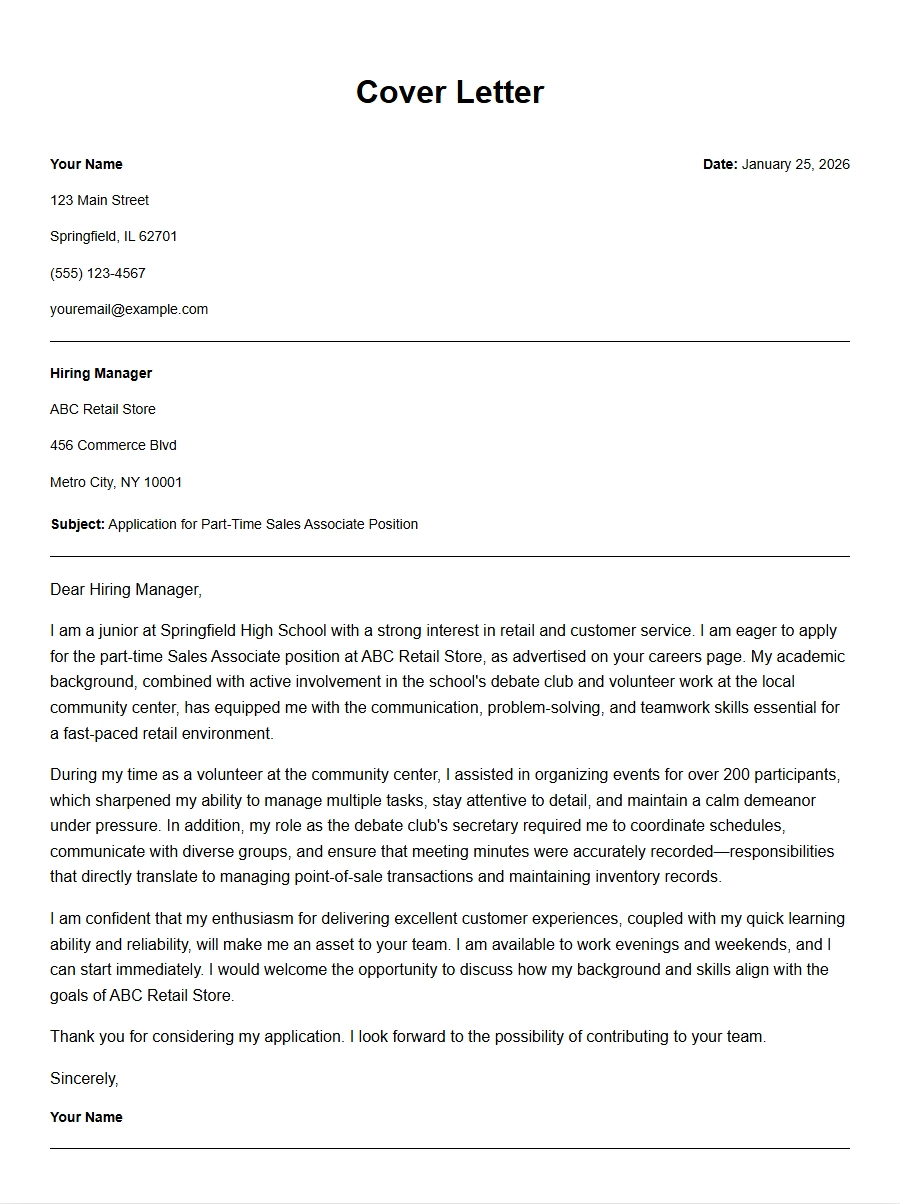 High School Student Part Time Job Cover Letter
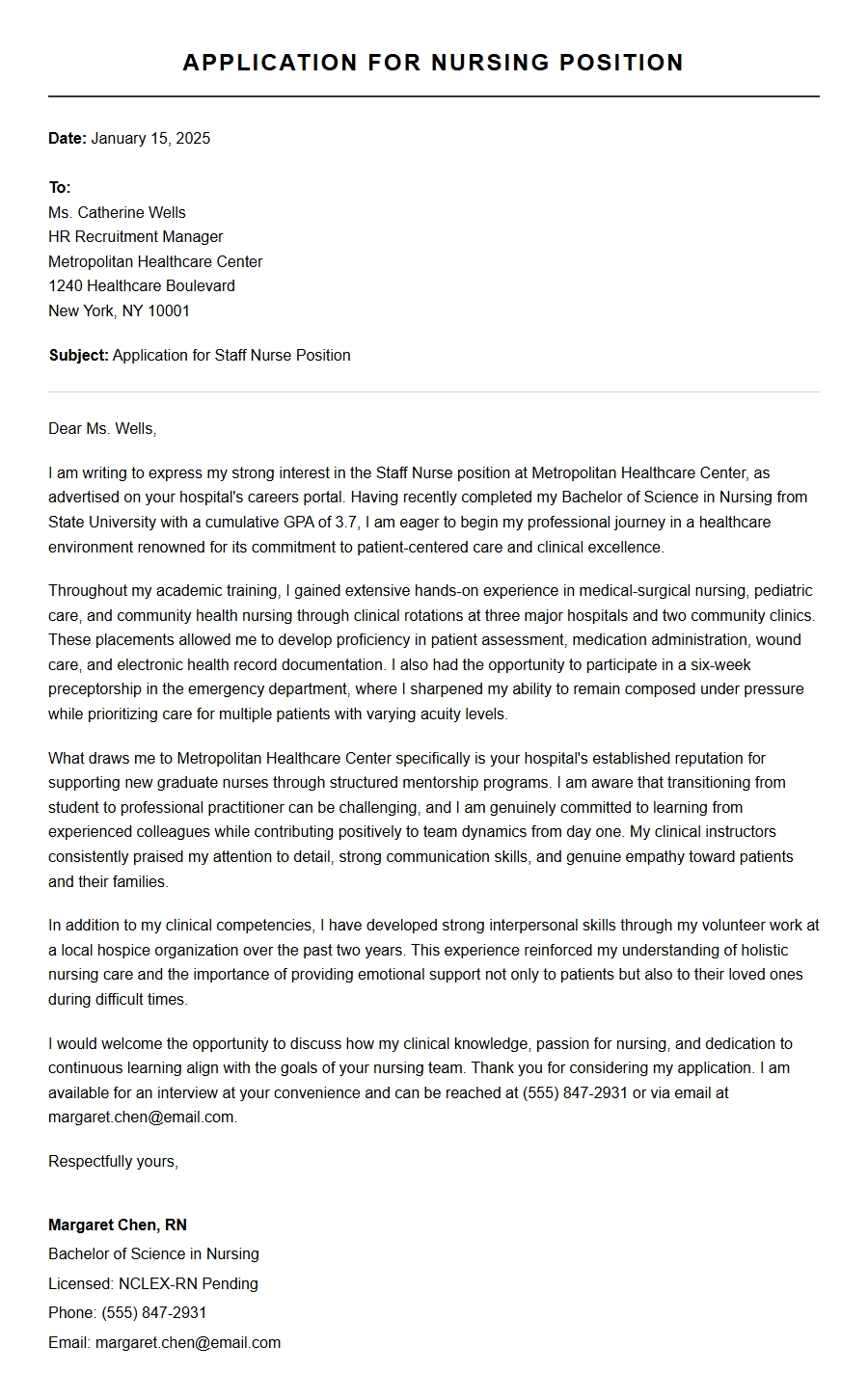 Fresh Graduate Nursing Application Letter
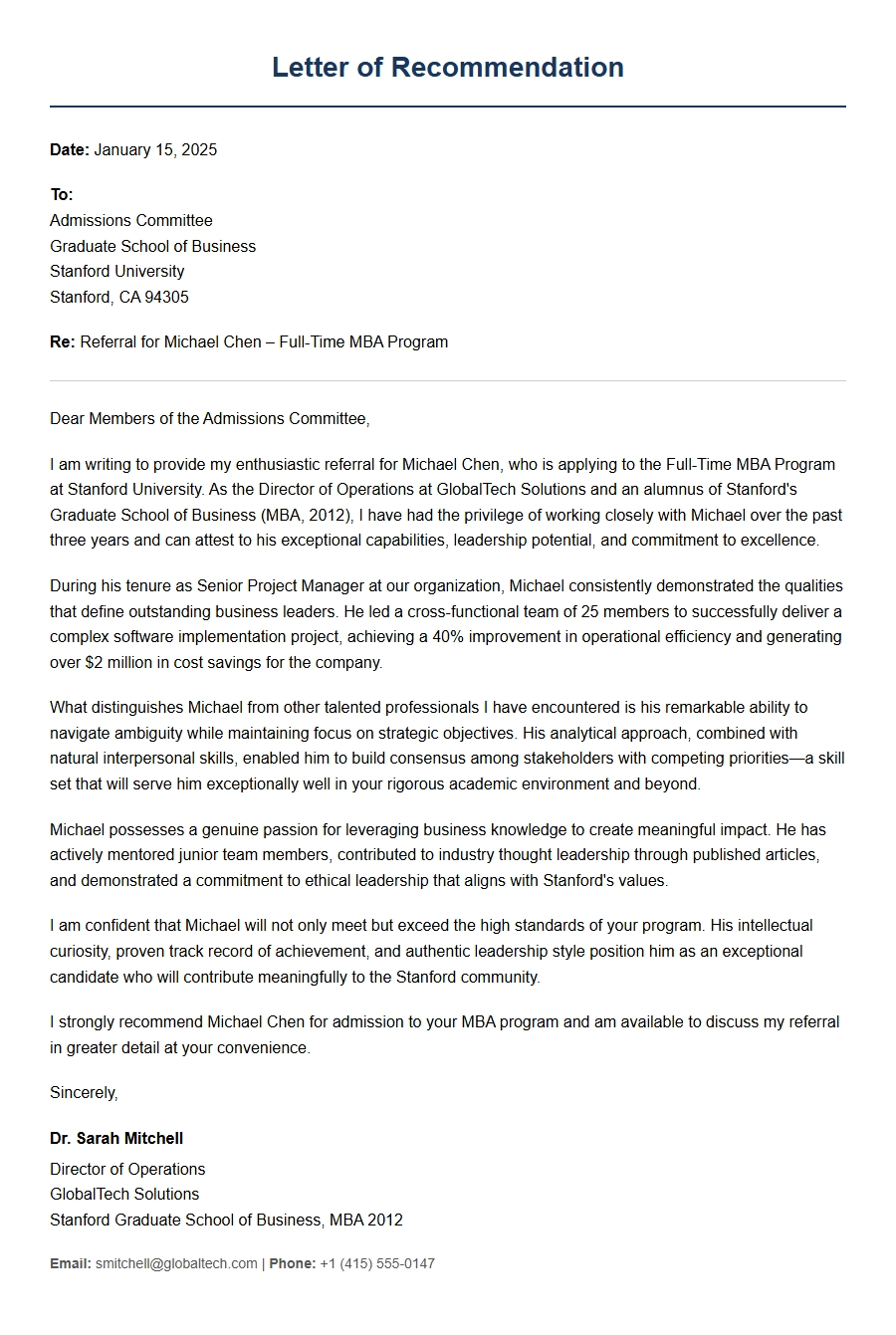 University Alumni Referral Email Cover Letter