You’ve polished your manuscript until it gleams. You’ve researched agents who rep your genre. Now you’re staring at a blank email, trying to turn your book’s soul into three paragraphs. It’s the part of publishing that feels less like craft and more like a job interview—and the anxiety is real. A solid literary agent query response sample doesn’t mean you’re cutting corners. It means you’re being strategic.
Why a query sample is a smart shortcut
Agents read hundreds of queries a week. They scan for letter structure and a quick sense of your voice. Using a sample isn’t cheating—it’s learning the format so you can focus on what matters: making your story sound irresistible. A good template shows you where the hook goes, where to place your comp titles, and how to handle the salutation and closing without second-guessing yourself. It frees up mental space for the hard part, which is convincing an agent you’re the writer they’ve been waiting for.
Pick the right format for your situation
Most agent queries are sent via email, so digital letter format matters. Your subject line should be clear and direct—like “Query: [Title] by [Name].” Use a professional salutation like “Dear [Agent’s Full Name].” Avoid “To Whom It May Concern” or “Dear Sir/Madam.” Those feel impersonal and suggest you didn’t research the agent. If you’re submitting via an online form, follow their exact instructions. Some agents want the query pasted into a box. Others accept attachments. Ignoring submission guidelines is the fastest way to get a form rejection.
How to adapt a sample without losing your voice
The risk of using a letter template is that your query sounds like everyone else’s. That’s a problem. Agents want to hear *your* way of telling a story. Use the sample for structure, not for sentences. Look at the opening paragraph of a good sample. Notice how it introduces the protagonist and stakes within two sentences. Now write your own version using that rhythm. Keep your tone in writing consistent with your book. If you write literary fiction, your query should feel thoughtful. If you write comedy, let a little humor show—but don’t force jokes. Authenticity matters more than polish.
Craft an opening that makes them keep reading
The first paragraph is your only shot. Start with the protagonist’s problem, not with “I am seeking representation for my novel.” That can come later. Try something like: “When a failed journalist discovers her neighbor is a war criminal hiding in plain sight, she has to decide between the story that could save her career and the danger that could end her life.” That’s a hook. It sets up character, conflict, and stakes. Avoid vague statements like “This is a story about love and loss.” Be specific. Use concrete details that make your book feel unique.
Common mistakes that kill a query
Writers often try to pack too much into a query. You don’t need to explain the entire plot. Stick to the first act and the central conflict. Another mistake is using outdated letter writing etiquette. For example, including your full mailing address or a phone number is unnecessary for email queries. Your email signature with your name and website is enough. Proofreading letter errors are a red flag. A query with typos suggests you haven’t polished your manuscript either. Read your query aloud. Have a trusted friend check it. Customizable letter templates are great, but they still need your specific words.
When to go formal vs. semi-formal
Most agent queries fall into semi-formal territory. You want to be professional, but not stiff. Use contractions like “don’t” and “it’s.” Avoid overly complex sentences. If you’re writing nonfiction or a very serious literary novel, you might lean more formal. For genre fiction—thriller, romance, fantasy—a conversational yet professional tone in writing works well. Read the agent’s manuscript wish list. If they say “I love dark humor,” you can be a little playful. If they emphasize literary craft, keep your language precise.
For additional guidance, see examples of professional correspondence in other contexts. The same principles of clarity and respect apply whether you’re querying an agent or writing a recommendation.
What about the biography paragraph?
Don’t overthink your bio. Agents want to know if you have relevant credentials, but they care more about the manuscript. If you’ve published short stories, mention it. If you have an MFA or work in a related field, include it. If you don’t have either, that’s fine. Keep the bio brief—two to three sentences. Avoid listing unrelated personal details like your pets or hobbies unless they connect to your book’s subject. If you’re writing a novel about veterinary medicine, then mentioning your decade as a vet tech is useful.
If you’re an academic writing fiction, you might also refer to recommendation letter structure for insight on how to frame credentials without sounding stiff.
End with a forward-looking thought
A query is an invitation. You’re not begging. You’re saying, “Here’s my work. I think it fits your list. Let’s talk.” That confident, collaborative energy makes agents want to read more. Use the sample to get comfortable with the form, then let your tone in writing and story do the real work. The more queries you write, the faster the process gets. And one day, you’ll be writing the email that says “Thank you for offering representation.” That letter is its own kind of sample—but you’ll know exactly how to write it.
If you work in journalism or creative nonfiction, a journalist’s query approach can offer fresh ideas for structuring your pitch. For writers in comedy or performance, adapting a comedian’s recommendation letter can teach you how to capture voice in a short space. And if your story involves fashion, setting, or character detail, examining an attire coordinator’s recommendation letter might sharpen your descriptive instincts.
Templates and Samples
Sample Literary Agent Query Response Letter
Referral to Senior Agent
Date: May 12, 2025
Re: Query referral for “The Last Ember” by J. R. Holloway
Dear Marcus,
I’m forwarding the above query to you because the manuscript aligns perfectly with your recent interest in climate fiction with strong character arcs. Holloway’s novel combines ecological collapse with a deeply personal survival story, reminiscent of The Overstory but with a tighter thriller pace.
Criteria
Assessment
Concept originality
Excellent – fresh take on geoengineering
Author platform
Moderate – active in environmental blogs
Marketability
High – growing demand for cli-fi
I recommend you request the full manuscript. Please let me know if you need my partial notes on the first three chapters. I believe this could be a strong addition to our list if handled with the right editorial eye.
Best, Elena Torres, Literary Agent
Enthusiastic Publisher Endorsement
Date: June 3, 2025
To: Acquisitions Board, Red Oak Press
Subject: Enthusiastic recommendation for “Stars Like Dust” by Mei-Lin Tan
I am writing to wholeheartedly recommend this debut speculative fiction novel for publication. After reading the complete manuscript, I believe it offers the rare combination of literary depth and commercial appeal that your imprint has been seeking.
Plot: A multigenerational family saga set against a first-contact scenario, with emotional stakes that never waver.
Audience: Strong crossover potential between SFF readers and book‑club audiences.
Tan has already built a modest following through short‑story publications in Clarkesworld and Uncanny Magazine. I have no doubt that with the right editorial guidance, this book could become a breakout title. I strongly urge you to make an offer.
Sincerely, David Osei, Senior Literary Agent
Conditional Recommendation with Edits
Date: July 18, 2025
Re: Conditional recommendation for “Bone & Bark” by Tamsin Grey
Dear Rachel,
I’ve reviewed the revised submission of Grey’s dark fantasy novel and I’m now comfortable recommending it to you, provided the author completes three specific editorial passes before submission to publishers.
Below are the key conditions I see as necessary before I endorse a full pitch to our editorial contacts:
Streamline secondary POVs: Chapter 7 and 12 currently slow the pacing – suggest combining or cutting one narrator.
Tighten the mid‑act climax: The confrontation in the Whisperwood needs more immediate stakes; I’ve marked suggested cuts in the attached document.
Strengthen the villain’s motivation: The antagonist’s backstory is compelling but buried – bring it forward by at least one chapter.
If Grey agrees to these revisions within six weeks, I will personally write a letter to five acquisition editors I believe would be the best fit. Please let me know if you wish to proceed.
Warmly, Patrick Hsu, Literary Agent
Professional Recommendation for Conference
Date: August 22, 2025
To: Programming Committee, Pacific Northwest Writers Conference
Re: Speaker recommendation – Cassandra Vega
I am pleased to recommend debut novelist Cassandra Vega as a featured speaker for your 2026 conference. Since signing her last year, I have watched her grow into an articulate advocate for #OwnVoices stories in the mystery genre.
Qualification
Details
Published works
“Night on the Island” (upcoming, Soho Press)
Speaking experience
Panelist at Mystery Writers of America 2024
Unique perspective
Ten years as a forensic anthropologist before writing fiction
Vega’s craft talk on “Authentic Forensics in Cozy Mysteries” would be both educational and entertaining. She communicates complex forensic concepts with warmth and humor, and she actively engaged the audience during her recent bookstore tour. I am confident she will add tremendous value to your programming.
Please contact me if you need further information or a sample talk abstract.
Best regards, Nadia Kim, Literary Agent
Cautious but Positive Recommendation
Date: September 10, 2025
Re: Query response for “The Glass Hourglass” by L. P. Renner
Dear Alex,
I’m sharing a query that has potential but requires careful handling before I can fully endorse it. The premise – a time‑loop thriller set in a small-town library – is genuinely unique and has already attracted interest from a mid‑size publisher I won’t name here.
However, I caution that the pacing in the second half loses momentum, and the protagonist’s emotional arc feels underdeveloped. If the author is open to a developmental edit, I would be willing to represent the project. My conditions would be:
Hire a freelance editor with thriller experience
Rewrite chapters 15–20 to heighten the ticking‑clock tension
Add one or two mentor character scenes to anchor the reader
I realize this is a partial commitment, but I believe the core concept is strong enough to warrant a revision. Let me know if you want me to contact the author directly or if you prefer to handle this yourself.
Yours, Sofia Marchetti, Literary Agent
Recommendation for Foreign Rights
Date: October 5, 2025
To: Foreign Rights Team, Sterling Agency
Re: Sub‑rights recommendation for “The Moon’s Sister” by Anouk Girard
I am writing to recommend this literary fiction novel for translation and foreign rights submission. The book has already sold UK and US rights to major houses, and early reviews in trade journals have been stellar.
Key selling points for international markets:
Territory
Potential appeal
France & Quebec
Author’s francophone background, family Saga set in Normandy
Germany & Austria
Strong themes of sisterhood and post‑war reconciliation
Japan & Korea
Lush prose style, cultural interest in French provincial life
I recommend you prepare a submission package for these three territories immediately. The novel has been described as “a more accessible Elena Ferrante” and I believe it could repeat that market performance. Please let me know if you need translation samples or the author’s availability for interviews.
With enthusiasm, Leo Chen, Literary Agent
Recommendation for Film Adaptation
Date: November 2, 2025
To: Film Rights Department, Paradigm Agency
Re: Option recommendation – “Echoes of the Deep” by Malcolm Vane
I am enthusiastically recommending this underwater thriller for film representation. The novel’s cinematic structure, high‑concept hook (a marine biologist trapped in a submersible with a krakken‑like creature), and strong genre appeal make it an ideal candidate for adaptation.
Visual potential: The bioluminescent deep‑sea sequences would be stunning on screen, comparable to Gravity in confined‑space tension.
Star vehicle: The lead role – a stoic female scientist – is perfect for actors like Lupita Nyong’o or Zendaya.
Market timing: With the success of The Meg and Underwater, studios are actively seeking creature‑thriller IP.
I have attached a six‑page treatment option memo. The author is open to creative collaboration and has a background in marine biology, offering credibility that could strengthen a pitch. I strongly urge you to consider a fast‑track option so we can approach studios before the manuscript’s publication buzz fades.
Best, Rochelle Davis, Literary Agent
Follow-Up Recommendation after Revisions
Date: December 15, 2025
Re: Follow‑up on “Fractured Light” by Kai Tanaka
Dear Jonathan,
You may recall I submitted this YA fantasy novel to you in March with a provisional recommendation. The author has since completed the extensive revisions I requested, and I am now prepared to offer a full, unconditional recommendation.
Specific improvements I noted:
Pacing: The previously sluggish opening act now launches the protagonist into the magical school conflict in chapter one.
Character growth: The sidekicks now have distinct arcs that intertwine with the main plot, solving the “flat companion” issue.
World‑building clarity: The magic system rules are clearly stated in a integrated glossary that doesn’t interrupt narrative flow.
I believe this novel is now ready for submission to the five editors we previously discussed. The author has also built a TikTok following of 40,000 during the revision period, which increases discoverability. Please let me know if you’d like a fresh sample.
Warmly, Indira Patel, Literary Agent
Recommendation for Award Consideration
Date: January 8, 2026
To: Awards Committee, American Library Association
Re: Recommendation for Alex Award – “The Cartographer’s Daughter” by Fiona O’Shea
I am writing to nominate O’Shea’s debut novel for the Alex Award, which recognizes adult books with strong teen appeal. Having represented the manuscript through sale and promotion, I can attest to its unique ability to bridge age demographics.
Why it fits the award criteria:
Criterion
How the book meets it
Adult content with YA‑friendly voice
Complex themes of grief and colonialism, yet accessible prose and a 16‑year‑old protagonist
Broad appeal
Already adopted by three high school reading lists while selling to adult readers
Literary merit
Finalist for the Center for Fiction First Novel Prize
I would be happy to provide additional materials – including reader testimonials and a list of comparable titles – if it helps the committee’s decision. This book has the power to create lifelong readers, and it deserves recognition.
Sincerely, Mark Reynolds, Literary Agent
Recommendation for Co-Agent
Date: February 20, 2026
To: Claudia Wu, Co‑Agent Relations
Re: Co‑agency recommendation for “Silk and Steel” by V. R. Kayode
Dear Claudia,
I am writing to propose a co‑agency arrangement for this historical fantasy manuscript set in pre‑colonial West Africa. The project falls slightly outside my direct network (I primarily handle contemporary thrillers), but I believe your expertise in African diaspora fantasy makes you the ideal partner.
Author profile: Kayode is a Nigerian‑American professor with a growing presence in literary magazines. No prior traditional publishing deals.
Manuscript quality: I read the full submission – lush prose, impeccable research, strong narrative drive. Comparable to Tomi Adeyemi but with a more adult skew.
Market gap: There’s a hunger for authentic African‑set fantasy that isn’t solely dystopian. This book fills that niche.
I’m happy to split commission 50/50 and share my initial editorial notes. If you’re interested, I can introduce you to the author directly. I believe this could be a significant win for both of our lists.
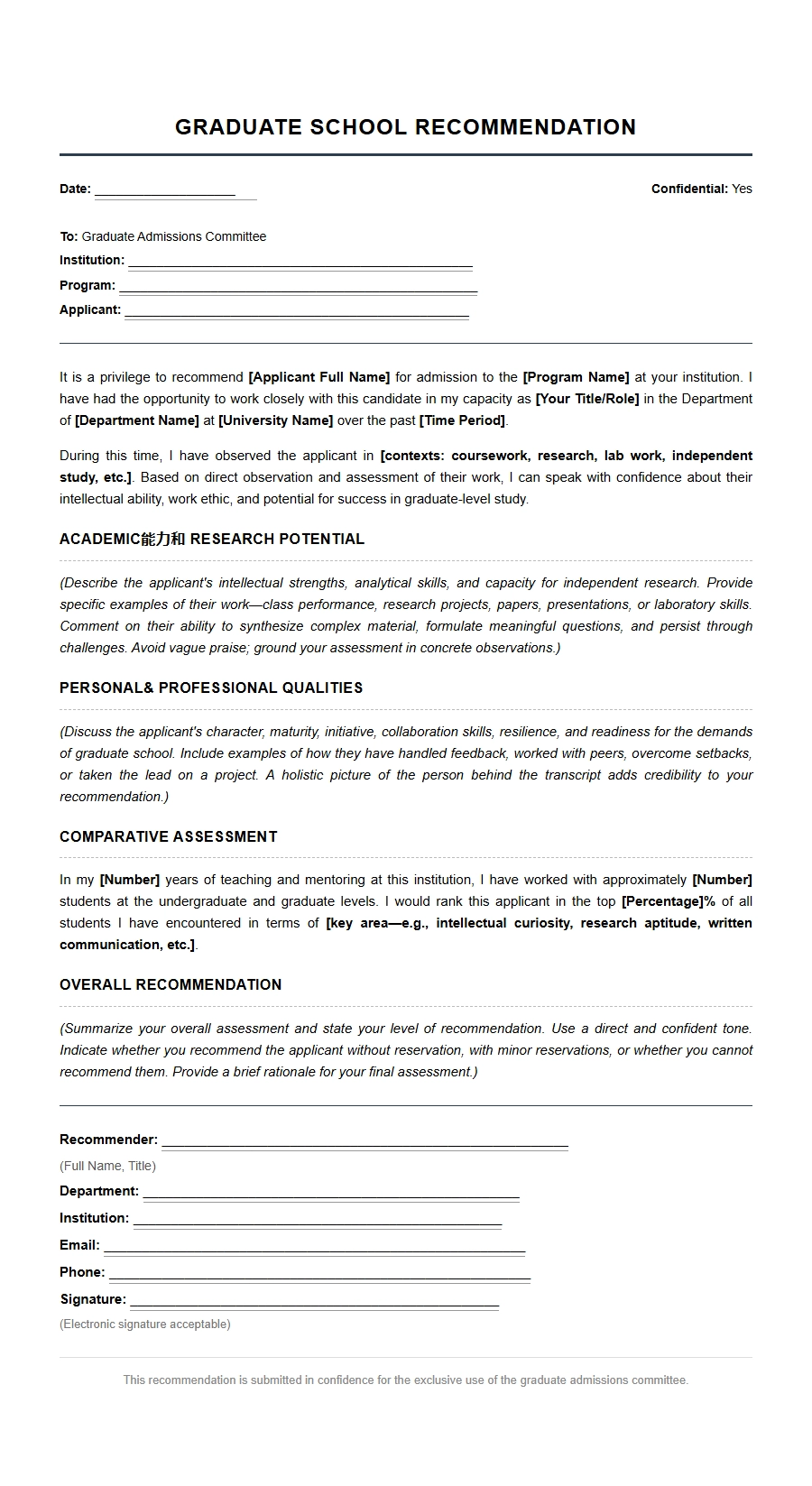 Format for Graduate School Faculty Recommendation Letters
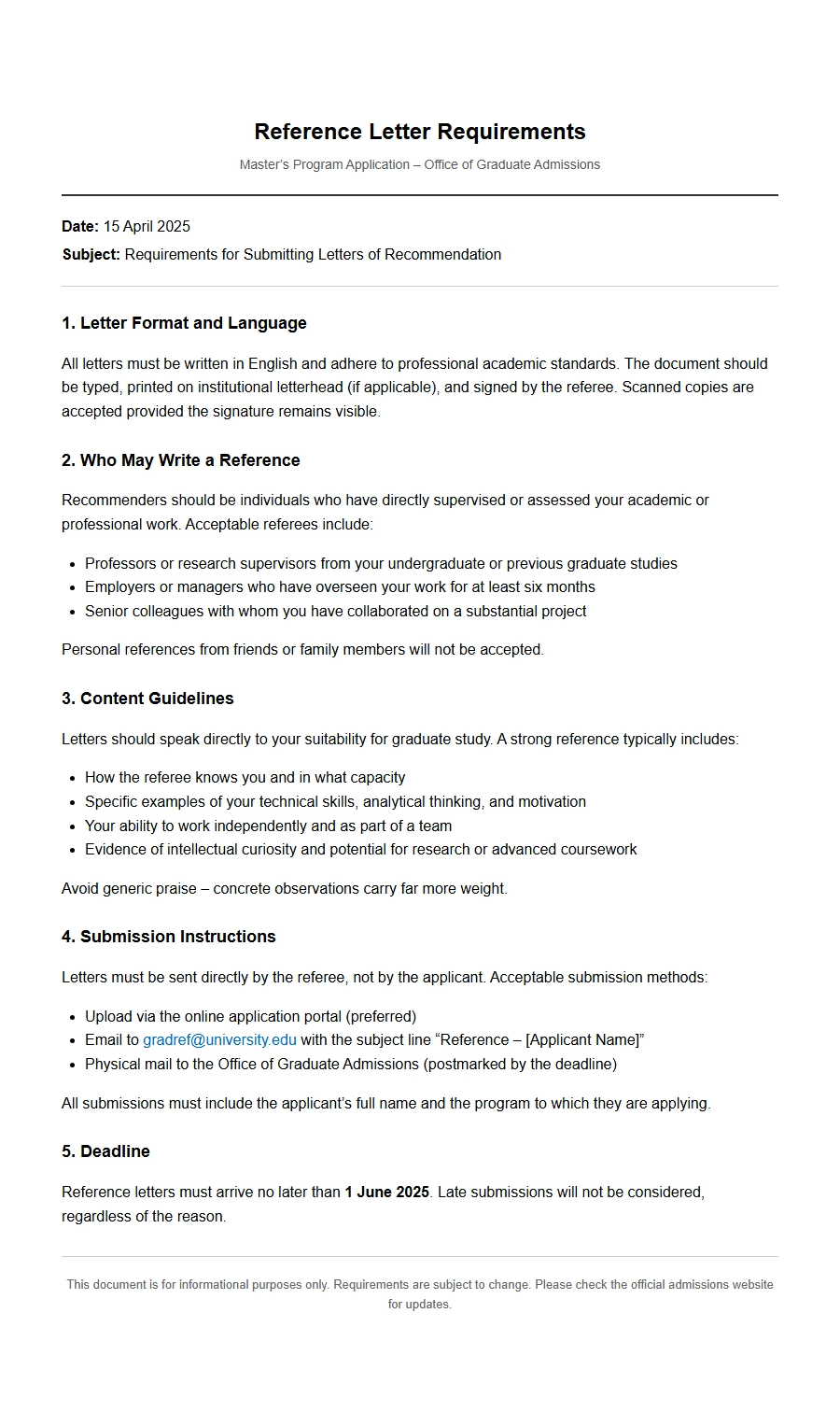 Master's Program Reference Letter Requirements
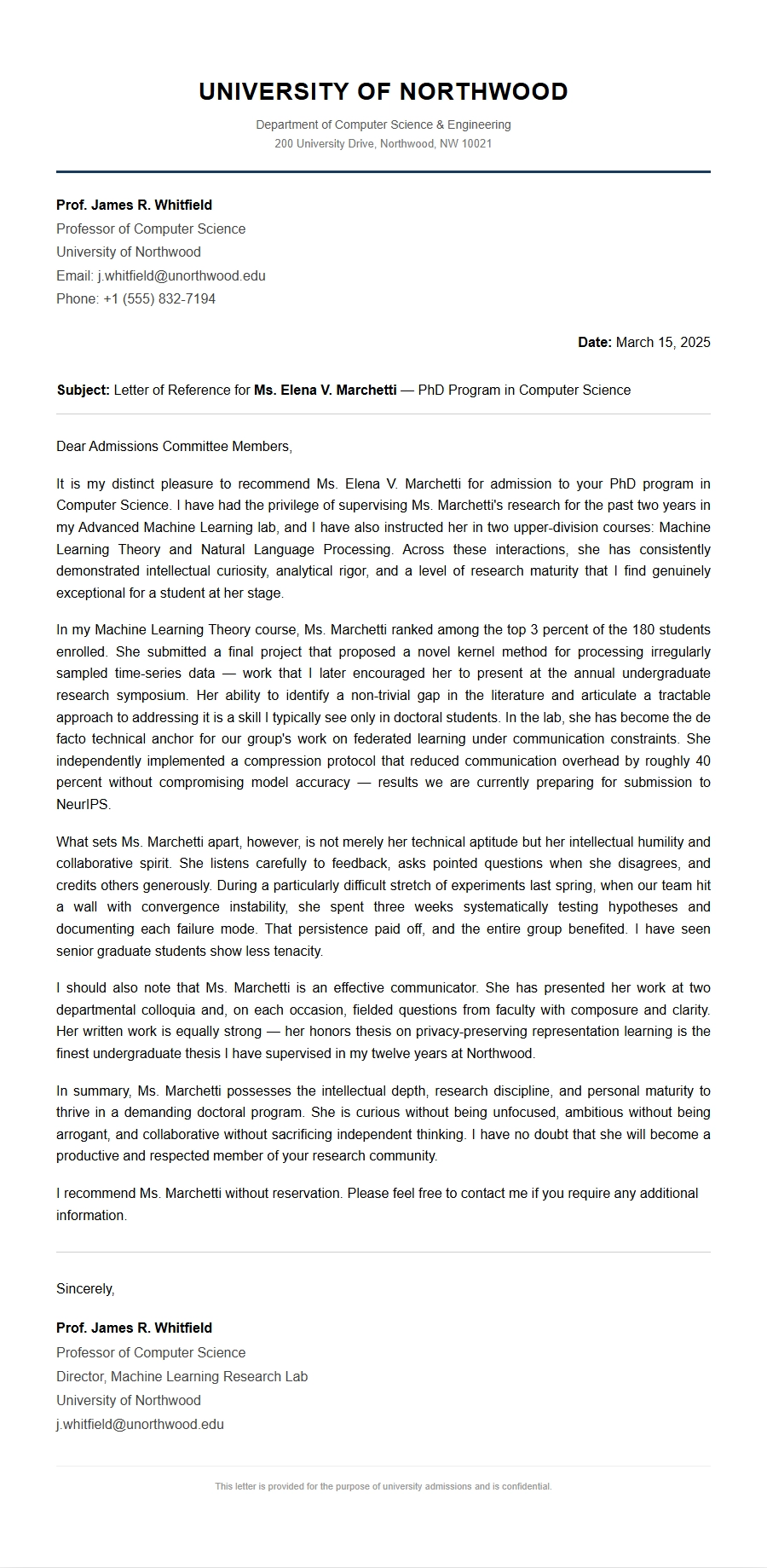 The Perfect Structure for a University Reference Letter
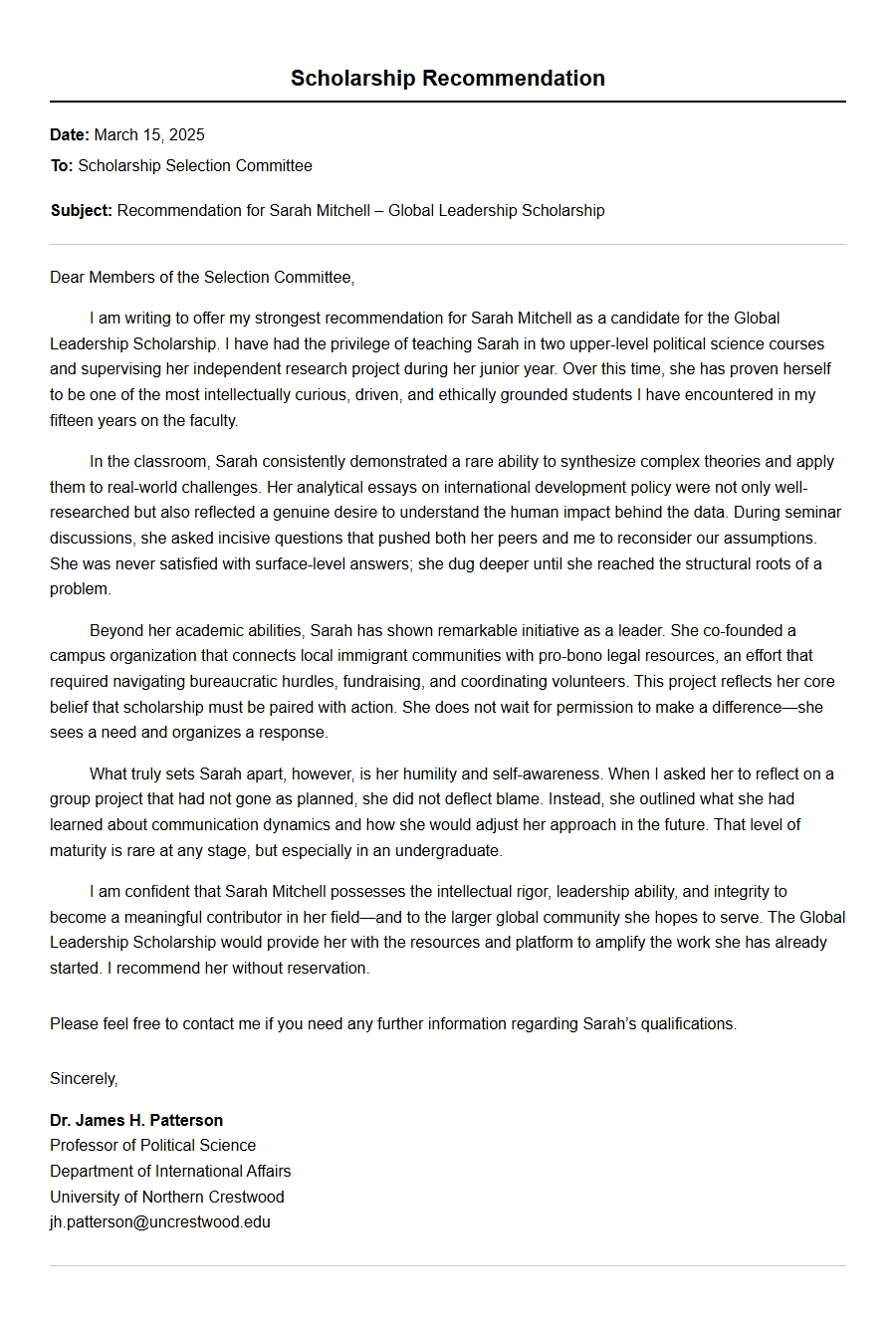 scholarship essay recommendation portion - Recommendation Letters
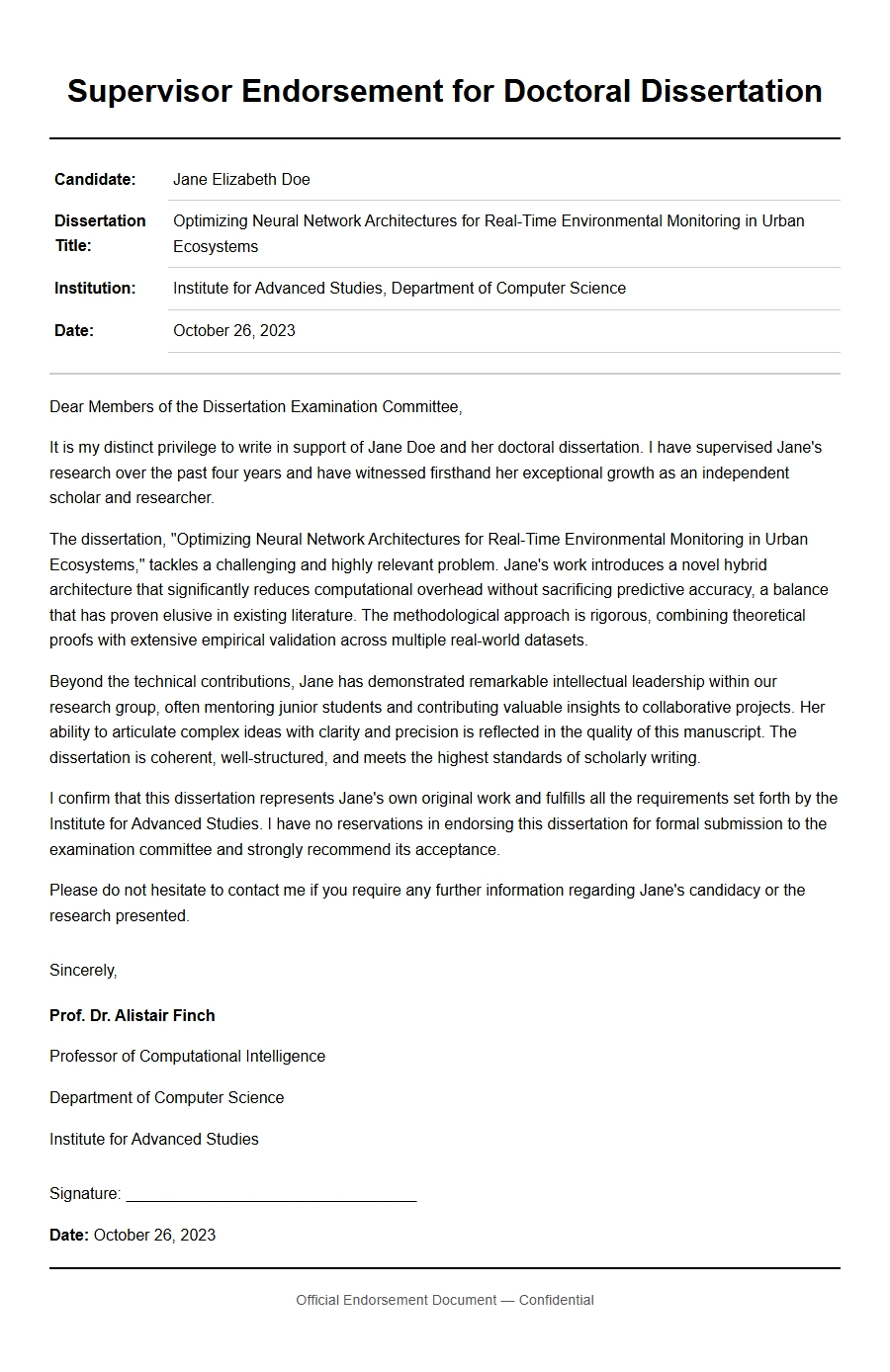 Sample PhD Supervisor Endorsement Letter
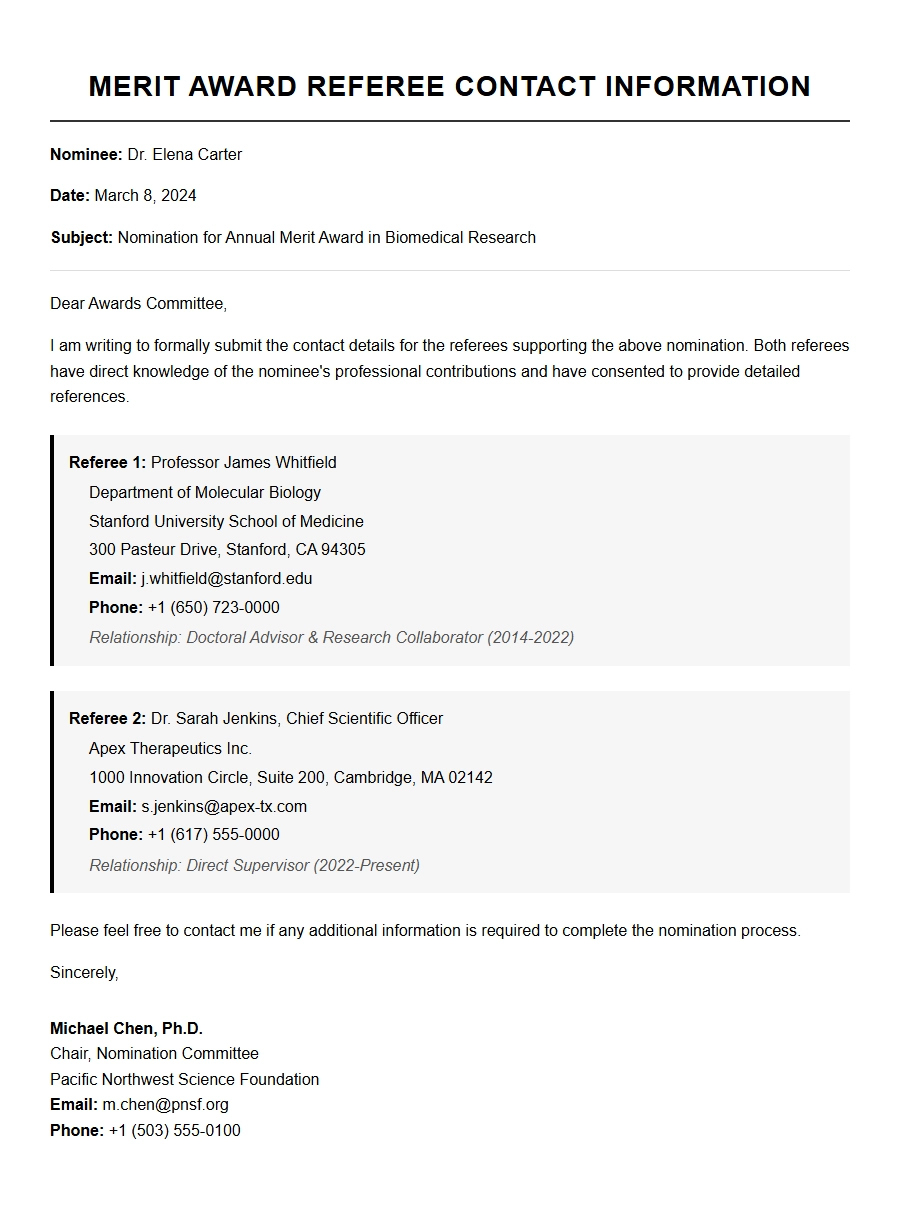 How to Find Your Merit Award Referee Contact Info