Crafting Invitation Wording for Family Reunion Gathering
You’ve got the date, the venue, maybe even a potluck plan. But when you sit down to write the actual invitation wording for a family reunion gathering, your mind goes blank. How do you sound warm but organized? Casual but clear? You don’t want to come off like a corporate memo, and you don’t want to leave people confused about the details.
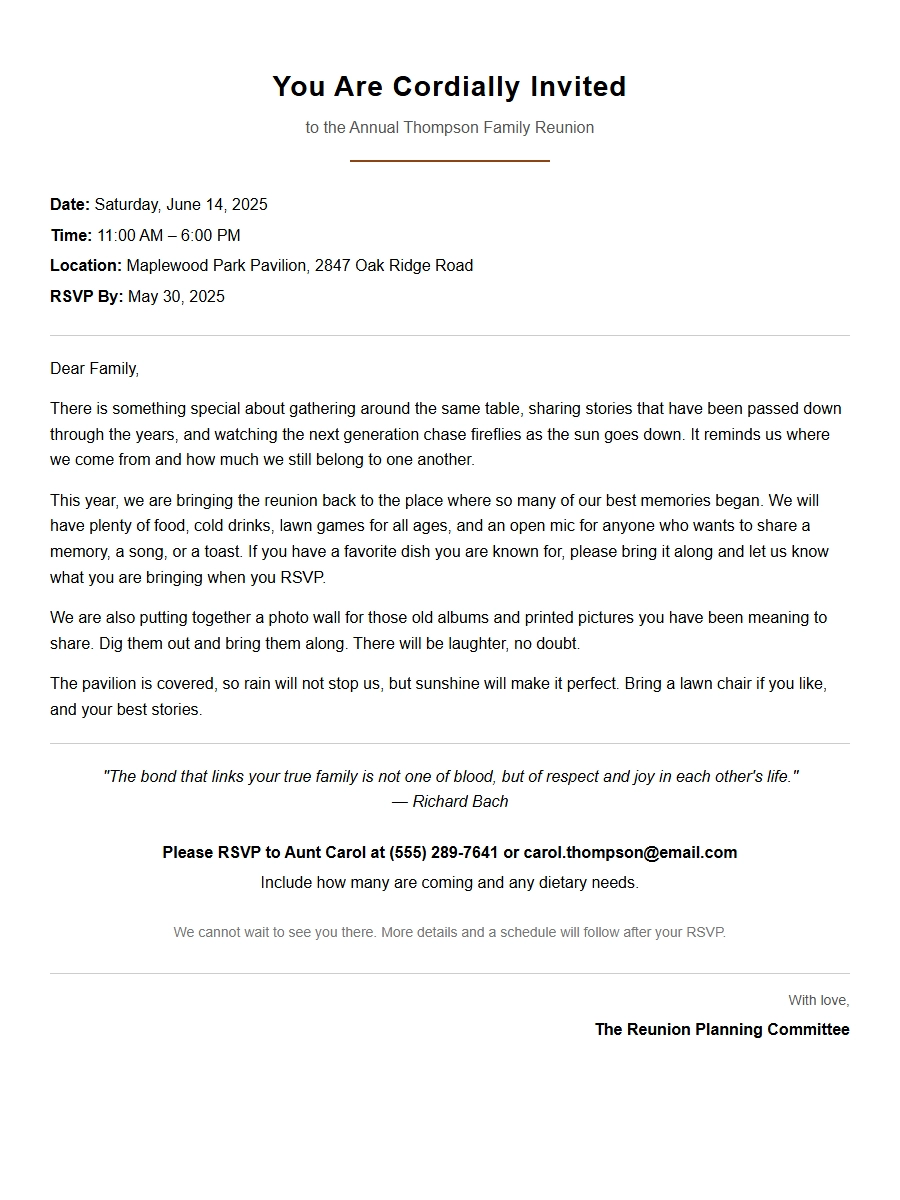
The good news is you don’t have to invent perfect phrasing from scratch. Using a sample invitation as a starting point isn’t cheating—it’s smart. A solid letter template gives you the right structure, a natural tone, and the key phrases that make your invitation stand out. You just add your family’s personality, dates, and location.
Category: Family Event Planning
What makes good family reunion invitation wording?
Think of the invitation as a conversation starter. You’re not sending a legal document; you’re sending an ask wrapped in warmth. The best invitations do three things: they explain the purpose (reconnect, celebrate, honor a milestone), they give concrete details (when, where, what to bring), and they make people feel wanted.
For example, instead of “The Smith Family Reunion will be held on June 15,” try “We’re clearing schedules and firing up the grill—June 15 is our Smith family reunion, and we can’t wait to see everyone.” The second version feels personal and urgent. That’s the tone you want: friendly, direct, and specific.
How to choose the right tone for your family
Every family has its own culture. Some love a formal, printed invitation with full names and RSVP cards. Others prefer a quick email or a Facebook event. The key is matching the tone to your audience, not to what looks “proper” in a professional correspondence handbook.
If your reunion includes older relatives who appreciate tradition, lean toward semi-formal wording: “You are cordially invited to the Johnson Family Reunion…” followed by a clear schedule. If your group is mostly cousins and kids, go with something like “Hey family—picnic time! Bring a dish, your lawn chairs, and your best stories.”
The same structure—greeting, invitation, details, close—works for both. You’re just adjusting the language. That’s why having a sample you can tweak is so helpful. It saves you from starting with a blank page every time.
Structuring your invitation: what goes where
Even a casual reunion invitation benefits from a clear order. Here’s a simple framework that works for print or digital:
1. Greeting and opening hook. Address the group (“Dear family,” or a more playful “To all the Martins past and present”). Then state why you’re writing. Grab attention with a reason—this year’s reunion is especially important because Grandma turns 90, or it’s been five years since everyone gathered.
2. Core details. Date, time, location, and any key activities (potluck, games, photo session). Don’t bury the date in a long paragraph. Make it easy to find. If it’s a multi-day event, list start and end times.
3. Logistics and expectations. Are people bringing a dish? Is there a cost? Do they need to book nearby hotels? Be upfront. Vague invitations lead to confusion.
4. RSVP instructions. Specify how and by when they should respond. A phone number, email, or online form works. And always include your name and contact info.
5. Warm closing. Something like “Can’t wait to hug you all” or “Let’s make memories together.” Then sign off with “With love” or “Your reunion committee.”
This structure mirrors what you’d find in a good business letter format—clear sections, polite tone, actionable next steps—but adapted for family. If you’re also writing a formal event invitation, say for a speaker appearance or a quarterly business review, you’d swap the warm language for more professional phrasing. The logic stays the same.
Common wording mistakes to avoid
Even a well-meaning invitation can fall flat. Watch out for these pitfalls:
Outdated salutations. “To Whom It May Concern” is too stiff for a family reunion. Use “Dear cousins,” “Hi everyone,” or just “Family!”
Overly long paragraphs. People scan your invite for logistics. Keep details in short lines or a quick list. School dance invites often do this well—they keep it punchy.
Ignoring digital vs. printed format. An email invitation can be less formal than a mailed card. But both need a clear subject line or envelope address. Housewarming toast invites demonstrate how a short, warm note works in any format.
Forgetting to proofread. A typo on the date can ruin plans. Read your invitation out loud, then ask a family member to double-check.
Tailoring a sample without losing your voice
Once you find a sample you like, don’t just copy it. Read it through, then rewrite the opening in your own words. Maybe your family has an inside joke or a favorite phrase. Drop that in. Change “we invite you” to “you’re part of this.” Swap generic activities for specific traditions, like “Yes, we’re doing the three-legged race again, and Uncle Joe is defending his title.”
The sample gives you a skeleton; you add the heartbeat. That’s the difference between a generic invitation and one that gets a delighted “Yes!” back. If you’re also writing an art exhibition opening invite or a formal business note, the same principle applies: customize the tone and details to fit the audience.
Next steps: make it your own
Pick a sample that feels close to your family’s style—whether that’s fun and breezy or slightly dressed up. Change the names, dates, and place. Adjust the level of formality until it sounds like you. Then send it out and watch the replies roll in.
The more you practice adapting templates, the faster and more natural it becomes. Soon you’ll be writing professional correspondence of any kind—reunion invites, thank-you notes, even a resignation letter sample—with the same ease. Because every good letter, no matter how formal or casual, starts with a clear purpose and a genuine voice.
Realistic Samples
Crafting Invitation Wording for Family Reunion Gathering
Casual Backyard Reunion
Let’s fire up the grill and enjoy a relaxed afternoon together! We’re hosting a casual family reunion at our place, and everyone is invited.
Date: Saturday, June 15, 2025 Time: 2:00 PM – 7:00 PM Location: 123 Oak Street, Springfield
Please bring a side dish or dessert to share. Burgers, hot dogs, and drinks will be provided. Kids are welcome – we’ll have lawn games set up.
Please RSVP by June 1 so we can plan accordingly. Call or text Aunt Linda at (555) 123-4567 or reply to this email.
Can’t wait to see everyone!
Formal Family Dinner
You are cordially invited to a formal family reunion dinner celebrating our shared heritage. Please join us for an elegant evening of fine dining, connection, and memory-making.
Event details:
Date: Saturday, July 20, 2025
Time: 6:00 PM – 10:00 PM
Venue: The Grand Ballroom, 456 Maple Avenue, Riverton
Attire: Semi-formal. A plated dinner will be served; menu choices will be collected upon RSVP.
We ask each family unit to contribute toward the meal cost. Suggested donation is $25 per adult, $10 per child. Please bring cash or check payable to “Smith Family Fund.”
Kindly RSVP by July 1 to Grandpa Joe at (555) 987-6543 or via the reply card enclosed.
We look forward to a sophisticated and joyful gathering.
Potluck Picnic in the Park
Let’s pack a basket and head to the park for a family reunion potluck picnic! Bring your favorite dish and enjoy a day of sunshine, laughter, and togetherness.
Date: Sunday, August 10, 2025 Time: 11:00 AM – 4:00 PM Location: Riverside Park, Shelter #3, 789 River Road, Greenville
We’ll provide tableware, water, and lemonade. Please bring a dish to share (appetizer, main, side, salad, or dessert). Let us know what you’re bringing to avoid duplicates. Use the sign-up sheet below:
Family Name
Dish
Category
Johnson
Potato salad
Side
Lee
Fried chicken
Main
Ramirez
Fruit tray
Dessert
RSVP to cousin Maria at maria@example.com by August 1. Include your dish choice.
Let’s make this a memorable picnic!
Holiday Season Reunion
This holiday season, let’s gather as a family to celebrate warmth, gratitude, and joy. You’re invited to a festive family reunion filled with holiday cheer.
Date: Saturday, December 20, 2025 Time: 3:00 PM – 9:00 PM Location: The Community Center, 321 Elm Street, Northville
We’ll have a potluck dinner with a holiday theme. Please bring a traditional dish from your household. Drinks and desserts will be provided.
Activities include a gift exchange (bring a wrapped gift, value $15-20 if you wish), cookie decorating, and a carol sing-along. We’ll also have a table for family photos – please bring old photos to share!
RSVP by December 10 to Uncle Frank at (555) 246-8100 or frank.smith@email.com.
We can’t wait to share the holiday spirit with you!
Outdoor Games and BBQ
Calling all family members – it’s time for fun, games, and great food! Join us for an outdoor games and BBQ reunion at the lake house.
Date: Saturday, June 28, 2025 (Rain date: July 5) Time: 10:00 AM – 6:00 PM Location: 555 Lakeview Drive, Lakewood
We’ll have a cornhole tournament, volleyball, and a three-legged race. Prizes for winners! Bring your competitive spirit and comfortable clothes.
Food: BBQ lunch served at 1 PM – pulled pork, chicken, and veggie options. Please bring a side dish or dessert. BYOB (beer and wine only).
RSVP details:
Text “family” to (555) 333-2222 by June 20
Include number of adults and children
Note any dietary restrictions
This is going to be the best reunion yet – see you there!
Virtual Family Reunion
Can’t travel? No problem! Let’s meet online for a virtual family reunion. Connect from the comfort of your home and catch up with relatives near and far.
Date: Sunday, September 7, 2025 Time: 2:00 PM – 4:00 PM (Eastern Time) Platform: Zoom (link will be sent after RSVP)
We’ll have a fun agenda:
Welcome and introductions (share one highlight from your year)
Family trivia game (prizes for top scorers)
Show-and-tell: bring a photo or object that represents something special to you
Open mic for announcements, stories, or talent
Closing group photo (everyone on screen)
Please RSVP by September 1 to cousin Emma at emma@family.com. You’ll receive the Zoom link and a guide for optimal setup (good lighting, stable internet).
Let’s bridge the distance with smiles and memories!
Family History Theme Reunion
Come explore our roots at a family reunion themed around ancestry and heritage. Bring stories, photos, and heirlooms that celebrate where we come from.
Date: Saturday, October 11, 2025 Time: 1:00 PM – 6:00 PM Venue: The Historic Barn at 789 Heritage Lane, Oldtown
Activities include a genealogy timeline display, a “family tree” craft (everyone adds a leaf), and a storytelling circle. We’ll also have a memory table where you can place framed photos of ancestors.
Lunch will be a potluck with recipes from our grandparents. Please bring a dish that reflects a family tradition and write down the recipe to add to our family cookbook.
To help with planning, please RSVP by October 1. Indicate if you can bring a photo or heirloom for display. Contact cousin Rachel at (555) 444-7777 or rachel@family.org.
Let’s honor our past and strengthen our future together!
Anniversary Celebration Reunion
We’re combining our annual family reunion with a special milestone: Grandpa and Grandma’s 50th wedding anniversary! Join us for a double celebration of love, family, and tradition.
Date: Saturday, August 30, 2025 Time: 4:00 PM – 10:00 PM Location: The Garden Pavilion, 123 Bloom Street, Rosemont
Program:
4:00 PM – Welcome and appetizers
5:00 PM – Anniversary tribute with slideshow
6:30 PM – Dinner (buffet style)
8:00 PM – Dancing and socializing
We’d love for family members to contribute a short video message or a written memory for a keepsake book. Please send digital files to anniversary@family.com by August 15.
RSVP by August 10 to Aunt Helen at (555) 888-9999. Let us know if you’d like to help with setup or bring a dessert.
Let’s make this reunion extra special for the couple who started it all!
Beach Day Family Reunion
Pack your sunscreen and beach gear! We’re heading to the shore for a fun family reunion by the ocean. Sand, surf, and smiles await.
Date: Saturday, July 12, 2025 Time: 9:00 AM – 5:00 PM Location: Sandy Cove Beach, 1 Ocean Drive, Seaside (meet near lifeguard station 3)
We’ll have a canopy tent for shade, coolers with drinks, and a portable grill for lunch. Please bring your own beach chair, towel, and any personal items. For food, we’re doing a potluck with a seaside twist: seafood, salads, fruits, and snacks.
Activities: sandcastle building contest, frisbee, and a family photo shoot at sunset (around 7 PM – optional).
RSVP by July 5 to cousin Derek (555-222-1111). Let him know if you can bring a pop-up tent, extra chairs, or a cooler. Also, share your dish so we can coordinate.
Don’t miss this chance to soak up the sun and family fun!
Weekend Camping Reunion
Escape the everyday and reconnect with family in the great outdoors. Join us for a weekend camping reunion at Pine Ridge Campground.
Dates: Friday, September 19 – Sunday, September 21, 2025 Location: Pine Ridge Campground, Site 15-20, 200 Forest Road, Hilltown
We’ll have a group campfire area, shared meals, and plenty of activities: hiking, fishing, stargazing, and storytelling. Each family unit is responsible for their own tent, sleeping bags, and camping gear.
Meal plan:
Day
Breakfast
Lunch
Dinner
Friday
–
–
Potluck (bring a dish)
Saturday
Provided (pancakes)
Pack your own
Group BBQ
Sunday
Provided (bagels & fruit)
Clean up & depart
–
Please RSVP by September 1 to brother-in-law Mike at mike.camp@email.com. Include how many in your party and if you have a tent. A detailed packing list will be sent after RSVP.
Experience nature and family together – it’ll be unforgettable!
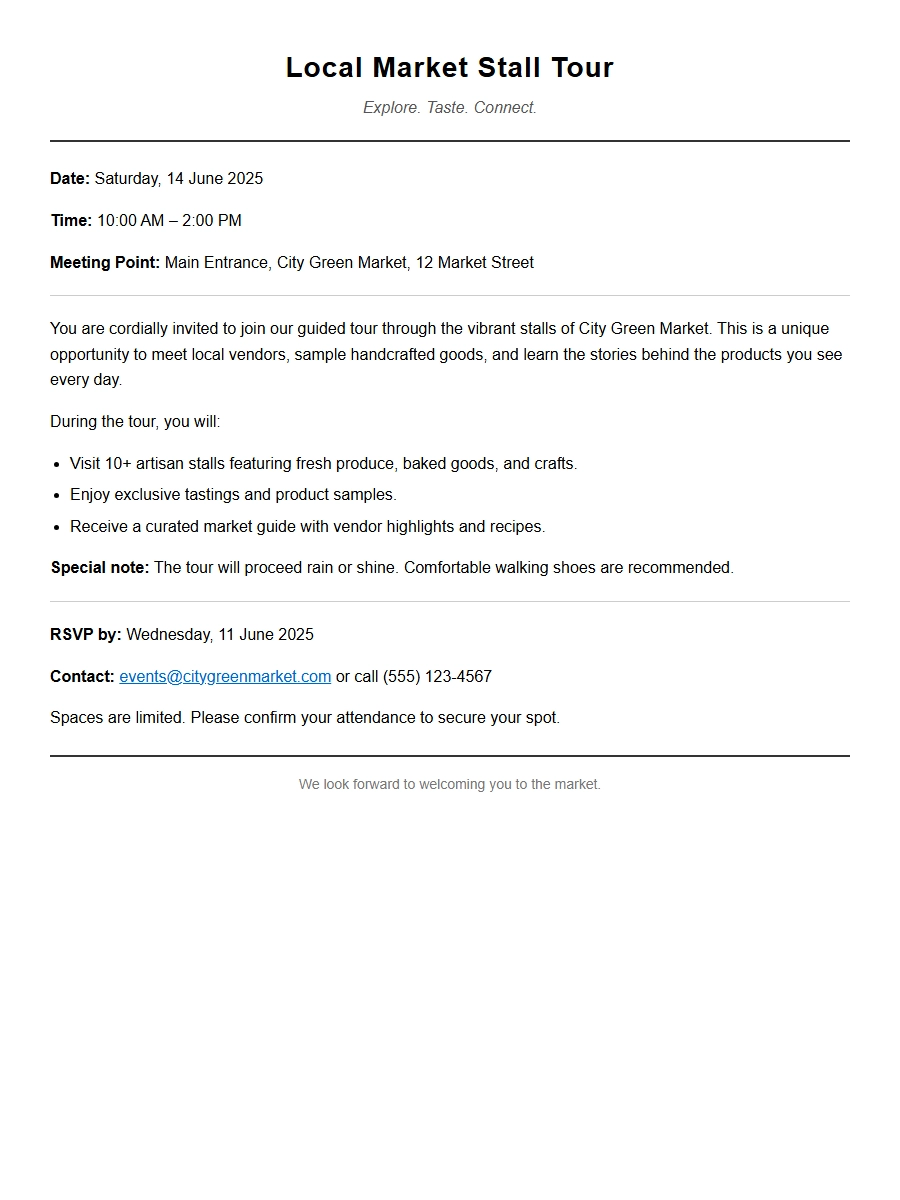 sample invitation for local market stall tour - Invitation Letters
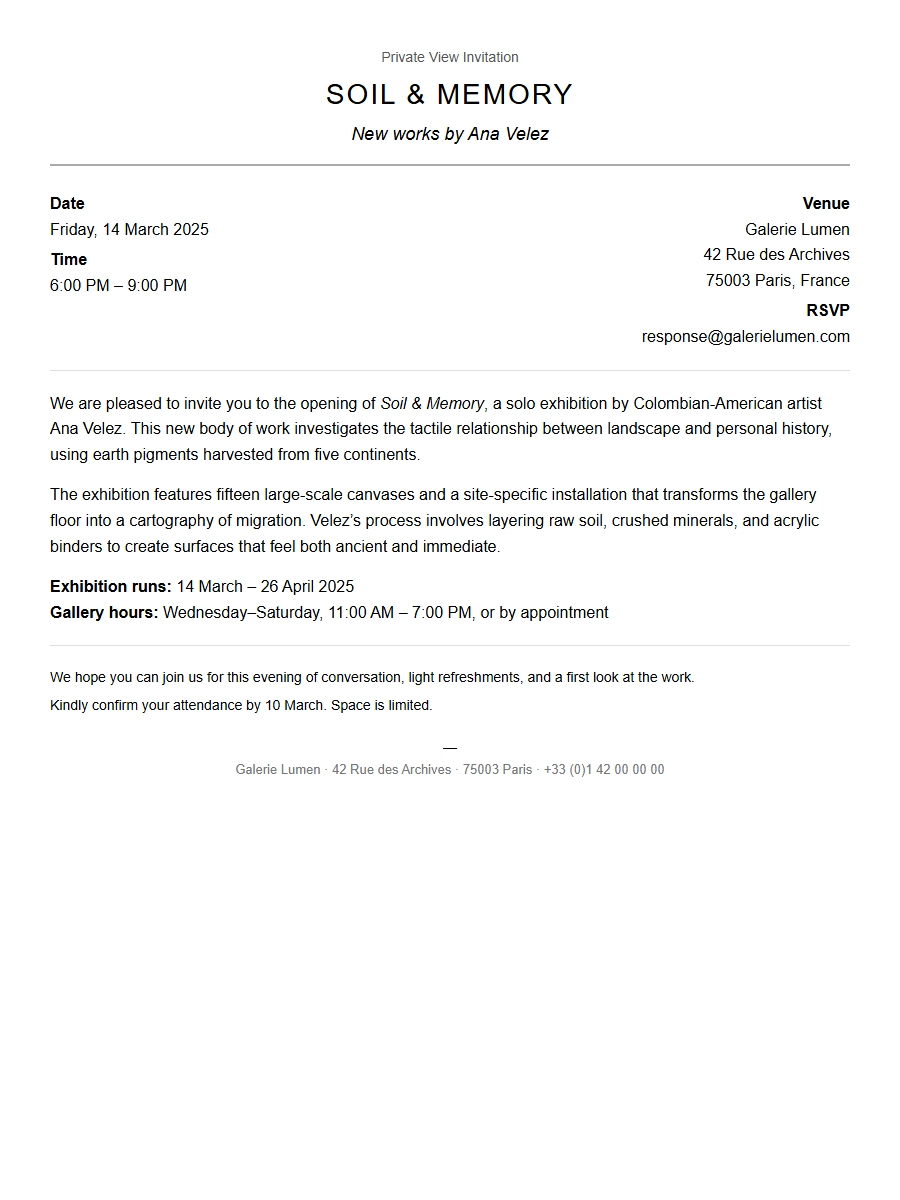 Art Exhibition Opening Invitation Wording Ideas
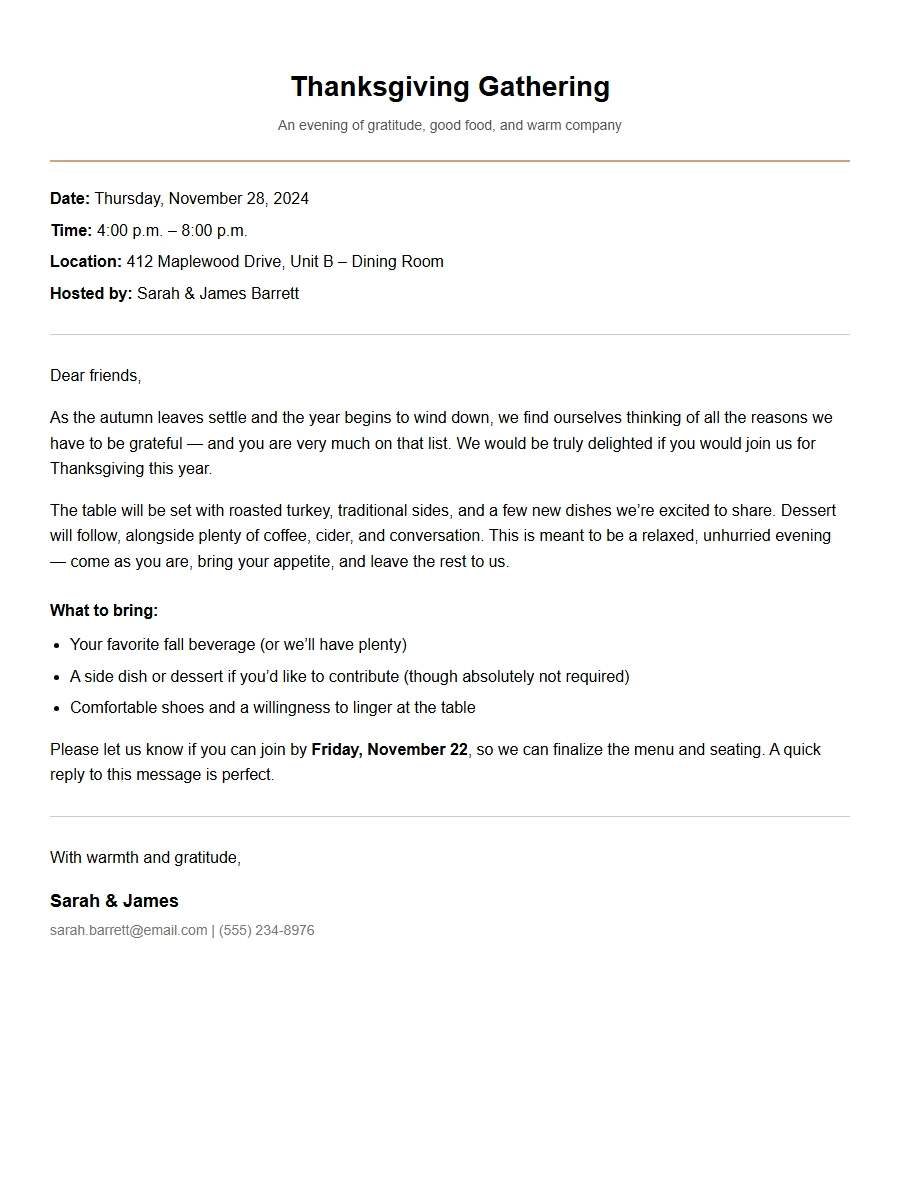 Thanksgiving Meal Gathering Invitation Text
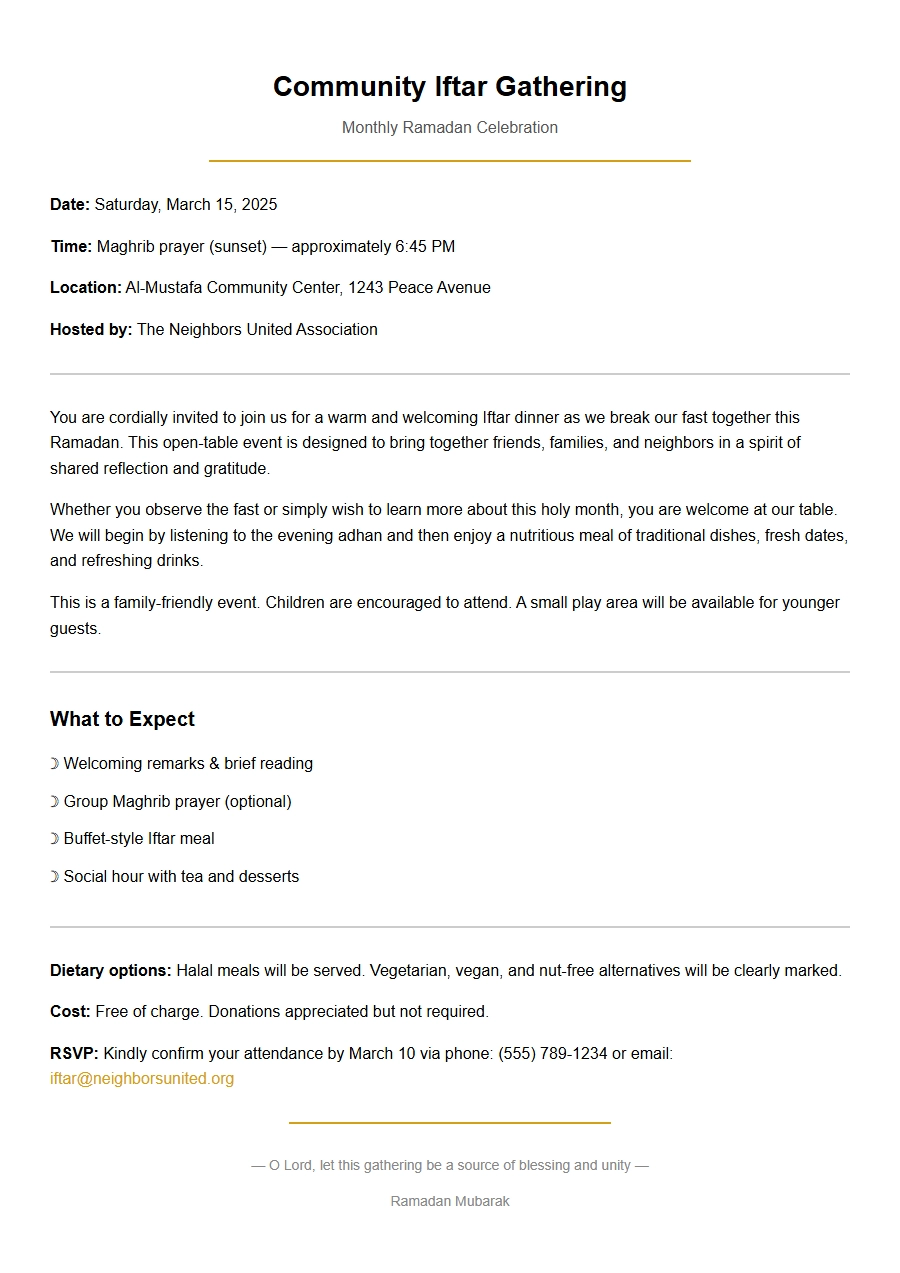 Ramadan Iftar Community Event Invitation
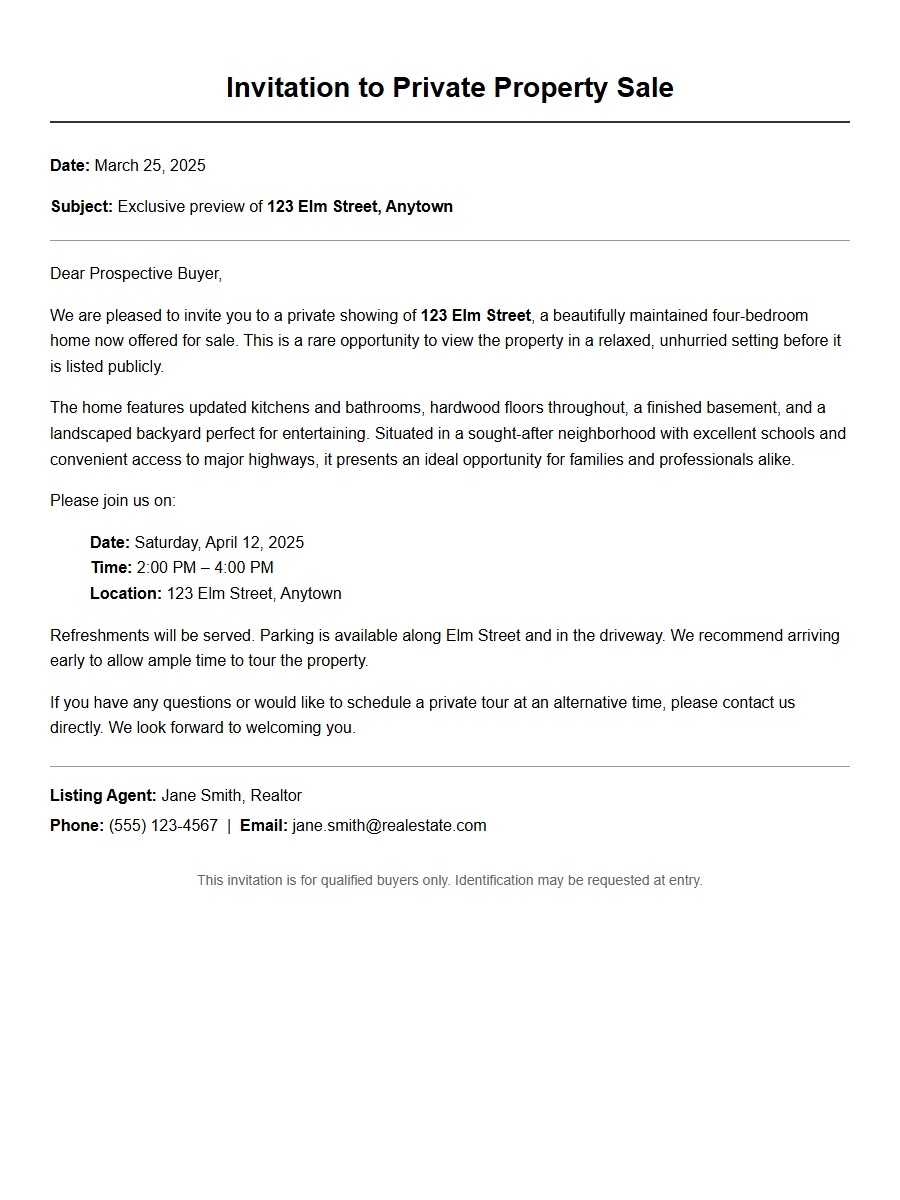 Sample Wording for Property Sale Invitations
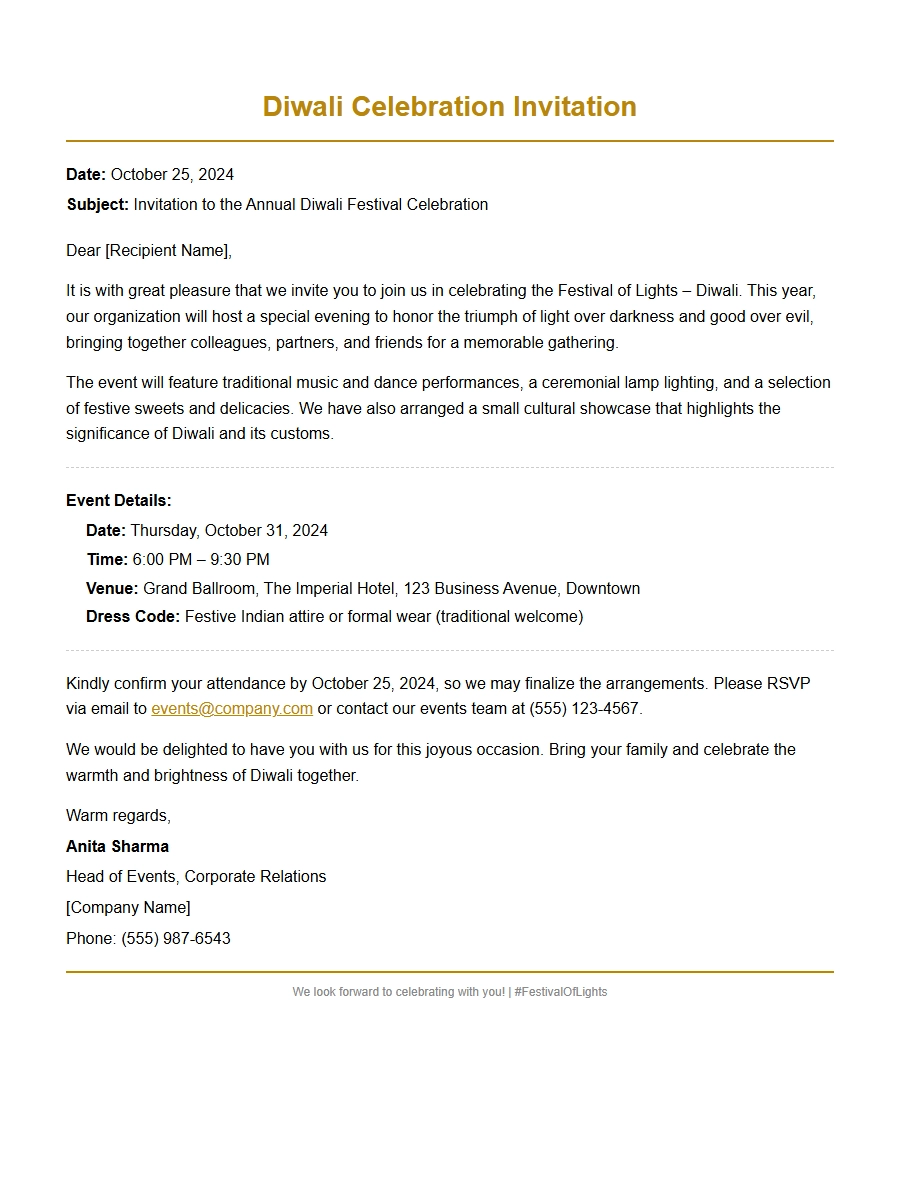 Diwali Festival Celebration Invitation Draft