You’ve got the venue booked and the menu set. Now you need to actually tell people when and where to show up. But writing a rehearsal dinner invitation can feel oddly tricky. It’s not quite a wedding invite, but it’s not a casual text either. You want it to feel warm, clear, and appropriate—without overthinking every word.
The good news is you don’t need to start from scratch. Using a letter template or sample invitation isn’t cheating. It gives you a solid structure so you can focus on the personal details that actually matter. The key is knowing how to adapt a sample without losing your own voice.
What makes rehearsal dinner wording different
A rehearsal dinner is usually more relaxed than the wedding itself, but it still sets the tone for the weekend. The invitation should match the formality of the event. If you’re hosting a backyard barbecue after the rehearsal, keep the wording casual. If it’s a seated dinner at a nice restaurant, let the language reflect that.
The core details are simple: host, couple, date, time, location, and RSVP instructions. But the way you arrange those details changes the feel of the invitation. That’s where choosing the right format helps.
Formal vs. casual: picking the right approach
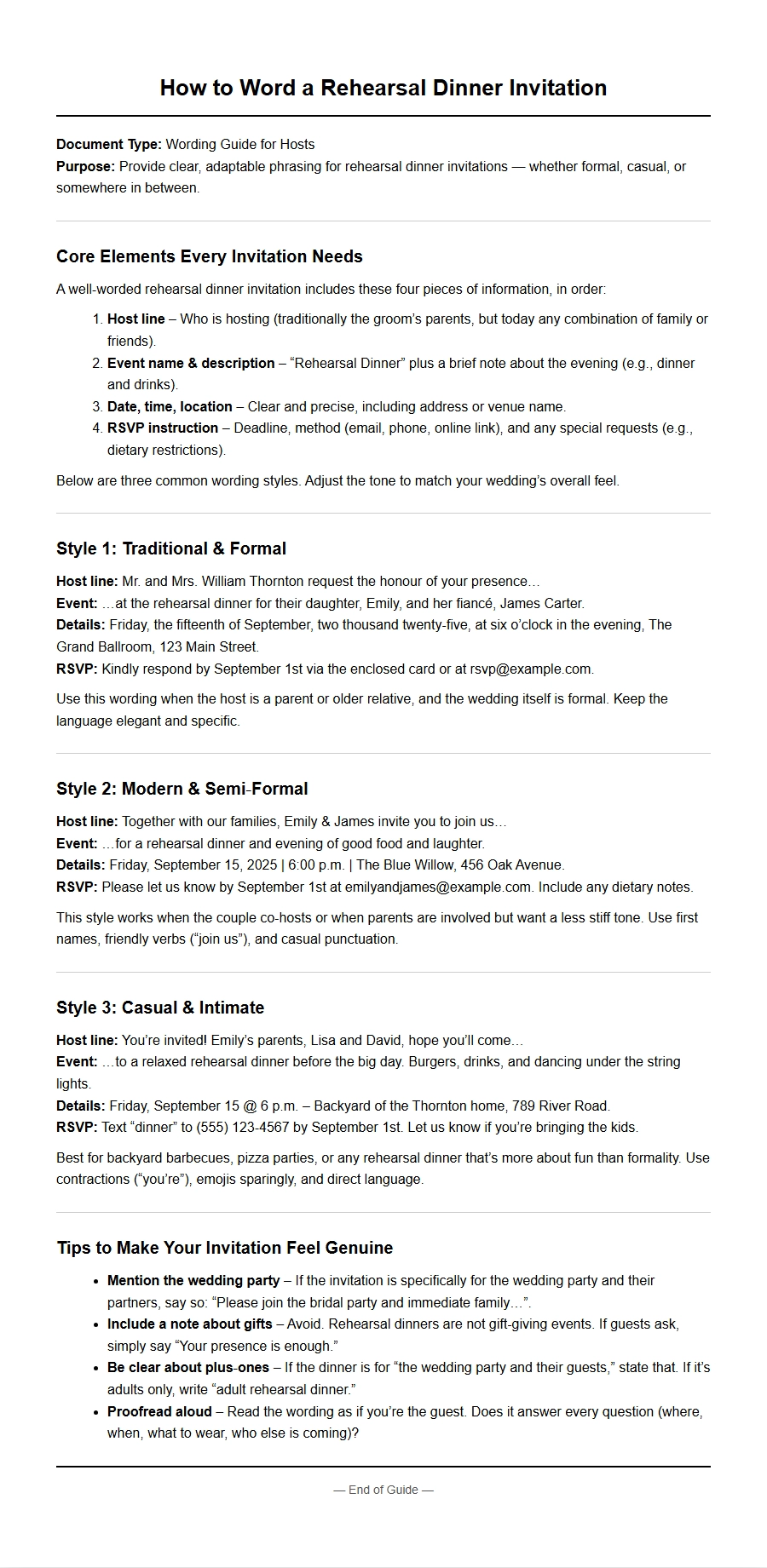
For a formal dinner, use full names and traditional phrasing. Something like “Mr. and Mrs. James Sullivan request the pleasure of your company at a rehearsal dinner honoring their son Michael and his fiancée Sarah.” That kind of language signals a polished evening with professional correspondence standards. It works well for black-tie or semi-formal events.
For a casual gathering, skip the formalities. Try something like “Come eat, drink, and toast with us after the rehearsal! Friday at 6 p.m. at The Rustic Table.” The tone should match how you actually talk to your guests. If you’d text them a funny meme, don’t send a formal card.
How to adapt a sample without sounding generic
Samples are great for structure, but you need to make them yours. Start by swapping out the generic phrases for details that reflect your event. Instead of “join us for dinner,” say “we’re firing up the grill and pouring sangria.” Instead of “formal attire requested,” say “wear what makes you comfortable—we’ll be in jeans.”
A quick tip: rewrite the opening paragraph first. That’s where people decide if they’re reading a template or a real invitation. Use the hosts’ actual voices. If your mom is hosting, let it sound like her. If you and your partner are writing it together, keep the tone consistent with your wedding style.
Common mistakes people make
A few things trip up most people. One is using an outdated salutation and closing. “To whom it may concern” has no place on a dinner invitation. Use “Dear friends and family” or address guests by name if you know your guest list.
Another mistake is ignoring the digital letter format. If you’re emailing invitations or using a service like Paperless Post, the letter structure needs to work on screens. Keep paragraphs short. Use line breaks. Don’t cram everything into one block of text.
Also, remember to include an RSVP deadline and a clear way to respond. People forget, and you need a headcount for catering. A simple line like “Please reply by June 1st so we can finalize the menu” does the job.
Adding a personal touch without overdoing it
The best invitations feel both professional and personal. You don’t need to write a novel. A short note about why this dinner matters—like “We’re so excited to thank our closest people before the big day”—adds warmth without extra fluff.
If you’re struggling with tone in writing, read your draft out loud. Does it sound like you? If not, tweak it. Your guests will appreciate the authenticity.
For more inspiration, take a look at how other events handle invitation wording. A formal dinner invitation reply can teach you a lot about proper RSVP etiquette. Similarly, looking at how people word a Christmas dinner gathering invitation can give you ideas for combining warmth with clear logistics.
When to match the invitation to the event type
Your rehearsal dinner might have a theme or a cultural element that affects the wording. For example, if you’re hosting a community-style event, the language should feel inclusive. A Ramadan iftar community event invitation often balances tradition with hospitality—a good model for any multi-generational gathering.
If parents are hosting on your behalf, you might want to check out a graduation parent notification invitation to see how parents can announce an event without sounding stuffy. And if you need ideas for a more formal fundraising-style dinner, a fundraising auction guest invitation shows how to include all the necessary details while maintaining a polished tone.
Practical tips for fast, clean invitations
Start with a sample that matches your formality level. Change the names and details first. Then adjust the tone line by line. Read it once as if you’re a guest—does it answer all your questions? If not, add what’s missing.
Proofreading matters more than you think. A typo in the date or time causes real confusion. Read it backwards word by word to catch errors. Ask a friend to check it too. It’s a small step that saves big headaches.
Finally, don’t stress about perfection. Your guests care about being included, not about whether you used the Oxford comma. The sample is a starting point. Once you’ve personalized it, send it with confidence. The more you do it, the faster it gets. And next time you need to write an invitation, you’ll already know what works.
 sample invitation for local market stall tour - Invitation Letters
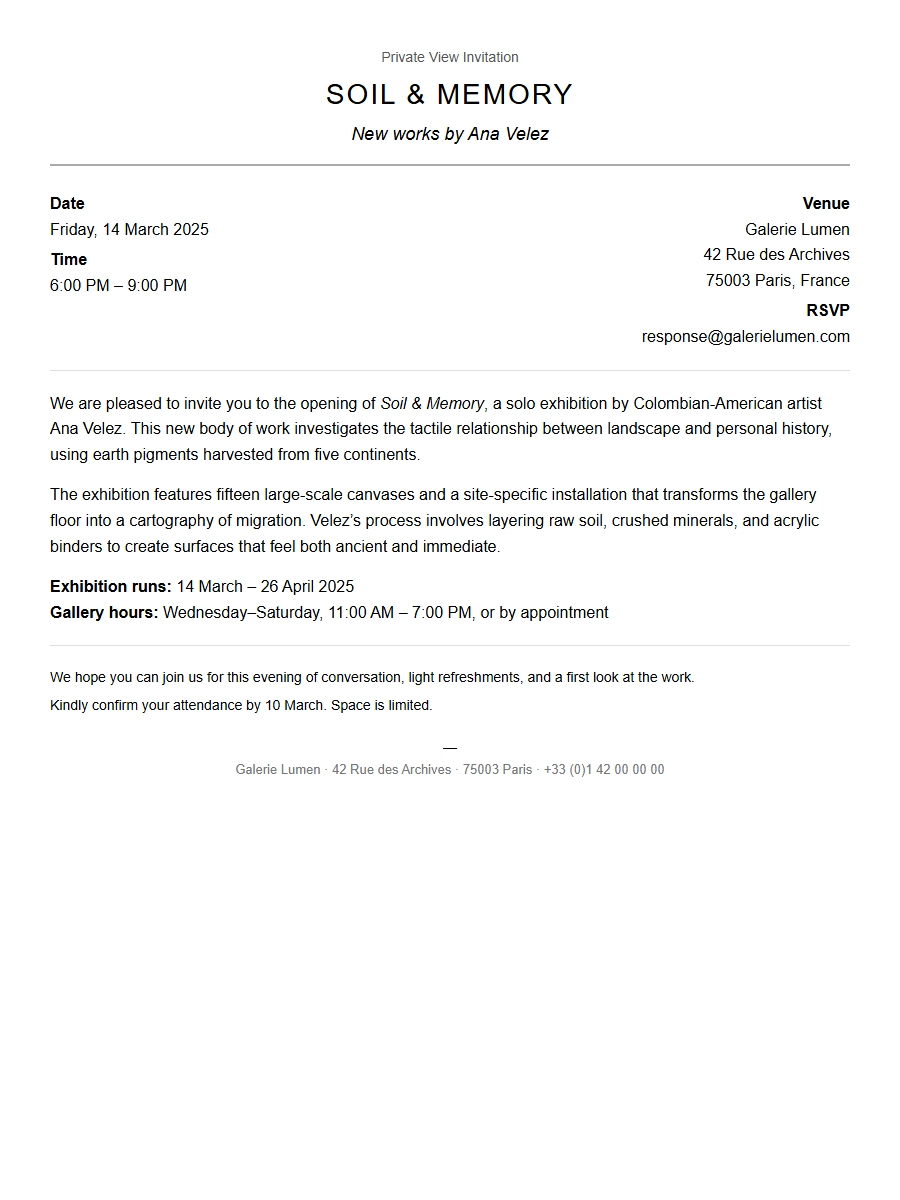 Art Exhibition Opening Invitation Wording Ideas
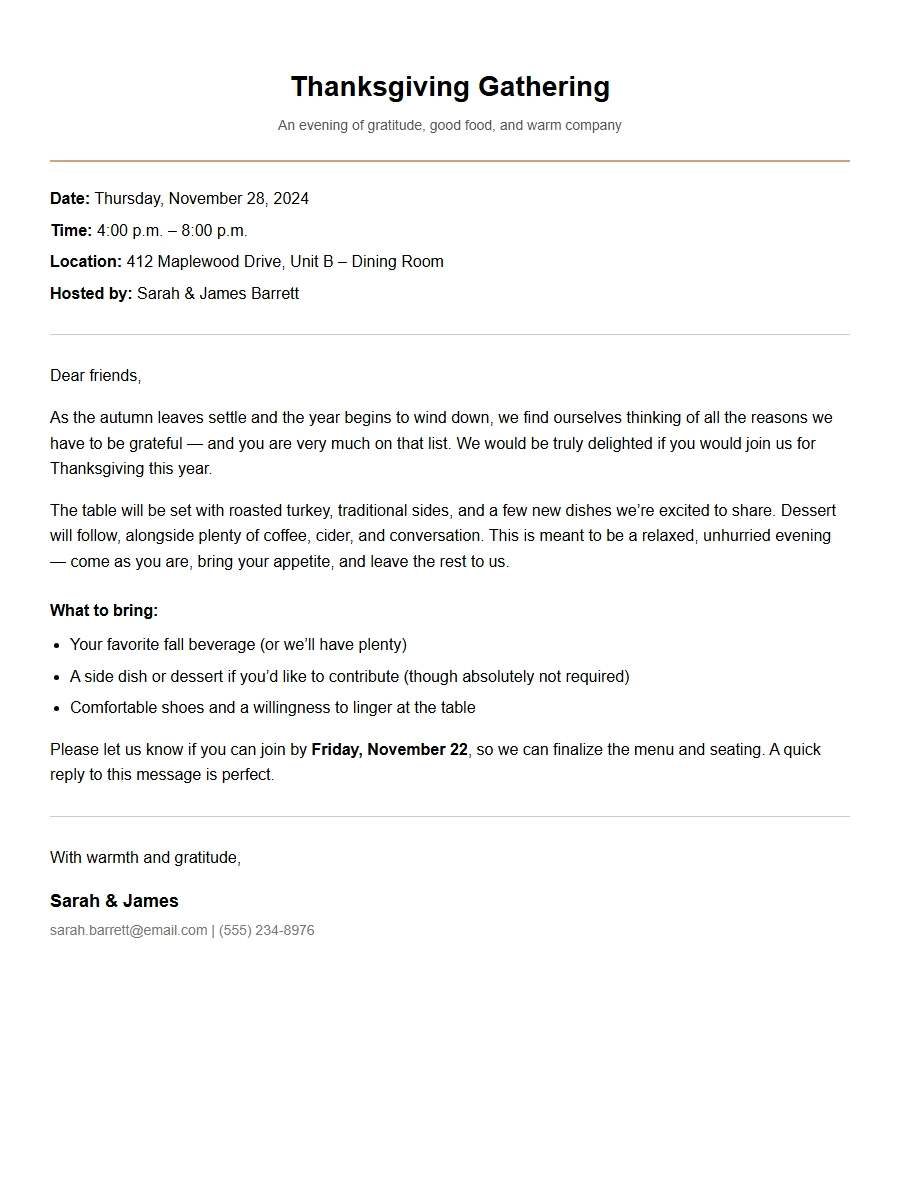 Thanksgiving Meal Gathering Invitation Text
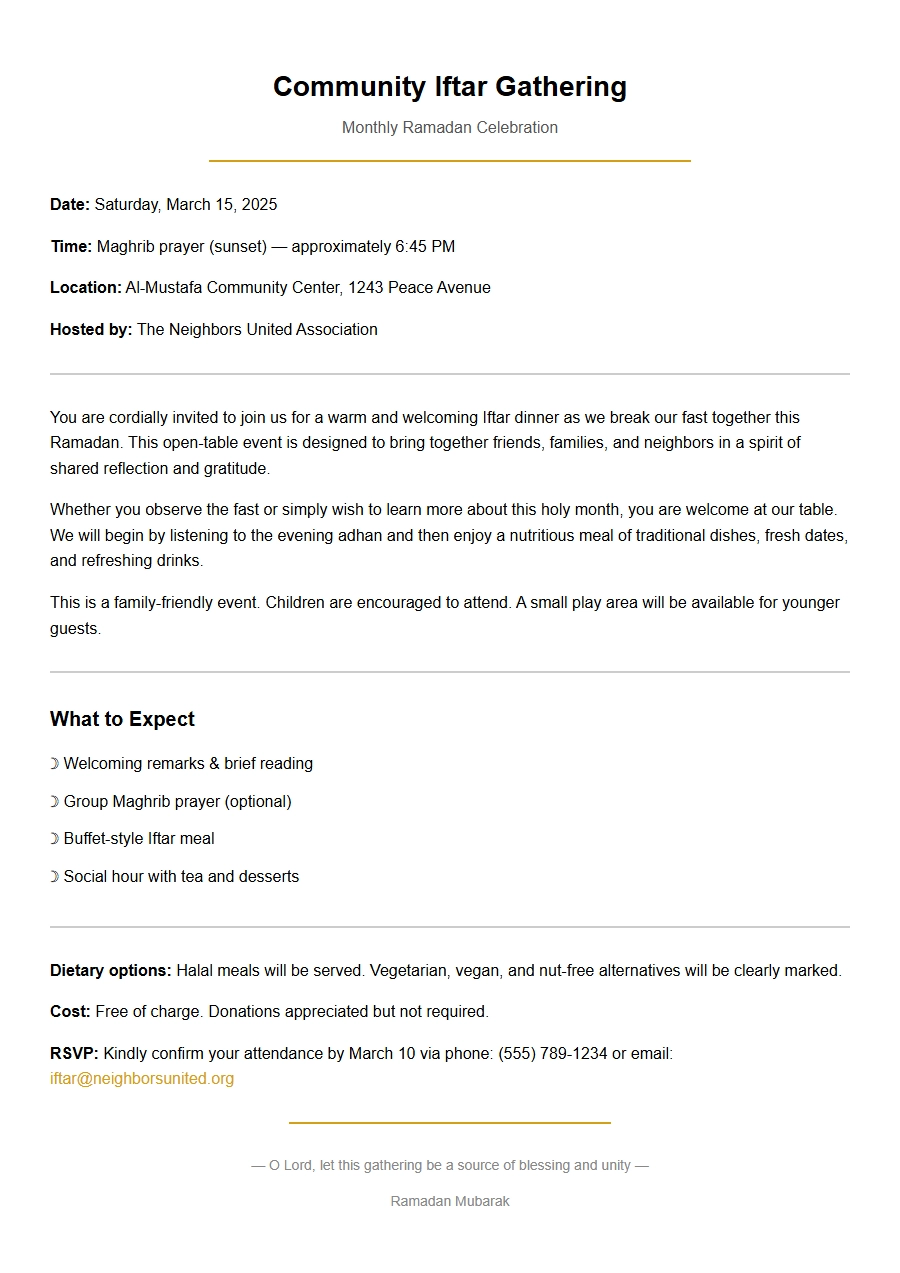 Ramadan Iftar Community Event Invitation
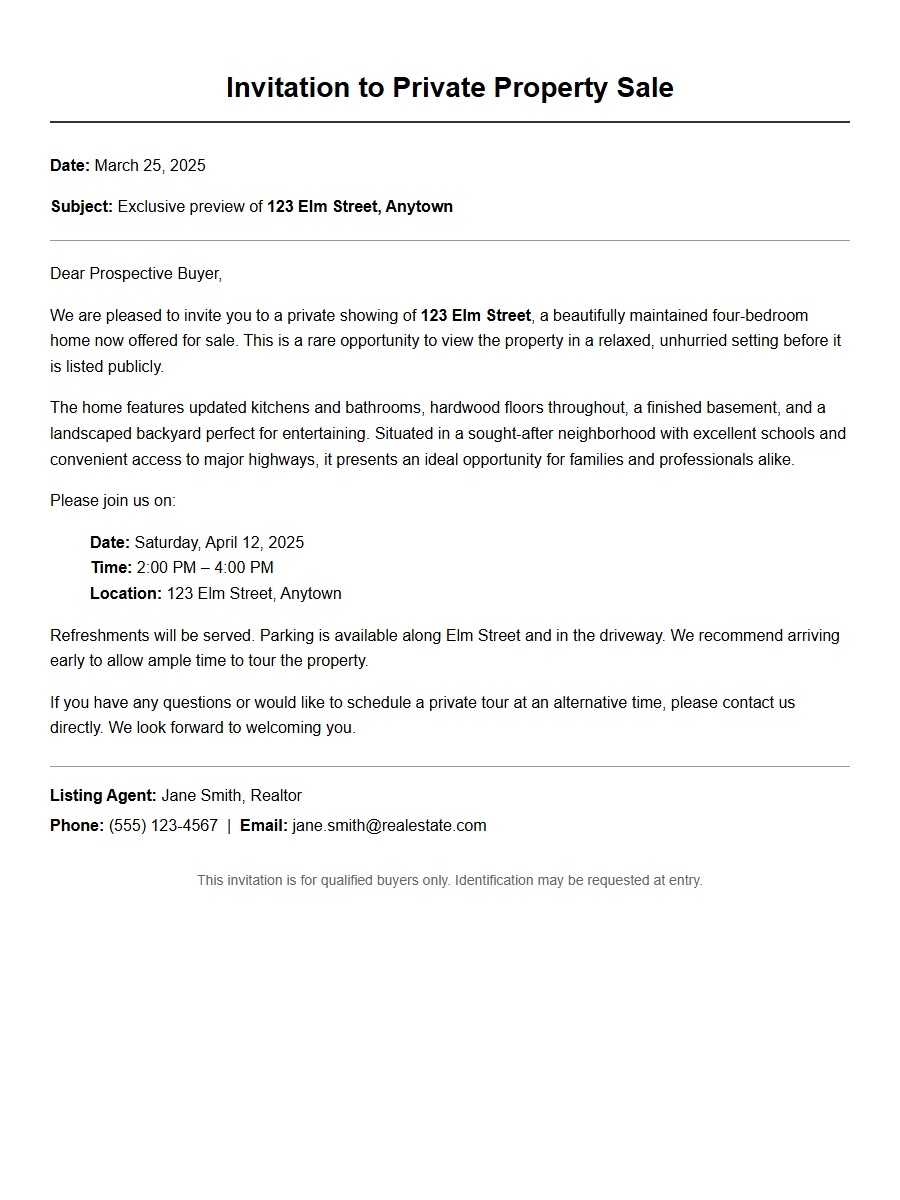 Sample Wording for Property Sale Invitations
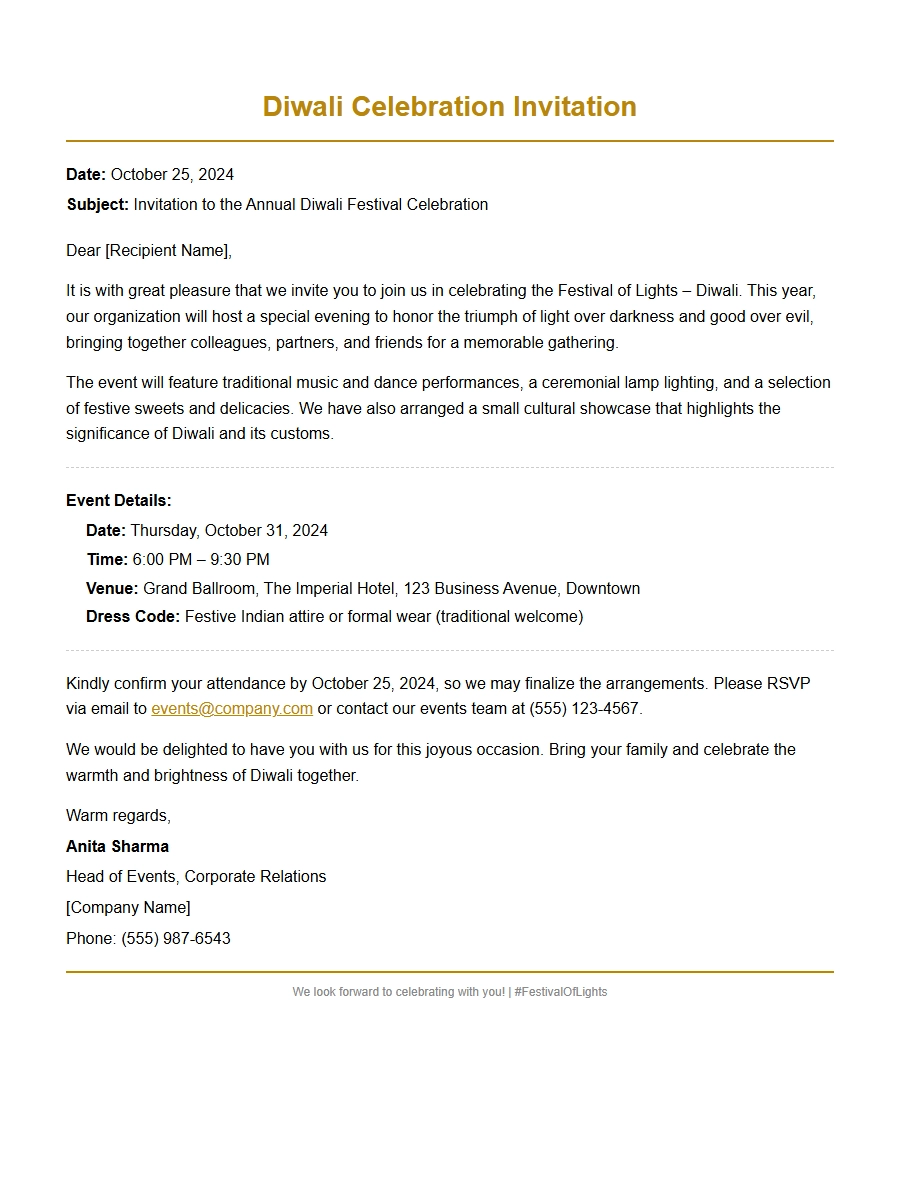 Diwali Festival Celebration Invitation Draft