You went through the negotiation. You heard their pitch. And now you're either staying or leaving—but you still have to put it in writing. Resigning after receiving a counter offer is a delicate dance. One wrong step, and you sound ungrateful. Another, and you burn a bridge. That blank page isn't helping. A solid resignation letter sample, built for this exact scenario, gives you a safe path forward.
Why a Resignation Letter Sample Helps Here
Using a letter template isn't cheating. It's smart. When emotions are high, a template keeps you grounded in professional correspondence. It handles the formal writing tips—like business letter format and proper salutation and closing—so you can focus on getting the tone right. The best samples give you a structure to lean on while leaving room for your own voice. Just like you'd tailor cover letter examples for different jobs, you need to adapt your resignation letter to this specific situation.
How to Choose the Right Sample
Not every resignation letter sample fits this moment. A generic "I'm leaving for a new challenge" feels dishonest when your boss just tried to keep you. You need a customizable letter that acknowledges the offer without over-explaining your decision.
If you're worried about sounding ungrateful, focus on gratitude. Learning how to resign without burning bridges is the exact skill you need here. It's about leaving with your reputation intact.
Start your letter with a clear subject line (if email) or a standard salutation like "Dear [Manager's Name]." State your intention and your last working day right away. Don't over-explain.
For the body, keep it simple. Something like: "After careful consideration of the offer to remain with the company, I have decided to move forward with my original resignation." You don't owe them a breakdown of every reason. This is where letter writing etiquette matters most—say enough to be respectful, but not so much that you create drama.
One common mistake? Using the wrong format. If you're sending a digital letter, don't attach a PDF unless required. Paste it into the email body. Don't worry about fancy letterhead design—a clean email signature works better. Another mistake is skipping the proofreading step. Sending a letter with typos after a sensitive negotiation makes you look careless. Treat this letter with the same attention you'd give a letter of recommendation—your name is on it.
If you're moving away, the tone shifts again. A resignation letter for relocation to another state focuses on the logistical necessity, not a rejection of the company. It's a different conversation entirely.
Category: Resignation Strategy
Making It Feel Like You
If your employer was genuinely good to you, show it. Ending with a sincere thank-you matters. A resignation letter thanking an employer for opportunities is a classy way to close this chapter. It reinforces that your decision wasn't about them failing—it was about your own direction.
Your resignation letter is a document, not a confession. Use a sample to get started, but read it out loud once you're done. Does it sound like you? If not, adjust the tone in writing until it fits. The goal is to leave on good terms, with your professionalism intact.
The more you write these letters, the easier they get. One day, you won't need a sample at all. You'll just sit down, write it, and send it with confidence.
Helpful Reference Samples
How to Resign After Receiving a Counter Offer
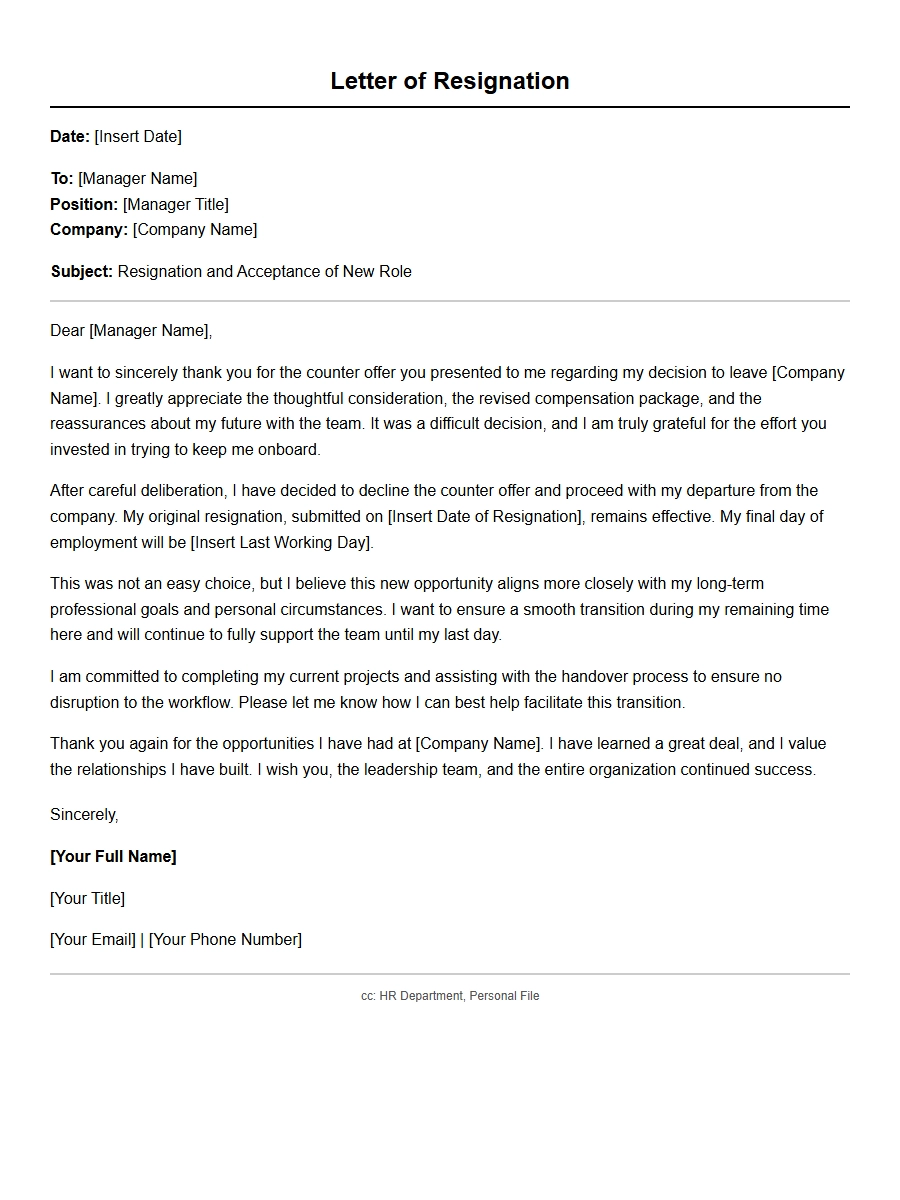
Formal Resignation Letter Declining Counter Offer
Date: [Insert Date]
To: [Manager’s Name] Company: [Company Name]
Dear [Manager’s Name],
Please accept this letter as formal notification that I am resigning from my position as [Your Job Title] at [Company Name], effective [Last Working Day, typically two weeks from date].
I am sincerely grateful for the counter offer you extended to me. After careful consideration, I have decided to decline it and move forward with my new opportunity. This decision was not made lightly, and I appreciate the trust and confidence you have shown in me.
I want to ensure a smooth transition during my notice period. I am committed to handing over my responsibilities and assisting with training for my successor. Please let me know how I can help make this change as seamless as possible.
Thank you for the support and opportunities I have had at [Company Name]. I wish the company continued success.
Sincerely, [Your Name]
Professional Email to Manager Announcing Resignation After Counter Offer
Subject: Resignation – [Your Name]
Dear [Manager’s Name],
I am writing to officially resign from my role as [Job Title] at [Company Name]. My last day will be [Last Working Day].
I want to thank you for the counter offer you presented. It was a difficult decision, but after evaluating my long-term career goals, I have chosen to pursue the new role I accepted. This is purely a career growth decision and not a reflection on my experience here.
During my notice period, I will complete all pending tasks and update documentation. I am happy to help interview and onboard my replacement if needed.
I truly appreciate the mentorship and opportunities you have provided. I hope to stay in touch and wish the team all the best.
Best regards, [Your Name]
Thank You Note to Employer While Resigning Despite Counter Offer
Dear [Manager’s Name],
I want to express my heartfelt gratitude for the counter offer you graciously extended to me. It means a lot that you value my contributions enough to make such a generous proposal.
After much reflection, I have decided to proceed with my resignation. This was not an easy choice, but I believe the new role aligns better with my career trajectory at this stage. Please know that my decision does not diminish the respect I have for you and the team.
I am fully committed to wrapping up my current projects and ensuring a smooth handover. I will provide detailed documentation and be available for any questions even after my departure.
Thank you again for everything. I will cherish the time I spent here and look forward to staying connected on LinkedIn.
Warmly, [Your Name]
Exit Interview Talking Points After Declining Counter Offer
Exit Interview – Key Talking Points
Use these points to explain your decision professionally:
Career growth: The new position offers a clear path for advancement in a direction I want to pursue.
Skill development: I will have opportunities to learn new technologies and expand my expertise.
Work-life balance: The new role provides more flexibility that aligns with my personal needs.
Counter offer reflection: While the counter offer included a salary increase, I believe the long-term benefits of the new role outweigh the short-term financial gain.
Positive feedback: I have enjoyed working here and appreciate the support. My decision is not based on any negative experience.
Remain respectful and avoid criticizing the company. Emphasize that the decision is about your personal growth, not about dissatisfaction.
Counter Offer Rejection Letter with Notice Period
Date: [Insert Date]
To: HR Department Company: [Company Name]
Dear [HR Representative Name],
With reference to the counter offer discussed on [Date], I am writing to formally decline the proposal and confirm my resignation from the position of [Job Title]. My last working day will be [Date – typically two weeks from date of this letter].
I appreciate the efforts made by the management to retain me. However, after careful consideration, I have decided to accept an external opportunity that better matches my career aspirations.
I will ensure a complete handover of my responsibilities before my departure. Please let me know the process for returning company property and any final settlement procedures.
Thank you for the opportunity to work at [Company Name].
Yours sincerely, [Your Name]
Steps to Resign Gracefully After Receiving Counter Offer
Follow these steps to resign professionally after declining a counter offer:
Evaluate the counter offer thoroughly: Compare salary, benefits, career growth, and company culture against the new opportunity.
Make a firm decision: Once you decide to leave, stick to it. Avoid reconsidering multiple times.
Prepare a resignation letter or email: Write a clear, respectful message stating your resignation and effective date.
Schedule a meeting with your manager: Inform them in person or via video call before sending formal notice.
Express gratitude: Thank your manager and the company for the counter offer and your time there.
Offer to help with transition: Propose a handover plan and offer to train your replacement.
Stay professional during notice period: Maintain high performance and a positive attitude until your last day.
Respond to counter offer gracefully: Politely explain why you’re declining without burning bridges.
Provide feedback if asked: In exit interviews, focus on personal growth reasons rather than complaints.
Comparison Table: Pros and Cons of Accepting vs Declining Counter Offer
Pros and Cons of Accepting vs Declining a Counter Offer
Factor
Accept Counter Offer
Decline Counter Offer
Salary increase
Immediate raise
May be lower short-term
Career growth
Same promotion path
New role with defined track
Trust & loyalty
Possible perception of disloyalty
Fresh start without baggage
Work environment
Familiar culture
New challenges & learning
Risk of staying
May be passed over later
Known opportunity elsewhere
Personal satisfaction
May feel uneasy
Excitement of new beginning
Consider these factors carefully before making your final decision. If you choose to leave, resign clearly and respectfully.
Resignation Letter with Specific Reasons for Leaving (despite counter)
Date: [Insert Date]
Dear [Manager’s Name],
I am writing to resign from my position as [Job Title], effective [Last Working Day].
I thank you for the counter offer you extended to me. After thoughtful deliberation, I have decided to decline it and accept a new role that offers:
Exposure to different industry verticals
Opportunity to lead a larger team
A more flexible remote work policy
These factors align closely with my long-term career objectives. My decision is not a reflection on this company, which I have greatly enjoyed being part of.
During my notice period, I will ensure all my pending deliverables are completed and documented. I am also available to assist in the hiring and training of my replacement.
Thank you for your understanding and support.
Sincerely, [Your Name]
Handover Plan Document for Resignation After Counter Offer
Subject: Transition Plan for [Your Name] – Resignation Notice Period
Dear [Manager’s Name],
As discussed, here is my proposed handover plan during my notice period ( [Start Date] – [End Date] ).
Week 1:
Complete and document all ongoing tasks.
Hold knowledge transfer sessions with [Colleague Name].
Update process manuals and standard operating procedures.
Week 2:
Assist with candidate screening for my replacement if needed.
Finalize any remaining projects and submit status reports.
Return company laptop, badge, and other assets.
Ongoing:
Available via email for two weeks after departure for urgent clarifications.
Provide a list of key contacts and vendors.
Please let me know if you would like to adjust this plan. I am committed to making this transition smooth.
Best regards, [Your Name]
Final Communication to Colleagues When Leaving After Counter Offer
Subject: Goodbye and thank you
Dear Team,
I am writing to let you know that I will be leaving [Company Name] on [Last Day]. I have accepted a new opportunity that I believe will help me grow in different directions.
I want to thank each of you for the collaboration, support, and friendship over the past [Time Period]. I have learned a lot from working with you, and I am grateful for the experiences we shared.
Although the company offered a counter proposal for me to stay, I felt it was the right moment to pursue a new challenge. Please know that this decision was not easy, and I leave with great respect for everyone here.
I will be wrapping up my tasks and handing over to [Colleague Name]. If you have any questions after I leave, feel free to reach me at [Personal Email] or connect with me on LinkedIn.
Let’s stay in touch! I wish you all continued success.
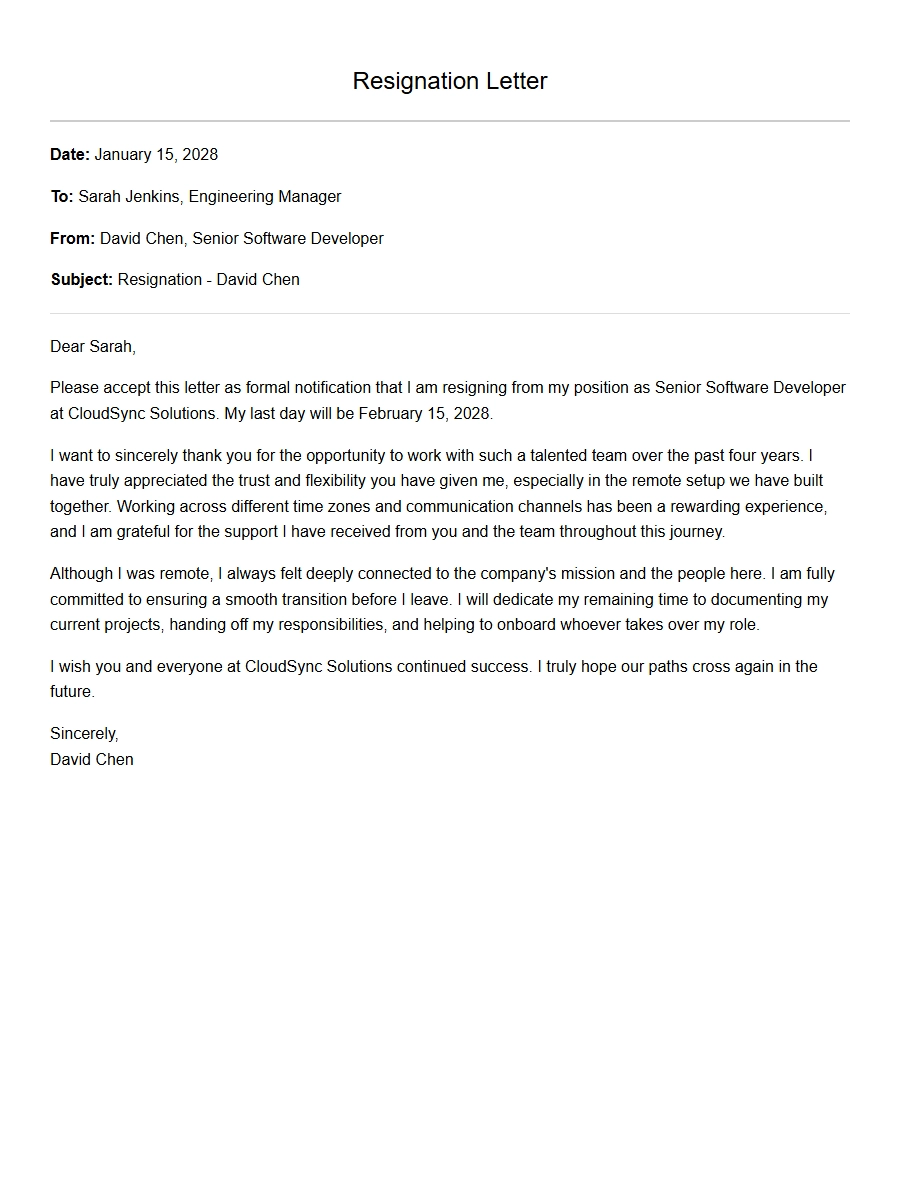 Polite Resignation Email for Remote Employees
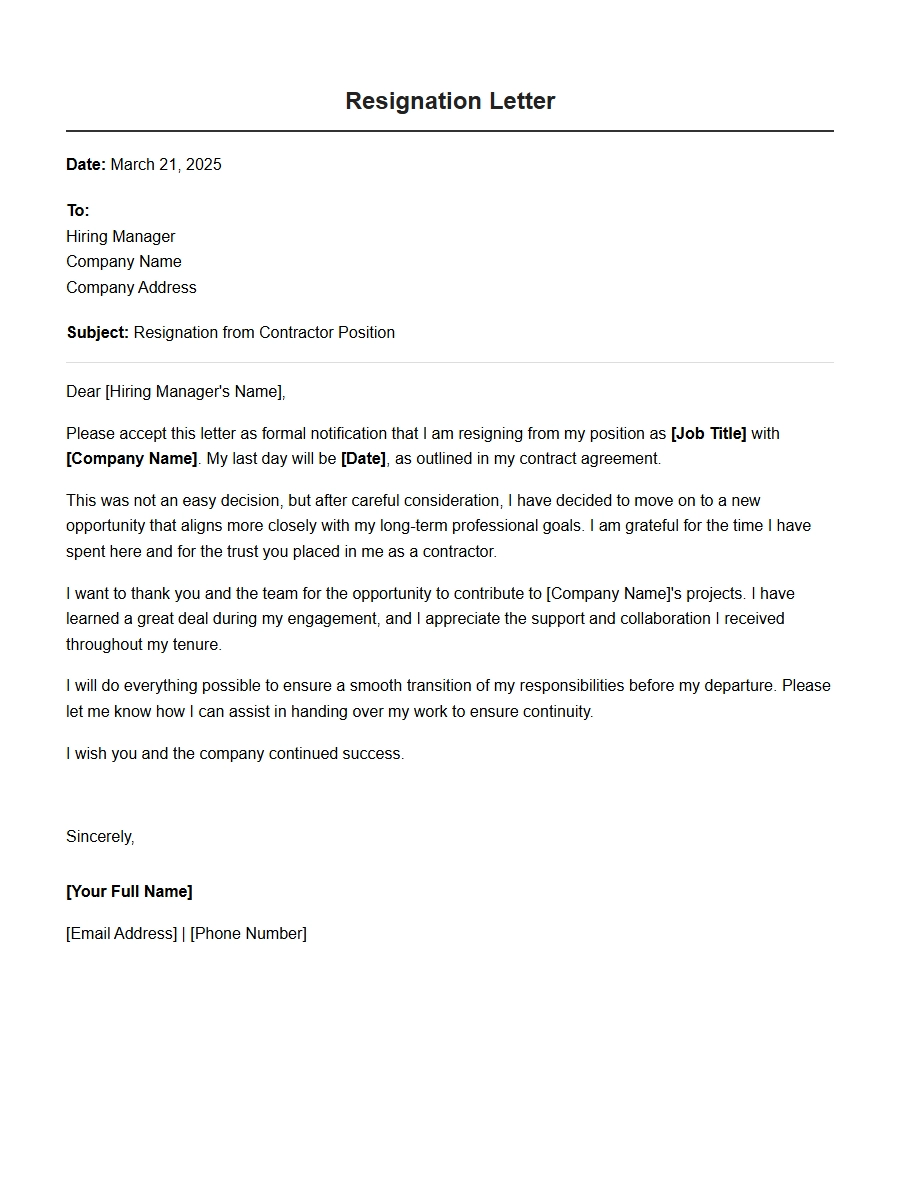 Short Resignation Letter for Contractor Position
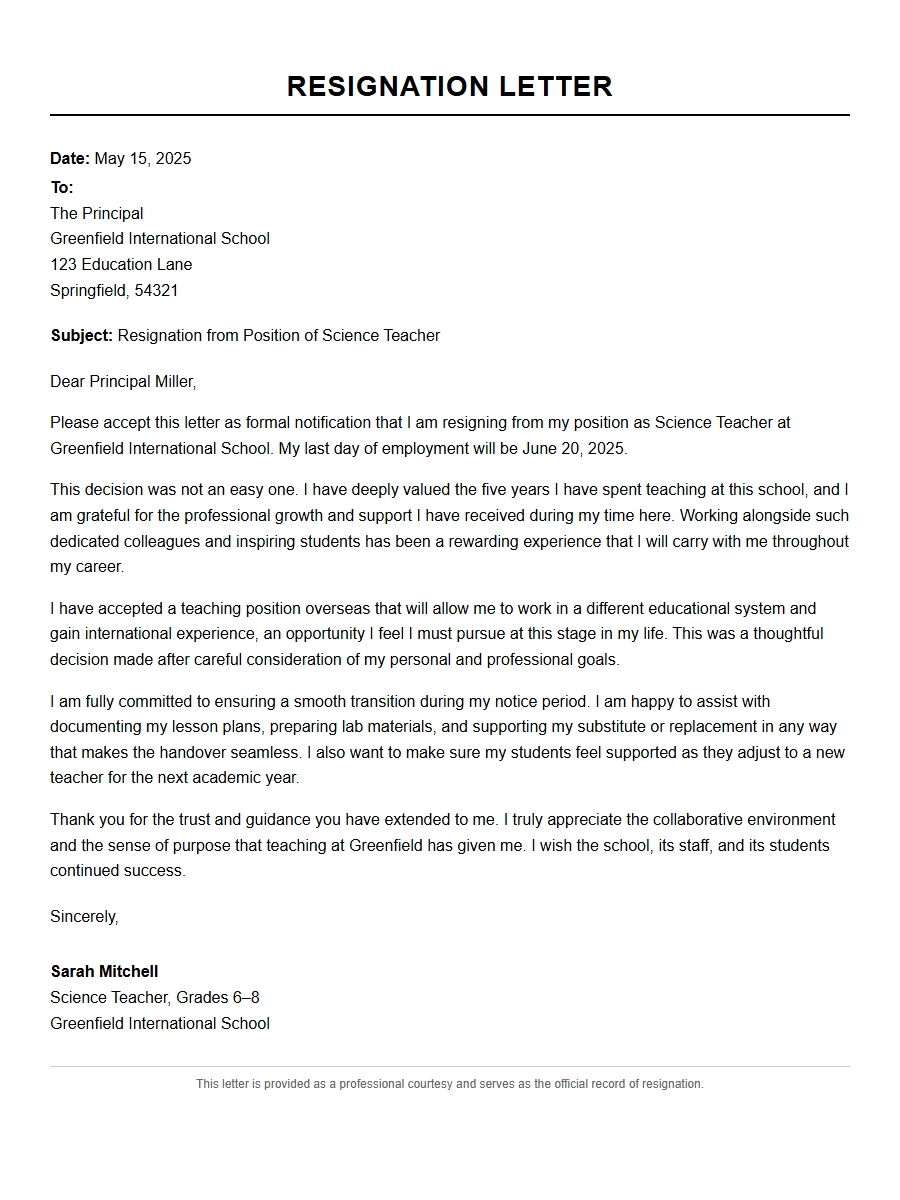 Teacher Resignation Letter Example
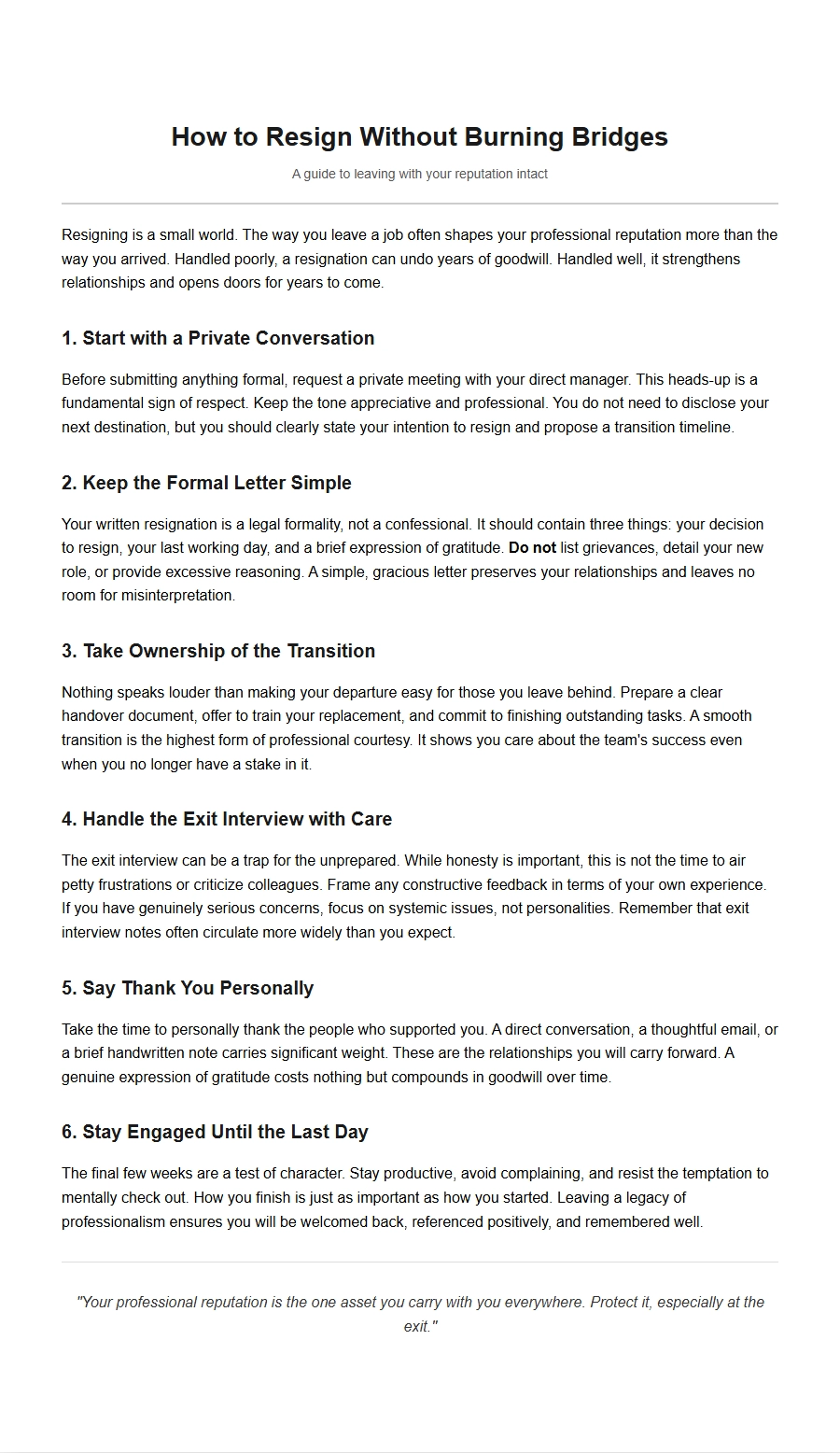 How to Resign Without Burning Bridges
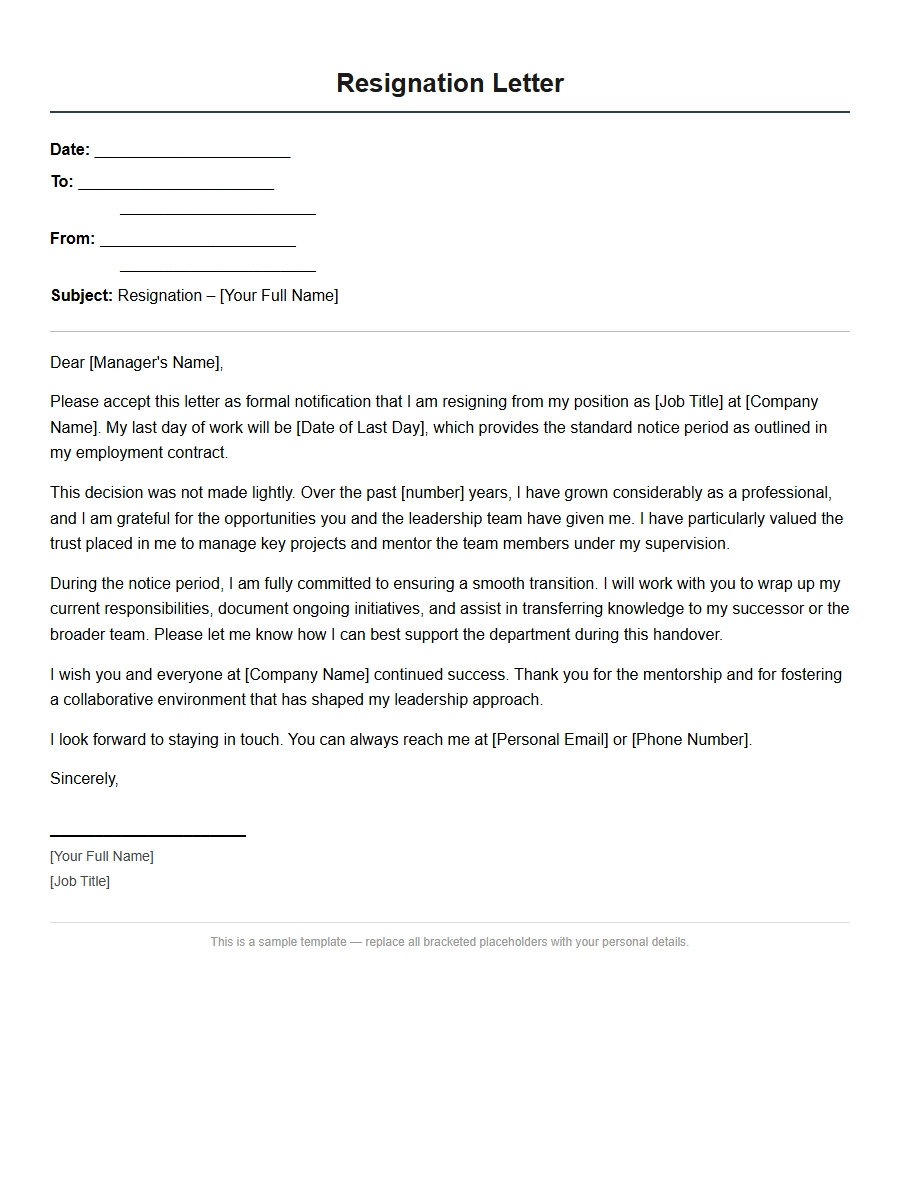 Formal Resignation Letter Sample for Manager
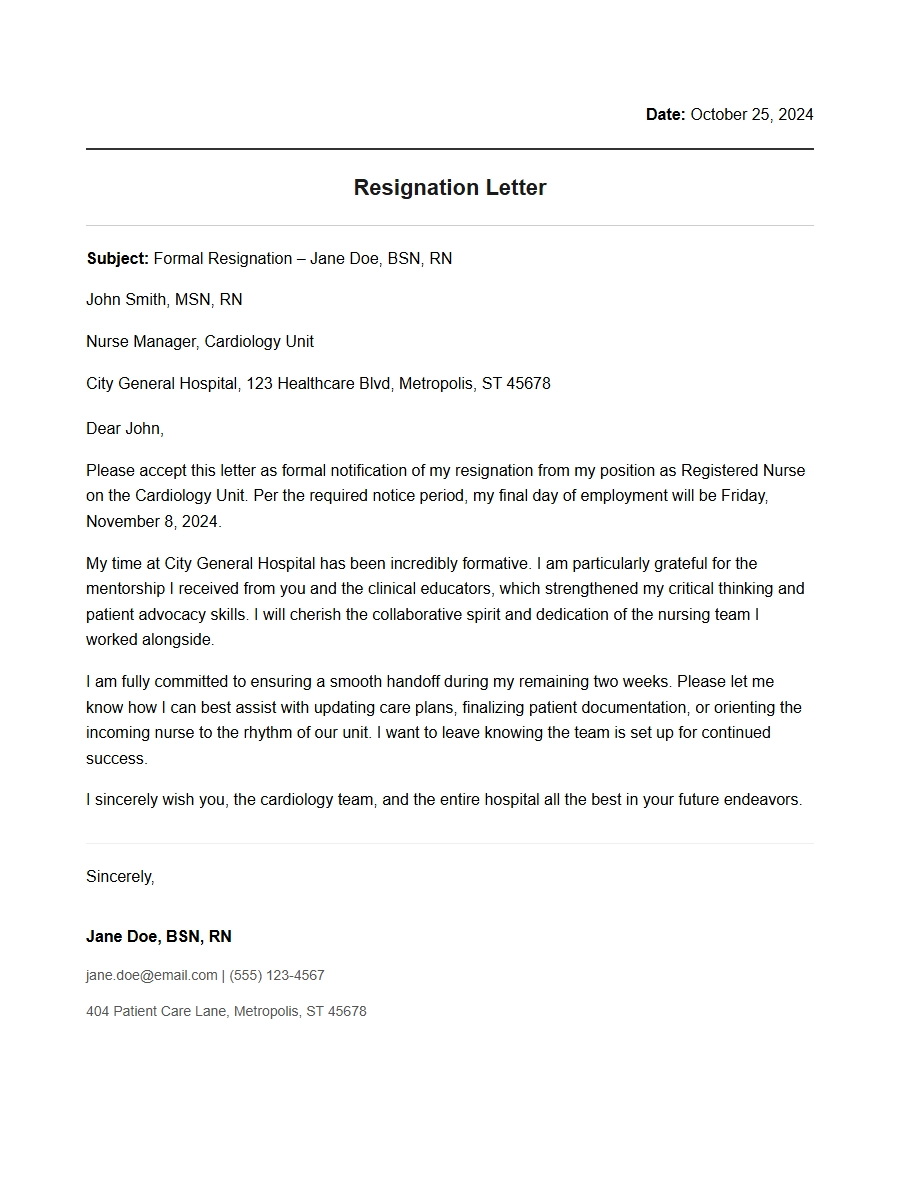 Nurse Resignation Letter with 2 Weeks Notice