You've got a trade show coming up Butterflies or blank page syndrome are hitting hard because you need to send out booth invitations—and they have to sound professional without being stuffy. It's that awkward middle ground between a formal business letter and something warm enough that people actually want to visit your booth.
The good news? You don't need to invent the wheel from scratch. Using a letter template for your trade show booth invite isn't lazy—it's smart. A good sample gives you the structure, tone, and key phrases you need, so you can focus on customizing the parts that actually matter: your specific offer, the right date, and a genuine reason to stop by.
What makes trade show booth wording different
A booth invitation sits somewhere between a formal business letter and a casual event notice. Too stiff, and you'll sound like a corporate robot. Too casual, and you risk looking unprofessional in a setting where people might be evaluating your company for serious partnerships.
The trick is balancing professional correspondence with actual personality. You want the recipient to think, "Hey, this sounds interesting and these people seem normal." That's harder than it sounds—which is exactly why starting with a proven format helps.
Category: Business Event Invitations
Start with a subject line that works for both email and print
If you're sending a digital letter format, the subject line is your first impression. Skip the vague "Come see us at Booth 42" and try something more specific. Something like "John, let us walk you through the new X-ray system at Booth 42" or "See how we're cutting production time in half—visit us at the Expo."
For printed invitations, that subject line becomes a headline. Keep it above the salutation, bolded, and short. It's the hook that makes someone open the envelope instead of tossing it.
Salutation and closing: get these right
Letter writing etiquette matters more than most people realize. If you know the person's name, use it. "Dear Alex" beats "Dear Sir or Madam" every time. If you're sending to a generic contact, "Dear Marketing Team" or "Dear Partner" works better than outdated alternatives.
For the closing, "Best regards" or "Warmly" are safe for most industries. Avoid "Sincerely" unless you're writing something truly formal, like a letter of recommendation or a partnership proposal. The tone in writing your closing should match the tone of your invitation—friendly but professional.
Structure your invite like a real conversation
Here's a simple flow that works for most trade show booth invitations:
Opening line: Acknowledge the connection. "We met at last year's conference and you mentioned interest in our line." Or "We've worked together for three years and wanted to show you our latest prototype first."
The specific reason: Why should they visit your booth? Be concrete. "We're launching a handheld diagnostic tool that cuts testing time by half." Generic claims like "exciting new products" get ignored.
Logistics: Date, time, booth number. Keep this short. If you're offering a demo or specific appointment time, mention it here.
Call to action: "Reply to this email and I'll reserve 15 minutes for you." Or "Stop by anytime—we'll have coffee ready." Make the ask clear.
Friendly sign-off: Reiterate that you look forward to seeing them.
If you're adapting a customizable letter, this structure gives you room to adjust the tone without losing the logical flow. For example, a cover letter examples style works well if you're introducing yourself to someone new—treat the booth visit like an interview where both sides explore a fit.
Common mistakes that kill responses
One big one is ignoring the format difference between print and email. A printed invitation needs space for the recipient to write down the date or parking directions. An email needs a clickable link to your booth map or calendar booking tool.
Another mistake is forgetting to proofread your letter. One typo in a trade show invitation makes you look sloppy in front of people who might be evaluating your professionalism. Read it out loud before sending.
Outdated salutations are also a problem. "To Whom It May Concern" sounds like you sent a mass mailer without caring. Take the extra two minutes to find a real name or use a department title.
Adapting samples without losing your voice
When you use a resignation letter sample or any other template, you're borrowing structure, not personality. Swap out generic phrases for your actual language. If you normally write "Hey, check this out" in emails, don't suddenly write "We cordially invite you to observe our exhibition." It'll sound fake.
Your booth invite should sound like a slightly polished version of you. If your company culture is laid-back, lean into that. If you're in a formal industry like legal tech or medical devices, keep it clean and respectful. If you need inspiration for other formal writing situations, our formal invitation wording for board meeting samples can give you ideas for keeping things diplomatic and professional.
Quick tips for better trade show invitations
If you're struggling with the opening paragraph, start with a question or a shared point. "You said you wanted faster onboarding—come see how we've redesigned our platform around that exact challenge." That hooks attention better than a standard introduction.
For digital invitations, consider letterhead design that works on screen. A clean header with your logo, event name, and booth number makes the letter feel official. For physical invites, use good paper stock—it signals that you value the recipient's time.
For different event types, you can adapt your structure. An invitation letter for Christmas dinner gathering flows differently than a trade show invite, but both benefit from clear logistics and a warm sign-off.
Use the sample as your starting point
The best professional correspondence feels like it was written by someone who knows what they're doing but still sounds human. Use the sample to get the bones of your letter right—then fill in the flesh with your actual voice, your specific offer, and your real enthusiasm for the event.
After you send your booth invitations, don't just wait. Follow up a week before the show with a brief reminder. Include the booth number again and a quick "still hoping to see you there." That follow-up often doubles your response rate.
For general event invites like a how to write an RSVP request in letter guide, you'll find similar principles apply: be clear, be polite, and make it easy to respond. And if you're organizing something less formal like a wellness seminar invite, the same structure works with a lighter tone.
Start with the sample. Make it yours. Send it with confidence. You'll be surprised how quickly writing these invitations feels natural instead of forced.
Realistic Samples
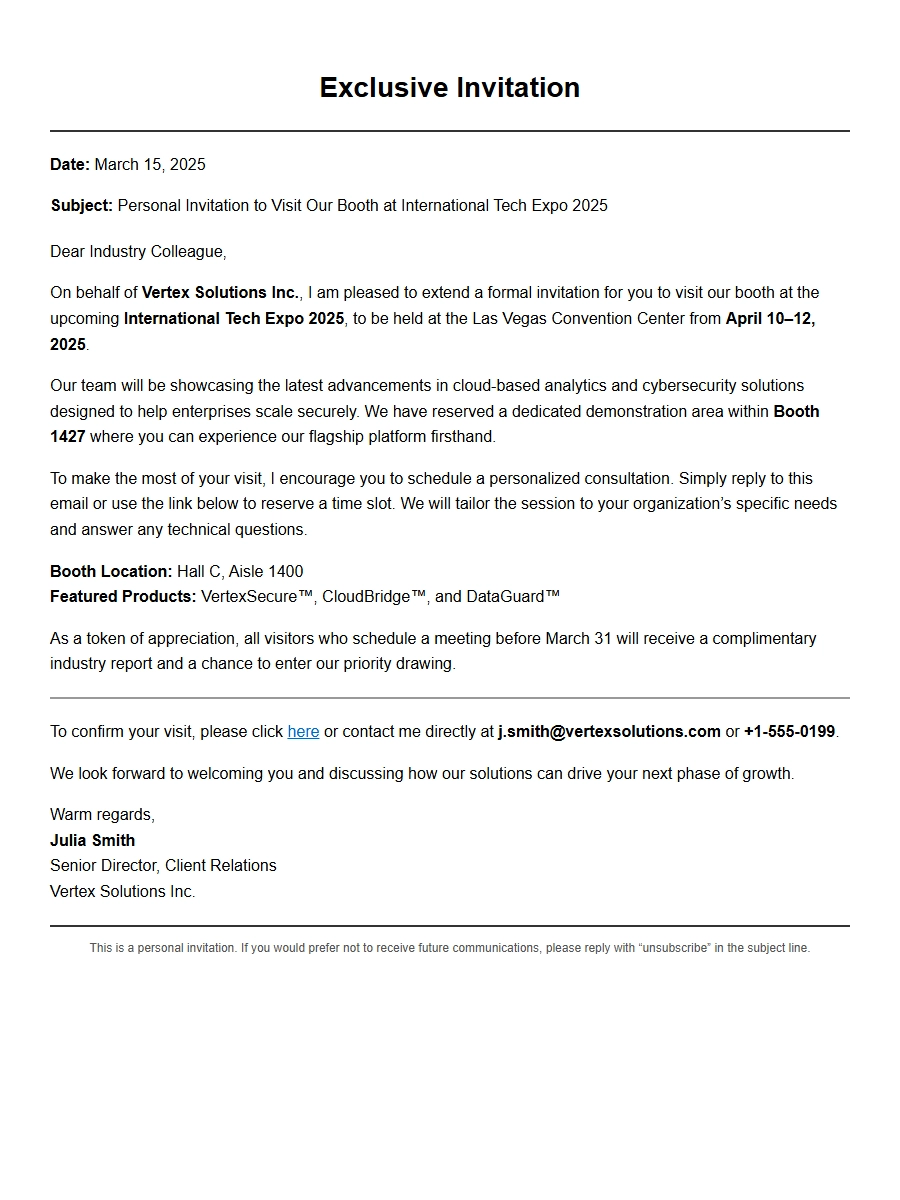
Formal Invitation Wording for Trade Show Booths
VIP Business Partner Invitation
Subject: Exclusive Preview at Booth 14C – International Trade Expo 2025
Dear [Partner Name],
We are delighted to extend this personal invitation to you and your team to join us at our trade show booth during the upcoming International Trade Expo 2025. As a valued business partner, you are among a select group of guests invited to an exclusive preview of our latest product line, scheduled for Wednesday, March 12, 2025, from 9:00 AM to 11:00 AM.
Please find key event details below:
Detail
Information
Event
International Trade Expo 2025
Booth Number
14C
Date
March 12–14, 2025
Private Preview
March 12, 9:00 AM – 11:00 AM
Location
Convention Center, Hall A
We have arranged a dedicated meeting area within our booth to discuss potential collaborations and showcase how our new solutions align with your strategic goals. Light refreshments will be served.
Kindly RSVP by February 28, 2025 to confirm your attendance. Should you have any special requests, please do not hesitate to contact us directly.
We look forward to welcoming you and exploring new opportunities together.
Press and Media Representative Invite
Subject: Press Briefing Invitation – Booth 22A at TechWorld Expo
Dear [Reporter Name],
We cordially invite you to visit our booth at TechWorld Expo, scheduled for June 5–7, 2025. As a member of the press, you are invited to a private briefing where we will unveil our newest innovation in smart home automation.
Our press event will take place on the opening day:
Date: June 5, 2025
Time: 10:00 AM sharp
Location: Booth 22A, Main Exhibition Hall
During the briefing, our CEO and Head of Product will present a live demonstration and answer your questions. A press kit, including product fact sheets and high-resolution product specifications, will be distributed.
We would be honored to have your coverage. To reserve your place, please confirm your attendance by May 25, 2025. For interview scheduling, please reply to this email.
Thank you for considering our invitation. We look forward to seeing you there.
Client Appreciation & Networking Invite
Subject: You’re Invited: Client Appreciation Hour at Booth 31B
Dear [Client Name],
We are thrilled to invite you to a special client appreciation event held at our booth during the National Business Expo 2025. This is our way of saying thank you for your continued partnership and trust.
Please join us for an exclusive networking hour:
Event
Date & Time
Client Appreciation Hour
April 10, 2025, 4:00 PM – 6:00 PM
Location
Booth 31B, Expo Center
We will host a casual gathering with light hors d’oeuvres and beverages. This is an excellent opportunity to meet our leadership team and network with other industry professionals in a relaxed setting.
As a token of our appreciation, each attending guest will receive a complimentary gift. Please RSVP by April 1, 2025 so we can ensure a memorable experience for everyone.
We deeply value your business and hope to see you there.
Joint Venture Prospect Invitation
Subject: Strategic Collaboration Invitation – Booth 07 at Global Trade Fair
Dear [Prospect Name],
We are writing to extend a formal invitation to you to visit our booth at the Global Trade Fair, taking place from July 15–17, 2025. We believe there is strong potential for a mutually beneficial partnership between our firms.
To discuss this further, we would like to schedule a private meeting at our booth:
Booth Number: 07
Suggested Time: July 16, 2025, at 2:00 PM or 3:30 PM
Duration: 30 minutes
During this meeting, we propose to share our current market analysis, product roadmap, and explore how a joint venture could accelerate growth for both parties. Our senior management team will be present.
To confirm a time slot, please reply with your preferred option by July 5, 2025. We are open to adjusting the schedule to accommodate your availability.
We are eager to explore how we can build something great together.
Industry Peer Booth Visit Request
Subject: A Friendly Invitation to Visit Our Booth at the Manufacturing Summit
Hello [Peer Name],
As a respected leader in our industry, we warmly invite you to stop by our booth at the upcoming Manufacturing Summit on September 21–23, 2025. Your insights and perspective would be greatly valued.
We have planned a series of live demonstrations showcasing our new automation solutions. The schedule is as follows:
Time
Demonstration
10:00 AM
Robotic Assembly Line
12:00 PM
Quality Control AI
2:00 PM
Predictive Maintenance
Our booth number is 55C. Feel free to drop by anytime during the summit. We would be delighted to exchange ideas and learn from your experience. Coffee and snacks will be available for all visitors.
No formal RSVP is needed, but if you would like a dedicated walkthrough, please let us know by September 10.
Looking forward to seeing you there.
International Buyer Invitation Letter
Subject: Special Invitation for International Buyers – Booth 9 at World Trade Expo
Dear [Buyer Name],
We are pleased to invite you, as an international buyer, to visit our booth at the World Trade Expo 2025. This event presents an excellent opportunity for you to explore our full range of export-ready products.
To assist with your visit, we have arranged the following services exclusively for you:
Booth Number: 9
Exclusive Buyer Briefing: October 8, 2025, at 11:00 AM
Translation Support: Available on request
Sample Collection: Product samples can be reserved in advance
We understand that international travel can be demanding. Therefore, we have also set up a quiet meeting corner at our booth where we can discuss your specific requirements and logistics in detail.
Kindly confirm your interest by September 25, 2025 so we can prepare a personalized product booklet and schedule a dedicated meeting time.
We are committed to making your visit productive and enjoyable.
Distributor Network Expansion Invite
Subject: Invitation to Explore Distribution Opportunities – Booth 12B
Dear [Prospective Distributor],
We are excited to invite you to our booth at the Annual Trade Show 2025, where we will unveil our new line of eco-friendly packaging solutions. We are actively seeking reliable distribution partners across the region.
We have reserved time slots for one-on-one discussions:
Date
Available Times
November 11, 2025
10:00 AM, 2:00 PM, 4:00 PM
November 12, 2025
9:00 AM, 1:00 PM, 3:00 PM
At our booth (12B), we will present our product portfolio, pricing structure, and distributor support program. Our team will also share market data and growth projections to help you evaluate the opportunity.
To secure a meeting time, please respond with your preferred slot by November 1, 2025. If these times do not suit, feel free to suggest an alternative.
We look forward to discussing a potentially rewarding partnership.
We are honored to invite you as our distinguished guest to the official launch of our flagship product, NovaEdge X1, at the EnterTech Expo. The launch will take place at our booth on February 20, 2025.
Event schedule for the launch day:
9:00 AM – Welcome and registration
9:30 AM – Product launch presentation
10:15 AM – Live demonstration
11:00 AM – Networking and refreshments
As a VIP, you will receive a special gift bag and have the opportunity to be among the first to test the product. Our product manager will be available to answer all your questions.
Please RSVP by February 10, 2025 so we can prepare your badge and materials. We would be delighted to host you.
Your presence would make this event truly special.
Investor Meeting Booth Invitation
Subject: Invitation for Investors – Booth 08 at Innovation Capital Summit
Dear [Investor Name],
We cordially invite you to visit our booth at the Innovation Capital Summit 2025. We believe our breakthrough in renewable energy storage is a compelling investment opportunity.
To facilitate an in-depth discussion, we have prepared a private investor meeting area at our booth. Key details are below:
Item
Details
Booth Number
08
Investor Session Dates
August 18–19, 2025
Meeting Duration
45 minutes per session
Materials Provided
Investor deck, financial projections, demo
We propose a meeting to present our technology, market traction, and capital requirements. Our founding team will personally lead the discussion. If interested, please suggest two alternative time slots by August 5, 2025.
We are confident that our innovation aligns with your investment thesis. We look forward to a fruitful conversation.
Supplier Collaboration Invitation
Subject: Invitation to Explore Supply Partnership – Booth 65 at PackExpo
Dear [Supplier Name],
We recognize the importance of strong supply chains, and we would like to invite your company to visit our booth at PackExpo 2025. We are looking to establish long-term relationships with reliable raw material suppliers.
At our booth, we will share our procurement requirements:
Annual volume: Estimated 500 metric tons per material
Quality standards: ISO 14001 certified preferred
We have scheduled supplier meet-and-greet sessions on May 22 and 23, 2025, from 1:00 PM to 4:00 PM. Booth number is 65.
To ensure we can prepare a tailored presentation, please confirm your attendance by May 15, 2025. We will also provide a brief questionnaire to align expectations prior to the meeting.
We hope to forge a mutually beneficial partnership with you.
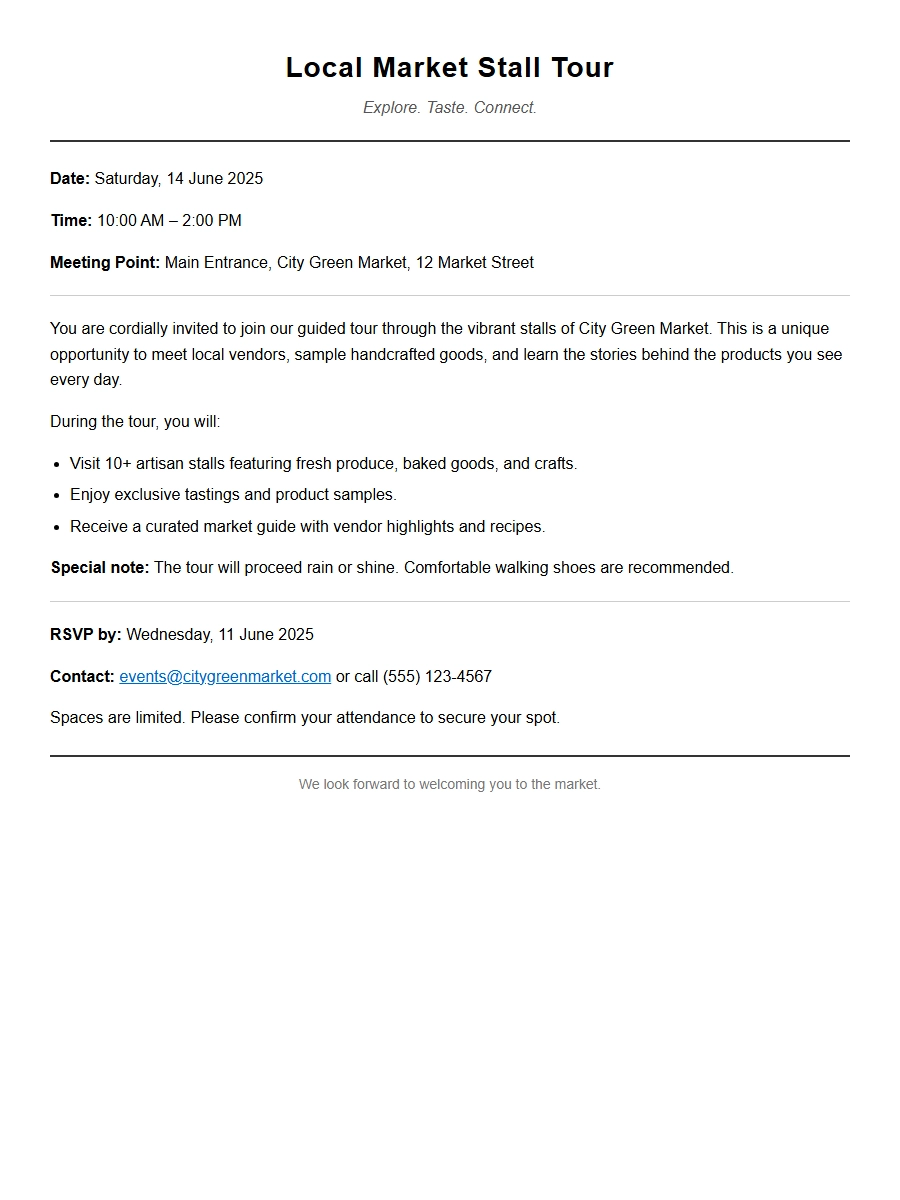 sample invitation for local market stall tour - Invitation Letters
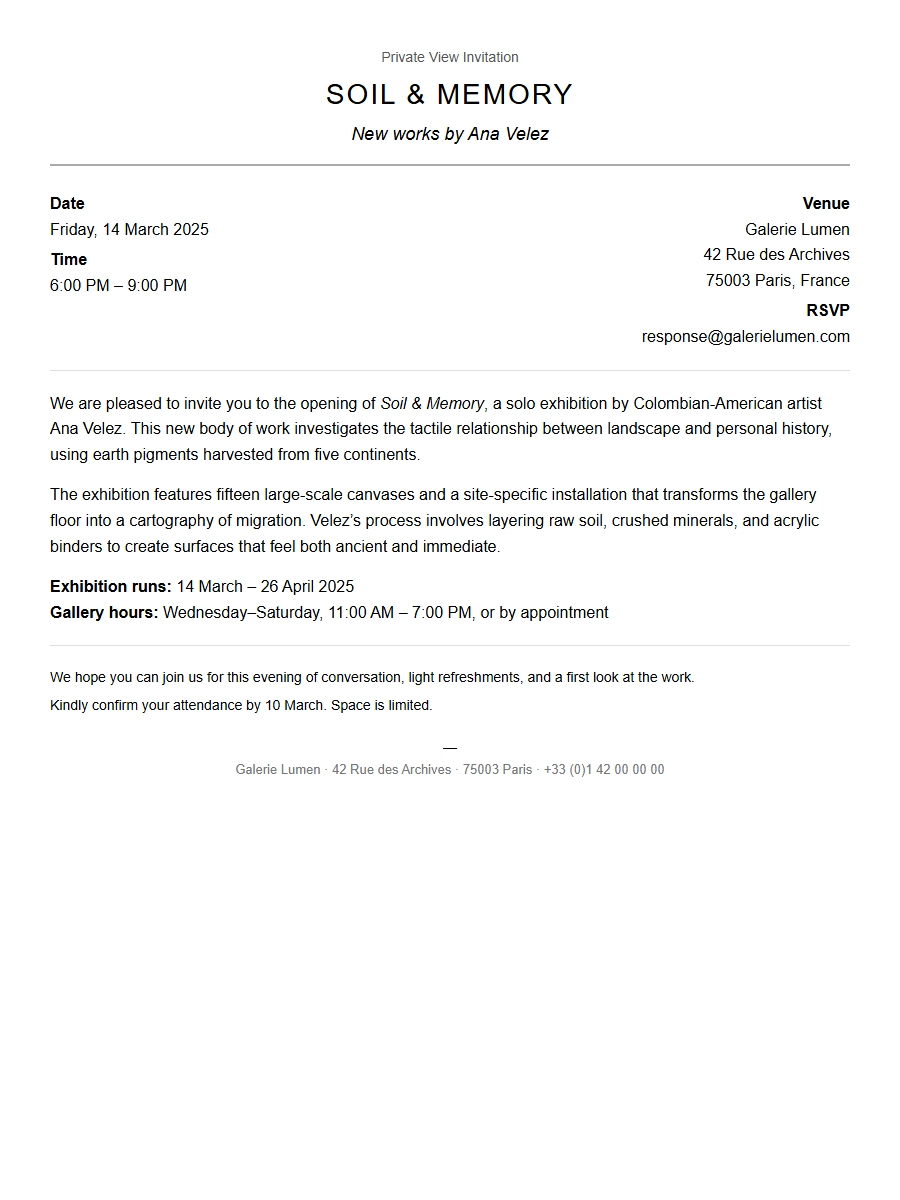 Art Exhibition Opening Invitation Wording Ideas
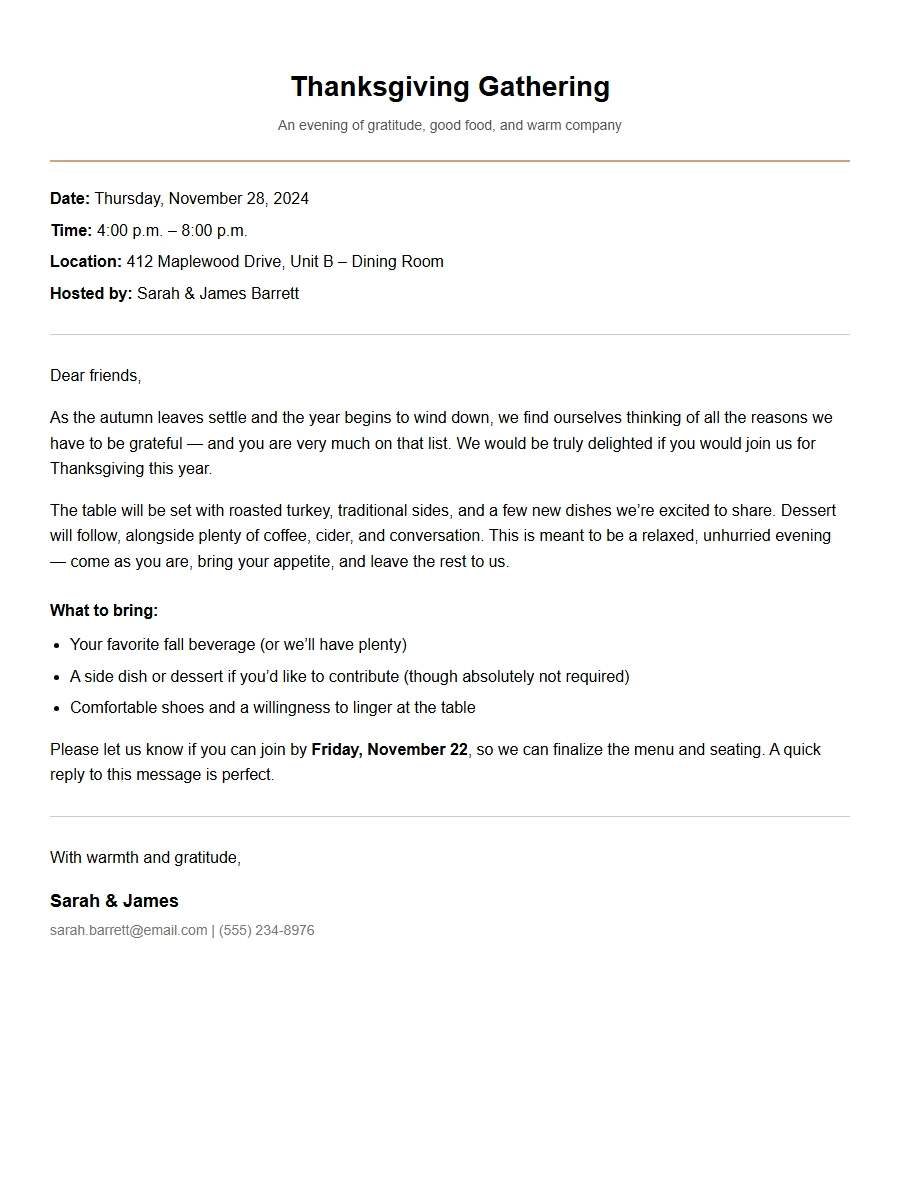 Thanksgiving Meal Gathering Invitation Text
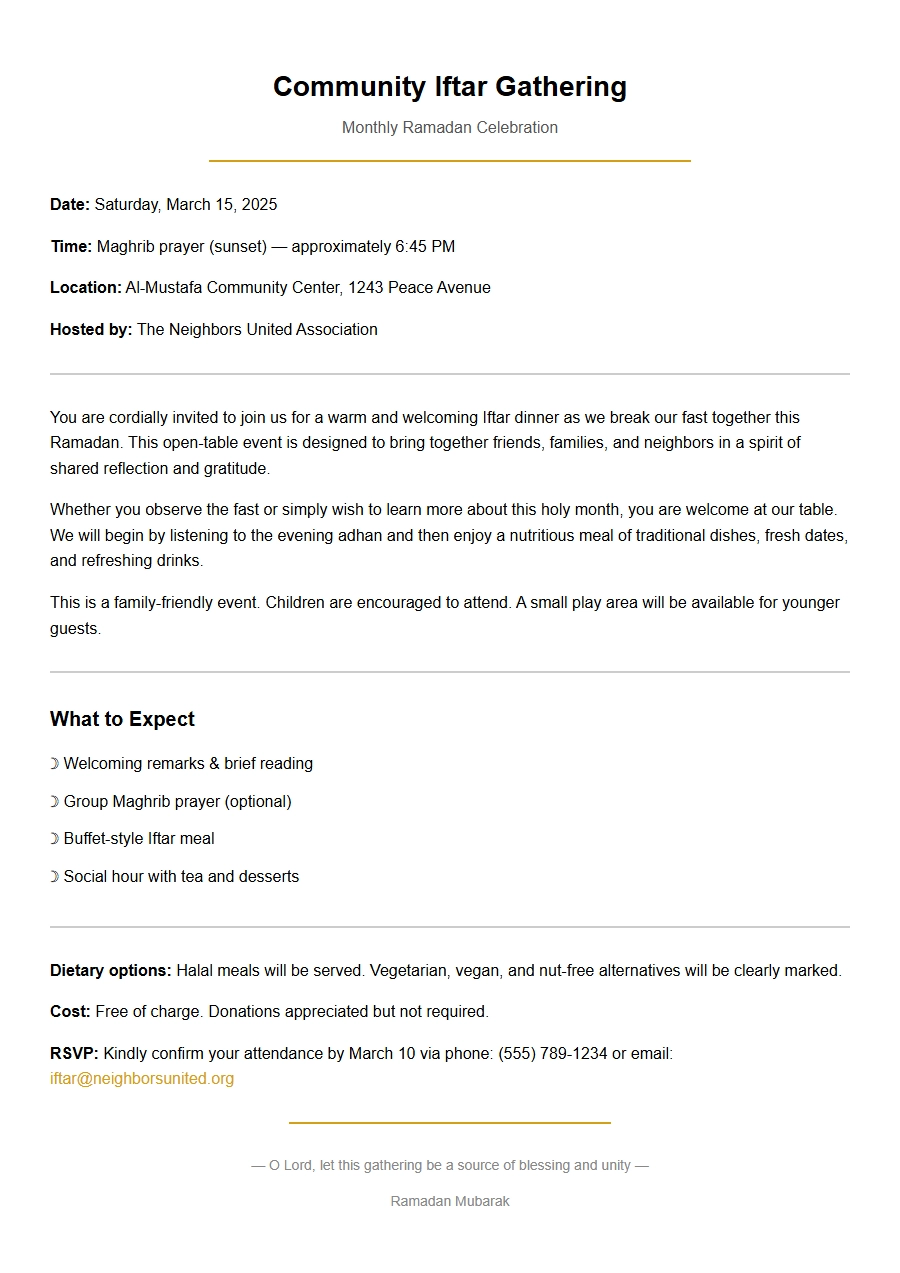 Ramadan Iftar Community Event Invitation
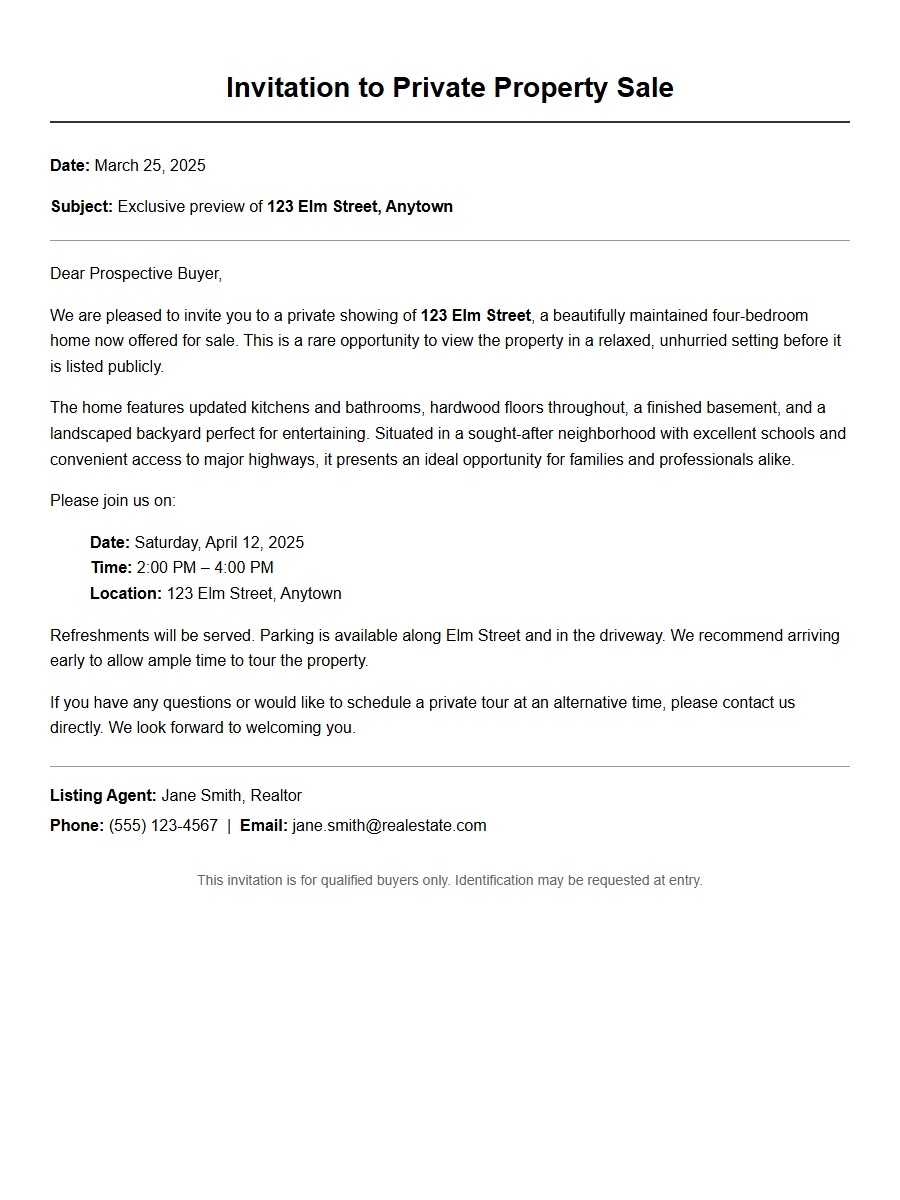 Sample Wording for Property Sale Invitations
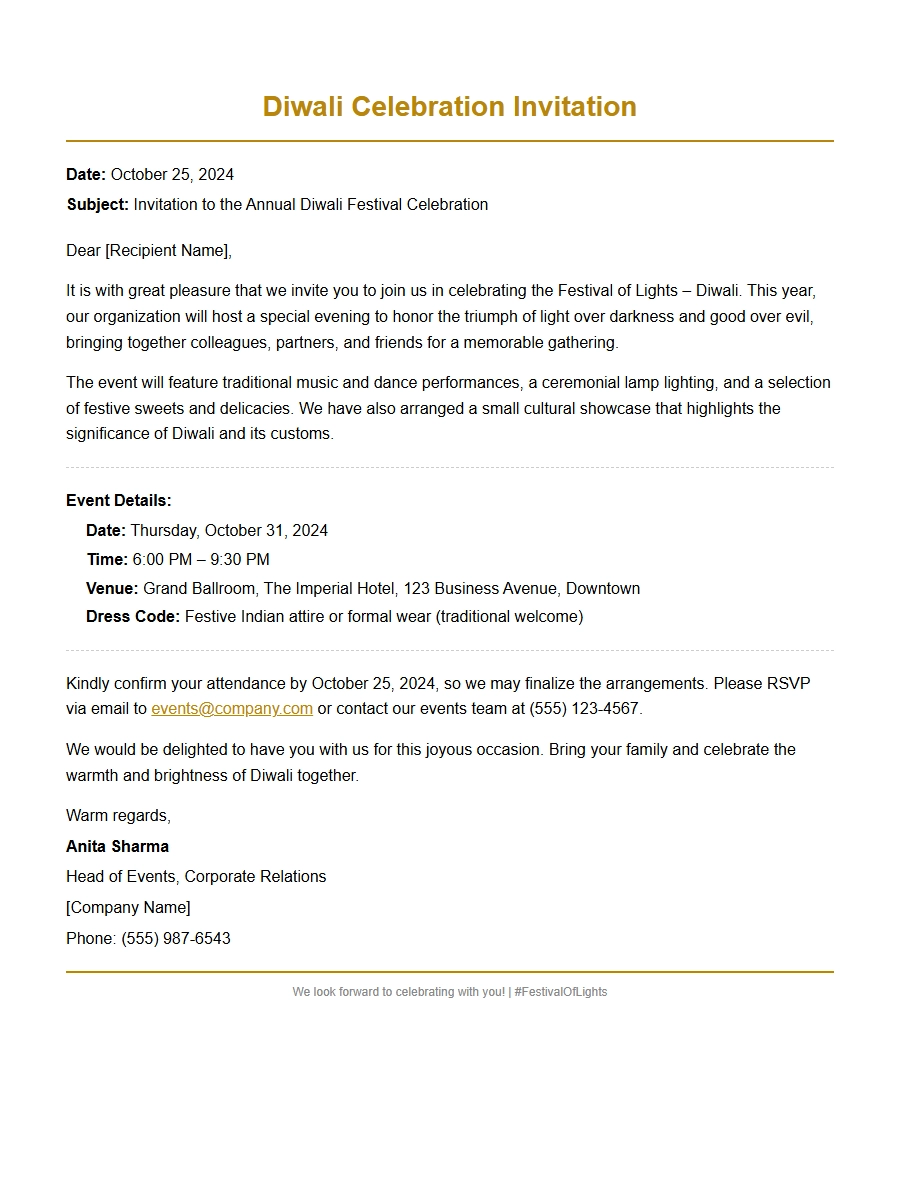 Diwali Festival Celebration Invitation Draft