You borrowed money from a friend or family member, and now you’re paying it back. That’s a relief. But the thank-you note that goes with the repayment can feel surprisingly awkward. You don’t want to sound too stiff, but you also don’t want to seem ungrateful. A good sample helps you strike the right tone without overthinking it.
Using a template isn’t cheating. It’s a smart way to get the structure right—salutation, expression of gratitude, confirmation of repayment, and a warm closing—while leaving room for your own words. Think of it as a starting point, not a script. You’ll still sound like you, just more polished.
Category: Thank-You Letters
What to include in a thank-you note for loan repayment
Whether you’re writing a formal letter or a quick email, the key parts are the same. Start by stating the amount you’re repaying and thanking the person for trusting you. Mention how their loan helped you—maybe it covered an unexpected car repair or helped you bridge a gap between jobs. That personal touch turns a simple transaction into a genuine moment of gratitude.
Then confirm the repayment method. If you’re handing over cash, say so. If you sent a digital transfer, note the date. This avoids confusion later and shows you’re organized. Close with a forward-looking statement, like looking forward to celebrating together soon, which keeps the relationship warm.
How to adjust the tone for your relationship
With close friends, you can keep it casual: “Hey, here’s the $200 I borrowed last month—thanks again for helping me out. Let’s grab coffee this weekend.” For a more formal situation, such as a loan from a relative who prefers businesslike correspondence, use a standard business letter format with “Dear [Name]” and “Sincerely.” The same structure works, but the language becomes more measured.
If you’re writing on behalf of a small business that received a loan from an investor, you might want a more professional correspondence. In that case, include a letterhead design and a clear subject line. You can find gratitude email for investor funding opportunity samples that guide you on the right level of formality.
Common mistakes to avoid
One big slip-up is using an outdated salutation like “To Whom It May Concern” when you know the person well. That feels cold and impersonal. Another is forgetting to proofread the letter. A typo in the repayment amount can cause awkward questions. Also, if you’re sending the note via email, the digital letter format matters—use a clear subject line like “Repayment of loan – thank you” so it doesn’t get lost in an inbox.
Don’t over-apologize. You borrowed money, and now you’re paying it back with thanks. That’s a positive thing. Keep the tone grateful, not guilty. If you’re unsure about the closing, “With sincere thanks” works for almost any situation.
Making the sample your own
When you use a letter template, replace the generic phrases with specifics. Instead of “Thank you for your help,” write “Thank you for covering my rent that month—I honestly don’t know what I would have done.” That sounds like a real person, not a robot. Keep the structure but add your voice.
Pay attention to the opening paragraph. It should grab the reader’s attention by acknowledging the kindness right away. For example: “I’m writing to thank you for the loan of $500 last March. Repaying it today feels like closing a chapter I’m grateful you helped me through.” That’s specific and warm.
If you’re writing a thank-you for a different context, like thanking a coach for sports performance improvement, the same principles apply but the tone shifts. For loan repayment, you want reliability and appreciation—not effusive praise or corporate jargon.
Why this matters beyond the money
A well-written thank-you note strengthens the relationship. It shows you respect the person and value their trust. Even if the loan was small, the letter writing etiquette matters. You’re not just paying back cash; you’re reinforcing a bond. That’s why putting a little thought into the wording pays off.
Now that you have the structure, adapt it. Change the details, tweak the tone, and read it out loud to hear how it sounds. If it feels too formal, loosen it up. If it feels too casual, tighten it. The goal is to write something you’d be comfortable receiving yourself.
Practice will make it faster. The first time you write one, it may take ten minutes. The tenth time, two minutes. And you’ll never have to stare at a blank page again—you’ll know where to start. So go ahead, send that note. You’ve done the hard part by repaying the loan. Giving thanks is the easy, rewarding finish.
Samples for Inspiration
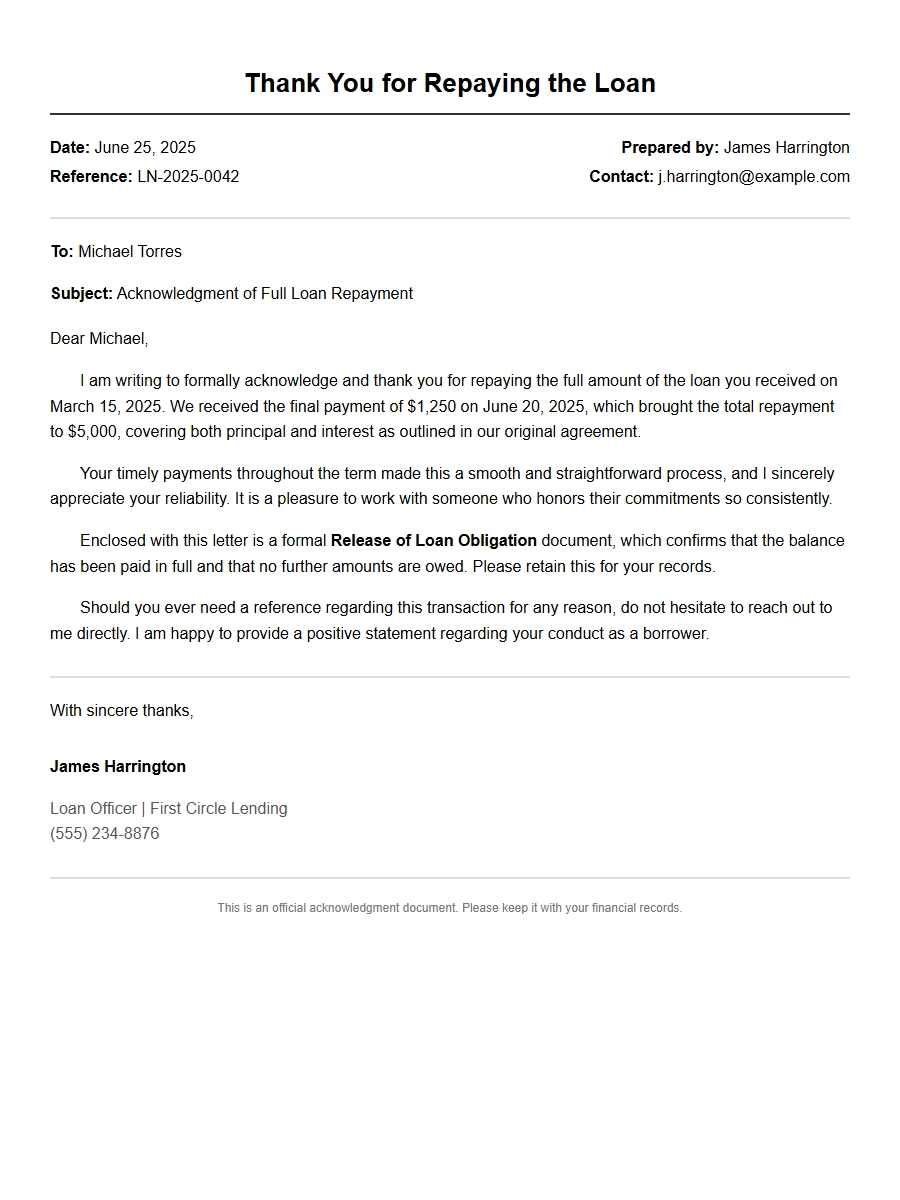
Example Thank You for Repaying Loan
Personal Thanks to a Friend for Loan Repayment
Dear Alex,
Thank you so much for repaying the $500 I lent you last month. I really appreciate your thoughtfulness in sending the money on time and even including a little extra as a thank-you gesture. It was never a burden to help you, but knowing that you value our friendship enough to honor your word means the world to me.
Your prompt repayment shows your responsibility and integrity. I hope you’re in a better financial place now, and please know I’m always here if you need advice or support. Let’s catch up soon over coffee!
Warmly, Jordan
Formal Thank-You to a Family Member for Loan Repayment
Dear Uncle Mark,
I am writing to formally express my sincere gratitude for the repayment of the $2,000 loan you extended to me last year. Your generosity helped me cover unexpected medical expenses during a difficult time, and I am relieved to have now fully repaid the amount.
To confirm the details:
Item
Details
Loan Amount
$2,000.00
Date Received
March 15, 2024
Date Repaid
February 28, 2025
Method
Bank transfer (reference: #12345)
Thank you again for your trust and patience. Your support allowed me to regain stability, and I will not forget your kindness.
With love, Nina
Thank-You Email Confirming Loan Repayment Receipt
Hi Priya,
This email is to confirm that I have received your repayment of $350 for the personal loan we discussed in January. Thank you for settling the amount promptly.
As a record, here is the transaction breakdown:
Principal: $300.00
Interest (as agreed): $50.00
Total Repaid: $350.00
Date of Transfer: March 1, 2025
I truly appreciate your honesty and reliability. It was a pleasure helping you, and I am glad we handled everything transparently. If you ever need assistance again, don’t hesitate to ask.
Best regards, Rohan
Thank-You from Small Business to Investor after Loan Repayment
Dear Ms. Chen,
On behalf of the entire team at GreenLeaf Organics, I want to extend our heartfelt thanks for the repayment of the $10,000 loan you provided to our startup last year. Your capital was instrumental in launching our new product line, and we are proud to have returned the full amount ahead of schedule.
Here is a summary of the loan and its impact:
Metric
Value
Original Loan
$10,000
Repayment Date
March 5, 2025
Revenue Growth Since Loan
45%
New Jobs Created
3
Your faith in our mission made a real difference. We look forward to a continued partnership and hope to have you as an investor in future ventures.
With gratitude, Samuel Torres, CEO
Thank-You Note from Employee to Employer for Salary Advance Repayment
Dear Mr. Henderson,
I am writing to thank you for accepting the repayment of my salary advance of $1,200. I truly appreciate the understanding you showed during my family emergency last quarter. Your willingness to support me made a stressful situation much more manageable.
The repayment has now been completed via payroll deduction, as shown below:
Advance Amount: $1,200.00
Deduction Period: January to March 2025
Total Deducted: $1,200.00
Balance: $0.00
Thank you for being such a compassionate employer. I remain committed to giving my best at work and am grateful to be part of this team.
Sincerely, Liam O’Brien
Thank-You from Student to Parent for Tuition Loan Repayment
Dear Mom and Dad,
I can’t express how grateful I am that you loaned me the $8,000 for my final semester tuition. Now that I have graduated and started my job, I am happy to have repaid the full amount. Thank you for not charging any interest and for trusting me to pay it back.
Your support allowed me to focus on my studies without financial worry. I promise to always be responsible with money, just as you taught me. Here is a quick look at the repayment schedule we followed:
December 2024: $2,000
January 2025: $2,000
February 2025: $2,000
March 2025: $2,000 (final payment)
Thank you again for everything. I love you both!
Your son, David
Thank-You from Charity to Donor for Loan Repayment (Project Fund)
Dear Mr. and Mrs. Gupta,
We are writing to express our deepest gratitude for the repayment of the $5,000 loan you generously provided to our clean water initiative in 2023. Your loan enabled us to drill a well serving 300 families. Now that the project is self-sustaining, we are delighted to return the funds to you, as agreed.
Impact details:
Beneficiaries
Number
Households with clean water
300
School children
150
Reduction in waterborne diseases
70%
Thank you for being a partner in change. Your trust in our mission made this possible.
With sincere thanks, Anita Sharma, Director of Operations
Thank-You Receipt with Loan Repayment Details
This document serves as a thank-you receipt for the repayment of a personal loan.
Borrower: Maria Lopez Lender: James Kim Loan Date: July 1, 2024 Repayment Date: March 10, 2025
Repayment Summary:
Component
Amount
Principal
$1,500.00
Interest (5% simple)
$75.00
Late fee (none)
$0.00
Total Repaid
$1,575.00
Thank you, Maria, for repaying the loan in full and on time. Your integrity is appreciated. Please keep this receipt for your records.
Acknowledged by: James Kim
Thank-You from Co-Signer to Primary Borrower after Full Repayment
Dear Kevin,
I want to thank you sincerely for repaying the $3,000 loan for which I was a co-signer. As you know, co-signing was a big step for me, and I did it because I believe in you. Your on-time payments and full repayment have proven that trust was well placed.
Because you paid on schedule, my credit report remains unaffected. I’m relieved and proud of you for managing this responsibly. Going forward, I hope you continue to build your own credit strength so you won’t need a co-signer again.
Here’s the final confirmation:
Loan Amount: $3,000.00
Repayment Period: 12 months
Final Payment Date: March 1, 2025
Status: Paid in full
Thanks for keeping your word, Kevin. I’m always here for you.
Best, Lisa
Thank-You Letter for Early Loan Repayment
Dear Daniel,
I am writing to thank you for repaying your $2,500 loan a full three months early. Your decision to settle the balance ahead of schedule is greatly appreciated and reflects your strong financial discipline.
Below is the final statement of your loan account:
Item
Amount
Original Principal
$2,500.00
Interest (original estimate)
$125.00
Interest waiver for early payment
($40.00)
Amount Paid
$2,585.00
As a token of appreciation, I’ve waived a portion of the interest. Thank you for making our lending arrangement smooth and pleasant. If you ever need a recommendation or financial reference, please don’t hesitate to ask.
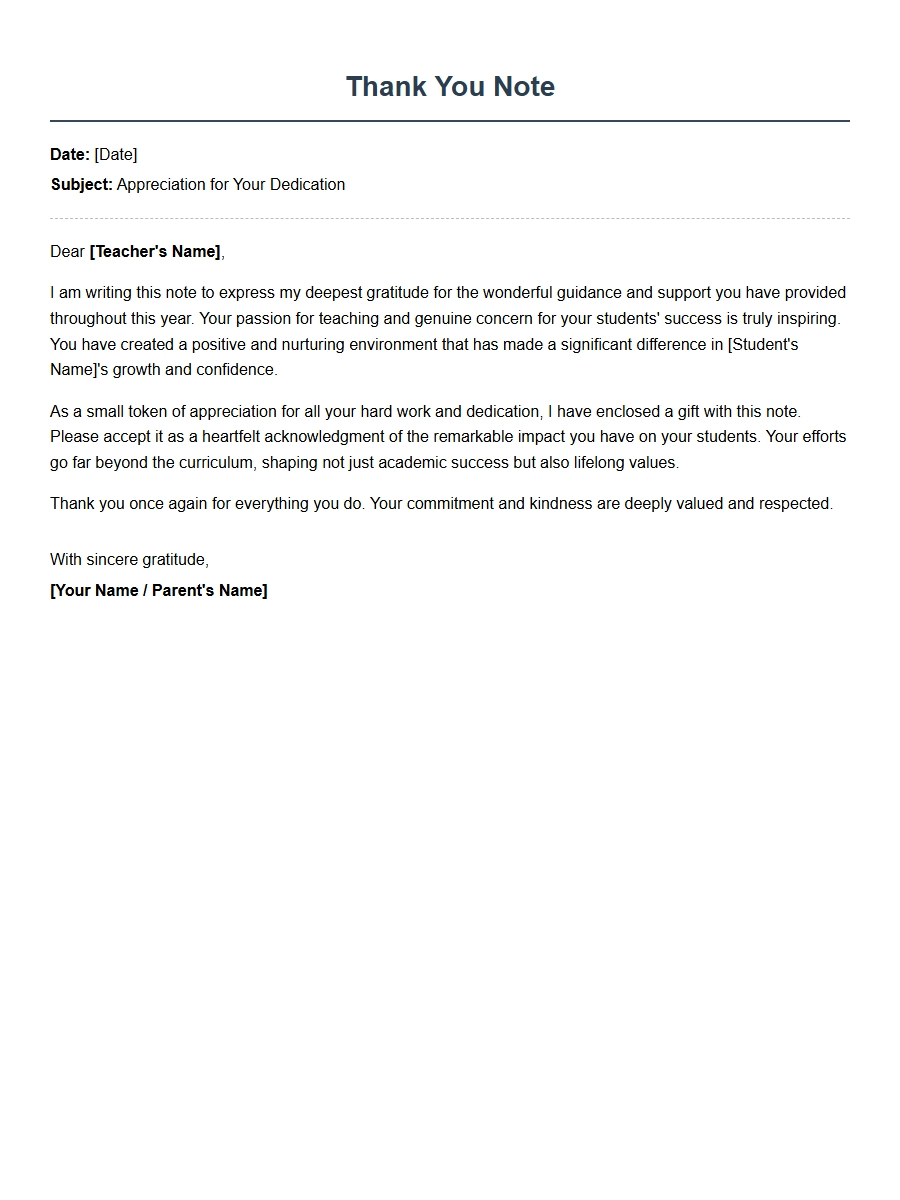 Sample Thank You Note for Teacher Gift
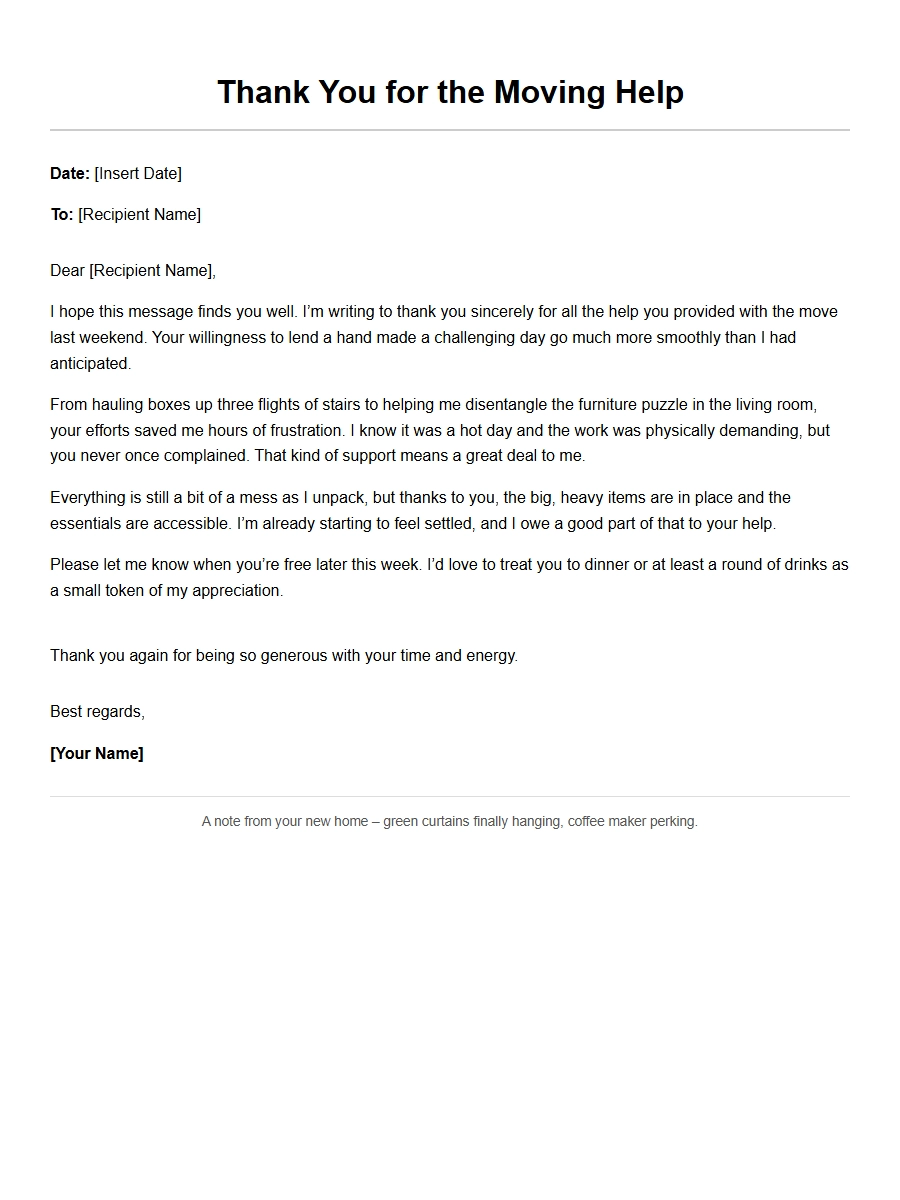 Thank-You Letter for Help with Moving
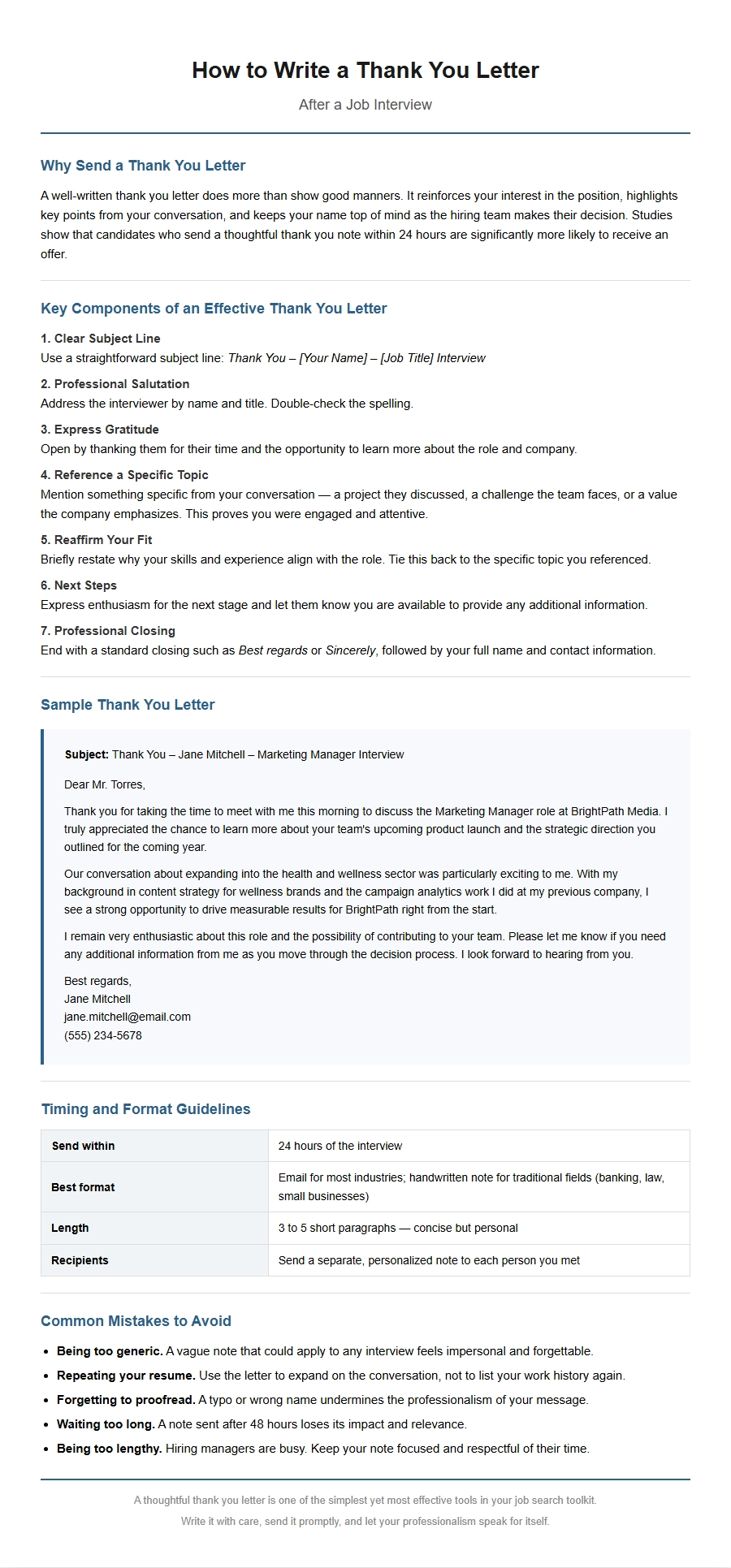 How to Write a Thank You Letter After an Interview
 professional thank you email example for client - Thank-You Letters
 Business Mentor Thank-You Letter Guide
 Thank You Letter for Sponsor Donation