Staring at a blank page when you need to write an email to a professor about a late assignment can feel paralyzing. You know you need to explain yourself, apologize, and ask for understanding — but the words just won’t come. That’s exactly why a solid sample email is your best friend. It turns that anxiety into a confident, polished draft in minutes. And no, using a sample isn’t cheating. It’s a smart, time-saving strategy that gives you structure, tone, and key phrases while leaving plenty of room for your own situation.
Category: Academic Email Templates
Let’s be clear: professors get dozens of emails every day. The ones that stand out are respectful, honest, and easy to read. A sample email for a late assignment submission does the heavy lifting of professional correspondence for you — the right greeting, a clear subject line, and a polite closing. You just fill in the details. Think of it as a customizable letter that you adapt, not a script you copy word for word.
How to choose the right sample for your situation
Not every late assignment is the same. Maybe you missed the deadline by a few hours because of a flu. Or perhaps it’s been days and you’re really nervous. A good sample should match the severity of the situation. If your professor is strict about deadlines, you want a tone that’s formal and apologetic. If they’re more relaxed, a semi-formal email works fine. Look for samples that include a clear explanation, a genuine apology, and a suggestion for making it right — like turning in the work within 24 hours.
One common mistake is using an outdated salutation. “Dear Professor [Last Name]” is always safe. Avoid “To Whom It May Concern” or “Hey” — that’s not good letter writing etiquette in academia. And remember the subject line. Something like “Late Submission – [Course Name] – [Your Name]” shows you’re organized.
Adapt the sample without losing your authentic voice
When you find a sample you like, don’t just paste and send. Read it out loud. Does it sound like you? If it feels too stiff, rephrase sentences in your own words. For example, instead of “I sincerely apologize for the delay,” you might say “I’m sorry my assignment is late.” The key is to keep the tone in writing respectful but natural. Professors can tell when you’re reading from a script, and that can hurt your credibility.
A quick tip on tailoring the opening paragraph: grab attention by being direct. “I’m writing to apologize for submitting my essay after the deadline” is better than “I hope this email finds you well.” Your professor wants to know what happened and what you’ll do about it. Be honest about the reason (illness, family emergency, tech issue) without over-explaining. Then offer a concrete next step: “I have attached the completed assignment and am ready to accept any late penalty.”
Common mistakes to avoid in your email
One big error is ignoring the difference between an email and a printed letter. In a digital letter format, you don’t need a full address block or letterhead design. Keep it simple: greeting, body, closing, signature. Another mistake is forgetting to proofread. A typo in an apology email makes you look careless. Read it twice, or use a tool like Grammarly. Also, be careful with attachments. Double-check you’ve attached the right file and that it’s not corrupted. There’s nothing worse than sending a late assignment that’s unreadable.
The same care you put into crafting an apology for a late assignment applies to other sensitive situations — like writing apology letters for divorce settlement negotiations or addressing an exam result irregularity. Good letter structure and a respectful tone work across many contexts.
Internal link examples (natural integration):
If you’re struggling with how to apologize properly, you might find the approach in apology letters after an argument helpful — the same principles of sincerity and clarity apply.
When you need to explain a mistake in a formal setting, like an exam result irregularity, the email structure is very similar: state the issue, apologize, and propose a solution.
For professionals who handle errors in billing, acknowledging a billing discrepancy follows the same pattern of owning the mistake and offering a fix.
Make the email feel both professional and personal
Your professor wants to see that you take the class seriously. A formal writing tip that works well: use the professor’s title and last name in the greeting, thank them for their understanding, and sign off with “Best regards” or “Sincerely.” But don’t be afraid to add a personal touch — like mentioning something specific from the lecture that made the assignment challenging. That shows you’re engaged, not just making excuses.
One last thing: proofreading your email is non-negotiable. Small mistakes like a missing word or a wrong date can undermine your entire message. If possible, ask a friend to glance at it before you hit send. You’ll feel more confident, and your professor will appreciate the effort.
Use the sample as a springboard, not a crutch
The best emails to professors come from real people who are honest and respectful. A sample gives you a solid starting point, but your own voice makes the message genuine. The more you practice writing these emails, the faster and easier it becomes. Next time a deadline slips, you’ll know exactly what to say — and you won’t need a blank page to stare at. Just a good sample and a little trust in yourself.
Samples to Guide You
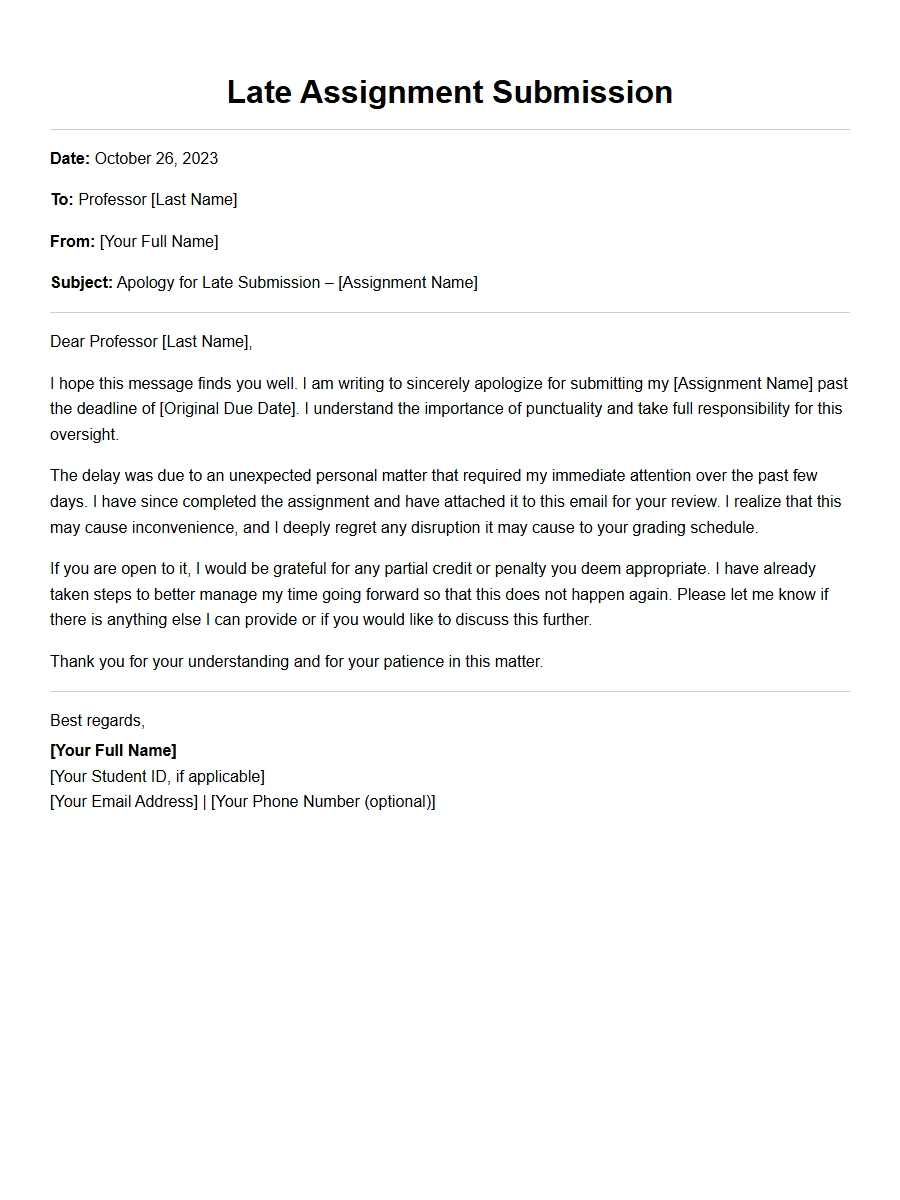
Apology Email to Professor for Late Assignment
Medical Emergency Apology
Dear Professor [Last Name],
I sincerely apologize for submitting the assignment late. I was unexpectedly hospitalized due to a severe allergic reaction on [date] and was unable to access my laptop until today. Please find my submission attached.
Below is a revised schedule to make up for lost time:
Task
Original Due
New Due
Final Paper Submission
Oct 20
Oct 22 (submitted)
Discussion Board Post
Oct 21
Oct 23
Peer Review
Oct 22
Oct 24
I have attached a doctor’s note for verification. Thank you for your understanding.
Respectfully, [Your Name]
Technical Difficulties Apology
Dear Professor [Last Name],
Please accept my sincere apologies for missing the assignment deadline. My laptop’s hard drive crashed on [date] and I lost the draft. I have since recovered most of the work from a backup and completed the submission now.
Here are the steps I took to resolve the issue:
Contacted IT support for data recovery
Reinstalled necessary software
Rewrote the final section using cloud notes
I have also submitted the file via email. If possible, I kindly request a one-day late penalty instead of zero credit. I will ensure all future work is backed up on multiple platforms.
Thank you, [Your Name]
Personal Emergency Apology
Dear Professor [Last Name],
I am writing to apologize for submitting my assignment after the deadline. A family emergency required my immediate attention over the weekend, and I was unable to complete the work on time.
I understand the importance of meeting deadlines and deeply regret any inconvenience caused. The completed assignment is attached. I am available to meet during your office hours tomorrow or Thursday to discuss how I can make up for this delay, if needed.
Thank you for your compassion and consideration.
Sincerely, [Your Name]
Poor Time Management Apology
Dear Professor [Last Name],
I apologize for the late submission of my assignment. I underestimated the time required to thoroughly research and write the paper, and I mismanaged my schedule last week.
I take full responsibility and have attached my completed work. To avoid this in the future, I have:
Set up intermediate milestones for each assignment
Blocked out dedicated study hours in my calendar
Joined a peer accountability group
I would appreciate any partial credit you can offer. Thank you for your understanding and guidance.
Regards, [Your Name]
Deadline Misunderstanding Apology
Dear Professor [Last Name],
I sincerely apologize for turning in the assignment late. I mistakenly thought the deadline was [incorrect date] due to a misreading of the syllabus. As soon as I realized the error, I completed and submitted the work.
Here are the submission details:
Item
Details
Assignment Name
Research Paper – Topic [X]
Original Due
[actual deadline date]
Submitted On
[submission date]
File Name
Lastname_Firstname_Paper.pdf
Please let me know if there is a late submission policy I should follow. I appreciate your fairness.
Best regards, [Your Name]
Family Emergency with Document Proof
Dear Professor [Last Name],
I am writing to apologize for the delayed submission of the assignment. My grandmother was hospitalized unexpectedly on [date], and I was needed at the hospital for several days. This made it impossible to complete the work on time.
Attached you will find:
The completed assignment
A supporting document from the hospital
I am committed to not letting this affect my academic performance. Please let me know if any additional steps are required. Thank you for your empathy.
Yours truly, [Your Name]
Oversleeping Apology
Dear Professor [Last Name],
I am truly sorry for submitting my assignment after the deadline. I overslept on the morning it was due and missed the cutoff by a few hours. I know this is not an excuse, and I sincerely regret my lack of diligence.
I have attached the completed work now. I understand if you cannot accept it late, but I wanted to be honest about what happened. I will set multiple alarms and submit assignments earlier in the future.
Thank you for your consideration.
Apologetically, [Your Name]
Multiple Late Submissions Apology
Dear Professor [Last Name],
I apologize for submitting two assignments late this semester. I have fallen behind due to a combination of health and personal issues, but I am taking steps to get back on track.
Below is my action plan to improve:
Issue
Solution
Timeline
Missed deadlines
Use a project management app with reminders
Starting today
Poor focus
Study in library without distractions
Each weekday
Health concerns
Scheduled check-up and rest
This week
I have submitted both assignments. I respectfully request a chance to earn partial credit. Thank you for your patience.
Sincerely, [Your Name]
Late Lab Report Apology
Dear Professor [Last Name],
I apologize for submitting the lab report after the due date. I encountered an error in my data analysis and had to rerun several experiments, which caused the delay.
Here is a summary of the corrected data:
Trial
Original Value
Corrected Value
1
2.34 s
2.31 s
2
2.45 s
2.42 s
3
2.29 s
2.27 s
The full report is attached. I have learned to double-check my calculations before finalizing. Please let me know if you require any further information.
Thank you, [Your Name]
Group Project Delay Apology
Dear Professor [Last Name],
I am writing to apologize on behalf of my group for the late submission of the project. I personally take responsibility for the delay, as I was unable to complete my section on time due to a workload miscalculation.
My teammates have submitted their parts already. I have now finished my contribution and attached the merged project. To remedy the situation, I propose:
Presenting the project during an extra office hours slot
Completing an additional short write-up on the topic
I deeply regret letting down the team and you. I will ensure better planning for future group assignments.
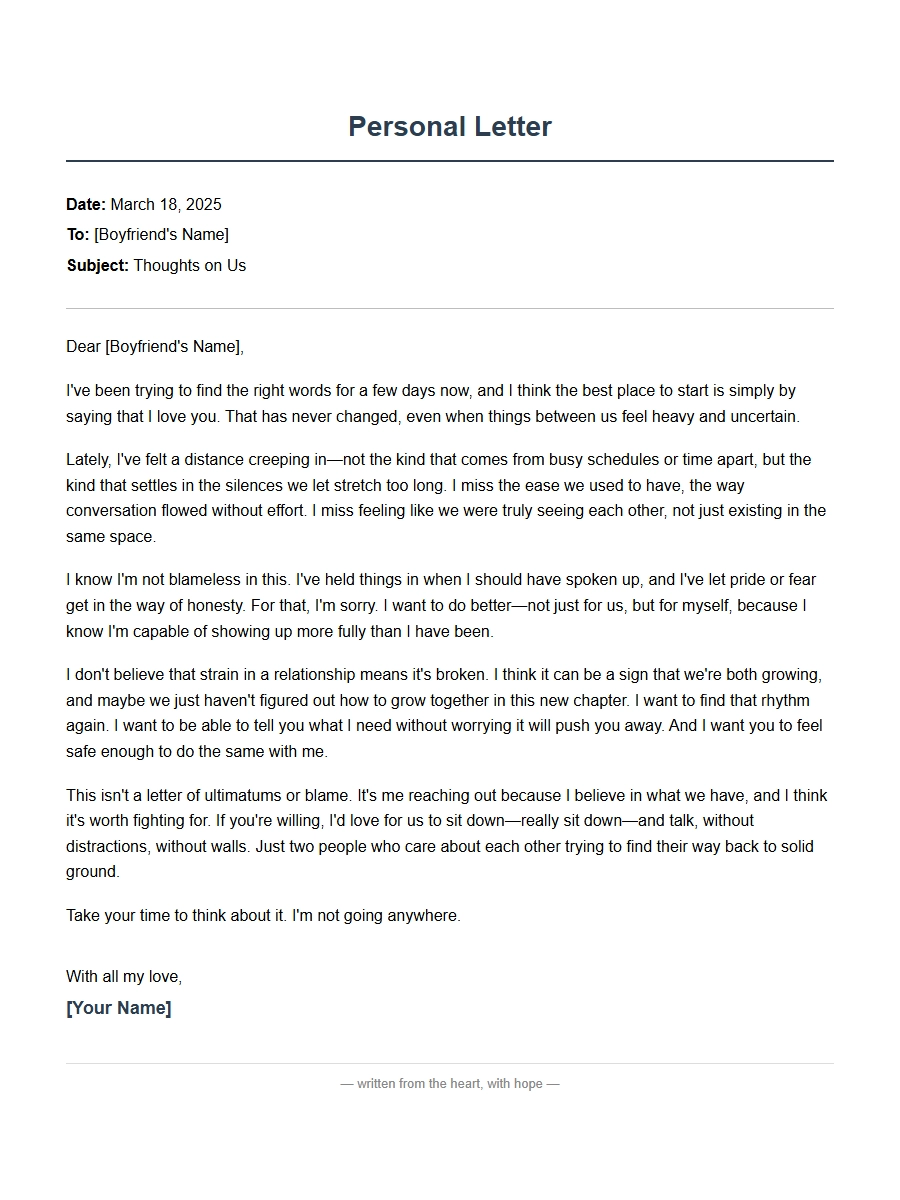 Personal Apology Letter for Boyfriend Relationship Strain
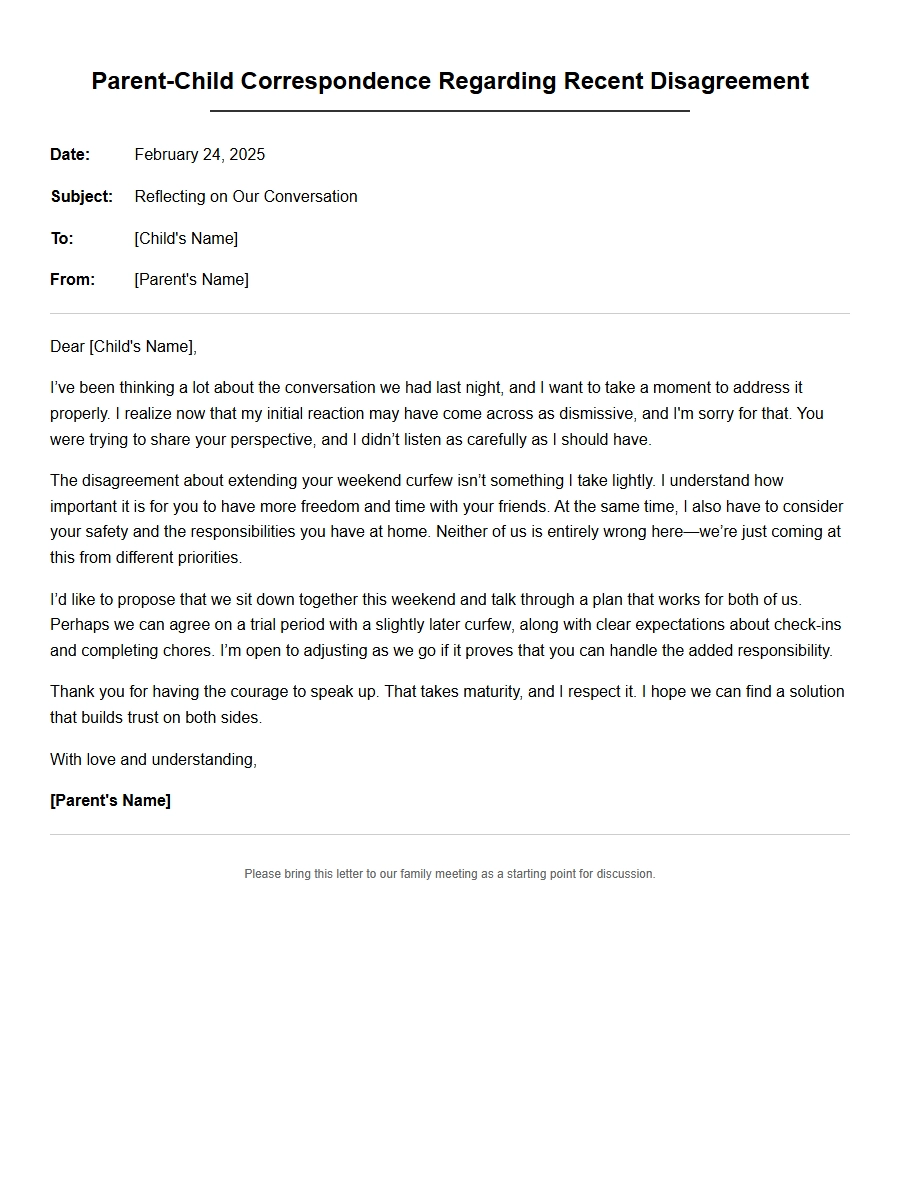 Apology Correspondence for Parent-Child Disagreements
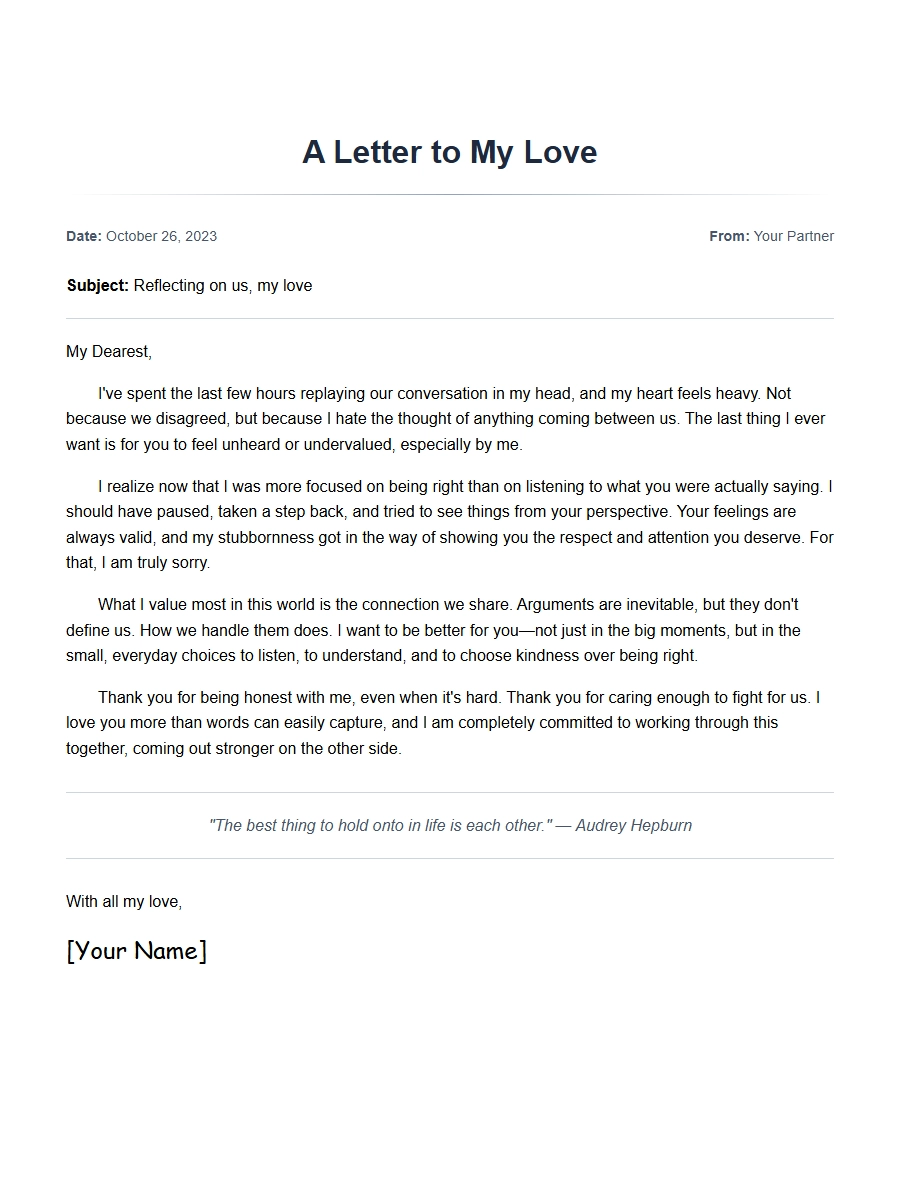 Apology Message for Girlfriend After Argument
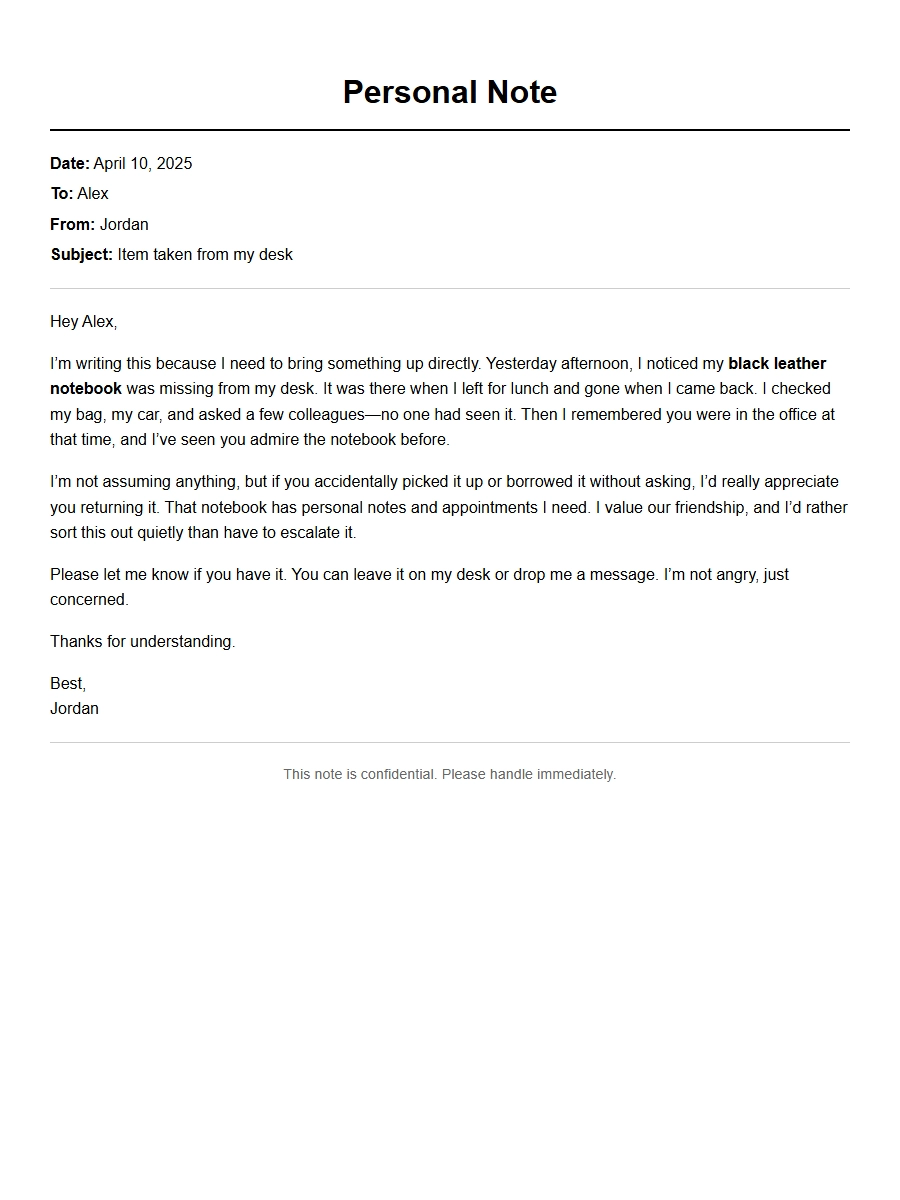 note for friend stealing item - Apology Letters
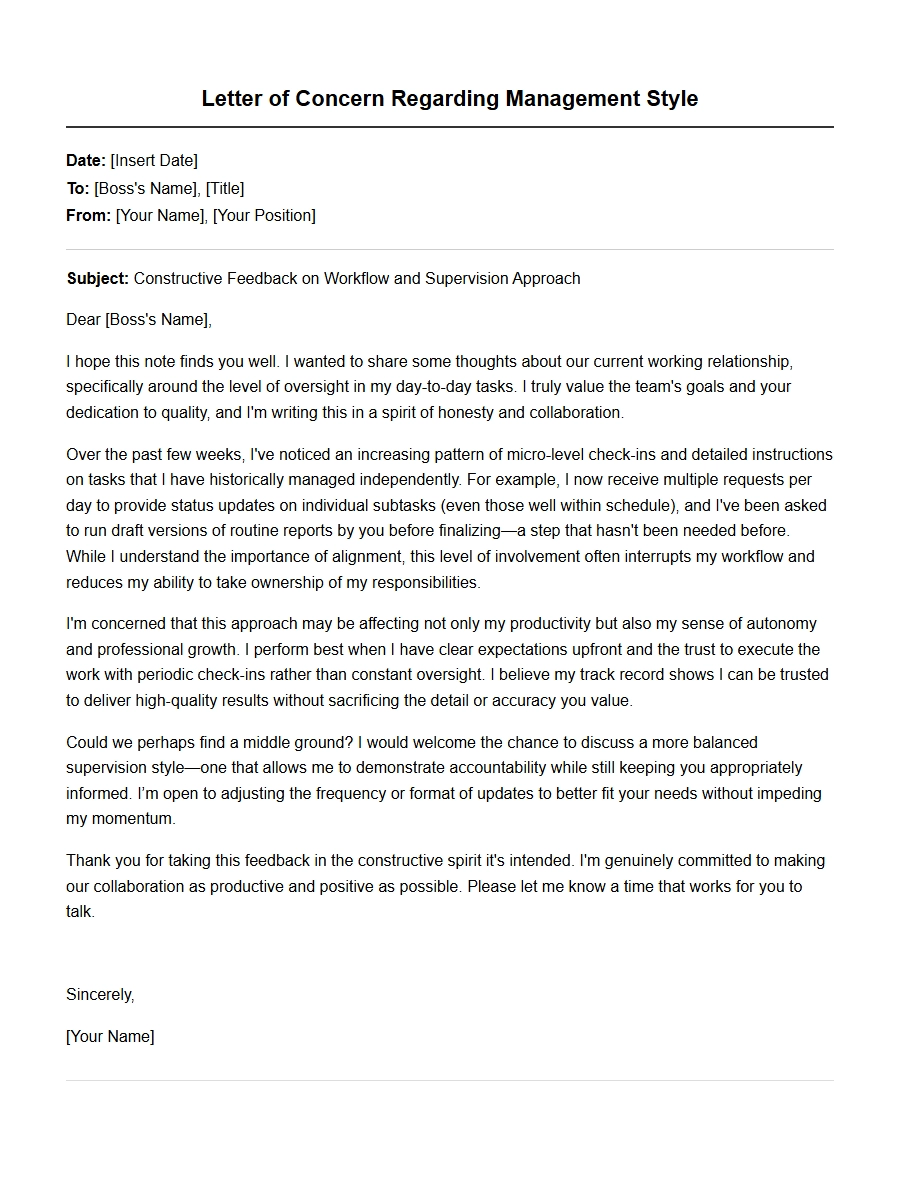 Apology to Boss for Micromanagement Complaint
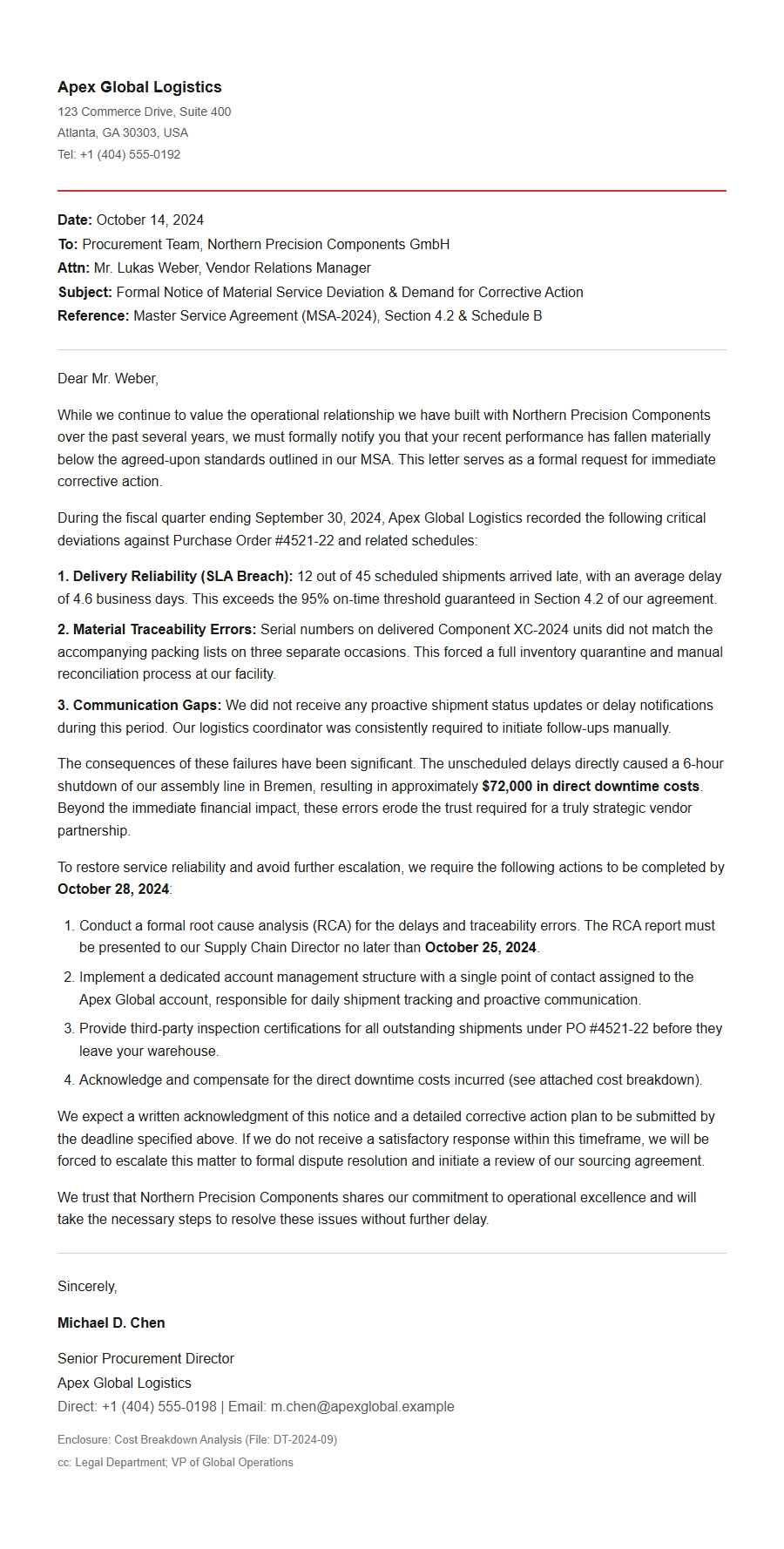 Apology Document for Vendor Supply Chain Issue