You discovered a billing error on an invoice or statement, and now you need to write an acknowledgment—something that shows you’ve identified the mistake and are handling it. That blank page staring back at you can feel intimidating, especially when you want to get the tone right. The good news: a solid sample letter can turn that anxiety into a polished, professional draft in minutes.
Using a letter sample isn’t cheating. It’s a smart shortcut. Samples give you the structure, tone, and key phrases you need, while still leaving room for your own details. Think of it as a scaffold—you build on it, adapt it, and make it yours. The goal is professional correspondence that feels both competent and human, not a robot copy-paste job.
Category: Business Correspondence
Why a dedicated sample for billing errors helps
A generic apology letter won’t cut it when you’re addressing a specific overcharge, duplicate entry, or miscalculation. You need a customizable letter that clearly states the error, your responsibility (if any), and the next steps. A well-chosen template ensures you don’t miss important elements like the invoice number, date of error, and correction plan.
Most billing discrepancy acknowledgments follow a standard business letter format: your contact info, date, recipient details, clear subject line, polite salutation, body, and professional closing. Even if you’re sending it via email, the same letter structure applies—just skip the letterhead design and use a concise subject line.
How to choose the right sample for your situation
Not all errors are the same. If you’re writing to a client about a mistake your company made, your tone should be apologetic and direct. If you’re a customer acknowledging an error on a vendor’s invoice or bank statement, you’ll want to be firm but polite. The best approach is to find a sample that matches your role and the severity of the discrepancy.
Look for samples that include phrases like “We have identified an error on invoice #…” or “I am writing to confirm the billing discrepancy regarding…”. Avoid samples that sound too stiff or overly remorseful—accuracy and professionalism matter more than excessive apology.
Adapting a sample without losing your voice
Once you have a template, read it aloud. Does it sound like you? If not, adjust. Swap formal phrases for ones that feel natural. For example, change “We regret to inform you” to “I noticed a mistake on your latest statement” if that fits your relationship. The key is to keep the core facts clear while using a tone that matches your usual professional writing style.
One quick tip: rewrite the opening paragraph to grab attention by stating the error upfront. “This letter acknowledges a billing discrepancy on account #12345 regarding an incorrect charge of $200 on March 15.” That immediacy builds trust. Don’t bury the problem in vague language.
Common mistakes to avoid
Using outdated salutations like “To Whom It May Concern” when you know the recipient’s name. Always use a specific name if possible. Ignoring letter writing etiquette for email vs. printed letters—for email, skip the full address block and use a clear subject line. Failing to proofread is another big one: proofreading your letter before sending prevents embarrassment. Read it backwards or out loud to catch errors.
Also avoid vague promises like “we’ll fix it soon” without a timeline. State the correction date or refund process clearly. That shows you’re serious about resolving the issue.
Tailoring the tone for formal vs. informal contexts
If you’re writing to a long-standing client, a slightly warmer tone works. “Hey Jane, I noticed a mix-up on your latest bill—here’s what happened and how we’re fixing it.” For a new vendor or an official complaint, stick to formal professional correspondence. Use “Dear Mr. Smith” and a more reserved tone. The best letters feel both professional and personal—no one wants a cold, robotic email, but you also don’t want to sound casual when money is involved.
Using other apology letter samples for inspiration
If your billing error happened in a workplace context—like a missed shift or a software bug that caused incorrect charges—you can adapt samples from related situations. For example, if you need to apologize for an administrative mistake that led to a billing error, check out reply to manager regarding missed shift apology letters for ideas on how to structure an honest acknowledgment. Similarly, request for administrative privilege escalation apology letters can guide you on tone when you need to explain an error to higher-ups.
After you adapt the sample, add a sentence that shows you understand the impact. “I know this delay caused frustration, and I apologize for the inconvenience.” Then state exactly what you’re doing to fix it. End with a forward-looking line: “The corrected invoice will arrive by Friday, and I’ll follow up to confirm you received it.” That leaves a positive impression.
Remember, the sample is a springboard, not a crutch. The more you practice writing these letters, the faster and more natural they become. You’ll soon be able to draft a clear error acknowledgment in minutes without staring at a blank page.
Samples to Guide You
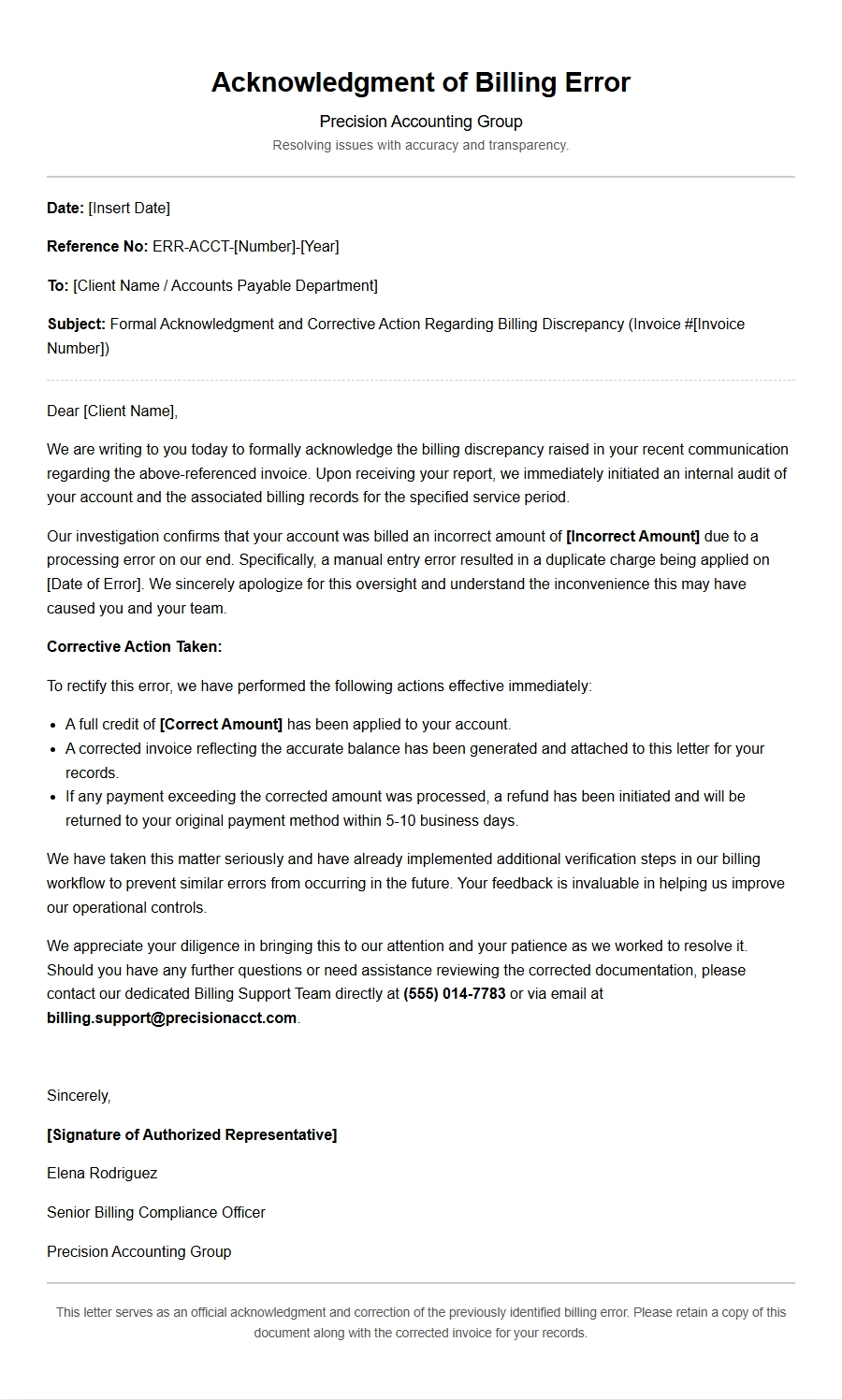
Acknowledging Our Billing Discrepancy Error
Formal Apology for Overcharge on Invoice
Dear Mr. Johnson,
We acknowledge your recent report of a billing discrepancy on invoice INV-2024-3781 dated March 12, 2024. After a thorough review, we confirm that your account was overcharged by $247.50 due to an incorrect rate applied to item Premium Support Package.
Please find the corrected details below:
Description
Original Amount
Corrected Amount
Premium Support Package (Q1)
$550.00
$302.50
Overcharge
$247.50
$0.00
We sincerely apologize for this error. A credit of $247.50 has been applied to your account, and a corrected invoice will be sent within 2 business days. If you have any further questions, please contact our billing department at (555) 123-4567.
Thank you for your understanding.
Acknowledgment of Duplicate Billing Error
Dear Ms. Rodriguez,
Thank you for bringing to our attention the duplicate billing on your account for reference number BL-2024-089. We have investigated and confirmed that the charge of $89.99 on March 15, 2024 was processed twice in error.
Details of the error:
Original charge: March 15, 2024 - $89.99
Duplicate charge: March 16, 2024 - $89.99
Total incorrect charges: $179.98
We have reversed the duplicate transaction, and the refund of $89.99 should appear on your statement within 3–5 business days. We deeply apologize for this oversight. As a gesture, we are adding a $10.00 goodwill credit to your account. Please do not hesitate to reach out if you need further assistance.
Sincerely,
Billing Support Team
Correction of Incorrect Rate Applied
To our valued client,
We are writing to acknowledge a billing discrepancy discovered on your monthly statement for March 2024 (Account # A98765). Due to a system error, the hourly rate for consulting services was applied as $175.00 instead of the agreed $150.00.
Below is the corrected breakdown:
Service
Hours
Original Charge
Correct Charge
Software Architecture Review
12
$2,100.00
$1,800.00
Database Optimization
8
$1,400.00
$1,200.00
Total Overcharge
$3,500.00
$3,000.00
The difference of $500.00 has been credited to your account. We apologize for the inconvenience. A revised invoice will be issued by end of day. If you have any concerns, please contact your account manager.
Best regards,
Finance Department
Apology for Billing Error on Subscription
Dear Ms. Chen,
We sincerely apologize for the incorrect billing on your Gold Subscription (plan ID: GS-2024-045). On April 1, 2024, we mistakenly charged you $199.00 instead of the promotional rate of $149.00 that you were eligible for.
We have corrected the issue as follows:
Refunded the excess $50.00 immediately
Adjusted future billing to the correct rate
Added one month of Premium Feature Access at no charge
Below is your updated billing summary:
Date
Description
Amount
Apr 1, 2024
Original incorrect charge
-$199.00
Apr 2, 2024
Refund of overpayment
+$50.00
Apr 2, 2024
Correct subscription charge
-$149.00
We value your business and regret the error. Please reply if you need further clarification.
Acknowledgment of Missing Credit Due to Error
Dear Mr. Patel,
We acknowledge your notice that a credit of $320.00 was not applied to your account as promised after your return of equipment on February 10, 2024. Our records confirm that the credit was erroneously omitted from invoice INV-2024-401.
We have now manually processed the credit. Please see the corrected invoice details:
Item
Previous Balance
Credit Applied
New Balance Due
Equipment Return Credit
$320.00
-$320.00
$0.00
Original Invoice Total
$1,250.00
$930.00
We apologize for the oversight. Your revised statement will reflect the adjustment by the next billing cycle. As a token of apology, we have also added a $25.00 discount on your next order. Please feel free to call us at (555) 987-6543 if you have questions.
With sincere apologies,
Accounts Receivable Team
Apology for Late Fee Charged in Error
Dear Mrs. Thompson,
We recently received your complaint regarding a late fee of $35.00 on your account # 5421-890. After reviewing your payment history, we confirm that your payment was received on January 5, 2024—within the grace period—and the late fee was applied incorrectly by our automated system.
We have taken the following actions:
Removed the late fee of $35.00
Updated your account to reflect payment on time
Disabled the erroneous late fee flag
Your current balance is now $0.00 (previously showed $35.00 due). We deeply regret this error and any inconvenience it may have caused you. We are also reviewing our system logic to prevent similar issues. If you require written confirmation, please let us know.
Thank you for your patience,
Client Services
Correction of Billing Discrepancy in Medical Bill
Dear Mr. Williams,
We acknowledge the billing discrepancy you reported for your visit on February 20, 2024 (patient ID: WIL-4872). Upon investigation, we found that the procedure code 99214 (established patient visit) was billed at $200, but the correct code should have been 99213 ($150) as per your insurance plan.
Corrected charges:
Service
Original Code
Original Charge
Corrected Charge
Office Visit
99214
$200.00
$150.00
Lab Work
80048
$45.00
$45.00
Total Due
$245.00
$195.00
A refund of $50.00 will be issued to your insurance provider. We sincerely apologize for the error. Please review the updated statement we will mail to you within a week. Our billing team is available at (555) 321-0987 should you have any questions.
Acknowledgment of Billing Error in Utility Statement
Dear Ms. Garcia,
We appreciate you notifying us of the unusual spike in your electricity bill (account # UTIL-78901) for the period ending March 31, 2024. Our meter reading team investigated and discovered that the meter was misread, recording 2,450 kWh instead of the actual 1,230 kWh.
Corrected usage and charges are as follows:
Description
Incorrect
Correct
Electricity Usage (kWh)
2,450
1,230
Total Charges
$367.50
$184.50
We have credited your account for the overpayment of $183.00 (including tax adjustment). You will see this reflected on your next statement. We sincerely apologize for this error and any stress it may have caused. To ensure accuracy going forward, we have rescheduled your next meter reading and provided additional training to our field staff. If you have further concerns, please contact our customer service team.
Thank you for your understanding.
Apology for Incorrect Tax Calculation on Invoice
Dear Mr. Lee,
We are writing to acknowledge a billing error on your recent invoice INV-2024-523 dated March 22, 2024. The sales tax was incorrectly calculated at 10.5% instead of the correct rate of 7.25% applicable to your jurisdiction.
Below is a breakdown of the correction:
Line Item
Subtotal
Incorrect Tax
Correct Tax
Software License
$1,000.00
$105.00
$72.50
Setup Fee
$250.00
$26.25
$18.13
Total
$1,250.00
$1,381.25
$1,340.63
The overpayment of $40.62 has been refunded to your original payment method. We apologize for the inconvenience. Our tax software has been updated to prevent future errors. If you need a corrected invoice for your records, please reply to this email.
Acknowledgment and Resolution of Billing Discrepancy in Contract
Dear Ms. Davis,
We acknowledge the billing issue identified in your contract # CON-2024-007 regarding the monthly maintenance fee. According to the signed agreement, the fee should be $75.00/month for the first 12 months, but we inadvertently charged $125.00/month for the past three months (January–March 2024).
We have recalculated the correct charges:
Month
Amount Charged
Correct Amount
Difference to Refund
January
$125.00
$75.00
$50.00
February
$125.00
$75.00
$50.00
March
$125.00
$75.00
$50.00
Total
$375.00
$225.00
$150.00
A credit of $150.00 has been applied to your account. Future invoices will reflect the correct $75.00 rate. We sincerely regret this oversight and value your partnership. Please confirm receipt of this correction by replying to this message.
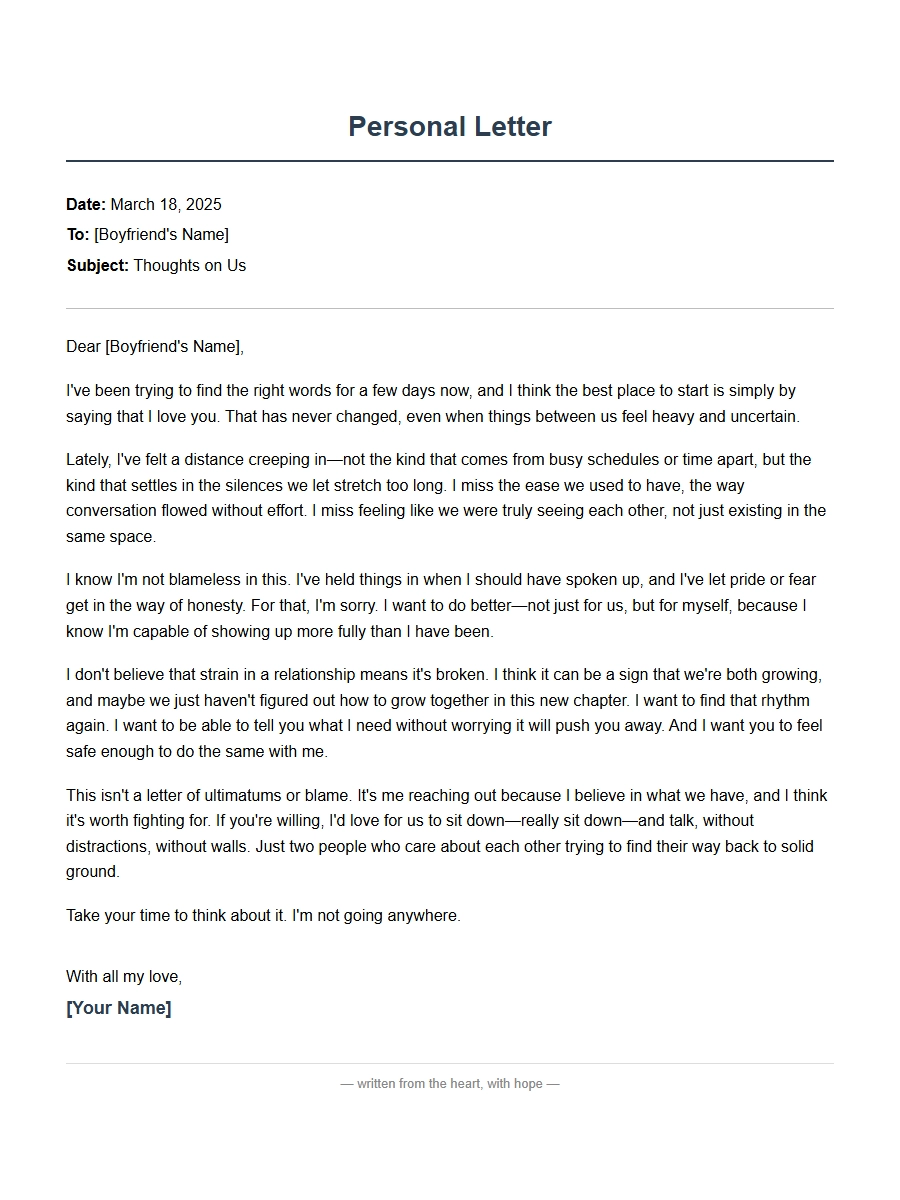 Personal Apology Letter for Boyfriend Relationship Strain
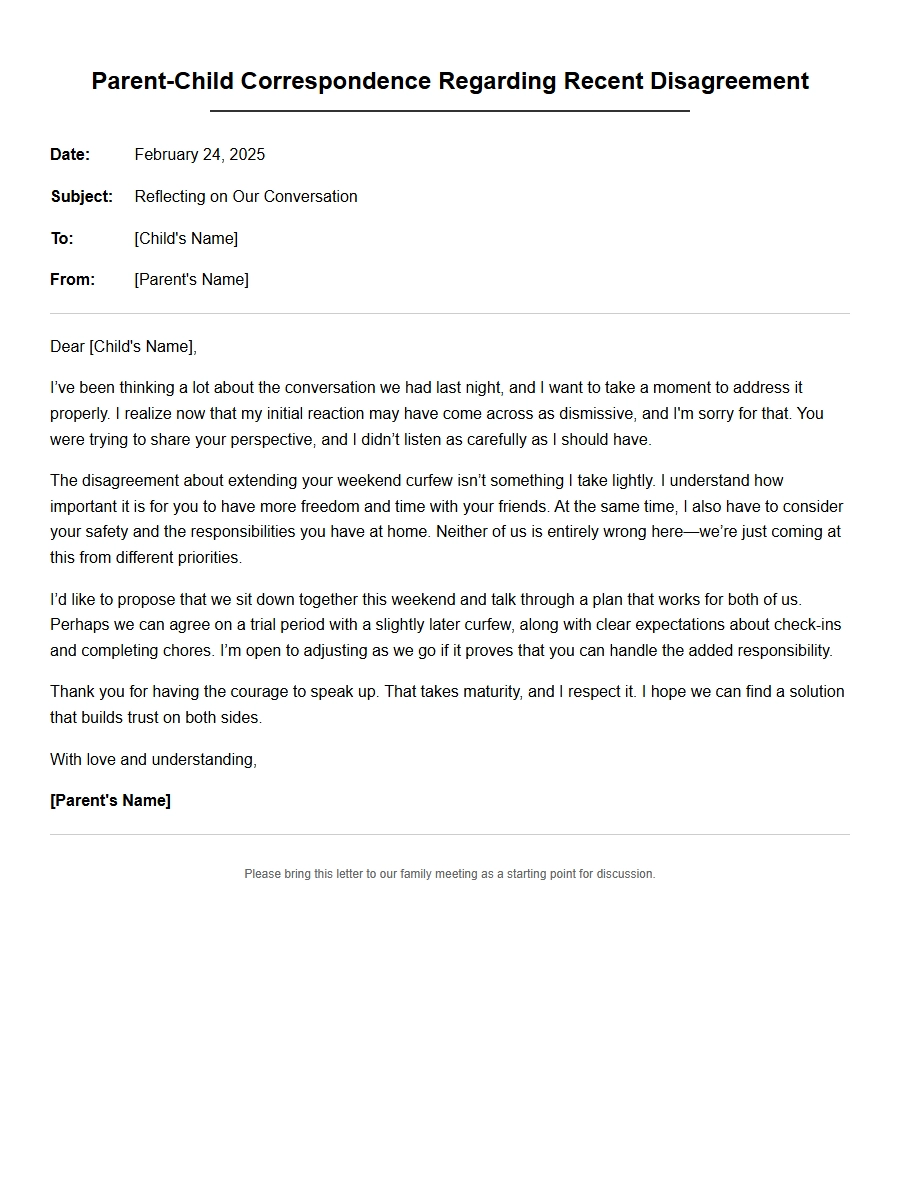 Apology Correspondence for Parent-Child Disagreements
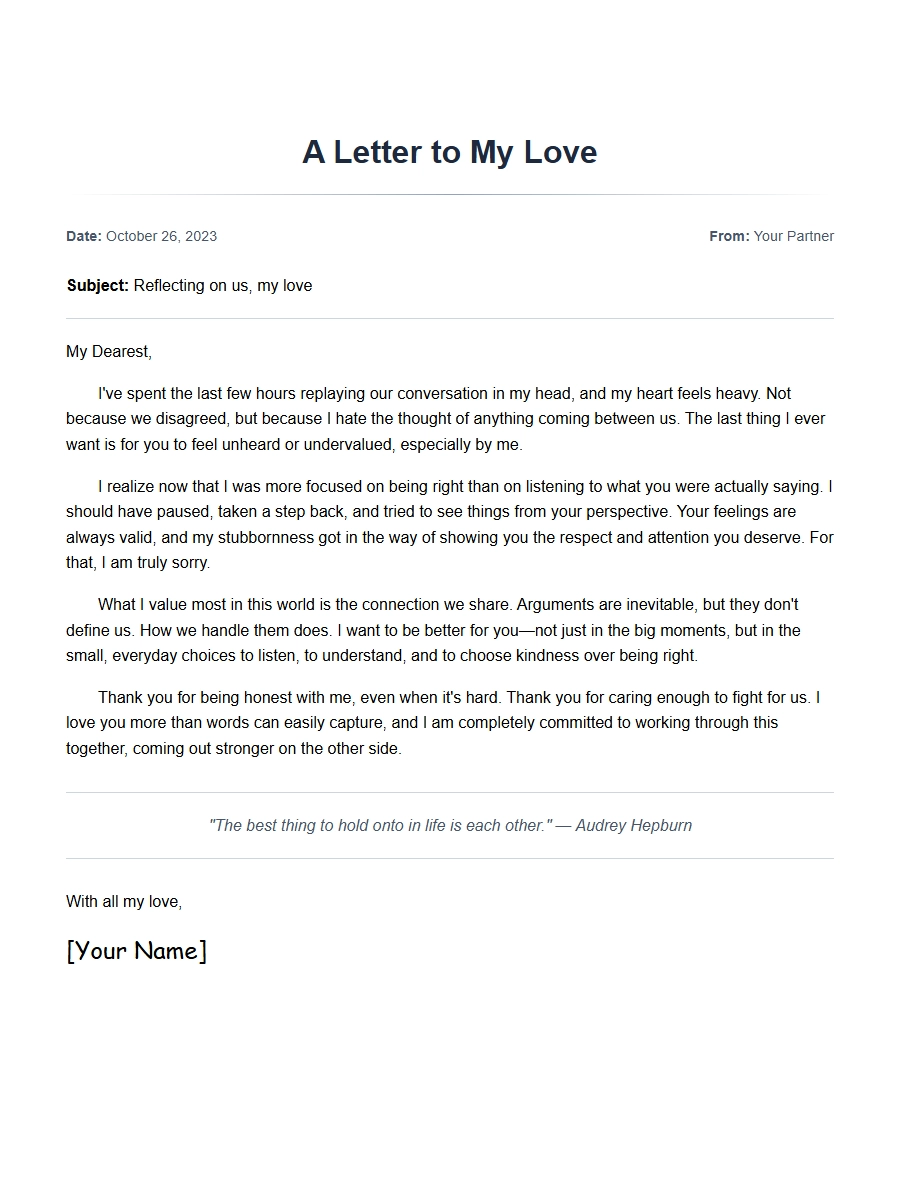 Apology Message for Girlfriend After Argument
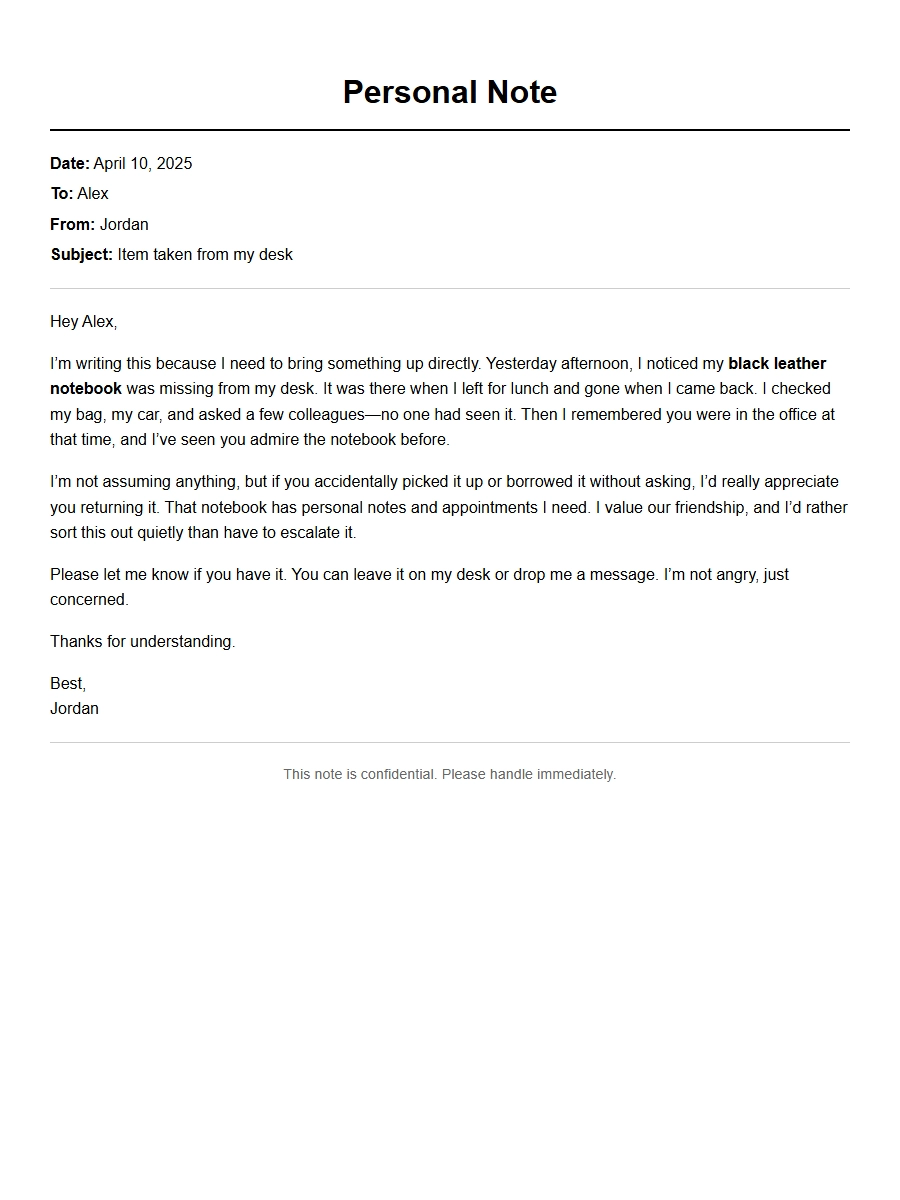 note for friend stealing item - Apology Letters
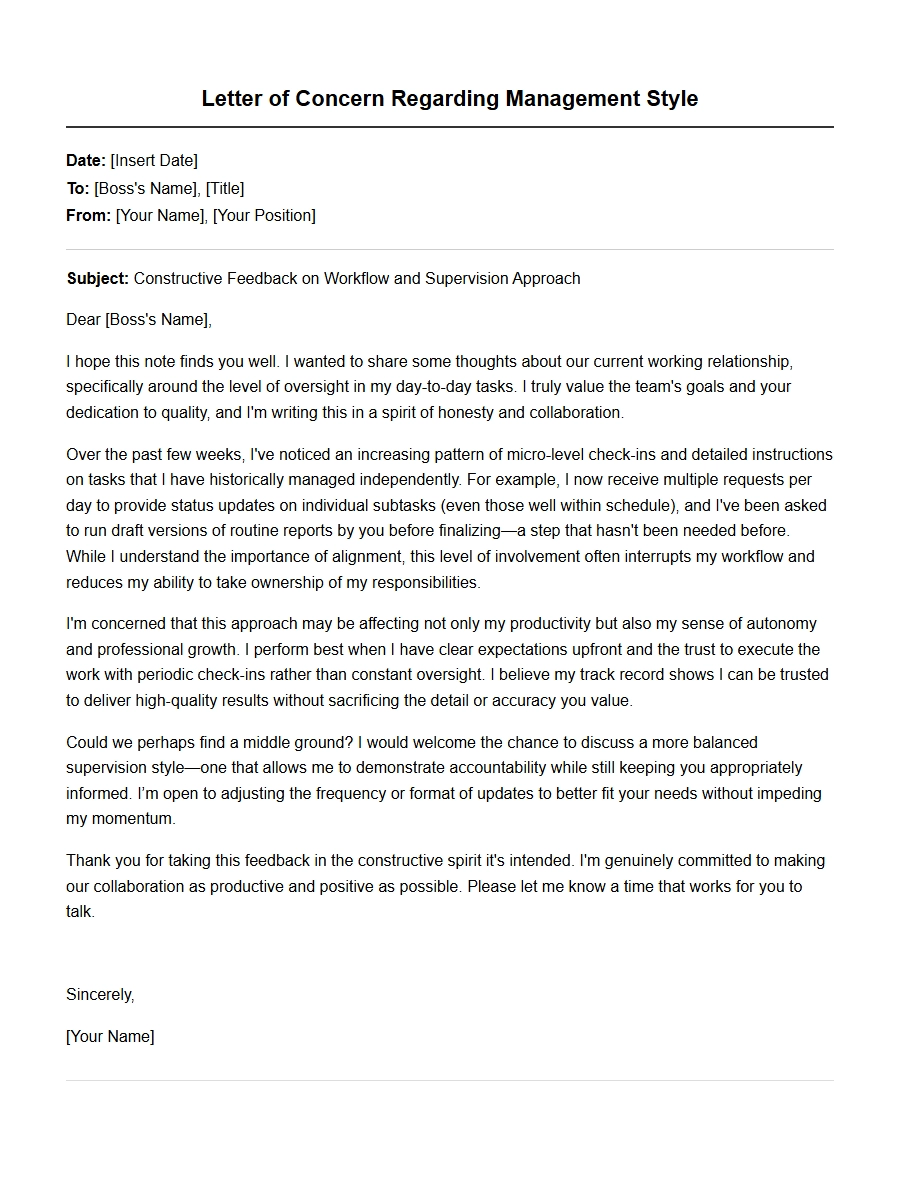 Apology to Boss for Micromanagement Complaint
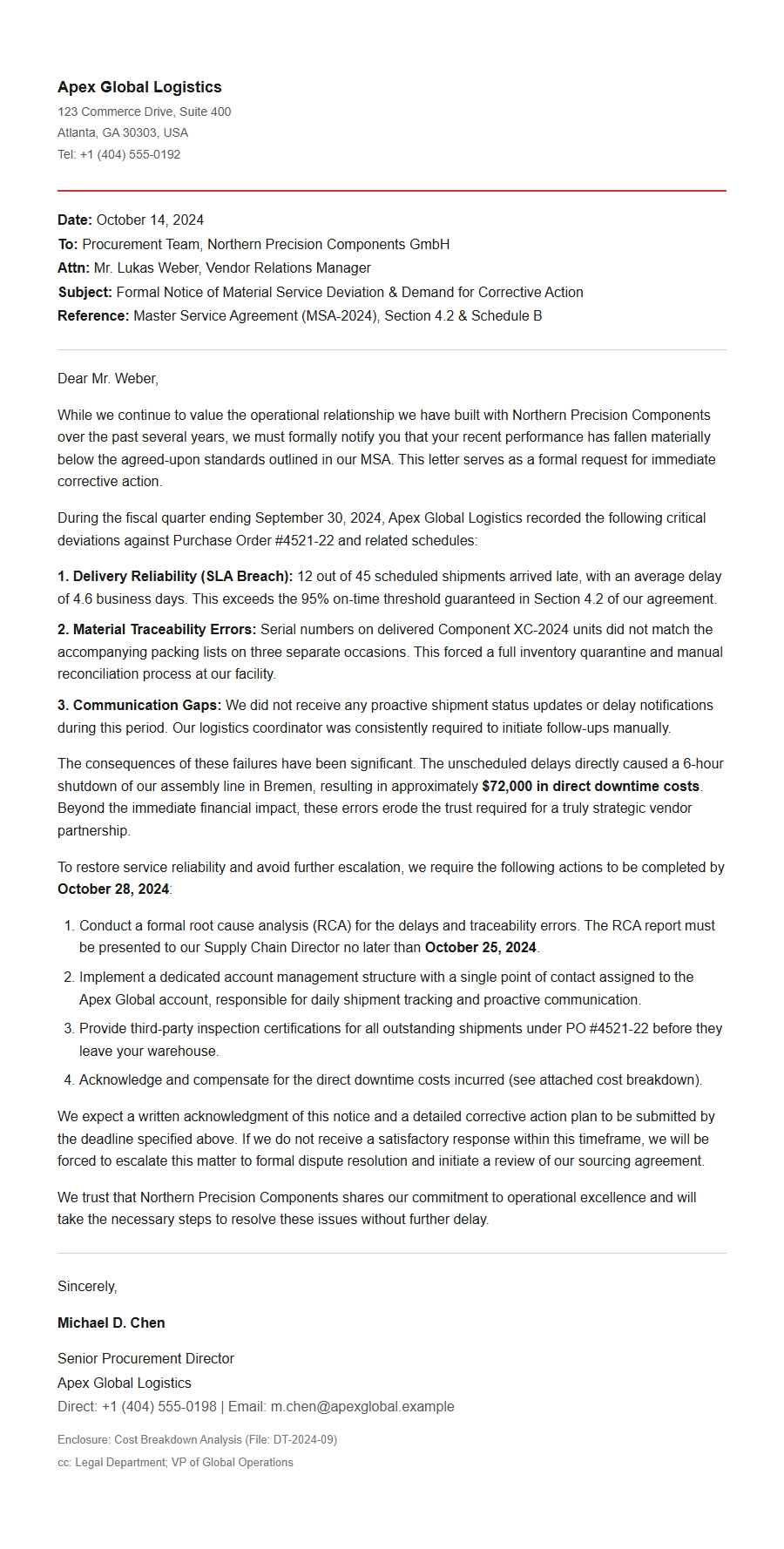 Apology Document for Vendor Supply Chain Issue