It’s a stressful moment. You’ve found someone using your original work—maybe a photo, a piece of software code, or a product design—without your permission. You know you need to send an email for intellectual property rights claim, but you’re not a lawyer and you don’t want to sound aggressive or amateurish. You just want them to stop and to respect your ownership.
Using a letter template or example of professional correspondence here isn’t cheating. It’s a smart way to start. A good sample gives you the correct structure, the right formal tone, and the key phrases that establish your legal standing without you having to guess. The trick is knowing how to adapt it so it sounds like you—firm, clear, and fair.
What you’re actually sending (and why it matters)
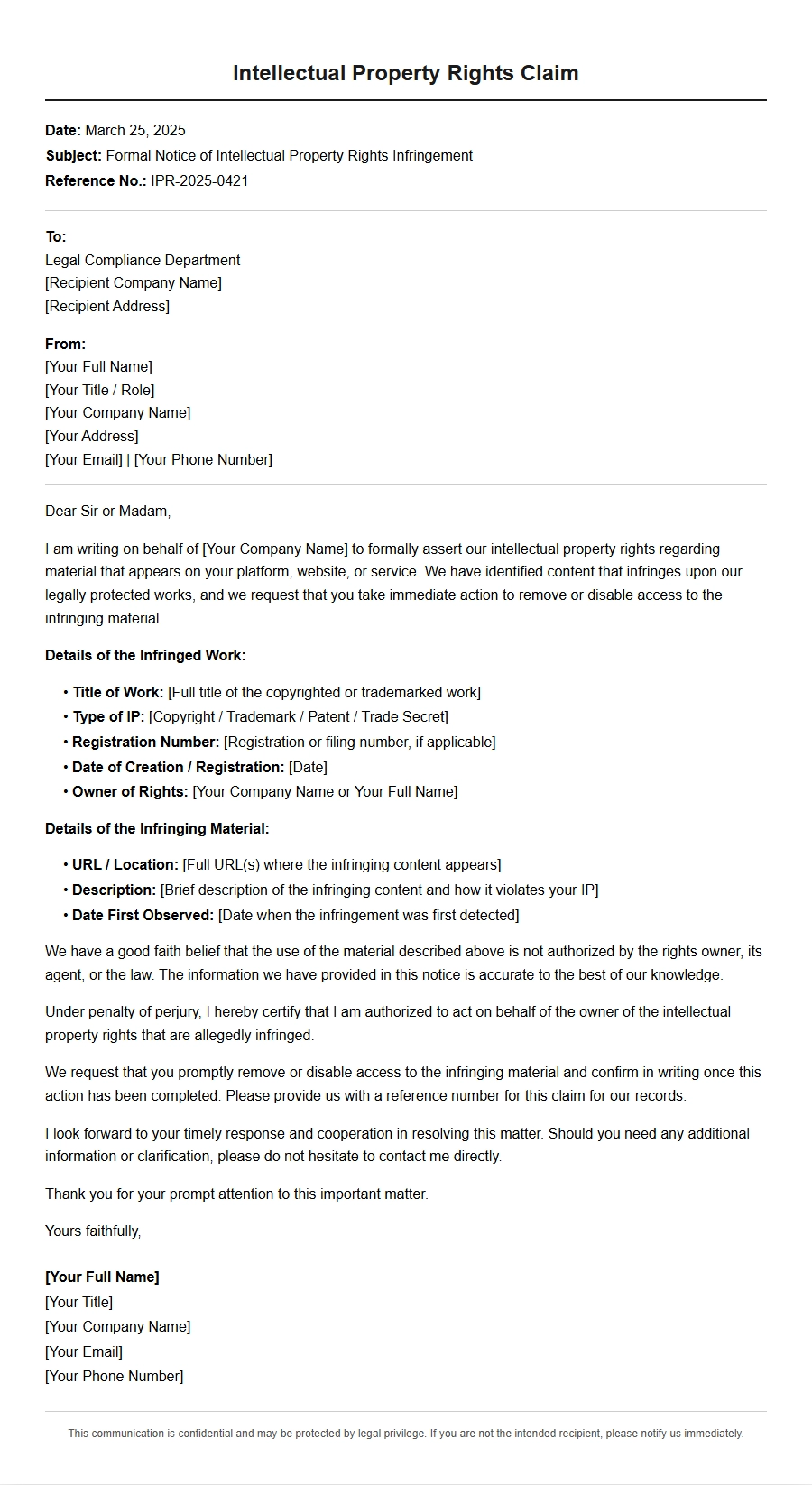
An intellectual property claim isn’t casual chit-chat. It’s a formal written notice that you own a specific right and that someone else is infringing on it. This is a real-life scenario: a designer discovers their logo on a competitor’s website, or a freelance writer finds their article republished without credit. Your email needs to say: “This is my work. Here’s proof. Stop using it.”
A good letter structure for this includes a clear subject line stating the work, a direct opening sentence naming the infringement, the specific evidence you hold, and a request for action (removal, compensation, or both). Missing any of these weakens your position.
How to pick the right sample and make it yours
Not every sample fits every situation. A claim about a registered trademark has different language than a claim about an unregistered design. Look for a letter template that matches your industry (tech, art, writing) and your relationship with the recipient. If you’re emailing a large corporation, the tone should be more legal and direct. If it’s a small business owner, you can be slightly more conversational but still firm.
Once you have a sample, don’t just swap in your name and hit send. Read through it carefully. Change the salutation and closing to match your comfort level—"Dear [Name]" feels less confrontational than "To Whom It May Concern." Adjust the wording to reflect your actual situation. If the sample says “I hereby demand removal” but you prefer “I request that you remove this content immediately,” that’s fine. Keep your authentic voice but maintain the tone in writing that shows you’re serious.
One common mistake: ignoring digital letter format. An email claim doesn’t need a physical letterhead design, but it does need a professional signature block at the end. Include your full name, contact info, and a way to verify your ownership (like links to the original work).
Another error: being too vague in the opening paragraph. Don’t write “I think you might be using my stuff.” Be specific: “I own the copyright to the image titled ‘Sunset Bridge’ registered on March 15, 2023. It is currently displayed on your homepage without my consent.” That single sentence removes all doubt.
If you’re worried about tone, ask yourself: would I be comfortable reading this out loud in a meeting? If it feels too stiff or too casual, adjust. You can always soften a resignation letter sample tone elsewhere, but with IP claims, clarity is kindness.
Category: Legal Correspondence
Practical steps to finish strong
After you write the email, step away for an hour. Then come back and proofread it yourself. Check for typos, missing dates, or unclear deadlines. If you can, ask a friend to read it. A small error like a wrong date can make you look less credible.
Remember that a letter of recommendation aims to praise someone; your claim does the opposite. Keep the focus on the specific rights being violated. Don’t add unrelated complaints about their business practices or personal behavior. Stay on point.
Finally, send it and keep a copy. If they respond, you have your claim documented. If they don’t, the email serves as your first formal step before you escalate. Use it as a springboard, not a crutch. The more you write these, the faster you’ll get at explaining your boundaries clearly and firmly.
When you might need a gentler first note
Sometimes the infringement is accidental—a blogger used your photo from a free image site where you never posted it. In those cases, you might start with a shorter, less formal note. You can reference the approach in a note for teacher regarding grading mistake or adjust the language from an inquiry for airline flight delay compensation to set a cooperative tone. The goal is still to get the work removed, but with less heat.
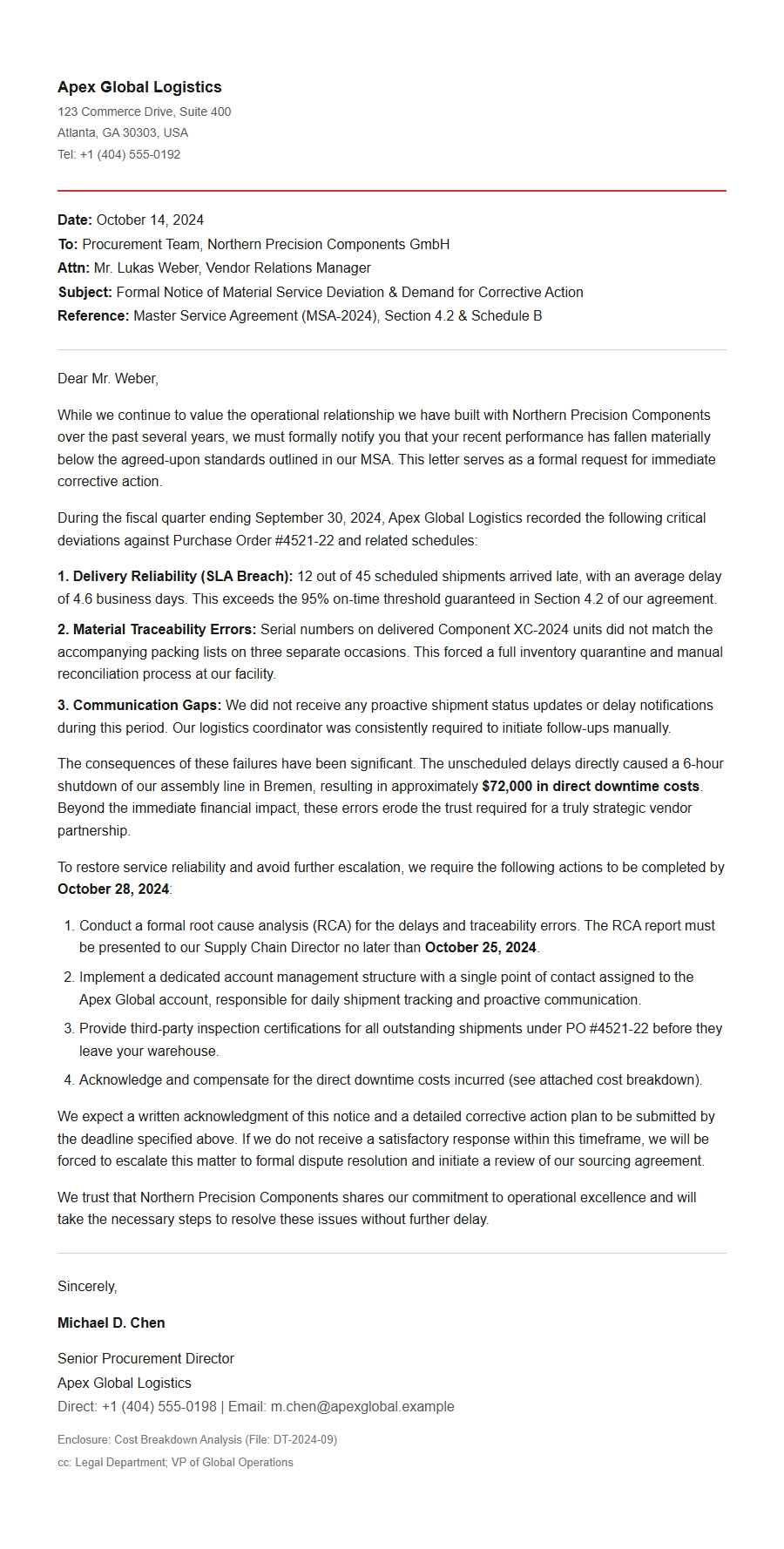
If there’s a history of miscommunication, like blame shifting over damage, look at the structure in a letter for ride share accident liability to see how to stick to facts without escalating. For more complex claims involving third parties, a statement for third party integration risk can show you how to frame shared responsibility. And if the issue is with a supplier who keeps using your design, a document for vendor supply chain issue offers a model for setting firm boundaries in a business relationship.
Every situation is unique, but the basics stay the same: state your ownership, show your evidence, ask for what you want. Do that clearly, and you’ve already won half the battle.
Helpful Examples
Apology Email for Intellectual Property Claim
Apology for Unauthorized Use of Copyrighted Image
Dear [Name],
I am writing to express my sincere apologies for the unauthorized use of your copyrighted image on our website. Upon receiving your intellectual property rights claim, we immediately removed the image from our site. We fully acknowledge that this was a violation of your creative work and appreciate you bringing it to our attention.
Steps we have taken to address this issue:
Removed the image from all pages and servers.
Conducted an audit of all other visual content to ensure no further infringements.
Updated our content sourcing policy to require proper licensing for all third-party assets.
We deeply regret this oversight and assure you that it will not happen again. Please let us know if there are any additional actions you require. We value the rights of creators and are committed to respecting intellectual property in the future.
Sincerely, [Your Name]
Apology for Trademark Infringement in Product Name
Dear [Recipient],
We apologize unreservedly for using a product name that infringes upon your registered trademark. Your intellectual property rights claim was valid, and we have ceased all sales and marketing of the product under that name effective immediately.
We are taking the following corrective measures:
Renaming the product and updating all packaging, advertisements, and online listings.
Issuing a recall notice to our distributors and retailers.
Implementing a trademark clearance process before launching any new product names.
We understand the value of your brand and the trust it represents. This incident was a result of insufficient oversight. We will ensure that our future product naming respects all third-party trademarks.
Please accept our sincere apologies. If you require any further information or have specific demands, we are prepared to comply fully.
Regards, [Your Name]
Apology for Patent Violation in Software Feature
Dear [Name],
We write to apologize for the inadvertent inclusion of a feature in our software that infringes upon your patent. Your intellectual property rights claim was carefully reviewed, and we acknowledge the validity of your assertion. We have disabled the disputed feature and are working on a permanent removal in the next update.
Details of our response plan:
Action
Timeline
Disable feature via patch
Completed
Remove all source code related to the feature
Within 5 business days
Notify affected users and provide alternative solutions
Within 2 weeks
Review patent landscape for future features
Ongoing
We regret any harm this may have caused to your business. We value innovation and respect your intellectual property rights. Thank you for bringing this to our attention. We are committed to resolving this matter promptly and amicably.
Yours sincerely, [Your Name]
Apology for Using Trade Secret Information
Dear [Name],
This letter serves as our formal apology for the unauthorized use of trade secret information that belongs to your company. Your intellectual property rights claim has prompted an immediate internal investigation, and we accept full responsibility for the misuse of confidential data.
We have taken the following steps to rectify the situation:
Deleted all copies of the respective documents and files from our systems.
Retrained all employees involved on the importance of safeguarding third-party proprietary information.
Installed stricter access controls for any shared confidential materials.
We recognize that this breach undermines the trust between our organizations. We are fully cooperating with your legal team and are prepared to discuss compensation or other remedies as you see fit. Please accept our deepest regrets and assurance that we will prevent any recurrence.
Apologetically, [Your Name]
Apology for Unlicensed Distribution of Digital Content
Dear [Name],
We extend our sincere apologies for the unlicensed distribution of your digital content, which constituted a clear violation of your intellectual property rights. Your claim was justified, and we have immediately removed all unauthorized copies from our platform.
We have implemented the following actions:
Terminated the accounts of users who uploaded your content without authorization.
Added a content verification system that flags potential copyright issues before publication.
Established a direct channel for rights holders to submit takedown requests.
We fully respect your exclusive rights and are committed to protecting creators' works. This incident was a failure of our previous moderation policies. We hope to rebuild your trust through our improved processes.
Please accept our apology. If you have any further requirements, we are at your disposal.
Sincerely, [Your Name]
Apology for Design Patent Infringement in Product Packaging
Dear [Name],
We apologize for the unintentional infringement of your design patent in our product packaging. Your intellectual property rights claim was reviewed, and we acknowledge that our packaging bears a confusingly similar ornamental design to your patented one. We have halted production of the current packaging and begun a redesign.
Corrective steps are listed below:
Action
Status
Halting production of infringing packaging
Completed
Commencing redesign with distinct visual elements
In progress
Destroying existing inventory of infringing packaging
Within 10 days
Notifying retailers to remove old packaging from shelves
Completed
We deeply regret the confusion this may have caused in the marketplace. We hold your design rights in high regard and will ensure that our new packaging fully respects your patent. Thank you for your patience and understanding.
With apologies, [Your Name]
Apology for Copying Website Content and Layout
Dear [Name],
We are writing to apologize for copying significant portions of your website's content and layout, which infringes upon your intellectual property rights. Your claim alerted us to the issue, and we have taken immediate action to remove all copied materials from our site.
We have done the following:
Deleted all duplicated text, images, and code.
Rewritten all content from scratch with original wording.
Redesigned our site layout to ensure no visual confusion with your brand.
We understand that your website represents years of creative and financial investment. Our actions were a serious mistake, and we accept full liability. We are committed to never using your materials without permission again. Please let us know if you require any further remedial actions.
We hope you can accept our sincere apology.
Respectfully, [Your Name]
Apology for Misappropriating Trade Dress
Dear [Name],
We offer our deepest apologies for misappropriating your trade dress, which has caused confusion among consumers and infringed upon your intellectual property rights. Your claim highlighted that our product packaging's overall look and feel imitates your distinctive branding. We have ceased production of the current packaging immediately.
Our corrective actions include:
Commissioning a complete redesign by an independent agency to ensure distinctiveness.
Retrieving all existing inventory from our supply chain for disposal.
Issuing a public statement clarifying that our products are not affiliated with yours.
We recognize that trade dress is a valuable asset protected by law. Our oversight was unacceptable. We are prepared to discuss reasonable compensation for any damages caused. Thank you for your vigilance in protecting your intellectual property.
Apologetically yours, [Your Name]
Apology for Using Registered Trademark in Domain Name
Dear [Name],
We are truly sorry for registering a domain name that incorporates your registered trademark without your consent. Your intellectual property rights claim was valid, and we have immediately suspended the domain and are in the process of transferring it to you at no cost.
To resolve this matter fully, we will:
Transfer the domain registration to your ownership within 7 business days.
Provide proof of transfer and confirmation from the registrar.
Refrain from registering any future domains that include your trademark.
We did not intend to cause harm or profit from your brand recognition. We understand that such actions can dilute your trademark and mislead customers. We sincerely apologize for this mistake and hope this transfer resolves the issue. Please contact us if you need any assistance with the transfer process.
Regretfully, [Your Name]
Apology for Including Protected Code in Open Source Project
Dear [Name],
We write to apologize for including your proprietary code in our open source repository, which infringes upon your intellectual property rights. Your claim was correct, and we have removed the infringing files and reverted the repository to a state before the code was added.
Steps taken to ensure compliance:
Action
Result
Removed infringing code from all branches
Completed
Contacted all contributors to delete local copies
Completed
Added automated checks for license compliance in our contribution workflow
Implemented
We deeply regret the oversight. Our project is built on the principle of respecting others' intellectual property. This incident was a failure of our code review process. We appreciate your patience and will ensure that only properly licensed code is used moving forward.
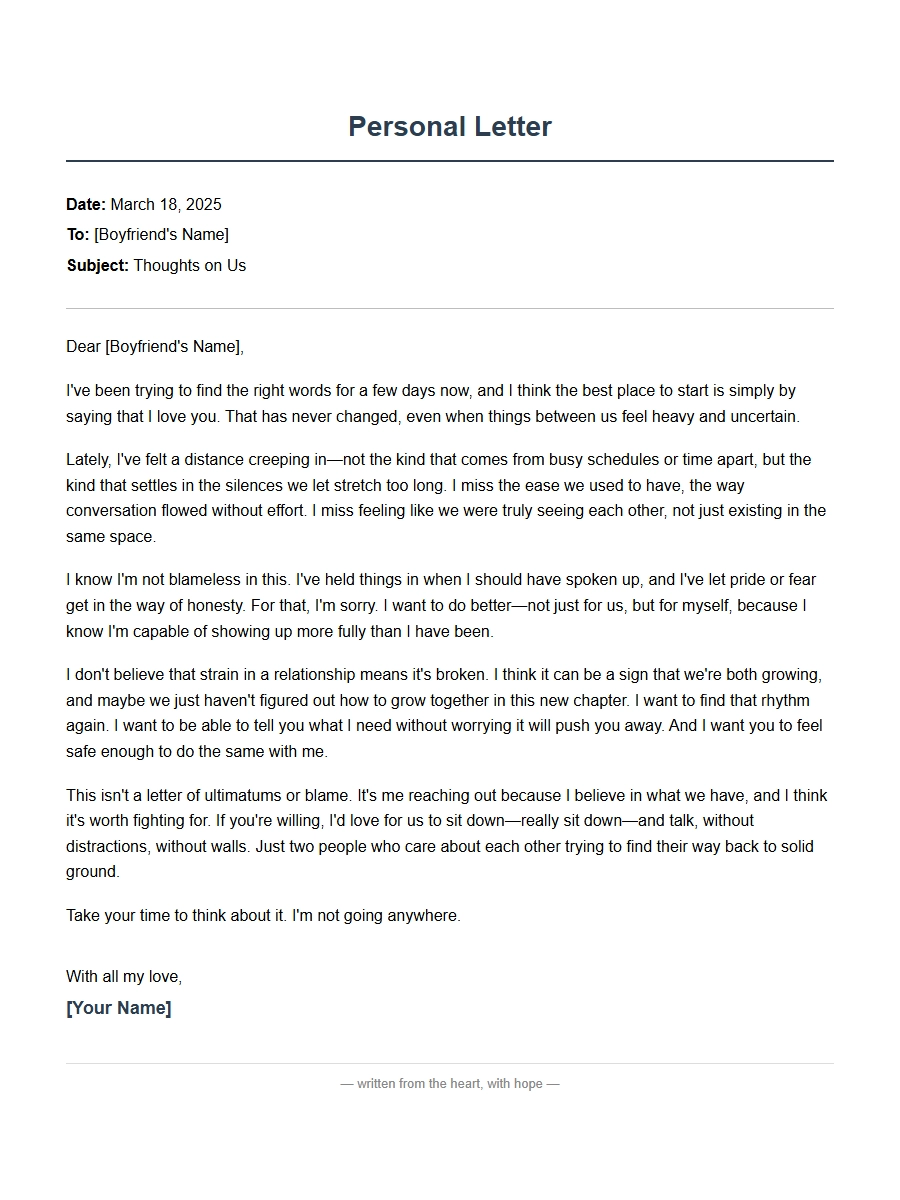 Personal Apology Letter for Boyfriend Relationship Strain
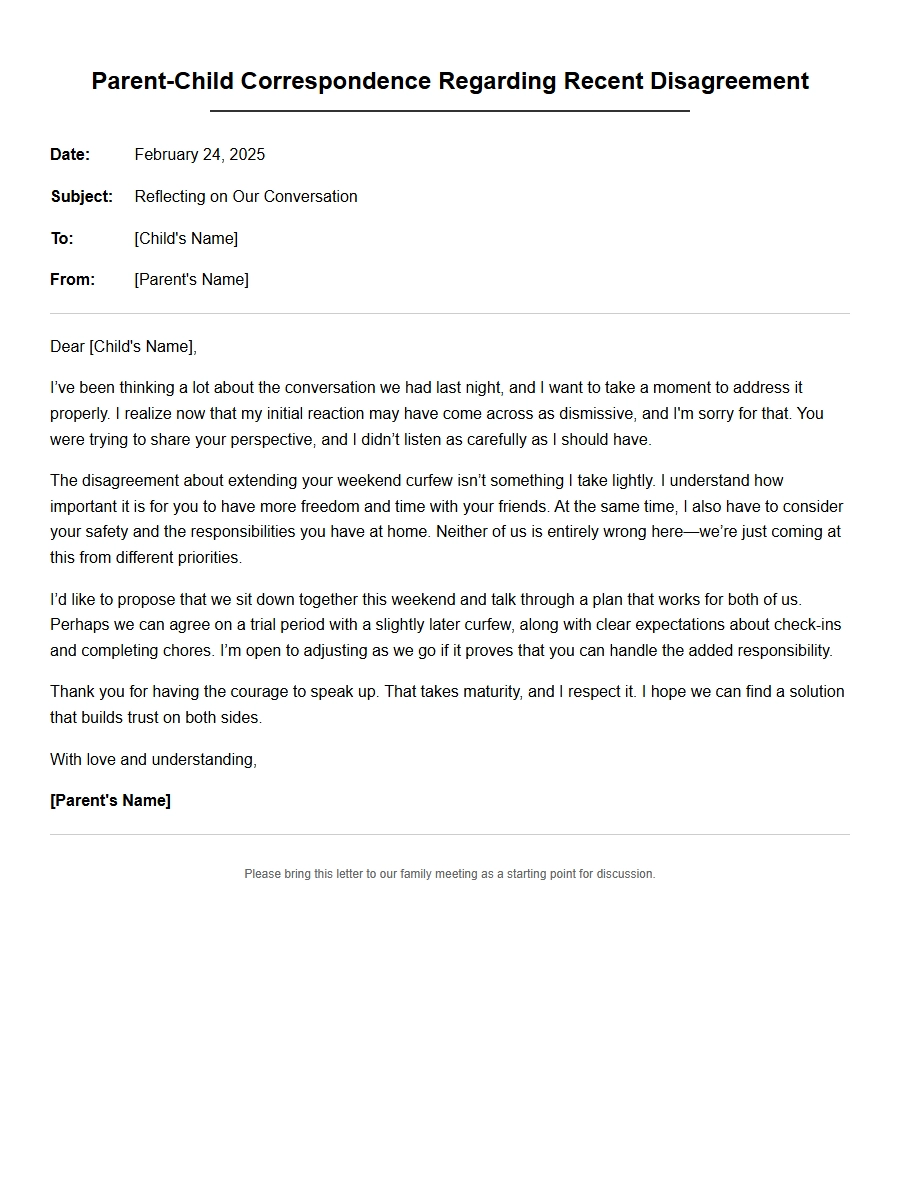 Apology Correspondence for Parent-Child Disagreements
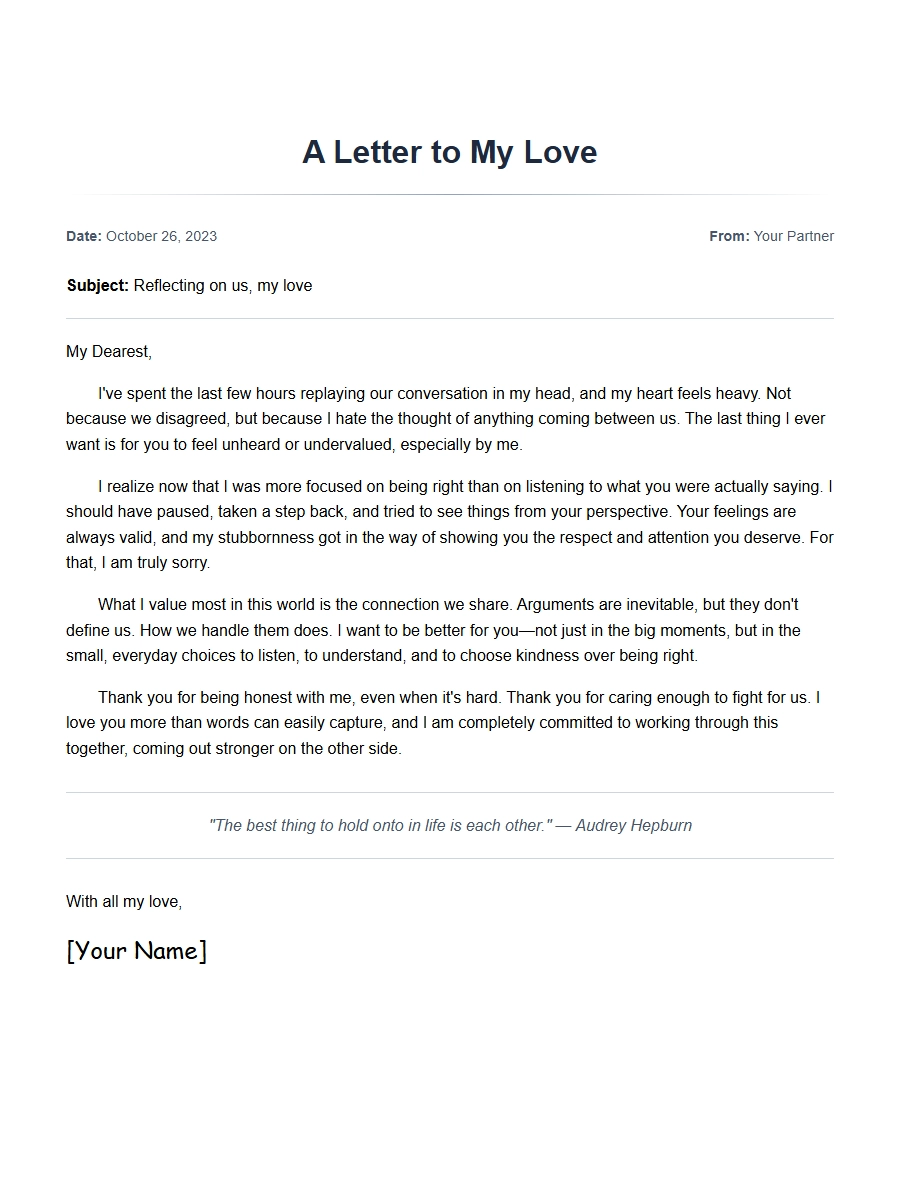 Apology Message for Girlfriend After Argument
 note for friend stealing item - Apology Letters
 Apology to Boss for Micromanagement Complaint
 Apology Document for Vendor Supply Chain Issue