Cover Letter for Dental Hygienist in Private Practice
You need to write a cover letter for a dental hygienist position at a private practice—and you’re probably staring at a blank screen, wondering where to start. Maybe it’s been years since you last applied, or you’re fresh out of hygiene school and unsure what employers actually want to see. That blank page anxiety is real, but it doesn’t have to stop you. A well-chosen sample can turn that panic into a confident draft in minutes.
Why using a sample isn’t cheating
Grabbing a cover letter example doesn’t mean you’re taking shortcuts. It means you’re smart about structure and tone. Samples give you a proven framework: the right salutation and closing, a logical flow, and phrases that sound professional without being stiff. You still make it your own—swap in your specific experience, adjust the tone to match the practice’s vibe, and keep your authentic voice. Think of a sample as a map, not a script. It shows you the route, but you drive.
What makes a dental hygienist cover letter different?
A private practice owner isn’t reading your letter to check off HR boxes. They want to know: Can you build rapport with patients? Are you reliable with scheduling? Do you understand the business side of running a small practice? Your letter needs to show you get that. Unlike a public relations specialist cover letter that emphasizes media skills, your letter should highlight clinical competence, patient education, and ability to work closely with one dentist. Use specific examples—like how you handled a nervous patient or improved a recall system.
Choosing the right sample for your situation
Not all cover letter templates fit a private practice setting. A formal corporate letter feels wrong here. Look for samples that use a warm but professional tone, avoid overly bureaucratic language, and focus on patient care. If the sample starts with “I am writing to express my interest in the position of…” it’s too stiff. A better opening might be: “When I learned that Oak Dental Care was expanding its hygiene team, I knew I had to apply.” That’s direct, personal, and grabs attention. Also consider whether you’re emailing the letter or printing it on letterhead design. For email, skip the addresses at the top and use a clear subject line. For a printed version, use a simple letterhead with your name, license number, and contact info.
How to adapt a sample without losing your voice
Start by reading the sample all the way through. Underline the parts that sound like you—maybe a line about patient education or team collaboration. Then rewrite the rest in your own words. For example, if the sample says “I have excellent communication skills,” change it to “I take time to explain oral hygiene routines so patients feel empowered, not lectured.” That’s more specific and genuine. Don’t copy the sample’s opening exactly; instead, tailer it to the practice. Mention something you noticed about their website or a recent community event they hosted. It shows you did your homework.
Common mistakes to avoid
One big misstep is using outdated phrases like “To Whom It May Concern.” In a private practice, you can usually find the dentist’s name on the website or by calling the front desk. Use that name. Another mistake is writing too much about what you want—flexible hours, benefits, etc.—instead of what you offer. Keep the focus on how you can help the practice run smoothly. Also, watch the length. A cover letter for a dental hygienist role shouldn’t be more than three short paragraphs. Finally, don’t forget proofreading letter basics: read it aloud to catch awkward phrasing, and double-check the practice’s name and address. A typo on a private practice owner’s name is a fast way to get your letter set aside.
Putting it all together: a quick structure
A strong dental hygienist cover letter for a private practice follows this flow:
Opening: Name the practice, mention something specific that drew you to it, and state your interest briefly.
Middle paragraph: Give one or two concrete examples of your clinical skills, patient interactions, or contributions to practice efficiency. Tie them to what the practice needs.
Closing: Thank them, express enthusiasm for an interview, and state your next step (e.g., “I will follow up next week via phone”).
Keep the tone in writing warm but professional—imagine you’re talking to a colleague you respect. Avoid jargon like “prophylaxis” unless you explain it simply. Most practice owners appreciate clarity over showing off dental terminology.
Where to find good samples and templates
You don’t need a paid service. Look for cover letter examples from reputable career sites or dental associations. Many offer customizable letter templates you can download. If you’re also applying to other roles, you might adapt a structure from a personal assistant calendar scheduling cover letter for its clarity, but then replace all scheduling references with patient recall systems. The key is to borrow the format, not the content. Similarly, if you’ve worked with a benefits administrator on employee relations, you could mention your ability to communicate politely even with anxious patients—just keep the focus dental-specific.
For fresh graduates, a fresh graduate nursing application letter shares similarities: both need to highlight clinical training, soft skills, and eagerness to learn. But remember, nursing letters often emphasize acute care, while yours should emphasize continuity of care and patient education. Adapt the structure, then rewrite the substance.
Digital vs. paper: format matters
Most private practices accept emailed letters. Use a clean digital letter format—plain text or PDF, not a Word doc. If you’re sending via email, put the letter in the body, not as an attachment. The subject line should include your name and the position. For a printed letter, use quality paper and simple letterhead design—no clip art or fancy borders. Keep it readable. Business letter format still works, but you can drop the line for “Re:” if you’ve already referenced the position in the subject or first sentence.
One last tip: make it feel human
Ever received a letter that felt too stiff or too casual? The sweet spot is being helpful and confident, not humble or pushy. Use contractions like “I’m” and “you’ll.” Ask yourself: would I send this to a dentist I actually respect? If yes, you’re good. Remember, the best letters feel both professional and personal. Practice makes the process faster—after you write one solid version, you can reuse the skeleton for other practices with minor tweaks. That first draft takes the longest. The next one takes half the time.
So grab a sample, open a fresh document, and start with one sentence. Even a rough draft is better than a blank page. You’ve got the skills; now just get them on paper.
Samples to Guide You
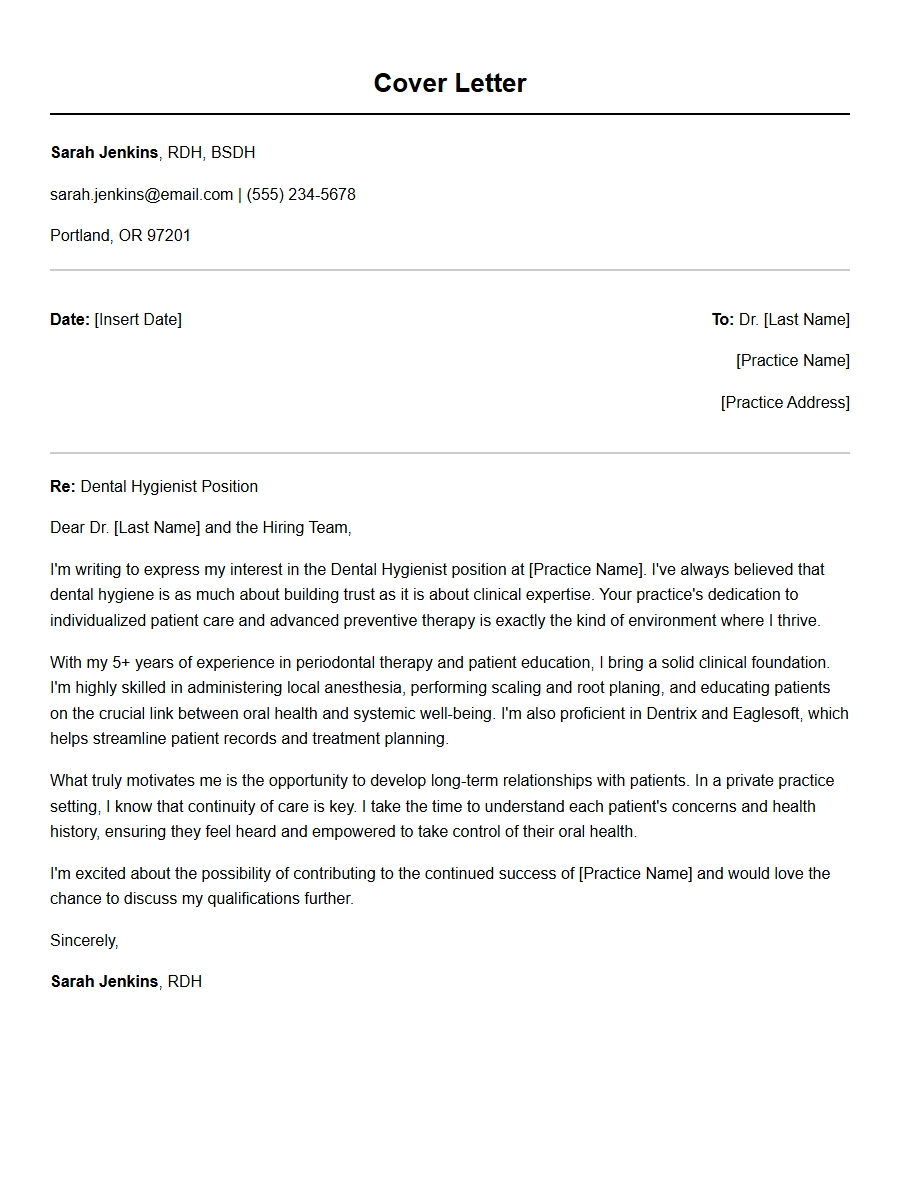
Cover Letter for Dental Hygienist in Private Practice
Experienced Hygienist Cover Letter
Dear Dr. Smith,
I am writing to apply for the dental hygienist position at your private practice. With over seven years of experience providing comprehensive periodontal therapy and prophylaxis, I bring a strong clinical skill set and a patient-first approach. In my previous role at Green Valley Dentistry, I consistently maintained a 98% patient satisfaction rate and successfully managed a daily schedule of 10–12 patients.
My expertise includes:
Proficient in scaling and root planing
Digital radiography and intraoral imaging
Sealant application and fluoride treatments
Patient education on oral hygiene and nutrition
I am committed to evidence-based care and look forward to contributing to your practice’s reputation for excellence. I would welcome the opportunity to discuss how my background aligns with your team’s goals.
Sincerely, Jane Doe, RDH
New Graduate Cover Letter
Dear Dr. Johnson,
As a recent cum laude graduate from State College of Dental Hygiene with an Associate of Applied Science, I am eager to begin my career in your private practice. My clinical rotations included two semesters at a high-volume community clinic, where I treated over 200 patients and refined my skills in prophylaxis, radiography, and local anesthesia.
Key competencies I bring:
Current CPR and infection control certifications
Experience with digital charting (Dentrix)
Strong interpersonal skills with anxious patients
I am also fluent in Spanish, which will help serve your diverse patient base. I am dedicated to lifelong learning and plan to pursue continuing education in periodontal therapy. Thank you for considering my application.
Respectfully, Maria Lopez
Patient Education Focus Cover Letter
Dear Dr. Brown,
Your private practice’s emphasis on preventive care strongly resonates with my philosophy. I believe the cornerstone of oral health is empowering patients with knowledge. During my five years at Midtown Dental, I developed a structured patient education program that reduced treatment plan rejection by 30%.
My approach includes:
Explaining oral-systemic connections
Teaching proper brushing and flossing techniques
Using models and radiographs for visual learning
One satisfied patient wrote: “She made me understand why gum health matters for my heart.” I am confident I can help your patients achieve lasting health through education and gentle care. I look forward to meeting you.
Best regards, Sarah Kim, RDH
Periodontal Therapy Specialist Cover Letter
Dear Dr. Patel,
I am a licensed dental hygienist with specialized training in non-surgical periodontal therapy. Your practice’s reputation for managing complex cases aligns with my professional expertise. Over the past four years I have completed over 300 periodontal maintenance appointments and full-mouth debridements.
Procedural proficiency includes:
Scaling and root planing with ultrasonic and hand instruments
Arestin and PerioChip placement
Risk assessment and re-care scheduling
A summary of my clinical outcomes:
Metric
Value
Average pocket depth reduction
2.1 mm after SRP
90-day re-care compliance
87%
I am also trained in laser-assisted new attachment procedure (LANAP) support. I would enjoy contributing to your team’s success.
Sincerely, David Nguyen, RDH
Part-Time Hygienist Cover Letter
Dear Dr. Garcia,
I understand your private practice is seeking coverage for Tuesdays and Thursdays. As a hygienist with 10 years of experience now preferring part-time hours, I can offer reliability and seamless integration. I have worked in similar multi-provider settings and am adept at adapting to different protocols quickly.
Availability:
Tuesdays: 8:00 AM – 5:00 PM
Thursdays: 8:00 AM – 5:00 PM
One Saturday per month possible
I hold active malpractice insurance and maintain OSHA/CDC compliance. I can start within two weeks. Please let me know if we can schedule an interview to discuss your specific needs.
Thank you, Lisa Thompson
Technology-Advanced Hygienist Cover Letter
Dear Dr. Lee,
I am drawn to your practice’s investment in cutting-edge technology. My career has centered on digital workflows, and I am skilled in intraoral scanning (iTero, Cerec), digital radiography (Schick/PSP), and practice management software (Eaglesoft and Open Dental).
My technical experience includes:
Training team members on digital perio charting
Troubleshooting equipment issues
Using DIAGNOdent for caries detection
I also have experience with teledentistry platforms for patient consultations. Your practice will benefit from my ability to streamline clinical documentation and improve imaging efficiency. I am excited to apply my skills in your modern setting.
Warmly, Ryan O’Brien
Pediatric Private Practice Cover Letter
Dear Dr. Miller,
Your pediatric-focused practice inspires me because I love creating positive dental experiences for children. With three years of experience at a kid-centric clinic, I have developed a playful yet educational chairside manner. I use the tell-show-do technique and age-appropriate language to reduce anxiety.
Services I routinely provide:
Prophylaxis and fluoride varnish application
Sealants and silver diamine fluoride
Exposure of bitewings and panoramic films
Behavior guidance for children with special needs
I am CPR and nitrous oxide certified. Additionally, I hold a certificate in pediatric sedation monitoring. I look forward to contributing to your practice’s gentle and fun atmosphere.
Sincerely, Amanda Wright, RDH
Bilingual Hygienist Cover Letter
Dear Dr. Rodriguez,
I am a fully bilingual (English/Spanish) dental hygienist seeking to join your private practice. In my previous role, 60% of our patient population was Spanish-speaking, and I often served as a translator for the dentist during treatment discussions. This ability bridges communication gaps and improves compliance.
Key qualifications:
Radiography and anesthesia certification
Experience with bilingual patient education materials
Cultural competence with Hispanic and Latinx patients
I also offer a sample of my patient education dialog:
English
Spanish
“Open wide, please.”
“Abra grande, por favor.”
“You need a deep cleaning.”
“Necesita una limpieza profunda.”
I am confident I can help your team enhance patient trust and care quality.
Atentamente, Elena Martinez, RDH
High-End Cosmetic Practice Cover Letter
Dear Dr. Clark,
Your reputation for cosmetic and restorative excellence is widely admired. As a hygienist with three years in a luxury practice, I understand the importance of aesthetics alongside health. I provide meticulous supra- and subgingival debridement, with special attention to implant maintenance and veneer care.
Services I excel in:
Whitening procedures (in-office and take-home)
Post-orthodontic prophylaxis
Cosmetic case presentation support
Patient satisfaction is a priority; my last practice had a 4.9/5 rating on Google based on my hygiene reviews. I am also experienced with VIP concierge scheduling to ensure a premium experience. I would be honored to join your team.
Warm regards, Victoria Hughes
Team Collaboration Focus Cover Letter
Dear Dr. Chen,
Your practice model emphasizes a collaborative team approach, which mirrors my own work style. Over six years, I have partnered closely with dentists, assistants, and front office staff to optimize patient flow and treatment acceptance.
My contributions have included:
Leading weekly hygiene huddles
Coordinating with front desk for same-day perio re-care
Assisting with inventory management and supply ordering
Below is my track record from the past year:
Metric
Performance
Patient return rate for maintenance
89%
Perio case acceptance increase
22%
I thrive in a supportive environment and am eager to enhance your practice’s efficiency. I hope to speak with you soon.
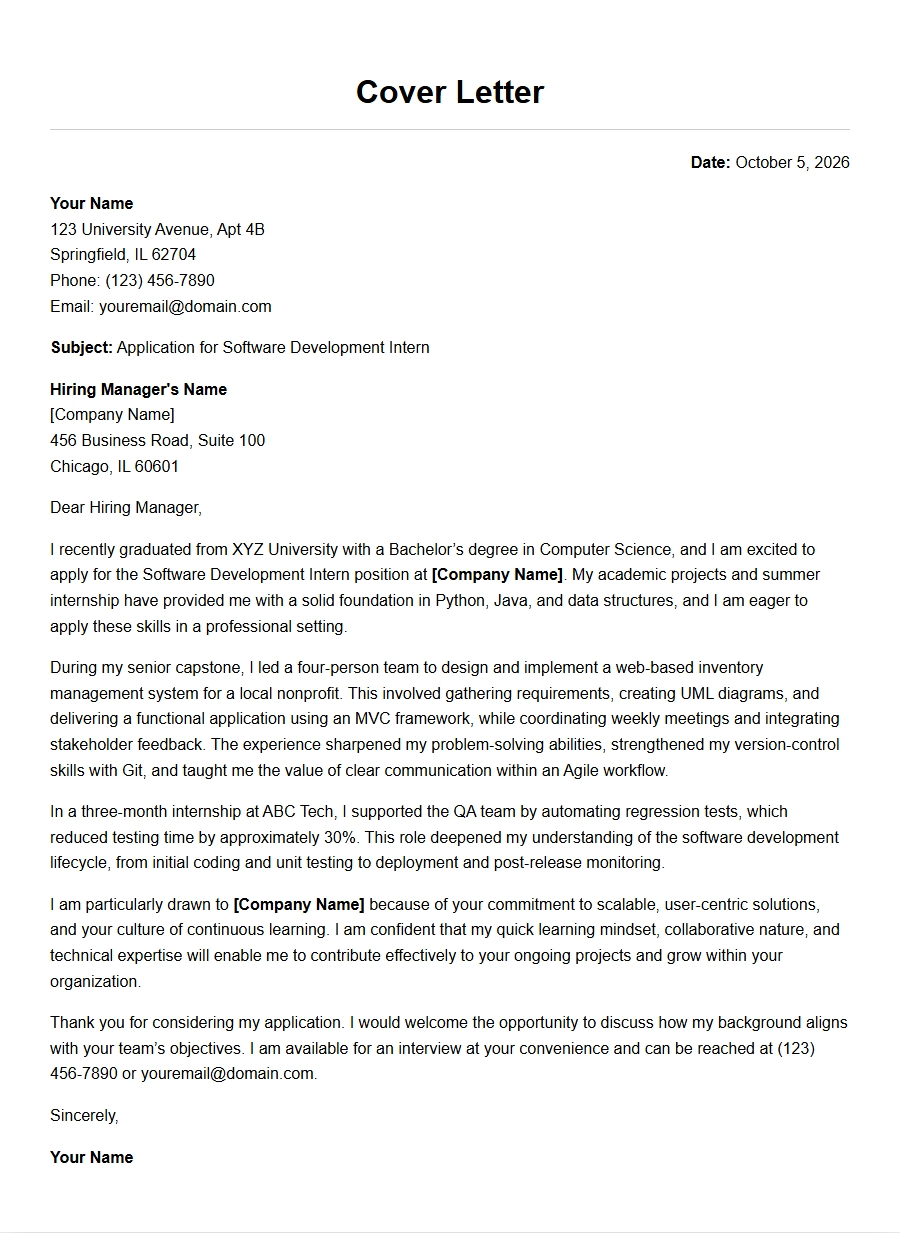 Recent College Student Cover Letter for Internship
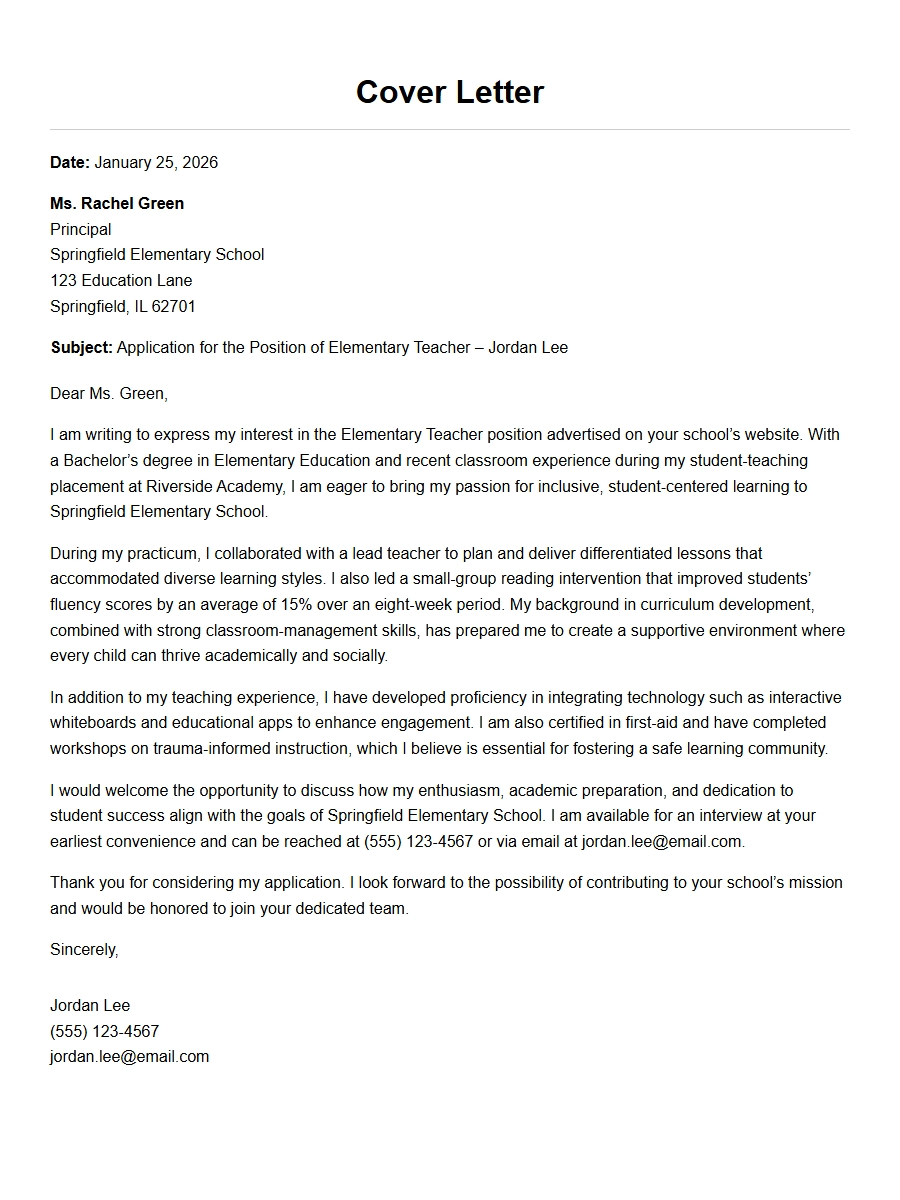 Entry Level Teacher Cover Letter Examples
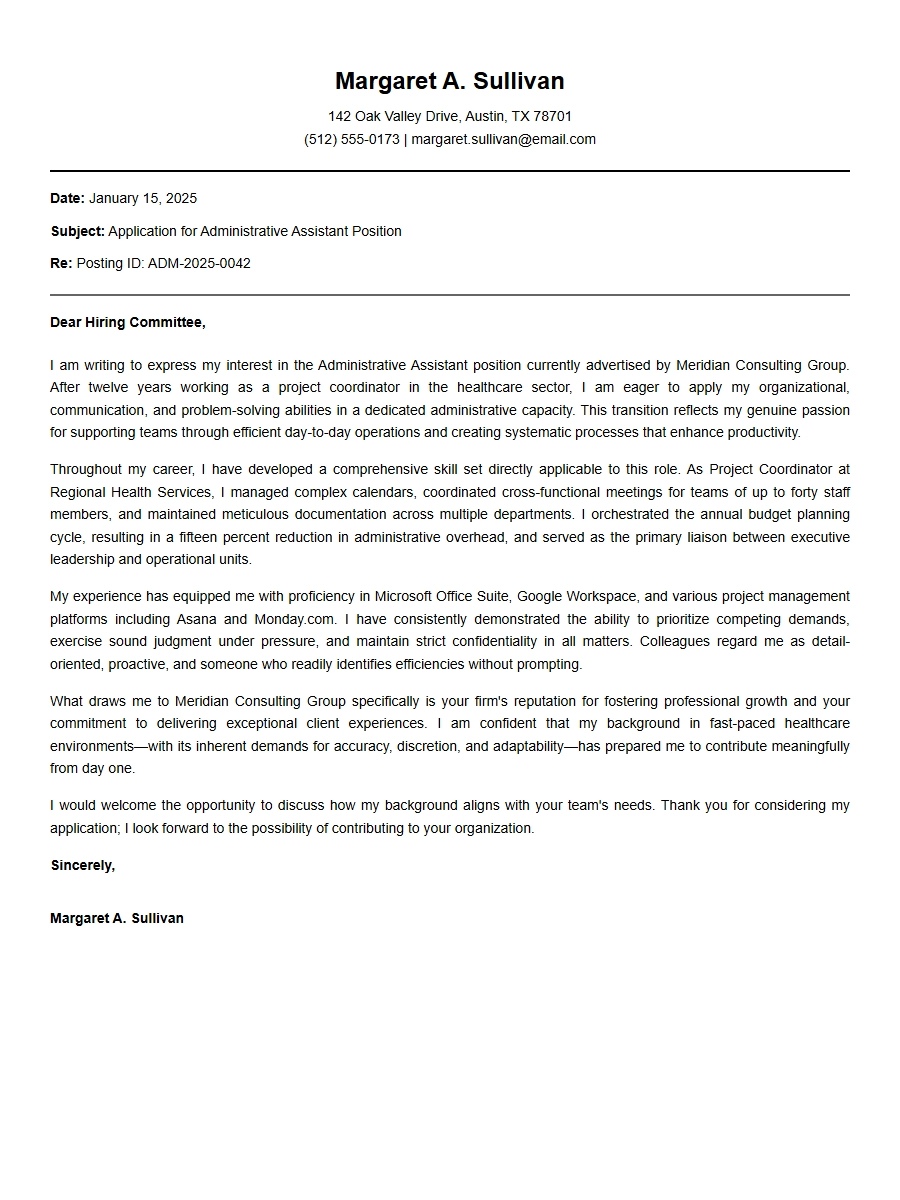 Career Changer Administrative Assistant Cover Letter
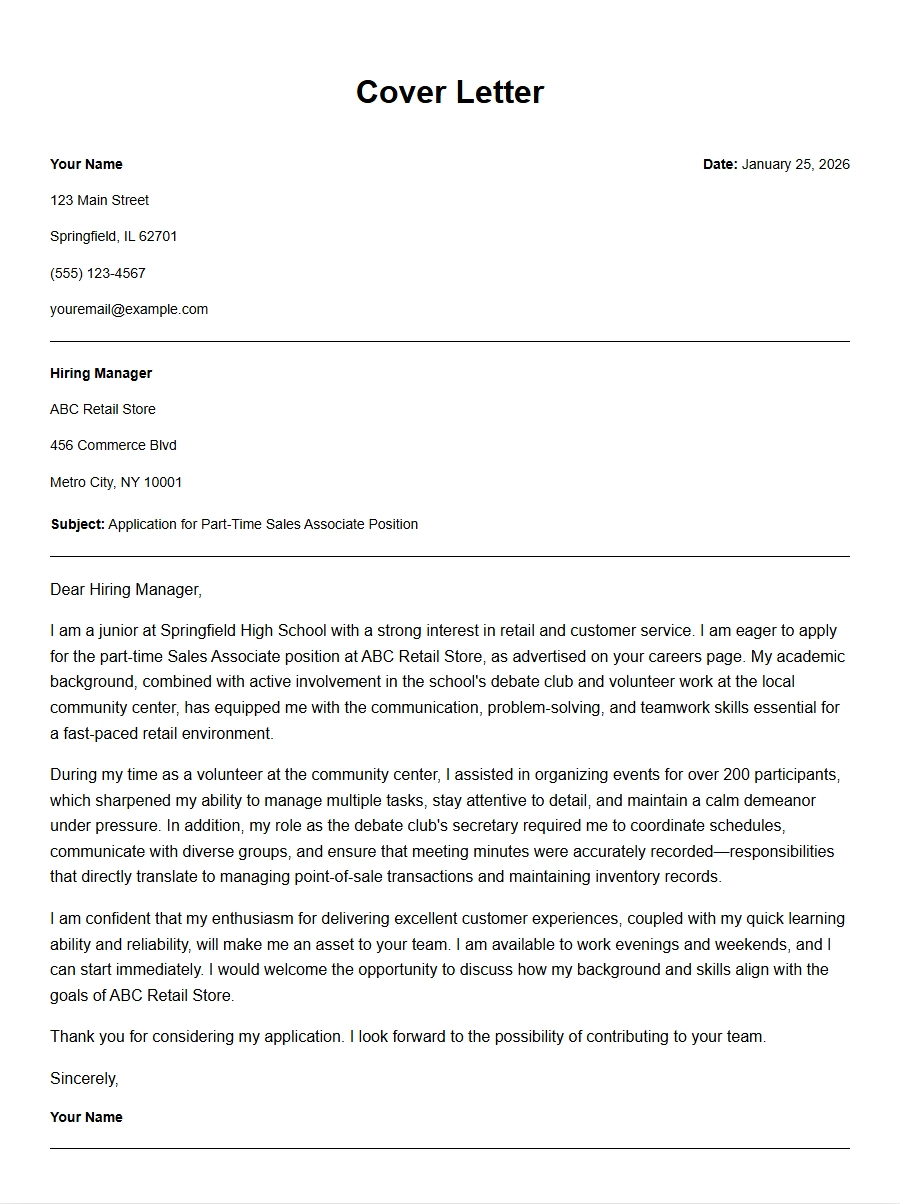 High School Student Part Time Job Cover Letter
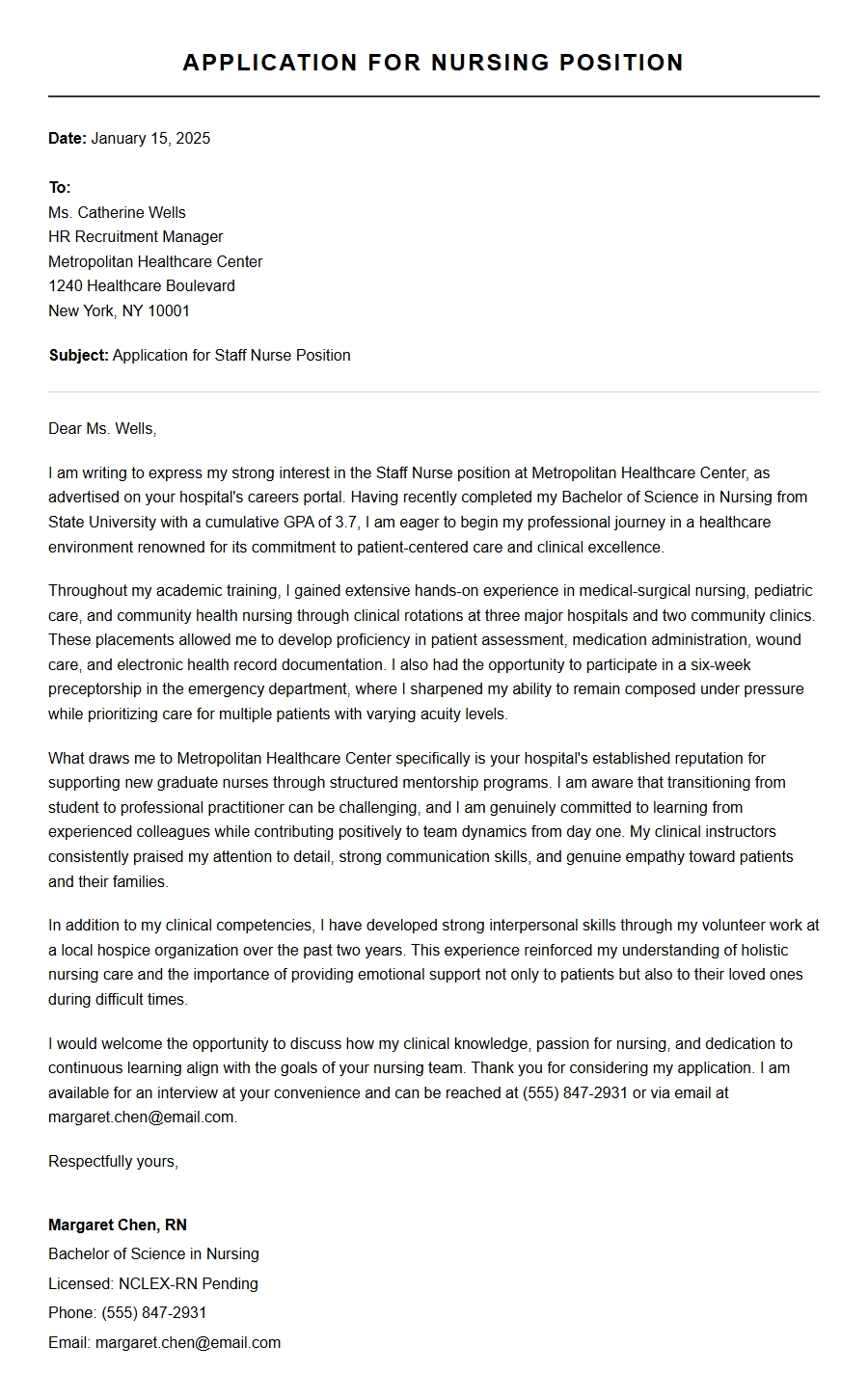 Fresh Graduate Nursing Application Letter
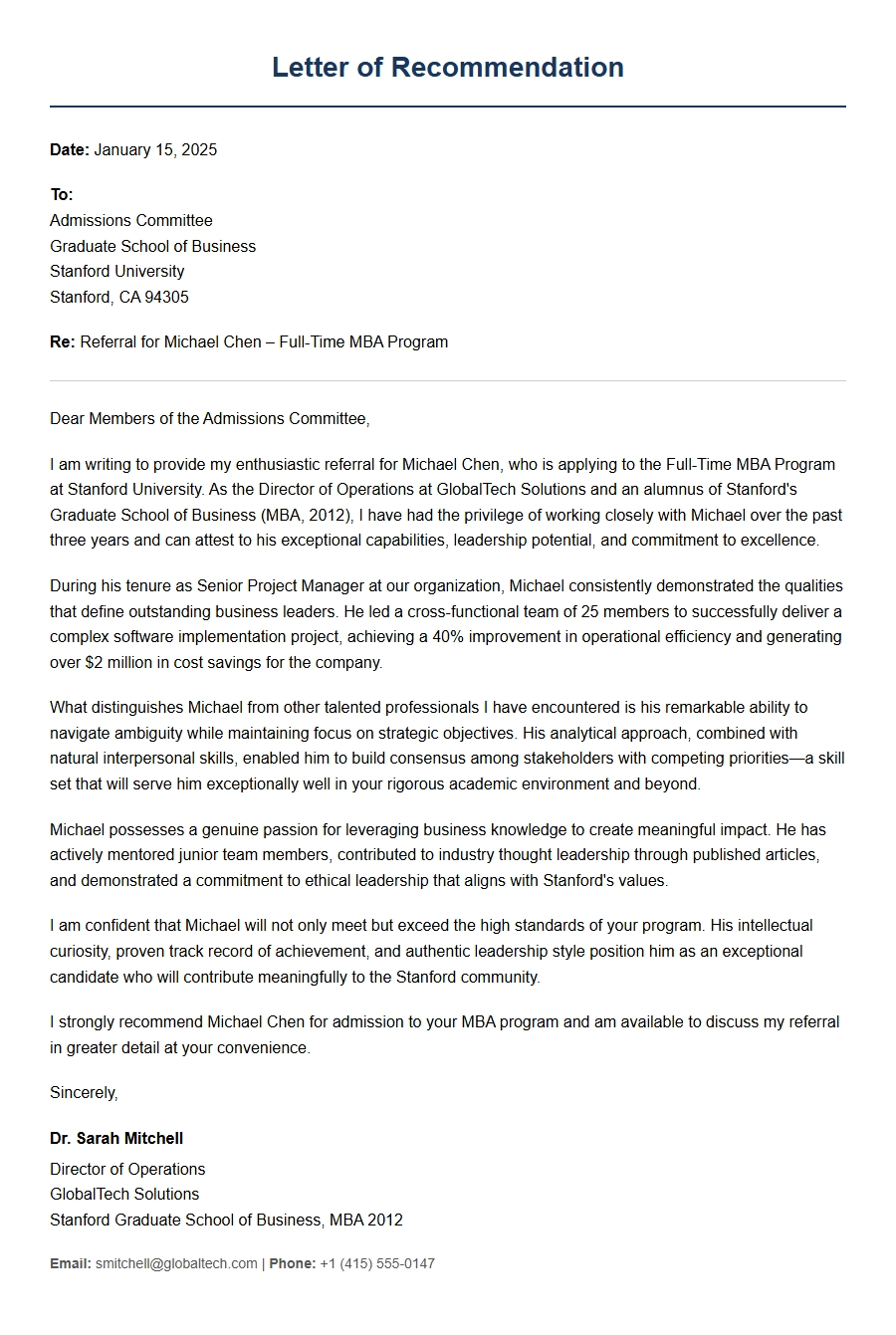 University Alumni Referral Email Cover Letter