Cover Letter for Benefits Administrator with Employee Relations
You’re staring at a blank document, cursor blinking, and the pressure to write a cover letter that lands you a benefits administrator role with an employee relations focus feels impossible. Maybe you’ve been out of practice, or you’re switching industries and don’t know the right tone. Either way, the urge to just “wing it” is real—but winging it rarely works when your document is competing against dozens of others. That’s where a solid letter sample comes in.
Why a sample isn’t cheating—it’s strategy
Using a cover letter sample isn’t about copying someone else’s story. It’s about having a reliable letter template that gives you structure, a professional tone, and key phrases that hiring managers expect. Think of it as a scaffold: you fill in the details, but the framework keeps you from falling into awkward wording or missing an entire section. The best samples are customizable—they leave room for your personality while ensuring you follow proper business letter format.
Category: Professional Cover Letters
Choosing the right sample for your situation
Not all cover letter examples are created equal. For a benefits administrator role that touches employee relations, you need a sample that highlights both technical knowledge (benefits enrollment, compliance) and soft skills (conflict resolution, communication). Look for a sample that balances these two sides. If you’re applying to a large corporation, lean toward a more formal structure with a traditional salutation and closing. For a startup, you can relax the tone but still keep the letter structure tight.
A good rule: read the sample out loud. If it sounds like you only when you swap in your own details, you’ve got a winner. If it still sounds robotic, keep looking.
Adapting a sample without losing your voice
Here’s the trick: start with the sample’s skeleton. The opening paragraph should grab attention, but avoid stale openings like “I am writing to apply for…” Instead, lead with a specific achievement. For example: “When I redesigned our open enrollment process, employee satisfaction scores jumped 20%.” That’s concrete and personal.
Don’t copy the sample’s entire body paragraph by paragraph. Pick one or two strong sentences that capture the tone in writing you want, then rewrite the rest in your own words. Keep your authentic voice—if you’re naturally direct, don’t force flowery language. Hiring managers can smell a stiff letter from a mile away.
Tailoring the opening to stand out
The first three lines decide whether the reader keeps going. Mention the company name and a specific reason you’re interested. Maybe they recently introduced a new wellness program, or you admire their approach to employee relations. This shows you did your homework. Avoid generic praise like “I’ve always admired your company.” Be specific and brief.
Also, consider the digital letter format. If you’re emailing the letter, skip the full letterhead design—just put your name and contact info at the top. For a printed or PDF version, include a clean, professional letterhead. Letter writing etiquette has shifted: many recruiters prefer a concise email body rather than an attachment. Know your audience.
Common mistakes that sink a good draft
One big one: using outdated salutations like “To Whom It May Concern” when you can easily find the hiring manager’s name on LinkedIn. Another: ignoring the difference between email and printed letter formatting. For email, keep paragraphs short—no more than four lines each. For a printed letter, you have a bit more room, but still avoid wall-of-text blocks.
Don’t forget to proofread letter carefully. A single typo in a benefits role—where detail matters—can kill your chances. Read it backward to catch errors, or use a tool, but don’t rely solely on spellcheck. Also, check your letter of recommendation references if you mention them; make sure you have permission.
Using samples for other types of letters
While we’re focused on a cover letter, the same skills apply to other professional correspondence. You might also need a resignation letter sample later. The ability to adapt a template to different contexts—like a formal resignation or a thank-you note—will serve you throughout your career. If you’re looking for similar guidance, check out our articles on covering other specialized roles or a personal assistant cover letter for scheduling focus. Each industry has its own nuances, but the core principles of formal writing tips remain the same.
Next steps for your cover letter
Now you have a solid sample as a starting point. Use it to draft your letter, then set it aside for a few hours. Come back with fresh eyes and ask yourself: “Does this sound like me? Did I prove my value?” Practice makes the process faster. Soon, you’ll be able to write a polished letter without reaching for a sample at all. But until then, lean on the template—it’s a tool, not a crutch.
Ready-to-Use Examples
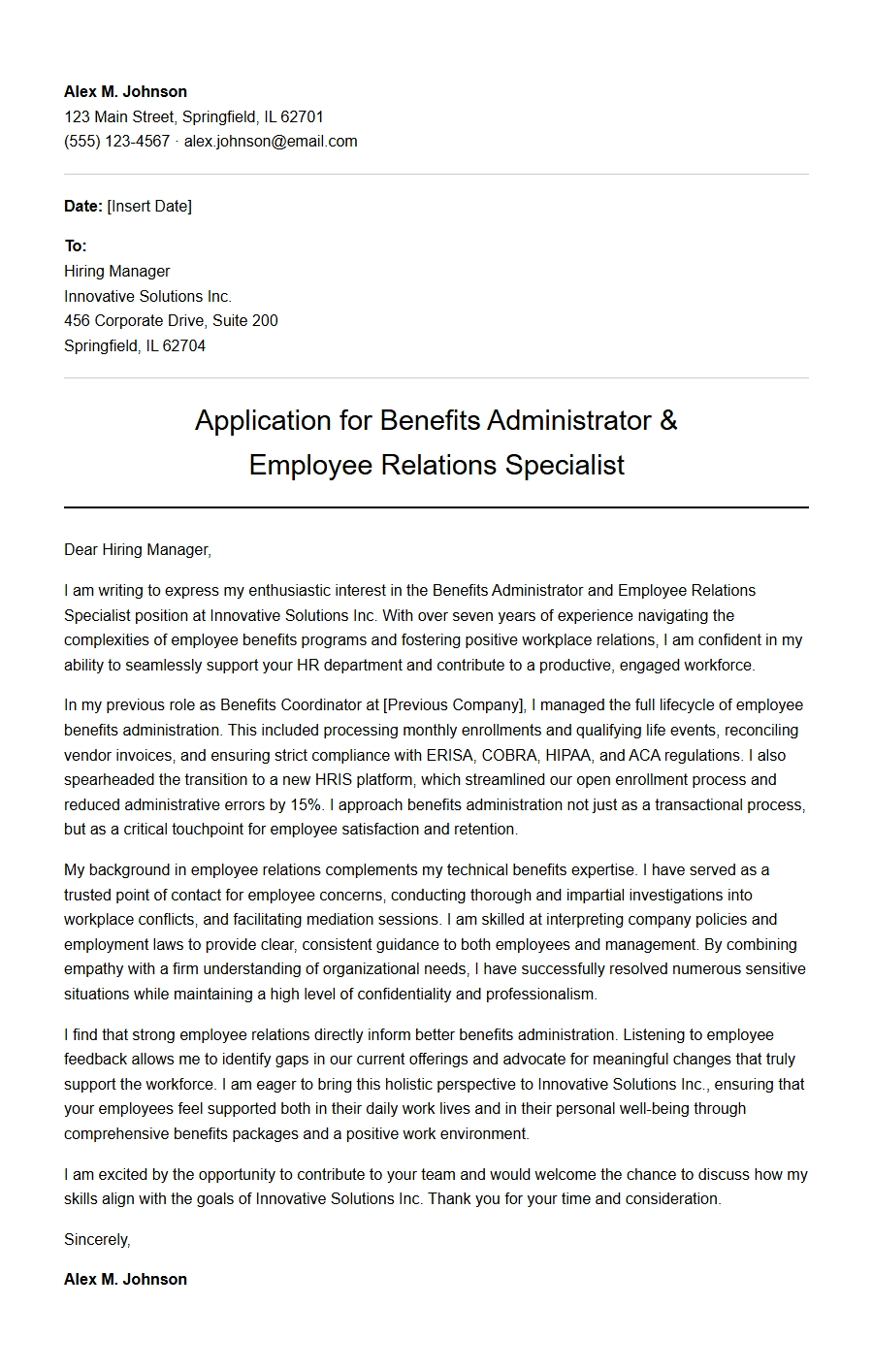
Cover Letter for Benefits Administrator with Employee Relations
Experienced Benefits Administrator with Employee Relations Focus
Dear Hiring Manager,
I am writing to express my strong interest in the Benefits Administrator position at [Company Name]. With over five years of experience managing employee benefit programs and a dedicated focus on employee relations, I am confident in my ability to support your team’s goals.
In my previous role at ABC Corp, I successfully:
Resolved over 200 complex benefit-related employee inquiries annually, maintaining a 95% satisfaction rate.
Led quarterly benefits orientation sessions that improved employee understanding and reduced disputes by 30%.
Collaborated with HR to mediate benefit conflicts, ensuring fair and consistent application of policies.
I pride myself on clear communication and empathy. By actively listening to employee concerns, I have helped foster a positive workplace culture. I am eager to bring my blend of technical benefits knowledge and interpersonal skills to [Company Name]. Thank you for your consideration.
Sincerely, Jane Doe
Conflict Resolution and Benefits Specialist
Dear [Hiring Manager],
I am excited to apply for the Benefits Administrator role with an emphasis on employee relations. My background in conflict resolution and benefits administration makes me a strong candidate.
At my current position with XYZ Industries, I manage benefits for 1,200 employees while serving as the primary point of contact for benefit-related grievances. Key achievements include:
Developing a standardized process for addressing benefit complaints, reducing resolution time by 40%.
Training managers on benefit policy interpretation, decreasing escalation of employee relations issues.
Facilitating quarterly open enrollment meetings that improved employee comprehension and reduced after-enrollment corrections.
I believe that a positive employee experience starts with transparent and supportive benefits administration. I would welcome the opportunity to discuss how my skills align with your needs. Thank you for your time.
Best regards, John Smith
Benefits Administrator Focused on Compliance and Communication
Dear [Hiring Team],
I am applying for the Benefits Administrator position where I can combine my expertise in regulatory compliance with strong employee relations skills.
As the benefits lead at DEF Ltd, I ensured that all plans adhered to ERISA, ACA, and state regulations while maintaining open communication with employees. Highlights of my work:
Area
Action Taken
Result
Compliance audits
Conducted quarterly reviews
100% audit readiness for 3 years
Employee education
Created plain-language summaries
Reduced inquiries by 25%
Dispute resolution
Facilitated mediation sessions
Maintained positive employee relations
I am adept at translating complex benefits information into clear, actionable steps for employees. I look forward to contributing to your organization’s reputation as an employer of choice.
Warmly, Emily Chen
From HR Generalist to Benefits Administrator
Dear [Hiring Manager],
I am writing to apply for the Benefits Administrator role. After three years as an HR Generalist with significant benefits responsibilities, I am ready to specialize in benefits administration while leveraging my employee relations background.
During my tenure at GHI Inc., I handled benefits for a diverse workforce of 800 employees. I often acted as the bridge between employees and insurance carriers to resolve disputes. My accomplishments include:
Streamlining the benefits enrollment process, saving employees an average of 20 minutes per enrollment.
Reducing benefits-related complaints by 35% through proactive communication campaigns.
Partnering with the employee relations team to address systemic benefit issues identified via exit interviews.
I am passionate about making benefits accessible and supportive of employee wellbeing. I am eager to bring this dedication to [Company Name]. Thank you for considering my application.
Sincerely, Michael Torres
Entry-Level Benefits Administrator with Internship Experience
Dear [Hiring Manager],
I am excited to apply for the Benefits Administrator position. As a recent graduate with a Bachelor’s in HR Management and a 6-month internship in benefits coordination, I have developed a solid foundation in employee relations and benefits administration.
During my internship at JKL Corp, I assisted the benefits team with:
Responding to employee inquiries about health, dental, and retirement plans, ensuring timely and empathetic responses.
Helping organize annual open enrollment fairs, which improved employee engagement.
Maintaining confidential benefits records and assisting with compliance reporting.
I also completed a project on employee benefits satisfaction, surveying staff and presenting recommendations that led to a new wellness incentive program. I am eager to apply my strong attention to detail and interpersonal skills to support your team and foster positive employee relations at [Company Name]. Thank you for your time and consideration.
Best regards, Sarah Lee
Senior Benefits Administrator with Leadership Experience
Dear [Hiring Committee],
I am submitting my application for the Senior Benefits Administrator position. With eight years of progressive experience in benefits management and a track record of improving employee relations, I am prepared to take on greater responsibilities.
In my current role at MNO Enterprises, I supervise a team of three benefits coordinators and directly handle escalated employee relations matters. Major achievements:
Designed and implemented a benefits dispute resolution protocol that reduced grievances by 50%.
Led cross-departmental task force to revamp benefits communication, increasing employee satisfaction scores by 15 points.
Mentored junior staff in both technical benefits administration and soft skills for handling sensitive employee interactions.
I am confident that my leadership and employee-focused approach will contribute to a harmonious and efficient benefits operation at [Company Name]. I look forward to discussing this opportunity further.
Respectfully, Laura Bennett
Data-Driven Benefits Administrator Focused on Employee Feedback
Dear [Hiring Manager],
I am writing to apply for the Benefits Administrator position. My approach combines analytical skills with a deep commitment to employee relations—using data to understand and improve the benefits experience.
At PQR Corporation, I managed benefits analytics for a workforce of 1,500. By tracking trends in employee inquiries and satisfaction surveys, I identified common pain points and proposed solutions. Examples of my work:
Insight
Action
Outcome
High volume of questions about dependent eligibility
Created a clear FAQ guide
Reduced related calls by 60%
Employees felt unengaged with wellness benefits
Launched a feedback-driven wellness series
Participation increased 40%
Pattern of confusion around FMLA interactions
Conducted targeted training sessions
Fewer policy violations
I am eager to use my ability to listen to employees and interpret data to foster positive relations and efficient benefits administration at [Company Name]. Thank you for your consideration.
Sincerely, David Kim
Wellness and Employee Relations Integration
Dear [Hiring Manager],
I am excited to apply for the Benefits Administrator role, where I can focus on the intersection of employee wellness and positive employee relations. I have a proven ability to design benefits communications that resonate with diverse employee populations.
In my previous role at STU Inc., I led the rollout of a holistic wellness program that included mental health resources, gym discounts, and financial wellness seminars. This program not only improved employee health outcomes but also strengthened the employer-employee relationship. Key results:
Employee satisfaction with benefits increased by 22% per annual survey.
Turnover fell by 12% among participants in the wellness program.
Number of benefits-related complaints dropped as employees felt heard and supported.
I believe that a well-administered benefits program is a cornerstone of good employee relations. I would love to bring my proactive, empathetic approach to your team. Thank you for considering my application.
Warmly, Anna Garcia
Targeted Response to Job Posting for Benefits Administrator (Employee Relations Focus)
Dear [Hiring Manager],
I read your job posting for a Benefits Administrator with strong employee relations skills and I am confident that my background aligns perfectly. As specified, you seek someone who can handle sensitive employee interactions while administering benefits accurately.
In my current role at VWX Corp, I manage day-to-day benefits operations for 600 employees and serve as the primary liaison for employee relations issues related to benefits. My specific qualifications:
Certified Employee Benefits Specialist (CEBS) and certified mediator.
Developed a benefits issue tracking system that reduced response time to 24 hours.
Led quarterly training for supervisors on benefits policies to prevent misunderstandings.
I am particularly drawn to your company’s commitment to employee wellbeing as stated in the job description. I look forward to the opportunity to discuss how I can contribute to your team. Thank you for your time.
Sincerely, Robert Jameson
Concise Cover Letter with Bulleted Achievements
Dear [Hiring Manager],
I am applying for the Benefits Administrator position. With four years of experience in benefits administration and a strong focus on employee relations, I am ready to contribute immediately.
Conflict Resolution: Resolved 95% of benefits-related employee grievances without escalation.
Compliance: Maintained 100% audit success while ensuring employee voices were heard in policy adjustments.
Team Collaboration: Partnered with HR and legal to update benefits policies that improved equity and employee trust.
I am eager to bring my dedication to efficient benefits administration and positive employee relations to [Company Name]. Thank you for your consideration.
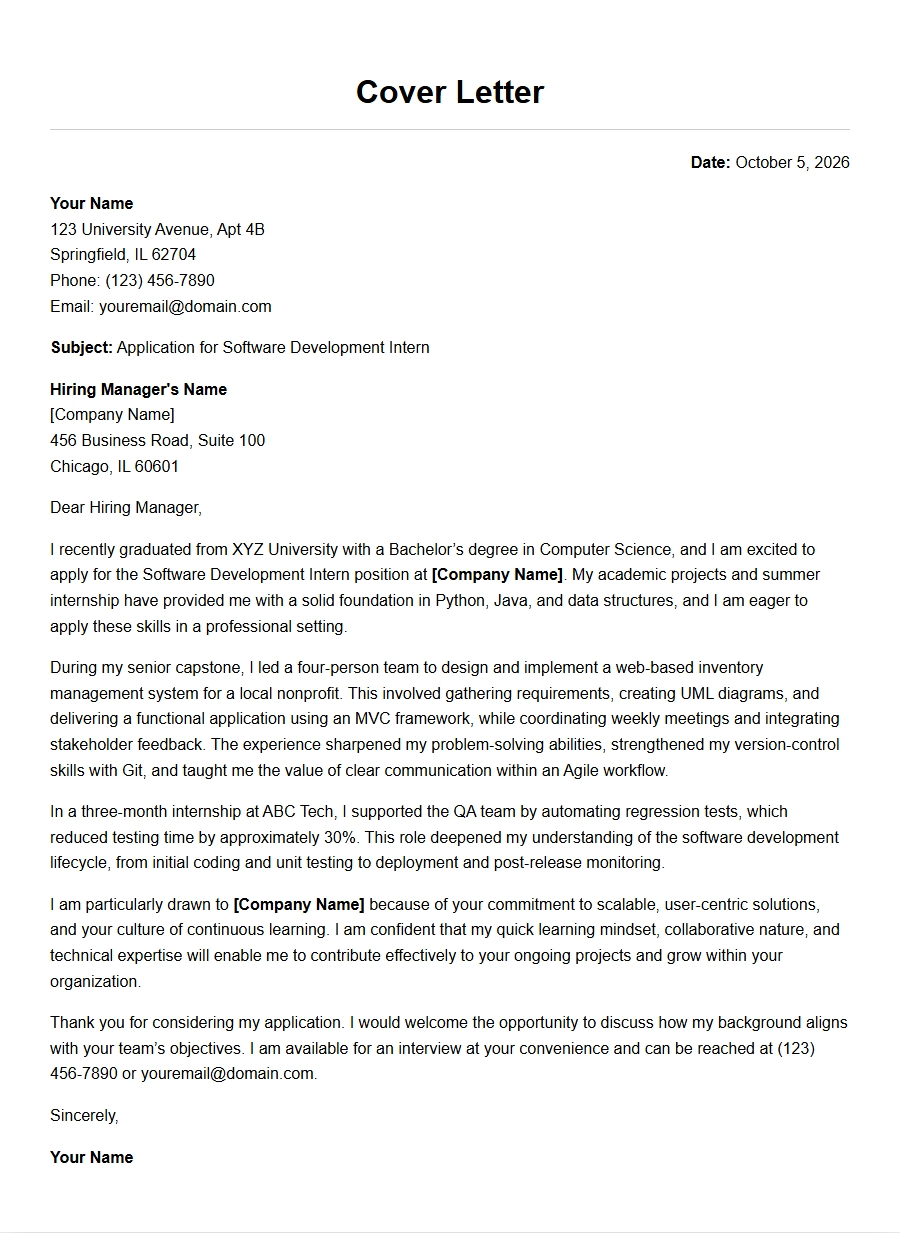 Recent College Student Cover Letter for Internship
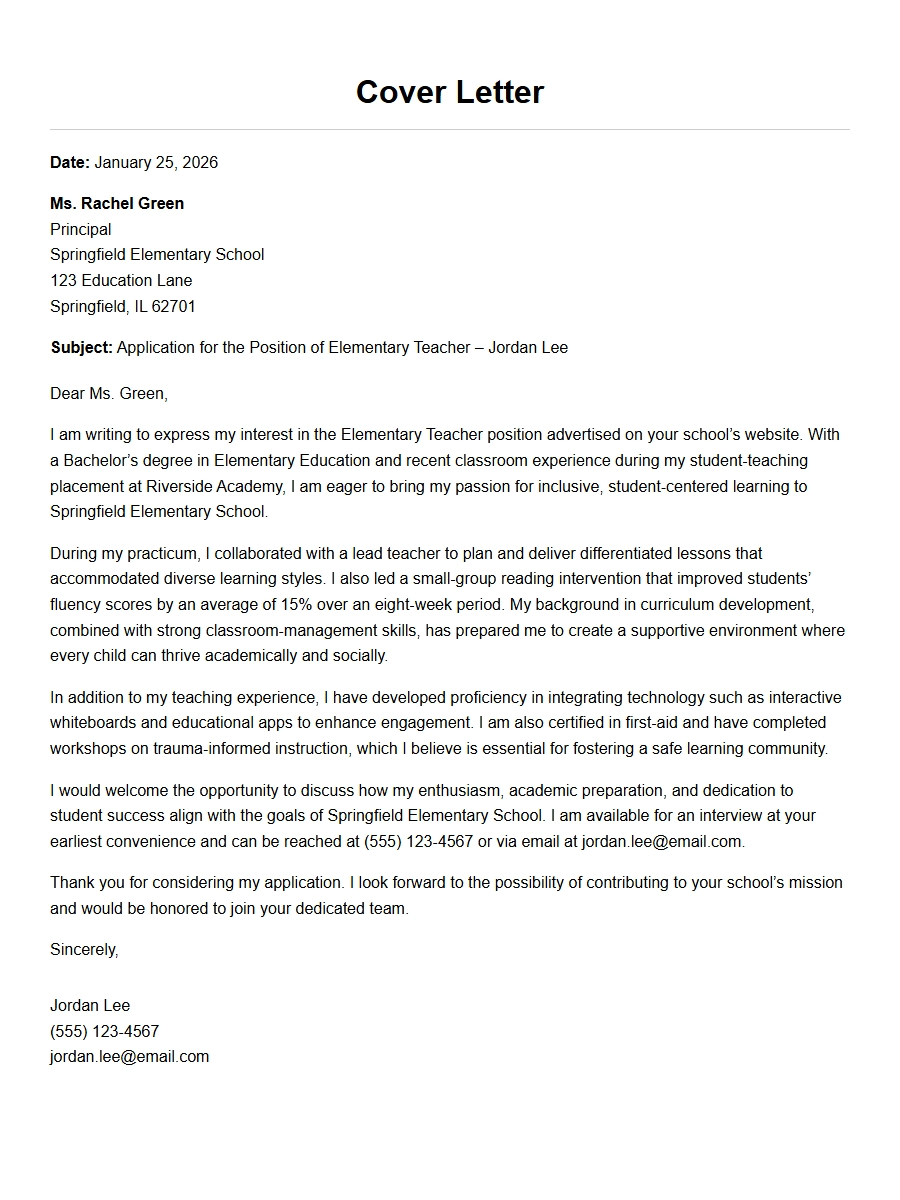 Entry Level Teacher Cover Letter Examples
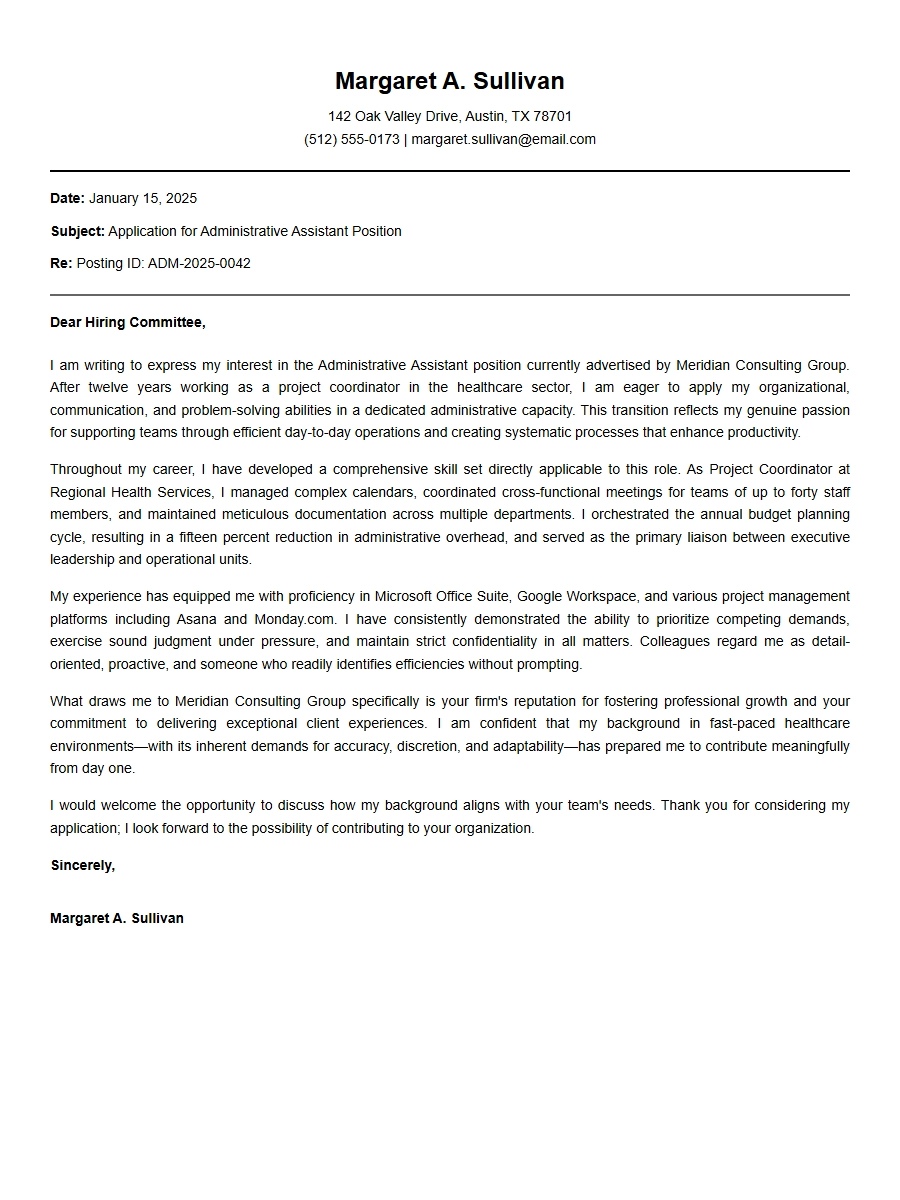 Career Changer Administrative Assistant Cover Letter
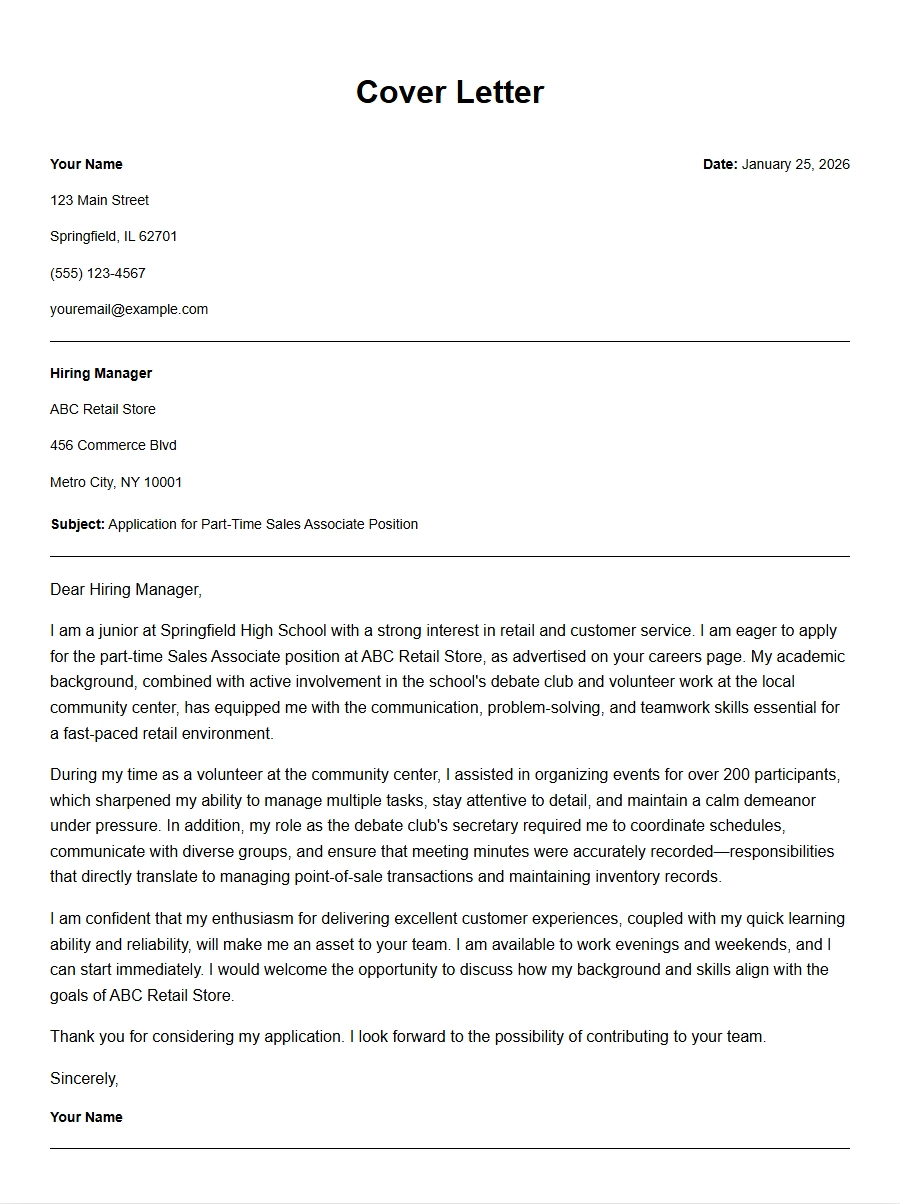 High School Student Part Time Job Cover Letter
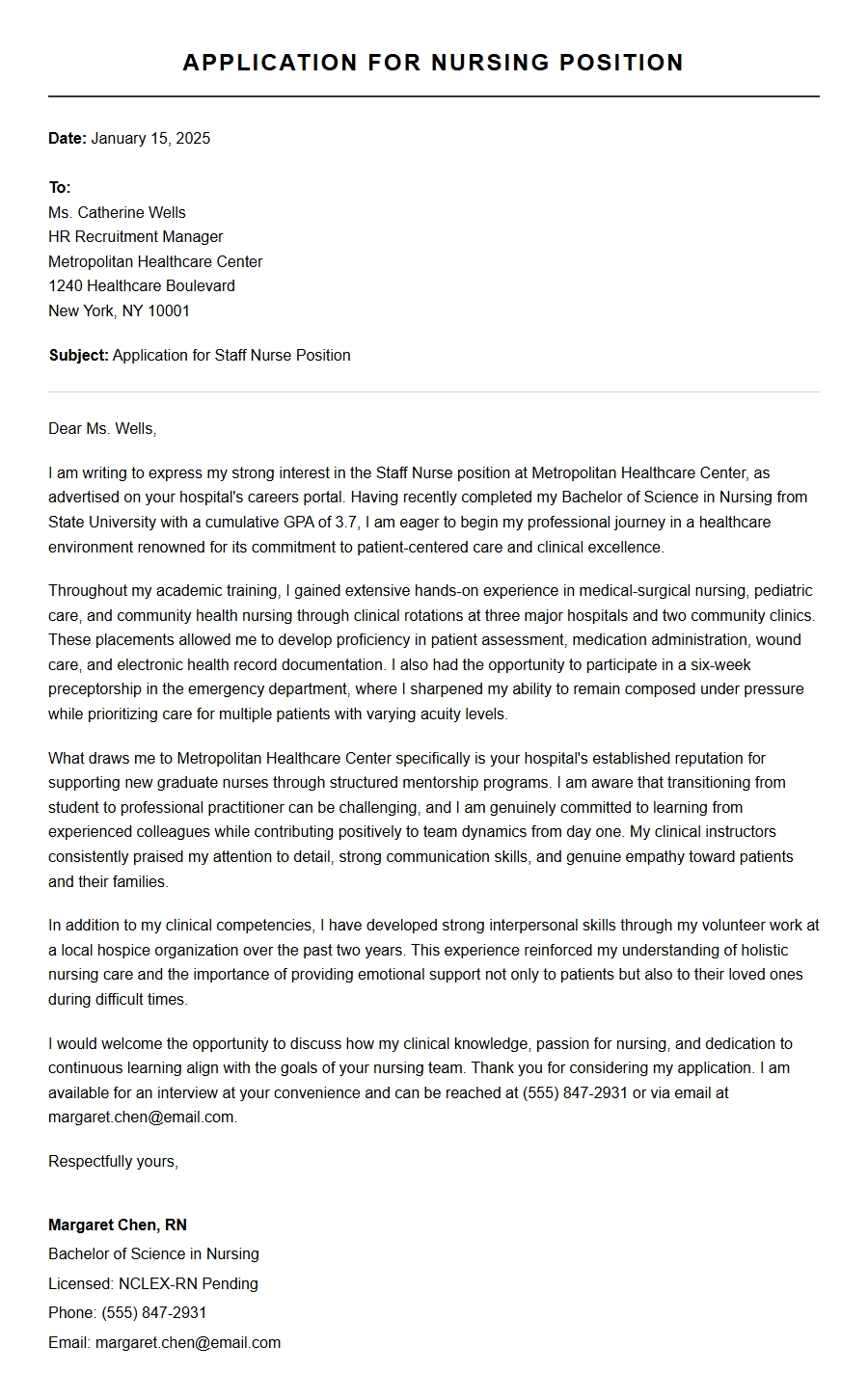 Fresh Graduate Nursing Application Letter
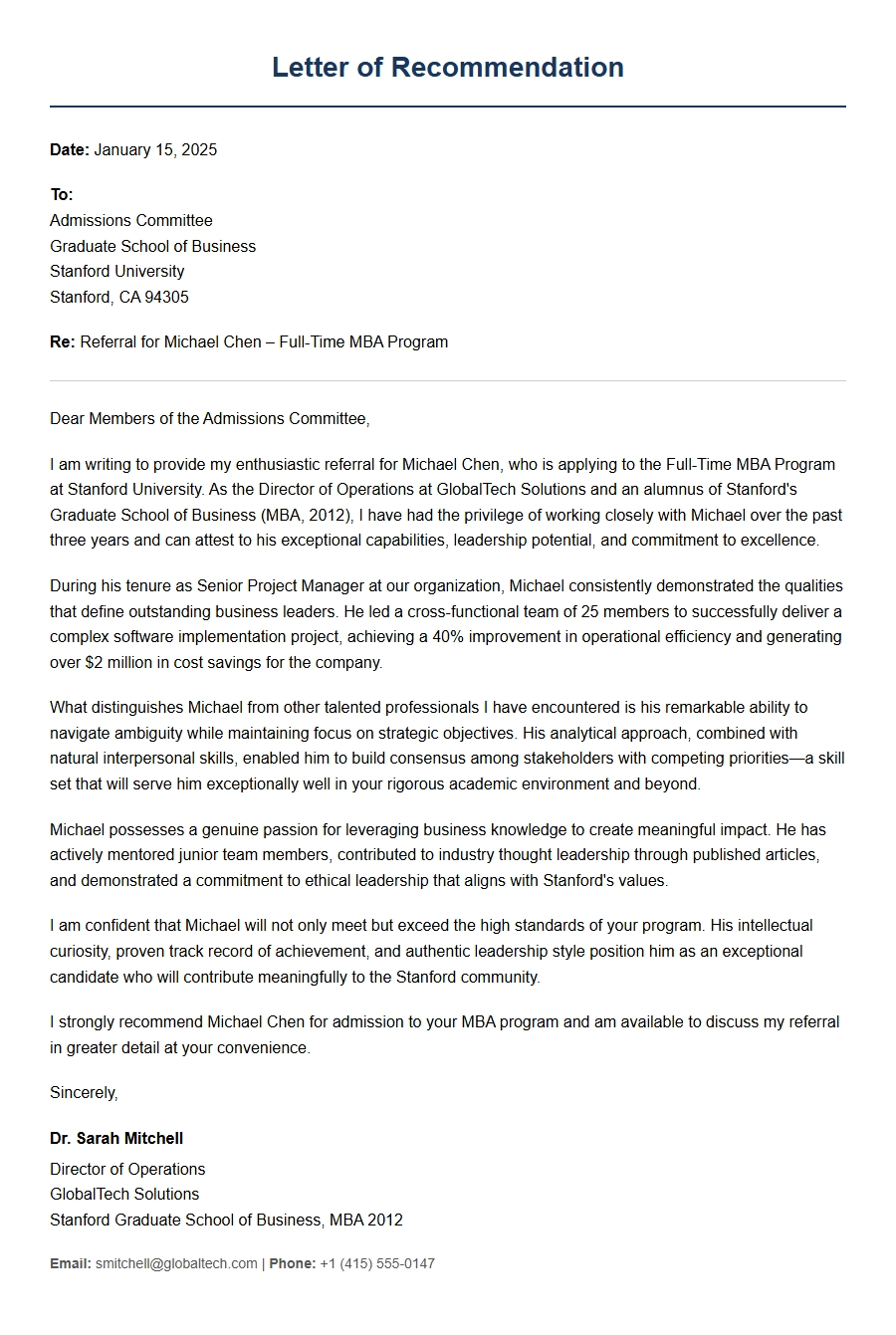 University Alumni Referral Email Cover Letter