You need to invite parents, fans, or the local community to a track meet, but the blank page is staring back at you. You want the wording to feel warm, clear, and professional—not stiff or confusing. That tension between getting it right and running out of time is exactly why using a sample invitation is a smart move, not a shortcut.
A good sample gives you a solid structure, a suitable tone, and the key phrases you need. Think of it as a template you can adapt, not a script to copy. That approach works for any professional correspondence, whether you're drafting a resignation letter sample or a letter of recommendation. For a track meet spectator invite, the same logic holds: start with a proven framework, then make it your own. This guide focuses on wording for track meet spectator invites, which falls under the broader category of sports event invitations.
Choosing the right tone for your invite
The tone of your invitation depends on who you're inviting and the formality of the event. A high school junior varsity meet might call for a casual, encouraging tone: "Come cheer on our team!" A collegiate or invitational meet may need a more formal approach: "We cordially invite you to attend." The same principle applies when you're crafting a corporate webinar invitation or a stakeholder consultation invitation—the audience dictates the style.
If you're unsure, lean slightly more formal. You can always warm it up with personal details (like mentioning a specific athlete or event). Avoid overly stiff phrases like "you are hereby invited." Instead, try "We'd love to have you watch our athletes compete." That small shift makes the wording feel human without losing professionalism.
What to include in a track meet spectator invite
Every spectator invite should cover the basics: date, time, location, and why the event matters. But the wording can elevate a dry list into something people want to act on. Start with a clear subject line or heading. For example: "Come watch our track team host the Spring Invitational!" Then include the details in a logical order.
Pay attention to letter structure—even for an email. Open with a friendly salutation (e.g., "Dear Parents and Fans,"), state the purpose, provide the details, and end with a warm closing. For printed invites, consider a simple letterhead design with your school or team logo. For digital invites, use a clean digital letter format that's easy to read on phones. And don't forget a call to action: "We hope to see you there!" or "Please RSVP by Friday."
One of the biggest errors is using outdated salutations. "To Whom It May Concern" feels cold and impersonal. If you're inviting parents, address them as "Dear Parents." Another mistake is ignoring the format. An email invite should be scannable—short paragraphs, bold key details. A printed letter can be longer, but avoid walls of text. Also, double-check your salutation and closing. "Sincerely" works for formal letters; "Thanks and see you there" fits a casual invite.
Proofreading matters more than you think. Misspelled names or wrong dates erode trust. Run the text through a quick spell-check and read it aloud. That's a simple proofreading letter habit that catches awkward phrasing. And if you're using a customizable letter template, make sure you actually change the placeholder info—nothing says "I copied this" like a leftover "[Insert Date]."
Personalizing your track meet invite sample
The best invitations feel personal even when they follow a template. Use the team's name, mention a star athlete, or include a fun fact about the meet. For instance, "Our relay team has been training since January—come see them break their personal best!" That small touch makes the invite feel genuine, not generic.
You can also adjust the tone in writing by swapping words. Instead of "event," say "meet." Instead of "attend," say "come out." The goal is to sound like someone who actually cares about the event, not a robot. If you're writing for a formal audience, refer to cover letter examples or business letter format for guidance on professional phrasing. But for a track meet, warmth usually wins.
Quick tips for digital vs. printed invites
If you're sending an email, keep the subject line short and specific: "Track Meet Spectator Invite – Saturday, May 6." Use a single-column layout and avoid heavy formatting that might break in some email clients. Printed invites should use a readable font (12pt or larger) and include space for handwritten notes if you want a personal touch. Either way, check your letter writing etiquette—include a clear response deadline and contact information.
And just as you'd tailor a Easter Sunday brunch invite to fit the occasion, your track meet wording should reflect the spirit of competition and community. That balance of professionalism and enthusiasm is what makes people want to show up.
Remember, the sample is a springboard, not a crutch. Use it to get the skeleton right, then add your own details, voice, and personality. The more the wording feels like you, the more your spectators will feel invited. And with a little practice, writing an invite becomes a five-minute task—not a headache.
Samples for Inspiration
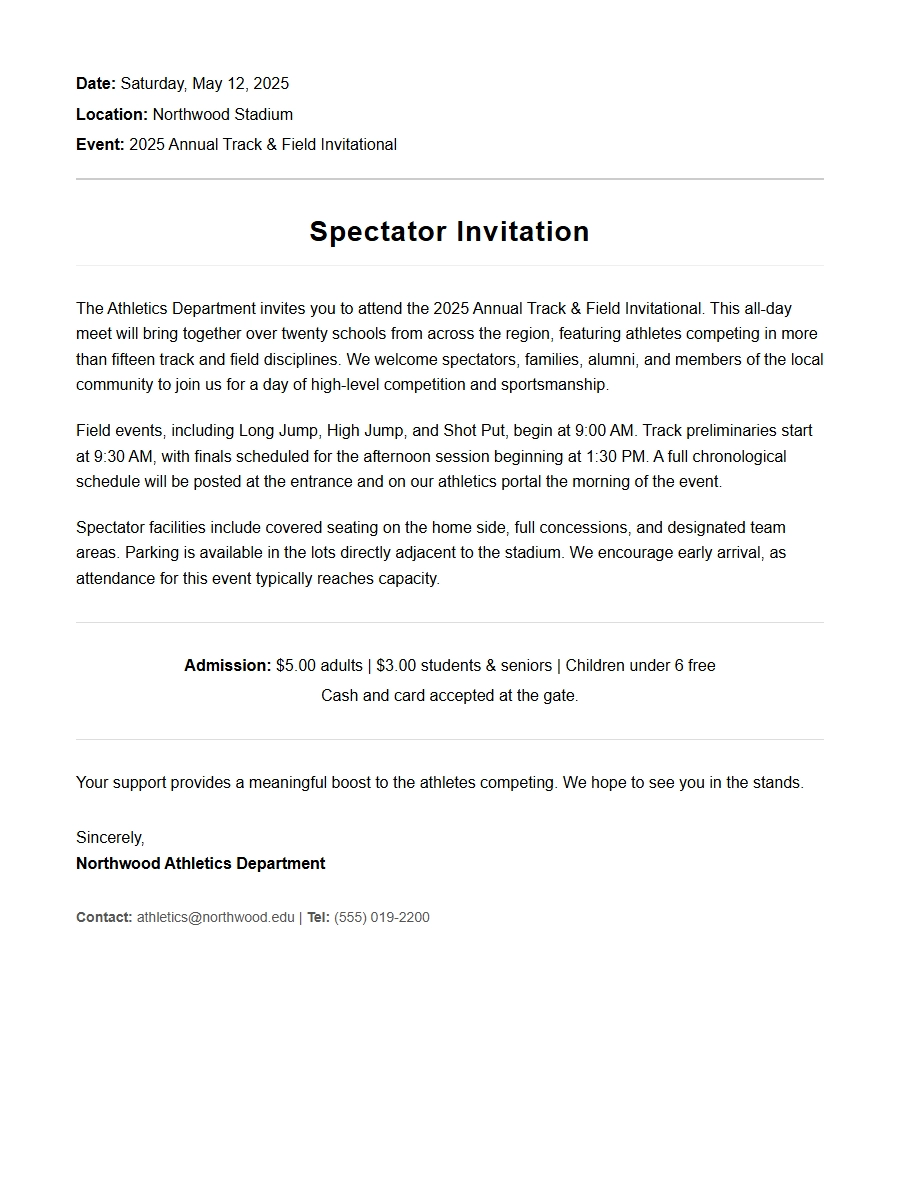
Track Meet Invitation Wording for Spectators
General Spectator Invitation
You’re Invited to the Annual All-City Track Meet!
Join us on Saturday, May 18, 2025, at Lincoln Memorial Stadium for a thrilling day of speed, strength, and teamwork. Gates open at 8:00 AM, events begin at 9:00 AM.
Watch athletes from 12 local high schools compete in sprints, hurdles, relays, long jump, shot put, and more. Food trucks and a spectator tent will be available on the infield.
Admission: Free for all ages. Bring your family and friends!
For schedule details, parking information, or to pre‑register a team bus, visit our website or contact the Athletic Office at (555) 123-4567.
Be part of the roar – cheer on your favorite athletes!
Parent & Family Spectator Invitation
Dear Parents and Families,
We warmly invite you to be our special guests at the Spring Classic Track & Field Meet on Friday, April 25, 2025, from 10:00 AM to 4:00 PM at the Riverside Athletic Complex.
Your student‑athlete will be competing in events ranging from the 100‑meter dash to the 4x400 relay. A parent recognition ceremony will be held at 12:30 PM near the finish line.
Schedule Highlights:
10:00 AM – Opening Ceremony & Parade of Athletes
10:30 AM – Field Events (shot put, long jump, high jump)
12:00 PM – Track Preliminaries
2:00 PM – Finals & Awards
Free admission for parents and siblings. A designated family seating area will be available. Please arrive early to secure your spot.
We look forward to celebrating your athlete’s hard work!
Alumni & Friends Spectator Invitation
Dear Alumni and Friends,
You are cordially invited to return to the track for the 2025 Alumni Reunion Meet on Saturday, June 14, 2025 at Thompson Field. Events kick off at 11:00 AM and continue until 5:00 PM.
This year we honor the 1995 State Championship teams. Join us for a special alumni recognition lunch at 1:00 PM under the pavilion.
Event List:
Time
Event
Location
11:00 AM
100m Hurdles
North Straightaway
12:00 PM
400m Dash
Main Track
2:00 PM
Alumni vs. Current Students Relay
Finish Line Area
Admission is $5 for adults, free for children under 12 and alumni who register by June 1. Proceeds support the Track & Field Scholarship Fund.
We can’t wait to see you back on the oval!
Community Welcome Spectator Invite
Hello Neighbors,
You are invited to the 2025 Community Track & Field Day on Sunday, July 20, 2025 at Oak Park Stadium. Spectator gates open at 9:00 AM; the opening ceremony begins at 10:00 AM.
This family‑friendly event features local youth clubs, adult recreational heats, and a special “Run with the Mayor” 800‑meter fun run at 10:30 AM.
Activities for Spectators:
Free popcorn and water sponsored by Main Street Merchants
Face painting and bounce house for children
Vendor booths from local businesses
Admission is free. Parking is available at the high school lot with shuttle service every 10 minutes. Bring your lawn chair and enjoy a day of movement and community spirit.
Questions? Call the Parks & Rec Department at (555) 987-6543.
School Spirit Spectator Invitation
Come Represent Our Colors at the Annual Rivalry Track Meet – Eagles vs. Hawks!
All students, faculty, and staff are encouraged to pack the stands and cheer for our athletes. The first 200 spectators will receive a free school spirit towel. We will have a designated student section with banners and chants.
Key Races to Watch:
4:15 PM – 4x100m Relay (boys & girls)
5:30 PM – 800m Sprint Medley
6:45 PM – 200m Dash (finals)
Show your school pride! Wear school colors (green and gold) and bring noise makers. Let’s make Eagle Stadium the loudest venue in the county. Go Eagles!
Team Supporter Appreciation Invitation
Dear Dedicated Fans and Boosters,
You make a difference every time you cheer. We invite you to the 2025 Track & Field Season Finale on Saturday, May 31, 2025, at Central Park Track. Spectator seating opens at 8:30 AM; meets begin at 9:30 AM sharp.
This event honors our senior athletes during a special ceremony at 11:00 AM. As a token of thanks, all returning boosters will receive a commemorative pin at the gate.
Supporter Benefits:
Reserved front‑row seating for boosters (show your membership card)
Complimentary coffee and pastries in the hospitality tent from 8:30 AM to 10:00 AM
Exclusive access to the post‑meet athlete meet‑and‑greet
Your presence fuels their performance. Let’s close the season with a thunderous roar!
Media & Press Spectator Invitation
Dear Media Partners,
You are cordially invited to cover the 2025 City Track Championship on Saturday, June 7, 2025 at Memorial Stadium. Athlete check‑in begins at 7:00 AM, first event at 8:30 AM.
Media Credentials:
Reporters and photographers: please RSVP by June 1 to media@trackcity.org or call (555) 222-3333
Designated media section near the finish line with power outlets and Wi‑Fi
Post‑event press conference at 4:00 PM in the stadium club
Top Storylines:
Athlete
Event
Record to Watch
J. Rivera
100m Dash
10.24 (personal best)
L. Chen
400m Hurdles
Defending state champion
Boys 4x200m
Relay
National qualifying time
We look forward to your coverage and will provide a media guide upon arrival.
Corporate Sponsor Spectator Invitation
Dear Sponsor,
On behalf of the River City Track Club, we thank you for your continued support. We invite you and your team to be our guests at the 2025 Sponsor Appreciation Meet on Friday, May 23, 2025, from 6:00 PM to 9:00 PM at Downtown Athletic Field.
Your sponsorship has helped purchase new starting blocks, timing equipment, and uniforms. As a token of our gratitude, we have reserved a VIP tent with catering and seating for up to 10 guests.
7:00 PM – Exhibition races featuring athletes from the club
8:30 PM – Q&A with coaches and athletes
Please confirm your guest count by May 16 to events@rivercitytrack.org. We look forward to celebrating your partnership!
Volunteer Recognition Spectator Invite
Dear Valued Volunteers,
You are the heartbeat of every meet. We invite you to the Volunteer Appreciation Track Night on Thursday, June 26, 2025, from 5:30 PM to 8:30 PM at the Community Sports Park Track.
This event is entirely for you – watch a special exhibition meet featuring our coaches and staff, then enjoy a barbecue dinner on the track infield.
Volunteer Highlights:
Recognition awards for volunteer milestones (50+ hours served)
Free volunteer‑exclusive T‑shirt (pick up at registration table)
Raffle prizes donated by local businesses
Bring your family – there will be fun relay games for kids between events. Please RSVP by June 20 to volunteer@tracktown.org so we can arrange seating and meals.
Without you, these meets don’t happen. Thank you for showing up!
Formal Invitation for Dignitaries
The Board of Athletics and the Mayor’s Office request the honor of your presence at the Grand Opening & First Meet of the New Sports Complex on Saturday, September 6, 2025, at 10:00 AM at the John H. Pursley Stadium.
A ribbon‑cutting ceremony will precede the inaugural track meet featuring regional elite athletes. You are welcome to bring up to two guests. Please respond by August 15 to rsvp@citysportscommission.gov.
Order of Events:
Time
Activity
10:00 AM
Welcome Remarks & Ribbon Cutting
10:30 AM
Invitational 1500m (elite heat)
11:15 AM
4x100m Relay Challenge
12:00 PM
Luncheon in the VIP Pavilion
Attire: Business casual. Valet parking will be available for dignitaries. We look forward to your company as we celebrate this milestone for our community.
 sample invitation for local market stall tour - Invitation Letters
 Art Exhibition Opening Invitation Wording Ideas
 Thanksgiving Meal Gathering Invitation Text
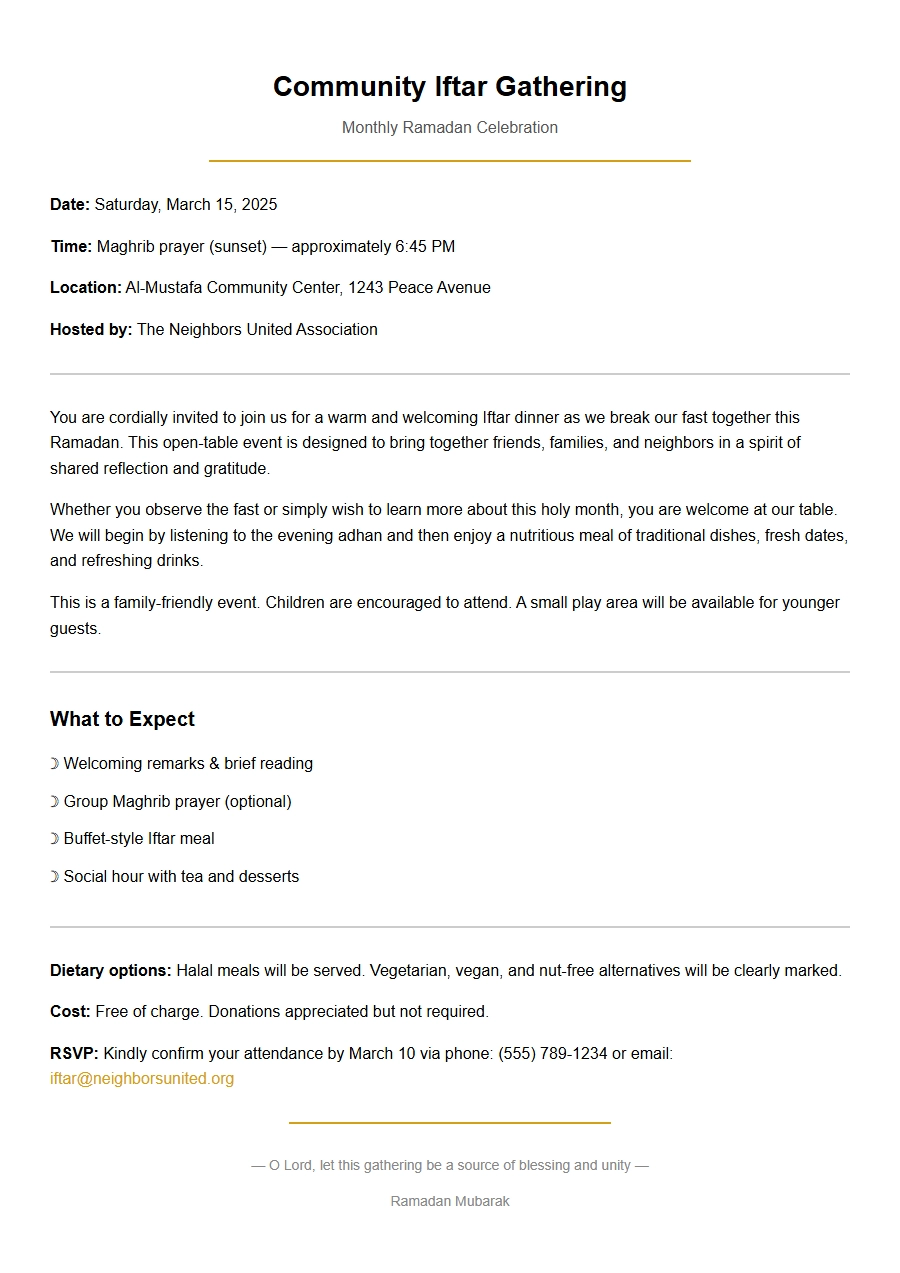 Ramadan Iftar Community Event Invitation
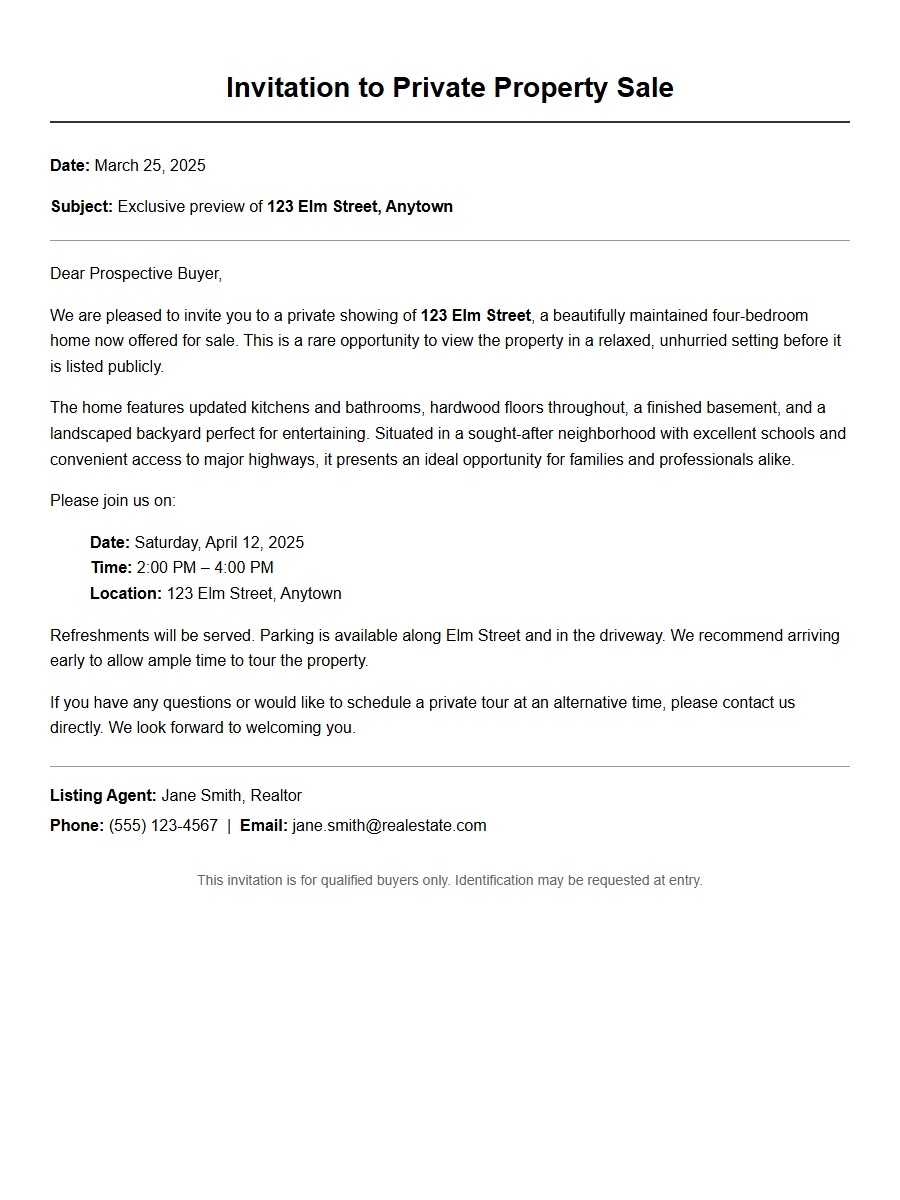 Sample Wording for Property Sale Invitations
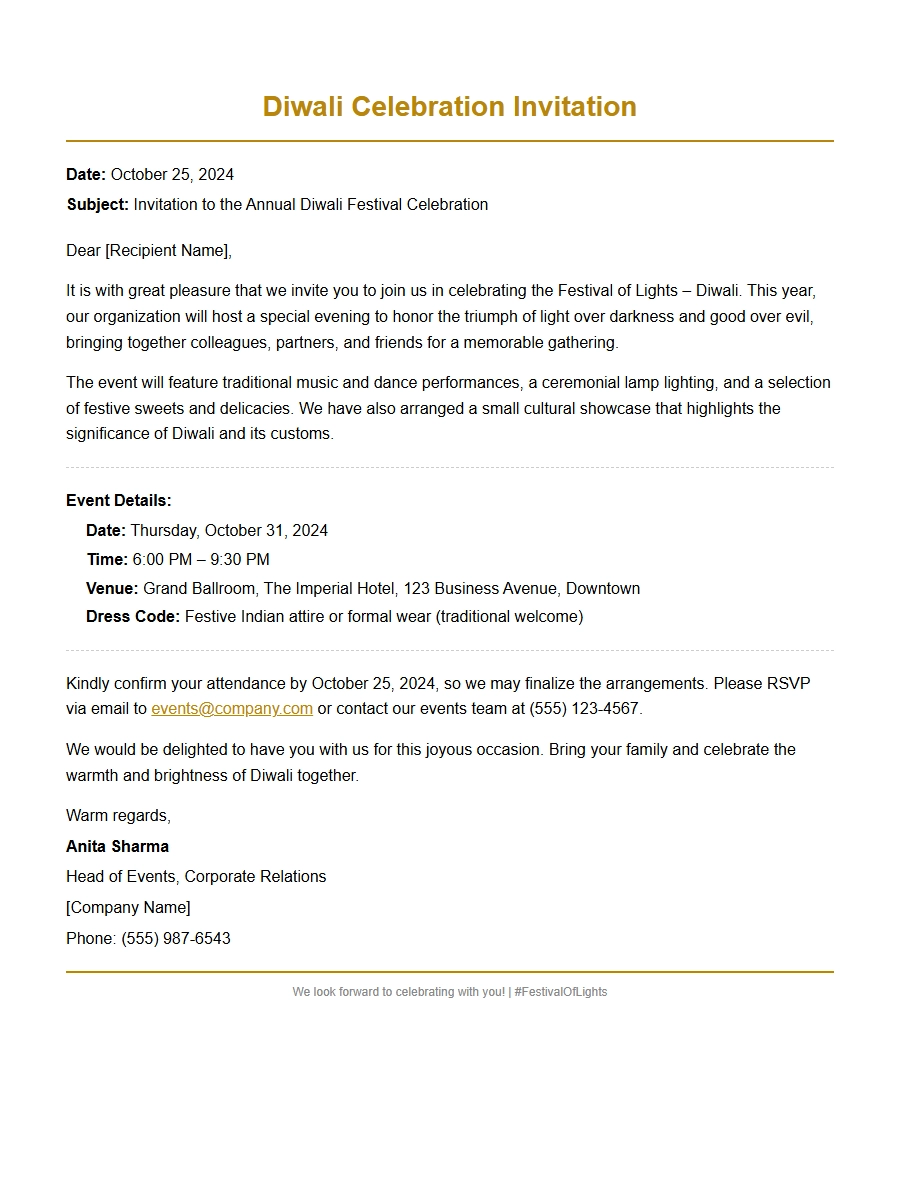 Diwali Festival Celebration Invitation Draft