Warehouse Manager Cover Letter with Forklift Certification
You need to send a cover letter for a warehouse manager role, and you want to highlight your forklift certification. But the blank page stares back. Maybe it’s been years since you wrote a formal letter, or you’re afraid of sounding too stiff or too casual. That anxiety is normal. The good news? A well-chosen sample can turn that blank page into a confident draft in minutes. It’s not cheating. It’s working smarter.
Using a letter template gives you a solid structure, the right tone, and key phrases you might forget under pressure. A good sample keeps you from worrying about format and lets you focus on your specific experience—like that OSHA forklift certification or your years managing inventory and a team. Think of it as a starting point, not a final script. You’ll still need to add your own details, but the heavy lifting is done.
Category: Cover Letter Samples
How to pick the right sample for a warehouse manager position
Not all cover letter examples are created equal. For a warehouse manager role that requires forklift certification, you want a sample that feels professional but not corporate-generic. Look for ones that use clear business letter format—your contact info, date, salutation, body, and closing. Avoid samples with overly formal language like “To Whom It May Concern”; that’s outdated for most warehouses today. Instead, aim for a direct salutation like “Dear Hiring Manager” or, better yet, the recruiter’s name if you can find it.
Also consider whether the letter will be printed or digital. If you’re emailing it, skip the letterhead design and go for a clean digital letter format with a concise subject line. A printed version might need a simple letterhead with your name and contact details.
How to adapt a sample without sounding like everyone else
Here’s where many people go wrong: they copy a sample word for word. Instead, treat the sample as a skeleton. Keep the structure and replace the generic phrases with your own story. For example, if the sample says “I have strong leadership skills,” change it to “I led a team of 12 warehouse associates and maintained a 98% on-time shipping rate while also managing forklift operations.” That’s specific, credible, and shows real experience.
Pay attention to tone in writing. A warehouse manager cover letter should sound competent and straightforward—not stiff, not overly casual. Use contractions (you’ll, it’s, I’ve) because they sound human. And always proofread your letter. A small typo can undermine your credibility, especially when you’re claiming attention to detail.
Tailor the opening to grab attention
The first two sentences are critical. Don’t waste them with “I am writing to apply for…” Instead, mention your forklift certification up front if it’s a key requirement. For example: “As a certified forklift operator with five years of warehouse management experience, I’m confident I can keep your distribution center safe and efficient.” That immediately tells the hiring manager you have the exact qualification they need.
Avoid common mistakes like using a generic subject line or ignoring the company’s specific needs. If the job description mentions safety records, reference that in your opening. If they want someone who can train others on forklift safety, mention your experience leading training sessions.
Other letters you might find helpful
If you’re also applying for other roles—or helping someone else write a letter—you can adapt similar strategies. For example, a software developer cover letter focuses on technical skills and projects, which isn’t far off from how you’d highlight forklift certifications and inventory management. For a different setting, like education, a substitute teacher cover letter emphasizes classroom management—similar to how you’d describe managing warehouse workflow. And if you’re new to writing formal correspondence, checking email marketing automation cover letter examples can give you ideas for concise, results-focused language.
The best letters feel both professional and personal. After you adapt a sample, read it out loud. Does it sound like you? If not, tweak the wording until it does. Remember, hiring managers read dozens of letters. Yours should stand out because it’s specific and human, not because it’s perfectly formatted. Practice writing a few versions, and soon the process will take you fifteen minutes instead of an hour. You’ve got the experience—now let the sample help you show it.
Simple Examples
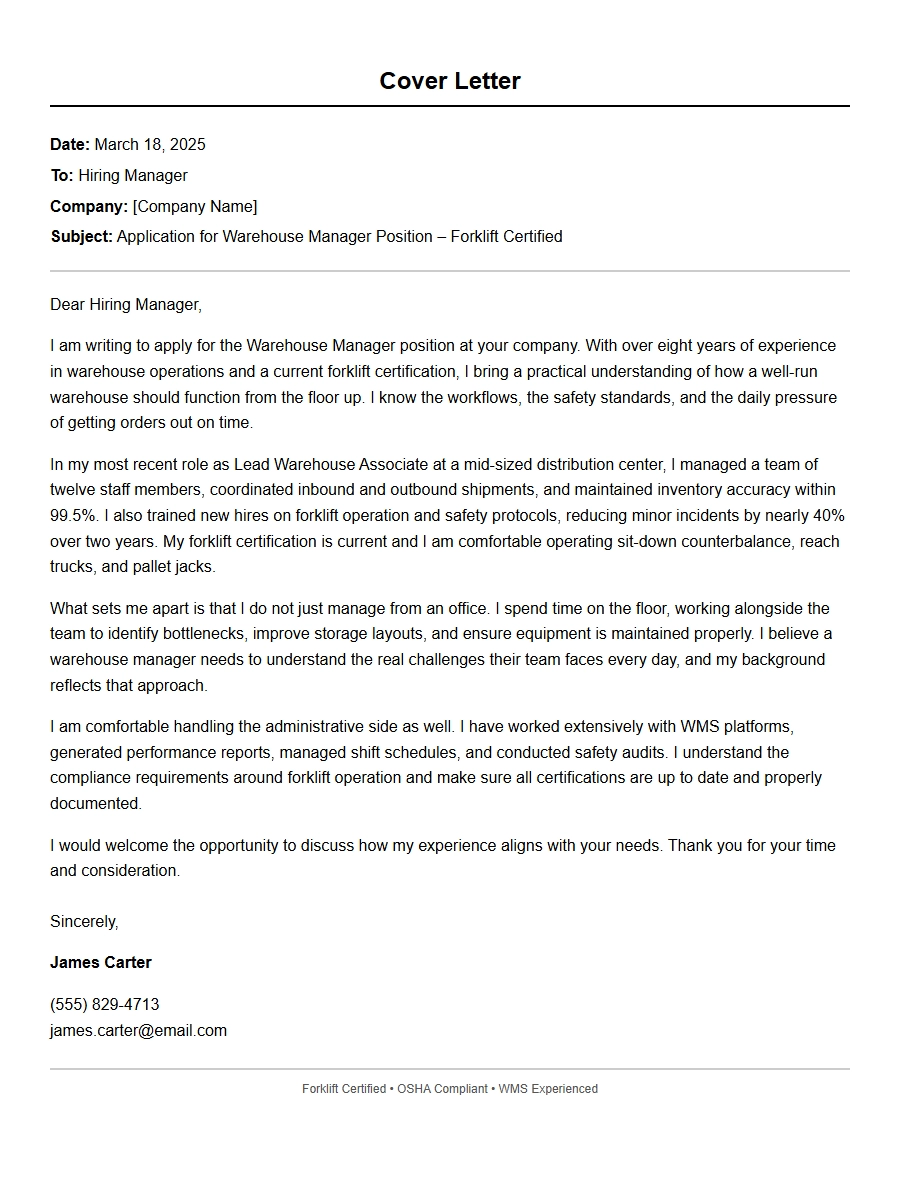
Warehouse Manager Cover Letter with Forklift Certification
General Warehouse Manager Cover Letter
Dear Hiring Manager,
I am writing to express my strong interest in the Warehouse Manager position at [Company Name]. With over eight years of experience in warehouse operations and a current forklift certification, I bring a combination of leadership skills and hands-on expertise to your team.
In my previous role at [Previous Company], I managed a team of 15 warehouse associates, reduced inventory discrepancies by 20%, and maintained a perfect safety record. My forklift certification ensures I can lead by example during peak seasons and train new operators on safety protocols.
Key qualifications:
5+ years of warehouse management experience
Valid forklift certification (renewed annually)
Proficiency in WMS (SAP and Oracle)
OSHA safety training completed
I am eager to bring my operational efficiency and safety mindset to your growing distribution center. Thank you for considering my application.
Sincerely, John Smith
Entry-Level Warehouse Manager Cover Letter
Dear Hiring Team,
I am excited to apply for the Warehouse Manager position at [Company Name]. Although I am early in my career, my dedication to excellence and current forklift certification make me a strong candidate for this role.
I recently completed an associate degree in Logistics Management and earned my forklift certification through a certified training program. During my internship at [Internship Company], I assisted with inventory audits and learned to operate forklifts safely. I am confident in my ability to manage a warehouse floor effectively.
Relevant certifications:
Certification
Date Obtained
Forklift Operator Certification
January 2024
OSHA 10-Hour General Industry
March 2024
I am eager to apply my skills in a fast-paced environment and grow with your company.
Best regards, Emily Johnson
Experienced Warehouse Manager Cover Letter
Dear [Hiring Manager Name],
With over a decade of warehouse leadership and an up-to-date forklift certification, I am thrilled to apply for the Warehouse Manager role at [Company Name]. I have a proven track record of streamlining operations, reducing costs, and improving safety metrics.
At [Previous Company], I oversaw a 200,000 sq ft facility with a team of 40 employees. I implemented a forklift safety program that reduced accident rates by 30% within six months. My certifications include advanced forklift training and Lean Six Sigma Green Belt.
Performance highlights:
Increased throughput by 15% through process improvements
Reduced overtime costs by 12%
Zero lost-time incidents in the last 3 years
I am ready to contribute immediately and would love to discuss how I can help [Company Name] achieve its goals.
Yours truly, Michael Brown
Warehouse Manager Cover Letter Focused on Safety
Dear Safety Director,
I am writing to apply for the Warehouse Manager position at [Company Name], where I can leverage my extensive forklift certification and safety experience to maintain a secure work environment. Safety has always been my top priority in warehouse operations.
In my current role at [Current Company], I conduct weekly safety meetings and have trained over 30 employees on safe forklift operation. I hold a current forklift certification and have completed advanced safety courses including Hazmat Handling and Emergency Response.
I am confident that my focus on preventative safety measures will strengthen your warehouse team.
Thank you, Sarah Davis
Warehouse Manager Cover Letter for E-commerce
Dear Hiring Manager,
I am writing to apply for the Warehouse Manager position at [E-commerce Company]. With my current forklift certification and experience in high-volume e-commerce fulfillment, I understand the unique demands of fast-paced shipping environments.
At [Previous Company], I managed a team that processed an average of 5,000 orders per day. I coordinated forklift operations for loading/unloading and ensured accurate inventory placement. My forklift certification is valid through 2025, and I am experienced with WMS systems like ShipStation and Fishbowl.
Relevant metrics:
Metric
Performance
Order accuracy rate
99.5%
Peak season throughput increase
25%
Team overtime reduction
10%
I look forward to optimizing your fulfillment operations and ensuring timely deliveries.
Sincerely, David Wilson
Warehouse Manager Cover Letter with Leadership Focus
Dear HR Manager,
I am eager to bring my leadership skills and forklift certification to the Warehouse Manager position at [Company Name]. I believe that a great manager leads from the front, and my ability to operate forklifts allows me to mentor my team directly.
During my tenure at [Previous Company], I developed a team training program that improved new hire onboarding time by 20%. My forklift certification has been instrumental in demonstrating proper techniques to junior operators. I also hold a certification in Supervisory Leadership from [Institution].
Leadership skills:
Team training and development
Conflict resolution
Performance management
Inventory control
I am excited to help your warehouse team achieve higher productivity and morale.
Best regards, Lisa Martinez
Warehouse Manager Cover Letter for Cold Storage
Dear Hiring Manager,
I am writing to express my interest in the Warehouse Manager position at [Cold Storage Company]. My forklift certification includes specialized training for cold storage environments, and I have five years of experience managing frozen and refrigerated warehouses.
At [Previous Company], I managed a -20°F freezer facility with a team of 12. I ensured forklift operators followed strict safety protocols for ice and condensation prevention. My certification covers both sit-down and stand-up forklifts, essential for tight cold storage aisles.
Cold storage experience:
Managed temperature-controlled inventory
Reduced product loss due to thawing by 15%
Trained staff on cold weather PPE usage
I am confident I can maintain your high safety and efficiency standards.
Sincerely, James Taylor
Warehouse Manager Cover Letter with Supply Chain Background
Dear [Company Name] Team,
I am applying for the Warehouse Manager position, bringing a strong supply chain management background and a current forklift certification. My experience spans from procurement to distribution, ensuring seamless warehouse operations.
I hold a Bachelor's degree in Supply Chain Management and have worked for [Company A], where I optimized picking routes and forklift deployment. My forklift certification is complemented by APICS CPIM certification. I have a solid understanding of FIFO and LIFO inventory methods.
Supply chain qualifications:
Skill
Proficiency
Warehouse layout design
Advanced
Forklift operation
Expert
Inventory management
Advanced
ERP systems (SAP, Oracle)
Intermediate
I am ready to take on the challenges of your warehouse and improve overall efficiency.
Best regards, Anna White
Warehouse Manager Cover Letter Promoting Efficiency
Dear Hiring Authority,
I am excited to apply for the Warehouse Manager role at [Company Name]. With a current forklift certification and a data-driven approach to efficiency, I have consistently improved warehouse throughput in my previous roles.
At [Previous Company], I analyzed forklift usage patterns and adjusted scheduling to reduce idle time by 20%. I also introduced a barcode scanning system that decreased picking errors by 35%. My forklift certification allows me to step in when needed, keeping operations moving.
Efficiency improvements:
Reduced average picking time by 1.5 minutes per item
Cut down forklift fuel costs by 10% through route optimization
Improved dock-to-stock time by 25%
I am eager to apply these strategies to your distribution center and drive continuous improvement.
Sincerely, Robert Lee
Warehouse Manager Cover Letter with Career Change
Dear Hiring Manager,
I am applying for the Warehouse Manager position at [Company Name], combining my 10 years of logistics experience with a recently updated forklift certification. After transitioning from a supervisory role in manufacturing to warehouse management, I have found my true calling in optimizing storage and shipping.
I earned my forklift certification through [Training Provider] in 2023 and have since gained hands-on experience operating forklifts in a distribution center. My previous supervisory experience taught me team motivation and workflow planning. I have also completed a course in Warehouse Management Systems.
Transferable skills:
Team leadership across 20+ employees
Process optimization with measurable results
Safety compliance and OSHA knowledge
I am ready to bring my combined skills to [Company Name] and grow with your team.
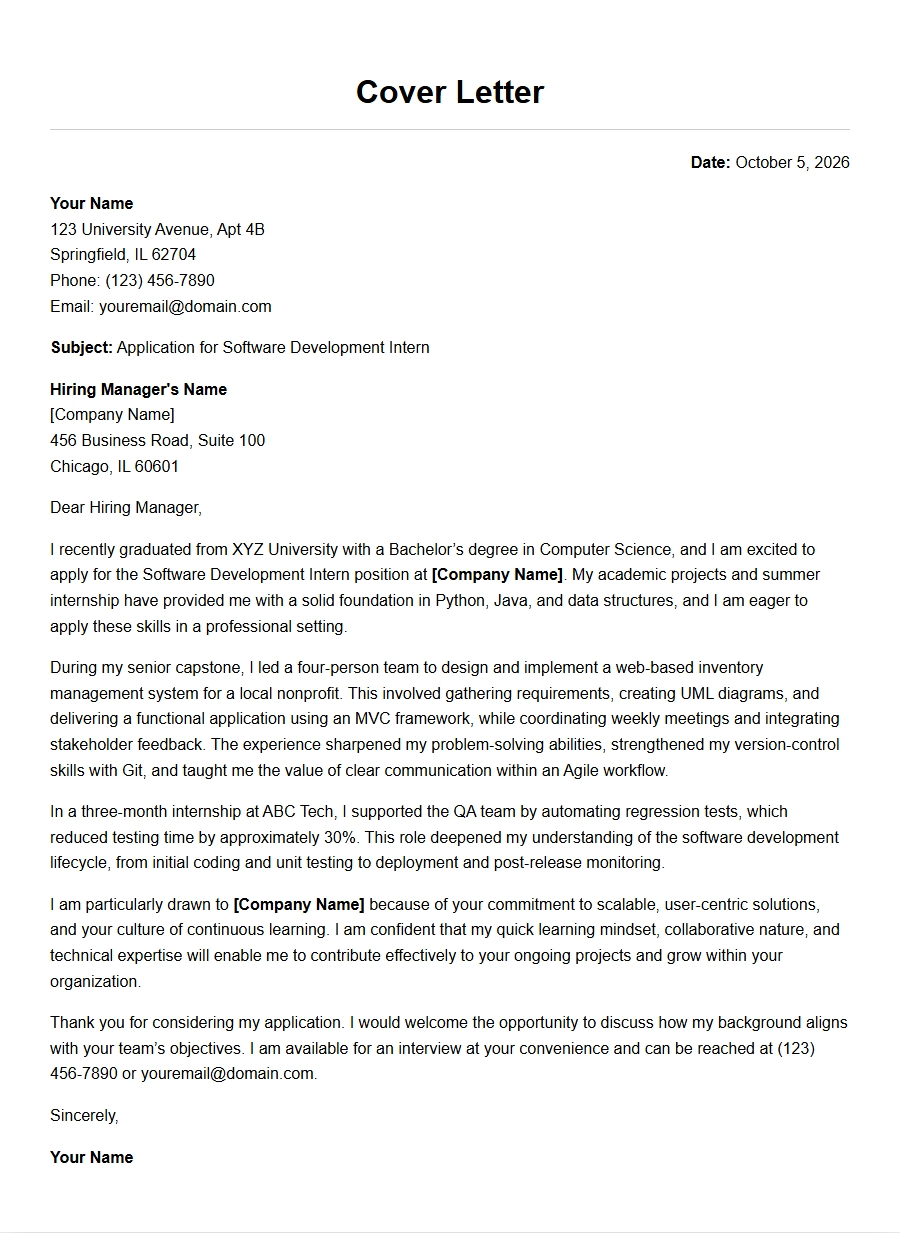 Recent College Student Cover Letter for Internship
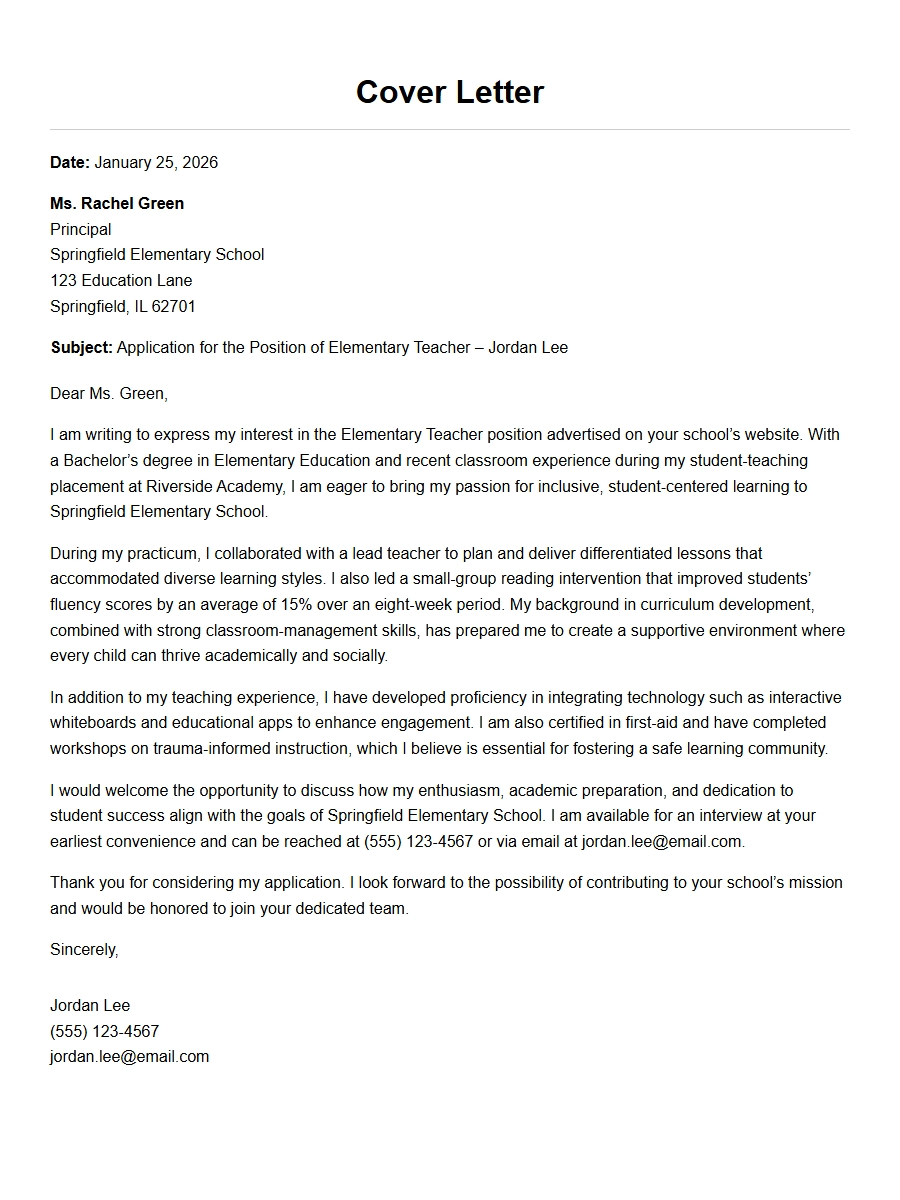 Entry Level Teacher Cover Letter Examples
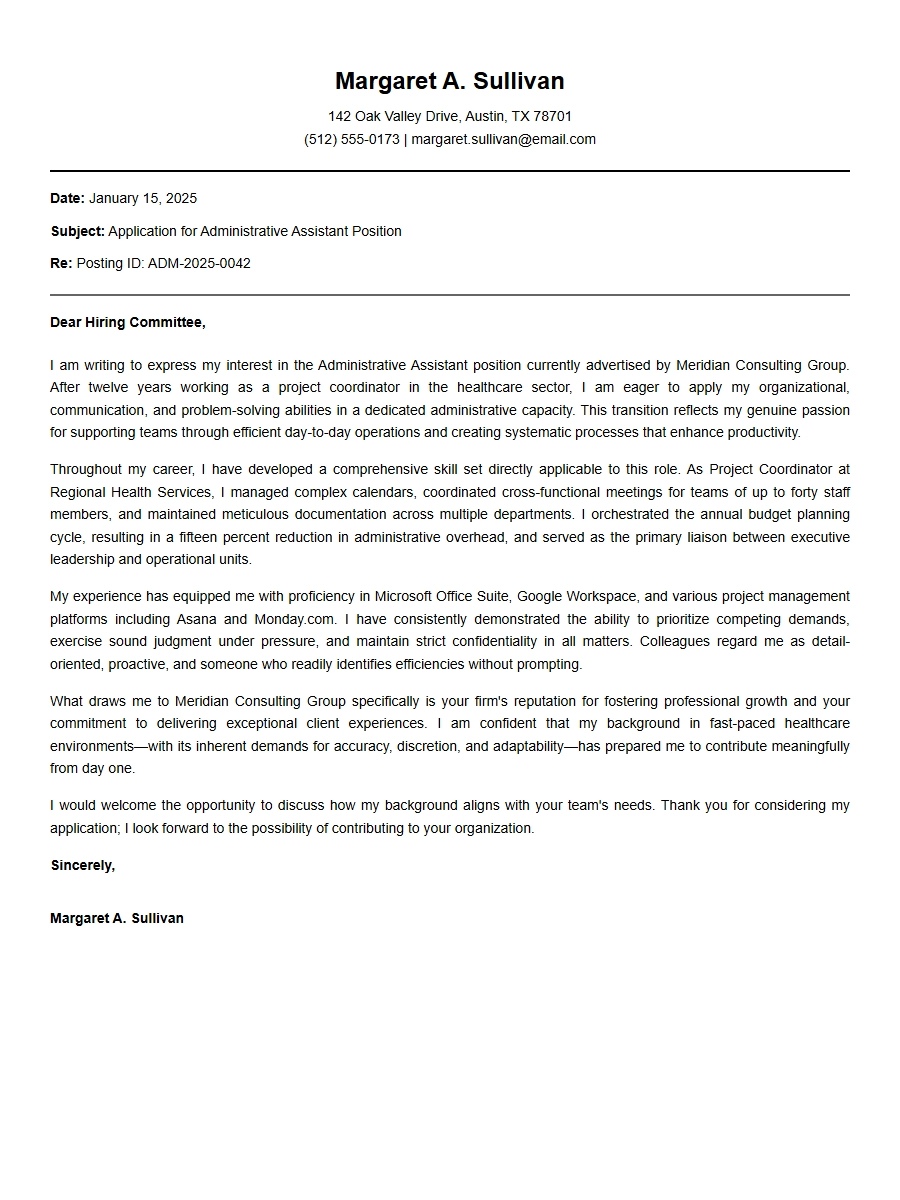 Career Changer Administrative Assistant Cover Letter
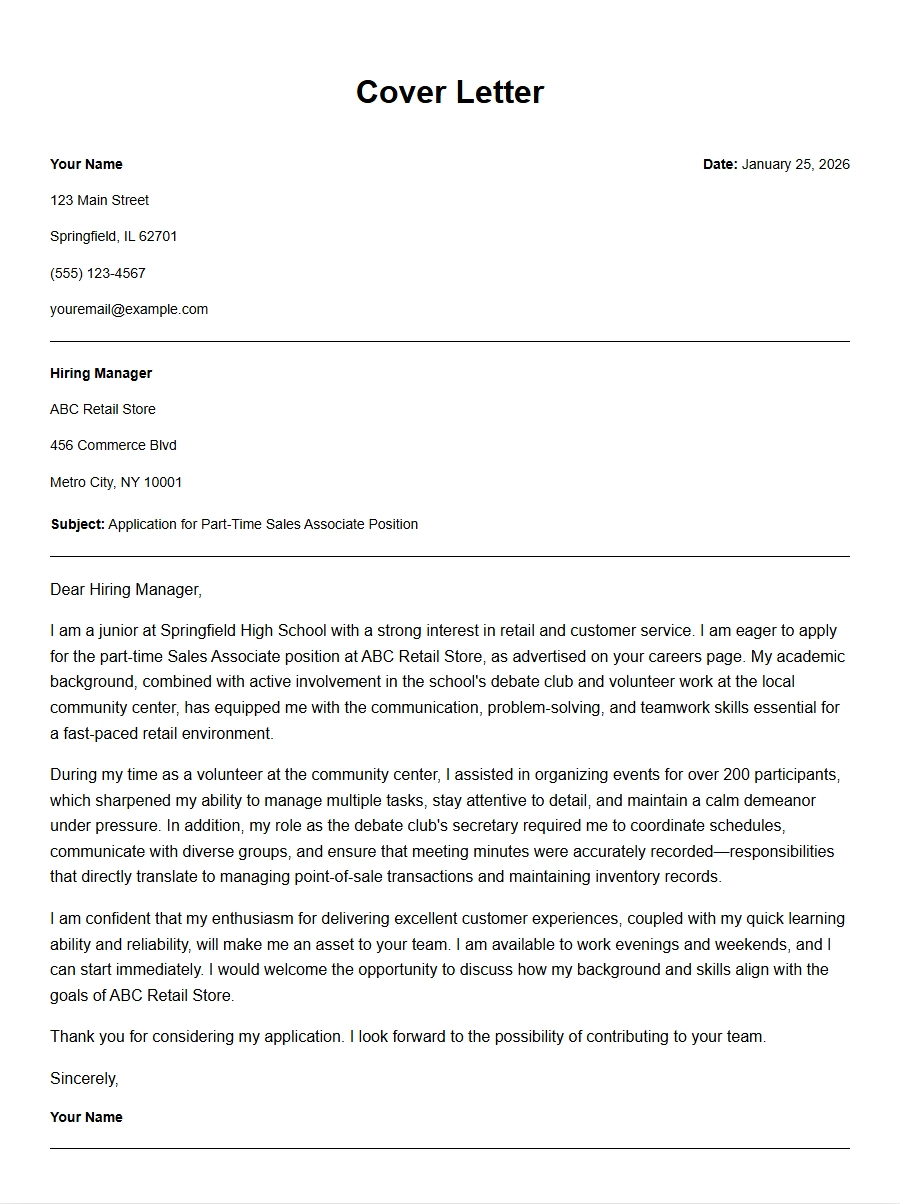 High School Student Part Time Job Cover Letter
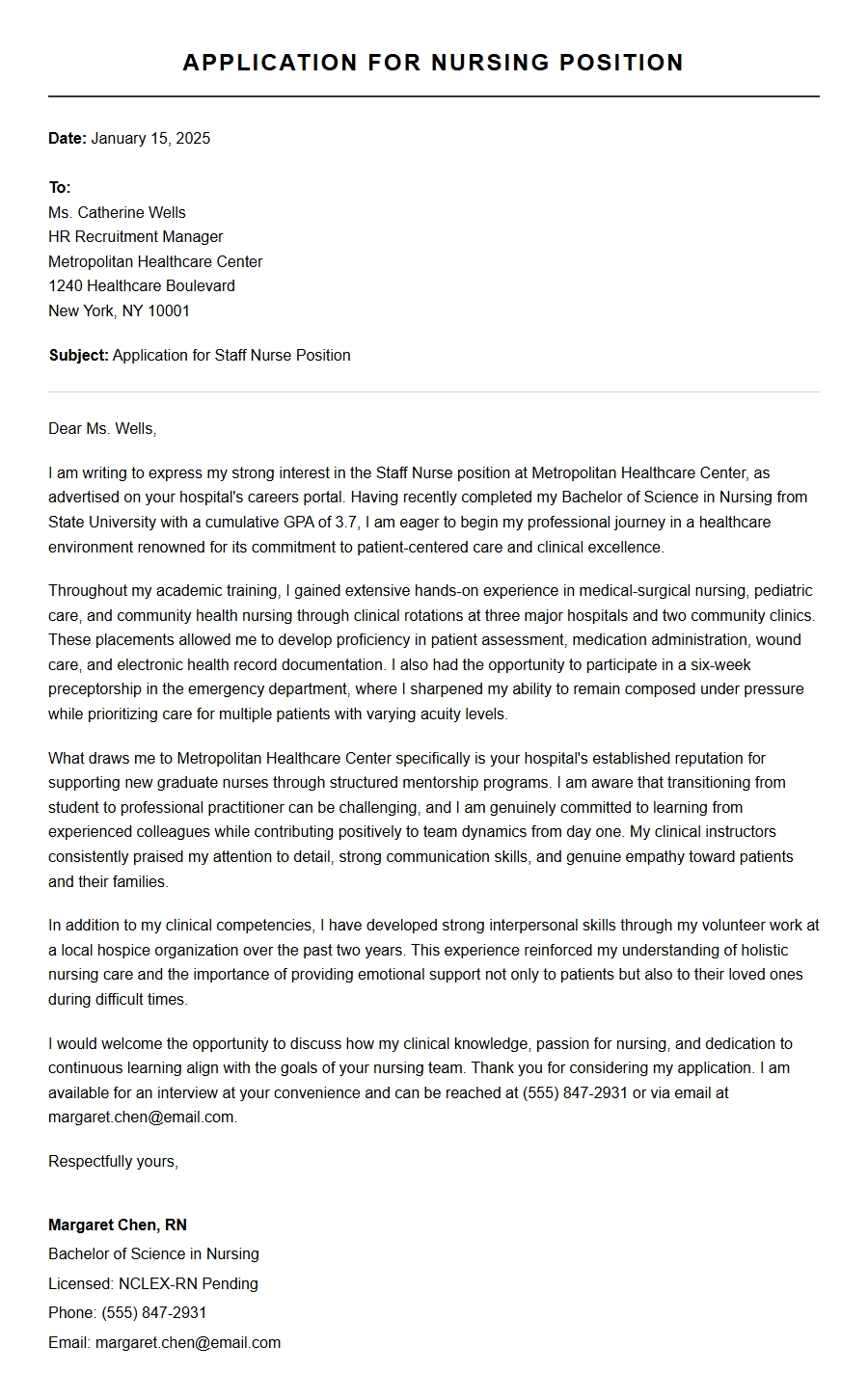 Fresh Graduate Nursing Application Letter
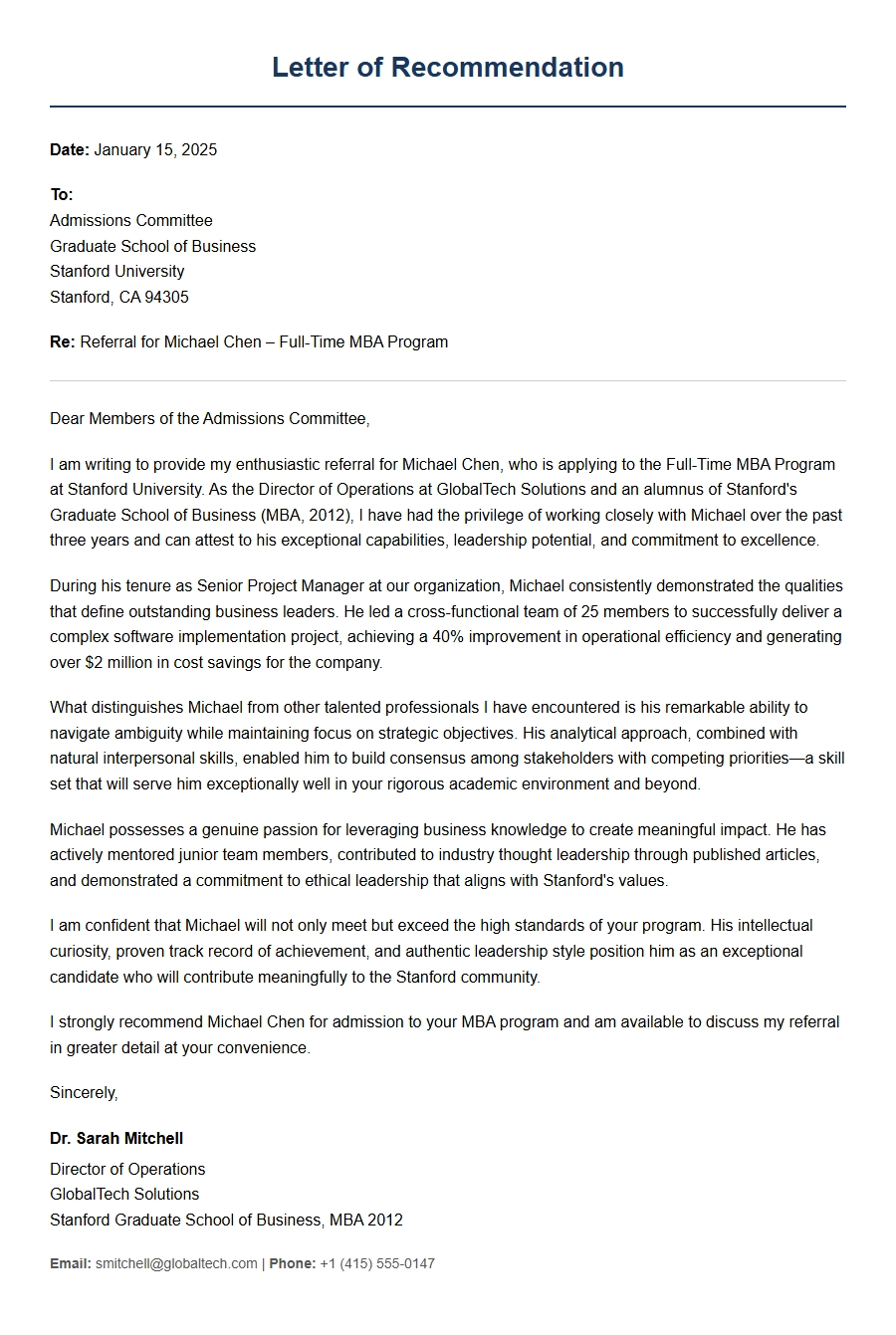 University Alumni Referral Email Cover Letter