You just checked into a hotel room that’s clearly not clean—sticky floors, musty towels, maybe even a stray hair on the pillow. Now you need to write a formal statement about it, either as a complaint, a feedback form, or a request for a refund. Staring at a blank page feels frustrating, but a well-chosen sample can turn that anxiety into a confident, polished draft in minutes.
Why using a sample isn’t cheating
Some people worry that using a letter template means their message will sound generic or lazy. In reality, a good sample gives you a solid letter structure and professional tone to build on. It provides the key phrases you might not think of when you’re upset—like “I’d like to document the condition of the room” or “I expect compensation for the inconvenience.” You then customize it with your specific details. That’s not cheating; it’s smart professional correspondence that saves time and avoids sounding whiny or aggressive.
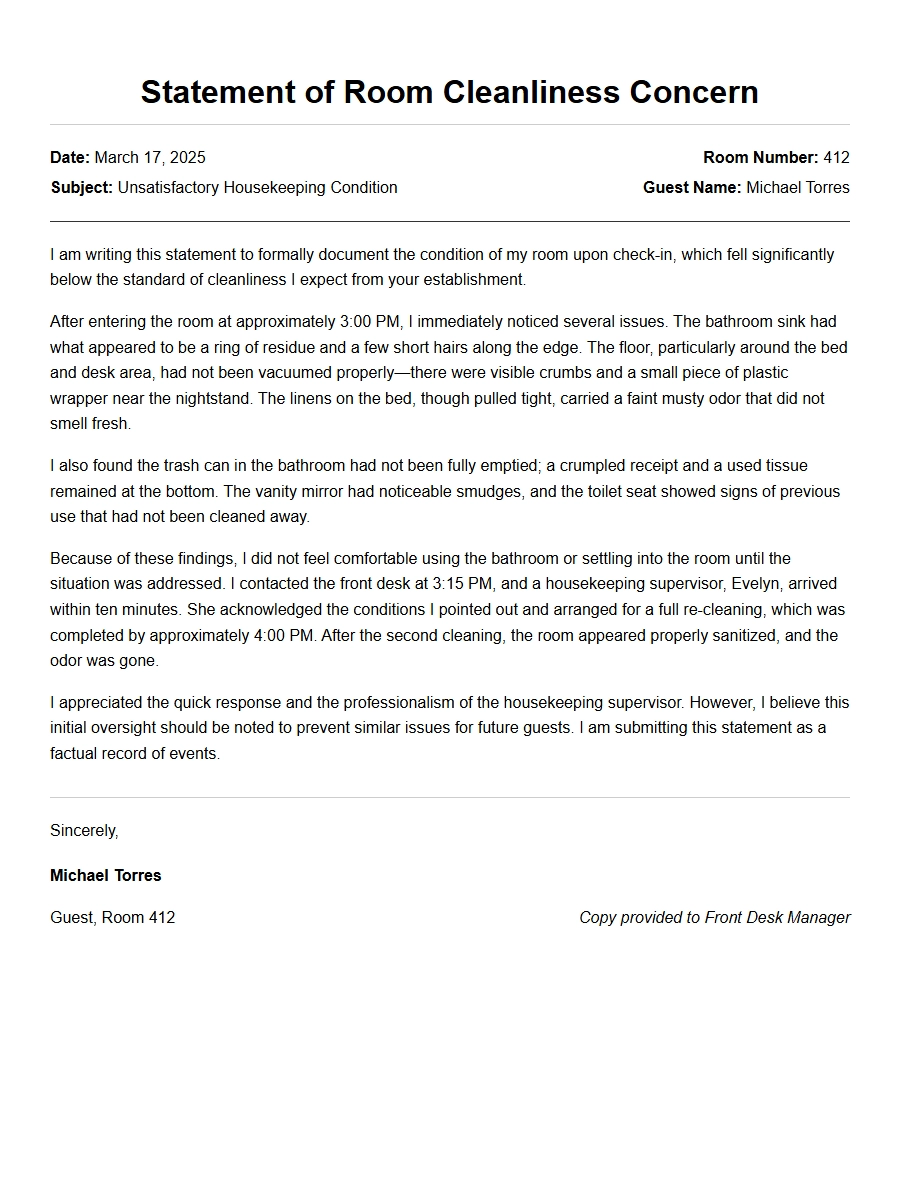
Category: Statement for hotel room cleanliness issue
How to pick the right sample for your situation
First, decide whether you’re writing a formal complaint (to management or corporate), a feedback note on a review site, or a simple request for a housekeeping revisit. Each requires a different tone. For a formal written statement, you’ll want a business letter format with your contact info, date, and clear subject line. If you’re emailing, a digital letter format with a polite salutation and closing works better. Avoid outdated salutation and closing like “To Whom It May Concern” unless you truly don’t have a name. Instead, try “Dear Front Desk Manager” or “Dear [Property Name] Team.”
Industry-specific details matter too. A budget motel may respond better to a simple, direct note; a luxury hotel expects more formal tone in writing. Look for a sample that matches the level of service you received.
Adapting a sample without losing your voice
Once you have a sample, read it through and replace generic placeholders with your actual experience. Instead of copying “I found the room unsatisfactory,” say “The bathroom had visible mold on the shower curtain and the sheets smelled stale.” Specificity makes your statement credible and harder to ignore. Keep your natural voice—short sentences, maybe a bit of frustration, but stay respectful. Ever received a letter that felt too stiff or too casual? Aim for somewhere in between: clear, factual, and reasonable.
A quick tip: tailor your opening paragraph to grab attention. Start with the date of your stay and the specific issue. “I checked into Room 412 on March 10 and immediately noticed a strong odor and crumbs on the sofa.” This immediately frames the problem.
Common mistakes to avoid
Many people forget to include a clear request for resolution. Don’t just complain—state what you want: a refund, a discount, a follow-up cleaning, or a response by a certain date. Also watch your formatting. A printed letter should have a simple letterhead design (your name and contact at the top). For email, use clear subject lines like “Cleanliness issue during stay on [date].” Proofread your letter before sending. A typo undermines your credibility. Read it out loud or have someone else check it. That’s basic letter writing etiquette.
Another mistake: ignoring the difference between a formal complaint and a casual review. A letter of recommendation is the opposite—don’t mix styles. Stick to the format that fits your goal.
Using a sample as a springboard, not a crutch
The best statements feel both professional and personal. They show you care about the issue but aren’t looking for a fight. Practice writing a few versions and you’ll get faster at it. Over time, you won’t need a sample at all—you’ll know the letter structure by heart. For now, grab a reliable template, customize it with your facts, and send it off with confidence.
Now go ahead—write that statement. You’ve got the tools and the tone. The rest is just specifics.
Examples You Can Adapt
Apology for Hotel Room Cleanliness Issue
Formal Apology for Housekeeping Oversight
Dear [Guest Name],
Please accept our sincere apologies for the cleanliness issues you encountered in your room during your recent stay at [Hotel Name]. Our housekeeping team failed to meet our usual standards, and we deeply regret the inconvenience this caused.
To address your concerns, we have taken the following corrective actions:
Retrained the assigned housekeeper on our detailed cleaning protocol.
Conducted an unannounced inspection of your room type to ensure consistency.
Reinforced the use of our new ultraviolet sanitation wands for high-touch surfaces.
As a gesture of goodwill, we have issued a full refund for your one-night stay and added 5,000 loyalty points to your account. Our customer care team will reach out within 24 hours to confirm your satisfaction.
We value your feedback and hope to regain your trust.
Sincerely, [Hotel Manager Name] [Hotel Name]
Personalized Letter for Stained Linens
Dear [Guest Last Name],
I am writing personally to apologize for the stained bed linens and unclean bathroom you reported during your stay at [Hotel Name] on [Date]. This incident does not reflect our commitment to providing a pristine environment.
Our investigation revealed that the housekeeper skipped the final quality check. We have established a new buddy system where two staff members verify room readiness. Specifically, we now require:
Checking all linens under natural light before making the bed.
Verifying bathroom fixtures, mirrors, and surfaces with a flashlight.
Signing off a printed checklist kept in each room.
For your trouble, we are offering a complimentary two-night stay valid for any weekend in the next six months. Additionally, we will credit 10,000 points to your loyalty profile. Please allow 48 hours for the points to appear.
We thank you for bringing this to our attention and hope you will give us another chance.
Warm regards, [General Manager Name]
Apology Following Guest Complaint About Mold
Dear [Guest Name],
We are extremely sorry for the mold and mildew you discovered in the bathroom of your room at [Hotel Name]. This is a serious health hazard and absolutely unacceptable. We have since taken immediate corrective measures.
Our maintenance team performed a deep clean and applied an anti-microbial sealant. We also replaced the bathroom ventilation fan to prevent future moisture buildup. Below is a summary of our response:
Issue
Action Taken
Responsible Party
Mold on ceiling
Scrubbed and repainted with mold-resistant paint
Maintenance Supervisor
Mildew in shower
Re-grouted tiles and deep cleaned
Housekeeping Lead
Poor ventilation
Installed higher CFM fan
Engineering Team
We have credited your account $150 plus the full cost of the night. A gift certificate for a future spa visit is also enclosed. Our quality assurance manager will follow up next week to ensure you are satisfied with these actions.
Your health and comfort remain our top priorities.
Respectfully, [Hotel Name] Management
Apology for Unclean Common Areas Adjacent to Room
Dear [Guest Name],
We apologize for the unpleasant odor and debris in the hallway outside your room during your last stay at [Hotel Name]. The cleanliness of all areas, not just guest rooms, is vital to us, and we failed you.
Our team has implemented a revised schedule for corridor cleaning:
Halls are vacuumed and mopped three times daily (early morning, noon, evening).
Carpet shampooing will occur bi-weekly instead of monthly.
Trash bins in corridors will be emptied every two hours.
Additionally, we replaced the carpet in your wing and installed new air fresheners. We also offered a 20% discount on your next booking as a gesture of apology. Our front desk has noted your preference for a room away from ice machines and elevators to ensure a quiet, clean environment in future stays.
We appreciate your patience and hope you will allow us to show you our true standards.
With apologies, [Housekeeping Director Name]
Formal Letter After Guest Found Pest Evidence
Dear [Guest Name],
We are deeply sorry that you encountered evidence of pests (droppings and a live insect) in your room at [Hotel Name] on [Date]. This is a breach of our hygiene policies and we take full responsibility.
Immediately after your report, we closed the room, contracted a licensed exterminator, and performed a deep fumigation. Our follow-up actions include:
Sealing all cracks and entry points in that room and adjacent rooms.
Moving all furniture and inspecting every surface.
Scheduling monthly pest control inspections across the property.
We have refunded your entire stay (3 nights) and provided a voucher for a future free night with breakfast. Additionally, we will donate $200 to a charity of your choice as a sincere gesture. Please email your preferred charity to [email address].
We assure you that this is an isolated incident and are available to discuss any further steps you may require.
Sincerely, [Hotel Owner/Manager Name]
Apology for Incomplete Turn-Down Service
Dear [Guest Name],
We regret that your turn-down service was not completed as requested on [Date]. Traces of coffee grounds on the desk and an unmade bed left you disappointed. Such oversight is not acceptable.
Our housekeeping team has been reminded to follow the specific turn-down checklist, which includes:
Refreshing towels and removing any used items.
Wiping down all surfaces, especially desks and nightstands.
Adjusting the thermostat and closing curtains.
Placing a mint on the pillow only after verifying entire room is clean.
We have issued a $75 credit to your card and upgraded your next booking to a suite with priority housekeeping. Our evening shift supervisor will personally inspect all turn-down requests for the next month.
Your comfort matters to us, and we are grateful for your feedback.
Best regards, [Guest Relations Manager]
Apology for Dust and Allergens in Room
Dear [Guest Name],
We apologize for the excessive dust and allergens found in your room at [Hotel Name] that triggered your allergy symptoms. This is a serious lapse in our housekeeping, especially considering you noted your allergy at check-in.
We have taken immediate steps to rectify the situation:
Deep cleaned the room using HEPA-filter vacuums and damp cloths.
Replaced all bedding with hypoallergenic covers and pillows.
Installed an air purifier in the room and changed HVAC filters on your floor.
Furthermore, we have established a protocol to flag rooms for guests with allergies. Your profile now includes this note for all future stays. We refunded your room charges and will cover your next visit’s upgrade fee. A dedicated housekeeper will pre-clean your reserved room before arrival.
Please accept our sincere apologies and let us know if you need medical assistance related to this incident.
Yours faithfully, [Hotel Manager]
Apology for Broken Amenities and Dirt
Dear [Guest Name],
We are sorry for the broken hair dryer and dirty carpet you encountered in your room at [Hotel Name]. These issues are not typical and we understand your frustration.
Our maintenance team has repaired or replaced the following items immediately:
Item
Status
Hair dryer mounted in bathroom
Replaced with new unit
Stain on living area carpet
Shampooed and steam cleaned
Dust on air vents
Cleaned and filter changed
We credited 50% of your room rate to your credit card. Additionally, we are offering a complimentary dinner for two at our restaurant as a peace offering. Please contact the concierge to arrange a reservation at your convenience.
We have also updated our preventive maintenance schedule to inspect all amenities every month. Your feedback has helped us improve.
Please accept our apology for the lack of proper sanitization in your bathroom, including leftover hair in the drain and soap scum on fixtures. This happened while you stayed at [Hotel Name] on [Date].
We have re-trained the responsible housekeeper and introduced a new bathroom cleaning checklist that includes:
Removing all hair from drains and cleaning them with enzyme drain cleaner weekly.
Polishing chrome fixtures with disinfectant every shift.
Replacing bath mats and shower curtains after each checkout.
As compensation, we have issued a full refund for the night and two free nights for your next visit. You will also receive a complimentary upgrade to an executive suite upon your return. Our quality assurance team will inspect your room personally before your next arrival.
We hope this experience does not overshadow our usual high standards.
Warm regards, [Hotel Operations Manager]
Apology for Unpleasant Smell from Minibar
Dear [Guest Name],
We are sorry that a spoiled item in your minibar caused an unpleasant smell and stains in your room at [Hotel Name]. This oversight by our housekeeping team should not have occurred.
We have resolved the issue as follows:
Expired food items were discarded and the minibar deep cleaned.
The entire carpet was steam cleaned to remove odors.
We now check minibar contents expiration dates daily during morning service.
For your inconvenience, we have refunded the minibar charges and applied a $100 credit to your account. Additionally, a personal assistant will ensure your stay is perfect next time. Please call our guest services line to book a free night as our guest.
We take cleanliness very seriously and have reinforced our daily inspections. Thank you for alerting us.
With sincere apologies, [Food & Beverage Manager] & [Housekeeping Supervisor]
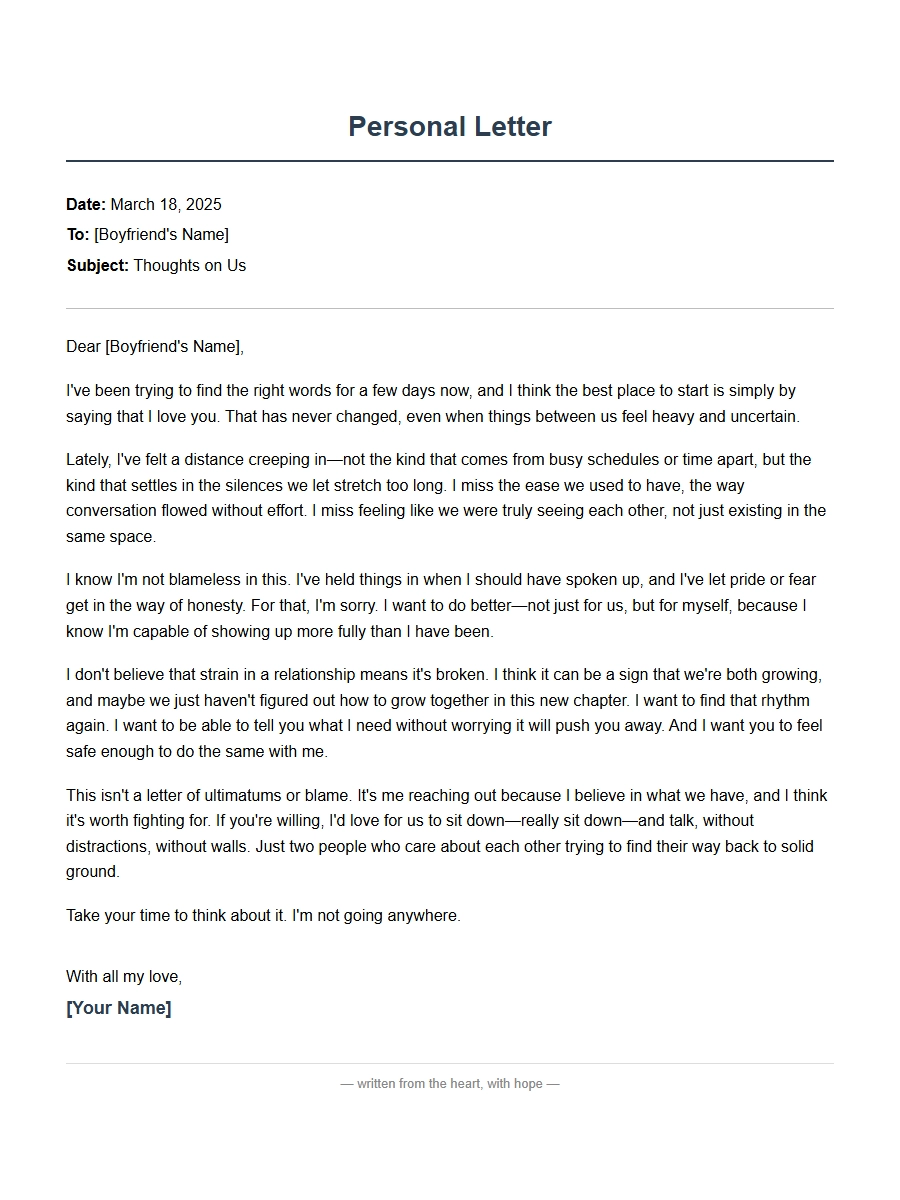 Personal Apology Letter for Boyfriend Relationship Strain
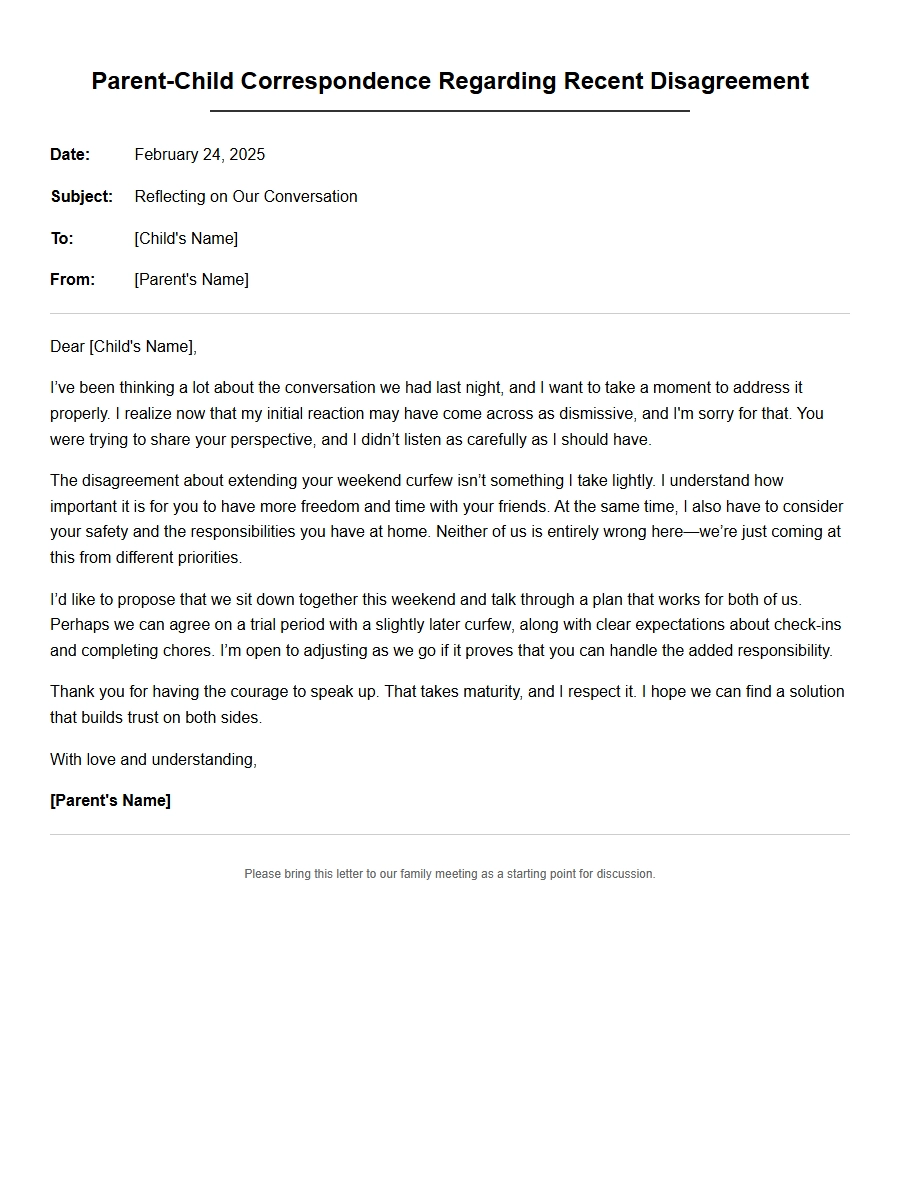 Apology Correspondence for Parent-Child Disagreements
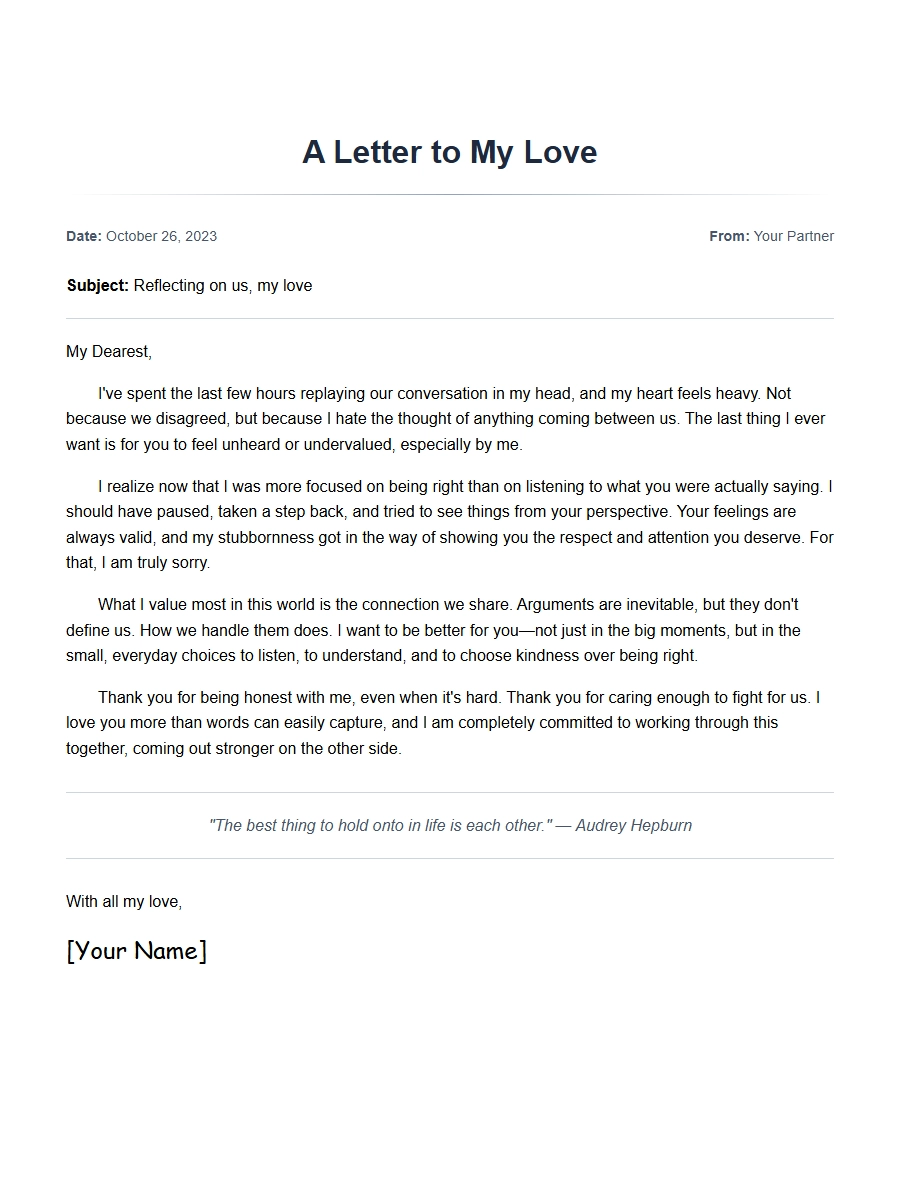 Apology Message for Girlfriend After Argument
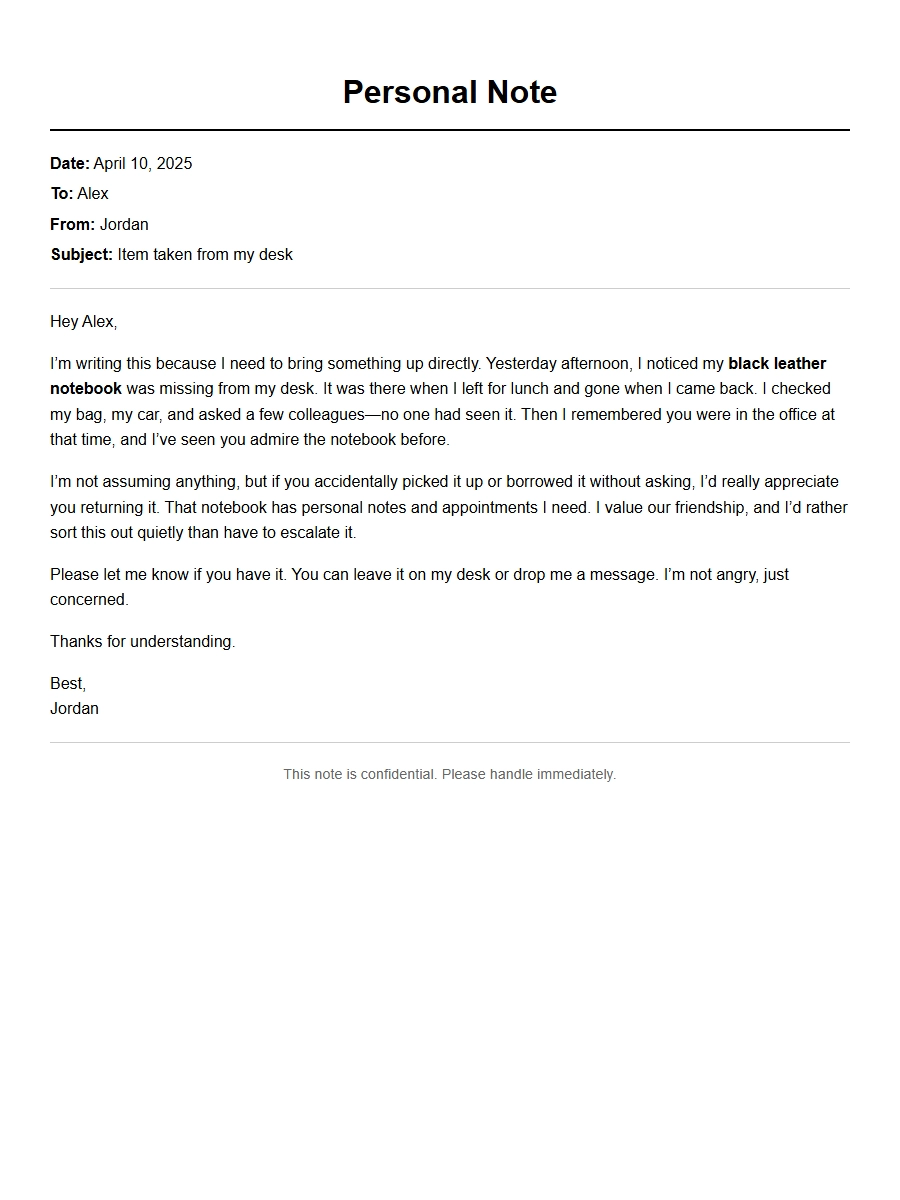 note for friend stealing item - Apology Letters
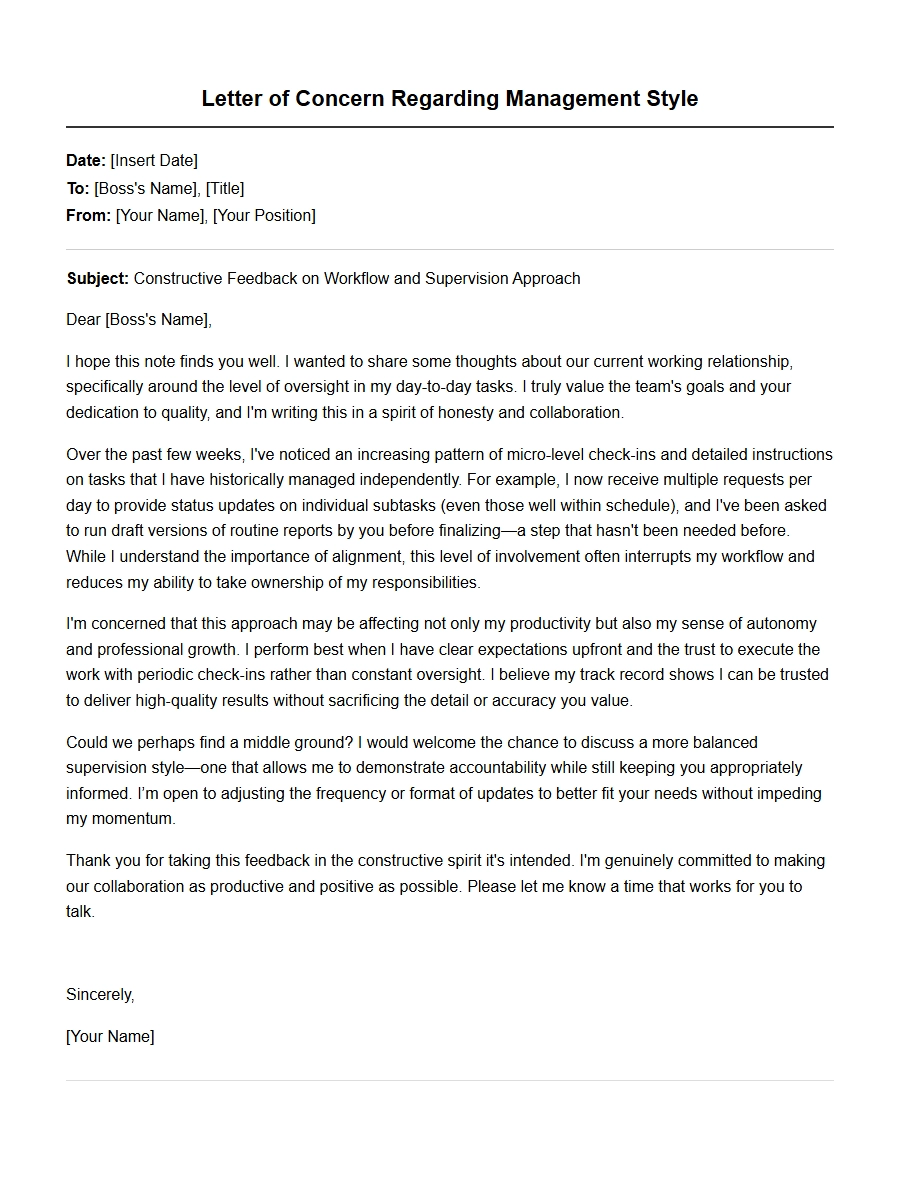 Apology to Boss for Micromanagement Complaint
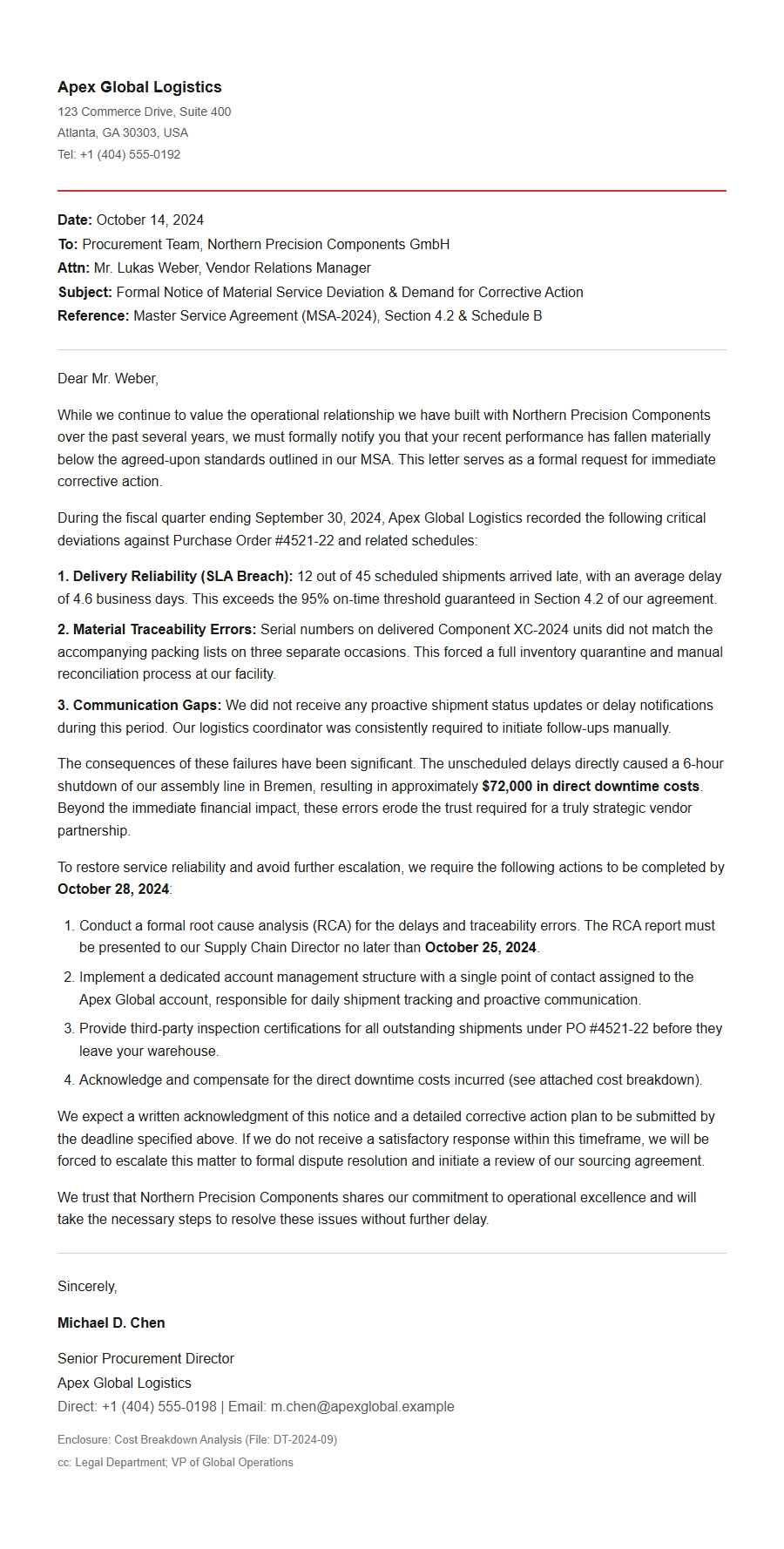 Apology Document for Vendor Supply Chain Issue