Special Education Teacher Cover Letter: Individualized Plan
You’ve spent years writing individualized education plans, tracking student progress, and adapting lessons on the fly. But the moment you sit down to write a cover letter for a special education teaching position, the words just won’t come. That blank page feels harder than any IEP meeting. I’ve been there. The good news is you don’t have to start from scratch. A solid letter sample can save you time and give you a structure that works—without making your letter sound like a robot wrote it.
Why using a sample isn’t cheating
Think of a letter template as a pair of training wheels. It keeps you upright while you find your own balance. Every professional correspondence—whether it’s a cover letter, a letter of recommendation for a student, or a resignation letter sample—follows a familiar pattern: salutation, opening, body, closing. The best samples show you the right tone and format, then leave room for your voice. You’re not copying; you’re adapting. That’s a smart, time-saving strategy.
Category: Professional Correspondence Tools
Choosing the right sample for your situation
Not every letter is the same. A cover letter for a public school special education role will sound different than a resignation letter for a private therapy center. Before you pick a sample, ask yourself: who is reading this, and what do they care about? For a cover letter, the principal or HR manager wants to see that you understand individualized plans, behavior interventions, and collaboration. A good sample will highlight those points in a natural way. Avoid generic business letter format templates that feel too stiff. You want a structure that lets you show your personality—and your expertise.
How to adapt without losing your voice
Start by reading the sample all the way through. Notice the opening: does it grab attention? Most samples use a strong first sentence to state the role and a quick reason for interest. In your version, swap their reason with yours. For example, “I’ve seen how the right support transforms a child’s learning” works better than “I am writing to apply for the position.” Keep the flow, but change the details. If the sample says “I have experience with behavior plans,” you might say “I’ve written individualized plans for students with autism and speech delays.” Specifics make it yours.
Common mistakes? Watch out for outdated salutations like “To Whom It May Concern.” Unless you have no choice, find the hiring manager’s name. Also, remember the difference between email and printed letters. In a digital letter format, you can skip the letterhead design and just use a clear subject line and your contact info at the top. Formal writing tips often say to keep the tone professional but warm. Don’t go so formal that you sound like a legal document.
Tailoring the opening paragraph to grab attention
The first three sentences decide if the reader keeps going. Instead of “I am excited to apply,” try a short story or a specific achievement. Something like: “This year, I helped a student with severe dyslexia move from below grade level to reading at grade level in six months. That’s the kind of impact I want to bring to your school.” That opening shows results, not just enthusiasm. If you’re writing a letter of recommendation for a paraprofessional, start with your connection and a concrete example of their work.
Ever received a letter that felt too stiff or too casual? Tone in writing is tricky. For a special education role, aim for a tone that’s competent and caring. Use contractions like “I’ve” or “you’ll”—they make you sound human. Avoid jargon unless you define it immediately. You can mention “individualized plans” because every special educator knows what that means, but don’t assume the reader remembers every acronym.
Don’t forget the closing and proofreading
A strong closing does more than say “Sincerely.” It restates your interest and invites the next step. “I would love to discuss how my experience with data-driven IEPs can support your students. Thank you for your time and consideration.” Then use a simple salutation and closing like “Best regards” or “Respectfully.” Before you hit send, proofread letter carefully. Read it aloud. Ask a colleague to glance at it. One typo can undo all your work, especially in a competitive job market.
If you’re writing a resignation letter sample, keep it brief and gracious. State your last day, thank them for the opportunity, and offer to help with the transition. No need to list complaints.
Use the sample as a springboard, not a crutch
The best letters feel both professional and personal. They show you’ve done the work of thinking about what to say, not just filling in blanks. With a little practice, writing professional correspondence becomes faster and less stressful. Next time you need a cover letter or a government clerk letter, you’ll know how to start. For special education teachers, the ability to write a clear, compelling letter is just another tool in your toolbox—like an individualized plan, but for your career.
So go ahead. Open that sample, make it yours, and get your letter out the door. You’ve got this.
Examples You Can Adapt
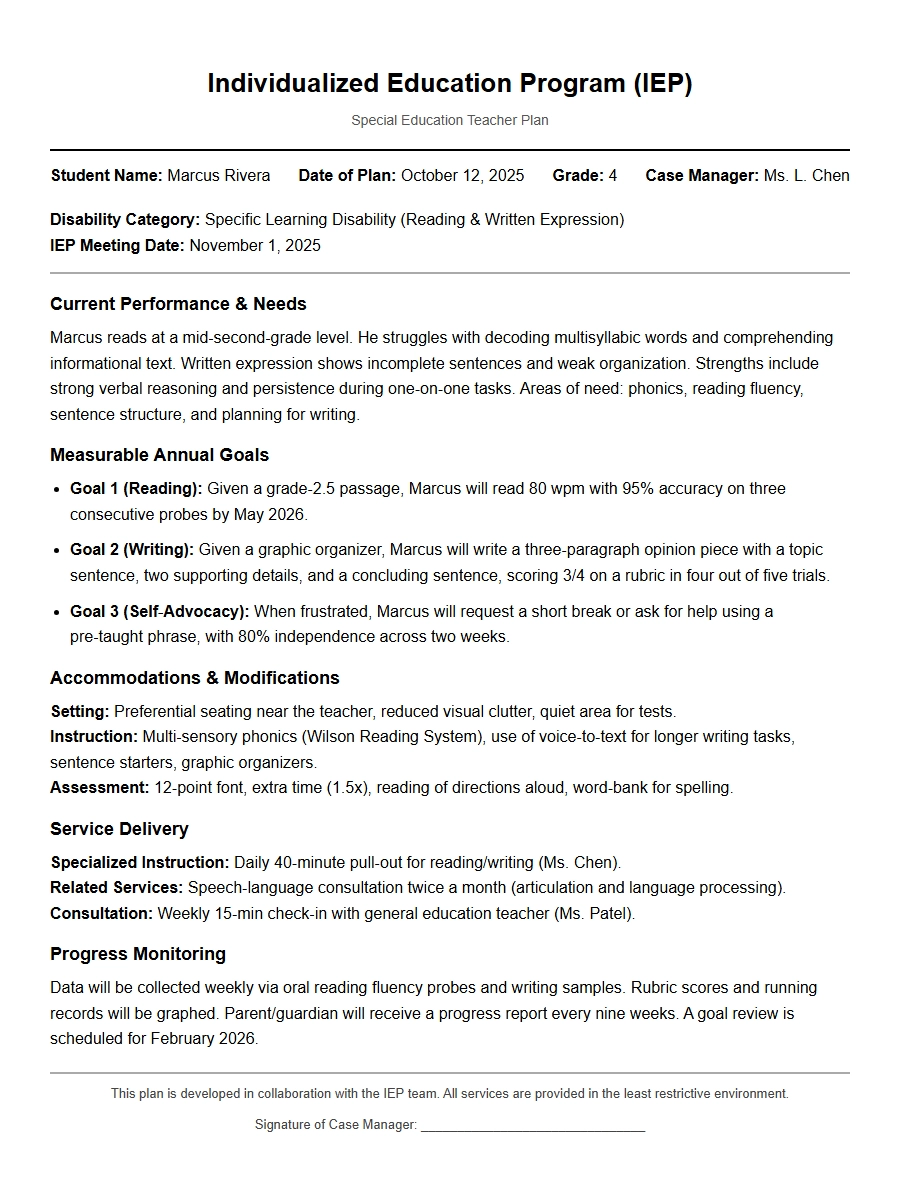
Special Education Teacher Cover Letter: Individualized Plan
Entry-Level Special Education Teacher Passionate About IEP Development
Dear Principal Rodriguez,
I am writing to apply for the special education teacher position at Lincoln Elementary. As a recent graduate with a Master’s in Special Education, I am eager to bring my knowledge of individualized education plan (IEP) development to your team. My student teaching experience involved creating and implementing IEPs for students with diverse learning needs.
Key skills I offer:
Conducting IEP meetings with parents, general education teachers, and support staff
Writing measurable annual goals and benchmarks
Using data to monitor progress and adjust instruction
I am confident that my dedication to crafting meaningful, compliant IEPs will support your school’s commitment to inclusive education. Thank you for considering my application.
With seven years of experience as a special education teacher in Smithfield District, I am excited to apply for the similar role at Maplewood High. My expertise lies in ensuring IEPs are both legally compliant and practically effective. I have successfully managed caseloads of 15+ students, each with unique needs.
Relevant accomplishments:
Area
Outcome
IEP meeting facilitation
100% parent satisfaction rate
Progress monitoring
Improved student goal achievement by 40%
Compliance audits
Zero findings in state review
I am skilled in using IEP software and collaborating with multidisciplinary teams. I look forward to contributing to Maplewood’s strong special education program.
Best regards, Michael Torres
Lead Special Education Teacher Coordinating IEP Teams
Dear Superintendent Hayes,
I am applying for the lead special education teacher position at Westwood Academy. Over the past ten years, I have served as both a classroom teacher and team leader, coordinating IEP development for over 50 students annually. My strength lies in building consensus among staff and parents to create personalized plans that drive student success.
My leadership responsibilities have included:
Training new teachers on IEP writing and legal requirements
Organizing annual and triennial review meetings
Ensuring timely submission of all documentation
I am proud of the collaborative IEP process we established, which reduced conflict and improved outcomes. I am ready to bring this experience to Westwood.
Warmly, Sarah Klein
Resource Room Teacher Focused on IEP Implementation
Dear Principal O’Brien,
Resource room instruction requires precise implementation of each student’s individualized plan. I am applying for this role at Sunrise Middle School because I excel at translating IEP goals into daily, differentiated lessons. With five years in resource settings, I have honed my ability to manage multiple plans simultaneously.
My approach includes:
Breaking down annual goals into short-term objectives
Using explicit instruction and assistive technology
Tracking progress with weekly data sheets
I also communicate regularly with general education teachers to ensure accommodations are in place. I am excited to support your students as they achieve their IEP milestones.
Sincerely, David Lee
Inclusion Support Teacher Highlighting Collaborative IEPs
Dear Hiring Team,
I am thrilled to apply for the inclusion special education teacher position at Parkside Elementary. My teaching philosophy centers on collaboration. For four years, I have co-taught in inclusive classrooms, co-authoring IEPs that blend special education supports with grade-level content. I believe a strong IEP is the foundation for meaningful inclusion.
Highlights of my experience:
Co-planning with three general education teachers
Adapting materials based on IEP accommodations
Conducting joint progress monitoring
I also facilitate monthly collaboration meetings to review IEP goals. I am eager to bring this team-oriented mindset to Parkside.
Best wishes, Emily Tran
Behavior Intervention Specialist Integrating BIPs with IEPs
Dear Director Martinez,
I am applying for the special education teacher position with a focus on behavior support at Valley High School. In my past six years, I have specialized in writing behavior intervention plans (BIPs) as part of comprehensive IEPs. I understand that academic and behavioral goals must align for student success.
My expertise includes:
Component
My method
Functional behavior assessment
Direct observation and data collection
BIP development
Positive, evidence-based strategies
IEP integration
Linking behavior and academic goals
I have reduced office referrals by 30% through effective IEP/BIP implementation. I look forward to helping your students succeed both socially and academically.
Respectfully, Kevin Wu
Early Childhood Special Education Teacher Crafting IEPs for Young Learners
Dear Ms. Garcia,
I am writing to express my interest in the early childhood special education teacher role at Little Steps Preschool. Working with children aged 3-5 requires developmentally appropriate, family-centered IEPs. I have three years of experience writing plans that incorporate play-based learning and functional skills.
My key qualifications:
Conducting developmental assessments and writing present levels
Creating goals for communication, motor, and social skills
Partnering with parents during IEP meetings
I also use visual schedules and sensory breaks to support young learners. I am passionate about setting a strong foundation through well-designed IEPs. Thank you for your consideration.
Sincerely, Jessica Patel
Autism Specialist Designing Individualized Plans for Students on the Spectrum
Dear Dr. Williams,
I am applying for the special education teacher position at Spectrum Academy, where my focus on autism-specific IEPs can make a meaningful difference. With eight years of experience teaching students on the autism spectrum, I tailor each individualized plan to the child’s unique strengths and challenges.
Components I emphasize:
Communication goals (AAC, verbal, social)
Sensory regulation strategies
Executive functioning supports
I also incorporate parent training and coordinate with therapists to ensure consistency. My students have achieved notable gains in independence and communication. I am excited to contribute to your team.
Best regards, Nathan Brooks
High School Transition Specialist Focusing on Post-School IEP Goals
Dear Principal Nguyen,
I am applying for the secondary special education teacher role at Jefferson High, eager to bring my expertise in transition IEPs. Helping students plan for college, career, and independent living is my passion. I have led transition planning for over 40 students, ensuring their IEPs include measurable postsecondary goals and coordinated services.
My transition planning skills:
Area
Examples
Vocational assessments
Interest inventories, job shadows
Community agency collaboration
Voc Rehab, developmental disabilities offices
Self-advocacy instruction
Student-led IEP meetings
I have helped 90% of my students secure employment or further education within one year of graduation. I am ready to guide your students toward successful futures.
Sincerely, Lisa Johansson
Itinerant Special Education Teacher Managing IEPs Across Multiple Schools
Dear Dr. Kim,
In response to the itinerant special education teacher opening, I offer four years of experience supporting students across three elementary schools. My role requires adaptability and strong organizational skills to develop and monitor IEPs for a diverse caseload. I ensure each plan is faithfully implemented regardless of location.
My approach to multi-site service:
Electronic IEP system proficiency for remote collaboration
Weekly check-ins with each building’s team
Consistent data collection across settings
I also enjoy training paraprofessionals on specific IEP accommodations. I am accustomed to flexible scheduling and clear communication. I would be honored to bring my itinerant expertise to your district.
 Recent College Student Cover Letter for Internship
 Entry Level Teacher Cover Letter Examples
 Career Changer Administrative Assistant Cover Letter
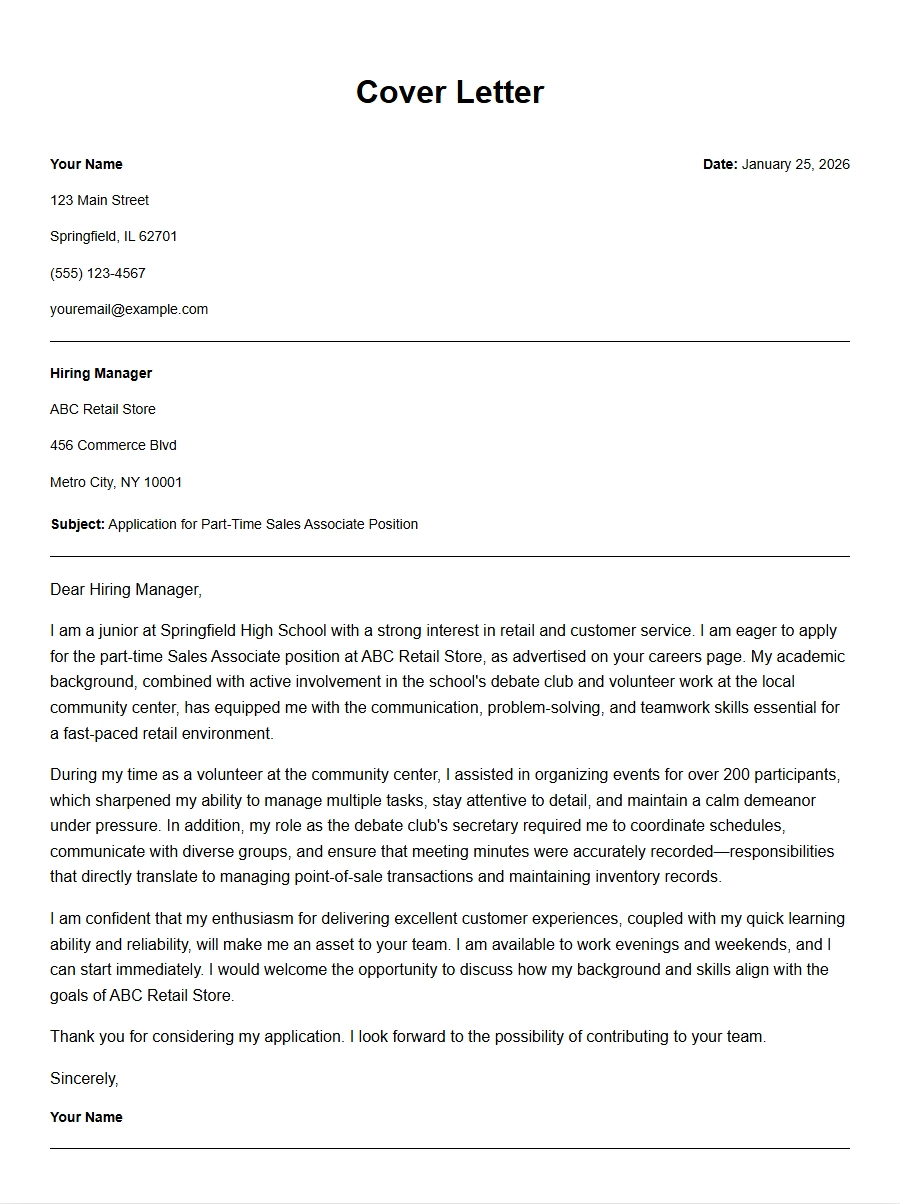 High School Student Part Time Job Cover Letter
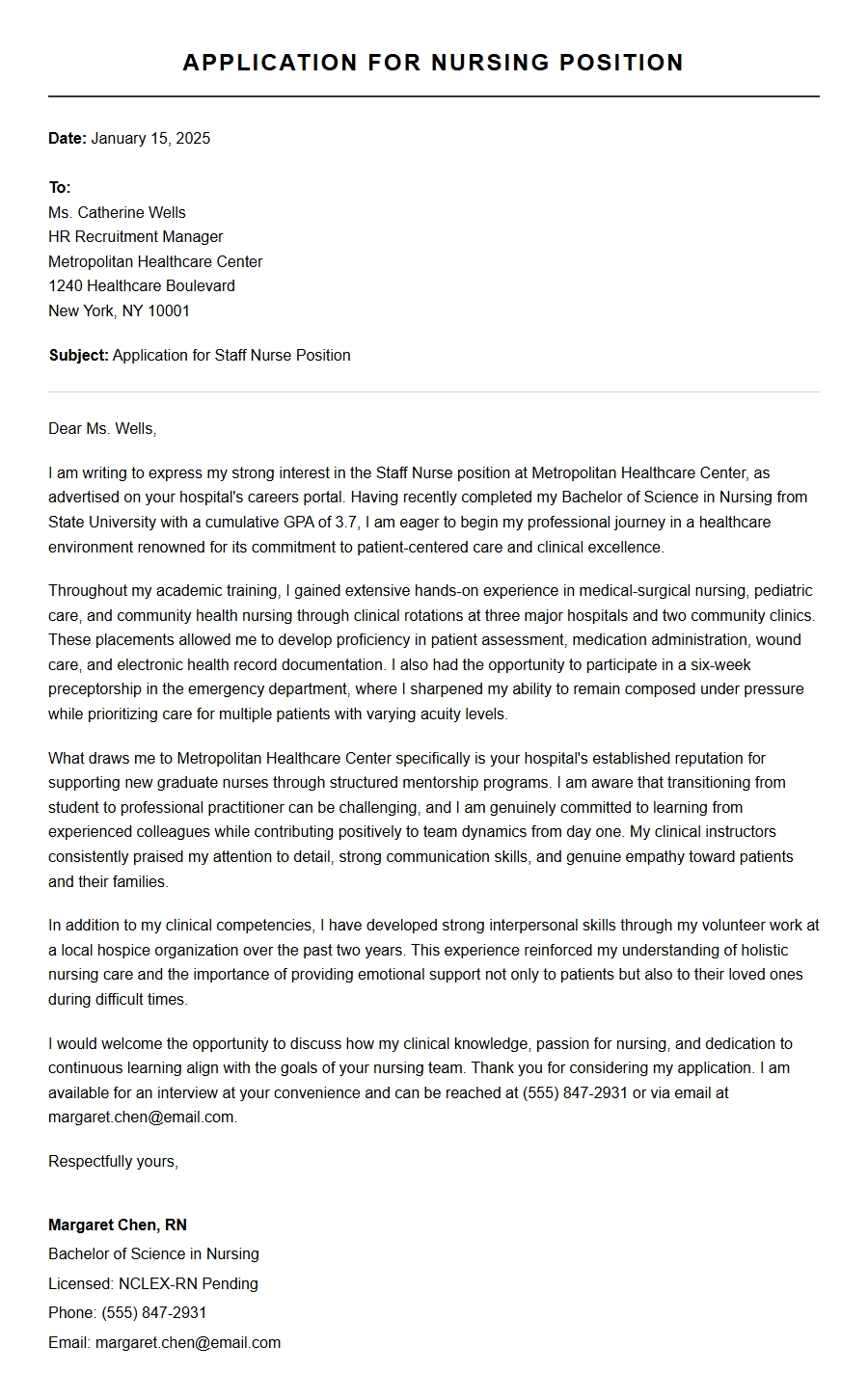 Fresh Graduate Nursing Application Letter
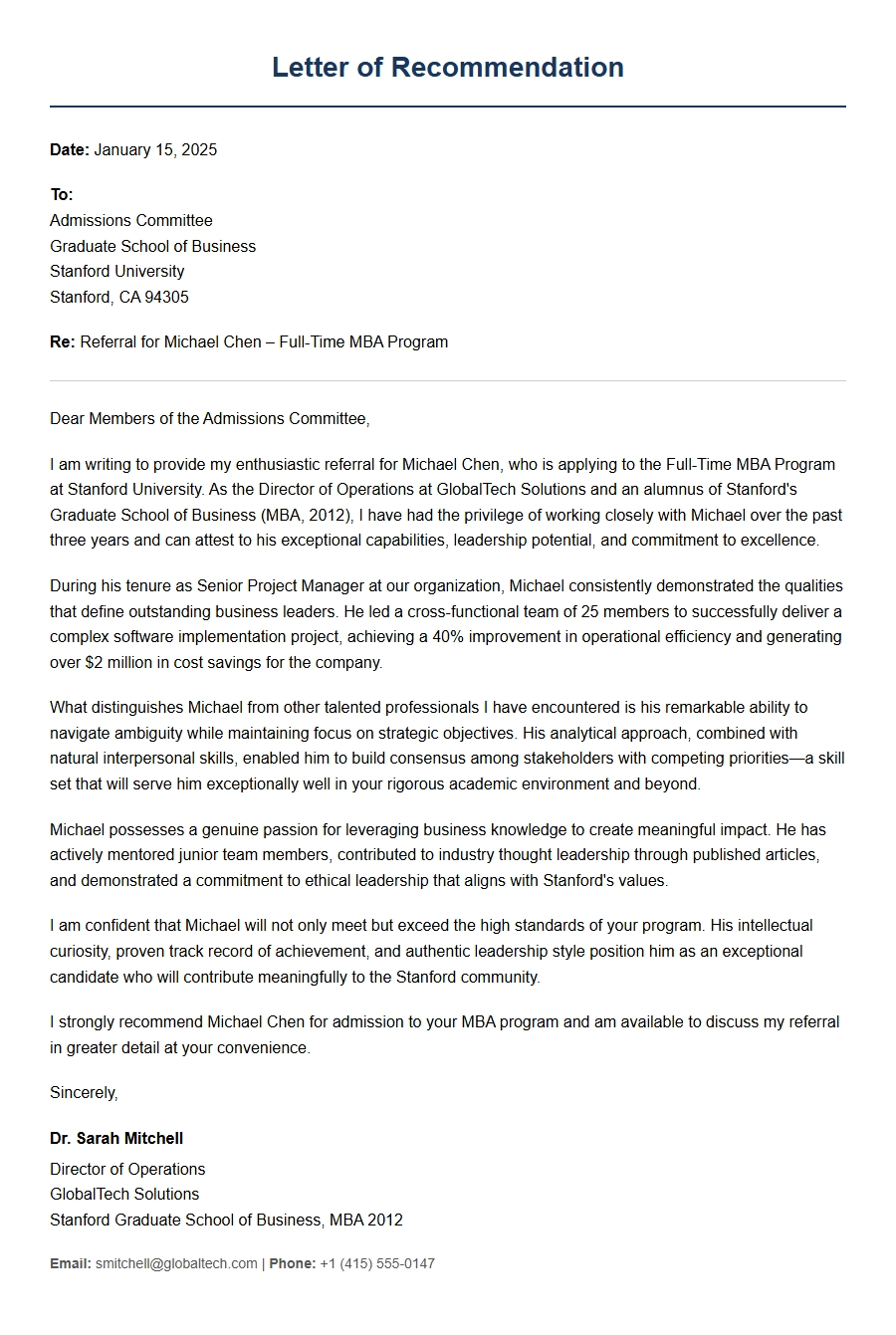 University Alumni Referral Email Cover Letter