You just realized two clients are booked for the same slot tomorrow. Your stomach drops. Now you need to send a message to one of them, and you want it to sound professional without sounding cold. The good news: a simple, well‑worded message can fix the mistake and even strengthen the client’s trust. You don’t need to start from scratch. A good sample gives you the structure, tone, and key phrases—then you tailor it to your salon’s voice.
A double‑booking message is a specific kind of professional correspondence. It’s not a formal business letter, but it still needs clear salutation, a sincere apology, a brief explanation, and a concrete solution. Most importantly, it needs to feel human. You’re not confessing a crime; you’re fixing a scheduling hiccup. The right sample helps you strike that balance between accountability and warmth.
Category: Salon Customer Communication
What makes a good double‑booking message?
The core need is to inform the client about the conflict without making them feel like an inconvenience. Start with a friendly salutation: “Hi [Name],” works fine. Then get straight to the point—don’t bury the apology. “I’m so sorry, but we’ve accidentally double‑booked your appointment.” Follow with a simple reason: “Our system had a glitch” or “I made a scheduling error on my end.” Avoid blaming others or giving too much detail. Clients don’t need the full story; they need a fix.
Next, offer a solution. That could be a new time slot the same day, a priority spot on the next available day, or even a small discount to apologize. End with an open invitation: “Let me know what works best for you.” Keep the tone in writing warm and professional. If your salon is casual, feel free to use emojis or a relaxed sign‑off like “Thanks so much.” For a high‑end salon, stick to “Sincerely” or “Best regards.”
How to adapt a sample without losing your voice
Letter writing etiquette still matters here, even in a short email or text. Use a clear subject line like “Rescheduling your appointment – sorry!” The body should follow a logical structure: greeting, apology, solution, closing. If you’re using a letter template, personalise it by swapping generic phrases with your own words. For example, change “we regret to inform you” to “I’m really sorry about this.” That small shift makes it sound like you, not a robot.
One mistake people make is using outdated salutations like “To whom it may concern.” That sounds too stiff for a salon message. Another common error is ignoring the format. If you’re sending a text, keep it short and avoid paragraph breaks. For an email, use a simple digital letter format with your salon name in the signature. Even a plain‑text email can feel professional if you proofread it carefully.
Mistakes to avoid
Don’t over‑apologise. One sincere apology is enough; repeating “I’m so sorry” five times can feel insincere. Also, don’t give a long excuse. “Our booking software crashed and we lost the data, then the receptionist forgot to check…” just makes you sound disorganised. Stick to a short explanation like “We had a scheduling mix‑up.” Then move to the solution quickly.
Another pitfall is not offering a specific alternative. Saying “We can reschedule you sometime next week” is vague. Instead, offer two concrete options: “I have an opening Thursday at 2pm or Friday at 11am. Which works better?” That shows you’ve already done the work to fix it. Finally, always proofread your message before sending. A typo in an apology can come across as careless. Proofreading a letter—or any client message—is a sign of respect.
When to customise more heavily
If the client is a regular, you might go beyond the standard sample. Mention their usual service or favourite stylist. For a loyal customer, consider adding a small gesture like a free add‑on next visit. That turns a negative into a positive. For new clients, keep it simple and professional. They’re still forming an impression of your salon’s reliability.
No sample will fit every situation perfectly. That’s okay. The best messages feel both professional and personal. Use the sample to get the basics right—the structure, the apology, the solution—then add your own personality. Practice makes the process faster. Next time you face a double booking, you’ll write the message in minutes, not hours. And your clients will appreciate the honesty.
Samples to Guide You
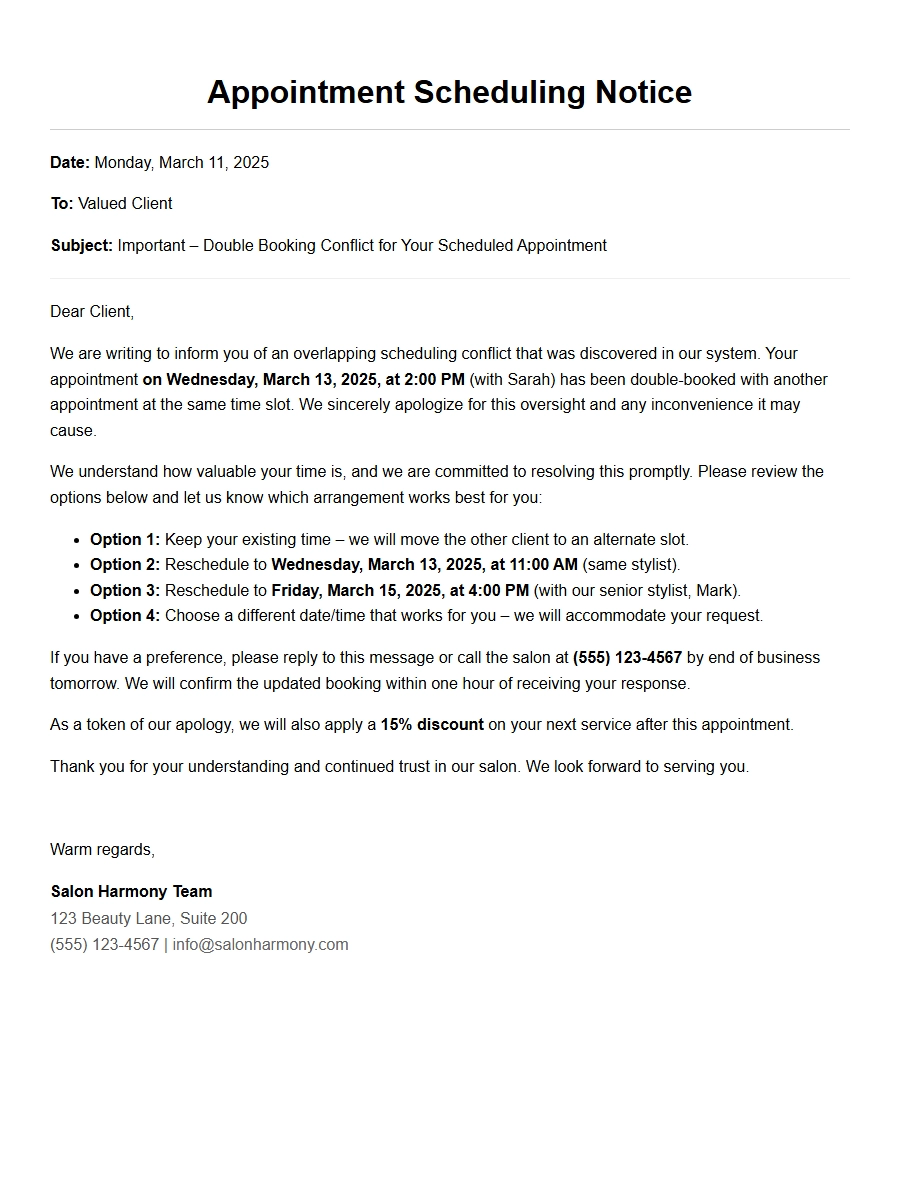
Apology for Double Booked Salon Appointment
Formal Apology Letter from Salon Owner
Dear [Client Name],
On behalf of [Salon Name], I sincerely apologize for the double booking that caused you inconvenience on [Date]. Our scheduling system failed to reflect your confirmed appointment, and we understand how frustrating this is.
To make things right, we offer the following options:
Priority rescheduling at your preferred time within the next week.
A 20% discount on your next service.
A complementary deep conditioning treatment with your next visit.
Please contact our receptionist at [Phone Number] or reply to this letter to choose an option. We have already updated our booking software to prevent this from recurring.
Thank you for your understanding. We value your patronage and look forward to serving you better.
Sincerely, [Your Name] Owner, [Salon Name]
Apology Text Message to Client
Hi [Client Name], this is [Stylist Name] from [Salon Name]. I am so sorry — due to an error in our system, your appointment for [Date] at [Time] was double booked.
We can still fit you in today at [Alternative Time] or reschedule to a time that works best for you. As a sincere apology, we will add a free scalp massage to your next service.
Please reply YES for the [Alternative Time] slot, or tell us your preferred time. Again, I apologize for the mix-up and truly appreciate your understanding.
Warmly, [Stylist Name]
Voicemail Script for Double Booking
Hello [Client Name], this is [Receptionist Name] from [Salon Name]. I am calling to sincerely apologize for a double booking that occurred with your appointment scheduled for [Date] at [Time].
We realize this is a significant inconvenience. To resolve this, we have set aside several alternative slots this week:
Day
Available Times
Monday
10:00 AM, 2:00 PM
Wednesday
11:00 AM, 4:00 PM
Friday
9:00 AM, 1:00 PM
Please call us back at [Phone Number] to confirm a new time. As a gesture of apology, we will include a 15% discount on your next visit. We hope to make this right. Thank you.
Email Apology with Rescheduling Options
Subject: Our Apologies for the Double Booking – [Salon Name]
Dear [Client Name],
We regret to inform you that your appointment on [Date] at [Time] was double booked due to a scheduling error. We take full responsibility and sincerely apologize for any disruption to your day.
To make amends, we would like to offer you the following choices:
Reschedule to any available slot in the next two weeks, with priority booking.
Receive a complimentary upgrade to a premium service of your choice (e.g., Olaplex treatment or aromatherapy scalp massage) on your next visit.
Obtain a 25% discount on your next service.
Please reply to this email or call us at [Phone Number] to let us know your preference. We have also added a note in your file to ensure this does not happen again.
With sincere apologies, [Manager Name] [Salon Name]
Handwritten Note with Discount Offer
Dear [Client Name],
I am writing this by hand because I want to personally express how sorry I am that your appointment was double booked. There is no excuse for it, and I take full responsibility.
To show how much we value you, I have authorized a 30% discount on your next service. Additionally, we will reserve your preferred stylist for any time you choose, even on busy weekends.
Please bring this note when you visit to claim your discount. I hope you will give us another chance to provide the excellent experience you deserve.
With regret and hope, [Owner/Stylist Name]
Receptionist's Apology and Explanation
Dear [Client Name],
This is [Receptionist Name] from [Salon Name]. I am writing to apologize personally for the double booking that occurred on [Date]. It was my oversight while handling two phone calls at once, and I am truly sorry.
I have already corrected the schedule and added a note to your profile so this will not happen again. To make up for the inconvenience, I have arranged the following:
A 10% discount on your next visit from me directly.
Your choice of a free beverage (specialty coffee or herbal tea) during your rescheduled appointment.
Priority in our cancellation list if you need a last-minute slot.
Please contact me at [Phone Number] or stop by the front desk when you come. I look forward to welcoming you back.
Best regards, [Receptionist Name]
Stylist's Personal Apology to Loyal Client
Dear [Client Name],
As your stylist, I feel terrible about the double booking that happened with your appointment. You have been a loyal client for years, and you deserve nothing but the best from me. Our scheduling system had a glitch, but I should have double-checked.
I want to make it up to you personally. On your next visit, I will provide a free express blow-dry and a small gift — a travel-size shampoo you love. I also reserved a slot on [Date] at [Time] just for you, if that works.
Please let me know if you can make that time, or we can find another. I value our relationship and hope to restore your trust.
With apologies, [Stylist Name]
Manager's Follow-Up Apology with Compensation
Dear [Client Name],
I am [Manager Name], the salon manager at [Salon Name]. I want to follow up on the double booking incident that affected your appointment on [Date]. Our team has reviewed what happened and implemented new training to prevent future errors.
As compensation, we would like to offer the following package:
Item
Value
Full refund of any deposit paid
—
Complementary haircut + style
$60 value
20% off next 3 services
Total savings ~$40
To claim, simply mention this letter when you book your next appointment. We also have a gift card for $25 attached. Thank you for your patience — we are committed to earning back your trust.
Sincerely, [Manager Name]
Apology on Social Media (Public Post)
To our valued clients,
We recently experienced a scheduling error that resulted in a double booking for some appointments on [Date]. We sincerely apologize to those affected. This does not meet our standards, and we are taking steps to fix it.
If your appointment was impacted, please contact us directly at [Phone Number] or DM us. We are offering the following to make it right:
Reasonable rescheduling within 48 hours.
A 20% discount on your next visit.
A free add-on service (choose from hand treatment, eyebrow wax, or scalp massage).
We appreciate your understanding and loyalty. Thank you for giving us the chance to improve.
– The [Salon Name] Team
Apology and New Appointment Confirmation Card
Dear [Client Name],
We apologize for the double booking that disrupted your appointment on [Date]. To rectify this, we have already scheduled a new appointment for you with [Stylist Name] on [New Date] at [New Time].
Please confirm this time by calling [Phone Number] or replying to this card. If it is not convenient, we will gladly adjust.
As a token of our apology, we have noted a free upgrade to a luxury service of your choice on your next visit. We look forward to seeing you.
Sincerely, [Salon Name] Reception
Note: Please bring this card to receive your upgrade.
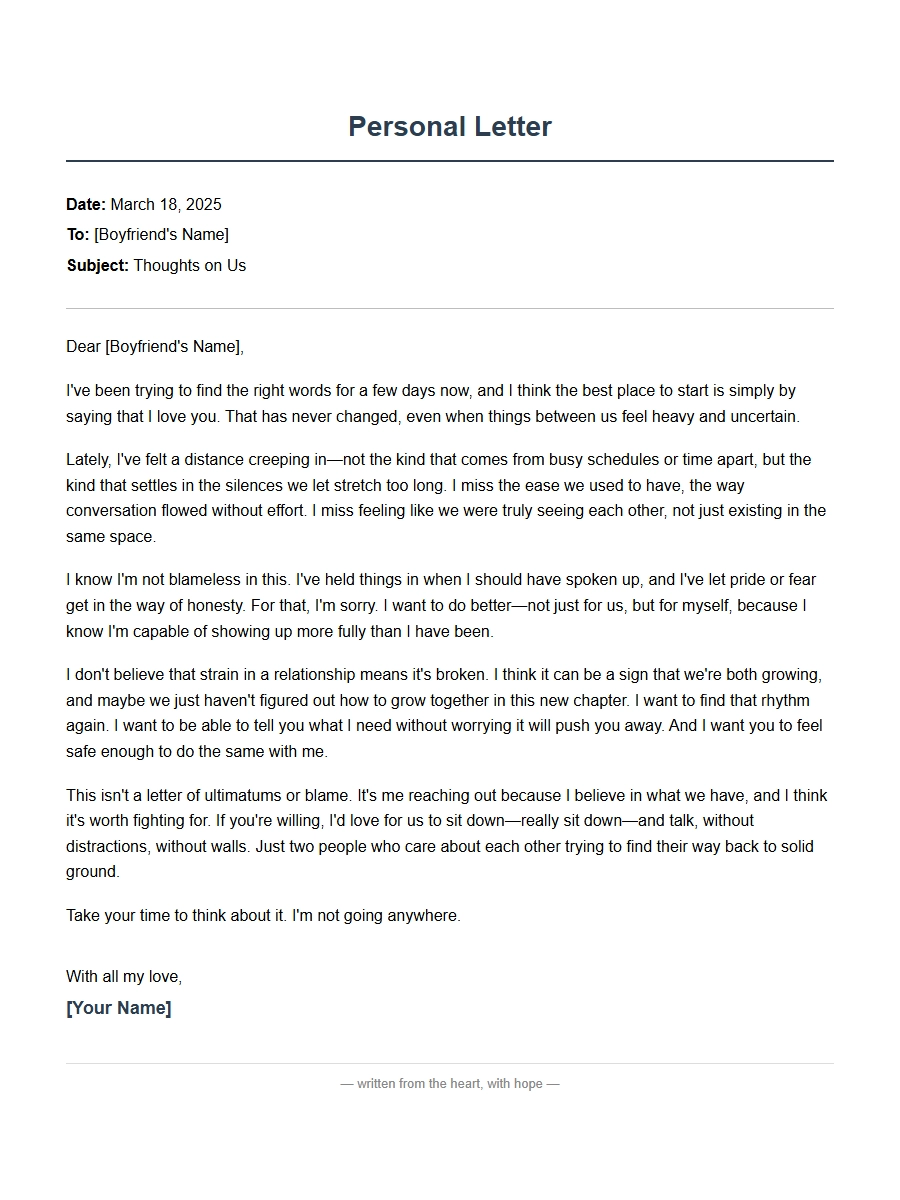 Personal Apology Letter for Boyfriend Relationship Strain
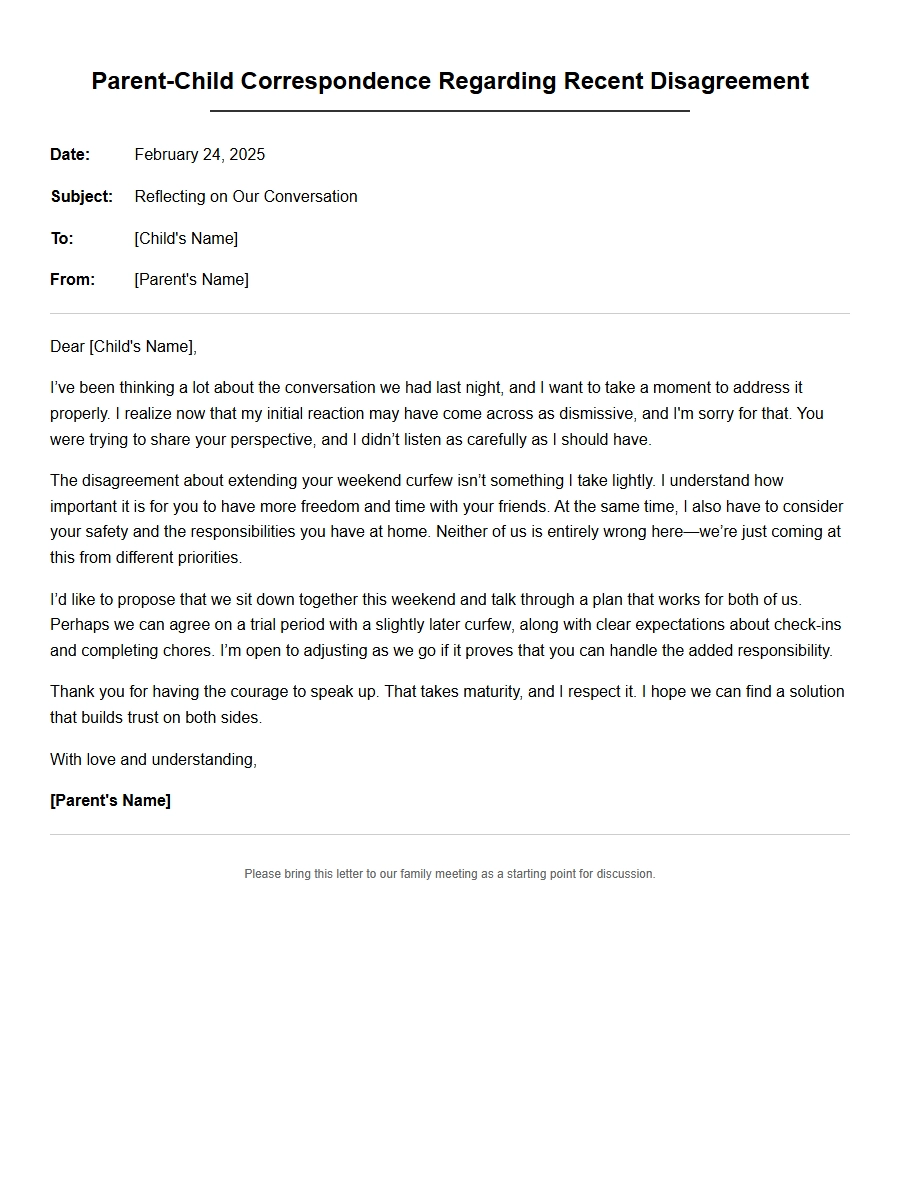 Apology Correspondence for Parent-Child Disagreements
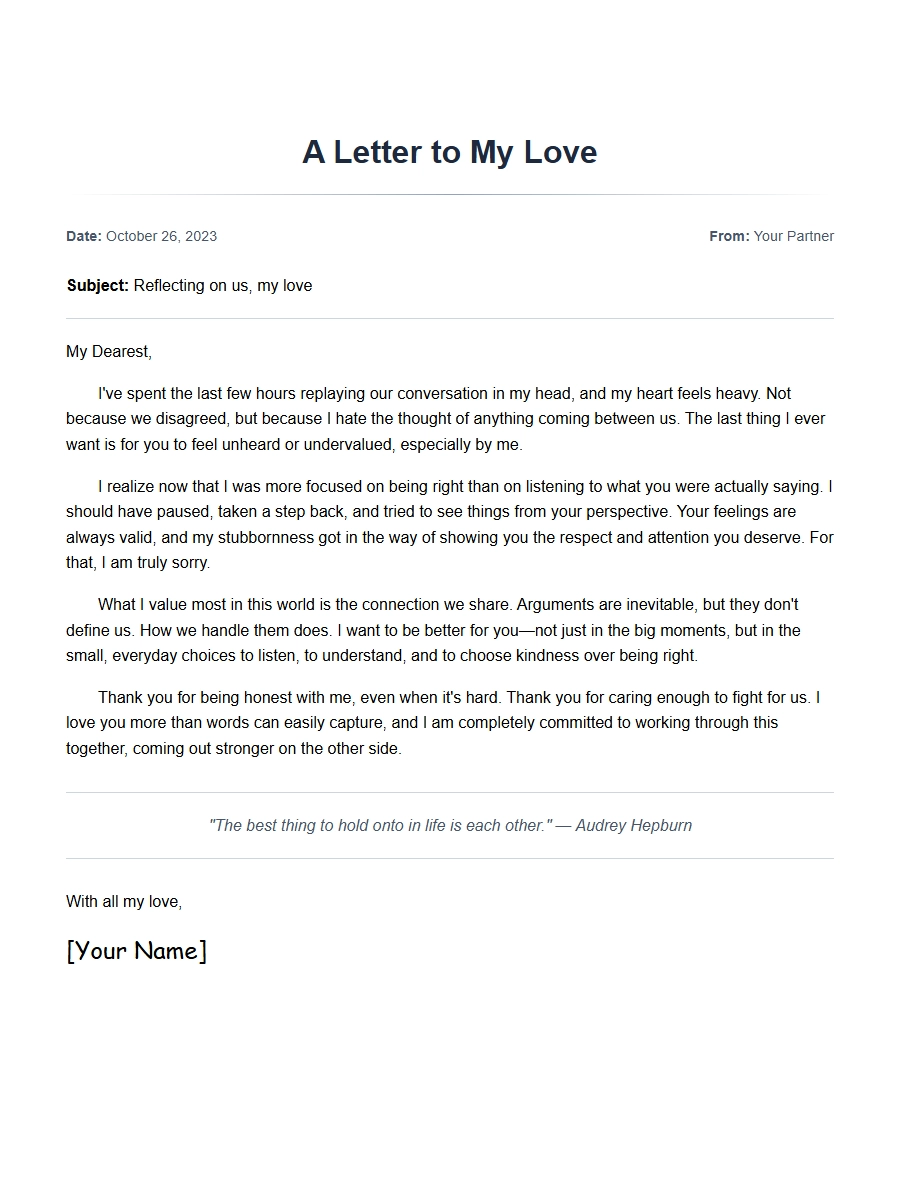 Apology Message for Girlfriend After Argument
 note for friend stealing item - Apology Letters
 Apology to Boss for Micromanagement Complaint
 Apology Document for Vendor Supply Chain Issue