Guidance Counselor Cover Letter: Student Development Focus
You’re staring at a blank screen, trying to write a cover letter for a guidance counselor role focused on student development. Maybe you’ve been in education for years but never needed a formal letter before. Or you’re switching from teaching and don’t know how to frame your experience. It’s frustrating because you know you’re great with students, but putting that into professional correspondence feels like a different skill entirely.
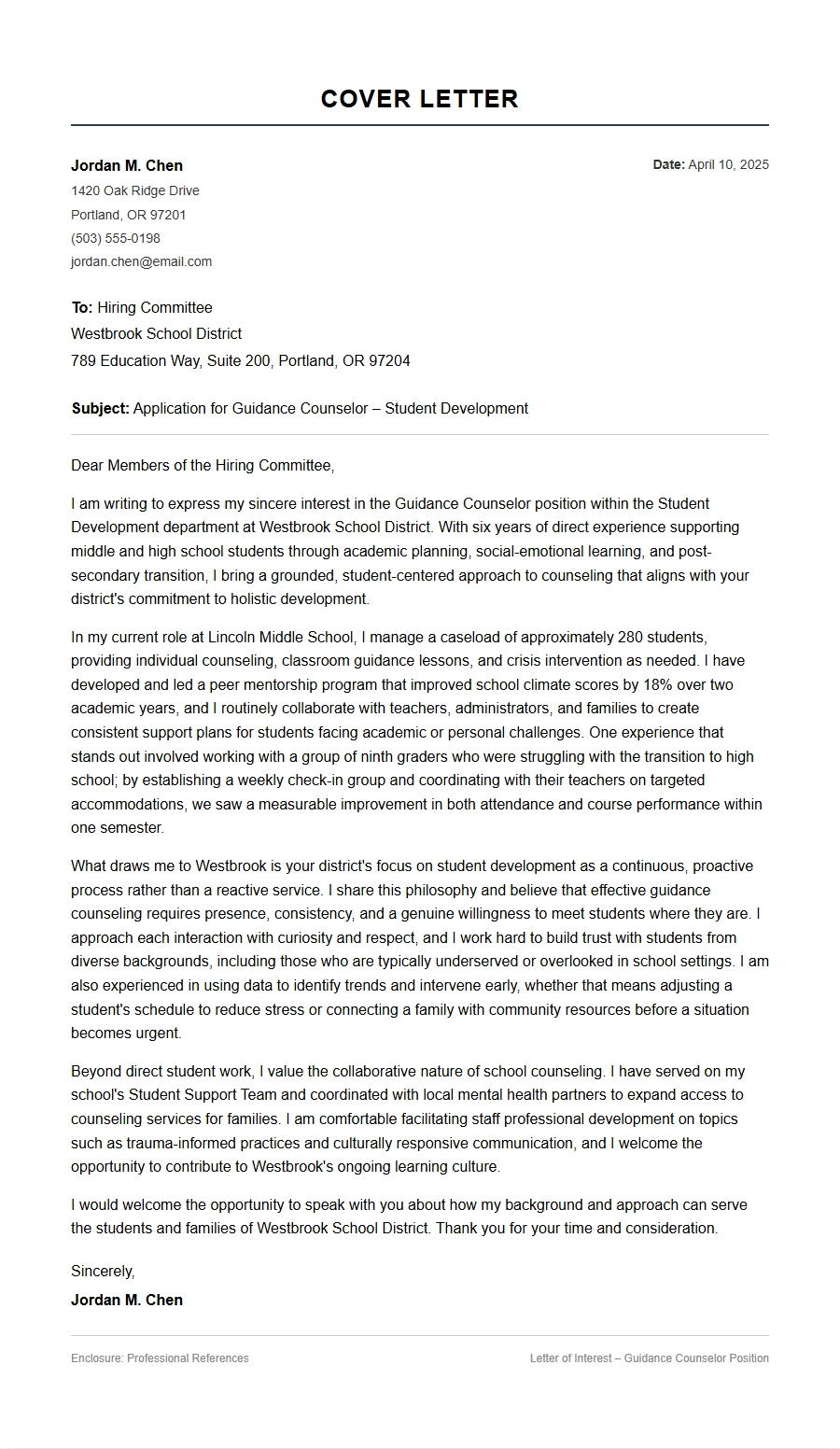
Using a letter sample isn’t cheating. It’s a smart shortcut. A good sample gives you the letter structure and business letter format so you don’t have to figure out where the date goes or how to set up a salutation and closing. More importantly, it shows you the tone in writing that hiring managers expect. You just have to swap in your specific stories and skills.
What a student development cover letter needs to cover
A guidance counselor cover letter isn’t just about listing your certifications. Hiring committees want to see how you support students academically, socially, and emotionally. Your letter should show you understand developmental stages, can handle crisis situations, and know how to work with parents and teachers.
Think about the specific challenges at the school you’re applying to. Maybe they struggle with college readiness or have a high number of students dealing with anxiety. Your letter needs to connect your experience to their needs. A generic letter that just says “I love helping students” won’t stand out.
How to pick the right sample and make it yours
Look for a letter template that matches the school environment. A letter for a large public high school will differ from one for a small private middle school. If the sample uses formal language and you’re applying to a more relaxed charter school, adjust the tone in writing to feel conversational but still professional.
When you adapt the sample, keep your own voice. Don’t use phrases you’d never say in an interview. If the sample starts with “I am writing to express my profound interest,” and you normally write “I’m excited to apply,” go with your version. Authenticity matters more than fancy vocabulary.
One quick tip: personalize the opening paragraph immediately. Instead of “I am applying for the guidance counselor position,” say “When I saw your opening for a student development counselor at Lincoln High, I immediately thought of the mentorship program I built last year.” This grabs attention and shows you did your homework.
Common mistakes to skip
Ever received a letter that felt too stiff or too casual? That happens when people don’t match the format to the context. For a printed and mailed letter, use a proper letterhead design with your contact info at the top. For an email application, skip the letterhead and use a clear subject line instead.
Another mistake: using outdated salutations. “To Whom It May Concern” tells the reader you didn’t bother to look up the hiring manager’s name. Spend two minutes checking the school website or LinkedIn. If you can’t find a name, “Dear Hiring Committee” works better than a generic placeholder.
Proofreading letter errors is non-negotiable. A typo in a guidance counselor application suggests you lack attention to detail. Read it out loud, then have someone else look it over. Even better, paste it into a plain text editor to catch formatting glitches.
Email versus printed letters
Most applications now come through email or online portals. For a digital letter format, keep your paragraphs short. No one wants to scroll through a wall of text on their phone. Use a simple font, avoid attachments unless required, and paste your cover letter directly into the email body with a brief note.
If you’re mailing a physical letter, print it on good quality paper. The feel matters. And always sign it in blue or black ink above your typed name.
When you might also need a letter of recommendation
Some applications ask for a letter of recommendation alongside your cover letter. If you’re asking a former principal or district administrator, give them a copy of your cover letter. It helps them match their tone to yours and mention the same accomplishments. Consistency between your professional correspondence and their recommendation strengthens your application.
In education, you might also write a cover letter for a role like charity volunteer coordinator if you're moving into nonprofit student programs. Or if you're moving into a leadership role overseeing facilities and safety, a construction foreman cover letter focused on safety protocols shows how to emphasize responsibility and compliance—skills that translate to school administration too.
Make the sample your springboard
The best letters feel both professional and personal. Use the sample to get the structure and cover letter examples right. But then step away from it. Write about a real student you helped, a program you started, or a difficult conversation you handled well. That specific story is what makes the reader want to meet you.
You don’t need to get it perfect on the first try. Write a draft, set it aside, then come back with fresh eyes. The more you practice writing these letters, the faster and more natural it becomes. Eventually, you won’t need the sample at all.
Helpful Reference Samples
Guidance Counselor Cover Letter: Student Development Focus
Elementary School Guidance Counselor – Social-Emotional Focus
Dear Hiring Committee,
With a Master’s in School Counseling and five years of experience in elementary settings, I am thrilled to apply for the Guidance Counselor position at your district. My approach centers on fostering social-emotional learning (SEL) through classroom lessons, small groups, and individual check-ins. I have implemented programs such as Second Step that improved self-regulation and conflict resolution among K–5 students.
Designed a “Feelings First” curriculum reaching 400+ students annually
Reduced office referrals by 30% through proactive SEL interventions
Collaborated with teachers to integrate mindfulness into daily routines
I believe that strong foundational SEL skills are critical for lifelong success and am eager to bring my passion for student development to your school community. Thank you for considering my application.
Sincerely, Jordan Martinez
High School Guidance Counselor – College Readiness
Dear Principal Rivera,
I am writing to express my enthusiastic interest in the High School Guidance Counselor role at Westbrook Academy. Specializing in college and career readiness, I have spent the past seven years helping students navigate the complex path from high school to higher education. At Lincoln High, I led a college application workshop series that boosted early submission rates by 40%.
Initiative
Outcome
Senior Seminar on Financial Aid
95% completion of FAFSA
Career Shadow Day
200+ students matched with mentors
Academic Advising Caseload
300 students per year, 90% on-track for graduation
My student development philosophy emphasizes personalized academic planning and early exposure to post-secondary options. I am confident I can support your students in achieving their college and career goals. Thank you for your time.
Best regards, Dr. Samantha Lee
Middle School Guidance Counselor – Transition Support
Dear Search Committee,
As a middle school counselor with a deep understanding of early adolescent development, I am excited to apply for the position at your school. Transition years (grades 6–8) are pivotal for identity formation and academic habits. I have designed orientation programs and advisory curriculums that ease the shift from elementary and prepare students for high school.
Implemented a “Link Crew” peer mentoring model for incoming 6th graders
Facilitated weekly “Rising Scholars” groups focused on executive functioning skills
Partnered with parents and teachers to create individualized transition plans for struggling students
My track record shows improved attendance and reduced anxiety among new students. I would love to bring my experience in student development to your middle school community. I look forward to discussing how I can contribute.
Warmly, Alex Chen
Special Education Guidance Counselor – Individualized Development
Dear Director of Special Services,
I am applying for the Guidance Counselor – Special Education role at your district. With a dual certification in school counseling and special education, I have spent eight years developing individualized student plans that address academic, behavioral, and emotional needs. I believe every student can thrive when given the right supports.
In my current position, I manage a caseload of 60 students with IEPs and 504 plans, collaborating closely with multidisciplinary teams. Key achievements include:
Behavioral interventions: Reduced crisis incidents by 50% through proactive counseling and de-escalation training
Transition planning: Helped 100% of graduating seniors secure vocational placements or college support services
Family engagement: Led monthly parent workshops on advocacy and community resources
I am committed to fostering student development in a structured, compassionate environment. Thank you for considering my application.
Sincerely, Patricia O’Neill
College Counselor – Student Development Office
Dear Search Committee,
I am writing to apply for the College Counselor position in the Student Development Office at University of Metropolitan. My professional background combines academic advising, career counseling, and co-curricular programming. Over six years, I have helped hundreds of students explore majors, secure internships, and build career readiness skills.
Service Area
Examples of Success
Career Exploration Workshops
120 students per semester; 85% reported increased clarity
Internship Placement Support
Placed 50+ students in local companies annually
Graduate School Prep
80% of advisees accepted to their top-choice programs
My approach is student-centered, using developmental advising models to empower students to take ownership of their growth. I am eager to contribute to your mission of holistic student development.
Thank you for your consideration.
Best, Marcus Johnson
Guidance Counselor for At-Risk Youth – Intervention Focus
Dear Hiring Manager,
I am passionate about supporting at-risk youth and would be honored to join your team as a Guidance Counselor. My career has been dedicated to student development in alternative schools and community-based programs where trauma-informed care and resilience building are essential.
Developed a dropout prevention program that improved graduation rates by 25%
Led weekly restorative justice circles reducing disciplinary incidents
Connected families with mental health, housing, and food assistance resources
I believe that building trust and consistent relationships is the foundation of student development. I work to help each student recognize their strengths and chart a positive future. I would bring empathy, creative problem-solving, and a data-driven approach to your counseling department.
Sincerely, Kai Williams
Private School Guidance Counselor – Holistic Development
Dear Head of School,
I am delighted to apply for the Guidance Counselor opening at Westminster Private Academy. Your school’s emphasis on holistic student development aligns perfectly with my counseling philosophy. I have eight years of experience in independent schools, where I partnered with faculty, parents, and community organizations to nurture students intellectually, socially, and emotionally.
My key contributions include:
Designing a K–12 character education program woven into advisory periods
Launching a parent education series on adolescent development and digital wellness
Facilitating student leadership retreats focused on ethical decision-making
I am committed to supporting each student’s unique journey and am eager to advance your school’s mission. Thank you for your time.
I am excited to apply for the Guidance Counselor position that emphasizes data-informed student development. With a background in school psychology and counseling, I have extensive experience using assessment data and outcome measures to tailor interventions and track growth.
Data Source
How I Use It
Student surveys & SEL screeners
Identify at-risk students for early intervention
Academic & attendance records
Monitor progress toward graduation and adjust supports
Post-graduation follow-ups
Evaluate counseling effectiveness and refine programs
In my previous role, I increased on-time graduation by 15% through targeted advising for struggling 9th graders. I am comfortable collaborating with data teams and teachers to ensure every student receives the right level of support. I look forward to discussing my passion for evidence-based student development.
Sincerely, Dr. Anita Rao
Bilingual Guidance Counselor – Multicultural Student Development
Dear Search Committee,
I am writing to apply for the Bilingual Guidance Counselor position. As a fluent Spanish-English speaker and a licensed counselor with six years of experience in diverse urban schools, I specialize in supporting the developmental needs of English learners, immigrant families, and multicultural student populations.
Conducted 200+ bilingual individual counseling sessions per year
Created a “Family Liaison” program to boost parent engagement among Latino families
Facilitated cultural identity groups that strengthened students’ sense of belonging
I believe effective student development requires culturally responsive practices. I am adept at bridging home and school cultures, advocating for equitable resources, and helping students navigate acculturation while achieving academically. I would be proud to serve your school community.
Gracias por su consideración. Best regards, Carlos Mendez
Entry-Level Guidance Counselor – Passion for Student Growth
Dear Principal,
I am excited to submit my application for the Guidance Counselor position. Recently completing my Master’s in School Counseling with a focus on student development, I bring fresh perspectives, strong clinical skills, and a deep commitment to helping every student thrive. During my internship at Lincoln Middle School, I gained hands-on experience in individual counseling, crisis intervention, and classroom guidance lessons.
Highlights from my training and volunteer work include:
Co-facilitated a “Newcomers” group for students new to the district, easing their transition
Developed a lesson on growth mindset that was adopted by the entire 7th-grade team
Volunteered as a mentor in a college-access program for first-generation students
I am eager to learn from your experienced team and contribute to the social and academic development of your students. Thank you for considering my candidacy.
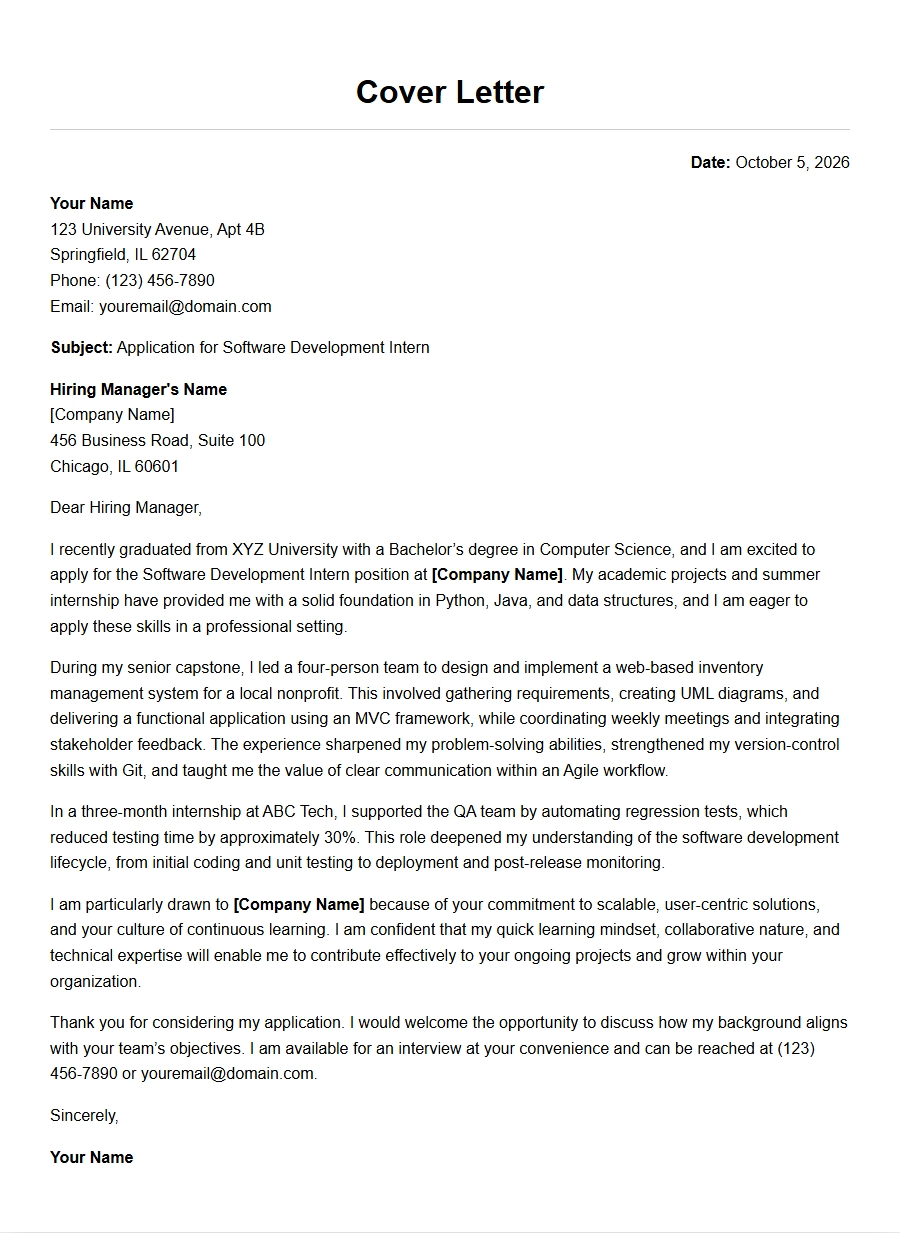 Recent College Student Cover Letter for Internship
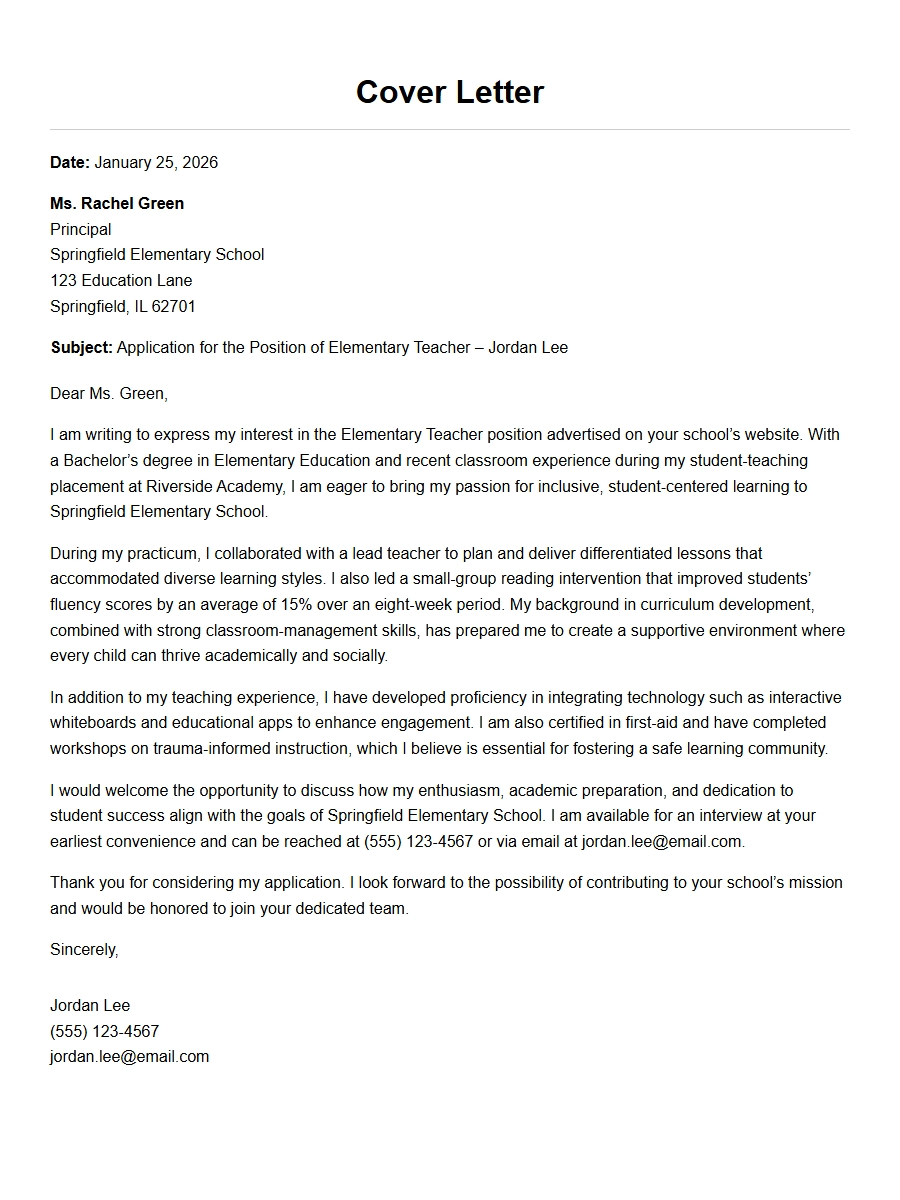 Entry Level Teacher Cover Letter Examples
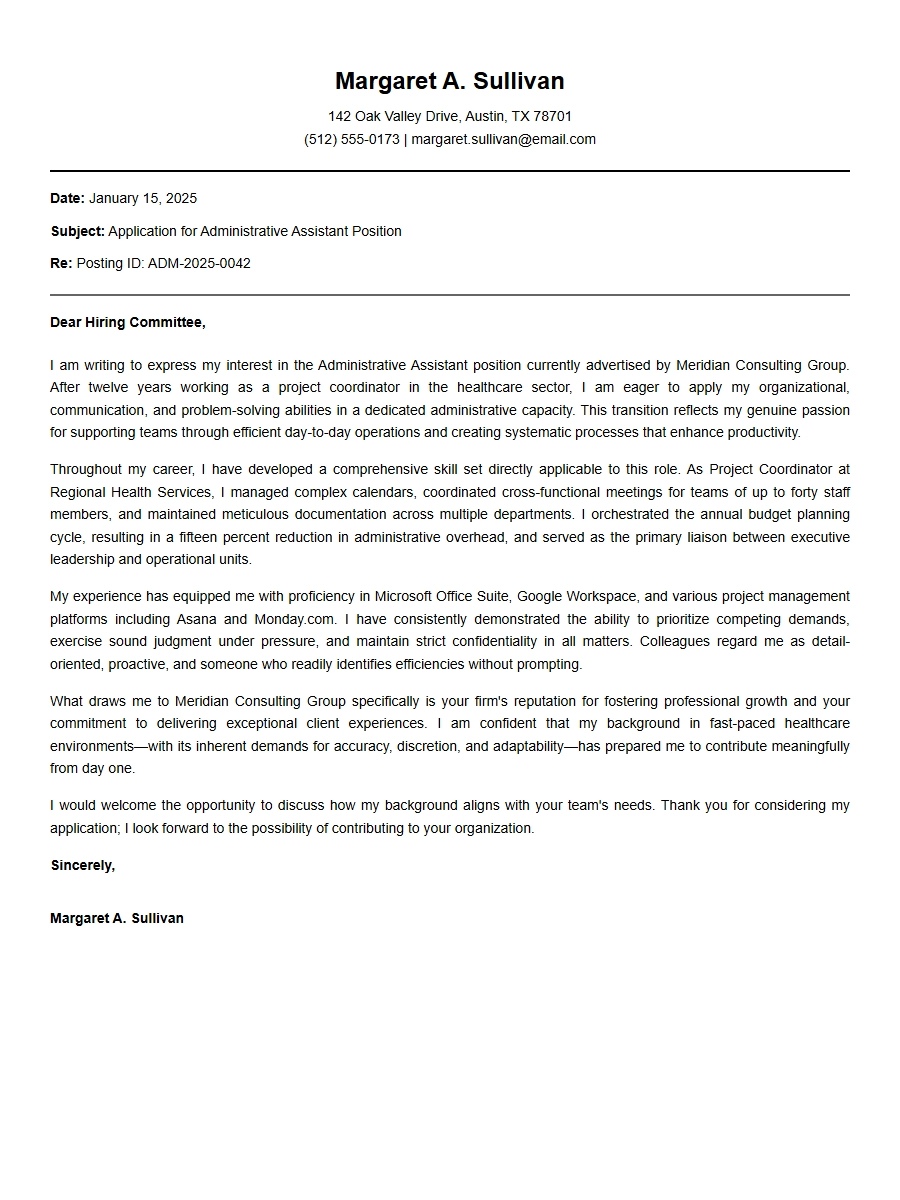 Career Changer Administrative Assistant Cover Letter
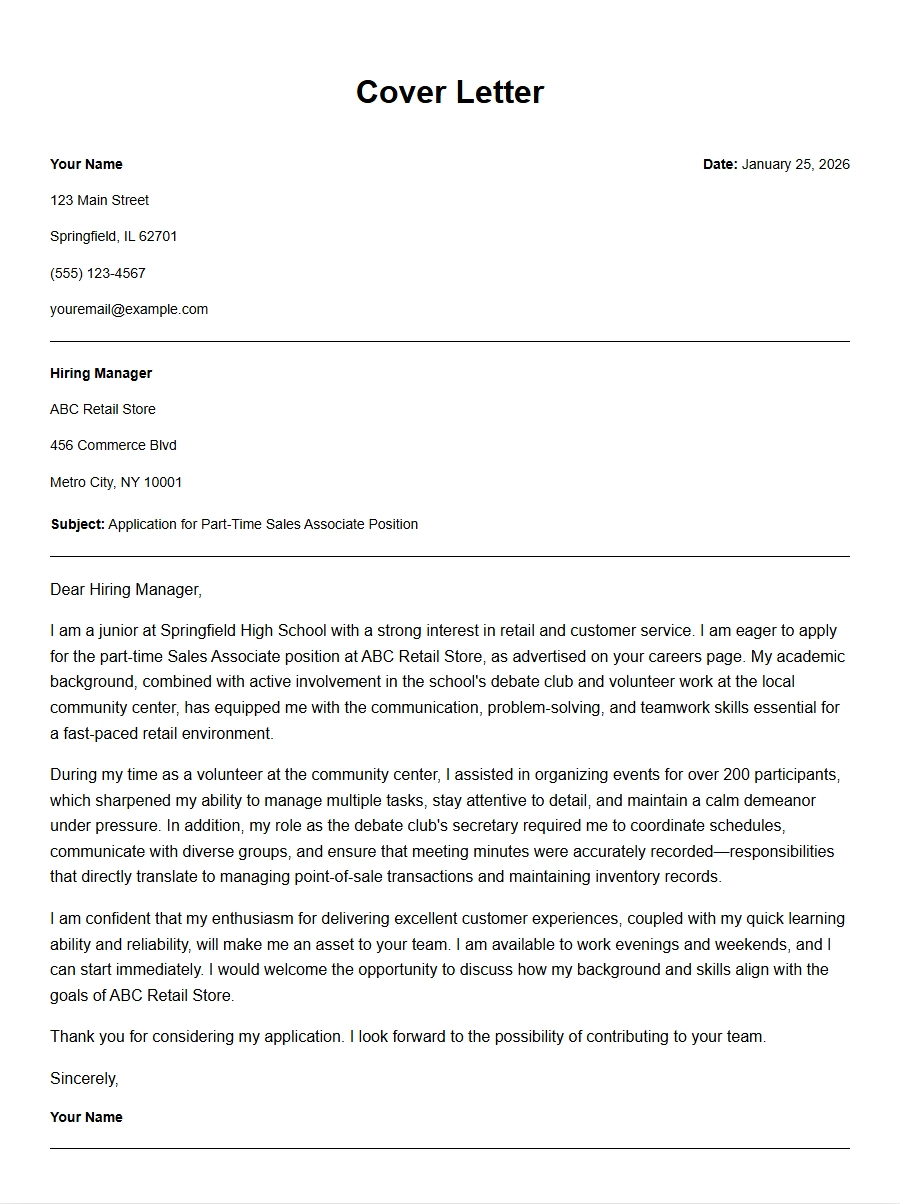 High School Student Part Time Job Cover Letter
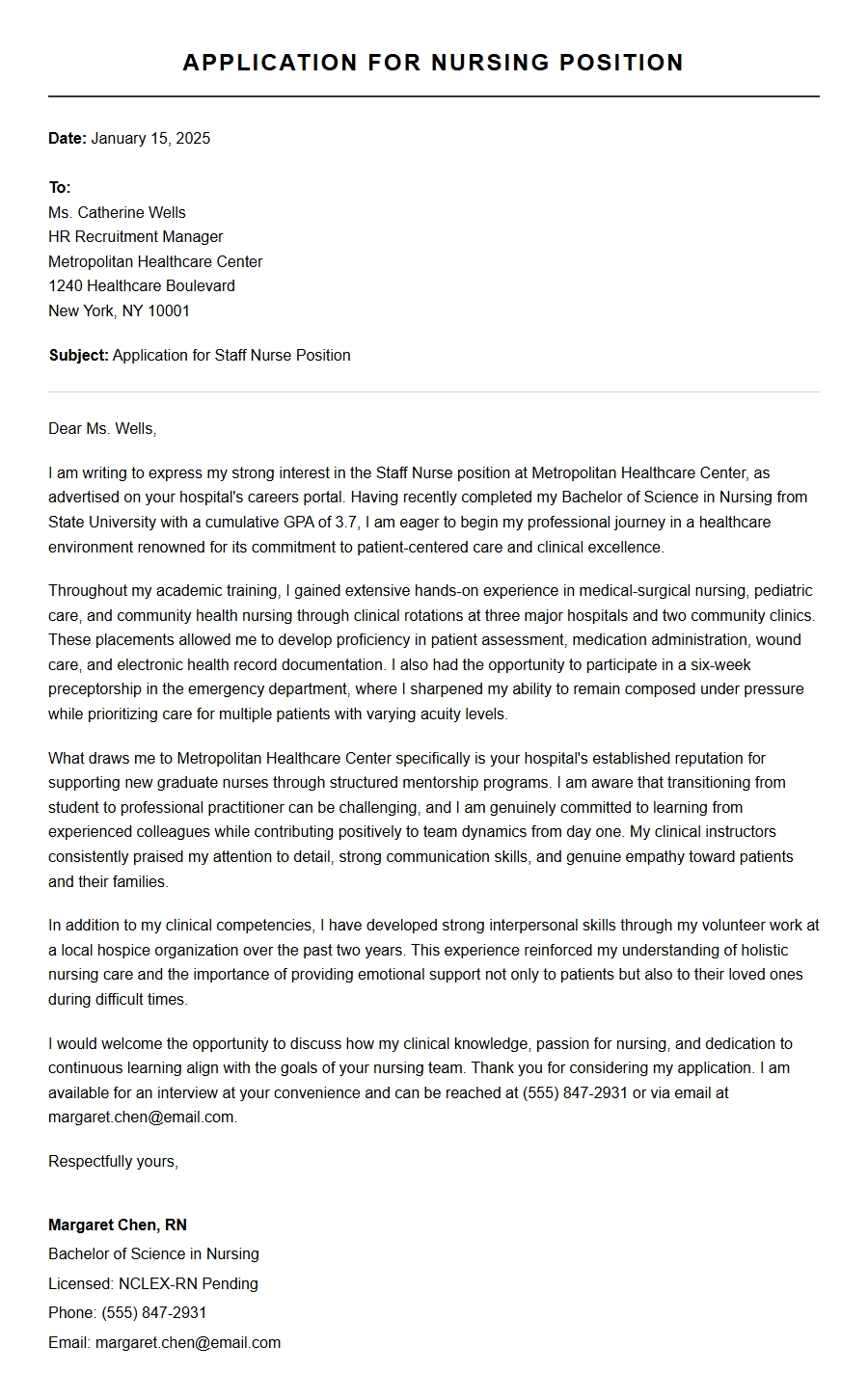 Fresh Graduate Nursing Application Letter
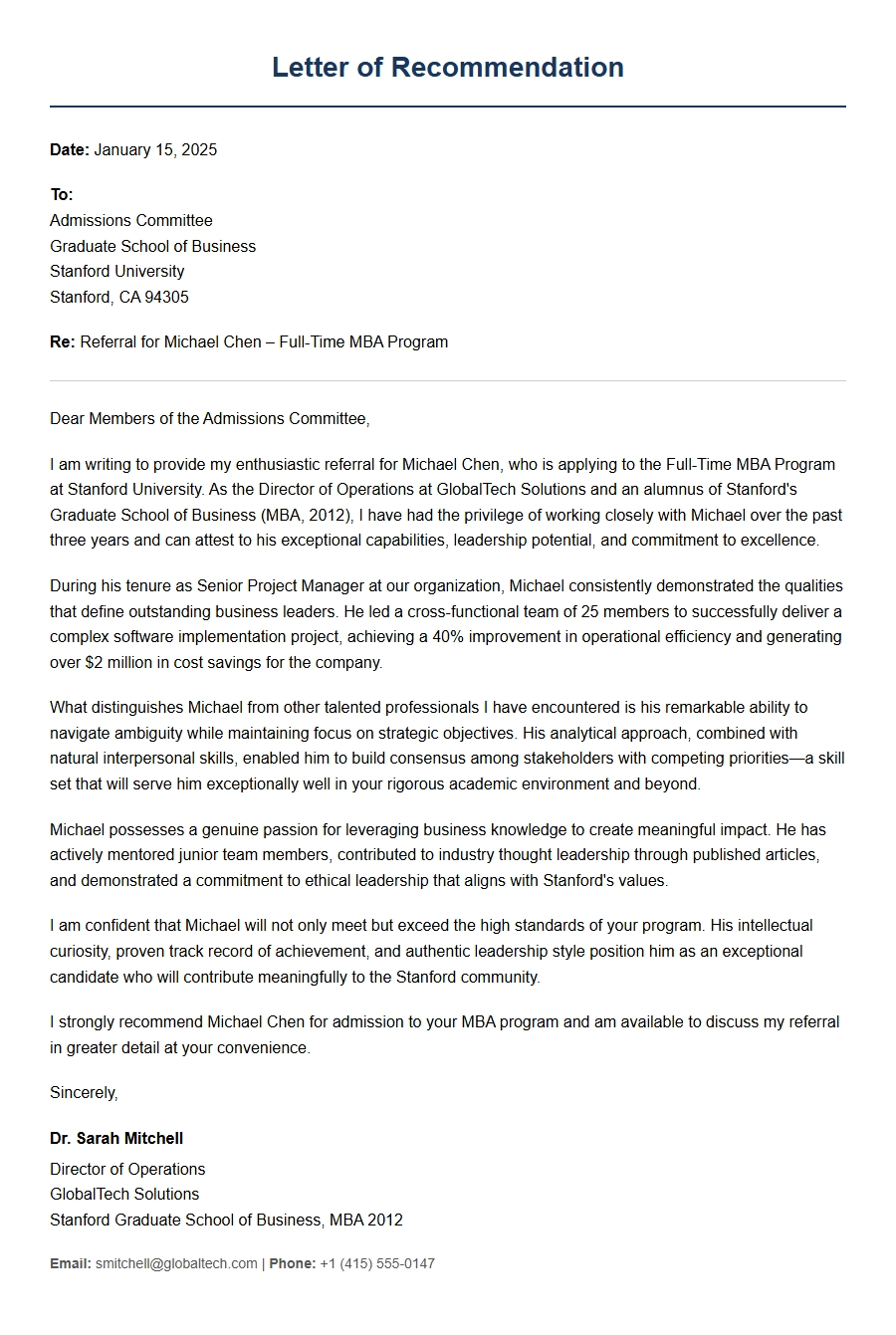 University Alumni Referral Email Cover Letter