Admitting you messed up in a friendship is one of the hardest things to do. You might be staring at a blank page, unsure how to begin. Your stomach is in knots, and every word sounds either defensive or hollow. I've been there. A good letter sample can turn that anxiety into a clear, heartfelt message—not a robotic apology, but a real one that actually helps repair things.
Using a sample isn't cheating. It's a smart, time-saving strategy. A well-designed letter template gives you structure, the right tone, and key phrases that work—while still leaving plenty of room for your own voice. Think of it like a recipe: you know the basic steps, but you still add your own pinch of salt. The goal is to write something that feels both professional (in the sense of thoughtful and clear) and deeply personal.
Category: Personal Letters
How to Choose the Right Sample for Your Situation
First, decide if your apology should be formal or informal. If the wrongdoing was serious—like breaking a promise or sharing a secret—you'll want a more structured approach. For a smaller slip-up, a short, conversational note might be better. Most friendship apologies fall somewhere in between, so look for samples that strike a balance between sincerity and warmth. Avoid anything that sounds like corporate language or legal disclaimers. Your friend doesn't need "business letter format" here; they need honesty.
Pay attention to tone in writing. A sample that starts with "I regret to inform you" is wrong. You want something like "I've been thinking about what happened, and I'm really sorry." That sets the right emotional register. Also consider the medium: a handwritten note feels more personal than an email, but if you're sending a digital letter format, keep the subject line simple (e.g., "I owe you an apology").
Step-by-Step: Adapting a Sample Without Losing Your Voice
Start by reading two or three different letter samples for acknowledging wrongdoing. Pick the one that feels closest to how you naturally talk. Then rewrite the opening paragraph completely in your own words. That's where you grab attention—and sincerity. For example, "I've been avoiding this conversation because I'm embarrassed, but I want to get it right." That's honest and specific.
Next, take responsibility. Use clear language: "I was wrong when I…" Avoid phrases like "I'm sorry if you felt hurt" — that shifts blame. Instead, say "I hurt you by…" You can explain your reasoning briefly, but don't make excuses. A common mistake is to write a whole paragraph of context before the apology. Get to the apology first, then explain if needed. The letter structure should be: apology, responsibility, explanation (short), and what you'll do differently.
Mistakes to Avoid in Your Apology Letter
One big trap is using outdated salutation and closing. "To whom it may concern" is laughable in a friendship note. Use "Dear [Friend's Name]" and close with "With love," "Yours truly," or "Warmly." Another mistake: skipping the proofreading letter step. A typo in an apology can come across as careless. Read it aloud to yourself. Does it sound like you? If it feels stiff, rewrite it. Also, don't make the letter all about you. If you spend more time describing your guilt than acknowledging their hurt, the apology feels hollow.
When You Need Other Kinds of Personal Letters
Acknowledging wrongdoing is just one part of friendship communication. You might also need to write a letter explaining your absence from a group trip, or acknowledging grief during a difficult time. Each situation has its own nuance, but the core principle remains the same: be honest, be specific, and be kind. For more joyful occasions, you might use a sample for announcing a baby arrival or confirming your presence at a reunion. All of these benefit from the same approach—starting with a structure, then making it yours.
Final Tip: Use the Sample as a Springboard
The best letters feel both professional and personal. They don't sound like a robot wrote them. Once you've adapted your sample, set it aside for an hour, then come back and read it fresh. Ask yourself: If I received this, would I forgive me? If the answer is yes, you're ready to send it. If not, tweak the tone. Practice makes the process faster—the next time you need to apologize, you'll know exactly how to start.
Remember, an apology letter is not about being perfect. It's about showing you care enough to try. Use the sample to get past the blank page, then let your real voice do the rest.
Practical Writing Samples
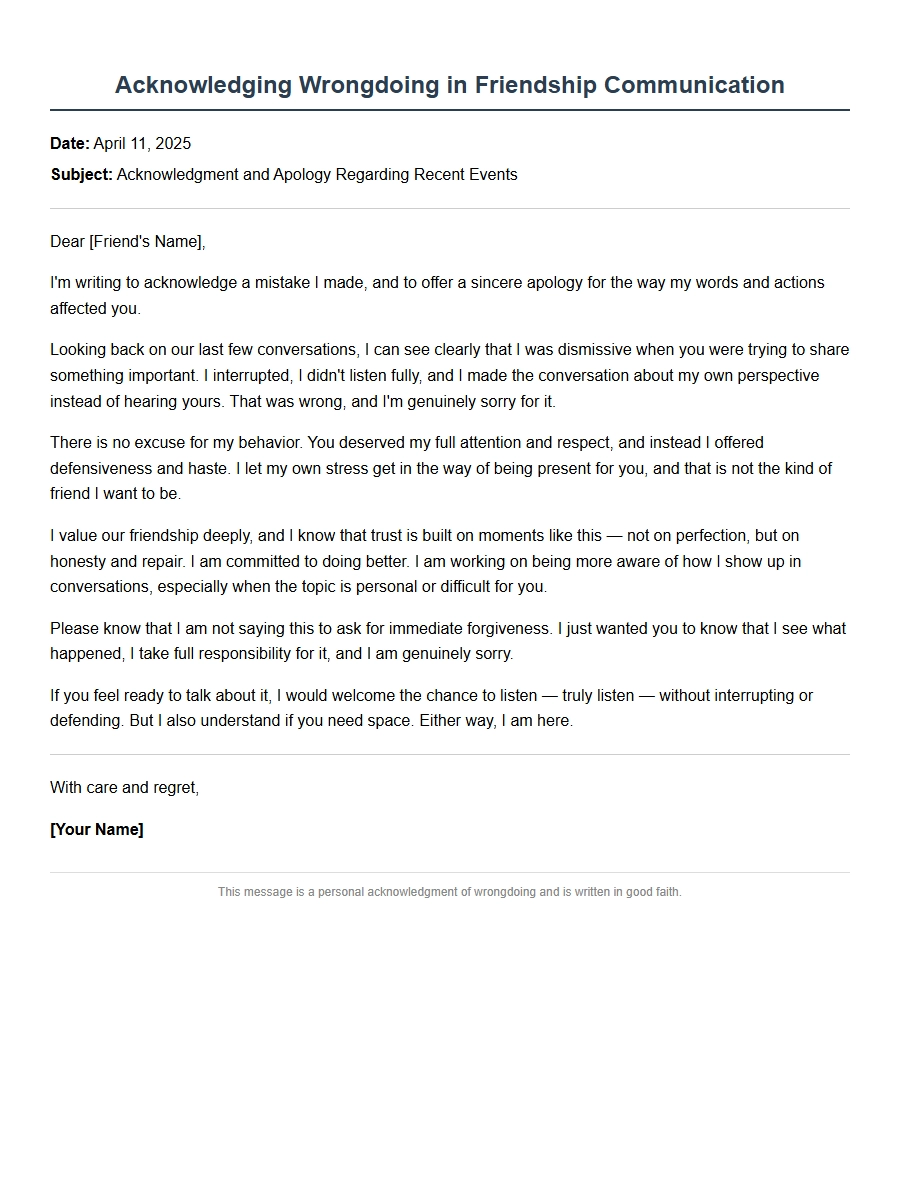
Acknowledging Wrongdoing in a Friendship Letter
Forgotten Birthday Apology
Dear Jamie,
I am truly sorry for missing your birthday last week. There is no excuse — I had it in my calendar but I let a busy week distract me, and that was unfair to you. You have always been there for my special days, and I failed to return that care.
I know a simple apology doesn’t undo the hurt, so I want to make it right. Below are the steps I’m taking to ensure this doesn’t happen again:
I have set a recurring reminder a week before your birthday each year.
I will leave a small celebration note on my desk as a visual cue.
I’d love to take you out for coffee this weekend — just the two of us.
Please let me know if you’re free Saturday afternoon. I value our friendship more than I can say, and I hope you can forgive my thoughtlessness.
Yours, Alex
Apology for Breaking a Promise
Hi Sam,
I need to admit that I broke my promise to help you move last Saturday. By the time I realized I had double-booked, it was too late to reschedule. I know you were counting on me, and I let you down. That was irresponsible, and I am deeply sorry.
To make amends, I have arranged for a moving van to pick up the remaining boxes from your old place this Tuesday. Here is the plan:
Item
Details
Date
Tuesday, 14 Nov
Time
9:00 AM
Van company
Swift Movers
Contact
555-0123
I will also personally come to your new apartment to help unpack from 11 AM onward. I hope this shows how much I regret breaking my word. Please let me know if this works for you.
Sorry, Jordan
Apology for Gossiping
Dear Morgan,
I owe you a huge apology. Last week at the dinner party, I made a careless comment about your recent career change. I wasn’t thinking and shared it with others before you had a chance to tell them yourself. That was a betrayal of trust, and I am ashamed.
Gossiping is never harmless. I have been reflecting on why I did it — I think I was nervous and tried to fill silence, but that’s no excuse. To ensure I rebuild our trust, I will:
Apologize directly to the people I spoke to, clarifying that I spoke out of turn.
Commit to asking you first before sharing any personal news about you.
Check in with you regularly to see if there is anything else I can do.
I cherish your friendship and promise to be a more trustworthy friend. Please let me know when you are ready to talk.
With regret, Taylor
Apology for Being Overly Critical
Hi Casey,
I am writing to apologize for my harsh words after your presentation last Tuesday. Instead of offering constructive feedback, I listed every flaw without acknowledging the effort you put in. That was not helpful — it was hurtful.
A true friend supports, not tears down. I realize now that I was projecting my own stress onto you, and that is unfair. Starting today, I want to change how I communicate. Here are the actions I’ve committed to:
Before speaking: Ask myself if the comment is kind, necessary, and true.
During feedback: Use the “sandwich” method — compliment, suggestion, encouragement.
After conversations: Reflect and apologize if I caught myself slipping.
Would you be open to a coffee chat next week so I can listen to how you felt? I want to understand your perspective better.
Yours sincerely, Riley
Apology for Neglecting a Friend in Crisis
Dear Pat,
I have been a terrible friend during the past month. You told me about your grandmother’s illness, and I responded with a quick “I’m sorry” and then never followed up. I was consumed by my own work deadlines, but that is no justification. You needed support, and I was absent.
I understand if you feel hurt. To begin making amends, I have created a small commitment plan:
Action
Frequency
Check in with you
Once a week (set alarm)
Offer specific help
Meal, errand, or call
Attend any family gathering if needed
As requested
I also want to schedule a proper catch-up this weekend. I miss our real conversations. Please give me a chance to show that I can be more present.
With love and regret, Avery
Apology for a Misunderstanding Over Text
Hi Jordan,
I think I made a mess of our text conversation yesterday. When you said “I need a break,” I assumed you meant from me, and I responded defensively. I realize now you were referring to work stress — and my reaction made everything worse.
I am sorry for jumping to conclusions and for the curt messages I sent. Text is a poor medium for tone, but I should have asked for clarification before reacting. To prevent this in the future, I will:
Pick up the phone to call when I sense a misunderstanding.
Use emojis or explicit questions like “Can you clarify?” before assuming.
Wait at least 10 minutes before replying to emotionally charged texts.
I hope we can laugh about this soon. Your friendship means too much for me to let a misinterpretation drive a wedge between us.
Sorry, Casey
Apology for Losing a Borrowed Item
Dear Taylor,
I have to admit something terrible: I lost your favorite scarf — the blue cashmere one you lent me for the ski trip. I feel sick about it. I searched every bag, pocket, and even called the lodge, but it’s gone.
I know that scarf had sentimental value; your grandmother gave it to you. Replacing it won’t be the same, but I want to try. Here is what I am doing:
I found the same brand and am ordering a replacement.
I have also set aside a personal “apology fund” for you to choose any small item you like.
I promise never to borrow something irreplaceable again without extra care.
I understand if you need space. Please let me know how I can make this right beyond the material loss. I am truly sorry.
Ashamed, Morgan
Apology for Not Supporting at an Event
Hi Riley,
I failed you last Saturday during your poetry reading. I said I would be there, but I arrived late and left early because I felt tired. I didn’t take into account how much it meant for you to have a familiar face in the audience. I am incredibly sorry.
To show that I value your talents and our friendship, I propose the following amends:
I will attend your next performance, arrive early, and stay for the full event.
I will bring a small group of friends to cheer you on.
I will write you a genuine review of your reading (I heard it was wonderful from others).
I should have been more present. Please forgive my selfishness. Let me know if you’d like to talk about how I can better support you in the future.
Your friend, Pat
Apology for a Small Lie
Dear Alex,
I need to come clean about something I lied about last month. When you asked why I didn’t invite you to the movie night, I said I thought you were busy. The truth is, I was feeling insecure and wanted a small group — and I didn’t want to admit that. I lied to avoid a conversation, and that was cowardly.
Lying, even about small things, erodes trust. I want to rebuild ours by being honest from now on. Here are my resolutions:
Situation
New habit
When I feel excluded/insecure
I will tell you honestly how I feel.
When I don’t want to do something
I will say “I need some alone time” instead of fabricating excuses.
After any mistake
I will confess immediately.
I hope you can forgive this one slip. I treasure our honesty more than anything.
With sincerity, Jamie
Apology for Jealous Behavior
Dear Casey,
I have to apologize for my behavior at your promotion party. Instead of being happy for you, I made passive-aggressive comments and sulked in the corner. That was driven by jealousy, and I am deeply embarrassed.
Your success is not my failure. I recognize that I let my own insecurities poison a celebration that was about you. I want to do better. Moving forward, I will:
Celebrate your wins actively — I’ll even plan the next party.
Work on my own achievements without comparing them to yours.
Openly tell you when I’m struggling with envy so we can talk it out.
I hope you can accept my apology and give me a chance to be the supportive friend you deserve. Would you be open to a lunch where we can talk more?
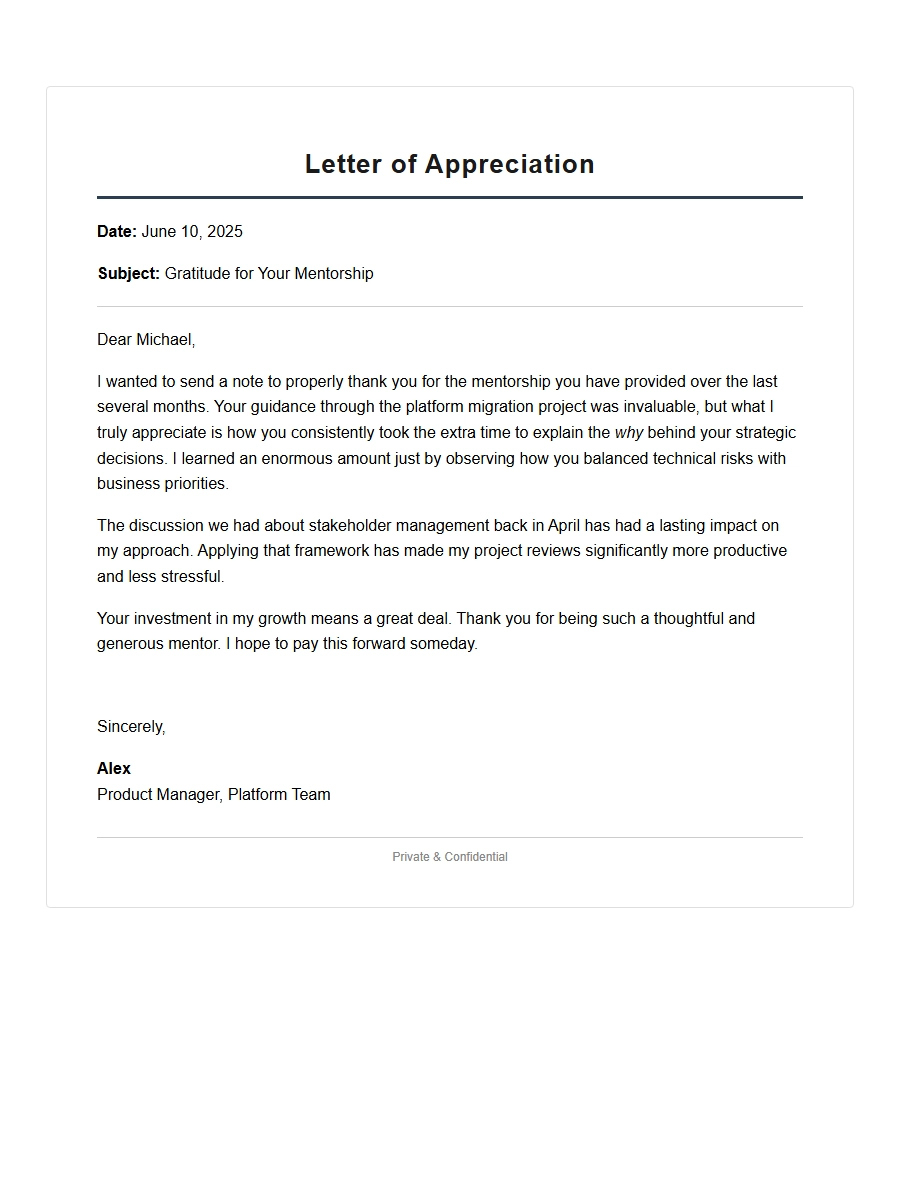 Thanking a Mentor for Guidance: Sample Messages
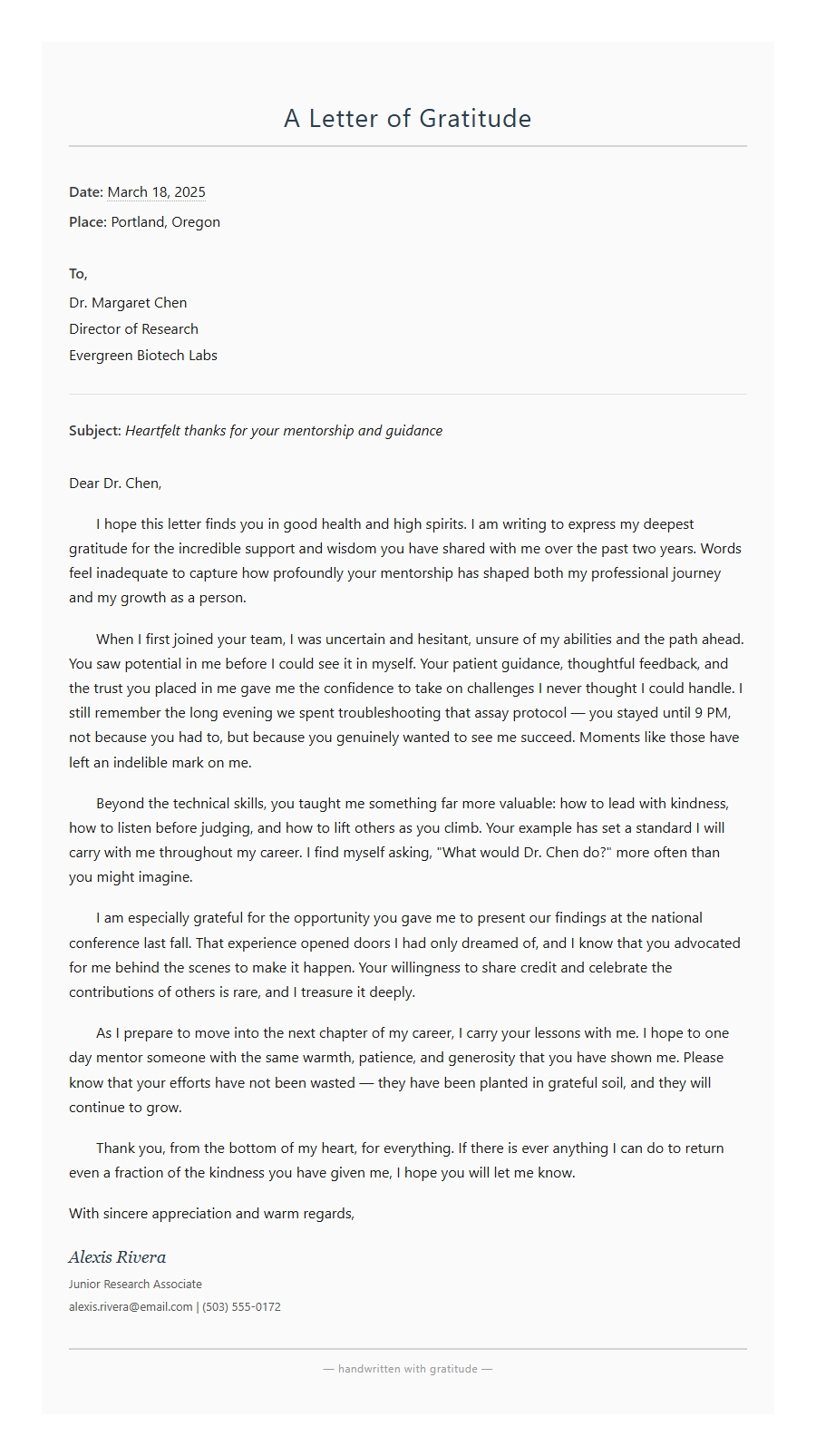 Expressing Gratitude: Handwritten Letter Example
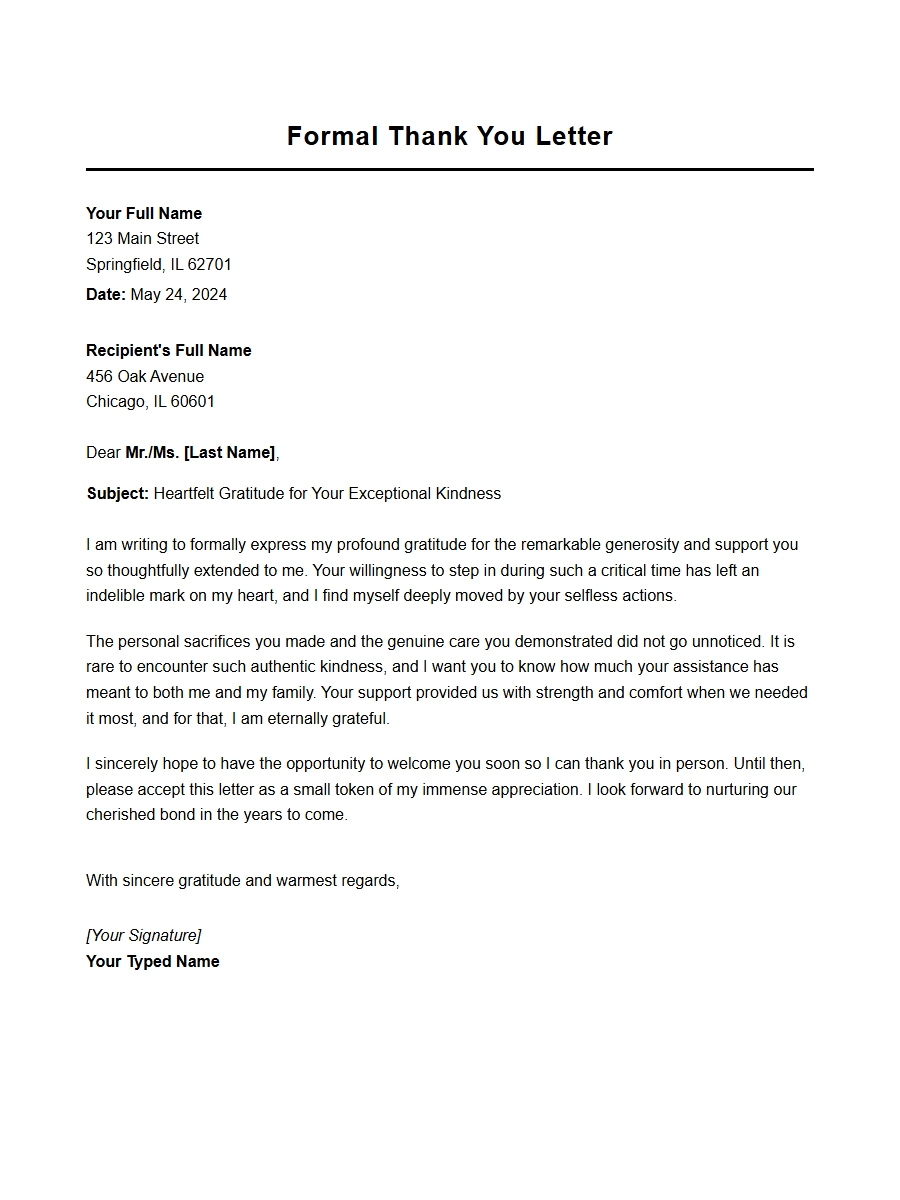 Expressing Thanks in a Formal Personal Letter
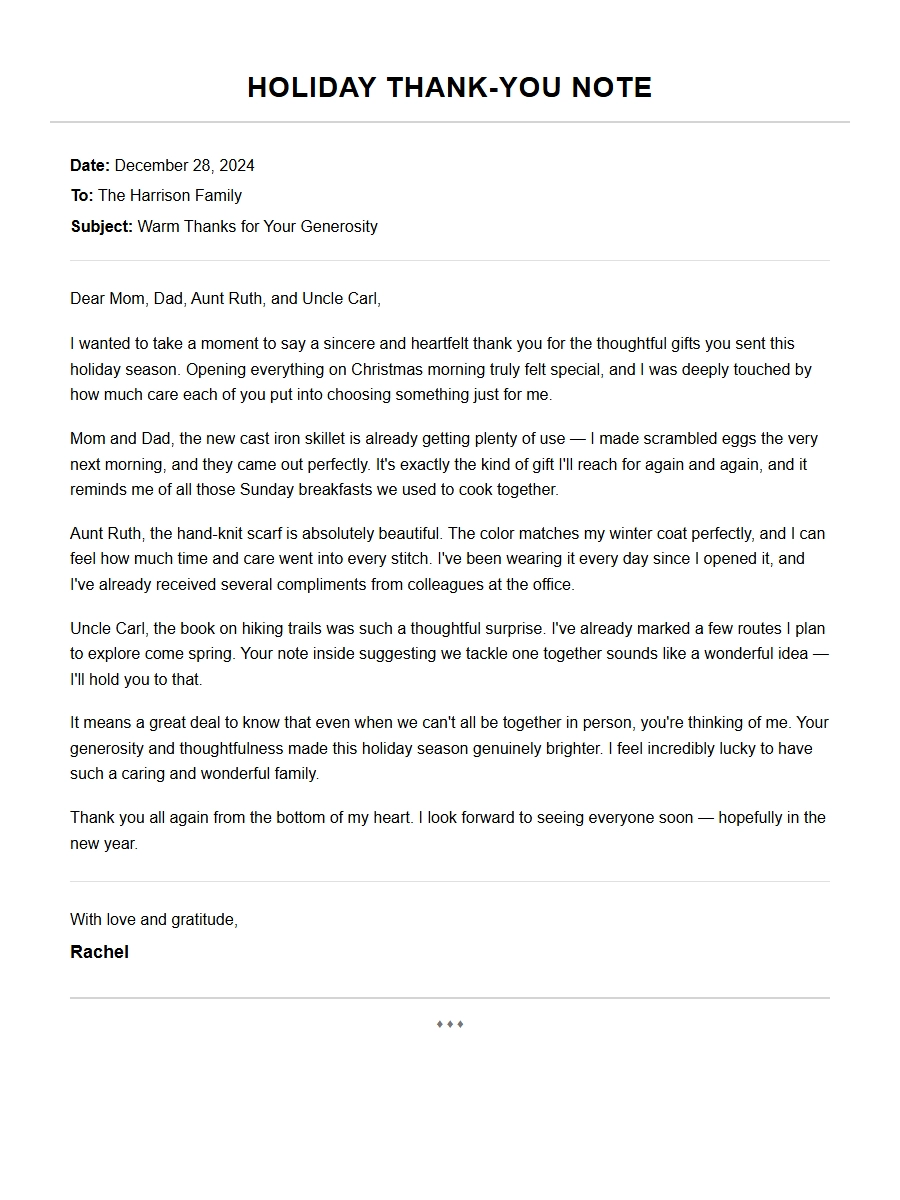 Thank You Letter Examples for Family Holiday Gifts
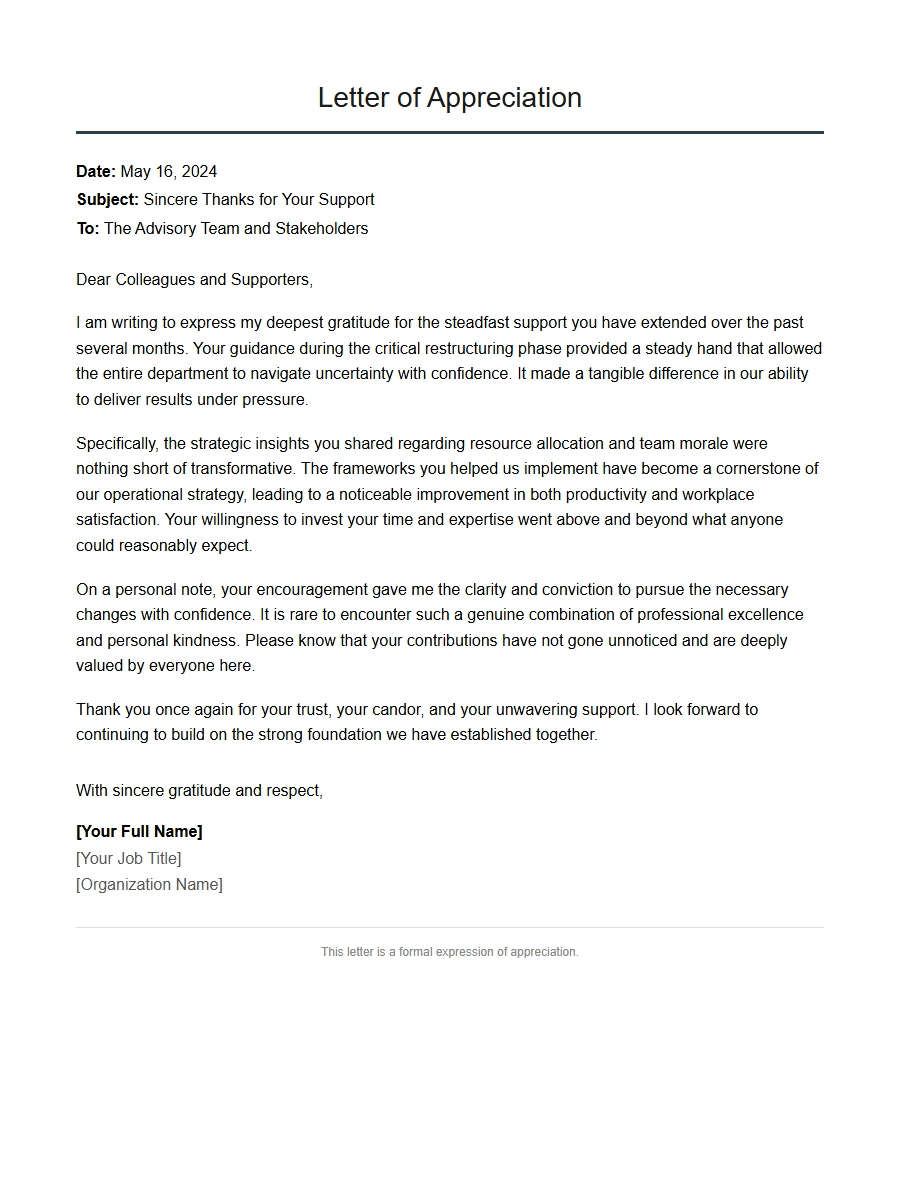 Sample Thank You Letter for Support
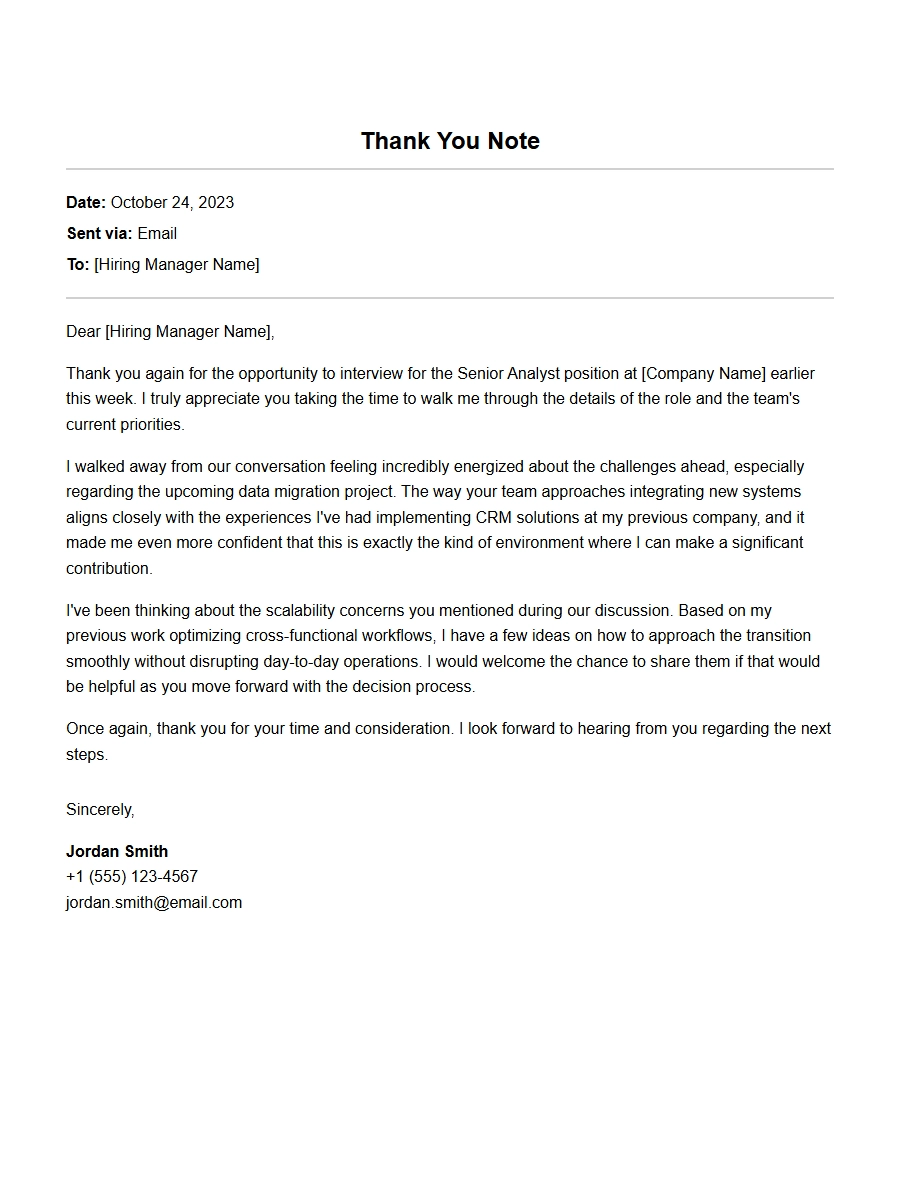 How to Write a Personal Thank-You Note After an Interview