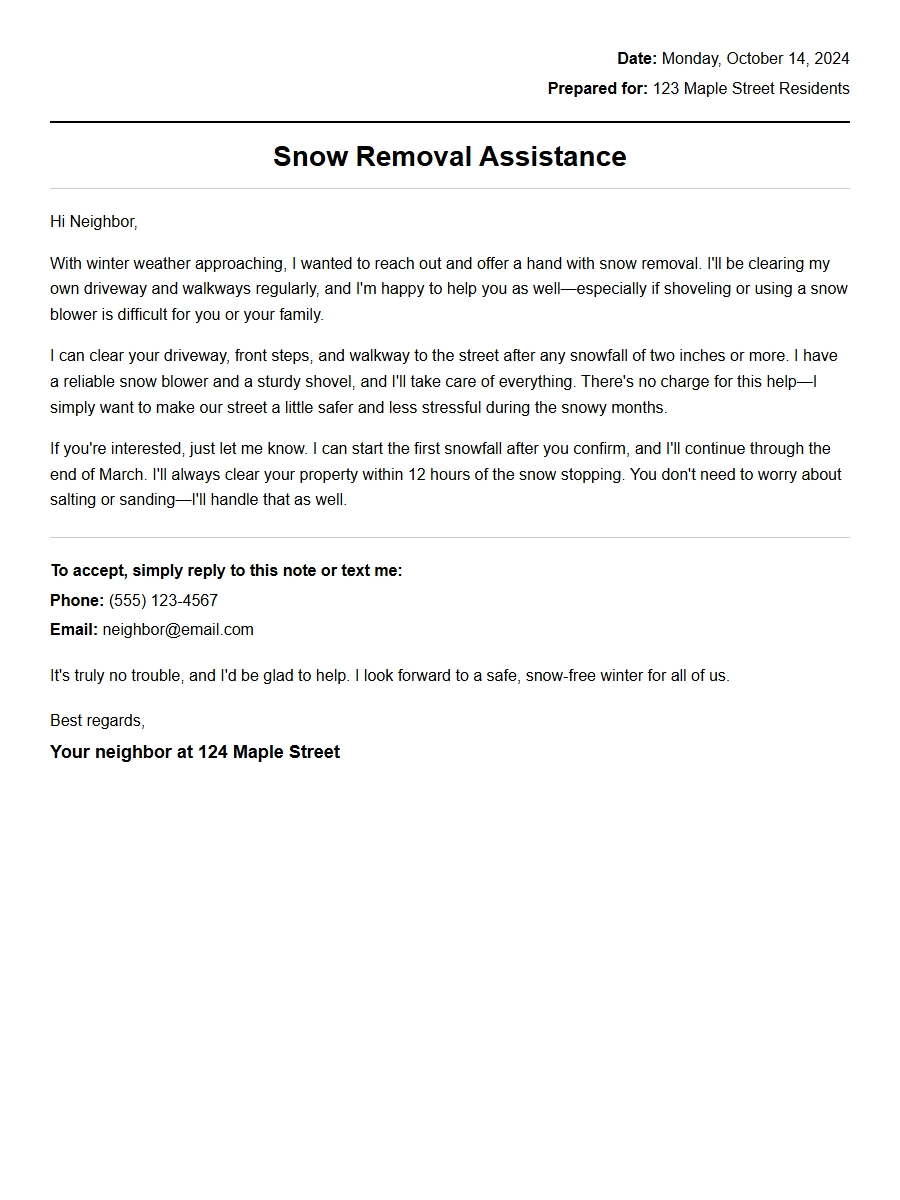
You look out the window and see your elderly neighbor struggling to shovel the walkway. You want to help, but you’re not sure how to offer without sounding pushy or making them feel obligated. That blank page or empty text box suddenly feels like a wall. The good news? A well-chosen letter sample can turn that hesitation into a warm, natural offer—written in minutes and delivered with confidence.
Why using a sample is a smart move
Some people think using a letter template is cheating. It’s not. A sample gives you a solid structure—a clear opening, a considerate tone, and a respectful closing—so you don’t have to reinvent the wheel. You still add your own words, your own voice, and the specific details of your situation. The template just saves you from staring at the cursor blinking at you. Whether you’re writing a quick note or a more formal piece of professional correspondence, a sample keeps you on track.
Category: Personal Letters — But the principles here work for any neighborly offer, whether you drop it in their mailbox or send an email.
How to choose the right letter format
Not every offer needs to be a business letter format. If you know your neighbor well, a short, friendly note is fine. If the relationship is more distant or you’re writing on behalf of a neighborhood group, a slightly more formal tone works better. Imagine you’re writing to someone you see at the mailbox twice a month—friendly but respectful. That’s your sweet spot.
For example, a sample for offering assistance with snow removal to neighbor might start with “Dear [Name],” then a simple sentence: “I’ve noticed the snow has been heavy lately, and I wondered if you’d like some help clearing your driveway.” That’s direct and kind. But if you want to sound less forceful, you can phrase it as a question: “Would it be helpful if I stopped by with my shovel after the next storm?”
Tailoring the sample without losing your authentic voice
Once you have a sample, read it aloud. Does it sound like you? If not, swap out words. Change “I would be pleased to assist” to “I’d love to lend a hand.” The goal is a letter that feels both professional and personal. Pay attention to salutation and closing—start with a simple “Dear [Name]” and end with “Best,” or “Warmly,” followed by your name. Avoid outdated formalities like “To Whom It May Concern” in a neighborly letter; it feels stiff.
Consider the medium. If you’re writing an email, the digital letter format should be short and scannable. No need for letterhead design—just a clear subject line like “Quick offer of help with snow removal” and your message. If you print it out, a clean, plain font works best. Handwritten notes can be even more personal, but make sure your handwriting is legible.
Common mistakes to avoid
One big error is being too vague: “Let me know if you ever need anything.” That sounds nice but doesn’t lead to action. Be specific: “I can clear your driveway after the next snowfall—just say the word.” Another mistake is ignoring tone. Too formal and you’ll sound like a stranger; too casual and you might come across as assuming they need help. A good sample strikes a balance—caring but respectful of their independence.
Don’t forget proofreading letter basics. Read it twice. Check for typos or awkward phrasing. If you mention a date or time, double-check it. A small error can make your offer seem careless, and that’s the last thing you want when you’re trying to help.
Adapting the same format for other neighborly gestures
Once you have a solid sample for offering assistance with snow removal to neighbor, you can reuse the same structure for other favors—like watering plants during travel or collecting mail. For example, after a memorial service, you might want to offer support to a grieving neighbor. You can adapt the tone and see how to follow up after a memorial service in a similar personal-letter style. Or if you need to apologize for a misunderstanding, you can apply the same considerate framing from how to apologize for hurtful words spoken.
Are you sending a formal invitation that requires a short note? The cover letter examples for events or even wedding invitation details via postcard example use much the same structure. The key is matching your tone to the relationship and the occasion.
Let the sample be your springboard
Think of a letter sample as training wheels for a bike. You use it until you’re comfortable, then you start to ride on your own. Your first written offer to shovel snow might feel awkward, but the next time a need arises—whether it’s a sympathy card message extension in letter form or a simple thank-you—you’ll have a go-to framework. Practice makes the process faster. And the best letters feel both professional and personal, like a genuine hand extended.
So grab that sample. Write your offer. Deliver it. Your neighbor will appreciate the thought—and the snow-free steps.
Examples You Can Adapt
Offering Snow Removal Help to a Neighbor
Offering to Shovel Driveway After Snowstorm
Dear Mr. Henderson,
I noticed the heavy snowfall we had last night, and I wanted to reach out and offer my help with clearing your driveway. I know you mentioned your back has been bothering you recently, and I have some time this morning before work.
I can bring my own shovel and salt if needed. I plan to start around 8:00 AM and would be happy to do both the driveway and the walkway leading to your front door. It should take me about 45 minutes.
Please don't hesitate to say yes—I truly don't mind. Just text me if you're okay with that. Otherwise, I'll check on you after the next storm.
Best, Alex
Offering Use of Snow Blower
Hi Maria,
Since you mentioned your snow blower broke down last week, I wanted to let you know that you are welcome to use mine. I keep it in the garage at 42 Maple Lane, and I can show you how it works in just a few minutes.
Here is the quick user guide I prepared:
Make sure the gas tank is full (I filled it yesterday).
Turn the choke lever to “Start” position.
Pull the cord firmly until it starts, then push the choke to “Run”.
Adjust the chute direction using the handle on the right.
I will be home all afternoon. If you want to borrow it, just knock on my door or call me at 555-0198. No need to rush returning it—keep it as long as you need.
Cheers, Tom
Checking on Elderly Neighbor After Snowfall
Dear Mrs. Kowalski,
I am writing to check on you after yesterday's snowstorm. I know you live alone and sometimes find it difficult to manage the heavy snow in your driveway and on the porch steps.
If you need help clearing a path to the mailbox or to your car, I would be happy to come over this evening or tomorrow morning. I also have a bag of ice melt that I can leave by your front door.
Please let me know your preferred time. I don't need anything in return—just knowing you're safe is enough. You can call me at 555-0247, or simply wave if you see me outside later.
Warmly, Sarah
Offering to Clear Sidewalk and Steps
Hello Mr. and Mrs. Patel,
I noticed that the sidewalk in front of your house and the steps leading to your porch are still covered in ice from the recent freeze. I worry about delivery people or anyone walking there slipping.
I would like to offer to clear that section for you. I have a metal shovel that works well on ice, and I can spread some sand for traction. I plan to do my own sidewalk tomorrow at 10 AM, and I can easily do yours right after—just an extra 15 minutes of work.
No obligation at all, but if you are comfortable with it, I will go ahead. If you prefer to handle it yourself, no problem. Just leave a note in my mailbox or send a text to 555-0331.
Thanks, Jim
Offering to Dig Out a Car
Hi Karen,
I saw your car buried under the snowplow ridge this morning. That must have been frustrating! I have a roof rake and a wide snow shovel that can reach over the car without scratching it.
If you want, I can come over at noon and help dig out your car. I'll clear the snow from around the wheels and off the roof and hood. I can also clear a path to the street so you can get out safely.
We can coordinate by text. I'll bring a broom for the softer snow and a scraper for any ice on the windows. Let me know if you'd like help—happy to do it while I'm already outside.
Your neighbor, Mike
Proposing a Snow Removal Swap
Dear Mr. And Mrs. Chen,
I enjoy helping out around the neighborhood, and I know you both work long hours. I would like to propose a simple swap: I will clear your driveway and walkway after every snowfall this winter, and in return, you can help me with something once spring comes—perhaps watching my cat when I travel or sharing some of your famous vegetable starts.
Here is what I would do:
Task
Frequency
Estimated Time
Shovel driveway (two-car)
After each storm over 2 inches
30 minutes
Salt front steps and sidewalk
Same day as shoveling
10 minutes
Clear snow from car roof
If requested via text
15 minutes
Think it over, and let me know if you are interested. I can start this coming Tuesday.
Sincerely, Liam
Offering to Teach Use of Snow Equipment
Hi Bob,
I heard you recently bought a used snow thrower but are not sure how to operate it safely. I have been using similar machines for years and would be happy to give you a quick hands-on lesson in my driveway this weekend.
How to adjust the skid shoes for different surfaces.
Clearing a clog safely—never use hands!
Basic maintenance like cleaning the auger and changing the shear pins.
I am free Saturday from 2 PM to 4 PM. If that works, bring your machine over, or I can come to your garage. It will take less than an hour. No charge—I just want everyone to stay safe while getting the job done.
Let me know, Dave
Offering to Coordinate a Block Snow Clearing
Dear Neighbors on Elm Street,
This winter has already brought several heavy snowfalls, and I know some of you have mobility issues or limited time. I would like to coordinate a block snow clearing effort.
I have a small pickup truck with a plow attachment and can clear the main part of each driveway. I am looking for one or two neighbors who could help by shoveling steps and walkways afterward. If you are interested, please reply to this note by Friday.
Proposed plan details:
Role
Task
Time Commitment
Plow driver (me)
Clear driveway lanes for 5–6 houses
1 hour per storm
Shoveler 1
Steps and front walks for 3 houses
30 minutes
Shoveler 2
Steps and front walks for remaining houses
30 minutes
We can rotate roles each storm if needed. Let me know by this weekend if you want to join. Together we can keep our block accessible for everyone.
Thanks, Nina
Thank-You Note After Neighbor Helped with Snow
Dear Jamie,
Thank you so much for coming over last Thursday to help me clear the heavy, wet snow from my driveway. I was completely exhausted after just 10 minutes, and you worked for nearly an hour without complaint. I really appreciate it.
I also want to say how thoughtful it was that you brought your own shovel and even salted the path to my back door. That made a huge difference when I let the dog out later.
To show my gratitude, I have left a small gift card to the local coffee shop in your mailbox. Please use it for a warm drink on me. Also, if you ever need help with anything—snow removal or otherwise—just knock on my door. I am happy to return the favor.
With gratitude, Pat
Offering to Clear Snow for a Visiting Family
Hello Garcia family,
I understand you are staying at 85 Birch Lane for the holidays while your relatives are away. I live next door at 87 Birch, and I wanted to welcome you to the neighborhood. Since the forecast predicts several inches of snow over the weekend, I would be happy to clear your driveway and walkway so you can come and go easily.
Here is what I can do on Sunday morning:
Snow blow the full driveway (room for two cars).
Shovel the front walk and steps.
Spread ice melt on the porch and step areas.
You do not need to pay me. If you insist, maybe just let me pet your friendly dog when I see you outside. I will wait until about 9 AM to start, so it doesn't disturb your sleep. If you would prefer I skip your house, just hang a red cloth on the mailbox and I will move on.
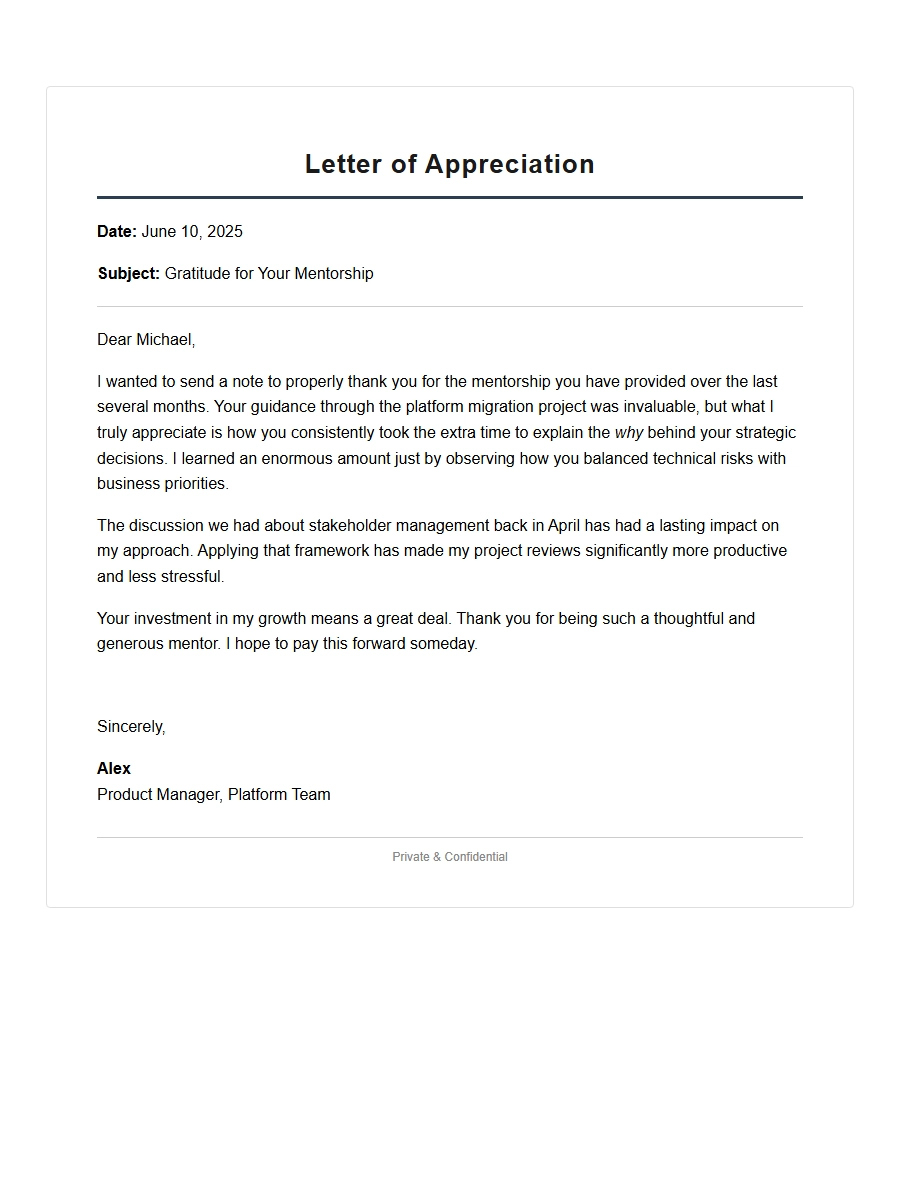 Thanking a Mentor for Guidance: Sample Messages
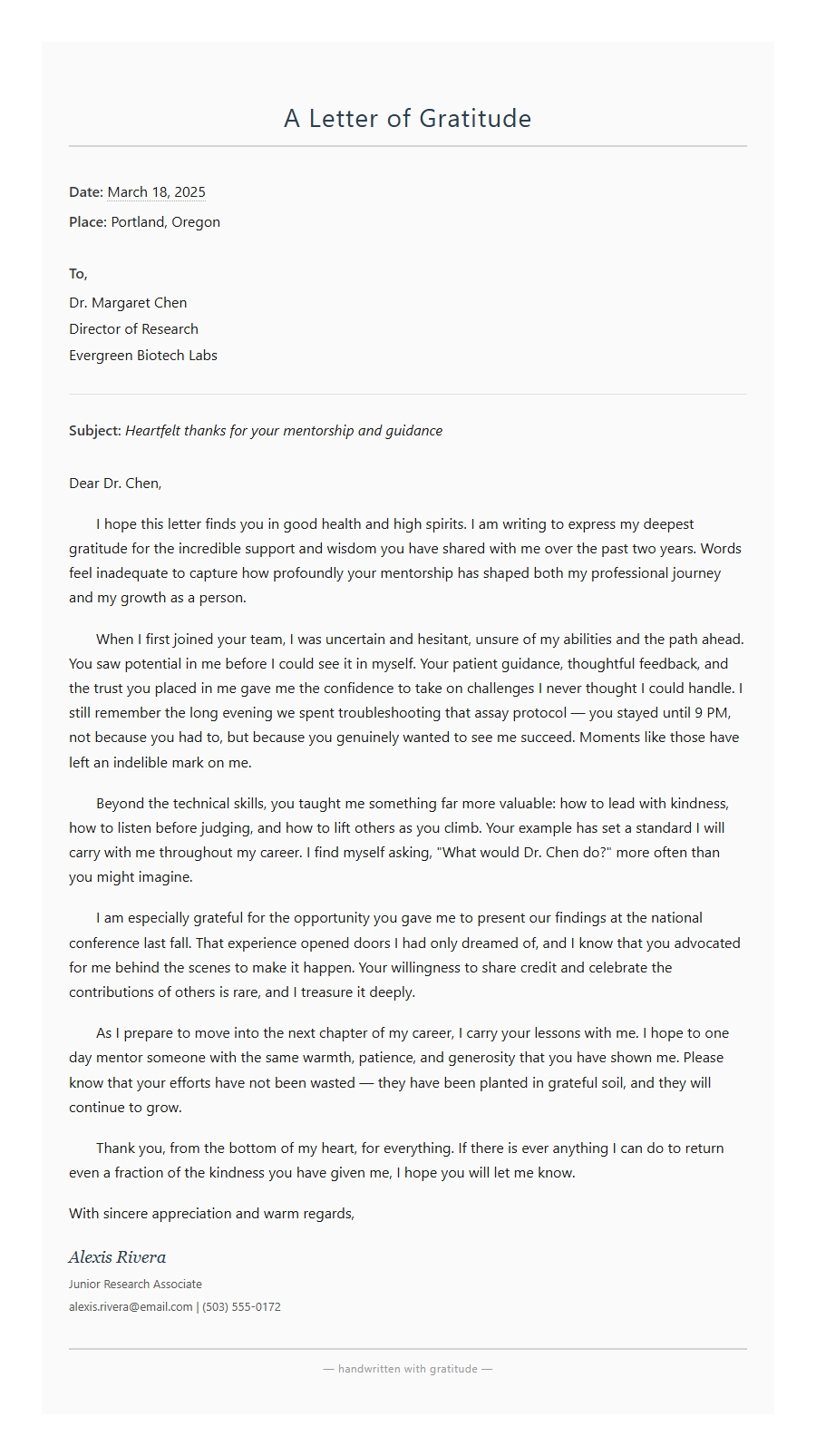 Expressing Gratitude: Handwritten Letter Example
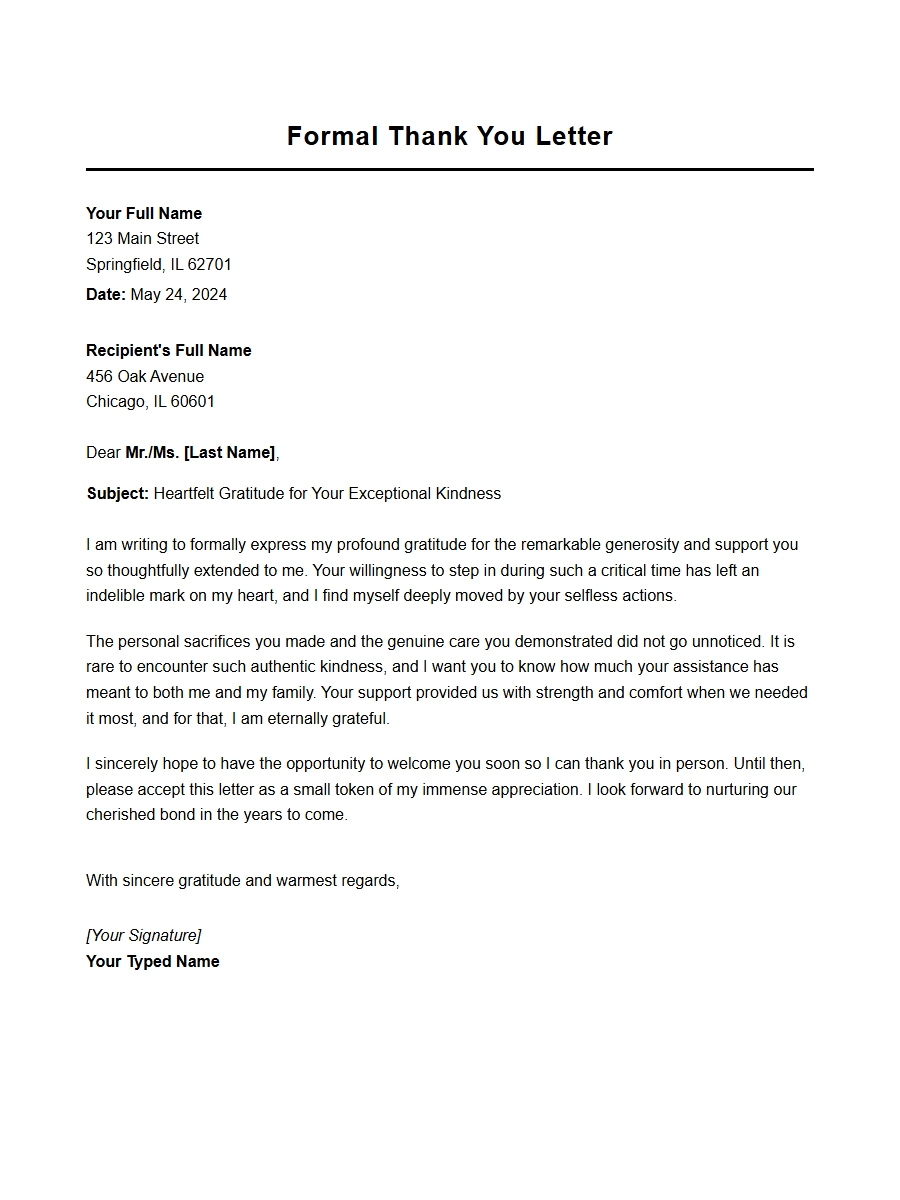 Expressing Thanks in a Formal Personal Letter
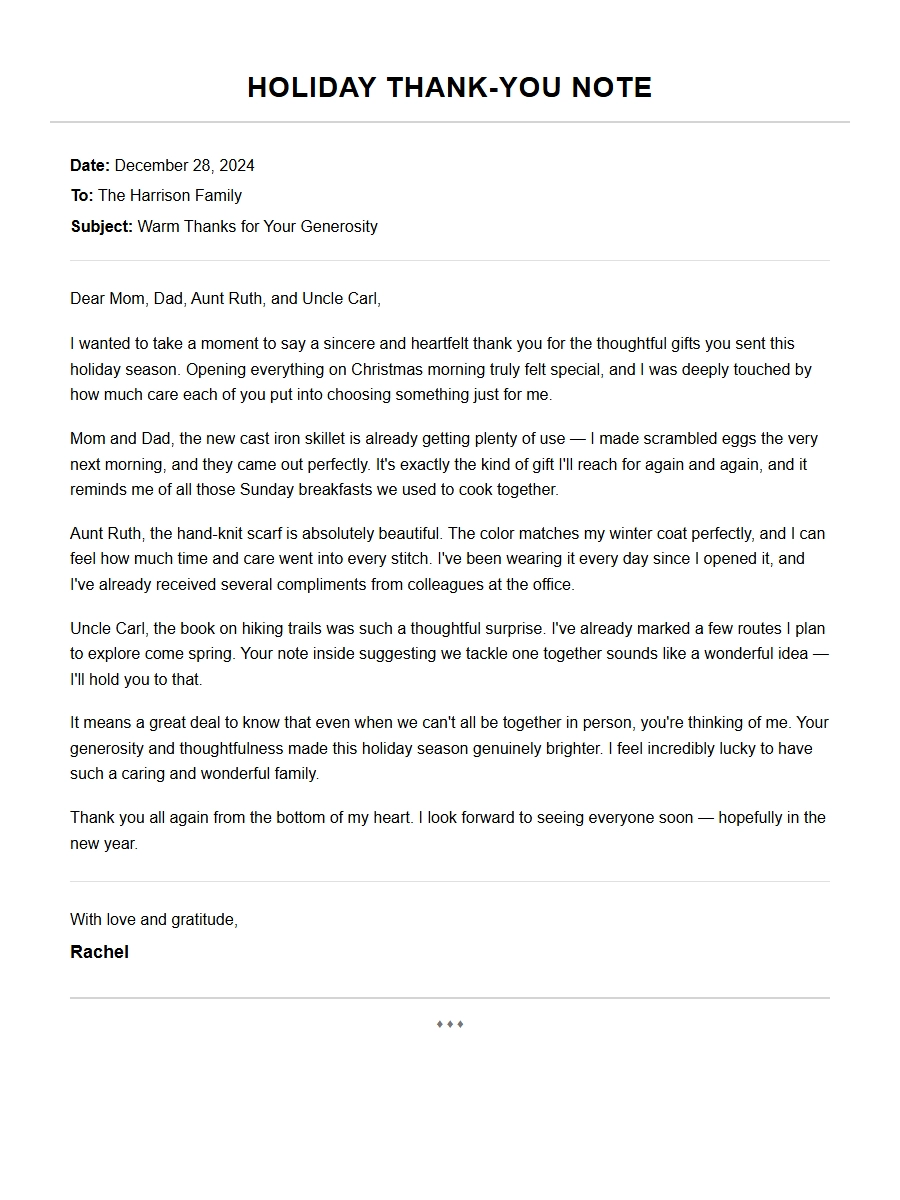 Thank You Letter Examples for Family Holiday Gifts
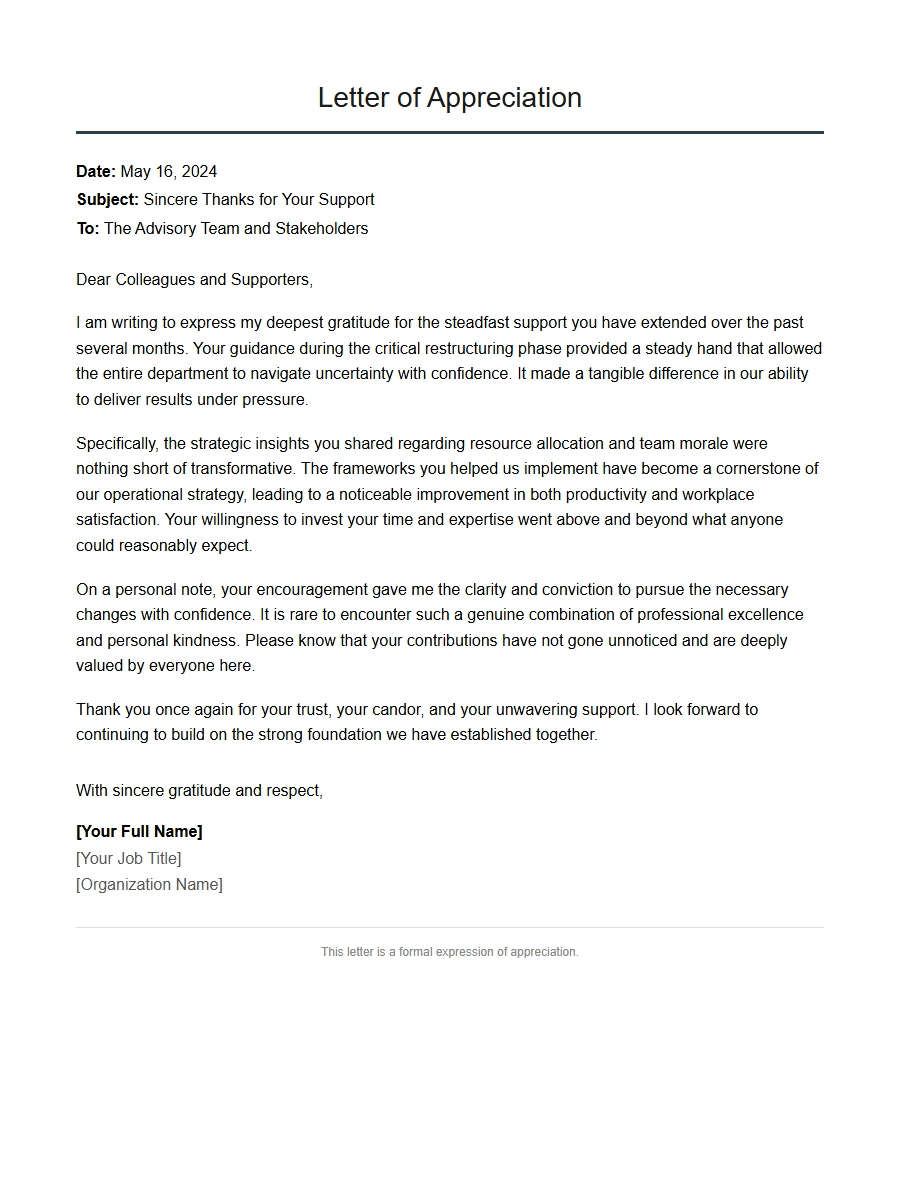 Sample Thank You Letter for Support
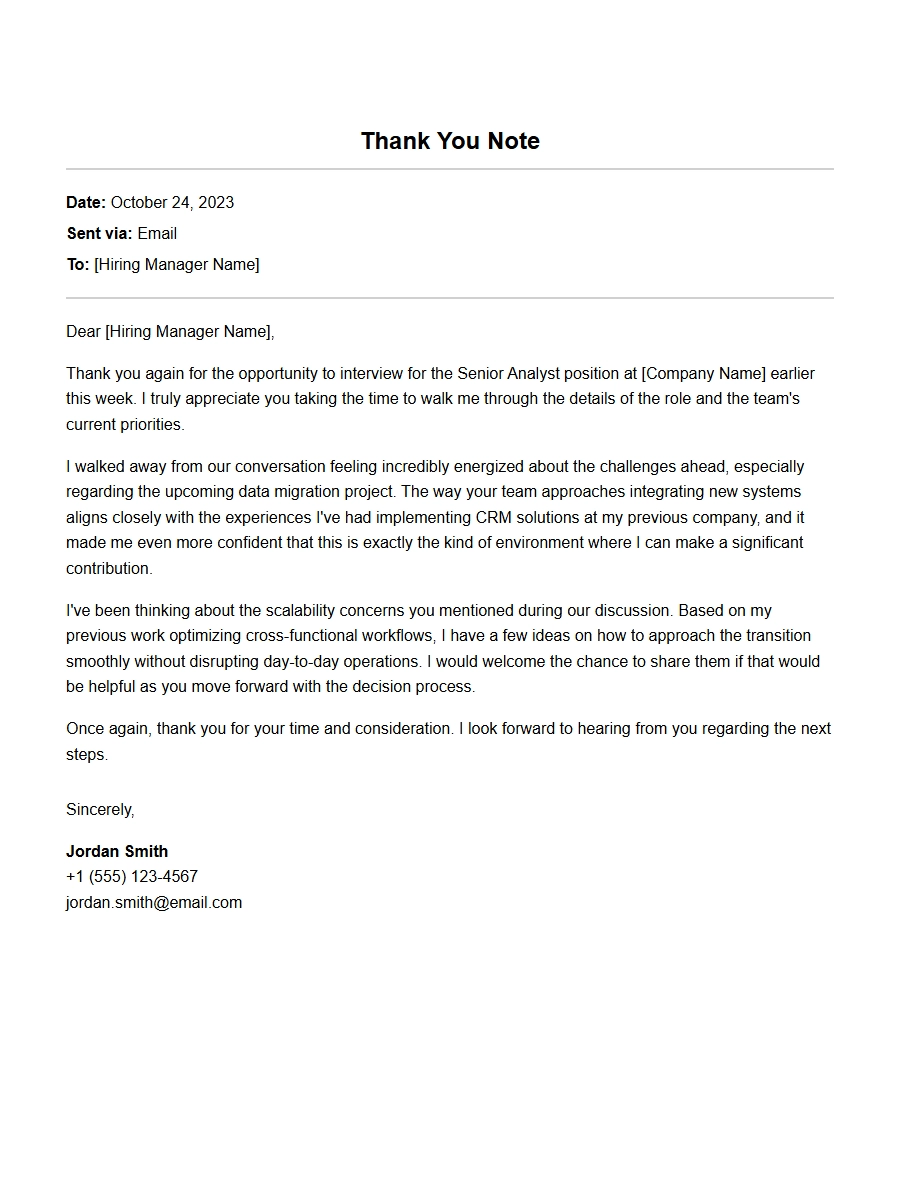 How to Write a Personal Thank-You Note After an Interview